
What Does Chicken Thigh Fillets Mean? Your Guide to Cuts, Cooking, and More
You probably see “chicken thigh fillets” on packaging and wonder what sets them apart from other cuts. Chicken thigh fillets are boneless, skinless pieces trimmed from the thigh that keep the richer flavor and tenderness of dark meat while cooking faster and offering easier portioning.
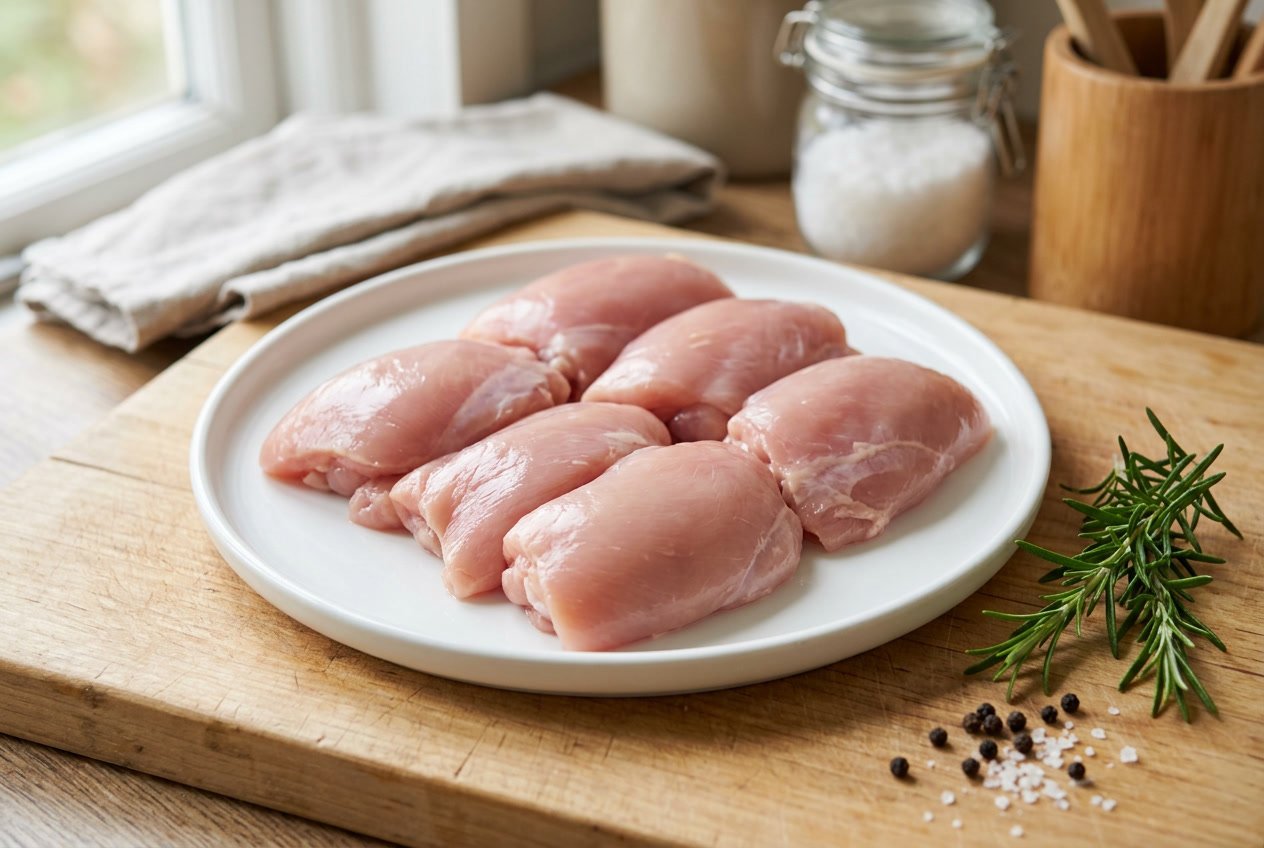
Thigh fillets differ from bone-in thighs and breasts in several ways. You can expect practical tips and quick recipe ideas so you can put thigh fillets to work in weeknight dinners or bolder dishes.
Definition of Chicken Thigh Fillets
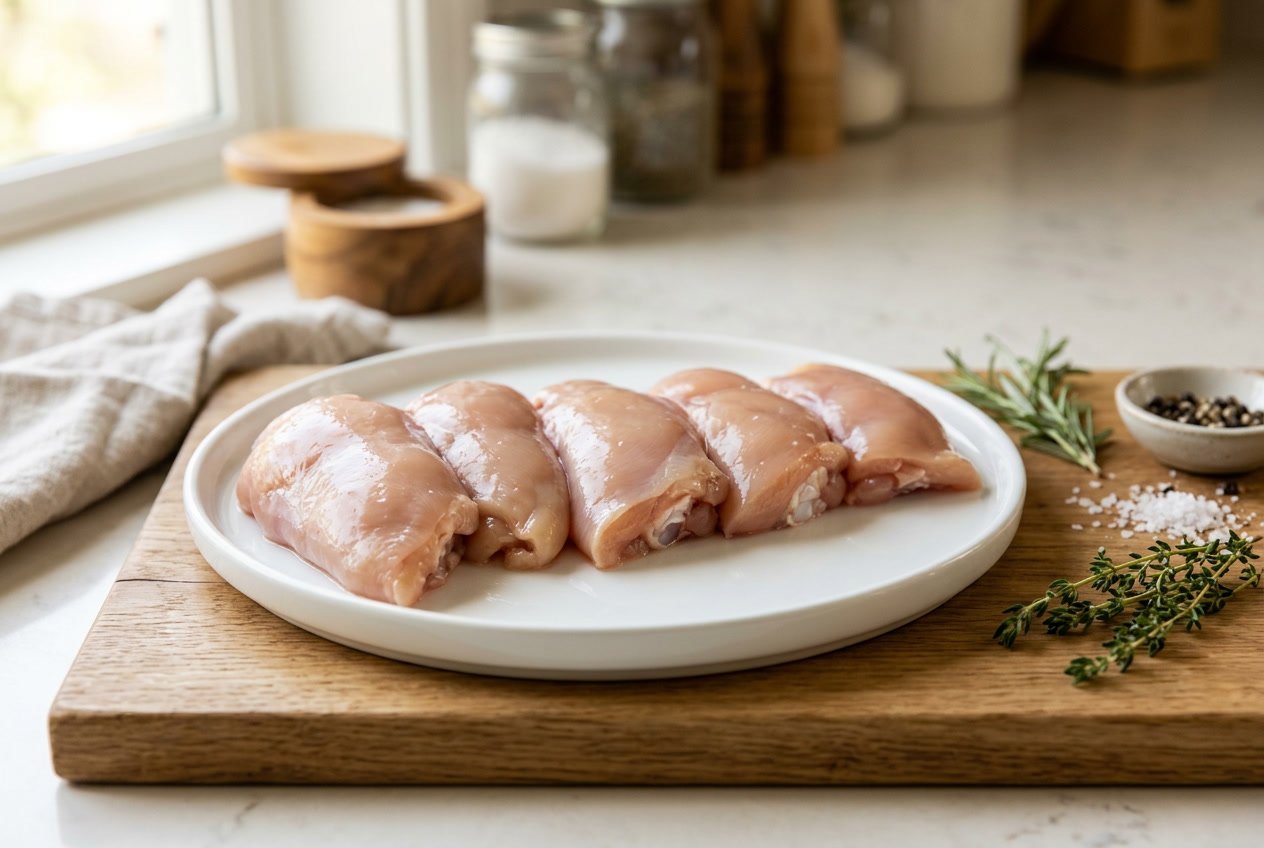
Chicken thigh fillets are boneless, skinless pieces of meat taken from the upper leg of the bird. They deliver rich flavor and moistness and come trimmed for quick cooking and versatile recipes.
Anatomy of Chicken Thigh Fillets
A chicken thigh fillet comes from the thigh muscle between the hip and the knee joint. Butchers remove the bone and connective cartilage, leaving a single slab of dark meat that still contains some intramuscular fat and connective tissue.
You’ll typically see an oblong, slightly curved piece with uneven thickness. That retained fat and collagen give thigh fillets a deeper flavor and better tolerance for high-heat or longer cooking than white meat.
The color ranges from pale pink to deeper red compared with breast meat.
How Chicken Thigh Fillets Are Prepared
Butchers remove the femur and surrounding joint, then trim skin and excess fat to create a boneless, skinless thigh fillet. Retail packs may be left whole, sliced into strips, or pounded to even thickness for quicker, uniform cooking.
You can marinate, grill, braise, roast, or pan-sear these fillets. They tolerate higher heat and longer cook times, so you don’t need to be as precise with internal temperature as with breasts, but you should still reach 165°F (74°C) for safety.
Freeze thigh fillets when vacuum-sealed and use within 6–9 months for best quality.
Comparison to Other Chicken Cuts
Chicken thigh fillets are darker, fattier, and more forgiving of overcooking than chicken breast fillets. Breasts are lean and mild; thighs give more flavor and remain juicier in long or high-heat methods.
Boneless thigh fillets save prep and yield more edible meat per piece than bone-in thighs, but they lack the flavor boost bones provide during slow cooking. Pick thigh fillets for quick, flavorful meals and bone-in thighs when you want richer stock or stews.
Chicken Thigh Fillets vs Chicken Thighs
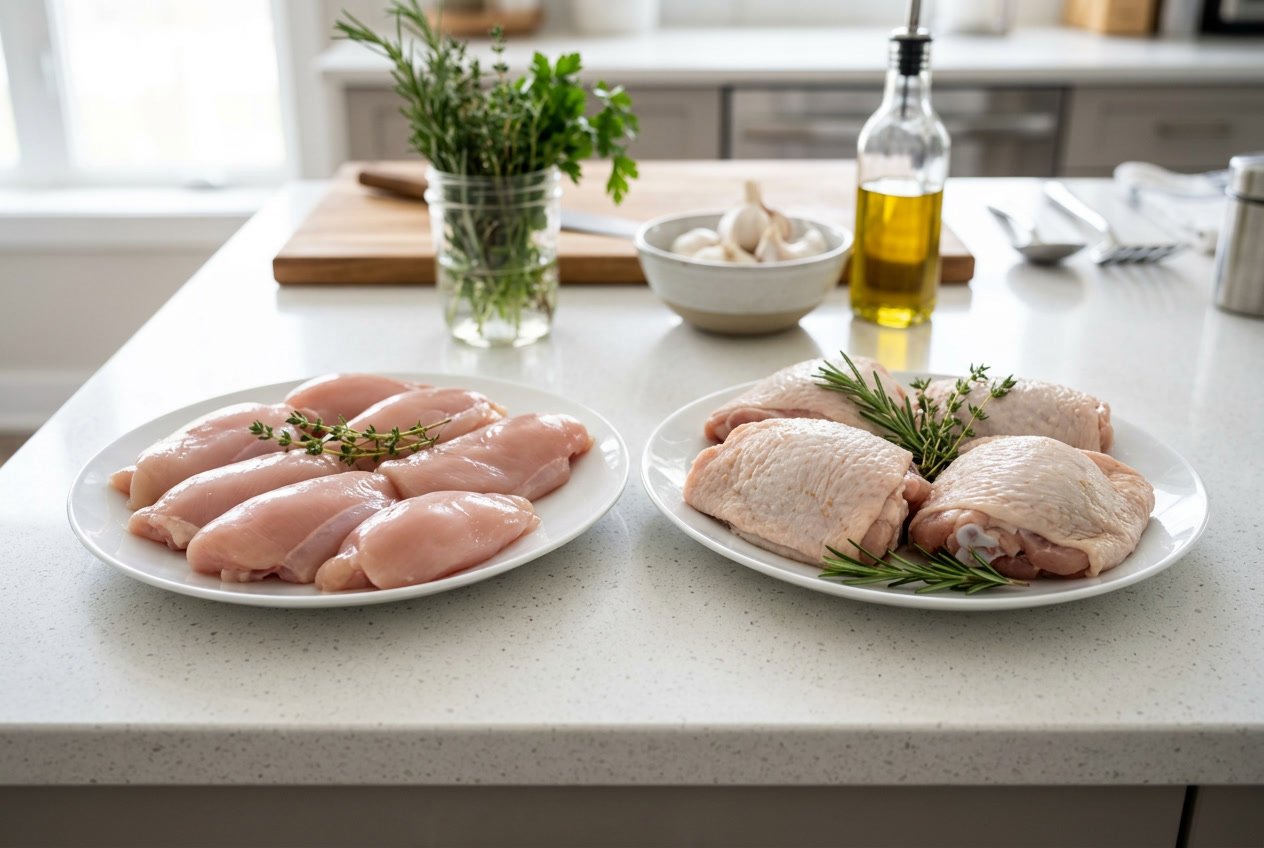
Thigh fillets and whole chicken thighs differ in composition, cooking behavior, and flavor. Pay attention to bone and skin removal, cooking time adjustments, and the flavor trade-offs tied to dark meat.
Key Differences
Chicken thigh fillets are the boneless, usually skinless portions cut away from the thigh bone. They consist mainly of dark meat muscle with less connective tissue visible than a whole thigh.
Whole chicken thighs typically include bone and skin and therefore weigh more per piece and contain higher fat content.
You should expect differences in price and yield. Thigh fillets cost more per pound because they’re trimmed and ready to cook, but you get a higher usable meat percentage.
Cooking time will also change: fillets cook faster and need gentler heat to avoid drying, while bone-in thighs tolerate longer, higher-heat methods.
Bones and Skin: What’s Removed
When you buy thigh fillets, the thigh bone and most or all skin have been removed. That eliminates bones that add structure and skin that renders fat and crisps during roasting.
Removing these parts shortens cooking time and reduces fat runoff, which can matter for both flavor and nutrition.
If a recipe relies on bones for stock or on skin for crisp texture, substituting fillets will alter the result. You can mimic some bone flavor by adding a small amount of stock or using bone-in thighs for braises.
For crispness, briefly pan-sear fillets skinless to develop a brown crust, or use a thin oil coating and high heat.
Texture and Flavor Impact
Dark meat in both fillets and whole thighs provides richer flavor than white meat because of higher myoglobin and intramuscular fat.
Whole thighs often taste more intense because the bone and skin release collagen and fat during cooking. That extra fat helps keep meat juicy during long braises or roasting.
Thigh fillets remain tender and slightly firmer in texture. They absorb marinades faster and take well to quick methods like grilling, stir-frying, or pan-searing.
If you want the deepest flavor and the most forgiving slow-cook performance, choose bone-in, skin-on thighs. If you need convenience, faster cook time, and leaner portions, choose thigh fillets.
Nutritional Profile of Chicken Thigh Fillets
Chicken thigh fillets are dark-meat cuts that provide more fat and iron than breast meat while delivering strong protein per serving.
Expect higher calorie density when the skin is left on, and reduced calories with boneless, skinless fillets.
Macronutrients and Calories
A 100 g serving of boneless, skinless chicken thigh fillet typically delivers about 160–210 calories depending on trimming and cooking.
You get roughly 18–22 g of protein per 100 g, making it an efficient source for muscle repair and satiety.
Fat content ranges from about 5–12 g per 100 g for skinless fillets. Leaving the skin on raises total fat substantially, often doubling calories.
Key points to track:
- Protein: ~18–22 g / 100 g (high-quality complete protein).
- Total fat: ~5–12 g / 100 g (mix of mono- and saturated fats).
- Carbohydrates: 0 g (negligible unless breaded or sauced).
If you weigh servings cooked versus raw, protein and calorie density increase after cooking due to water loss. Adjust portion sizes if you aim for specific macro targets.
Vitamins and Minerals
Chicken thigh fillets contain meaningful amounts of B-vitamins and minerals tied to dark meat.
Per 100 g, you commonly find notable niacin (B3) and vitamin B6, both important for energy metabolism and nervous-system function.
You’ll also get vitamin B12 in measurable amounts, which supports red blood cell formation.
Mineral highlights:
- Iron: higher than white meat, useful for preventing deficiency.
- Zinc: supports immune function and wound healing.
- Phosphorus and selenium: present in useful amounts for bone and antioxidant roles.
If you need more iron or zinc in your diet, choosing dark-meat thigh fillets over breast meat gives a modest but practical boost.
Popular Cooking Methods for Chicken Thigh Fillets
You can achieve juicy, well-seasoned chicken thigh fillets with high-heat searing, direct flame grilling, or controlled oven roasting. Each method emphasizes temperature control, moisture retention, and timing to maximize flavor and texture.
Pan-Frying and Stir-Frying
Pan-frying delivers a crisp exterior and tender interior. Pat your fillets dry, season with salt and pepper (or a spice rub), and heat 1–2 tablespoons of oil in a heavy skillet over medium-high heat.
Sear the presentation side first for 4–6 minutes without moving the meat to develop a brown crust, then flip and cook until the internal temperature reads 165°F (74°C). Rest for 3–5 minutes before slicing to retain juices.
For stir-frying, cut fillets into 1-inch strips. Use a wok or large skillet on high heat with a tablespoon of neutral oil.
Work in batches to avoid crowding and cook pieces 2–4 minutes until browned and just cooked through. Add aromatics and sauce at the end so the fillets stay tender and the sauce glazes the meat.
Grilling Techniques
Grilling adds smoky flavor and is ideal if you want char and quick cooks. Preheat the grill to medium-high (about 400–450°F).
If fillets are thin, use direct heat and grill 4–6 minutes per side; thicker pieces may need 6–8 minutes per side with a 2-zone setup to finish over indirect heat.
Oil the grates and brush fillets with a light oil or marinade to prevent sticking.
Use a thermometer to avoid overcooking; 165°F (74°C) is the safe target. For crosshatch marks and even cooking, rotate fillets 90° halfway through each side’s cook time.
Let grilled fillets rest 3–5 minutes so the juices redistribute before serving.
Baking and Roasting
Baking provides even heat and hands-off cooking for multiple fillets at once. Preheat the oven to 400–425°F (200–220°C).
Arrange fillets on a rimmed sheet pan or a wire rack over a baking tray to allow airflow and crisping. Brush with oil and apply your seasoning or marinade.
Cook times vary: thin fillets take 18–22 minutes; thicker fillets need 25–35 minutes. To crisp skin or tops, finish with a 2–3 minute broil.
Check doneness with an instant-read thermometer for 165°F (74°C). Rest fillets briefly before serving to keep them moist.
How Chicken Thigh Fillets Compare to Other Chicken Cuts
Thigh fillets give you more fat, connective tissue, and flavor than lean white meat. They cook more forgivingly at lower temperatures and pair well with bold marinades and long braises.
Chicken Thigh Fillets vs Chicken Breast Fillets
Chicken thigh fillets are darker, richer, and have higher fat content than breast fillets. You’ll notice more natural juices and a chewier texture; that makes thighs preferable for grilling, slow braising, and recipes that tolerate longer cook times.
Breast fillets are lean and mild. They cook quickly and dry out if overcooked, so you must time them precisely for slicing or quick sautés.
Nutrition and use differences to consider:
- Calories/fat: Thigh fillets contain more fat and calories per 100 g than breast fillets.
- Flavor: Thighs deliver stronger poultry flavor; breasts act as a neutral canvas for sauces and seasonings.
- Cooking methods: Use breasts for pan-searing, quick grilling, and poaching; use thigh fillets for stews, kebabs, and recipes where retained moisture matters.
Chicken Thigh Fillets vs Chicken Wings
Chicken thigh fillets and wings offer very different eating experiences and uses. Wings are small, bony, and skin-forward; you cook them for crisp skin and sticky sauces.
Thigh fillets are boneless, meatier, and better for slicing or shredding into salads, tacos, and curries.
Practical contrasts you’ll care about:
- Texture: Wings combine crisp skin and connective tissue around bone; thigh fillets give uniform, tender slices.
- Prep and yield: Wings require more handling per edible ounce; thigh fillets provide higher usable meat yield.
- Best applications: Choose wings for appetizers, deep-frying, and high-heat roasting; choose thigh fillets for versatile mains, marinated kebabs, and slow-cooked dishes where meat should stay moist.
Practical Tips for Buying, Storing, and Using Chicken Thigh Fillets
Pick firm, odor-free fillets, keep them at 40°F (4°C) or below, and use proper thawing and cooking methods to retain juiciness and safety.
Selecting Quality Thigh Fillets
Look for fillets that are pale pink to deep pink with no gray or green spots. Press lightly; fresh meat springs back.
Avoid sliminess or a strong sour smell—both are spoilage signs.
Check packaging dates: choose “sell by” or “use by” as far in the future as possible. Prefer vacuum-sealed packs for longer fridge life and less exposure to oxygen.
If buying loose, ask the butcher when it was cut.
Decide between boneless skinless and bone-in based on cooking. Boneless skinless fillets cook faster and suit stir-fries and grilling.
Bone-in delivers more flavor for braises and slow cooking.
Freezing and Storage Advice
Store raw fillets in the coldest part of your fridge and use within 1–2 days. Cooked thigh fillets last 3–4 days when sealed.
For freezing, remove excess air to prevent freezer burn. Use heavy-duty freezer bags or vacuum-seal and label with date.
Flash-freeze on a tray first if you want individual portions, then transfer to bags.
Freeze chicken thigh fillets for best quality up to 6–9 months. They remain safe longer but texture may degrade.
Thaw in the fridge overnight or under cold running water if short on time. Never thaw at room temperature.
Preparing Skinless Chicken Thigh Fillets
Pat the fillets dry before seasoning to ensure even browning.
Marinate for up to 24 hours. Acidic marinades require less time to avoid a mushy texture.
Cook the fillets to an internal temperature of 165°F (74°C) at the thickest point.
Use a thermometer to achieve consistent, safe results.
Start skinless thighs in a hot pan with a small amount of oil for searing. Finish them in the oven if needed.
To shred, simmer the fillets gently in broth until they become fork-tender. Bone-in pieces provide more flavor, but skinless fillets shred well when cooked low and slow.
Recipe Inspiration Using Chicken Thigh Fillets
Chicken thigh fillets offer juicy, forgiving meat that browns well and holds flavor.
Use them for quick weeknight dinners or when you want richer textures than breast meat.
Classic Dishes: Chicken Parmesan
Swap thigh fillets for breast in Chicken Parmesan to get more tenderness and flavor.
Pound each fillet to an even thickness, about 1/2 inch, so they cook evenly. Season with salt and pepper, then dredge in flour, egg, and panko or Italian breadcrumbs mixed with grated Parmesan.
Fry or shallow-bake the fillets until golden, about 3 to 4 minutes per side over medium-high heat.
Top each with 1/4 to 1/3 cup of tomato sauce and mozzarella and more Parmesan.
Finish under a broiler or in a 400°F oven for 6 to 8 minutes until the cheese melts and bubbles.
Serve on cooked spaghetti or over sautéed spinach.
For a lighter option, roast the breaded fillets on a parchment-lined sheet and use lower-fat cheese.
Add garlic and oregano to the breadcrumb mix for deeper flavor.
Versatile Meals
Thigh fillets work especially well in stir-fries and fajitas because they stay moist during high-heat cooking. Slice the fillets thinly across the grain for quick cooking and better bite.
Marinate briefly for 15 to 30 minutes in soy sauce, garlic, and a splash of rice vinegar for stir-fries. Use lime juice, cumin, and chili powder for fajitas.
For stir-fries, use a hot wok or skillet and cook the chicken over very high heat. Sear slices in small batches for 1 to 2 minutes per side, then toss them with crunchy vegetables and a glossy sauce made from soy sauce, sesame oil, a pinch of sugar, and cornstarch slurry.
For fajitas, sear the seasoned strips with sliced onions and bell peppers until the edges char slightly, about 4 to 6 minutes total. Squeeze fresh lime over the top and garnish with cilantro, sliced avocado, and warm tortillas.
Tips: Avoid overcrowding the pan. Cut vegetables to match the chicken’s cook time and rest thin slices briefly off heat to let juices redistribute.


