
What Does Boned Chicken Thighs Mean? Definitions, Methods & More
Boned chicken thighs mean the thigh meat has had the bones removed, leaving a single, easy-to-cook piece that keeps the dark, juicy flavor you expect from thigh meat.
You get the rich taste and tenderness of a thigh with faster, more flexible cooking and easier serving because the bones are gone.
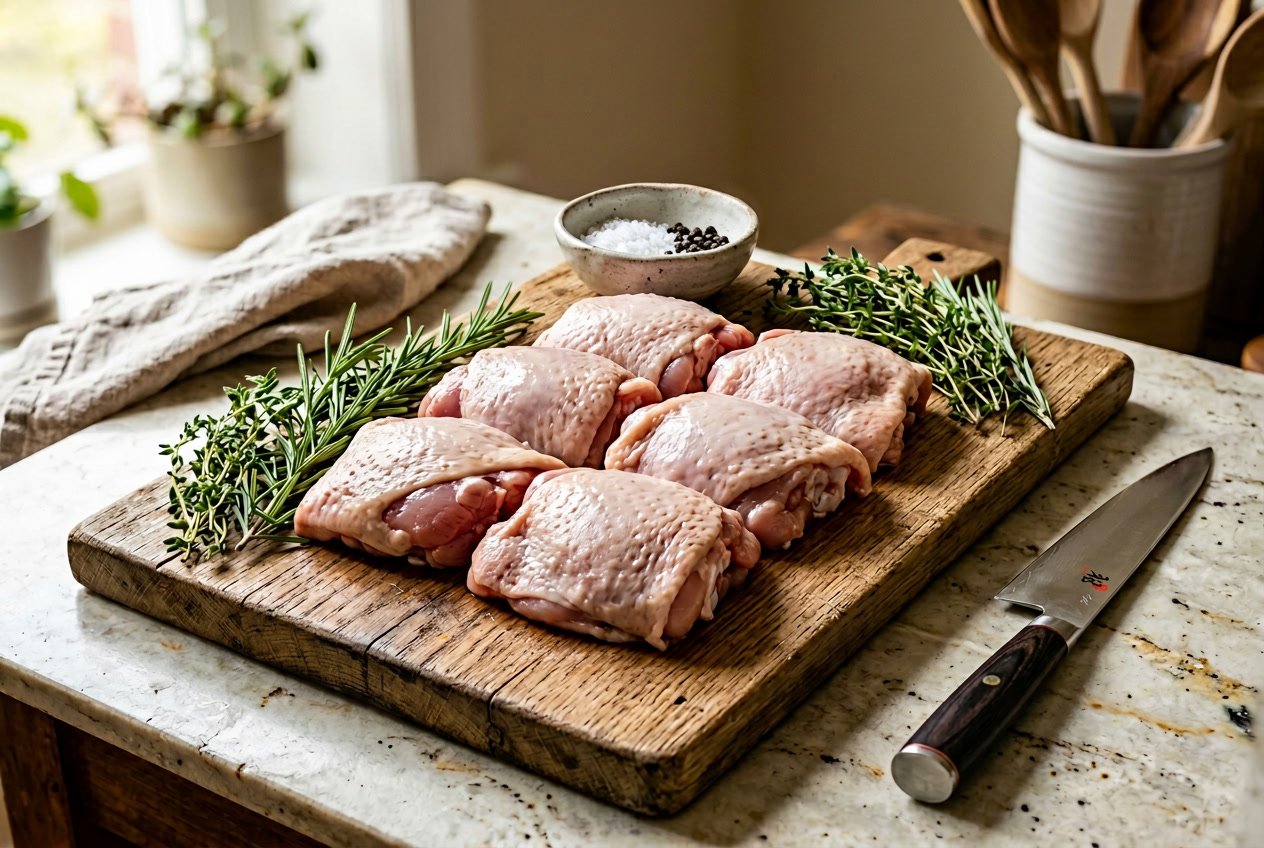
If you want to know how chefs bone chicken thighs, why they choose boned thighs over bone-in or breast cuts, and which methods and storage tips bring out the best texture and nutrition, read on for the process, benefits, comparisons, and practical cooking techniques.
Defining Boned Chicken Thighs
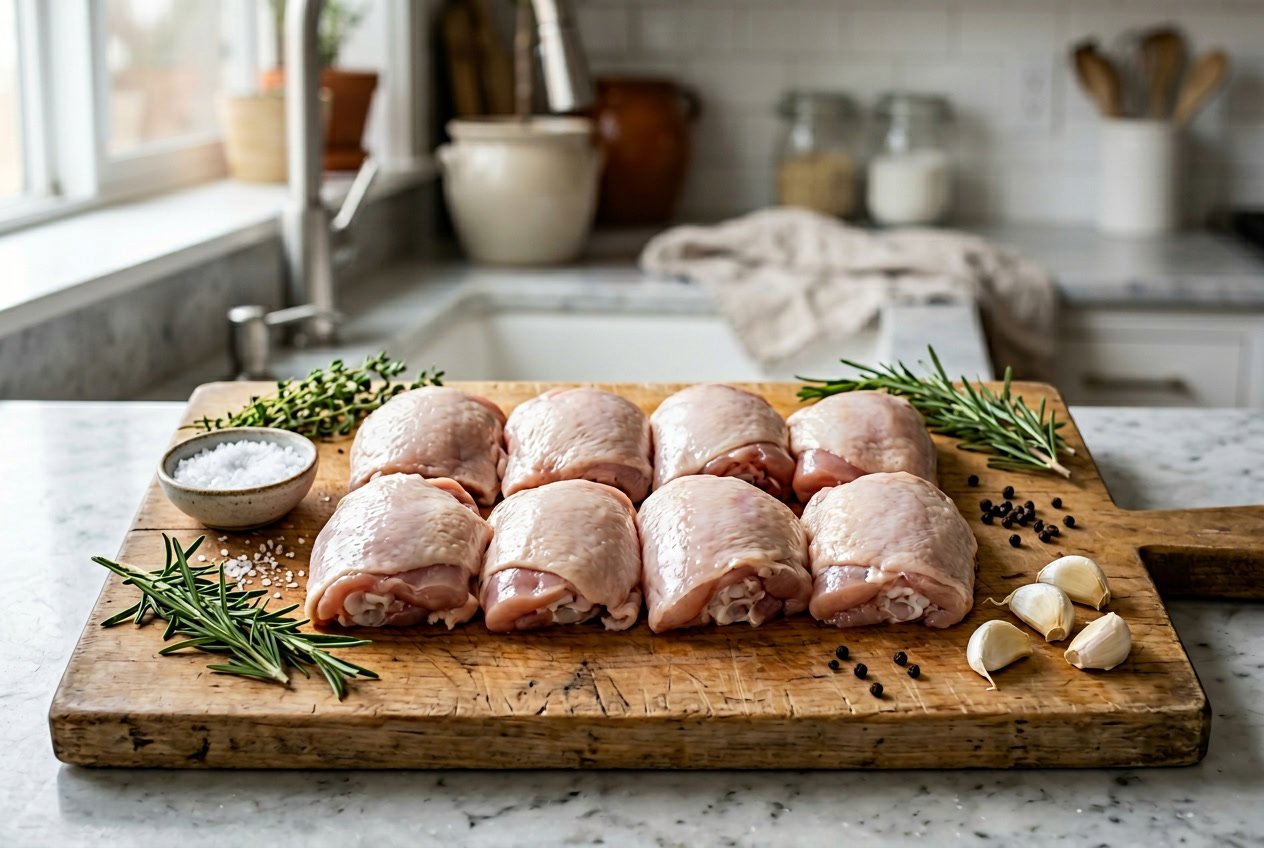
Boned chicken thighs are a specific poultry cut you’ll encounter at markets and in recipes.
They remove the bone structure while keeping the thigh as a single piece of meat, which affects cooking time, texture, and how you handle the cut in recipes.
What Is Boned Chicken?
Boned chicken means someone has removed the bones from a portion of poultry.
In practice, that can apply to thighs, breasts, legs, or other parts; when you buy boned chicken thighs, the thigh bone (and often the small pelvic bone) has been taken out.
Removing bones shortens cook times and makes eating and slicing easier.
It also slightly changes how the meat behaves during cooking: without the bone to conduct heat and add flavor, you may see faster, more even cooking but a modest reduction in the deep, roasted flavor bones can impart.
Anatomy of Chicken Thighs
A chicken thigh is the upper portion of the bird’s leg, containing muscles, fat, connective tissue, and one primary bone running through the center.
That bone is what you remove to create boned chicken thighs; the skin may be left on or removed depending on the product.
Thigh meat is darker and higher in fat and connective tissue than breast meat, which helps it stay moist and flavorful during cooking.
When you remove the bone, you still keep the thigh’s natural fat and collagen, so the cut remains forgiving and suited to searing, braising, or grilling.
Difference Between Boned and Bone-In Cuts
The main difference is structural: bone-in thighs keep the bone intact, while boned thighs have the bone removed.
This affects cooking time, flavor development, and presentation.
Bone-in thighs often take longer to cook and can taste slightly richer because the bone and surrounding marrow transfer flavor and help regulate heat.
Boned chicken thighs cook faster, are easier to slice or stuff, and work better in dishes that require uniform pieces, such as stir-fries, kebabs, or quick pan-sears.
Choose boned meat for convenience and consistent cooking; choose bone-in for maximum flavor and a slower-cooked texture.
The Boning and Deboning Process
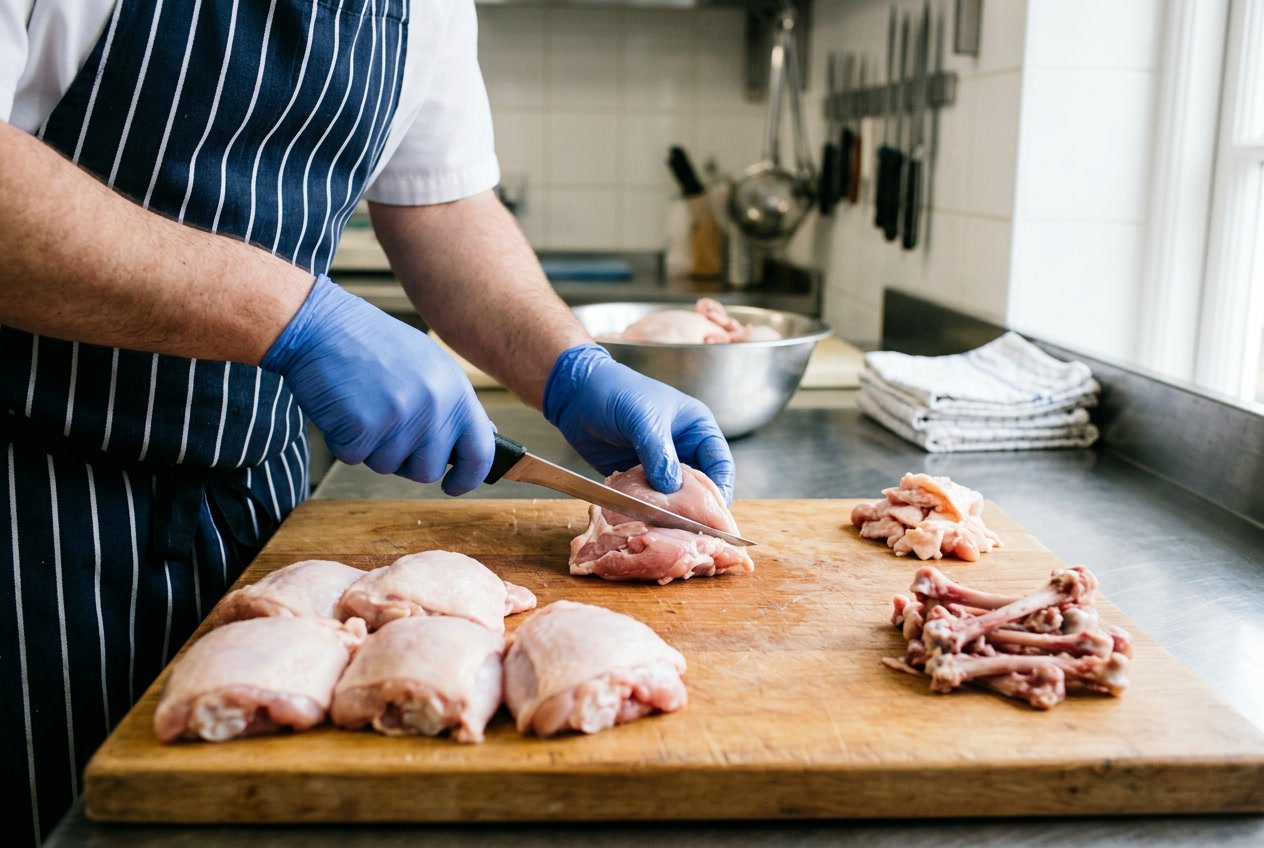
You will learn how to remove bones, which cuts and tools matter, and what differs when you debone thighs versus other meats.
Expect step-by-step actions, common safety points, and the specific tools pros use.
Boning Process Explained
You separate meat from the skeleton with minimal waste.
Start by placing the cut on a stable board, identifying the bone line by touch, and making shallow cuts along the bone’s contour to expose it.
Keep the knife tip pointed toward the bone and use short, controlled strokes to peel the meat away rather than slicing through it.
Work slowly around joints and cartilage where the bone anchors into the flesh; use kitchen shears to snip connective tissue and reduce tearing.
Trim away excess fat and cartilage after you free the bone to improve texture and cooking consistency.
Always dry the meat and secure it with your non-knife hand to maintain control and avoid slips.
How Chicken Thighs Are Deboned
Deboning thighs focuses on a single long shaft bone and joint ends.
Place the thigh skin-side down and locate the bone by running your fingers along the center.
Make an incision along one side of the bone, then the other, following the bone’s curve to separate meat from bone.
Use the knife blade to scrape meat from the bone surface, gradually exposing the shaft.
Cut through the small ligament or cartilage at each end to release it.
Pull the bone up and out vertically, then trim remaining bits of cartilage and tendon.
Keep the skin if you want crisp skin-on boneless thighs.
Save bones for stock or discard; frozen bones work well for broth.
Tools Used for Boning
Use a sharp boning knife as the primary tool; choose a narrow, slightly flexible blade for precise work.
The tip helps you navigate around joints and under bones without removing excess meat.
Kitchen shears help by cutting tendons, ligaments, and skin quickly.
Use shears to open up joints or snip cartilage where a knife would be awkward.
A stable cutting board and a towel to grip the meat complete the basic kit.
Optional tools include a paring knife for fine trimming, disposable gloves for grip and hygiene, and a bone saw for larger butcher tasks.
Keep blades honed and sanitized to reduce effort and contamination risk.
Deboning Process for Other Meats
Deboning larger cuts like leg of lamb or pork shoulder follows similar principles but on a bigger scale.
Make longer contour cuts, work around multiple bones, and sometimes remove entire bone plates rather than single shafts.
When deboning whole chickens, detach legs at the hip, loosen breast from keel bone, and use shears to cut through rib cartilage.
For fish, run a fillet knife along the backbone and rib cage, keeping cuts shallow to avoid pin bones.
Adjust knife choice and tools to the size and density of the bone.
Prioritize control and minimal meat loss across all deboning tasks.
Benefits of Boned Chicken Thighs
Boned chicken thighs deliver richer flavor, easier handling, and faster cooking compared with bone-in cuts.
You get juicy dark meat that adapts well to marinades, and you save time during prep and serving.
Tenderness and Texture
Boned (deboned) thighs stay moist through various cooking methods because the dark meat contains more intramuscular fat than breast.
That fat keeps fibers tender during searing, roasting, or braising, so the meat resists drying even when cooked to a safe internal temperature of 165°F (74°C).
If you remove the skin, texture becomes leaner but still more forgiving than breast meat.
For shredding or slicing, boned thighs break down predictably, yielding consistent pieces for tacos, salads, or stews.
The absence of bone also means you won’t need to navigate around hard landmarks while eating or plating.
Cooking Convenience
You save real time with boned thighs: shorter cook times and simpler prep.
Without a bone, pieces heat evenly, so pan-searing or grilling takes minutes rather than the longer intervals bone-in cuts require.
That makes boned thighs ideal for weeknight dinners and meal prep.
Deboned meat also simplifies portioning and stuffing.
You can flatten, roll, or cube thighs without removing bone later.
Storage and thawing are easier too—individual pieces freeze flat for faster, safer thawing in the fridge or cold-water bath.
Versatility in Recipes
You can adapt boned thighs across cuisines because they accept strong marinades and hold up to high-heat methods.
Slice them thin for stir-fries, cube them for skewers, or leave whole for pan-roasting.
Their higher fat content supports rich sauces and reductions without becoming greasy.
Use them in dishes where bone-in cuts would be awkward—sandwiches, grain bowls, or stuffed preparations—because deboned pieces are easier to eat and present.
If you want cost savings, note that boned thighs trade off a small premium for convenience compared with bone-in; choose based on whether prep time or price matters more to your menu.
How Boned Chicken Thighs Compare to Other Cuts
Boned chicken thighs sit between bone-in dark meat and fully boneless cuts in texture, cook time, and flavor concentration.
They offer faster cooking and easier carving than bone-in pieces while retaining more fat and moisture than lean boneless cuts.
Boned vs. Boneless Chicken
Boned chicken thighs may still contain bone fragments or residual cartilage after partial bone removal, so they keep slightly more connective tissue than fully boneless thighs.
That extra tissue can boost mouthfeel and succulence during braises or longer cooks, and you’ll notice a modest flavor lift compared with fully boneless pieces.
Fully boneless chicken (including boneless chicken thighs) cooks faster and slices uniformly, which helps in stir-fries and pan-searing.
If you need quick, even cooking and minimal trimming, choose fully boneless.
If you want a juicier result for slow or moist methods, boned or semi-boned thighs give you more forgiving results.
Boned Chicken Thighs vs. Boned Beef and Lamb
Boned poultry differs from boned beef and boned lamb in fat distribution, connective tissue, and ideal cooking methods.
Boned beef and boned lamb cuts (for example, lamb shanks) contain thicker bones and dense collagen that break down into gelatin during long, low cooking, producing rich sauces you won’t get from poultry.
Use boned thighs for faster braises and roasting.
You won’t rely on the bone for the same depth of gelatin as lamb shanks or a braising beef cut.
If a recipe calls for bone-derived body and mouthfeel—stews, long braises—choose boned beef or boned lamb.
Use boned chicken thighs when you want shorter braise times and a lighter, still-rich finished dish.
Boned Thighs vs. Boneless Chicken Breast and Pork Tenderloin
Boned thighs differ sharply from boneless chicken breast and pork tenderloin in fat and cooking margin for error.
Boneless chicken breast is lean and dries quickly; it needs brief, high-heat cooking or gentle brining to stay tender.
Pork tenderloin is leaner than thighs, cooks fast, and benefits from quick sears and moderate oven times.
If you want forgiving meat that tolerates overcooking, boned thighs outperform both breast and pork tenderloin because of higher intramuscular fat.
For recipes where low fat and a neutral taste are priorities—salads, light sautés—go with boneless chicken breast or pork tenderloin.
For tacos, stews, or dishes requiring shreddable, moist protein, boned or boneless chicken thighs give better texture and flavor.
Best Cooking Techniques for Boned Chicken Thighs
Boned chicken thighs cook faster than bone-in cuts and hold more fat and flavor than breasts.
Choose methods that develop surface browning, render fat, and bring the internal temperature to 165°F without drying the meat.
Cooking Boned vs. Boneless Chicken
Boned (boneless) thighs refer to thighs with the bone removed; they’re thicker and more uniform than bone-in pieces.
You’ll notice shorter cook times—typically 12–25 minutes depending on thickness—so monitor temperature rather than relying on time alone.
Because they lack a bone, these thighs cook more evenly and are easier to slice for salads, tacos, or stir-fries.
They retain more moisture than breasts due to higher fat and connective tissue, so you can cook them to well-done without major dryness.
When substituting boned for bone-in in recipes, reduce oven or braise time by about 25–30%.
For grilling or pan-searing, flatten thicker pieces to even thickness for consistent doneness.
Recommended Methods for Boned Chicken Thighs
Pan-searing then finishing in the oven gives the best combination of crust and juicy interior.
Heat a skillet to medium-high, pat thighs dry, season, sear skin-side or presentation-side 3–5 minutes, then transfer to a 375°F oven until 165°F internal.
Stir-frying or slicing thin for quick sautés works well because boned thighs absorb marinades and sauces.
Cut into strips, marinate 15–30 minutes, then cook over high heat for 4–6 minutes until browned and cooked through.
Baking on a wire rack at 400°F yields even heat and crisp edges without extra oil.
For braises or stews, brown first to develop flavor, then simmer gently; the meat will remain tender and release savory richness into the sauce.
Grilling over medium-high heat works if pieces are not too thick.
Use indirect heat to avoid charring the exterior before the center cooks.
Aim for 165°F internal; remove and rest 5 minutes before serving.
Tips for Cooking Boned Meat Safely and Flavorfully
Always use an instant-read thermometer to confirm 165°F internal temperature.
Insert into the thickest part; do not touch any pan or pocket where heat reads falsely high.
Pat meat dry and season early; salt 15–30 minutes beforehand improves flavor and moisture retention.
For extra crust, dust the exterior lightly with flour or baking powder before searing.
Avoid overcrowding the pan; leave space so pieces brown rather than steam.
Let thighs rest 4–6 minutes after cooking to redistribute juices.
If freezing, portion and thaw in the refrigerator 24 hours before cooking; never thaw at room temperature.
When marinating, don’t exceed 24 hours with acidic marinades to prevent mushy texture.
For safety, discard used marinade or boil it before using as a sauce.
Nutritional Value and Storage Considerations
Boned chicken thighs deliver concentrated protein, modest fat, and useful B vitamins. You can keep them safe and flavorful with simple refrigeration or freezing.
They are more calorie-dense than breast meat but still suitable for many diets when you prepare them with healthy methods.
Nutritional Comparison to Other Cuts
Boned (boneless) chicken thighs provide roughly 25–30 g of protein per 100 g cooked, which matches breast on a per-serving basis but with higher fat and calories. Skinless boneless thighs have about 5–12 g fat per 100 g, while skin-on versions contain more saturated and total fat.
Thighs supply more iron, zinc, and B vitamins (B6, B12) than white meat. These nutrients support energy metabolism and red blood cell health.
If you want lower calories and less fat, choose skinless breast. For richer flavor and more forgiving cooking, thighs are better. Grilling, baking, or steaming keeps fat lower than frying or heavy breading.
Cost and Availability
You can find boned chicken thighs year-round at supermarkets, butcher counters, and wholesale clubs. Prices depend on region and whether the product is organic, free-range, or conventionally raised.
Boneless thighs usually cost more than bone-in due to extra processing. You can buy them fresh, vacuum-sealed, or frozen.
Check packaging dates and sell-by labels. Value packs are convenient for meal prep, but check portion size to avoid waste.
In some markets, boneless thighs may cost slightly more than breasts, but they usually remain one of the most economical dark-meat options for flavor and yield per dollar.
Storage Tips for Boned Chicken Thighs
Store fresh boneless thighs in the refrigerator at 40°F (4°C) or below. Use them within 1–2 days.
Place the thighs in their original packaging or an airtight container on the bottom shelf to prevent cross-contamination.
For longer storage, freeze the thighs in single-serving portions using airtight freezer bags or vacuum seal them. Label each package with the date.
For best quality, use frozen thighs within 6–9 months. The meat stays safe longer but may lose texture.
Thaw the thighs safely in the fridge, under cold running water, or with your microwave’s defrost setting.
Cook thawed thighs within 1–2 days. Only refreeze raw meat if you have cooked it first.


