
What Do Chicken Thighs Look Like: Raw, Cooked, and Buying Tips
You can spot a chicken thigh by its roughly pear-shaped, pink-to-red piece of meat with visible fat marbling. Bone-in thighs show or feel the femur, while boneless ones appear more compact and uniform.
For a quick visual ID, look for the curved shape, richer color than breast meat, and either a protruding bone end (bone-in) or a smooth, flattened shape (boneless).
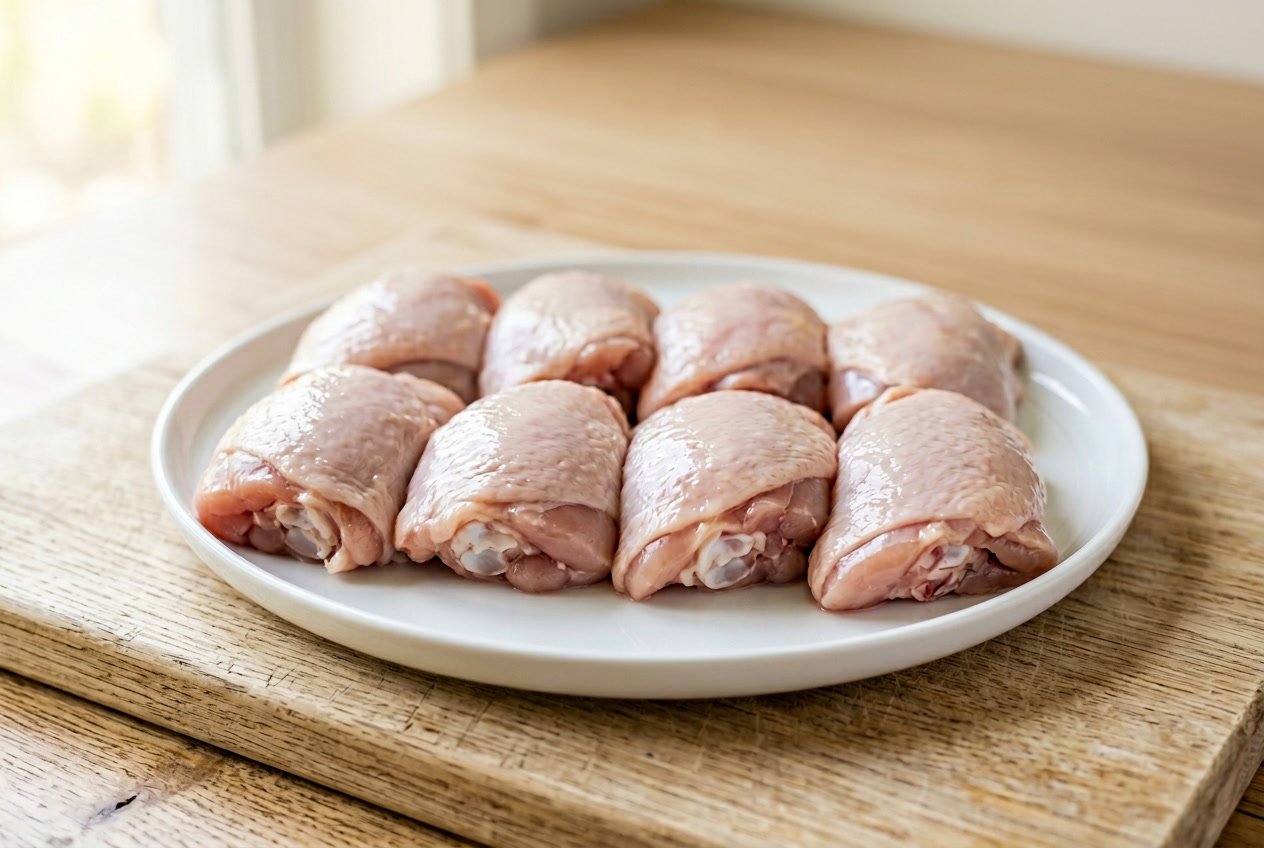
Raw and cooked thighs change color and texture, and skin and bone affect cooking and appearance. You should check certain things when choosing, freezing, or thawing them.
With these tips, you can confidently pick and prepare thighs that match the look and cooking method you want.
Identifying Chicken Thighs
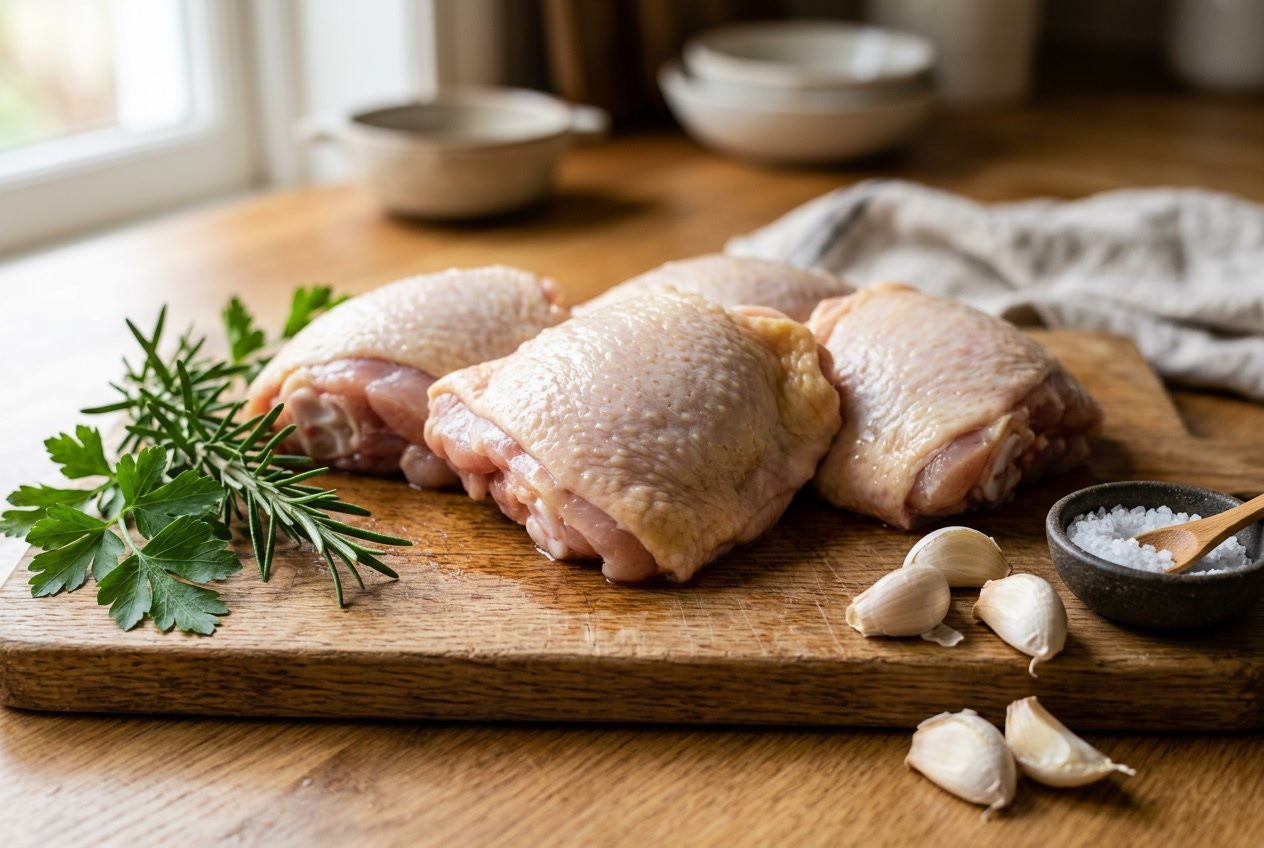
You can recognize a chicken thigh by its shape, color, and texture, and by comparing it to other cuts. These details help you pick fresh thighs and choose between bone-in or boneless.
Typical Shape and Size
A chicken thigh is roughly pear-shaped: wider at the top where it connects to the body and tapering toward the joint. Bone-in thighs keep the femur inside, creating a noticeable rounded end.
Boneless thighs are flattened and more uniform in outline. Size varies by bird, but retail thighs commonly weigh between 3 and 6 ounces each.
Skin-on thighs have a layer of loose skin that adds bulk and a textured surface. When packaged, look for plump, evenly sized pieces to ensure predictable cooking times.
Color and Texture of Raw Thigh
Raw chicken thighs display a pink to deeper red-pink hue because they are dark meat with higher myoglobin than breast meat. The surface often shows visible fat marbling and a slightly glossy sheen from natural juices and skin oils.
Fresh chicken thighs feel firm and moist but not slimy. Skin-on thighs present a dimpled, slightly elastic texture.
Skinless thighs reveal a fine grain and more visible connective tissue near the bone. Discard any thighs with a grayish or greenish tint or a strong sour odor.
Distinguishing Thighs from Other Cuts
Thighs attach to the upper leg, between the body and the drumstick. The drumstick is the lower leg and has a long, distinct bone shape.
Compared with breast meat, thighs are darker, fattier, and more marbled, which yields juicier results when cooked. You’ll see these types at the store:
- Bone-in, skin-on: retains shape and flavor; best for roasting or braising.
- Boneless, skinless: cooks faster and is easier to cut or pound for recipes.
- Pre-marinated or frozen: convenient but check for added salt or preservatives.
When carving a whole chicken, find the thigh by locating the joint where the leg meets the body and following the broader, meatier section toward the torso.
Bone-In vs Boneless Chicken Thighs
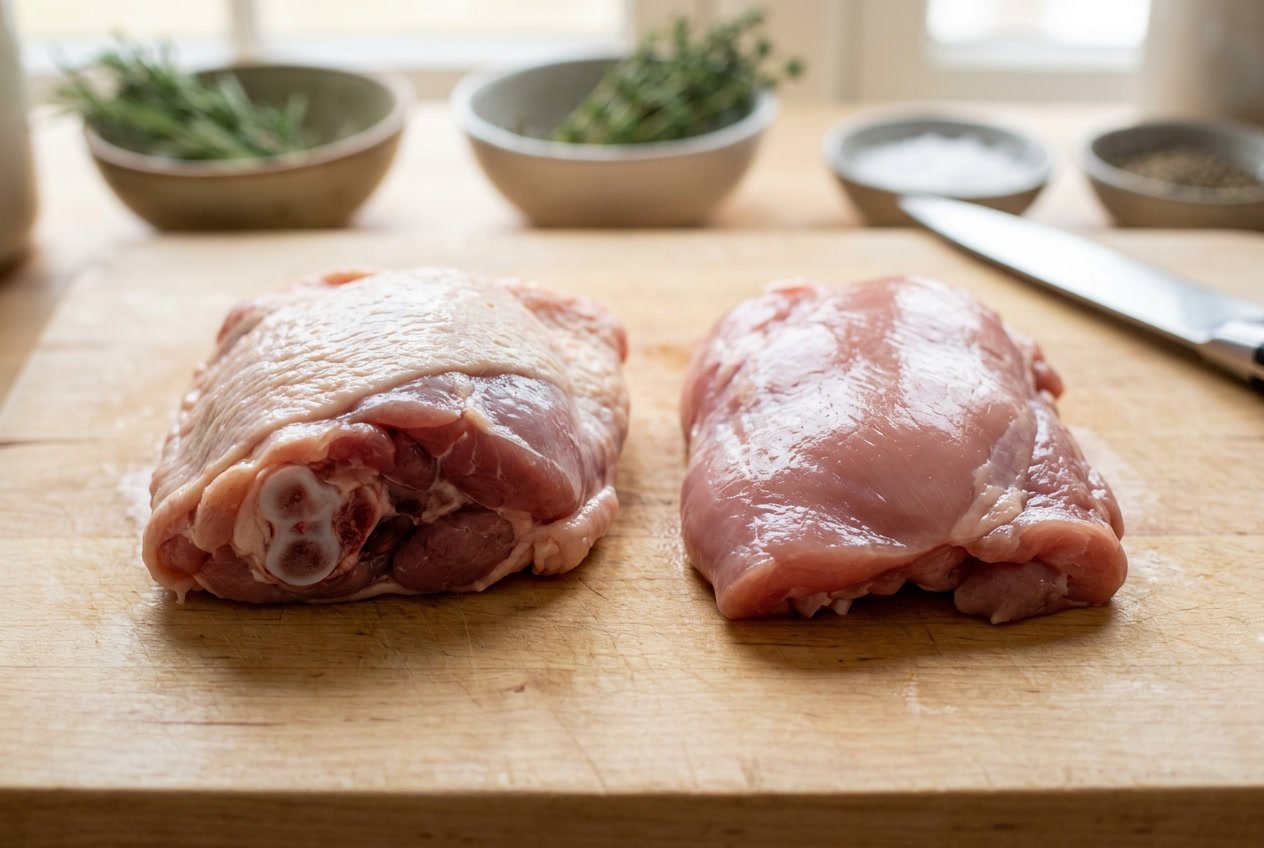
Bone-in and boneless thighs look different and have different uses. The bone changes shape and cooking behavior, while boneless pieces simplify handling and slicing.
Visual Differences in Appearance
Bone-in chicken thighs keep the femur, which creates a rounded, irregular shape and often a visible bone end. You can spot the bone by feeling for firmness under the meat or by a small protruding tip.
The overall piece looks chunkier and less uniform than boneless chicken thighs. Boneless chicken thighs appear flattened and more uniform in size and thickness.
If skin-on, boneless pieces still show the yellowish skin layer. Skinless boneless thighs look like compact, oval cuts of meat.
Packaging often shows boneless thighs stacked neatly, while bone-in thighs lie with more volume and variation. Color between the two is similar—pink to reddish raw meat—but bone-in pieces may display slightly more marbling and connective tissue around the bone area.
Texture and Structure
Bone-in chicken thighs have denser structure near the bone where connective tissue and cartilage concentrate. The meat around the bone stays juicier during longer cooks, and you’ll notice richer mouthfeel when you bite near the bone.
The bone conducts heat differently, so the surrounding meat can finish slightly slower. Boneless chicken thighs lack that internal support, giving a more consistent texture from edge to center.
They often feel softer and more pliable when raw, and they cook more evenly and faster. Because they contain less connective tissue, you’ll get uniformly tender slices ideal for quick sears and stir-fries.
If you want pieces that hold shape for shredding or slow braises, bone-in thighs give a firmer pull near the joint. For quick chopping or uniform bite-sized pieces, boneless thighs shave prep time and slice cleanly.
Uses for Each Type
Use bone-in chicken thighs for braising, roasting, and grilling where prolonged cook time benefits from the bone’s heat retention and flavor contribution. They suit recipes like coq au vin or slow-roasted thighs.
Choose boneless chicken thighs for pan-searing, stir-frying, kebabs, and quick meals. They’re easier to butterfly, stuff, and cube, and they cut evenly for salads, tacos, or pasta.
Boneless skin-on thighs work well when you want crispy skin without managing a bone. Bone-in chicken thighs are often priced lower per pound, while boneless thighs cost more due to deboning labor.
Pick based on the recipe’s timing and your desired texture.
How Cooked Chicken Thighs Change Appearance
As the thighs cook, the skin browns, the flesh turns opaque, and juices clarify. These visible changes indicate doneness and texture.
Color and Texture When Cooked
Cooked chicken thighs develop a golden-brown to deep-amber skin when seared or roasted. If you pan-sear, look for evenly browned, slightly blistered skin.
In the oven, aim for a uniform color across the surface. Beneath the skin, the meat becomes opaque and moves from a translucent, glossy look to a firm, matte appearance.
The thickest part should feel slightly springy and yield to gentle pressure, not squishy. Juices running clear when you pierce the meat help confirm the texture change.
Properly cooked thighs retain moisture and appear plump rather than stringy or dry.
Visual Signs of Doneness
The most reliable visual cues are clear juices, opaque meat, and skin browning. When you cut into the thickest spot, the flesh should be uniform in color except for a possible faint pink near the bone.
That pink can be harmless if the internal temperature reached 165°F (74°C). Look for slight shrinkage and a small gap where meat meets bone on bone-in pieces.
This often signals the proteins have contracted and the thigh is cooked through. Always use a thermometer placed in the thickest, boneless part, avoiding contact with bone.
Checklist
- Skin: golden to deep amber
- Flesh: opaque, not translucent
- Juices: clear, not bloody
- Optional: slight bone separation for bone-in pieces
Bone-In vs Boneless After Cooking
Bone-in thighs often show a faint pink near the bone even when safe. The bone alters heat distribution and can delay full color change.
You’ll frequently see a small gap where the meat has pulled from the bone, which indicates the connective tissue has contracted. Boneless thighs cook more evenly and typically have uniform color through the center.
They brown faster on a pan because there’s no bone to slow heat transfer. Use an instant-read thermometer: for boneless aim for 165°F (74°C) in the center; for bone-in, check the meat near but not touching the bone.
Cooking Methods and Their Effects on Appearance
Different techniques change color, surface texture, and how juices present when you cut into the thigh. Pay attention to skin browning, interior opacity, and juice clarity to judge doneness and visual appeal.
Baking Chicken Thighs
Baking produces even browning and a reliably crisp skin if you start on a hot sheet or roast at 425°F (220°C). The exterior should turn golden to deep amber.
Inside, the meat becomes opaque and moist. Juices should run clear when pierced.
A little residual pink near the bone can occur but is safe only if the thickest part reads 165°F (75°C). For extra crispness, broil 2–4 minutes at the end.
Arrange thighs skin-side up, spaced at least 1 inch apart. Pat skin dry and oil lightly to promote browning and an appealing, crackling surface.
Grilling Chicken Thighs
Grilling creates pronounced sear marks and a darker caramelized crust from direct flame contact. Expect grill lines and patchy charring where fat drips and flares touch the skin.
The interior should remain juicy. High, direct heat cooks the surface quickly, so use medium heat and indirect zones to avoid an undercooked center.
When done, the meat will be opaque and pull away from the bone slightly. Watch for flare-ups that can blacken skin.
Controlled juices and occasional turning produce an even color and a classic smoky tint.
Other Popular Cooking Techniques
Pan-searing followed by oven finishing yields a deeply browned crust and tender interior. Sear skin-side down in a hot pan until dark golden, then transfer to a 375°F (190°C) oven to finish.
Slow braising or stewing breaks down collagen into gelatin, causing thighs to look uniformly darker and the meat to shred easily. You lose crisp skin, but the surface will be glossy from sauce and the meat richly colored.
Frying gives an even, golden-brown crust that is thicker and more uniform than roasting. The interior should stay moist while the exterior is crisp.
How to Choose and Assess Chicken Thighs at the Store
Look for thighs that are plump, moist but not slimy, and uniformly colored. Check labels for type (bone-in, boneless, skin-on, skinless) and inspect packaging for leaks, tears, or excess liquid.
Signs of Freshness
You want a pinkish hue with even coloring. Avoid gray or green tints.
Fresh chicken thigh flesh should spring back slightly when pressed and feel firm, not mushy. Smell the package if possible; there should be a very mild neutral scent.
Any sour, sulfur, or ammonia notes indicate spoilage. If the thigh has skin, expect pale cream to light yellow skin depending on feed and breed.
A thin, even layer of fat is normal and helps flavor. Excessive visible fat or blood pooling can indicate poor handling or older meat.
Prefer uniform size pieces for even cooking.
Checking Packaging Quality
Choose vacuum-sealed or tightly wrapped trays with intact seals. Look for minimal liquid in the tray.
Excess juices may mean the product has been sitting too long or was previously thawed. Clear packaging lets you confirm color and texture without opening the package.
Read the label for type and handling. Bone-in thighs take longer to cook but give more flavor.
Boneless are faster and better for uniform cuts. Skin-on crisps better, while skinless reduces fat.
Check sell-by or pack dates and opt for the furthest-out date that still fits freshness needs. Avoid packages with torn film, swollen trays, or sticky residue.
Handling and Storage Tips
Put raw chicken in a separate grocery bag to prevent cross-contamination with produce. At home, store thighs on the coldest shelf (back of the bottom refrigerator shelf) in their original wrap or a sealed container and use within 1–2 days.
For longer storage, wrap tightly in plastic and foil or use freezer bags. Frozen thighs keep quality for about 4–6 months.
When thawing, move frozen thighs to the fridge overnight or use the cold-water method in a sealed bag, changing water every 30 minutes. Always wash hands and sanitize surfaces after handling raw thighs.
Use a meat thermometer to confirm cooked internal temperature reaches 165°F (74°C).
Freezing and Thawing Chicken Thighs
Freezing preserves texture and flavor when you package thighs correctly. Thawing safely prevents bacterial growth.
Use airtight wrapping, portion meals, and plan refrigerated thawing for best results.
Freezing Tips for Best Quality
Wrap each thigh tightly in plastic wrap or freezer paper. Press out air to reduce freezer burn.
For longer storage, vacuum-seal or double-wrap with foil after the initial wrap.
Flash-freeze on a single-layer baking sheet for 2 to 4 hours so pieces don’t stick together. Once solid, transfer them to labeled heavy-duty zip-top bags or airtight containers and remove excess air before sealing.
Portion by meal size and freeze 1 to 4 thighs per bag depending on your recipes.
If you freeze cooked thighs, cool them to room temperature for no longer than two hours. Package them the same way as raw thighs.
Freeze sauced or marinated thighs flat in bags to save space and help them freeze faster.
How to Thaw Frozen Chicken Thighs Safely
Place the chicken in the refrigerator on a plate or in a leak-proof container to catch juices. Allow about 24 hours for 1–2 pounds; individual thighs often thaw overnight.
For faster thawing, submerge the sealed bag in cold water. Change the water every 30 minutes.
Small portions thaw in 1–2 hours. Cook the chicken immediately after using this method.
If you use a microwave’s defrost setting, expect uneven warming. Cook the thighs right away to avoid bacterial growth.
Never thaw chicken at room temperature on the counter. That allows the surface to enter the danger zone where bacteria multiply.


