
What Do Chicken Thighs Cook To? Ultimate Guide to Temperature and Techniques
You want chicken thighs that are safe and juicy, not dry or underdone.
Cook chicken thighs to an internal temperature of 165°F (74°C) for safety. Aim for 175–185°F (79–85°C) if you prefer them more tender and falling-apart.
Use a probe thermometer in the thickest part to check.
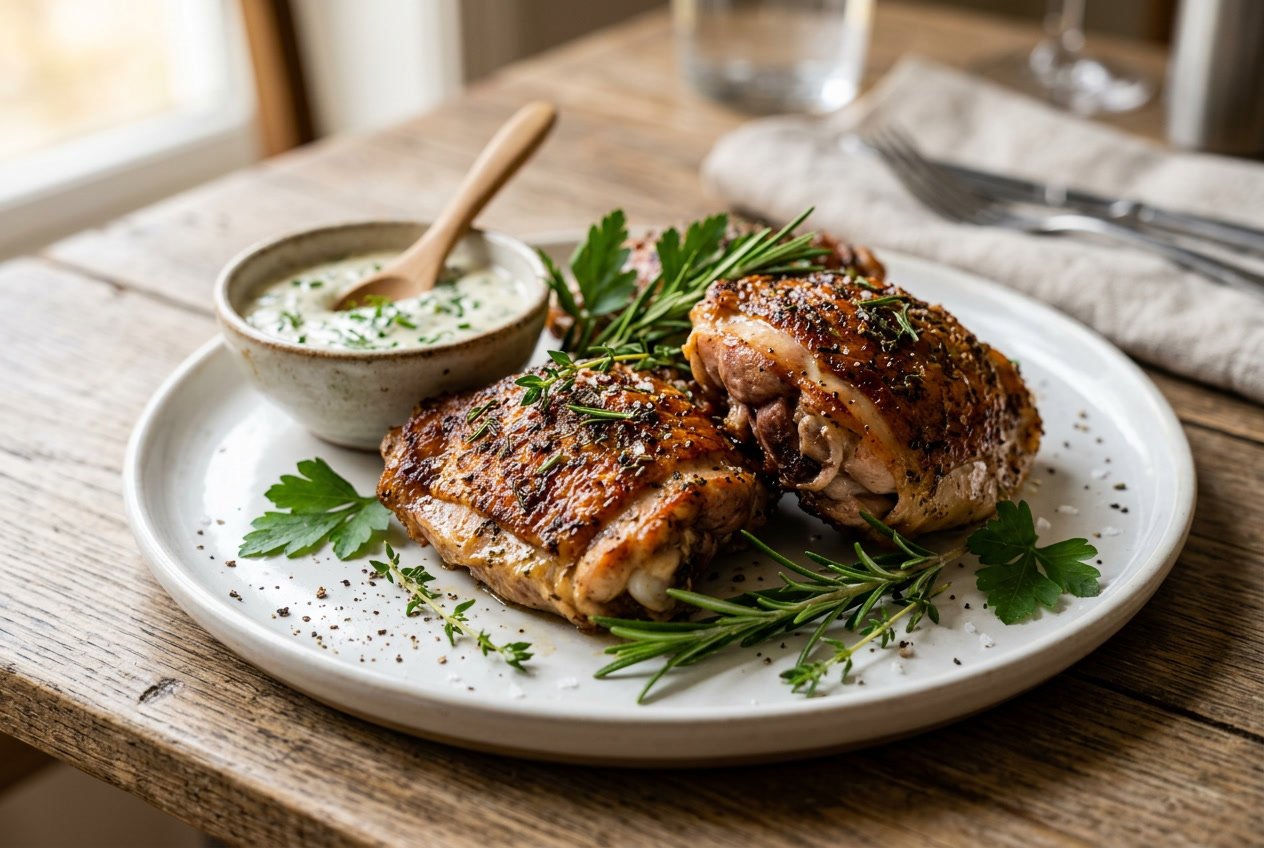
Bone-in and boneless cuts change cooking time. Oven temps and pan methods also affect results.
Find straightforward oven times, stovetop and grill guidance, and a few recipe ideas to put the temperatures into practice.
Ideal Internal Temperature for Chicken Thighs
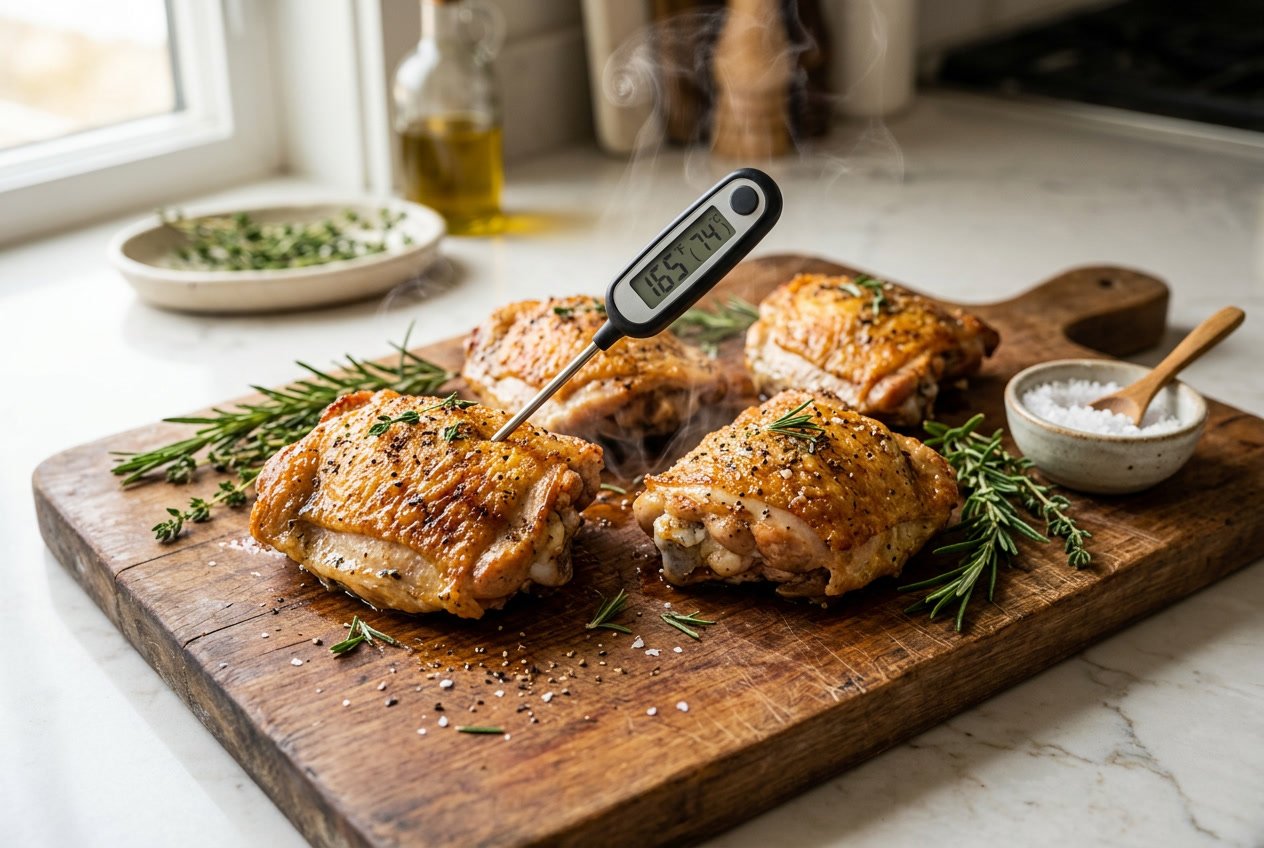
Aim for temperatures that balance safety with tenderness. Use an instant-read thermometer in the thickest part of the thigh, avoiding bone, to get accurate readings.
USDA Safety Guidelines
The USDA sets the safe internal temperature for poultry at 165°F (74°C), measured in the thickest part of the thigh away from bone.
Reaching 165°F quickly destroys harmful bacteria like Salmonella.
If you cook at lower temperatures, you must hold the meat at that temperature for a specified time to achieve the same level of pathogen reduction. Always check multiple pieces if you cook several thighs at once.
Insert an instant-read thermometer at least ¼ inch from the bone and wait until the display stabilizes.
Recommended Temperatures for Texture and Flavor
For juicier chicken thighs, many cooks prefer higher final temps than the USDA minimum.
Typical targets:
- 165°F (74°C): Safe and acceptable, meat will be fully cooked but may be firmer.
- 175–185°F (79–85°C): Often yields more tender, moist thighs as connective tissue begins to soften.
- 190–195°F (88–91°C): Produces very tender, almost falling-off-the-bone texture for dark meat. Avoid going past 210°F to prevent stringiness.
Select a target based on method. Quick roasting or pan-searing often ends near 165–175°F. Slow braising or low-and-slow roasting benefits from 180–195°F.
Rest the thighs 5–10 minutes so juices redistribute and the thermometer reading evens out.
Why Temperature Matters for Thighs
Thighs contain more collagen and connective tissue than breast meat.
As temperature rises, collagen converts to gelatin, increasing juiciness and tenderness.
Holding thighs in the 175–195°F range allows that breakdown without drying out the meat.
Texture changes gradually. Below 165°F is unsafe. Between 165–175°F, you get firm but cooked meat. Above 175°F, you get progressively softer, more succulent results.
Temperature control also affects flavor. Longer, gentler heating concentrates savory notes while maintaining moisture.
Types of Chicken Thighs and How They Affect Cooking
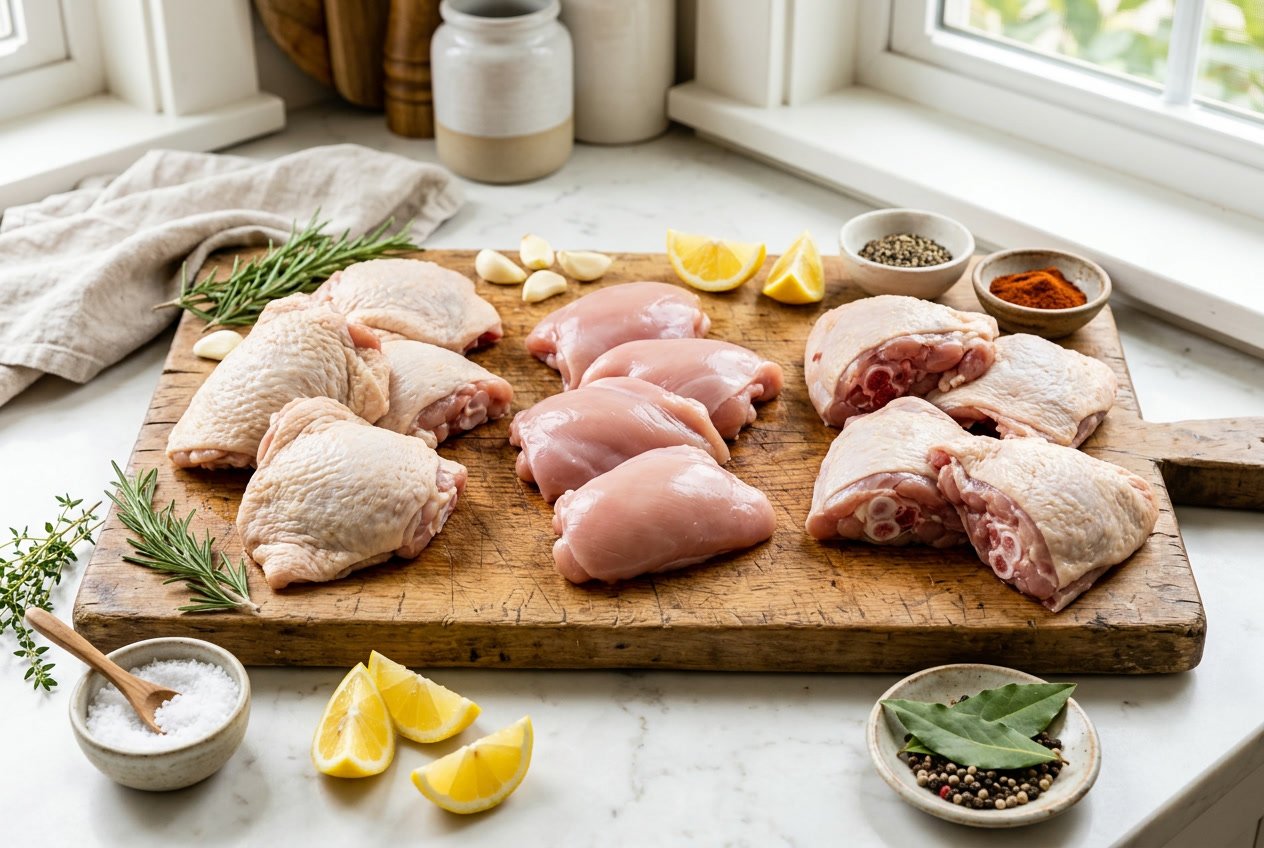
Different thigh types change cooking time, texture, and how you handle heat and seasoning.
Choose bone-in for richness and higher pull temperatures. Choose boneless for quick, even cooking. Skin variations let you control crispiness and moisture.
Bone-In, Skin-On Chicken Thighs
Bone-in, skin-on thighs hold more flavor and need longer cooking time than boneless pieces.
The bone slows heat transfer, so plan for higher target internal temperatures. Pull bone-in thighs at about 175°F–185°F to convert collagen into gelatin and get tender meat without dryness.
The skin provides a fat layer that protects the meat during high-heat methods like grilling, roasting, or pan-searing.
Pat the skin very dry, salt ahead, and render slowly. Start skin-side down in a cold pan or roast on a wire rack at 400°F to crisp the skin while the fat renders.
Expect 35–45 minutes in a 400°F oven for bone-in, skin-on thighs.
Use an instant-read thermometer and measure at the thickest part, avoiding the bone for accurate readings.
Boneless, Skinless Chicken Thighs
Boneless, skinless thighs cook fastest and heat through more evenly because they lack bone and thick skin.
Pull these at 165°F–170°F. They contain less collagen, so higher temps will dry them out.
Expect 16–25 minutes in an air fryer or oven at 400°F, and 5–7 minutes per side on a hot skillet.
Marinate or brine for 30 minutes to a few hours to add moisture and flavor since there’s no skin to seal juices.
Because they release less fat, you won’t get the same crust from dry-heat methods. Use quick sears, sauces, or finishes under the broiler to add color.
They work well for stir-fries, tacos, and quick meals where speed and easy portioning matter.
Bone-In, Skinless Chicken Thighs
Bone-in, skinless thighs sit between the other two types. They keep the flavor and heat-buffering of the bone but lack the protective skin layer.
You still need the longer cook times and higher pull temps. Aim for 175°F for tenderness, but watch the surface for dryness.
Use moist-heat methods like braises, slow cooking, or covered roasting to preserve juiciness.
If you want a browner exterior, finish under a broiler or sear briefly in a hot pan after cooking to add color without overcooking the interior.
These thighs work well for stews, curries, and dishes where the bone adds depth to the sauce.
How to Bake Chicken Thighs
Use this clear, repeatable method for baking chicken thighs to a safe internal temperature while getting crisp skin and juicy meat.
Find exact oven temperatures, timings for bone-in vs. boneless, and practical tips for texture.
Step-by-Step Baking Process
Preheat your oven and arrange a rimmed baking sheet or a shallow roasting pan.
Pat the thighs dry with paper towels, then rub with 1–2 teaspoons oil per pound and season with salt, pepper, and any spices you like.
For bone-in, skin-on thighs, place them skin-side up spaced about 1 inch apart so heat circulates.
For boneless or skinless thighs, use a single layer on a lightly oiled sheet or a wire rack set over the pan.
Insert an oven-safe thermometer probe if you have one, with the tip in the thickest part away from bone.
Bake until the thickest part reaches 165°F (74°C).
For extra crisping, finish under a high broil for 1–3 minutes, watching closely to avoid burning.
Let thighs rest 5–10 minutes before slicing to let juices redistribute.
Baking Times and Oven Temperatures
Use higher ovens for faster browning and lower for gentler cooking.
Common targets:
- 425°F (220°C): boneless thighs 20–30 minutes; bone-in skin-on 25–35 minutes.
- 375–400°F (190–205°C): bone-in 35–45 minutes for slower, even cooking.
- 350°F (175°C): 40–50 minutes if following slower roast times.
Check doneness with an instant-read thermometer: 165°F (74°C) in the thickest part.
Avoid touching bone for bone-in pieces.
If you don’t have a thermometer, cut into the thickest spot; juices should run clear and meat should be opaque.
Tips for Juicy and Crispy Baked Chicken Thighs
Dry the skin thoroughly before oiling. Moisture blocks crisping.
Use a light coating of oil and a hot oven (425–500°F) for skin-on thighs to render fat and create a golden crust.
Preheat a rimmed pan in the oven and place skin-side down onto the hot surface to speed crisping.
For juicy meat, avoid overcooking. Pull from the oven at 160–162°F and rest to reach 165°F.
Marinate or brine boneless thighs briefly (30 minutes) to add flavor and moisture.
Use a wire rack to let air circulate under the thighs, or flip once midway when cooking boneless pieces to promote even browning.
Season simply with salt and pepper, or apply a sticky glaze in the last 5–10 minutes to avoid burning.
Store leftovers in a sealed container in the refrigerator up to 4 days and reheat gently to preserve moisture.
Other Popular Cooking Methods
You can achieve crisp skin, deep sear, or fall-off-the-bone tenderness depending on method, temperature, and whether the thighs are bone-in or skin-on.
Target internal temperatures and brief resting produce the best texture and food-safety results.
How to Grill Chicken Thighs
Preheat your grill to medium-high (about 375–450°F).
Oil the grates and place bone-in, skin-on thighs skin-side down first to render fat and develop char. Grill 6–8 minutes per side depending on thickness.
Use direct heat for an initial sear, then move to indirect heat if flare-ups start or the exterior browns too quickly.
Aim for an internal temperature of 165–175°F for moist, tender meat. Check near the bone with an instant-read thermometer.
Let thighs rest 5 minutes after pulling them to let juices redistribute.
For boneless thighs, grill about 4–6 minutes per side over direct heat.
Marinate or baste during grilling for flavor, but avoid sugar-heavy sauces early to prevent burning. Add glazes in the last 2–3 minutes.
Frying and Air Fryer Techniques
Heat a heavy skillet over medium-high and add a tablespoon or two of oil.
Pat thighs dry, season, then sear skin-side down until golden (6–8 minutes). Flip, then lower heat and finish cooking until 165–175°F.
For deep-frying, keep oil at 350–375°F and fry bone-in pieces 10–12 minutes, adjusting for size.
Use a thermometer to keep oil stable. Drain on a rack to keep skin crisp.
In an air fryer, preheat to 380–400°F.
Lightly coat thighs with oil or spray and arrange skin-side up without overcrowding.
Cook 18–22 minutes for bone-in, turning once if your model requires. Adjust time for boneless (10–14 minutes).
Air fryer thighs get crisp exterior texture comparable to frying with lower oil use.
Broiling Chicken Thighs
Set the oven broiler to high and position the rack 6–8 inches from the element.
Use a rimmed sheet pan and a wire rack so air circulates and fat drains away. Broil skin-side up to prioritize crisping.
Sear under the broiler in 3–5 minute bursts, watching closely to avoid burning.
Rotate pieces for even browning.
Finish by moving the pan lower in the oven if the interior needs more time.
Target 165–175°F internal temp.
Thinner boneless thighs cook quickly—check temperature early to prevent dryness.
Braising and Slow Cooking
Brown thighs first in a hot pan to render fat and build flavor.
Transfer to a pot or slow cooker with aromatics (onion, garlic), liquid (stock, wine, or tomatoes), and herbs. The liquid should come halfway up the meat.
Simmer gently on the stovetop or cook on low in a slow cooker for 2–3 hours until meat reaches 175–205°F and connective tissue has broken down.
Finish by removing thighs from the liquid and reducing the braising sauce until it thickens. Spoon the sauce over the meat before serving.
Seasoning and Flavoring Chicken Thighs
Focus on salt, aromatics, and a balancing acid or sweet element.
Use a light hand with salt up front and adjust after cooking when needed.
Classic Spice and Herb Combinations
Start with kosher salt and freshly ground black pepper as your base.
For a simple dry rub, mix 1 tsp paprika, 1 tsp garlic powder, ½ tsp onion powder, ½ tsp dried oregano, and ¼–½ tsp black pepper per pound of thighs.
Pat thighs dry, rub evenly under and over the skin, and let sit 30–60 minutes in the fridge for better flavor penetration.
For herb-forward profiles, combine chopped fresh thyme with lemon zest, 1 tsp kosher salt, and ¼ tsp black pepper.
Rub under the skin for direct contact with the meat.
If you prefer heat, add ½ tsp smoked paprika and a pinch of cayenne.
Use baking powder (small pinch) on the skin when you want extra crispness.
Marinades and Sauces for Extra Flavor
Marinades add depth and tenderize when you use them correctly.
For an acidic marinade, combine 2 tbsp olive oil, 1 tbsp lemon juice, 1 tsp paprika, 1 tsp chopped oregano, 2 smashed garlic cloves, and ½ tsp black pepper. Marinate for 2–8 hours, but avoid more than 24 hours to prevent a mushy texture.
For a savory-sweet option, mix 3 tbsp soy sauce, 1 tbsp honey, 1 tsp grated ginger, 1 tsp sesame oil, and ½ tsp black pepper. Pat off excess marinade before searing to help browning.
If you use yogurt or buttermilk, add 1 tsp dried thyme and ½ tsp paprika to the mix. Marinate up to 8 hours to tenderize without breaking down fibers too far.
Delicious Chicken Thigh Recipes to Try
These recipes highlight how thighs handle high-heat roasting, slow braises, quick stovetop pan-sears, and bold marinades.
Family-Friendly Chicken Thigh Dishes
Choose bone-in, skin-on thighs for roast dinners that serve a crowd. The skin crisps and the bone adds flavor during roasting or braising.
Try a sheet-pan meal: toss thighs with potatoes, carrots, garlic, rosemary, salt, and pepper. Roast at 425°F until the skin is golden and the internal temperature reaches 165°F.
For quick weeknights, use boneless, skinless thighs in a one-skillet garlic-mustard or maple-soy glaze. Sear both sides over medium-high heat, then simmer the sauce 6–10 minutes until thickened and the chicken reaches 165°F.
Kid-friendly options include mild BBQ or honey-glazed thighs shredded into tacos, rice bowls, or sandwiches. These reheat well and make easy leftovers for lunches.
Healthy and Comfort Food Recipe Ideas
If you want leaner plates, choose skinless thighs and braise them in tomato or vegetable broth with onions, bell peppers, and herbs.
Simmer gently for 25–35 minutes until fork-tender and the sauce reduces. Serve over whole-grain rice or quinoa.
For comfort food, slow-cook bone-in thighs in a savory gravy with mushrooms and pearl onions.
Cook for 4–6 hours on low or braise in the oven at 325°F for 60–90 minutes. The long, low heat makes the meat tender and creates a rich sauce for mashed potatoes.
To keep calories moderate, pan-sear thighs and finish with a splash of white wine.
Stir in a few tablespoons of Greek yogurt off heat for a creamy sauce without heavy cream.


