
What Do Chicken Thighs Offer? Cooking Uses, Cuts, and Recipes
You can turn chicken thighs into a reliable weeknight winner or an impressive dinner with minimal effort. They give you juicy, forgiving meat and versatile flavor, perfect for grilling, roasting, braising, or air-frying.
You’ll spend less time rescuing dinner and more time enjoying it.
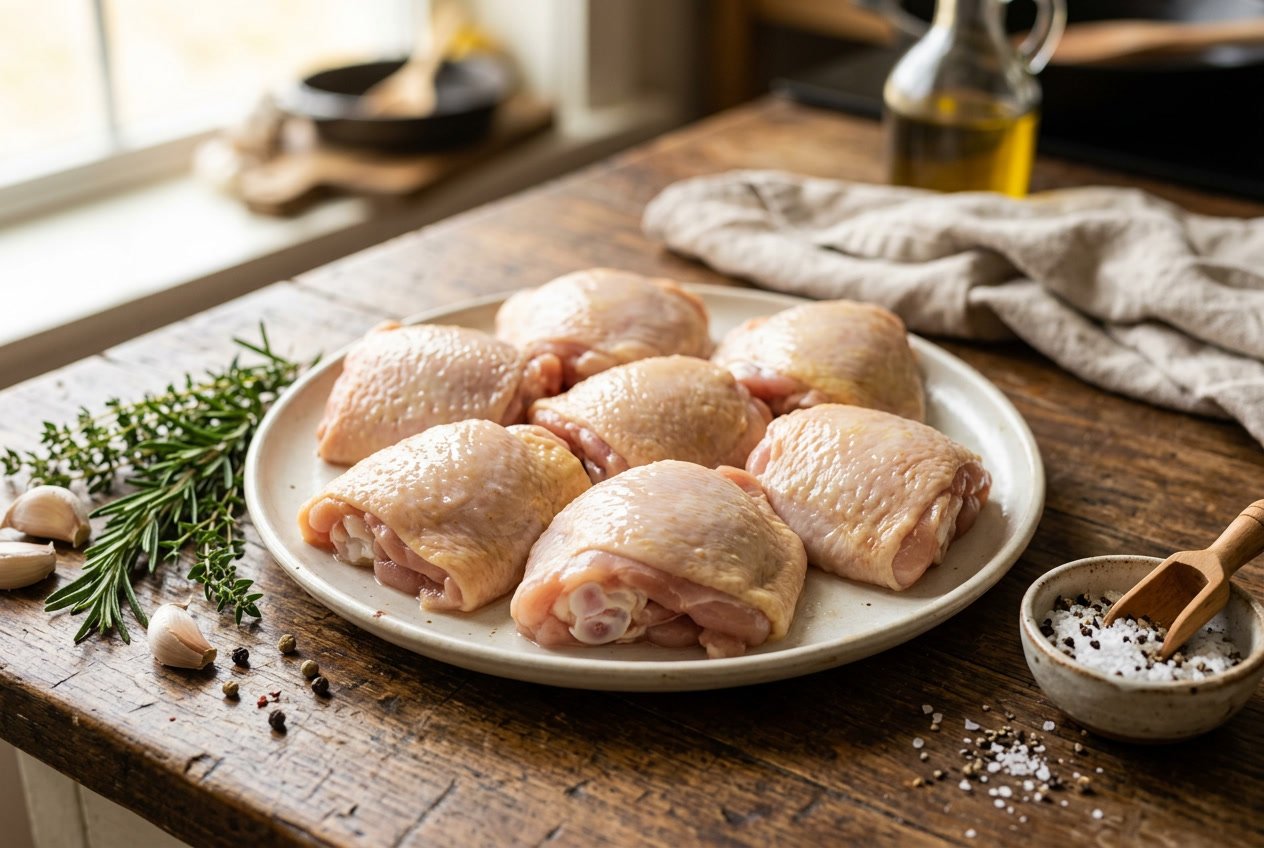
This post explains what thighs are and how the different types affect cooking. You’ll learn how to buy, prep, store, and cook them across traditional and modern appliances.
Expect practical tips on temps, crisping skin, marinades, and a few dishes you can make tonight.
What Are Chicken Thighs?
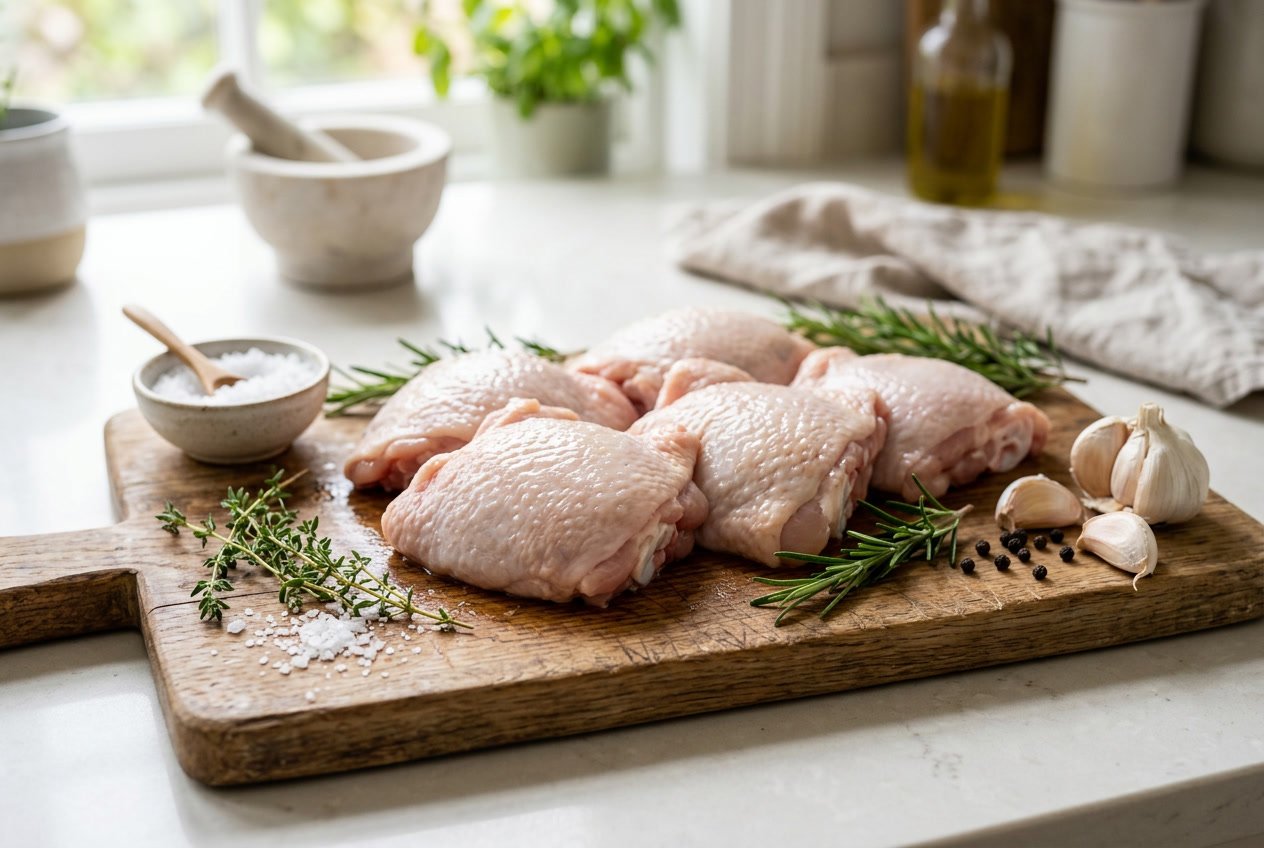
Chicken thighs are the upper part of the bird’s leg. They offer higher fat content, rich flavor, and forgiving texture.
You’ll find them sold bone-in or boneless, skin-on or skinless. They respond well to slow braises, high-heat roasting, and pan-frying.
Anatomy and Nutritional Value
The thigh sits between the chicken’s body and drumstick. It contains dark meat with more connective tissue and intramuscular fat than the breast.
That structure keeps the meat moist during cooking and makes tender chicken thighs easy to achieve with moderate heat or slow cooking.
A 3-ounce cooked, skinless thigh typically provides about 20 g protein and roughly 9 g fat. You also get iron, zinc, selenium, and B vitamins.
If you leave the skin on, calories and fat increase. Remember this when tracking intake or planning meals.
Thighs contain more myoglobin and connective tissue, so they resist drying out and offer concentrated flavor. You can trim visible fat or remove skin to reduce calories while preserving much of the meat’s juiciness.
Chicken Thighs vs. Other Cuts
Compared with breast meat, thighs have higher fat and lower carbohydrate content. This gives them a richer mouthfeel and greater tolerance for longer cooking.
Breasts cook fast and lean. Thighs tolerate higher heat and longer times without becoming rubbery or dry.
Bone-in thighs add flavor and help regulate internal temperature during roasting. Boneless, skinless thigh fillets speed cooking and are easier to cut for stir-fries or skewers.
Drumsticks are similar but denser. Wings are fattier and smaller. Breasts are milder and firmer.
For recipes that need shreddable, succulent meat—like stews, tacos, or curries—use thighs. For quick, low-fat meals that highlight subtle flavor, use breasts.
Why Choose Chicken Thighs
Choose thighs when you want reliable juiciness, stronger flavor, and a forgiving cooking margin. They stay tender if you sear, roast, braise, or grill.
Thighs are more economical per pound than many breast options. They adapt to marinades and rubs, and the skin crisps well for texture contrast.
If you want to reduce fat, pick skinless thighs or remove skin after cooking. For maximum flavor and crisp skin, use bone-in, skin-on thighs and roast at high heat.
Different Types of Chicken Thighs
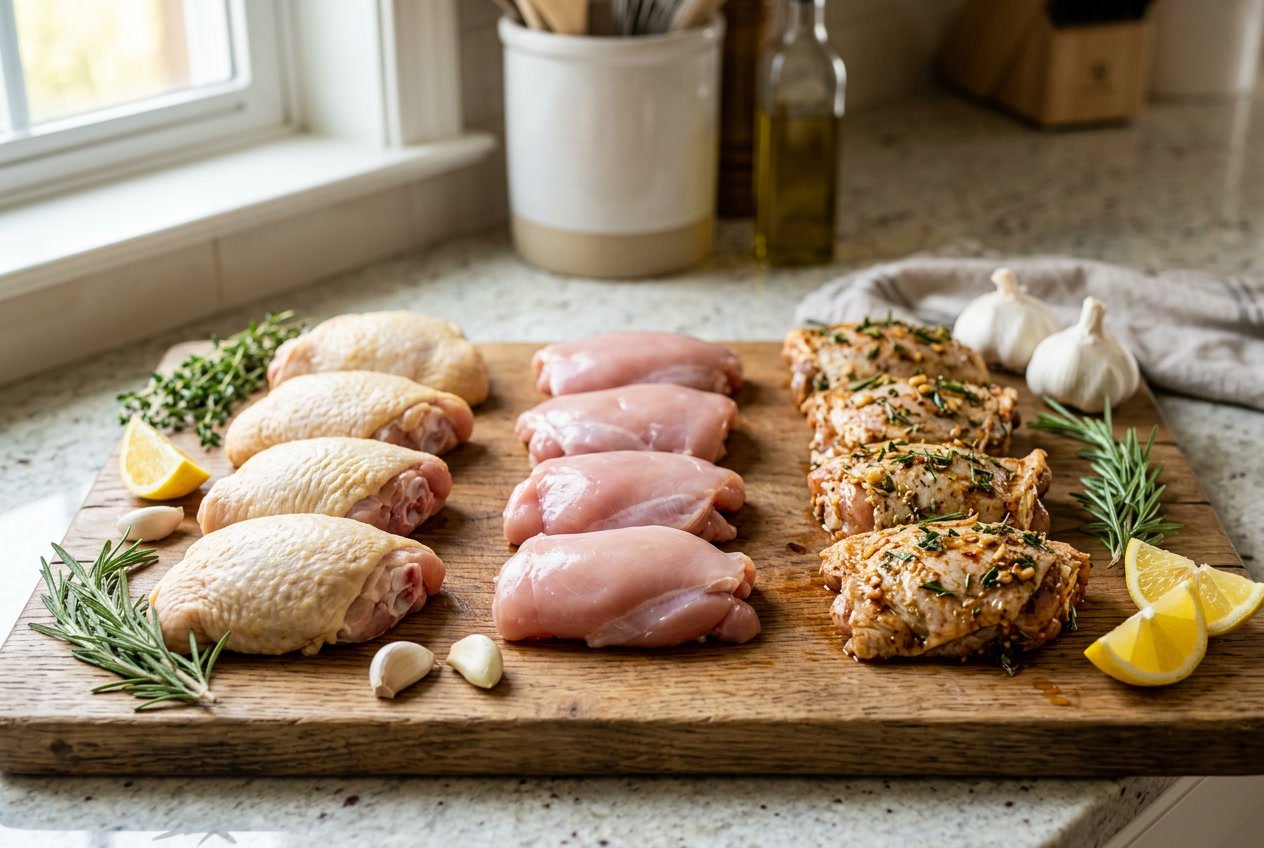
You’ll pick thighs by bone and skin depending on flavor, cooking time, and the recipe’s moisture needs. Choices include bone-in or boneless, and skin-on or skinless.
Each option affects texture, cooking method, and final taste.
Bone-In Chicken Thighs
Bone-in chicken thighs include the femur and surrounding joint tissue. The bone slows heat transfer, so these thighs take a bit longer to reach safe internal temperature but stay juicier during roasting or braising.
You get more flavor from bone-in thighs because marrow and connective tissue release gelatin as they cook. Use them for long braises, slow-roasted dishes, or confit for tender, saucy results.
Roast bone-in thighs at 400–425°F and finish skin-side up for crisp skin and tender meat. For stews, sear first to brown the exterior, then simmer low and slow to extract richness.
Boneless Chicken Thighs
Boneless chicken thighs have the bone removed; they may still have skin. They cook faster and are easier to portion and shred for tacos, stir-fries, and sandwiches.
Boneless thighs can overcook and dry if left unattended because they lack the bone’s insulation. Treat them like steaks: high-heat sear followed by a brief finish, or quick braises and sautés to retain moisture.
Use boneless thighs when you need uniform pieces for skewers or when shredding is required for salads, tacos, or casseroles. They shrink less unpredictably than breasts, giving you reliable yield per package.
Skin-On vs. Skinless Chicken Thighs
Skin-on thighs deliver the most flavor and texture because the skin renders fat and crisps under high heat. Choose skin-on when you plan to roast, grill, or pan-sear for maximum browning and mouthfeel.
Skinless thighs cut fat and calories and work best in wet preparations like curries, stews, or braises where crispness isn’t needed. They also absorb marinades faster, so flavors penetrate more quickly.
Use skin-on for dry-heat methods like roasting, broiling, or grilling to get a crisp, savory crust. Use skinless for quick sautés, slow-cooker meals, or whenever you want a leaner plate.
Buying, Prepping, and Storing Chicken Thighs
Choose thighs with fresh color, firm texture, and intact packaging. Plan storage and prep so you use them within safe timeframes and avoid cross-contamination.
How to Select the Best Chicken Thighs
Look for thighs that are pinkish without gray or green tints and that smell neutral. If buying packaged meat, check the sell-by date and avoid swollen or torn wrap.
Decide between bone-in and boneless by recipe. Bone-in keeps moisture and adds flavor for braises and roasting. Boneless cooks faster for stir-fries and pan-searing.
When possible, buy thighs with minimal liquid pooled in the tray. Excess liquid indicates older meat or temperature fluctuation.
If you buy in bulk, portion into meal-sized packs before refrigerating. Choose organic or pasture-raised if you prefer specific farming practices.
Preparation Methods
Trim excess fat and remove any remaining pin bones to prevent uneven cooking. Pat thighs dry with paper towels to improve browning.
Season or marinate on the dry surface so flavors adhere. For quick weeknight cooking, use boneless thighs: pan-sear 4–6 minutes per side over high heat until internal temp reaches 165°F (74°C).
For slow, tender results, braise bone-in thighs at low simmer for 35–45 minutes or roast at 400°F (200°C) for 30–40 minutes depending on size.
When marinating, keep raw thighs refrigerated and marinate no longer than 48 hours. Use a meat thermometer to confirm doneness.
Let cooked thighs rest 5–10 minutes before serving to retain juices.
Storage and Food Safety Tips
Refrigerate raw chicken thighs at or below 40°F (4°C) and use within 1–2 days. Store them on the lowest shelf in a sealed container or leak-proof bag to prevent juices from contacting other foods.
Cooked thighs last 3–4 days in airtight containers in the fridge. Label containers with the date to track storage time.
For long-term storage, freeze raw or cooked thighs. Wrap tightly and use within 6–9 months for best quality.
When thawing, move frozen thighs to the fridge overnight or use cold-water thawing in a sealed bag, changing water every 30 minutes if you need to speed it up.
Avoid leaving chicken at room temperature more than 2 hours (1 hour above 90°F/32°C). Discard any thighs that develop a sour smell, sticky or slimy texture, or discoloration.
How to Cook Chicken Thighs
Choose bone-in, skin-on thighs for maximum flavor and moisture. Use boneless skinless for faster, leaner meals.
Aim for a crisp skin and an internal temperature between 165°F and 175–185°F depending on texture preference.
Baking Chicken Thighs
Preheat the oven to 400°F for a balance of crisp skin and juicy meat. Pat thighs dry, season generously, and place skin-side up on a rimmed baking sheet or a shallow roasting pan.
Bake time depends on cut and oven: bone-in, skin-on usually takes 30–40 minutes; boneless thighs take 20–30 minutes. Insert an instant-read thermometer into the thickest part without touching bone; remove at 165°F and let rest 5–10 minutes.
For extra-crispy skin, finish under the broiler for 1–3 minutes, watching closely. Brush with oil or a thin glaze (olive oil, honey, or soy-based) before baking for added flavor.
Arrange thighs with space between pieces so hot air circulates and skin crisps evenly.
Grilling and Roasting Techniques
Preheat the grill to medium-high (about 400°F) and oil the grates to prevent sticking. Sear bone-in thighs skin-side over direct heat for 3–4 minutes to render fat, then move to indirect heat and cook covered until 165–175°F (about 20–30 minutes total).
Use two-zone cooking for roasted-style results on a charcoal or gas grill: high heat for initial sear, lower heat to finish. Flip once or twice and let the meat rest 5–10 minutes before serving so juices redistribute.
If using a spit or rotisserie, tie thighs loosely and roast until 175°F for tender connective tissue breakdown. Brush barbecue sauce in the last 5 minutes to avoid burning the sugars.
Stovetop and Pan-Roasting Methods
Use a heavy skillet (cast iron preferred) and heat to medium-high. Season and dry skin, add a tablespoon of high-smoke oil, and place thighs skin-side down.
Sear without moving for 6–8 minutes until deep golden and fat renders. After searing, reduce heat to medium and cook skin-side up for a few minutes.
Transfer the pan to a 375°F oven to finish if they’re bone-in (10–20 minutes). For boneless thighs, continue on the stovetop over medium-low, covered, for 8–12 minutes until 165°F.
Deglaze the pan with stock, wine, or lemon and finish with butter and herbs for a quick pan sauce. Rest the thighs 5 minutes before slicing.
Chicken Thighs in Modern Appliances
Appliances change how you approach temperature, time, and texture. Use high, dry heat for crisp skin; use pressure or low, moist heat for shreddable tenderness.
Air Fryer Chicken Thighs
The air fryer crisps skin quickly while keeping meat juicy. Pat thighs dry, season well, and arrange skin-side up without overlapping.
Cook at 400°F: boneless 16–20 minutes, bone-in 22–28 minutes, flipping once halfway for even browning. Use a light coating of oil or a sprinkle of baking powder in the rub to boost browning and extra-crispy skin.
Avoid overcrowding and work in batches if needed. If skin softens after storage, re-crisp under the air fryer for 3–6 minutes at 400°F.
Quick tips:
- Preheat 3–5 minutes for consistent results.
- Spray basket lightly to prevent sticking.
- Internal temps: 165°F for boneless, 175°F for juicier bone-in.
Instant Pot and Slow Cooker Recipes
Use the Instant Pot for fast fall-apart thighs—cook bone-in for 10–12 minutes at high pressure with a natural release for tender meat. Add a cup of liquid (broth, soy-based adobo sauce) to prevent burning and flavor the meat.
Slow cooker recipes run 3–4 hours on high or 6–7 hours on low for shreddable results. Bone-in slow-cooked thighs develop deep flavor but will not have crispy skin.
Finish under a broiler or in a hot pan for 3–4 minutes if you want texture. For instant pot chicken adobo, brown thighs first in the pot’s sauté mode, add vinegar-soy aromatics, then pressure-cook to concentrate sauce and tenderize meat.
Practical notes:
- Always include sufficient liquid in sealed appliances.
- Use internal temp and texture, not time alone, to decide doneness.
- Reserve some sauce before thickening to adjust seasoning after cooking.
Flavoring and Marinating Chicken Thighs
Choose bold, balanced flavors and the right technique so your thighs stay juicy and develop a crisp exterior when cooked. Focus on salt, aromatics, and a binding agent like oil or sugar to carry seasonings into the meat.
Popular Seasonings and Rubs
Start with salt as your base. Kosher salt or a soy-salt blend helps the meat retain moisture and flavor.
Build layers with garlic powder or fresh minced garlic for a classic garlic chicken thighs profile. Add black pepper, smoked paprika, and a touch of cumin for warmth and color.
For a sweeter finish, mix brown sugar or honey with the dry rub. This combination creates honey garlic chicken thighs when paired with garlic and soy.
For Mediterranean notes, use oregano, thyme, and lemon zest. Press the rub into the skin so it adheres.
Let the seasoned thighs rest 20–30 minutes at room temperature or refrigerate up to overnight for deeper flavor.
Try a simple rub:
- 1 tsp kosher salt per pound
- 1 tsp smoked paprika
- 1/2 tsp black pepper
- 1 tsp garlic powder
- 1 tbsp brown sugar or honey (optional)
Pat the skin dry before applying the rub. This step maximizes crisping during roasting or grilling.
How to Marinate Chicken Thighs
Choose an acidic element like lemon juice or vinegar, or an enzymatic one such as pineapple or papaya to tenderize. Balance it with oil and salt or soy sauce.
For a brine-like effect, add soy sauce or 1–2 tsp kosher salt per cup of liquid. This way, the marinade both flavors and seasons the meat.
Puree fresh aromatics like onion, garlic, and herbs, then combine with oil, an acid, and a sweetener such as honey or maple syrup if you want caramelization. Marinate boneless chicken thighs in the refrigerator for 1–2 hours. Bone-in pieces can sit up to 6 hours.
If you plan to marinate for longer than 4 hours with salt present, reduce or omit added salt to avoid over-salting. Always discard used marinade or boil it for at least 5 minutes before using it as a sauce.
Pat thighs dry before cooking to promote browning. Reserve a small portion of fresh marinade (set aside before adding raw meat) if you want to baste or serve as a sauce.
Popular Chicken Thigh Dishes
Chicken thighs work well in quick sheet-pan dinners and slow-braised classics. They also shine in worldwide recipes that layer bold sauces over rice or potatoes.
The meat stays juicy and forgiving, holding up to long cooking, strong spices, and one-pan convenience.
Sheet-Pan and One-Pot Dinners
Sheet-pan dinners turn bone-in, skin-on thighs into a hands-off, crispy-skinned meal with roasted vegetables. Arrange thighs skin-side up with quartered potatoes, carrots, or Brussels sprouts.
Brush with oil and a simple spice rub, then roast at high heat so the skin crisps while the vegetables brown. Swap flavors easily by using lemon-rosemary for a Mediterranean vibe or smoked paprika and garlic for smoky depth.
One-pot and slow-cooker methods suit braised chicken thighs and stews. Brown thighs first for color, then simmer in a sauce such as tomato for chicken cacciatore or coconut curry for chicken curry.
A bourbon-tinged glaze adds a sticky finish. These techniques make easy weeknight dinners and keep clean-up minimal.
Global Chicken Thigh Recipes
Thighs absorb bold international flavors and stay tender after long simmers. Make Philippine chicken adobo by braising thighs in vinegar, soy, garlic, and bay leaf.
Serve with rice for a classic pairing. Try Indian chicken biryani by layering marinated thighs with parboiled basmati and slow-steaming for aromatic, layered rice.
East Asian options include gochujang chicken with a spicy-sweet Korean glaze. Japanese chicken and egg rice bowl (oyakodon-style) uses simmered thighs with dashi, soy, and eggs.
Caribbean brown stew chicken benefits from deep browning and allspice for a fragrant, hearty plate. Each regional method highlights the thighs’ fat and connective tissue, which break down into rich sauce and tender meat.
Casseroles and Comfort Classics
Turn shredded or chopped thighs into make-ahead comfort food. Use cooked, shredded thighs in chicken enchilada casserole with layered tortillas and sauce.
Fold them into a creamy chicken and dumplings base for a stick-to-your-ribs meal. For stovetop comfort, simmer thighs in a savory gravy with mushrooms and onions to make smothered chicken or chicken stroganoff.
Baked dishes like a cheesy chicken casserole benefit from thighs’ forgiving texture. They stay moist during baking.
When a recipe needs slow, moist cooking, use thigh meat for braised chicken or brown stew chicken. Thigh meat stays tender and reheats well for leftovers.


