
What Causes Chicken Skin on Thighs: Comprehensive Guide
You might see small, rough bumps on your thighs that look like “chicken skin” because excess keratin plugs hair follicles. That buildup—not an infection—is the main cause.
Keratosis pilaris is a common, harmless condition that happens when keratin clogs follicles. It produces flesh-colored, red, or white bumps and a sandpaper-like texture.
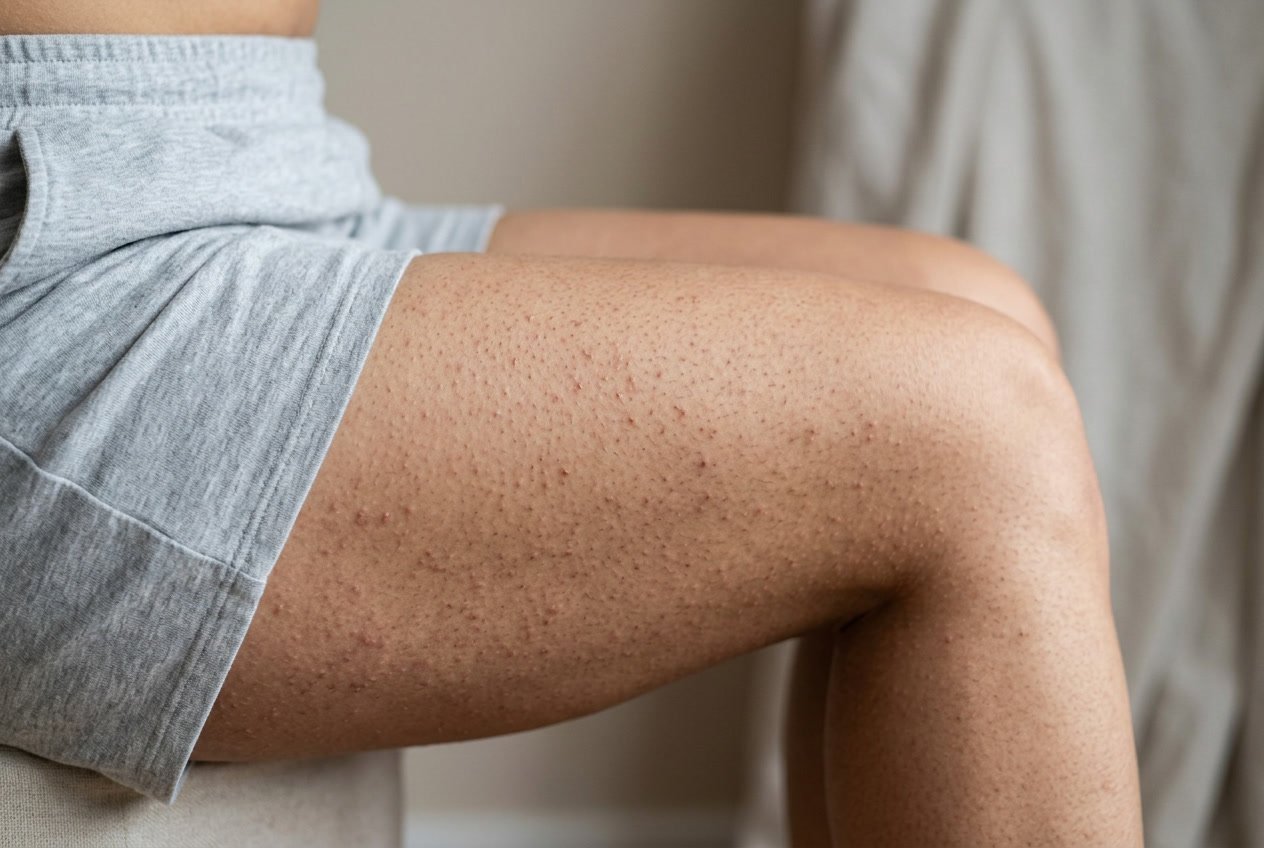
Genetics, skin barrier issues, dry weather, and conditions like eczema can trigger these bumps. Some signs mean you can try home care, while others indicate you should seek medical treatment.
You can use practical treatments, prescription options, and lifestyle steps to reduce flare-ups and improve skin texture.
Understanding Chicken Skin on Thighs
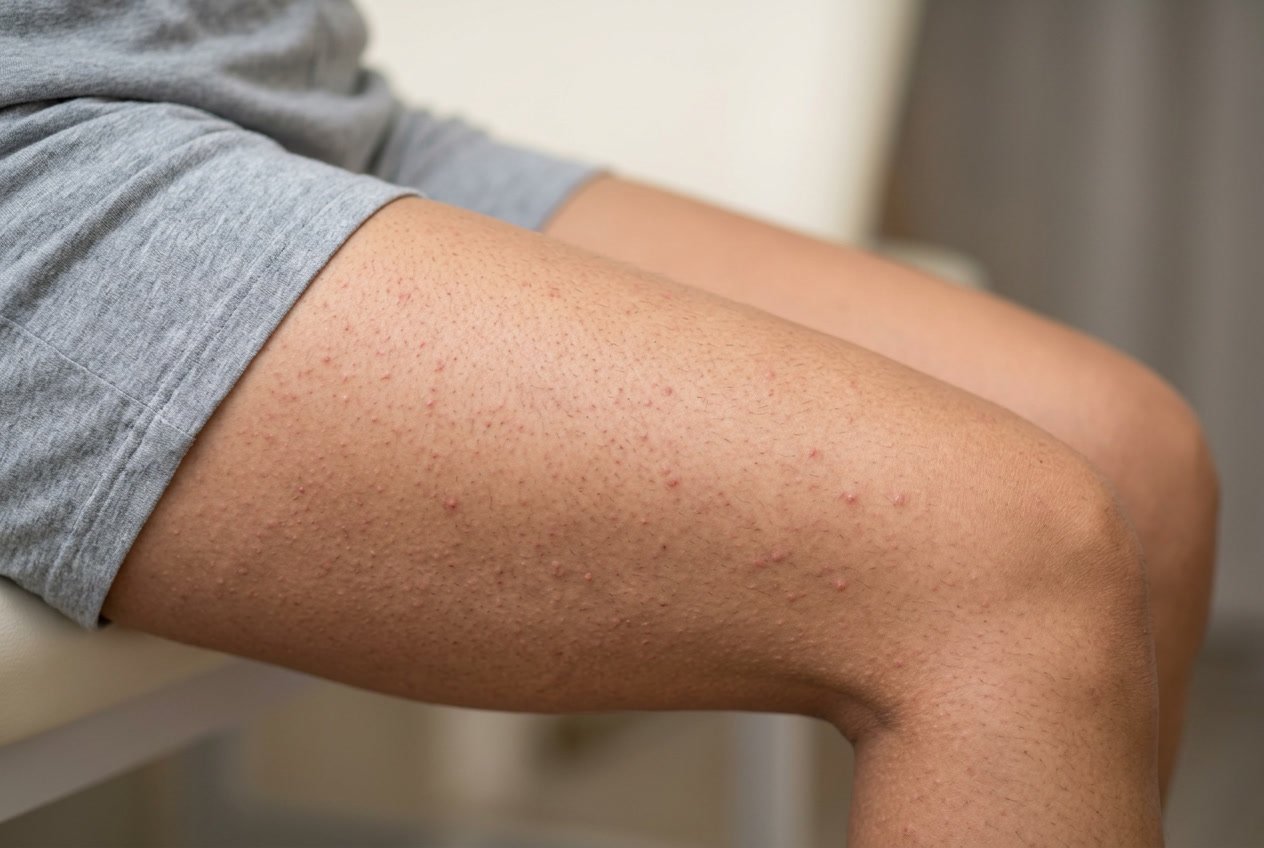
Keratosis pilaris forms on your thighs when excess keratin plugs hair follicles. You can distinguish it from other skin problems by looking for clear signs and differences when you inspect your skin.
What Is Keratosis Pilaris
Keratosis pilaris is a benign skin condition. Excess keratin plugs hair follicles.
Keratin normally protects skin and forms hair and nails. When it builds up at follicle openings, it creates tiny, firm bumps.
These bumps are often flesh-colored, red, or brown depending on your skin tone. They typically feel rough, like sandpaper, and may be mildly itchy.
KP is strongly linked to genetics and commonly occurs with atopic dermatitis. It often flares in dry climates or during winter when skin moisture drops.
How Chicken Skin Appears on Thighs
On the thighs, KP appears as clusters of small, raised bumps concentrated around hair follicles. You’ll often see them on the outer and front thighs, and they can spread to the buttocks or lower legs.
The bumps can resemble goosebumps, acne, or folliculitis, but they stay consistent in size and don’t develop pus. Pressing a bump won’t usually release material because the problem is a keratin plug.
Affected areas may show patchy roughness and sometimes mild redness or post-inflammatory darkening. The texture and pattern—grouped around hairs and not on palms or soles—help confirm it’s KP.
Common Skin Condition vs. Other Skin Issues
You can distinguish KP from acne, folliculitis, or keratinization disorders by pattern, symptoms, and history. Acne tends to have larger inflamed lesions and comedones, while folliculitis shows tenderness and pustules.
Key signs pointing to KP include tiny uniform bumps at follicle openings, a rough sandpaper texture, minimal pain, and a family history of similar skin. A dermatologist uses a visual exam and, rarely, a skin biopsy to rule out other causes.
If bumps itch intensely, ooze, or rapidly worsen, seek medical evaluation to exclude infection or allergic dermatitis. For typical KP, use noninvasive care such as moisturizers, keratolytics, and gentle exfoliation.
Main Causes of Chicken Skin on Thighs
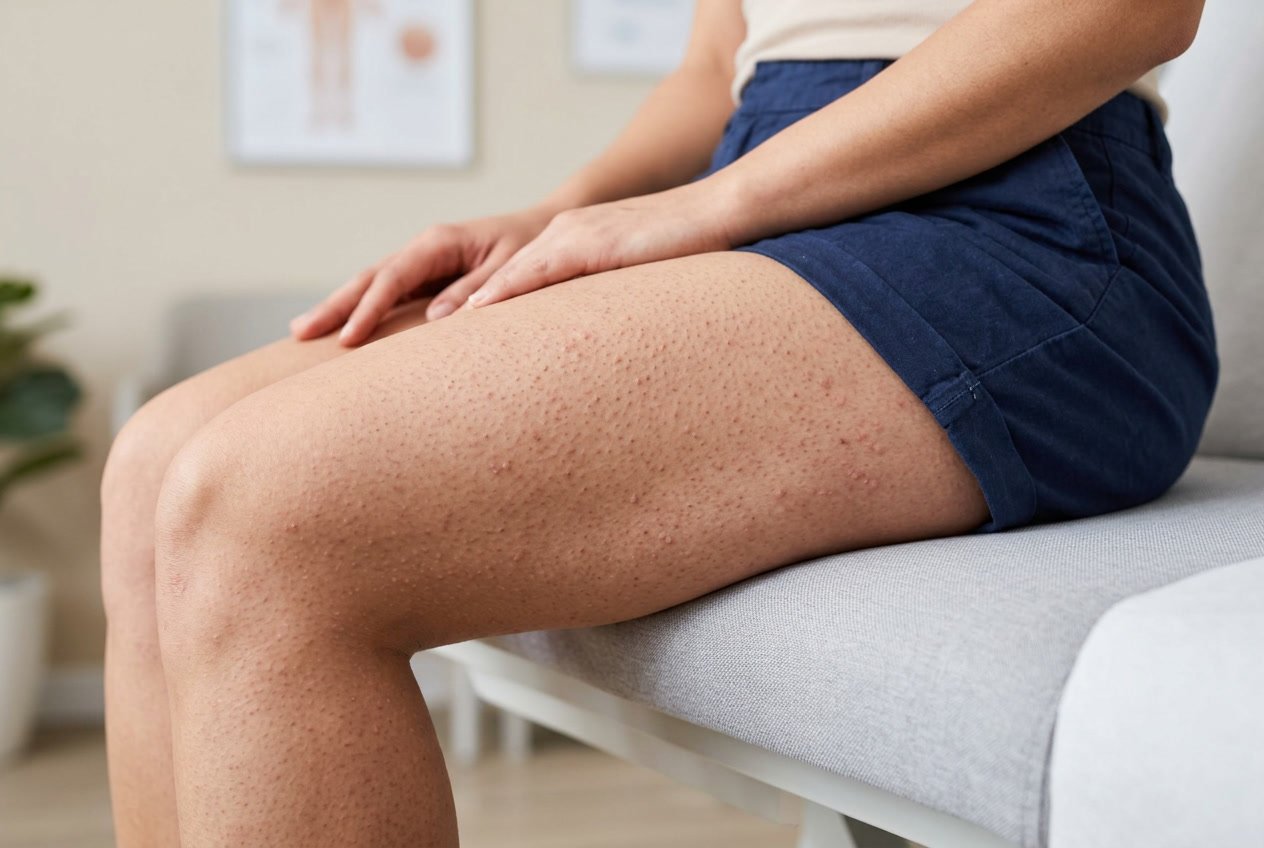
You’ll most often see small, rough bumps on the front and outer thighs where hair follicles exist. The main causes are a buildup of keratin in follicles, inherited tendencies, and skin dryness.
Keratin Buildup in Hair Follicles
Keratin, a normal structural protein in skin and hair, can accumulate inside hair follicles on your thighs and block the follicle opening. When keratin plugs the follicle, a tiny bump forms over the hair shaft.
This process is the core mechanism of keratosis pilaris. The bumps often feel like sandpaper and can be flesh-colored, red, or darker depending on your skin tone.
Topical exfoliants such as alpha hydroxy acids, urea, or mild retinoids target this excess keratin to help clear plugs. Results take weeks and require regular use.
Avoid aggressive picking, which increases inflammation and scar risk.
Genetic and Family Factors
Your genes strongly influence whether keratin will clog your follicles. Keratosis pilaris runs in families, so if a parent or sibling has the condition, your risk rises.
Several inherited skin differences, such as ichthyosis vulgaris, often coexist with KP and increase dryness and scaling. You may also have a personal history of atopic conditions.
Eczema and hay fever commonly appear alongside keratosis pilaris, suggesting shared genetic and immune-related pathways. Knowing your family and medical history helps your clinician choose treatments that address both KP and any underlying atopic skin issues.
Dry Skin’s Role
Dry skin makes keratin plugs more likely and worsens the visible roughness on your thighs. Low humidity, hot showers, harsh soaps, and certain fabrics strip oils and reduce barrier function.
Using gentle, fragrance-free cleansers and daily moisturizers with humectants or keratolytics helps restore hydration and loosen plugs. A humidifier in dry months and avoiding long, hot baths will also reduce flare-ups.
If you have eczema or ichthyosis vulgaris, treating those conditions improves skin moisture and often reduces KP severity.
Other Contributing Factors
These factors can make the bumps on your thighs more noticeable or persistent by changing skin texture, oil production, or moisture levels. They often interact with each other, so addressing one can help reduce the others’ impact.
Hormonal and Age-Related Changes
Hormonal shifts alter skin cell turnover and keratin production, which can worsen follicle plugging. During puberty, increased hormones stimulate oil glands and change keratinization.
Pregnancy causes hormonal fluctuations that can change skin barrier function and hydration. You might see KP flare during or after pregnancy.
Age influences KP too. Many people find the condition improves after their teenage years, but some adults keep patches into their 30s or later.
If you have a family history, genetic factors combined with age-related skin thinning or slower cell turnover can keep the bumps visible longer.
Environmental and Seasonal Effects
Cold weather and dry indoor heating remove moisture from your skin, making the rough bumps on your thighs stand out. In winter or in dry climates, the top layer of skin becomes dehydrated.
Low humidity outdoors and air conditioning indoors both contribute to flares by reducing skin barrier function. If you live somewhere with prolonged dry seasons, you’ll likely need more frequent moisturization and humidification.
Sun exposure and harsh soaps can strip oils and worsen dryness. Use gentler cleansers and routine use of a humectant or emollient, especially after warm showers, to help maintain smoother thigh skin.
Recognizing Symptoms and Variants
You’ll notice a few consistent signs when chicken skin appears on your thighs: small, rough bumps clustered where hair follicles sit, often with dry or slightly discolored surrounding skin. The look and severity vary by skin tone and related conditions.
How to Identify Keratosis Pilaris on Thighs
Look for tiny, raised bumps that feel like sandpaper when you run your hand over the thigh. Bumps are usually flesh-colored, white, pink, red, or brown depending on your skin tone.
They rarely contain pus and don’t form large nodules. Check the distribution: KP typically appears in patches along the outer and back thighs where hair follicles are present.
The skin around the bumps may be dry and slightly darker. Avoid squeezing; manipulation can cause irritation, scarring, or darker spots.
You can use gentle exfoliation and moisturizers with lactic acid or urea to test if softening and smoothing occur over weeks. If bumps persist, itch intensely, or show signs of infection, seek a dermatologist for confirmation.
Commonly Affected Groups
KP commonly starts in childhood or adolescence and often improves by your 20s or 30s. You’re more likely to have it if you have a personal or family history of dry skin conditions.
People with atopic tendencies—those who have atopic dermatitis, eczema, or hay fever—see KP more often. Those with ichthyosis vulgaris also report clustered follicular bumps because of genetic keratin and skin barrier differences.
Hormonal changes during puberty or pregnancy can trigger flares. Environmental factors influence who’s affected.
Dry winter air and hot showers worsen texture, so if your thighs flare seasonally, that pattern points toward KP rather than isolated infections.
Related Conditions and Skin Disorders
Differentiate KP from folliculitis, acne, or goosebumps by noting persistent, noninfectious bumps that lack central pus. Folliculitis tends to be painful or pustular, while acne often involves deeper comedones.
Consider erythromelanosis follicularis faciei et colli if you have reddish-brown follicular pigmentation on the face and neck in addition to thigh bumps. Atopic dermatitis and eczema commonly cause widespread dry, itchy patches.
If your thigh bumps sit within broader eczematous skin, treatment priorities shift to barrier repair. Ichthyosis vulgaris produces generalized scaling plus follicular prominence.
If you have widespread scale and family history of dry, rough skin, mention it to your clinician. A dermatologist can use clinical exam and history to distinguish these conditions and recommend targeted therapies.
Effective Treatments for Chicken Skin on Thighs
You can reduce bumps and rough texture by using targeted topical products and regular, gentle exfoliation. Focus on ingredients that loosen keratin plugs and lock in moisture, and avoid harsh scrubbing.
Topical Treatments and Moisturizers
Use moisturizers with lactic acid, urea, or glycerin to soften plugs and hydrate the skin. Apply cream or lotion to damp skin after showering to seal in moisture.
Repeat once or twice daily as needed. Look for over-the-counter products labeled for keratosis pilaris or dryness containing 5–12% lactic acid or 10% urea.
These concentrations help break down keratin without prescription-strength irritation. If OTC options fail, a prescription retinoid such as tretinoin or adapalene can normalize follicular skin turnover.
Use retinoids sparingly at first and combine with a gentle, non-irritating moisturizer to prevent peeling. Avoid heavy fragrances and alcohol-based lotions that dry the skin.
A mild cleanser and regular use of an emollient body lotion will support other treatments and reduce visible redness.
Chemical and Physical Exfoliation
Choose chemical exfoliants such as glycolic or lactic acid, and salicylic acid to dissolve dead skin and clear hair follicles. Start once every other day or two to three times weekly.
Increase frequency only if your skin tolerates it. Glycolic and lactic acid work well for surface buildup and hydration, while salicylic acid penetrates follicles and reduces oil-related clogging.
Use physical exfoliation very gently. A soft body scrub or a washcloth can remove loose scale, but avoid vigorous scrubbing or loofahs that cause irritation and darkening.
Combine approaches: apply a chemical exfoliant product, then follow with a moisturizer. Monitor for redness or increased sensitivity and pause treatment if irritation occurs.
Prescription and Advanced Medical Interventions
You can pursue prescription topical treatments to reduce follicle plugging. In-office procedures can resurface the skin or reduce redness.
Both approaches require dermatologist guidance and realistic expectations about improvement and maintenance.
Topical Retinoids and Prescription Creams
Topical retinoids work by increasing cell turnover to prevent keratin from clogging hair follicles. Common prescription options include tretinoin, tazarotene, and adapalene.
Over-the-counter retinol is a milder alternative but acts more slowly. Expect skin irritation such as redness, peeling, or increased sensitivity, especially during the first weeks.
Your dermatologist will advise a low-frequency start and a bland moisturizer to reduce dryness. Pregnant or breastfeeding people should avoid certain retinoids; always confirm safety with your provider.
Other prescription creams your dermatologist may recommend include urea or lactic acid formulations at higher concentrations than OTC products. These combine mild chemical exfoliation with hydration and can be used alongside retinoids if tolerated.
If a product causes persistent irritation, stop use and contact your clinician for an adjusted regimen.
Professional Treatments
Dermatologists use in-office procedures to target texture, pigmentation, and inflammation when topical care is not enough. Fractional CO2 laser and other ablative or nonablative lasers improve skin texture by promoting collagen remodeling and reducing bumps.
You usually need multiple sessions spaced weeks apart for best results. Chemical peels use controlled acid solutions like glycolic, lactic, or salicylic acid at stronger concentrations to remove superficial layers and reduce plugging.
Doctors often use light to medium peels for keratosis pilaris on thighs. You may experience temporary redness, flaking, and brief downtime depending on peel depth.
Lasers and peels carry risks such as hyperpigmentation, scarring, or prolonged redness, especially on darker skin tones. Choose a dermatologist who has experience with these treatments and can recommend the right device or peel strength for your skin type.
The dermatologist will outline a pre- and post-procedure care plan to lower the chance of complications.
Lifestyle and Prevention Strategies
Focus on daily skin care and small environmental changes to reduce follicle blockage and keep thigh skin hydrated. Use consistent topical treatments and simple habits to help prevent flare-ups.
Skincare Best Practices
Start with gentle cleansing. Use a mild, fragrance-free cleanser and avoid harsh soaps that strip oils and worsen dryness.
Limit showers to warm, short ones. Pat skin dry instead of rubbing.
Apply a keratolytic or exfoliating topical treatment two to three times weekly. Look for products with lactic acid, glycolic acid, or salicylic acid to loosen trapped keratin.
If you have sensitive skin, try a lower concentration or alternate nights with a humectant-containing moisturizer. Use a moisturizer daily, ideally one labeled for dry or keratosis-prone skin.
Choose formulas with urea or lactic acid for both hydration and mild exfoliation. Apply moisturizer while skin is slightly damp to lock in moisture.
Reapply after prolonged sun or heat exposure.
Environmental and Lifestyle Modifications
Use a humidifier during dry months to control indoor humidity. Aim for 40–50% relative humidity to prevent skin from drying out.
Clean bedroom and bathroom humidifiers regularly to prevent mold or bacterial growth.
Choose gentle physical exfoliation if needed, using a soft washcloth or mitt sparingly. Avoid abrasive scrubbing.
Try not to shave or wax on areas with active flare-ups. Consider laser hair removal if hair irritation frequently causes bumps.
Wear breathable fabrics like cotton or moisture-wicking blends to reduce friction and sweat buildup on thighs.
When choosing products, avoid those with heavy fragrances or alcohol that can dry skin. Select emollients and humectants to help maintain skin barrier function.


