
What Can Make With Chicken Thighs: Ultimate Cooking Guide & Recipes
You can turn chicken thighs into dozens of reliable weeknight meals. Quick pan-seared dinners, sheet-pan combos, slow-braised stews, and bold global dishes all work well because chicken thighs stay juicy, take on strong flavors, and tolerate high-heat and long-simmer methods.
Use bone-in, skin-on thighs for maximum flavor and crisp skin. Boneless, skinless thighs work when you need speed and easy shredding.
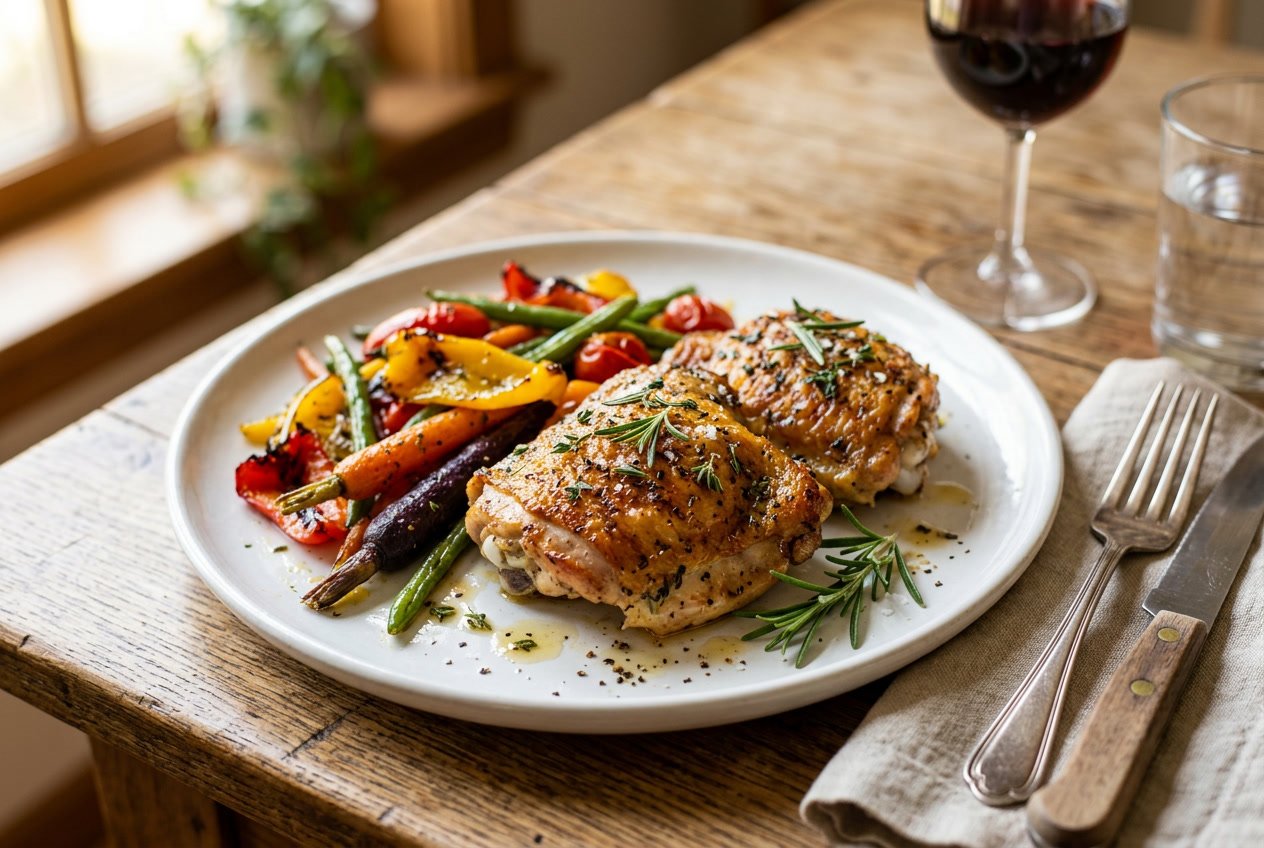
This guide helps you choose the right thigh, learn essential techniques, and discover time-saving recipes. Get practical tips for consistently excellent results.
You’ll find straightforward methods that fit busy schedules and a variety of classic and international recipes.
Types of Chicken Thighs and Preparation Methods
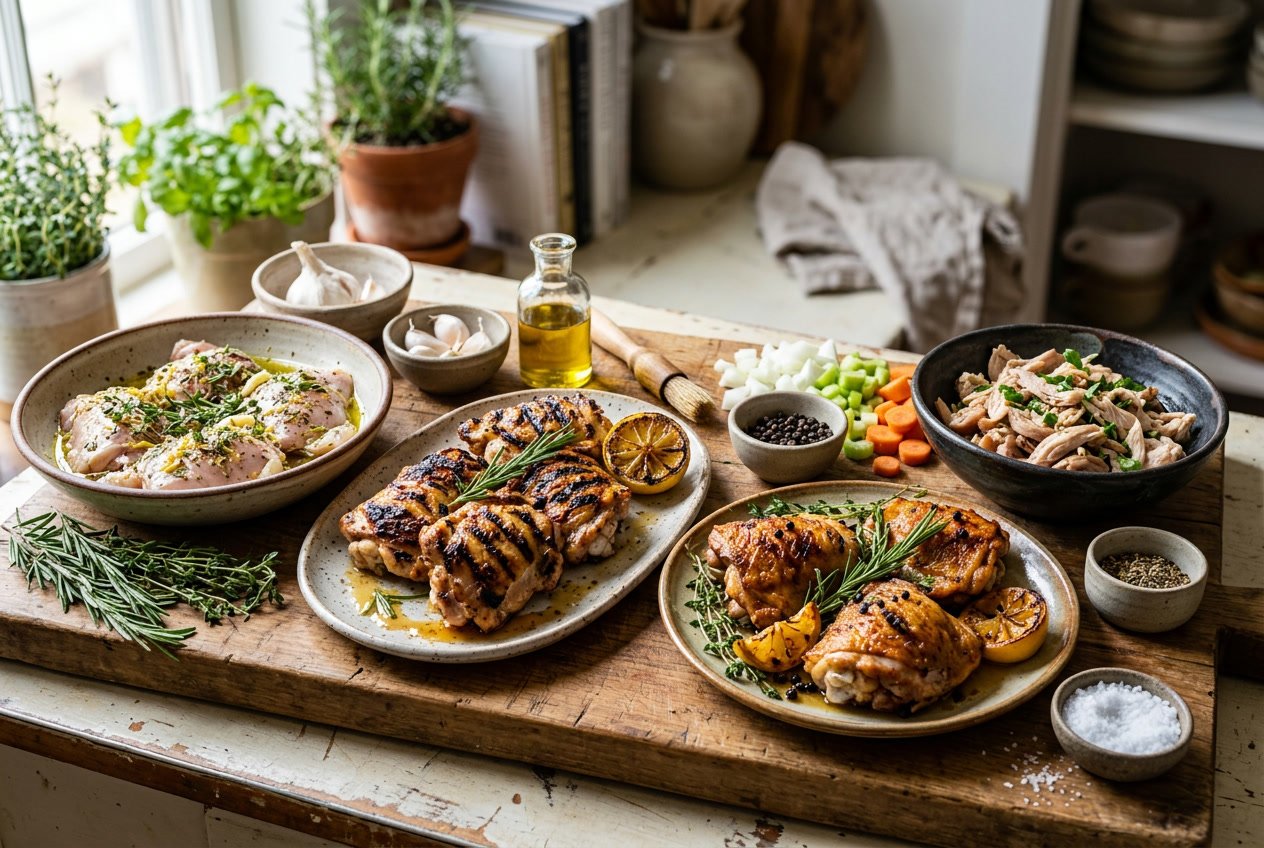
Bone-in cuts give more flavor and hold moisture. Boneless cooks faster.
Skin crisps and seals juices. Skinless shortens cook time and reduces fat.
Trim excess fat, dry the meat well, and match your cut to the cooking method for best results.
Bone-In vs. Boneless Chicken Thighs
Bone-in chicken thighs keep collagen and marrow close to the meat. This helps produce juicier, more flavorful results during long cooking or roasting.
Bone-in thighs need longer cook times (add 5–15 minutes depending on size) and slightly higher oven temperatures.
Boneless chicken thighs cook faster and are easier to portion for stir-fries, sheet-pan dinners, and quick sears. They brown quickly on high heat but can dry if overcooked, so watch internal temperature and remove at 165°F.
Use bone-in for braises, stews, and roasted dishes where moisture and flavor matter most. Use boneless for sandwiches, curries, or pan-seared recipes that demand speed and easy shredding.
Skin-On vs. Skinless Chicken Thighs
Skin-on chicken thighs deliver crisp, golden skin when you start skin-side down in a hot pan or roast at 400–425°F. The skin acts as a barrier that helps the meat stay tender and moist.
For maximum crispness, pat the skin dry and use a light coating of oil and salt.
Skinless chicken thighs reduce fat and cut cook time by a few minutes. They work well in saucy dishes where the skin would become soggy, such as curries, stews, or braises.
Expect leaner results that rely on proper seasoning, acidic marinades, or added fats (butter, oil) to remain juicy.
If you want crispy texture and richer flavor, use skin-on. If you prefer lighter, faster-cooking, or sauce-ready meat, use skinless.
How to Choose and Trim Chicken Thighs
Look for thighs with even color and minimal liquid in the package. Excess liquid often signals older meat.
For bone-in cuts, pick pieces with intact joints and a visible, clean bone. For boneless thighs, choose uniformly sized pieces for even cooking.
Trim excess fat and loose skin with kitchen shears or a sharp knife. Remove any dark or bloody spots and the flap of fat near the bone.
Pat thighs dry thoroughly with paper towels. Dryness on the surface is essential for browning and crisping.
If you plan to stuff or butterfly, boneless thighs offer easier handling. For shredding after cooking, both types work, but bone-in may yield slightly more flavor.
Marinating and Seasoning Tips
Use a balance of salt, acid, fat, and aromatics. Salt (about 1 tsp per pound) seasons deeply.
Acid (vinegar, citrus, yogurt) tenderizes but avoid more than 4–6 hours for thin marinades to prevent mushy texture. Oil helps distribute spices and promotes crisping on skin-on thighs.
Keep simple rubs for high-heat cooking: salt, black pepper, garlic powder, and smoked paprika. For overnight marinades, add herbs (thyme, rosemary) and a touch of sugar or honey for caramelization.
For saucy dishes, use bolder spice blends and avoid heavy sugar if you plan long braising.
Bring marinated thighs to room temperature for 15–20 minutes before cooking for even heat penetration. Pat skin dry again if you marinated skin-on to preserve crispness.
Essential Cooking Techniques for Chicken Thighs
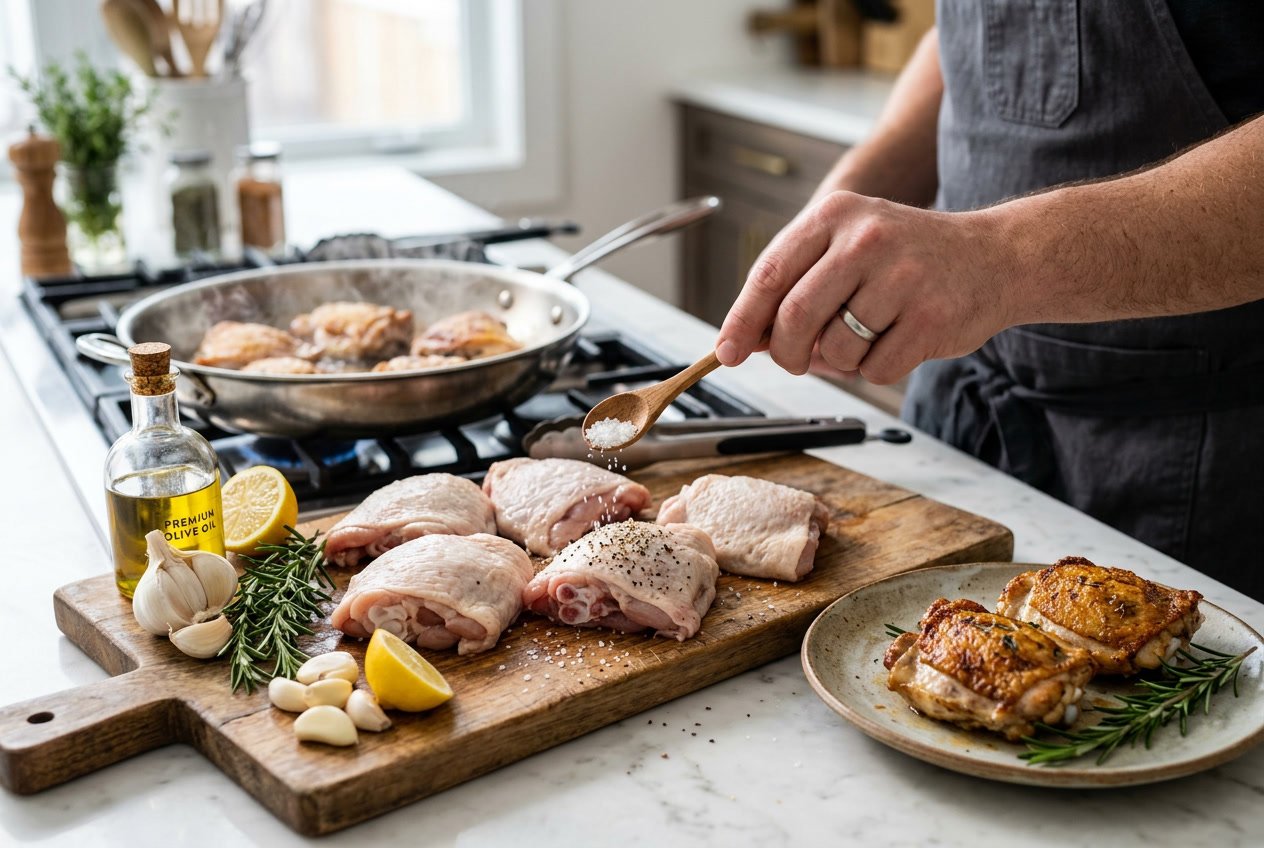
You can use reliable methods to keep thighs juicy, develop crisp skin, and concentrate flavor. Each technique explains heat, timing, and small steps that make baked, grilled, fried, or slow-cooked thighs turn out well.
Baking and Roasting Chicken Thighs
Baking at 400–425°F (200–220°C) gives you golden, crispy chicken thighs while keeping meat tender. Pat skin dry, season well, and place thighs skin-side up on a rack over a sheet pan to promote airflow.
Roasted chicken thighs with bone-in, skin-on pieces need about 35–40 minutes. Boneless, skinless pieces finish faster, around 20–25 minutes.
Use a meat thermometer—165°F (74°C) at the thickest point—for safety without overcooking.
For extra crispness, finish under the broiler for 1–3 minutes, watching closely. You can flavor with dry rubs, compound butter under the skin, or a light glaze (honey, soy, or BBQ) added in the last 5–10 minutes to avoid burning.
Roast at higher heat and avoid overcrowding the pan for crispy baked chicken thighs.
Grilling and BBQ Chicken Thighs
Grilled chicken thighs handle direct and indirect heat well, so set up two zones on the grill. Sear skin-side down over medium-high heat to render fat and build char, then move to indirect heat to finish cooking through.
Bone-in, skin-on grilled chicken thighs typically take 20–30 minutes total. Boneless thighs need about 8–12 minutes.
Turn regularly and baste with BBQ sauce only in the final 5–8 minutes to prevent burning. Marinate or brine beforehand and use a probe thermometer to reach 165°F.
For a smoky finish, add wood chips or use a charcoal grill. Press lightly with tongs when searing to maximize contact, but avoid pressing too long or you’ll lose juices.
Frying and Air Frying Chicken Thighs
For classic fried chicken thighs, use a 350–375°F oil temperature and maintain it to avoid greasy results. Dredge in seasoned flour or a batter, fry bone-in pieces for about 12–15 minutes, and boneless pieces 6–8 minutes, until internal temp hits 165°F.
Drain on a wire rack to keep crust crisp. Air fryer chicken thighs deliver similar crispiness with far less oil.
Preheat the air fryer to 380–400°F, spray lightly with oil, and cook skin-side up for 12–18 minutes depending on size. Flip once halfway through for even browning.
Crispy chicken thighs rely on dry skin and steady heat. Rest meat 5 minutes before serving to let juices settle.
Season after frying if needed to avoid washing away crust.
Slow Cooking and Braising Methods
Slow cooker chicken thighs give tender, pull-apart meat ideal for shredded dishes and stews. Use bone-in thighs for more flavor and cook on low for 4–6 hours or high for 2–3 hours.
Add aromatic liquids—broth, tomatoes, or a braising wine—and keep a 1:1 or 1:2 meat-to-liquid ratio to prevent drying.
Braising on the stovetop or in the oven starts with searing thighs skin-side down to render fat. Simmer them partially submerged in sauce at low heat until fork-tender.
Finish the sauce by reducing and skimming fat. Use the resulting juices as a base for gravies, pan sauces, or to toss with pasta or rice.
Classic and Global Chicken Thigh Recipes
These recipes show how chicken thighs shine in braises, grills, and quick stovetop dishes. Expect bold marinades, long-simmered sauces, and reliable one-pan or sheet-pan methods.
Italian and French Chicken Thigh Dishes
Turn thighs into chicken cacciatore by browning skin-on pieces, then simmering with tomatoes, bell peppers, onions, olives, and a splash of red wine. Use bone-in thighs for extra depth and roast or braise to finish.
Coq au vin takes that idea further: braise thighs in red wine with mushrooms, pearl onions, and thyme until the sauce is silky and reduced.
Classic chicken Provencal focuses on lemon, olives, capers, and herbs. Sear thighs skin-side down to crisp, then braise gently so the citrus brightens the dish.
For quicker Italian-French weeknights, use boneless thighs and finish in the oven or on a sheet-pan with potatoes and green beans.
Asian-Inspired Chicken Thigh Favorites
Tandoori chicken uses a yogurt-spice marinade (garam masala, turmeric, cumin, cayenne). Grill or roast at high heat to get char while keeping the thighs juicy.
Butter chicken follows tandoori-style cooking but finishes in a rich tomato-cream sauce. Use shredded or whole thighs for texture.
Shoyu chicken and Japanese fried chicken show contrast. Shoyu (soy)-braised thighs simmer in a sweet-salty sauce for rice bowls.
Karaage (Japanese fried chicken) uses small thigh pieces, marinated, coated, and fried for crispness.
For fast meals, stir-fry sliced thighs with vegetables and a savory sauce. Make an Instant Pot chicken adobo and rice—pressure-cooked thighs in soy-vinegar-garlic are tender in under an hour.
Huli huli and shawarma offer grilling options. Huli huli uses a sweet-sour pineapple-soy glaze.
Shawarma relies on spiced yogurt or vinegar marinades and high-heat roasting, then thinly sliced for wraps.
Comfort Food and Family Classics
Smothered chicken turns thighs into a homestyle dinner. Dredge, brown, then simmer in onion gravy until the meat falls nearly off the bone.
Sheet-pan chicken dinners simplify that process. Arrange thighs with root vegetables, season boldly, and roast until skin crisps and juices run clear.
Chicken adobo and rice deliver hands-off comfort. Adapt to an Instant Pot for weeknight speed.
Chicken stroganoff swaps beef for shredded thighs in a mushroom-sour cream sauce over noodles. This offers a hearty, weeknight-friendly plate.
Marry Me Chicken and other sauced skillet dishes show how pan-seared thighs finish in a quick cream-parmesan-tomato sauce for an impressive but fast dinner.
For a crowd, make a sheet-pan Huli Huli or shawarma-style roast so you can serve directly from the pan.
Quick and Easy Chicken Thigh Dinner Solutions
You can turn a package of chicken thighs into a full meal with minimal hands-on time. Focus on high-heat roasting or pressure cooking to lock in flavor.
Choose one-pan or one-pot builds to simplify cleanup.
Sheet Pan and One-Pot Recipes
Sheet-pan chicken thighs deliver crispy skin and roasted vegetables in one tray. Season thighs with salt, pepper, smoked paprika, and a drizzle of oil.
Arrange on a rimmed sheet with quartered potatoes, carrots, and onion. Roast at 425°F (220°C) for 30–40 minutes, flipping vegetables once, until skin is browned and internal temperature reaches 165°F (74°C).
For a faster sheet-pan dinner, use boneless thighs and par-cooked vegetables to cut time to about 20–25 minutes. Toss vegetables in the same marinade to concentrate flavor.
One-pot skillet versions build a pan sauce. Sear thighs skin-side down, remove, then sauté aromatics and deglaze with stock or wine.
Return thighs, add vegetables or beans, cover, and simmer until tender. Use a single baking dish to turn a sheet-pan routine into a braise by adding tomatoes or a splash of broth for juicier results.
Instant Pot and Pressure Cooker Meals
The Instant Pot speeds up braises, soups, and saucy dishes like chicken adobo. Brown thighs using the sauté function first to render fat and deepen flavor.
Add soy sauce, vinegar, garlic, bay leaves, and a touch of sugar for chicken adobo. Cook on high pressure for 8–10 minutes, then quick-release and reduce the sauce if needed.
Pressure cookers make excellent chicken-and-wild-rice soup with thighs. Sear thighs, remove them, then sauté celery, onion, and carrots.
Add rinsed wild rice, broth, herbs, and the thighs. Seal and cook on high pressure for 20–25 minutes.
Use natural release for a thicker broth and shred thighs before serving. Finish both Instant Pot adobo and wild rice soup with fresh herbs and an acid like lemon or rice vinegar to brighten flavors.
Popular Sauces and Flavors for Chicken Thighs
These sauces highlight reliable flavor families that work with bone-in or boneless thighs. Options keep meat moist, brown well, and deliver savory, sweet, or spicy profiles.
Garlic and Herb Chicken Thighs
Garlic and herb preparations emphasize aromatics that complement the thigh’s richer meat. Use 4–6 cloves minced garlic, fresh thyme or rosemary, lemon zest, and olive oil to make a simple marinade.
Salt the thighs 30–60 minutes before cooking so the flavors penetrate and the skin crisps if you roast or pan-sear. Finish with a splash of lemon juice or a pat of butter to lift the savory notes.
For a stovetop method, sear skin-side down until golden. Baste with the herb-garlic butter and finish in a 375°F oven.
Tips:
- For stronger garlic flavor, rub cloves under the skin.
- Use parsley at the end for freshness.
- Deglaze the pan with white wine or chicken stock and whisk in a little cream for a sauce.
Honey, Soy, and Teriyaki Inspirations
Sweet-salty glazes suit thighs because the sugar helps with caramelization while soy adds umami. Mix honey, soy sauce, minced garlic, and rice vinegar for a basic honey-garlic glaze; simmer to thicken and brush during the last 5–10 minutes of cooking.
Combine soy sauce, mirin or sake, brown sugar, and grated ginger for baked teriyaki chicken. Marinate 30 minutes to overnight, then bake at 400°F, spooning glaze over the thighs halfway through.
Teriyaki chicken thighs benefit from a cornstarch slurry if you want a spoonable sauce.
Quick notes:
- Use low-sodium soy and add honey to balance.
- Place thighs on a rack for oven methods so excess glaze drips and skin crisps.
- Reserve some marinade, boil to sterilize, and use as finishing sauce.
Spiced and International Marinades
Global marinades add bold, distinct character without complex technique. Try gochujang-based paste for Korean-style heat and sweetness, harissa with smoked paprika and cumin for North African depth, or a chimichurri of parsley, cilantro, garlic, red wine vinegar, and olive oil for bright South American flavor.
Let thighs marinate for 1–4 hours to absorb flavors. For sturdier rubs like garam masala or a jerk blend, sear at high heat to toast spices, then finish gently so the meat stays tender.
If you use acidic components like yogurt, citrus, or vinegar, limit marinating time to avoid a mushy texture. Spiced marinades often serve as both rub and sauce when thinned with stock or oil.
Tips for Achieving the Best Chicken Thigh Results
Use precise temperatures and allow space for air and fat to render. Finish with a dry-heat blast when you want crispy baked chicken thighs.
Pay attention to whether thighs are bone-in or boneless because that changes timing and target temperatures.
Cooking Times and Temperatures
Target internal temps with an instant-read thermometer for safety and best texture. Pull boneless thighs at 165°F–170°F to keep them juicy without overcooking.
Aim for 175°F–185°F for bone-in thighs; the higher range breaks down collagen into gelatin and gives tender chicken.
Oven guidelines at 400°F: boneless skin-on 20–25 minutes, bone-in skin-on 35–45 minutes. Air fryer at 400°F: boneless 16–20 minutes, bone-in 22–28 minutes.
For stovetop searing, start skin-side down in a cold or medium pan to render fat. Cook 7–10 minutes skin-side down, then finish 6–8 minutes with lower heat or in the oven.
Use probe thermometers for large batches and remove thighs from heat a few degrees below target if they’ll rest on a hot pan. Rest 5–10 minutes to let juices redistribute.
How to Keep Chicken Thighs Juicy and Flavorful
Pat thighs completely dry before seasoning to ensure crisp skin and better browning. Salt at least 30–60 minutes ahead or overnight to season through and draw out surface moisture that then reabsorbs.
Use a bit of oil with spices to help heat transfer and even browning. Choose marinades and rubs that match the cooking method: yogurt or buttermilk for tenderizing before baking or frying; acid-based marinades 2–8 hours max to avoid mushy texture.
Sear skin-side down to render fat, then finish at high oven heat or under the broiler briefly to crisp. Add aromatics like garlic, thyme, or citrus zest near the end of cooking to preserve freshness.
Avoid overcrowding the pan or air fryer. Leave 1–1.5 inches between pieces so steam escapes and skin crisps rather than steams.
Storing and Reheating Leftovers
Let cooked thighs cool to room temperature for no more than 2 hours. Then refrigerate them in airtight containers for up to 4 days.
For freezer storage, wrap each thigh tightly and place it in a sealed bag. Use within 3 months for best quality.
Reheat thighs in a 375°F oven on a wire rack for 8–12 minutes to restore crisp skin and even heat. If you use a microwave for convenience, heat briefly, then transfer to a hot skillet or broiler for 2–3 minutes to re-crisp the skin.
For slices or shredded thighs, warm gently in a covered skillet with a splash of stock to keep the meat juicy.


