
What Are the Macros for Chicken Thighs? Nutrition Facts & Comparison
You get roughly 20–30 grams of protein and 7–12 grams of fat per 3–4 ounce cooked chicken thigh. Calories typically range between 150–220 depending on skin and cooking method.
A skinless, boneless 3.5 oz (100g) cooked thigh provides about 25–28 g protein, around 7 g fat, and about 165 calories. Skin-on or fried versions have more fat and calories.

This article explains macro ranges, how cooking and portion size change numbers, and the differences between boneless skinless and skin-on thighs. You’ll also see comparisons to breasts and wings, plus tips to track servings accurately.
Macro Breakdown of Chicken Thighs

A single chicken thigh gives a concentrated mix of protein and fat with virtually no carbohydrates. Numbers change with skin-on vs. skinless and raw vs. cooked, so weigh your portion for accurate tracking.
Protein Content in Chicken Thighs
You get about 20–26 grams of protein per 100 g of raw to cooked boneless, skinless chicken thigh. Cooked meat concentrates protein as water evaporates, so 100 g cooked will show higher grams than 100 g raw.
For example, a 4 oz (113 g) cooked thigh typically contains about 28–30 g protein. Protein from thighs is complete and supplies all essential amino acids for muscle repair and satiety.
If you’re tracking macros, log whether the weight is raw or cooked. Food databases list both entries and values differ by roughly 20–30% after cooking.
Fat Content and Types in Chicken Thighs
Skinless boneless thighs contain roughly 4–7 g fat per 100 g raw. Skin-on or fried thighs can exceed 15–20 g per 100 g.
Most fat in thighs is monounsaturated and polyunsaturated, with a moderate amount of saturated fat (typically 1–4 g per 100 g when skinless). Cooking method shifts fat totals: grilling or baking on a rack reduces fat compared with pan-frying or deep-frying.
If you keep the skin, you get 50–70 extra calories and substantially higher fat per thigh. Here’s a quick comparison:
- Boneless, skinless (100 g, raw): ~120 kcal, 20 g protein, 4 g fat
- Skin-on, bone-in (100 g, raw edible): ~200–220 kcal, 16–17 g protein, 15–16 g fat
- Fried, battered (100 g, cooked): ~280–350 kcal, higher fat and added carbs
Carbohydrate Content in Chicken Thighs
Chicken thighs contain essentially 0 g carbohydrates when plain and unbreaded. Any carbs come from breading, batter, marinades with sugar, or sauces.
A battered fried thigh can add 8–18 g carbs per serving depending on coating and portion size. When you log carbs, check ingredient lists for marinades and commercial preparations.
Restaurant or packaged thighs often include sugars, flours, or starches that raise carb counts. Plain roasted or grilled thighs keep your carbohydrate intake effectively at zero.
Calorie Breakdown and Serving Size Impact
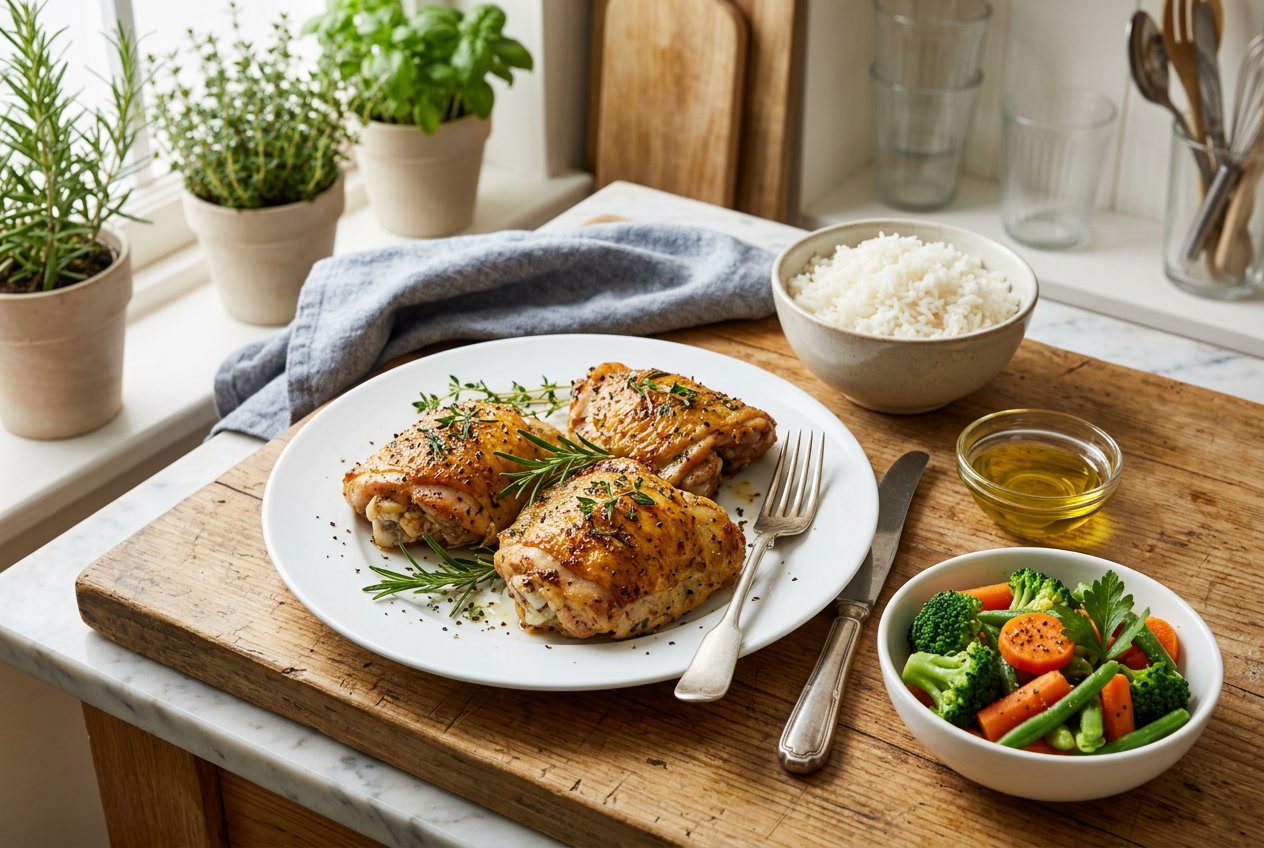
You get more calories and fat per bite when the skin stays on or when the portion size increases. Cooking method and whether you weigh raw or cooked meat significantly change the numbers you should log.
Standard Serving Size Macros
A 3.5 oz (100 g) raw boneless, skinless chicken thigh typically provides about 120–130 kcal, 20–22 g protein, and 4–6 g fat. Use this as a baseline when tracking because many nutrition databases list raw weights.
If the thigh is skin-on, the same 100 g raw portion jumps to roughly 200–220 kcal, 16–17 g protein, and 15–16 g fat. Protein per gram drops slightly because fat makes up a larger share of the weight.
When you remove the skin, you reduce calories and saturated fat without losing much protein. When you weigh cooked meat, expect higher calorie density per 100 g due to water loss.
Log entries should match whether you weighed raw or cooked to avoid double-counting calories.
Macros by Weight and Portion
Common portions and approximate macros (boneless, skinless unless noted):
- 4 oz (raw ≈ 113 g): ~136 kcal, 23 g protein, 4.5 g fat
- 4 oz (cooked ≈ 113 g): ~190 kcal, 29 g protein, 8 g fat
- Medium thigh (cooked, skin-on): ~140–150 kcal, 18 g protein, 7 g fat
Portion size affects absolute macros. Doubling the portion roughly doubles calories, protein, and fat.
Bone-in cuts weigh more due to bone. Use edible portion or weigh after removing bone for accurate macros.
If you meal-prep, weigh raw pieces and use raw-entry values in your tracker.
Calorie Breakdown by Cooking Method
How you cook thighs changes calories. Grilling or baking without added fat keeps calories closer to raw-derived values because little oil is added and some fat drips off.
For a 3.5 oz cooked, skinless thigh expect roughly 160–175 kcal, with about 8 g fat. Pan-frying in oil adds the oil’s calories; a single tablespoon of oil can add around 120 kcal shared across portions.
Breading and deep-frying increase both fat and carbs dramatically. A battered, fried thigh (3.5 oz) can reach 280–350 kcal, with 18–22 g fat and 10–15 g carbs.
If you remove skin after roasting, some surface fat remains in the meat. Track added oils, sauces, and breading separately to get an accurate calorie breakdown for the meal.
Boneless Skinless vs. Skin-On Chicken Thigh Macros
Removing or keeping the skin changes calories, total fat, and saturated fat the most. Protein per cooked weight shifts modestly.
You get roughly half the fat and 50–80 fewer calories per 100 g when you choose boneless skinless over skin-on, depending on cooking method.
Macro Differences Between Boneless Skinless and Skin-On
Boneless skinless chicken thigh (raw, per 100 g) typically provides about 120–130 kcal, around 20 g protein, and 4–5 g fat. Cooked values concentrate protein slightly—expect 25–30 g protein and 7–8 g fat per 100 g cooked, depending on moisture loss.
Skin-on thighs (edible portion, per 100 g raw) run closer to 200–220 kcal, 16–18 g protein, and 15–16 g fat. The extra fat raises calories and saturated fat (around 3–5 g per 100 g).
Breading or frying further increases carbs and absorbed oil, often adding 100+ calories per serving. If you track macros, use entries that match raw vs. cooked and skin status.
Weigh your meat raw for consistent logging. Swapping to boneless skinless reduces fat and calories while keeping most of the protein.
Health Benefits of Removing Skin
Removing the skin significantly lowers total and saturated fat intake. For a standard 4 oz (113 g) serving, skin removal can cut 50–80 kcal and 4–8 g of fat.
You still get iron, B vitamins, and most of the protein when you remove the skin. Boneless skinless chicken thigh preserves nutrient-dense chicken thigh nutrition info while improving the calorie-to-protein ratio.
Roasting on a rack or grilling lets residual fat drip away. If you want some flavor without the added fat, remove the skin after cooking to retain moisture while lowering the fat content.
Chicken Thigh Nutrition Details
A cooked chicken thigh delivers a dense mix of protein, fat, and several key vitamins and minerals. Expect roughly 200–220 calories and about 25–28 g of protein per 100 g of cooked, skinless thigh. Fat content varies with skin and cooking method.
Micronutrients in Chicken Thighs
You get meaningful amounts of iron, zinc, selenium, phosphorus, and B vitamins from a 100 g cooked thigh. Iron supports oxygen transport; a 100 g portion typically provides around 1–1.5 mg.
Zinc sits near 2–3 mg and helps immune function and wound repair. Selenium commonly ranges 20–30 mcg, supplying a large share of your daily need for antioxidant and thyroid support.
B vitamins—niacin (B3) and vitamin B6—appear in useful amounts, often around 6–7 mg niacin and 0.3–0.5 mg B6 per 100 g. Phosphorus and small amounts of vitamin B12 and riboflavin help energy metabolism and red blood cell formation.
If you track micronutrients, log chicken thighs as a reliable source of these specific nutrients.
Saturated and Unsaturated Fats
Fat content depends greatly on whether the skin stays on and how you cook the meat. For 100 g cooked, skinless thighs expect roughly 8–11 g total fat.
Skin-on pieces can add several grams, pushing total fat higher by 30–40 kcal per serving. Most of the fat in thighs is monounsaturated and polyunsaturated, with saturated fat usually around 2–3 g per 100 g.
Monounsaturated fats contribute to flavor and satiety and are higher than saturated fractions. If you reduce or remove skin before cooking, you lower total fat and saturated fat while preserving most of the protein and micronutrients.
Cholesterol and Sodium Content
A 100 g cooked chicken thigh typically contains about 90–105 mg of cholesterol. If you monitor dietary cholesterol, adjust portion sizes rather than avoiding thighs entirely.
Sodium in plain chicken thighs is moderate—often 70–100 mg per 100 g—unless the meat has been brined or seasoned. Processed or pre-marinated thighs can contain several times more sodium, so check labels.
To control sodium, choose unseasoned cuts and add salt sparingly during cooking.
Comparing Chicken Thighs, Chicken Breasts, and Wings
Thighs, breasts, and wings differ mainly in calories, fat, and protein per 100 g. Choose by your calorie target, desired fat level, and cooking method.
Chicken Thighs vs. Chicken Breast Macros
A 100 g serving of boneless, skinless chicken thigh typically provides about 20 g protein, 3–4 g fat, and around 125 kcal. Thighs deliver more fat than breasts, which makes them juicier and more forgiving in cooking.
Chicken breast (boneless, skinless) gives roughly 21–31 g protein per 100 g depending on raw vs cooked state, around 2 g fat, and about 100–165 kcal depending on preparation. That makes breast the leaner, higher protein-per-calorie choice.
If you track macros, pick breast when minimizing fat and maximizing protein density. Choose thighs when slightly higher fat and calories fit your plan, or when you want more flavor and moisture without adding oil.
Chicken Thighs vs. Chicken Wings Macros
Boneless, skinless chicken wings (meat only) provide roughly 22 g protein and about 3–4 g fat per 100 g, with calories near 120 kcal. With skin, wings jump to about 13 g fat and around 190 kcal per 100 g, similar to thighs with skin.
Thighs with skin usually have about 14–15 g fat and around 195 kcal per 100 g. The practical difference becomes texture and yield: wings have less edible meat per bone, so you need more weight to meet the same protein target.
If you want flavor plus reasonable protein without excessive waste, thighs often give better meat-to-bone ratio and similar fat profile to wings with skin. If you prefer small portions or finger food, wings fit that role but plan for higher calories if skin is kept.
Factors Affecting Chicken Thigh Macros
Weight, skin presence, and cooking method change the macros in chicken thighs. Pay attention to whether values are listed for raw or cooked meat and whether the skin or bone is included, because those details alter calories, fat, and protein counts.
Raw vs. Cooked Macros
Cooking removes water and concentrates nutrients, so raw and cooked weights give different macro numbers.
For example, 100 g of raw skinless, boneless thigh provides about 165 kcal and 18–20 g protein. In contrast, 100 g of cooked meat usually measures about 209 kcal and 26 g protein because it contains less water.
Check whether your database uses raw or cooked values when you track calories. Use the same method each time to stay consistent.
Skin and bone change the math. Skin-on thighs add roughly 30–50 kcal per 100 g of cooked weight compared to skinless thighs because of extra fat.
Bone-in pieces show lower protein per 100 g edible portion since the weight includes bone. If you portion by piece, weigh the edible meat after cooking or use a trusted conversion chart to avoid mistakes.
Cooking Methods and Their Effects
Different cooking methods add or remove calories primarily through added fat and water loss. Grilling, baking, or roasting concentrate macros by evaporating water.
Cooked-per-100g calories and protein become higher than raw because water leaves during cooking. Pan-frying or deep-frying increases calorie and fat content significantly because oil is absorbed.
For example, when you sear in a pan with 1 tablespoon of oil, you add about 120 kcal split across portions. Deep-frying adds more depending on how much oil the food absorbs.
Choose low-addition methods to keep the calorie breakdown leaner. Poaching, baking without added fat, or using an air fryer limits added fat and preserves protein while reducing extra calories.
If you aim for specific targets like 30 grams of protein per meal, track the cooking method and whether you left the skin on. Both factors shift the calorie-to-protein ratio and affect how much you should plate.


