
What Are Halal Chicken Thighs? Guide, Certification, Cooking & More
You want to know what makes chicken thighs halal and why that matters for your meals and values.
Halal chicken thighs are chicken thigh cuts that come from birds slaughtered and handled according to Islamic law, including proper slaughter method, permissible feed, and reliable certification.
You can eat them with confidence.
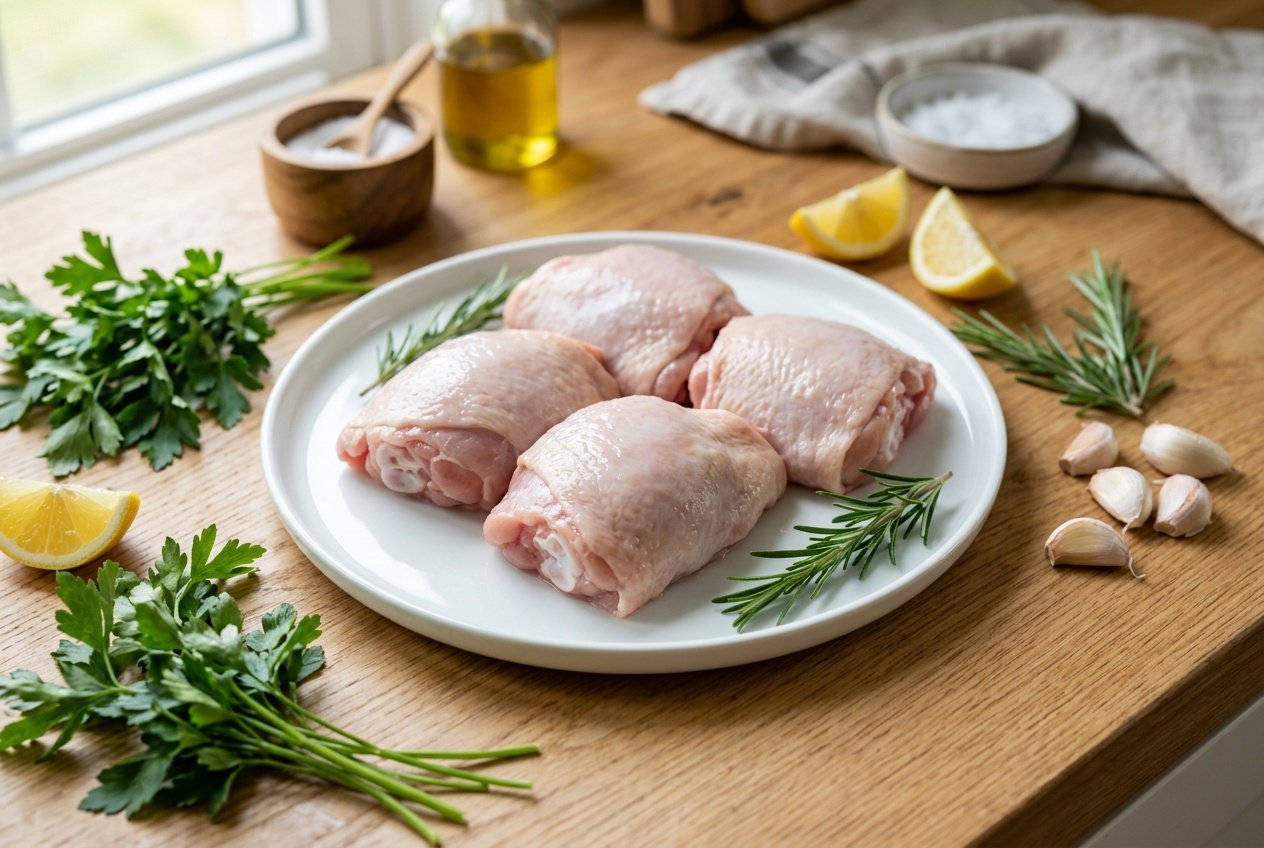
This post explains how halal rules affect sourcing, certification, animal treatment, nutrition, common cuts, and the best ways to cook them.
You’ll find guidance on certification checks, what to ask about farming and stunning, plus cooking ideas that show why halal thighs are a versatile choice.
What Are Halal Chicken Thighs?
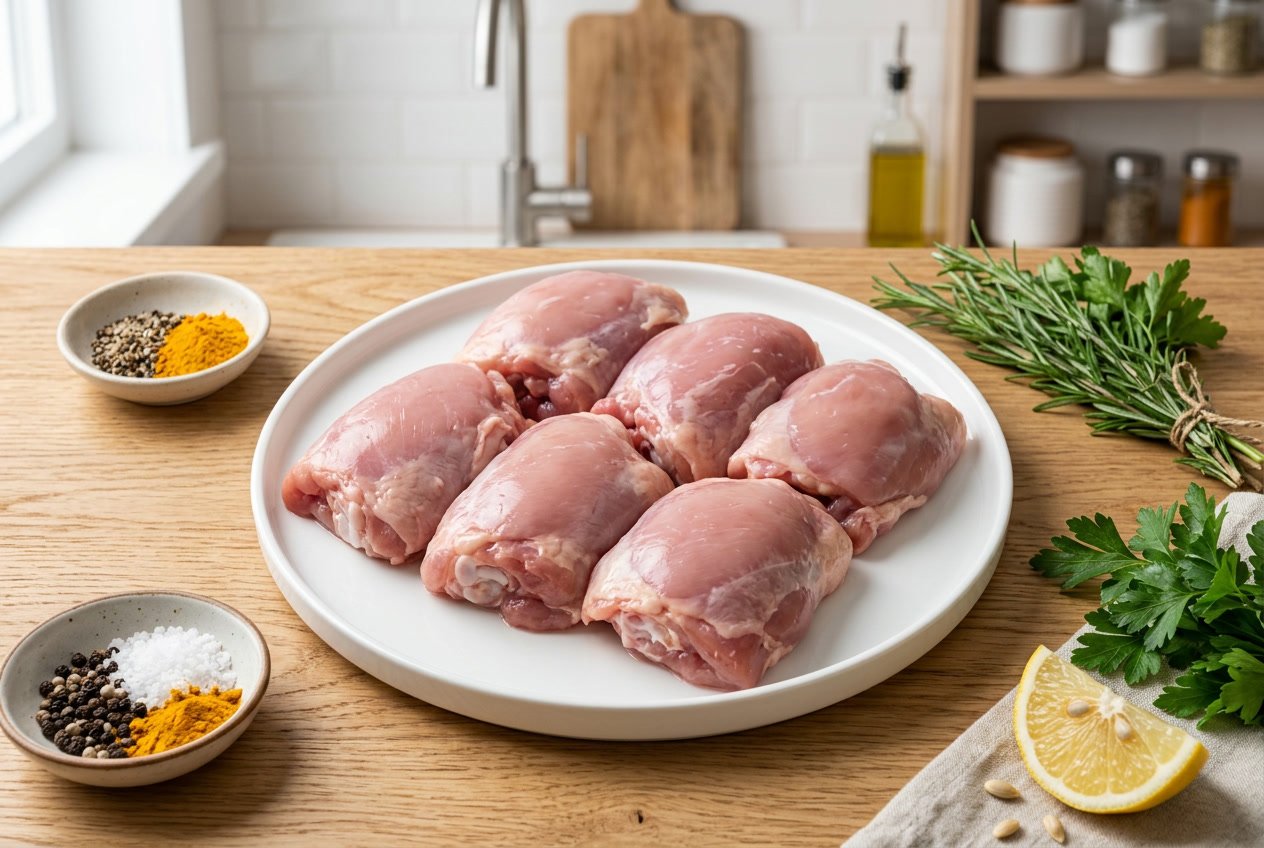
Halal chicken thighs are specific poultry cuts that meet Islamic dietary rules.
They combine the dark-meat characteristics of thigh cuts with processing steps that ensure religious compliance and often higher welfare and feed standards.
Definition and Meaning
Halal chicken thighs are the upper leg portion of the chicken, dark meat with higher fat and connective tissue.
For the cut to be halal, a Muslim must slaughter the bird using zabiha-style methods, pronounce God’s name, and make a swift cut to the throat to sever the windpipe, jugulars, and carotids so blood drains fully.
The thighs must come from that properly slaughtered bird and be handled separately from non-halal products during processing to avoid cross-contamination.
Certification from a recognized halal authority, such as seals on packaging, assures you that both slaughter and downstream handling met required standards.
Comparison to Conventional Chicken Thighs
Halal chicken thighs differ from conventional thighs mainly in slaughter method and processing controls, not in anatomy or cooking properties.
Nutritionally and culinarily, they remain dark, flavorful cuts ideal for braising, grilling, or roasting.
You’ll often find halal thighs marketed with guarantees about feed, limited or no antibiotics, and separate processing lines.
Look for recognized halal certification on packaging if you require religious compliance.
If you prioritize welfare, hygiene, or traceability, halal thighs may offer clearer documentation than many conventional options.
Halal Certification and Standards
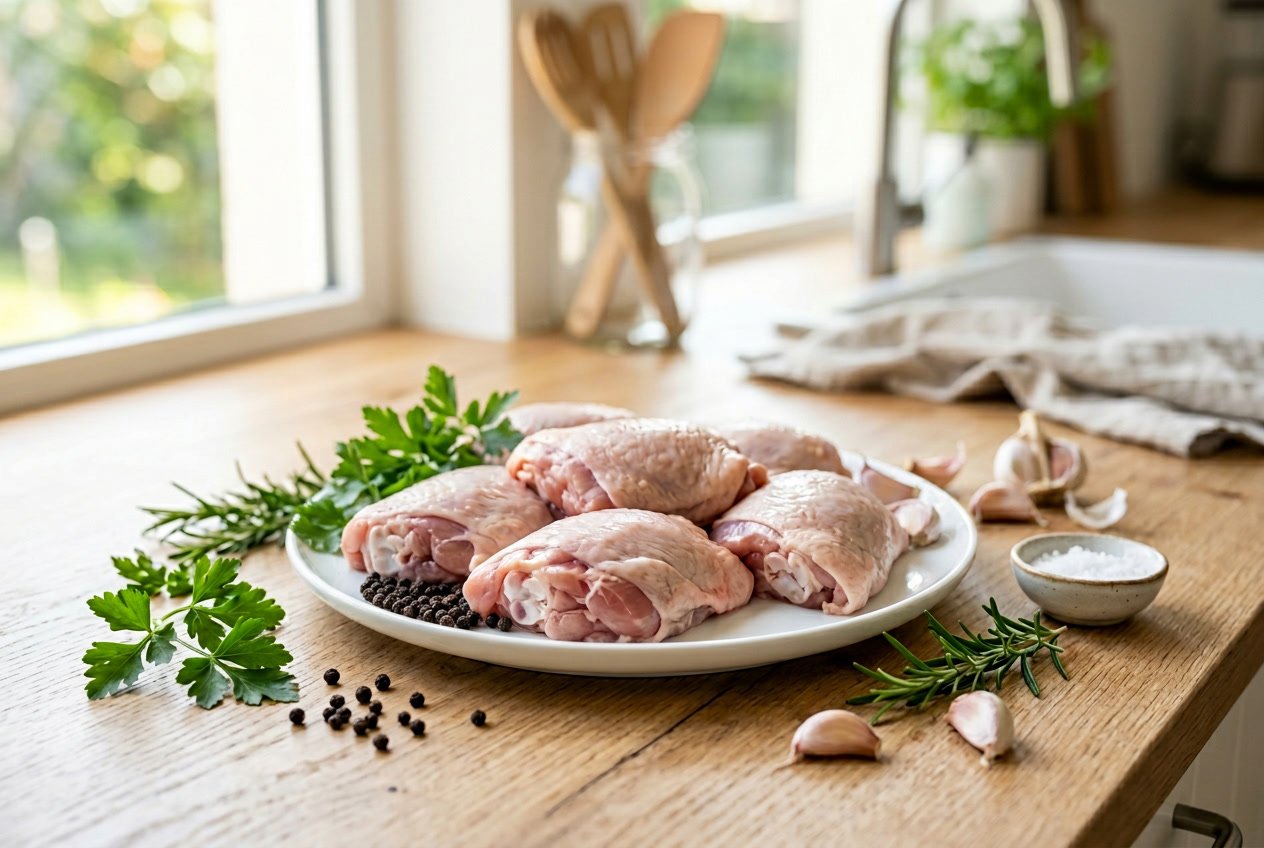
Certification confirms that production, slaughter, and handling meet defined Islamic and regulatory criteria.
You will learn which procedural steps and documentation matter, how the zabiha method is applied, and what differences exist between certified and non-certified chicken.
Requirements for Halal Chicken
Halal-certified chicken thighs come from birds raised and processed under documented controls.
Key requirements include:
- Species and feed: Birds must be permissible species and not fed prohibited substances.
- Facility controls: Slaughter and processing areas must prevent cross-contamination with non-halal items and have traceability systems.
- Documentation: A valid halal certificate issued by a recognized body must state the certifier’s name, scope, expiry, and the establishment’s registration number.
- Inspection and audits: Regular audits and on-site inspections by the certifier check compliance with hygiene, animal welfare, and recordkeeping.
Look for logos from known certifiers and batch or plant codes on packaging so you can verify authenticity.
Keep packaging or certificate details if you need to confirm claims with the certifying body.
Understanding Zabiha Process
A Muslim slaughterer performs the zabiha ritual by making a single cut to sever the trachea, esophagus, and major blood vessels in the neck without decapitation, enabling rapid blood drainage.
The slaughterer pronounces the name of God (tasmiya) or follows the certifier’s allowance for invocation timing.
Stunning practices vary by jurisdiction and certifier.
Some allow reversible stunning if it doesn’t cause death before the cut; others require no stunning.
Zabiha halal chicken means the cut and invocation meet the certifier’s accepted fiqh interpretation and are recorded in slaughterhouse logs.
Halal Certified vs. Non-Certified Chicken
Certification provides verifiable assurance.
With halal-certified chicken thighs you get:
- Third-party audit trail: Certificate, periodic inspections, and documented corrective actions.
- Chain-of-custody controls: Segregation, transport records, and labeled production lines reduce cross-contact risks.
- Consumer recourse: You can contact the certifier to validate claims.
Non-certified chicken labeled “halal” may still follow zabiha practices, but you lack independent verification.
If you require strict compliance for religious reasons, choose halal certified options and confirm the certifier’s recognition in your community.
How Halal Chicken Thighs Are Sourced and Raised
Sourcing and raising halal chicken thighs involves specific choices about feed, handling, and production systems that affect permissibility, animal welfare, and meat quality.
You should expect clear documentation of feed ingredients, slaughter practices, and any animal welfare standards claimed by the producer.
Diet and Feeding Practices
Chickens raised for halal meat must receive feed free from prohibited ingredients such as pork derivatives, non-halal animal by-products, or alcohol-based additives.
Look for explicit ingredient lists or supplier declarations covering protein meals, fats, enzymes, and vitamin/mineral premixes.
If feed contains animal-sourced components, the producer must verify those inputs come from halal sources or be plant-based.
Feeding practices also matter for the jallalah concern.
If chickens previously consumed contaminated or impure substances, they may require a cleansing period of clean feed before slaughter.
Labels and certification bodies often note feed regimes.
If they don’t, request supplier documentation.
Humane and Ethical Treatment
Producers should handle chickens humanely before slaughter, following Islamic guidelines that emphasize minimizing suffering.
Humane treatment includes low-stress catching, calm transport, and housing that prevents injury and crowding.
Producers should document handling protocols and staff training records.
During slaughter, halal requirements demand the animal be alive at severing and the cut render death swiftly.
Many certifiers also audit for minimal pre-slaughter stress.
If stunning is used, verify whether it is reversible and whether the certifier deems it compliant with halal rules.
Seek suppliers that publish third-party animal welfare audits or belong to recognized welfare-assurance programs.
Those records offer tangible evidence about how your halal chicken thighs were raised and treated.
Free-Range and Organic Options
Free-range and organic labels intersect with halal concerns but address different issues.
Free-range halal chicken thighs come from flocks given daytime outdoor access and per-bird space minimums.
Check the producer’s stocking density and outdoor access hours.
Organic certification limits synthetic pesticides, antibiotics, and certain feed additives.
This can simplify verification that feed and rearing practices meet halal purity expectations.
However, organic status does not automatically guarantee halal slaughter methods.
When choosing free-range or organic halal chicken thighs, verify both the organic or free-range certification and a separate halal certification.
Nutritional Value and Health Benefits
Chicken thighs deliver concentrated protein, B vitamins, phosphorus, and sensible amounts of fat that support muscle repair, energy metabolism, and nutrient absorption.
Halal chicken thighs share these nutrients and, when sourced from certified suppliers, come with assurance about slaughter practices and handling.
Key Nutrients in Chicken Thighs
A 3-ounce (85 g) cooked, skinless chicken thigh typically provides about 150–180 calories, 18–20 g protein, and 8–12 g fat depending on trimming and cooking method.
Protein in chicken thighs is high-quality and complete, supplying all essential amino acids needed for muscle maintenance and repair.
You also get important micronutrients:
- Vitamin B6 and niacin (B3): support energy production and nervous-system function.
- Vitamin B12: crucial for red blood cell formation and cognitive health.
- Phosphorus and selenium: help bone strength and antioxidant defenses.
If you keep the skin on, calories and fat rise, mainly monounsaturated and saturated fats.
Trimming or removing skin reduces calories while retaining most protein and B vitamins.
Dietary Advantages of Halal Chicken
Choosing halal chicken thighs ensures the meat comes from animals slaughtered under Islamic dietary laws and handled through certified channels.
This certification does not change basic nutrient content, but it provides traceability that can matter for sourcing, food-safety practices, and consumer trust.
Halal suppliers often emphasize humane handling and rapid bleeding, which can reduce contamination risk when proper processing standards are followed.
Halal chicken thighs remain a versatile, protein-dense option for weight management, meal prep, and post-exercise recovery.
If you follow low-carb or high-protein plans, bone-in or boneless halal chicken thighs fit easily into those macros.
Just account for added calories if you cook with oil or keep the skin.
Pay attention to preparation.
Baking, grilling, or roasting reduces added fat compared with frying and helps you maximize the lean-protein benefits of halal chicken thighs.
Varieties and Cuts of Halal Chicken Thighs
You’ll find halal chicken thighs sold in several clear cuts that affect cooking time, flavor, and prep.
Choose between bone-in or boneless and between skin-on or skinless depending on the recipe and your time constraints.
Bone-In vs. Boneless Chicken Thighs
Bone-in thighs include the thigh bone, which adds flavor and helps meat stay moist during long cooking methods like braising or roasting.
If you plan to slow-cook stews, confit, or oven-roast for an hour or more, bone-in halal chicken thighs give richer juices and a firmer texture around the bone.
Boneless chicken thigh removes the bone for faster, more even cooking and easier portioning.
Use boneless chicken thigh for quick pan-frying, grilling, or stir-fries.
It’s also easier to marinate thoroughly and to stuff or skewer.
Boneless thighs may cook faster and need less liquid to stay tender compared with bone-in pieces.
Skin-On vs. Skinless Cuts
Skin-on thighs deliver crisp, caramelized skin when roasted or grilled, and that rendered fat bastes the meat for increased flavor.
If you value texture and a golden crust, buy skin-on halal chicken thighs and cook skin-side down to render fat and crisp evenly.
Skinless thighs reduce fat and shorten cooking time slightly.
They are a practical choice for curries, stews, or dishes where you want the sauce to cling directly to the meat.
Skinless boneless chicken thigh is especially convenient for quick weeknight meals, kebabs, and recipes where you need uniform pieces for even heat distribution.
- Bone-in, skin-on: best for long roasts and deep flavor.
- Boneless, skinless: best for quick cooking and easy portioning.
- Boneless, skin-on: compromise for crisp texture with faster cook time.
Popular Cooking Methods and Recipe Ideas
Chicken thighs perform well with high-heat grilling, oven roasting for crispy skin, and quick pan-frying or stir-frying for saucy dishes.
Choose marinades and seasonings like paprika, lemon juice, and olive oil based on whether you want char, crust, or a tender, sauced finish.
Grilled Halal Chicken Thighs
Grilling gives thighs a smoky char and keeps the meat juicy thanks to their higher fat content.
Marinade suggestion: mix olive oil, lemon juice, minced garlic, paprika, salt, and black pepper.
Marinate 30 minutes to 4 hours for brighter flavor.
Preheat the grill to medium-high and oil the grates to prevent sticking.
Grill bone-in skin-on thighs 6–8 minutes per side, or until the internal temperature reaches 165°F (75°C).
For boneless thighs, reduce time to about 4–6 minutes per side.
Finish with a squeeze of lemon juice and chopped parsley.
Serve with grilled vegetables or rice to balance the richness.
Oven-Baked and Roasted Dishes
Baking creates crispy skin and cooks the chicken evenly, especially on a rimmed sheet or roasting pan. Pat thighs dry, rub them with olive oil, paprika, garlic powder, salt, and pepper, then arrange them skin-side up with space between each piece.
Roast at 400°F (200°C) for 30–40 minutes for bone-in thighs and check that the internal temperature reaches 165°F (75°C). For extra crispness, broil for 1–2 minutes at the end while watching closely.
Add quartered potatoes and lemon wedges to the pan if you like. The juices and lemon caramelize and flavor the vegetables as they roast.
Pan-Fried and Stir-Fried Thighs
Pan-frying creates a fast, crispy crust and works well for sauced recipes. Use a heavy skillet and heat 1–2 tablespoons of olive oil over medium-high heat.
Season thighs with salt, pepper, and paprika. Sear for 4–6 minutes per side for boneless thighs, or 6–8 minutes for bone-in.
For stir-fries, slice thighs thin against the grain and marinate briefly in lemon juice, soy, and a pinch of paprika. Cook in a hot skillet or wok in small batches to avoid steaming.
Finish pan sauces with a splash of lemon juice to brighten the dish.
Halal Chicken Thighs in Global Cuisines
Halal chicken thighs suit bold spices, flatbreads, and complementary sides. Each dish uses specific cooking methods, flavor pairings, and plating options.
Moroccan Chicken Thighs
Use bone-in halal chicken thighs for richer flavor and moist meat in Moroccan-style dishes. Season the thighs with ras el hanout, ground cumin, coriander, paprika, cinnamon, and a pinch of saffron if you have it.
Brown the thighs in olive oil, then braise them with onions, garlic, preserved lemons, and green olives to build a balance of savory, tangy, and sweet notes. Cook gently for about 35–45 minutes so the connective tissue breaks down and spices infuse the sauce.
Finish with fresh cilantro and toasted almonds for texture. Serve the thighs over couscous or barley to soak up the sauce.
Chicken Thighs with Naan Bread
Halal chicken thighs pair well with naan because the bread scoops sauces and juices easily. Marinate boneless thighs in yogurt, garlic, ginger, garam masala, turmeric, and lemon juice for 2–6 hours to tenderize and add tangy heat.
Grill or sear the thighs on high heat to develop a charred crust. Finish in a 375°F oven for 8–12 minutes, depending on thickness.
Tear warm naan and use it to wrap sliced thighs with raw onion, cucumber, and a cooling raita or chutney. Slice thighs against the grain and arrange on a platter beside stacked naan and small bowls of pickles and chutney.
Serving Suggestions and Sides
Pair halal chicken thighs with sides that absorb sauce or balance richness. Choose starches like couscous, saffron rice, or warm naan.
Serve vegetables such as roasted carrots and root vegetables with cumin. You can also offer a charred eggplant salad with lemon and olive oil.
Add sauces and condiments like preserved lemon and olive tapenade for Moroccan flavors. Use mint-yogurt raita or mango chutney for South Asian dishes.
Garnish with toasted nuts, chopped herbs, or citrus wedges for extra contrast. Plate the thighs on a bed of grain, spoon sauce over the meat, and arrange bread or pickles on the side.


