
What Are Frying Chicken Thighs: Easy Techniques & Crispy Results
Frying chicken thighs means cooking bone-in or boneless pieces in hot oil or a hot pan until the skin or coating turns crisp and the meat stays juicy.
You’ll get rich flavor and forgiving texture from thighs. They tolerate high heat and longer cooking without drying out, making them ideal for a crunchy exterior and tender interior.
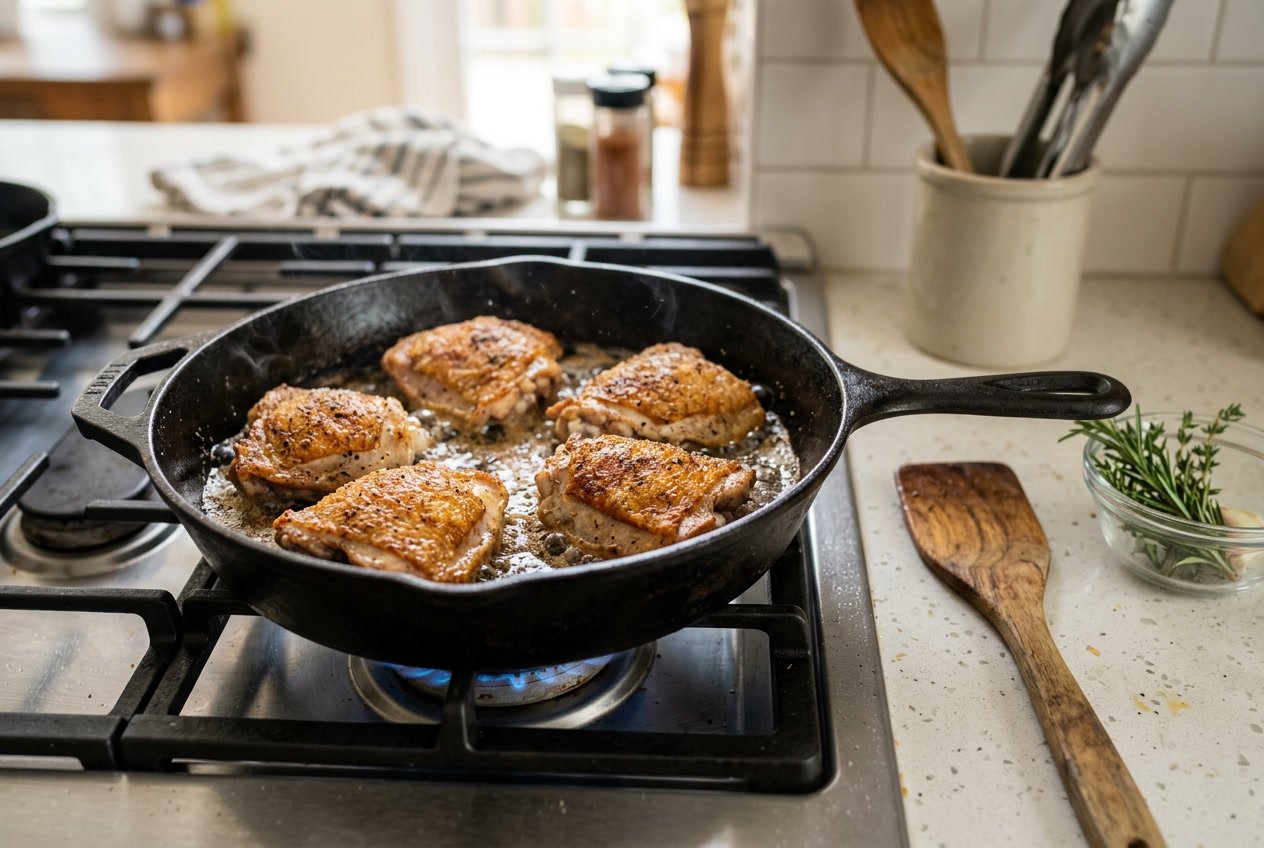
You can pick the right thighs, prepare a seasoning or brine, choose oil and equipment, and follow clear methods from pan-frying to deep-frying for consistent results.
You’ll find a step-by-step guide, practical tips to avoid common mistakes, and simple storage and reheating advice so your next batch stays crisp and flavorful.
Understanding Frying Chicken Thighs
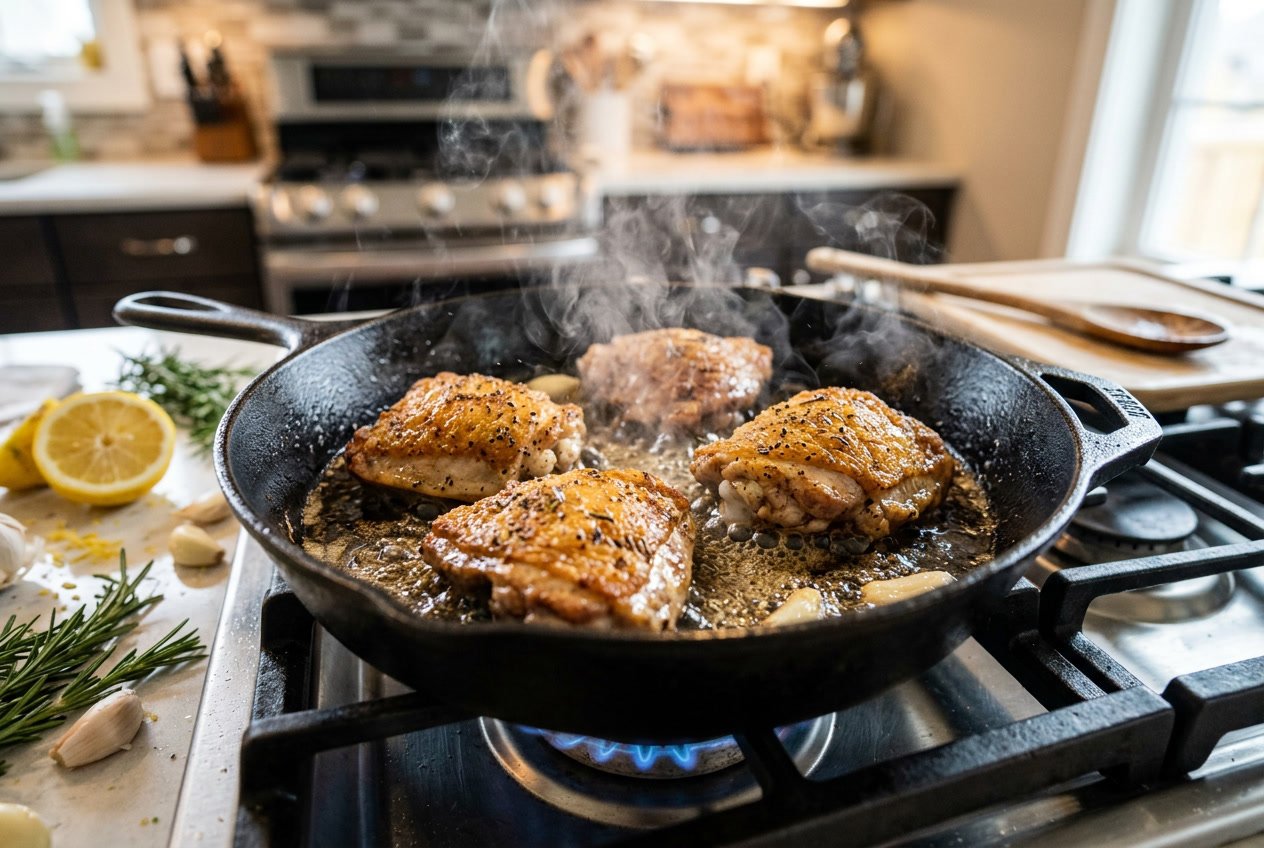
Frying chicken thighs creates a crispy exterior and moist interior.
The following explains why thighs work well, how bone-in and boneless cuts differ, and why skin matters for texture and flavor.
Why Choose Chicken Thighs for Frying
Chicken thighs have more fat and connective tissue than breasts, which keeps the meat juicy during high-heat frying.
That extra fat helps the interior stay tender while the outside crisps, so your fried chicken thighs resist drying even when cooked to a safe internal temperature.
Thighs can handle stronger seasoning and longer cook times. This lets you develop a deeper crust without losing moisture.
Choose bone-in, skin-on thighs for maximum flavor and crispiness. Pick boneless, skinless for quicker, slimmer portions that remain more forgiving compared with breasts.
Difference Between Bone-In and Boneless Thighs
Bone-in thighs cook more slowly because the bone conducts heat differently. This often results in more evenly cooked, juicier fried chicken.
The bone adds flavor and helps retain moisture around the dark meat, which benefits crisp crust development without overcooking the center.
Boneless thighs heat faster and allow more uniform breading contact, so you get crispier chicken thighs in pan-frying or shallow-frying.
They require shorter cook time and closer temperature control to avoid a rubbery texture. For deep-frying, boneless pieces fry evenly but will lose some of the depth of flavor that bone-in pieces provide.
Benefits of Skin-On Chicken Thighs
Skin creates a natural barrier that traps juices while frying, producing juicy fried chicken inside and a crackling, golden crust outside.
As the skin renders, its fat bastes the meat and helps brown the dredge or batter to a richer, crisper finish than skinless cuts can achieve.
Leaving the skin on also supports better visual and textural contrast: crisp, seasoned skin versus tender meat.
If you want extra crispiness, pat the skin dry, season under and over the skin, and fry at a steady oil temperature so the skin renders fully without burning.
Essential Ingredients for Crispy Fried Chicken Thighs
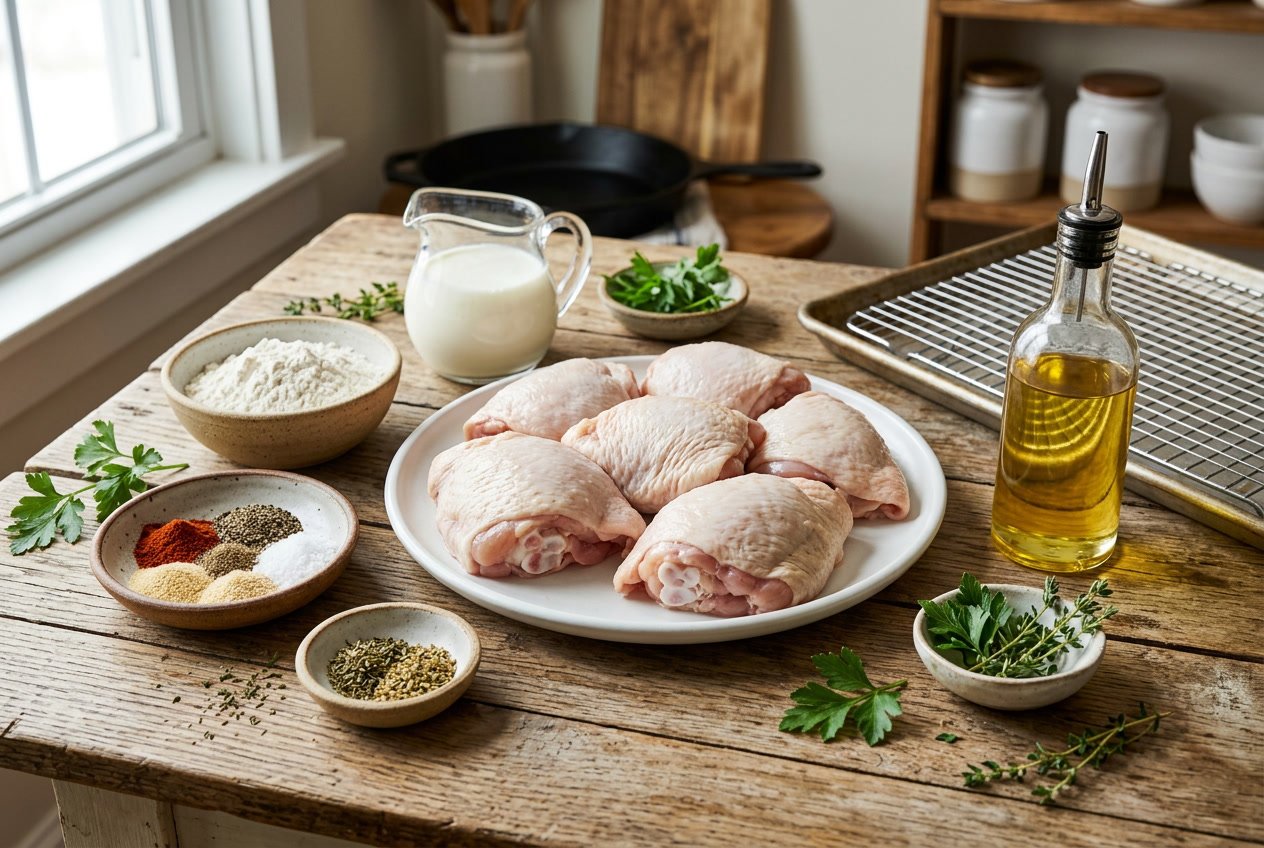
The cut of chicken, a buttermilk marinade, and a well-seasoned flour mix control texture, flavor, and doneness.
Selecting Quality Chicken Thighs
Choose bone-in, skin-on thighs for the best balance of flavor and moisture.
The bone and skin help retain juiciness and produce a crisp exterior when fried. Aim for thighs about 5–7 ounces each for even cooking.
Look for thighs with firm, pale-pink flesh and intact skin. Avoid bruising or an off smell.
If you prefer quicker cook times, boneless, skinless thighs work but yield less crispness and require shorter frying time.
Trim excess fat and pat thighs very dry before seasoning or marinating. Moisture on the surface prevents a crunchy breading.
Refrigerate uncovered for 30–60 minutes to dry the skin further if time allows.
Importance of Buttermilk Marinade
Marinating in buttermilk tenderizes through mild acidity and encourages the flour coating to cling.
Use enough buttermilk to fully submerge thighs, and season the marinade with salt, black pepper, and optional cayenne or paprika for depth.
Marinate 30 minutes for mild effect, or up to 4 hours for pronounced tenderness.
Buttermilk adds a slight tang that balances the fried crust.
After marinating, let excess drip off. Too much wetness makes the dredge soggy.
Dredge immediately and rest the coated thighs on a rack for 20–30 minutes so the seasoned flour adheres and forms a stable crust.
Seasoned Flour and Spices
Combine all-purpose flour with 1–2 teaspoons kosher salt and 1 teaspoon ground black pepper per cup of flour.
Add paprika, garlic powder, and onion powder for savory notes. Include 1/4–1/2 teaspoon cayenne per cup if you want heat.
Mix in cornstarch or rice flour (10–20% of the blend) to increase crunch and reduce oil absorption.
Dredge thighs in the seasoned flour, pressing gently to form an even coating.
For extra crispness, double-dredge: dip coated thighs in beaten egg or buttermilk, then re-coat with flour.
Let coated thighs rest on a wire rack for 20–30 minutes before frying to set the crust and prevent it from falling off during cooking.
Methods for Frying Chicken Thighs
You can choose between shallow pan-frying for controlled browning and deep-frying for even, fast cooking.
Both methods produce crispy fried chicken thighs when you control oil temperature and use a meat thermometer.
Pan-Frying Chicken Thighs
Pan-frying works well for bone-in, skin-on thighs and uses a skillet with 1/4–1/2 inch of oil.
Pat thighs dry, season or dredge in flour, and heat the oil to about 325–350°F (163–177°C).
Start skin-side down and cook undisturbed until the skin is deep golden and releases naturally, about 8–12 minutes depending on size.
Flip and lower heat to finish cooking through. Total time for bone-in thighs is typically 20–30 minutes.
Use a probe thermometer and remove when internal temperature reads 165°F (74°C).
Drain on a wire rack to keep the crust crisp.
Finish thick pieces in a 375°F (190°C) oven for 10–15 minutes.
Key pan-fry tips:
- Use a heavy skillet (cast iron preferred).
- Don’t overcrowd; work in batches.
- Adjust heat to prevent burning while allowing the center to reach 165°F.
Deep-Frying Chicken Thighs
Deep-frying submerges thighs in oil for a uniformly crisp crust and shorter active cook time.
Preheat oil to 350°F (175°C). If breaded, let the coating rest before frying to adhere.
Carefully lower thighs into oil. Bone-in pieces usually need 12–18 minutes, boneless 8–12 minutes, until the internal temperature hits 165°F (74°C).
Fry in small batches and monitor with a thermometer to maintain temperature and avoid large drops.
Drain thighs on a wire rack or paper towels for a few minutes to remove excess oil and preserve crispiness.
Use high-smoke-point oils such as vegetable, canola, or peanut.
Deep-fry tips:
- Keep oil between 325–350°F for even cooking.
- Use a spider or slotted spoon to turn and remove pieces safely.
- Rest on a rack rather than a plate to prevent sogginess.
Choosing the Best Oil and Equipment
Select an oil that stays stable at high heat and has a neutral or complementary flavor.
Use a reliable thermometer and splash-control measures for evenly cooked, crispy thighs with minimal mess.
Best Oils for Frying Chicken
Pick oils with smoke points above 375°F (190°C) so the oil won’t break down while you fry.
Good, affordable choices are canola, vegetable, and corn oil. Each has a neutral flavor and smoke points around 400°F–450°F.
Peanut oil and refined avocado oil offer higher smoke points and a touch of nuttiness if you want extra flavor.
Avoid unrefined olive oil or anything labeled “extra virgin” for deep frying. Their smoke points are lower and they can produce off flavors.
If you reuse oil, strain it through a fine mesh and store it in an airtight container in a cool, dark place.
Quick reference:
- Neutral, budget-friendly: canola, vegetable, corn oil
- Higher smoke point, flavor: peanut, refined avocado
- Avoid for high-heat frying: extra virgin olive oil, butter
Using a Deep-Fry Thermometer
A deep-fry thermometer keeps your oil in the 350–375°F (177–190°C) range, ideal for bone-in thighs.
Clip the thermometer to the side of the pot so the probe sits in oil but not touching the bottom. This gives accurate, continuous readings.
Heat the oil slowly and watch the thermometer.
Let the oil recover to target temperature between batches to prevent greasy, undercooked centers.
Digital thermometers with an alarm help you monitor without constant checking.
Preventing Oil Splatter
Dry your chicken thoroughly with paper towels before dredging to remove surface moisture that causes splatter.
Pat down skin and cavities; even small beads of water will pop in hot oil.
Lower pieces gently with tongs or a spider strainer rather than dropping them in.
Use a splatter screen over the pan while allowing steam to escape. This reduces mess without trapping moisture.
Keep a metal lid or baking sheet nearby to smother a small flare-up, and never add water to hot oil.
Step-by-Step Guide to Frying Chicken Thighs
Prepare thighs so the skin crisps, choose a coating that adheres, control oil temperature for even browning, and rest the meat so juices redistribute.
Follow these steps for safe internal temperature and consistent crispiness.
Preparation and Marination
Pat each bone-in, skin-on thigh dry with paper towels. Removing surface moisture is essential for crisp skin.
Trim excess fat or loose skin that can burn, then season lightly with kosher salt and freshly ground black pepper.
If you want juicier, more flavorful meat, marinate in buttermilk mixed with 1–2 teaspoons salt per cup, plus garlic powder and paprika, for 30 minutes to 4 hours.
The acid and enzymes in buttermilk tenderize fibers and help seasoned flour adhere.
Keep thighs refrigerated while marinating and discard used marinade.
Before breading, let thighs come close to refrigerator temperature. Cold meat straight from the fridge will take longer to cook, but avoid leaving them at room temperature for more than 30 minutes for food safety.
Breading and Coating
Set up a three-station breading area: seasoned flour, beaten eggs or buttermilk wash, and a second dredge of seasoned flour.
Mix all-purpose flour with 1–2 teaspoons salt per cup, 1 teaspoon black pepper, 1 teaspoon paprika, and optional 1/2 teaspoon cayenne.
Dredge thighs in flour, dip in the wash, then press into the second flour mixture to build a sturdy crust.
Let coated thighs rest on a wire rack for 20–30 minutes. This helps the coating adhere and reduces fallout in the oil.
For lighter crust, skip the egg and use only a single flour dredge after a buttermilk soak.
If you prefer extra crisp, add a small amount (10–20%) of cornstarch to the flour blend.
Shake off excess flour. Thick clumps will burn and taste floury.
Proper Frying Technique
Use a heavy-bottomed skillet or cast-iron pan and 1/4 to 1/2 inch of neutral oil (vegetable, canola, or corn).
Heat oil to 325–350°F (160–175°C) and use a thermometer for accuracy.
Place thighs skin side down without crowding and cook uncovered.
Maintain steady temperature by adjusting heat after adding poultry.
Fry skin side 8–12 minutes until deep golden and releasing easily, then flip and fry 8–12 minutes more.
Total time varies by size. Target 165°F (74°C) internal at the thickest point near the bone.
Finish especially thick pieces in a 375°F (190°C) oven for 10–15 minutes if the crust risks burning before the center reaches temperature.
Use a wire rack over a sheet pan to rest while monitoring temperature.
Resting After Frying
Transfer thighs to a wire rack set over a baking sheet to drain. This prevents soggy bottoms from trapped oil.
Rest for 5–10 minutes so juices redistribute and internal temperature evens out.
If you need to hold the thighs briefly, keep them in a 200°F (95°C) oven on the rack. This preserves crispness without overcooking.
Serve within 30 minutes for best texture. Prolonged holding in covered containers softens the crust.
Tips and Common Mistakes When Frying Chicken Thighs
Control oil temperature and remove excess surface moisture to keep skin crispy and meat juicy. Use a wire rack for draining.
Mind cooking time for bone-in vs boneless pieces. Finish thick pieces in the oven to avoid undercooked centers without burning the coating.
Achieving Consistent Crispiness
Pat thighs completely dry with paper towels before seasoning or breading. Drying for 15–30 minutes after seasoning helps the crust adhere.
Moisture on the skin creates steam that prevents crisping. Heat oil to 325–350°F (163–177°C) for bone-in thighs and adjust to 350–360°F for boneless pieces.
Use a thermometer and keep temperature steady. High heat burns the coating, while low heat makes it greasy.
Fry skin side down first. Avoid overcrowding the pan to maintain oil temperature and ensure even browning.
Transfer thighs to a wire rack so air circulates and the crust stays crisp while juices settle.
Frying Frozen Chicken Thighs
Do not fry thighs straight from the freezer. Surface ice causes severe oil splatter and uneven cooking.
Thaw overnight in the fridge or use a cold-water submersion with a sealed bag, changing water every 30 minutes until fully thawed.
After thawing, pat dry and adjust seasoning. Thawed meat can lose some saltiness.
If working quickly, bake partially to about 135°F (57°C) and then finish in hot oil to crisp the skin without overcooking the interior.
Previously frozen thighs may release more moisture during frying. Monitor oil temperature closely and allow extra resting time on a rack to let juices redistribute.
Avoiding Soggy or Burnt Coatings
Use a seasoned flour or double-dip method (flour, then egg or buttermilk, then flour) for a durable crust that resists oil absorption. Let coated thighs rest 20–30 minutes before frying so the coating sets.
Maintain steady oil temperature with a heavy pan or deep fryer. Don’t crowd the skillet.
If the coating browns too quickly, lower the heat and finish in a 375°F (190°C) oven to reach 165°F (74°C) internal temperature without burning the crust.
Place thighs on a wire rack over a sheet pan after frying so air circulates and the result remains crispy.
Storing and Reheating Fried Chicken Thighs
Cool the thighs quickly and keep them ventilated to avoid trapped steam. Reheat using dry heat to restore crispness.
Chill within two hours and store in single layers when possible. Use the oven or air fryer to re-crisp without drying the meat.
How to Store Fried Chicken
Let the thighs rest on a wire rack for 20–30 minutes after frying so steam escapes and the coating sets. Place cooled pieces in a single layer on a shallow tray or in a vented container.
Avoid sealing hot chicken in airtight plastic because trapped moisture softens the crust. If stacking, separate layers with parchment paper to reduce steam transfer.
Refrigerate at or below 40°F (4°C) and use within 3–4 days. For longer storage, freeze cooled thighs in a single layer on a sheet pan, then transfer to airtight freezer bags.
Label with the date and use within 2–3 months for best texture.
Recommended storage at a glance:
- Short term: vented container or uncovered on a wire rack in fridge (3–4 days)
- Long term: freeze after cooling in airtight bags (2–3 months)
- Stacking: use parchment between layers
Reheating Without Losing Crispiness
Preheat an oven or air fryer to 375°F (190°C). Place thighs on a wire rack set over a baking sheet so hot air circulates and moisture drains away.
Reheat for 12–20 minutes depending on piece size, or until internal temperature reaches 165°F (74°C) and crust sounds crisp.
For the air fryer, arrange in a single layer and heat for 6–10 minutes at 375°F, checking at the halfway point. Avoid microwaves, as they create steam that softens the coating.
If skin seems dry after reheating, spritz lightly with neutral oil before the final 2–3 minutes under heat to improve color and texture.
Quick reheating checklist:
- Temperature: 375°F (190°C)
- Finish: internal 165°F (74°C)
- Surface: wire rack or air fryer basket, single layer
Handling Leftover Fried Chicken
Label and date stored thighs so you can track the 3–4 day fridge window or the freeze-by date.
Let thighs sit at room temperature for 10–15 minutes before reheating to reduce reheating time and keep the meat juicy.
Discard leftovers if you leave them out for more than two hours at room temperature, or one hour above 90°F (32°C).
Thaw frozen thighs overnight in the refrigerator or reheat them from frozen at a lower oven temperature. Start at 325°F (163°C), then finish at 375°F (190°C) to avoid over-browning and ensure the center reaches 165°F (74°C).


