
What Are Chicken Thighs Cooked At? Temperatures, Methods & Tips
You want chicken thighs that are safe and juicy, not dry or undercooked. Cook chicken thighs to an internal temperature of 165°F (74°C) for safety, and aim for 175–185°F (79–85°C) if you want them more tender and fall-apart juicy.
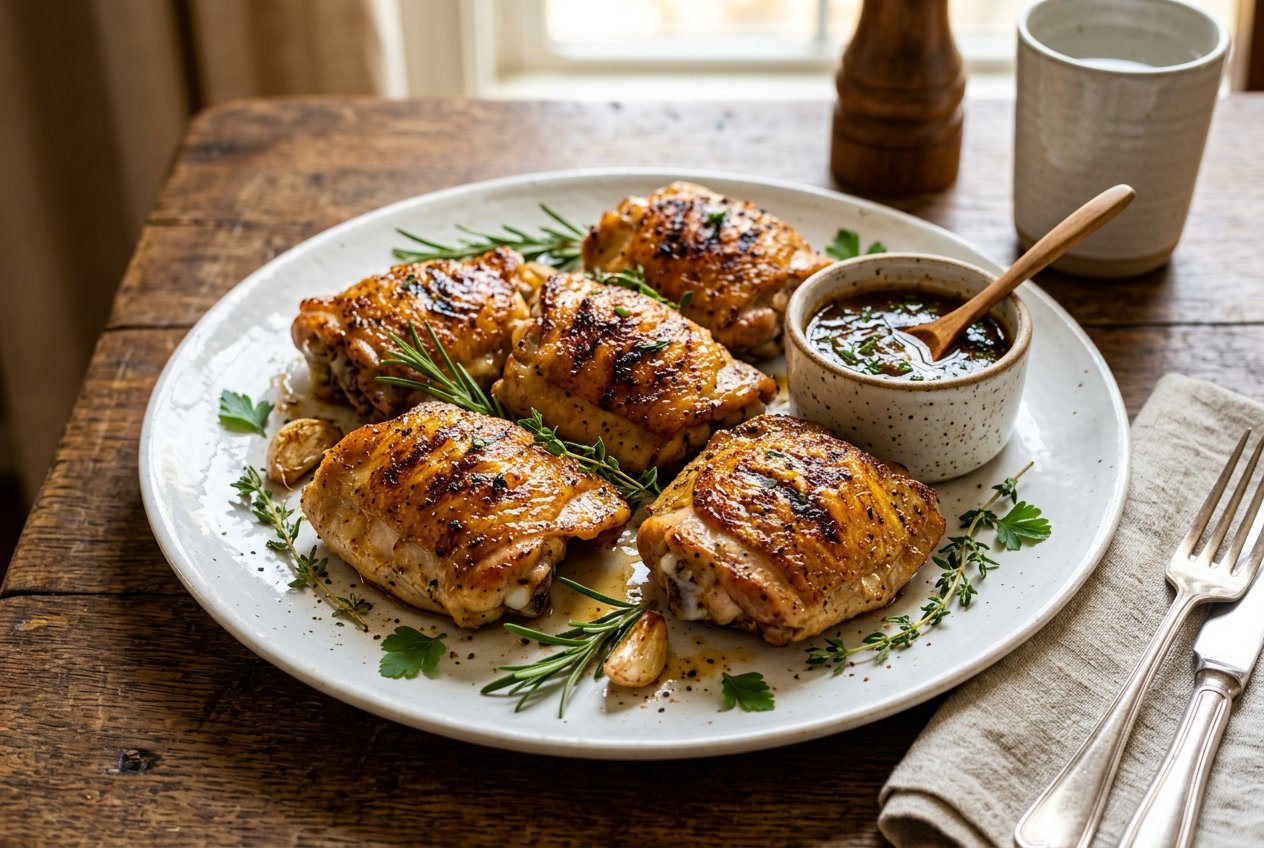
This post explains how bone-in and boneless thighs change cooking times, which oven temperatures and methods work best, and quick tips for crisp skin and deep flavor. Learn how to master oven roasting, stovetop searing, grilling, slow cooking, and pressure-cooker tricks so your thighs turn out consistently well.
Safe and Ideal Internal Temperatures
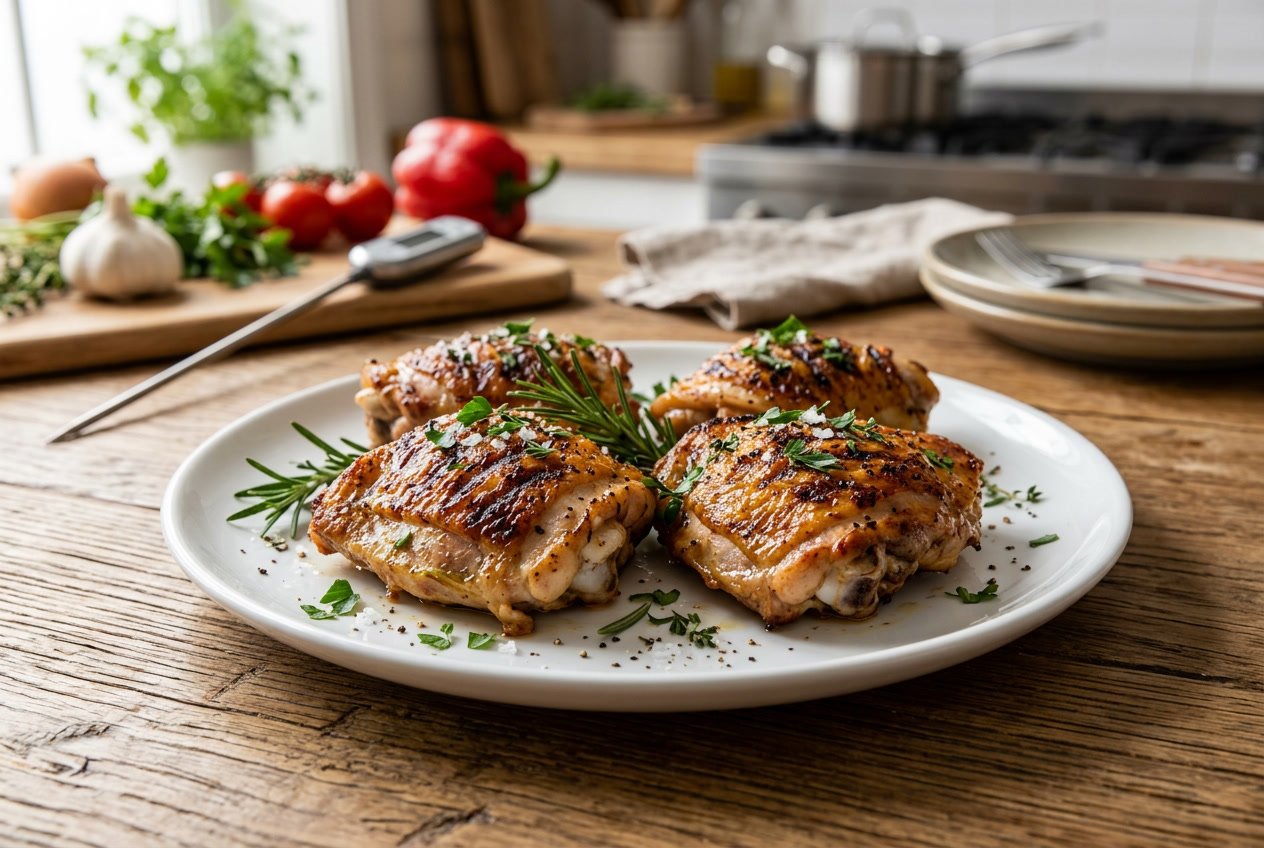
Balance food safety with texture by cooking to temperatures that kill pathogens and allow collagen in thighs to break down for juicy results.
USDA Safety Standards for Chicken Thighs
The USDA sets the minimum safe internal temperature for all poultry at 165°F (74°C). Make sure the thickest part of the thigh reaches this temperature to destroy harmful bacteria.
Use a calibrated meat thermometer and avoid touching bone, which reads hotter than surrounding meat. After the thighs reach 165°F, let them rest briefly; residual heat continues to cook the interior.
Do not rely on color or clear juices alone to check doneness. If you reheat leftovers, bring them back to 165°F before serving.
Best Temperatures for Juicy and Tender Results
Chicken thighs contain more collagen than breasts, so higher internal temps often improve texture. For bone-in, skin-on thighs, many cooks pull them at 175–185°F (79–85°C) to convert collagen into gelatin and yield tender, juicy meat.
Boneless thighs have less connective tissue and can dry out if pushed too high; aim for 165–175°F (74–79°C). If you want fall-off-the-bone tenderness for braises or slow cooking, target the upper end near 185°F.
For crisp-skinned pan-seared or roasted thighs, hit the desired internal temp, then rest briefly to redistribute juices.
How to Check Internal Temperature Correctly
Insert an instant-read meat thermometer into the thickest part of the thigh, avoiding contact with bone and fat pockets. Probe alongside the bone but do not touch it, as bone overestimates the temperature.
Wait for a steady reading; digital probes usually stabilize in a few seconds. If you use an oven probe, place it before cooking and monitor throughout.
Take multiple readings on larger pieces or crowded pans to confirm uniform doneness. Let the meat rest 3–5 minutes after removing from heat; internal temperature can rise a few degrees during rest, and juices will redistribute for juicier chicken thighs.
Types of Chicken Thighs and Their Cooking Needs
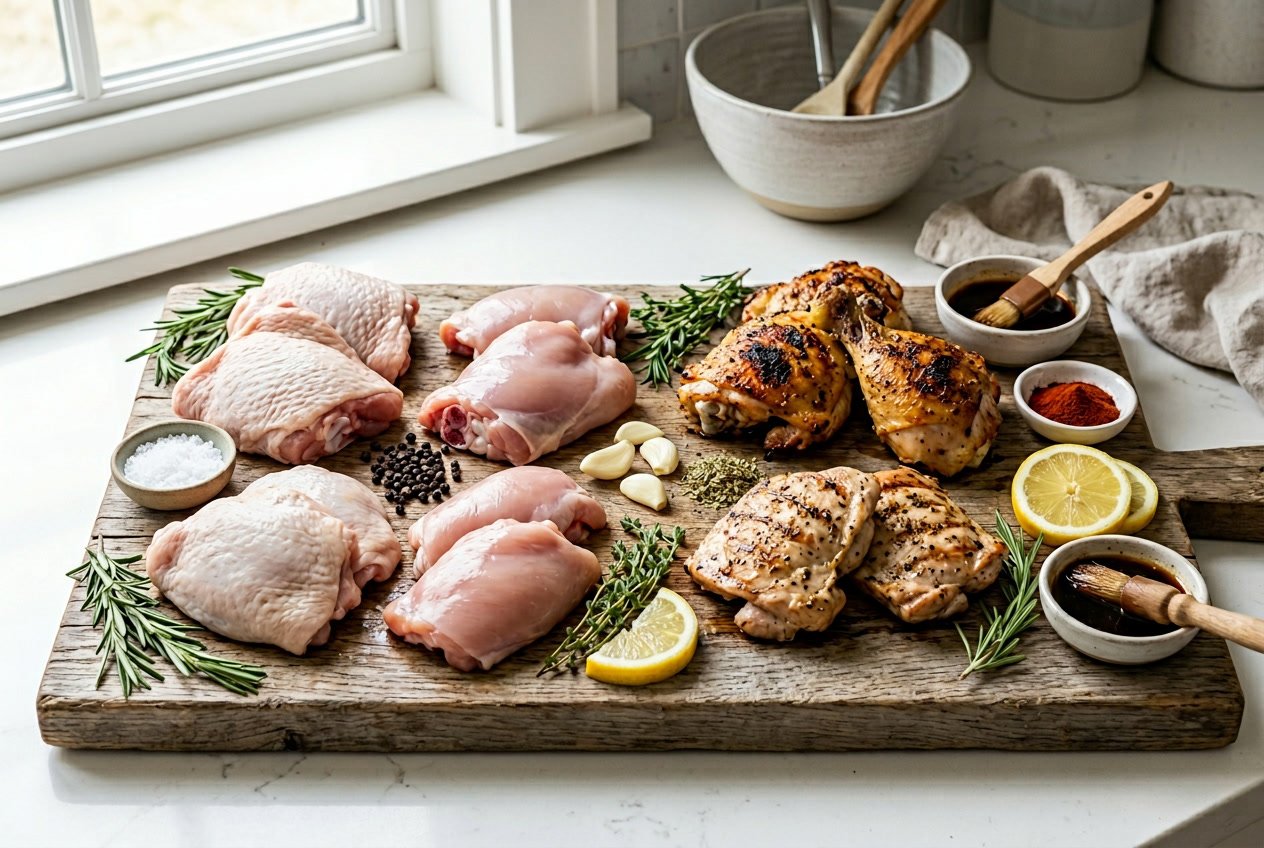
Different thigh types affect how you cook them, including target internal temperatures, timing, and whether you want crispy skin or shreddable meat. Choose the cut that matches your desired texture—crispy exterior, moist sliceable meat, or pull-apart tenderness.
Bone-In Chicken Thighs
Bone-in chicken thighs take longer to reach a safe internal temperature because the bone slows heat transfer. Aim for 175°F–185°F for best texture; the extra heat converts collagen to gelatin and makes the meat tender without drying.
Expect 35–45 minutes at 400°F in the oven for bone-in, skin-on pieces, or 20–25 minutes on indirect grill heat after an initial sear. Insert an instant-read thermometer near the bone but not touching it.
For pull-apart meat, cook toward the higher end (180°F–185°F). For crisp skin, finish under a broiler or sear skin-side down in a hot pan before finishing in the oven.
Skin-On Chicken Thighs
Skin-on thighs give you flavor and protection from drying, but the skin requires technique to get crisp. Pat the skin fully dry and salt ahead of time; leave uncovered in the fridge for at least an hour if possible.
Start skin-side down in a cold pan or roast at 400°F–425°F on a wire rack to render fat and develop color. Boneless skin-on thighs take about 25–30 minutes at 400°F; bone-in skin-on will need the longer times used for bone-in pieces.
A light dusting of baking powder in your dry rub can help the skin brown and crisp. Avoid covering with foil while cooking, as trapped steam softens the skin.
Boneless Chicken Thighs
Boneless chicken thighs cook fastest and peak at lower temperatures before drying. Pull boneless thighs at 165°F–170°F; 165°F delivers safe, juicy meat while 170°F adds slightly more tenderness.
Pan-sear for about 8–10 minutes total or bake for 20–25 minutes at 400°F depending on thickness. Because they lack a bone, these thighs respond well to quick high-heat methods like skillet, grill, or air fryer.
Watch for overcrowding; boneless pieces sear best with space between them. Use marinades or a quick brine to add flavor and moisture retention if you expect long cook times or reheating.
Skinless Chicken Thighs
Skinless thighs trim fat and crisping concerns but require careful timing to stay moist. Their texture benefits from slightly higher target temps than boneless skin-on pieces if you plan to shred them—175°F–185°F works for braises or slow-cooker recipes.
For quick cooking, aim for 165°F and remove promptly. When roasting or pan-frying skinless thighs, finish times drop: expect 20–25 minutes in a 400°F oven for bone-in skinless, and 15–20 minutes for boneless.
Because there’s no protective skin layer, use sauces, marinades, or a light oil rub to keep the surface from drying and to carry flavor into the meat.
Oven Cooking Temperatures and Times
Choose an oven temperature based on whether you prioritize juiciness, speed, or crispy skin. Use a meat thermometer and aim for 165°F (74°C) internal temperature.
Best Oven Temperatures for Chicken Thighs
Use 375°F (190°C) for reliably juicy, evenly cooked baked chicken thighs. This temperature gives fat time to render without drying the meat.
Choose 400°F (204°C) to shorten cook time while still retaining moisture. For fastest crisping, set the oven to 425°F (220°C).
At 425°F you’ll get browned, crispy skin but watch for over-browning. Reserve 450°F (232°C) only if you monitor closely or finish under the broiler; high heat can crisp skin quickly but may char edges before the interior reaches 165°F.
Convection ovens reduce time and improve crisping—subtract about 25°F or check earlier.
How Long to Bake Chicken Thighs at Different Temperatures
Bone-in thighs at 375°F (190°C): bake 35–45 minutes. Check with a thermometer near the bone; target 165°F (74°C).
Boneless thighs at 375°F will usually finish in 20–30 minutes. At 400°F (204°C): bone-in thighs need about 30–40 minutes; boneless take 18–25 minutes.
At 425°F (220°C): bone-in thighs commonly finish in 25–35 minutes; boneless in 15–22 minutes. At 450°F (232°C): expect 20–30 minutes for bone-in and 12–18 minutes for boneless, but verify internal temp.
Rest baked chicken thighs 5 minutes after removing from oven to let juices redistribute.
Achieving Crispy Chicken Thighs in the Oven
Dry the skin thoroughly before baking. Pat thighs with paper towels and, if possible, refrigerate uncovered for 30–60 minutes to air-dry the skin.
Use a light coating of oil and salt on the skin to promote browning. Place thighs skin-side up on a wire rack set over a rimmed baking sheet so air circulates and fat drains away.
Start at 400–425°F (204–220°C) or roast at 375°F (190°C) and finish under the broiler for a few minutes. For convection ovens, lower temp by about 25°F and shorten time.
Always confirm doneness with a meat thermometer reading 165°F (74°C).
Alternative Cooking Methods
You can use fast, high-heat, or low-and-slow options that suit different textures and schedules. Each method below lists target temperatures, timing cues, and practical tips for safe, juicy results.
How to Grill Chicken Thighs
Preheat your grill to medium-high (around 400–450°F). Oil the grates and place thighs skin-side down to start for a good sear and to help render fat.
For boneless, skinless thighs: grill 10–12 minutes total, turning once, until the internal temperature reaches 165°F. For bone-in or skin-on: grill 15–20 minutes, using direct heat to sear then moving to indirect heat if flare-ups occur; finish at 165°F near the bone.
Use an instant-read thermometer in the thickest part without touching bone. Season ahead or marinate 30 minutes to 8 hours.
Let the thighs rest 5–10 minutes after grilling to redistribute juices. For char and crisp skin, finish with a couple minutes over the hottest part of the grill.
How to Air Fry Chicken Thighs
Set the air fryer to 375–400°F. Pat thighs dry and apply a thin layer of oil and seasoning.
Arrange thighs skin-side up in a single layer with space between pieces. Cook boneless, skinless thighs about 12–18 minutes, flipping halfway; bone-in or skin-on need 18–22 minutes.
Target internal temp is 165°F; check near the bone for bone-in pieces. Shake or rotate the basket once for even browning.
Avoid overcrowding; work in batches if needed. For extra-crispy skin, increase temp to 400°F for the last few minutes.
Let rest 5 minutes before serving.
How to Fry Chicken Thighs
For pan-frying, use a heavy skillet over medium-high heat with a couple tablespoons of neutral oil. Pat thighs dry and season or dredge in flour for a golden crust.
Sear skin-side down for several minutes until deeply browned, then flip and reduce heat to medium. Cook another several minutes for boneless thighs; bone-in will take longer.
Finish when internal temperature reaches 165°F. Control oil temperature—around 325–350°F once the chicken is added—to avoid burning the crust while undercooking the interior.
For deep-frying, maintain oil at 350°F and fry until 165°F internal, usually 8–12 minutes for boneless pieces and 12–18 for bone-in. Drain on a rack to keep the crust crisp.
Rest 5 minutes before serving.
How to Broil or Braise Chicken Thighs
For broiling, place an oven rack 6–8 inches from the broiler and preheat to high. Put thighs on a foil-lined pan skin-side up.
Broil 6–10 minutes per side depending on thickness, watching closely to avoid burning. Check for 165°F internal temperature.
Broiling gives fast, intense top heat for crisp skin and quick cooking. For braising, brown thighs in a heavy Dutch oven over medium-high heat for a few minutes per side.
Add liquid (stock, wine, or sauce) to come about one-third up the thighs, cover, and simmer gently at 300–325°F (oven) or low stovetop. Cook 30–45 minutes for boneless, 40–60 minutes for bone-in, until meat is tender and reaches 165°F.
Braising yields fall-off-the-bone texture and concentrates flavors.
Essential Tips for Cooking Chicken Thighs
Learn how to hit safe and ideal internal temperatures, rest and slice for juiciness, and avoid timing and thermometer mistakes that dry out or undercook thighs.
Using a Thermometer for Precision
Use a reliable meat thermometer and insert it into the thickest part of the thigh without touching bone. Aim for at least 165°F (74°C) for safety, but many chefs prefer 175–185°F (79–85°C) for juicier, more tender thighs because connective tissue breaks down in that range.
Digital instant-read thermometers give fast, accurate readings. Probe thermometers work well for oven cooking.
For bone-in, check near but not on the bone. For boneless, center the probe horizontally for the best reading.
If oven temperature is 375–425°F, expect bone-in thighs to need 35–45 minutes and boneless 20–30 minutes, but rely on the thermometer rather than time. Calibrate or compare your thermometer occasionally to maintain accuracy.
Resting and Slicing Chicken Thighs
Let cooked thighs rest for 5–10 minutes before slicing. This helps the juices redistribute.
If you keep whole thighs tented loosely with foil during rest, you retain warmth without steaming the skin. For crispy chicken thighs, flip them skin-side up onto a rack while resting so steam escapes and the skin stays crisp.
Slice against the grain for the best mouthfeel if you plan to serve sliced. For shredded dishes, let thighs cool enough to handle, then pull along the natural muscle lines for even, juicy shreds.
Common Temperature Mistakes to Avoid
Do not rely solely on cooking time or appearance. The meat can look done while still below a safe temperature.
Place the probe away from the bone to get an accurate reading. If you read only the skin-side temperature, you risk undercooking the interior.
High oven temperatures can crisp skin but still leave the center undercooked. Use a thermometer to balance oven temperature, skin crisping, and internal doneness for juicy chicken thighs.
Flavor and Preparation Enhancements
Use acidic, salty, and umami components to season thighs. Let the skin dry for crisping and rest cooked thighs to redistribute juices.
Marinating Chicken Thighs
Marinades improve flavor and can tenderize if they contain acid or enzymes. Use a balance of 1 part acid (lemon juice, vinegar, or yogurt), 2 parts oil, and herbs or spices such as garlic, smoked paprika, soy sauce, or honey.
Marinate boneless thighs for 30 minutes to 4 hours. Bone-in thighs benefit from 2–12 hours.
Avoid very long acid-heavy marinades (over 12 hours) to prevent mushy texture. Always refrigerate while marinating and discard used marinade or boil it if you plan to use it as a sauce.
Pat thighs dry before cooking to promote browning and crispy skin when roasting or searing.
Best Chicken Thigh Recipes
Choose recipes that match your cooking method and time. For oven-roasted thighs, rub skin with oil, salt, pepper, and thyme, then roast at 400–425°F for 35–45 minutes (bone-in) or 20–30 minutes (boneless).
For stovetop-to-oven cooking, sear thighs skin-side down in a hot skillet until deeply browned. Finish at 375°F until the internal temperature reaches 175–180°F for tender results.
For braises or slow cooking, combine thighs with aromatic vegetables, stock, and a splash of acid such as wine or vinegar. Cook low until the meat is fall-apart tender; timing ranges from 3–4 hours on low in a slow cooker to 1–1.5 hours in a covered oven at 325°F.
Serving Ideas and Pairings
Serve roasted or grilled thighs with starchy sides that soak up juices, such as mashed potatoes, rice pilaf, or buttered couscous.
Roast vegetables like carrots, Brussels sprouts, or onions alongside the chicken to add flavor.
Add a squeeze of lemon or chopped herbs like parsley or cilantro to sauced thighs for freshness.
Pair spice-forward preparations with cooling sides like yogurt-based cucumber salad or a simple green salad.
Serve braised thighs with creamy polenta or crusty bread to enjoy the sauce.


