
What Are Chicken Thighs Best For? Guide to Recipes & Uses
If you want a cut that stays juicy, carries bold flavors, and adapts to nearly any cooking method, chicken thighs are your best bet.
They tolerate high heat for crispy skin, long braises for fall-apart tenderness, and quick pan or air-fryer cooks without drying out.
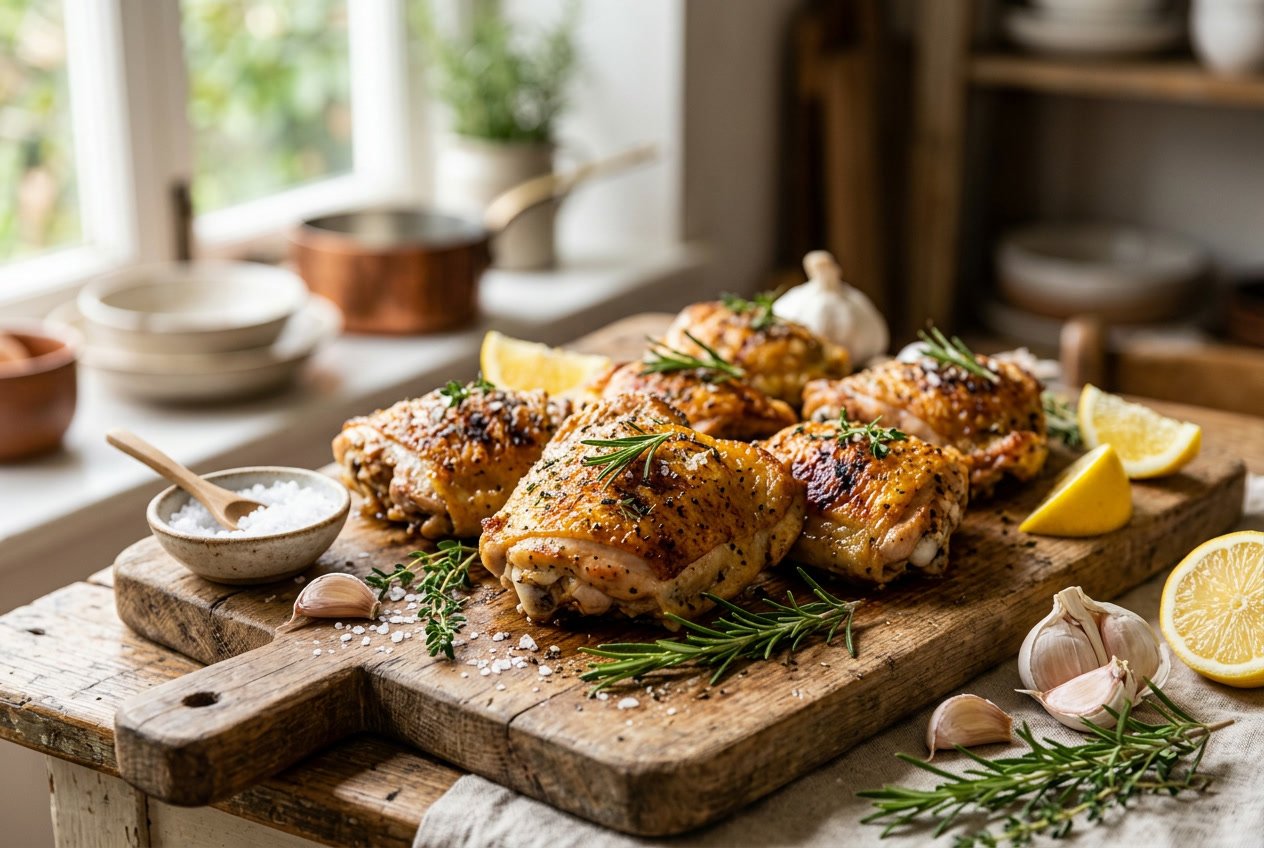
Use bone-in, skin-on thighs when you want maximum flavor and richness.
Choose boneless, skinless for faster, leaner weeknight meals.
As you scroll, you’ll find which thighs suit grilling, roasting, braising, or a one-pot shortcut.
You’ll also get tips to lock in moisture and get crisp skin every time.
Why Chicken Thighs Stand Out
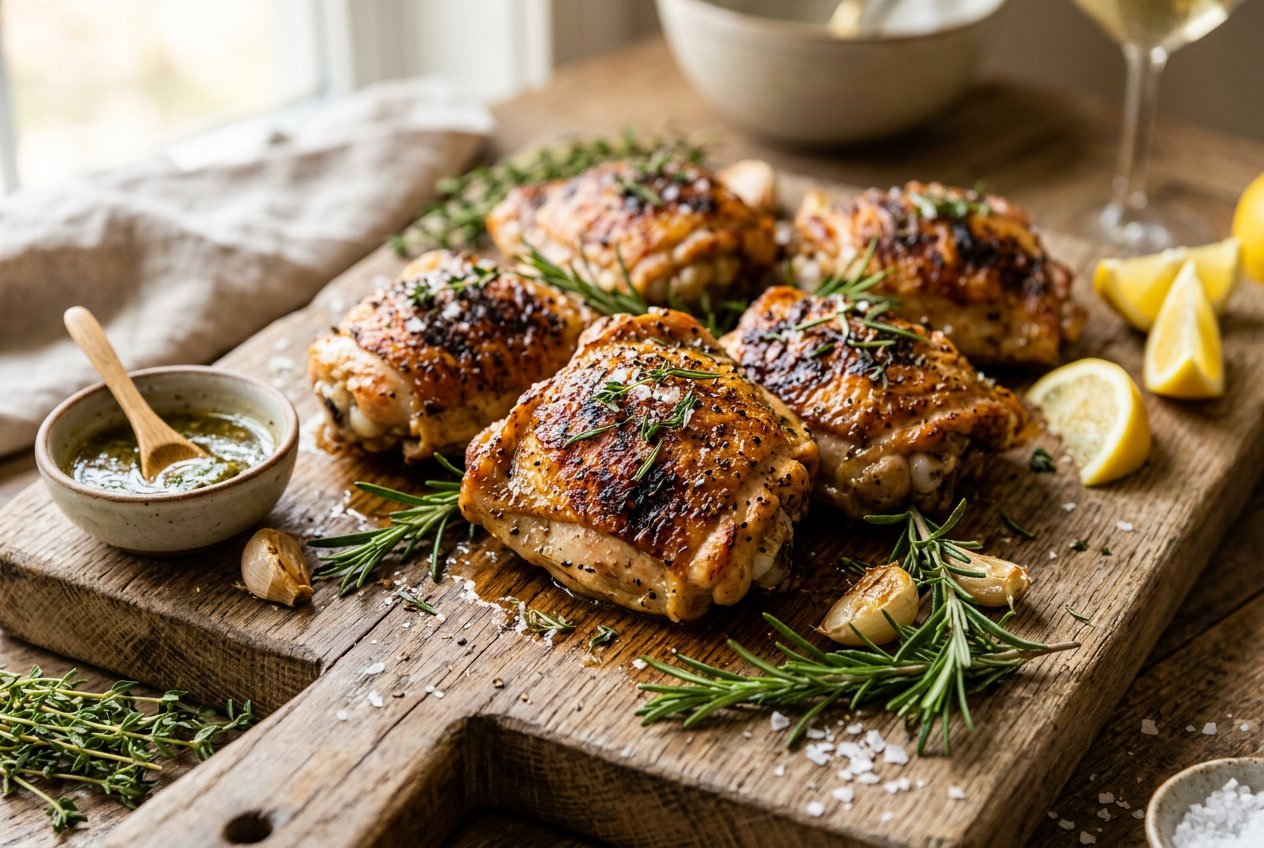
Chicken thighs give you richer flavor, forgiving cooking performance, and better cost-per-serving.
They hold moisture and fat where it matters, deliver more usable collagen for sauces and stocks, and typically cost less per pound than breasts.
Flavor and Texture Advantages
Thighs contain more intramuscular fat and connective tissue than breasts.
This gives you a deeper, savory taste when you roast, braise, or grill them.
The fat renders during cooking and keeps the meat moist, so you end up with juicy chicken thighs even if you leave them in the oven a bit longer.
Higher collagen content breaks down into gelatin when you cook thighs low and slow, improving mouthfeel and adding body to stews and sauces.
Skin-on thighs crisp well under high heat, creating a contrast between crunchy skin and tender, succulent meat beneath.
Affordability Compared to Other Cuts
You often find chicken thighs priced lower per pound than boneless skinless breasts.
This makes them a smart choice when you cook for a family or batch-cook meals.
Buying bone-in thighs stretches your food budget further because the bones add weight and you can use them for homemade stock.
Thighs typically give you more forgiving results per dollar because they resist drying and waste less in failed meals.
For budget-conscious menus, you can pair bold marinades or slow-cook techniques with thighs without losing quality.
Nutritional Benefits
Thighs provide similar protein to breasts but include more fat.
This increases calories slightly while contributing fat-soluble vitamins and a richer flavor profile.
You get B vitamins (notably niacin and B12) and iron in amounts comparable to other dark meats, supporting energy metabolism and oxygen transport.
If you monitor saturated fat, remove the skin to cut total fat substantially while keeping protein intact.
Using thighs in stews or soups also releases collagen into the broth, improving texture and adding a small protein boost to the liquid.
Types of Chicken Thighs and When to Use Them
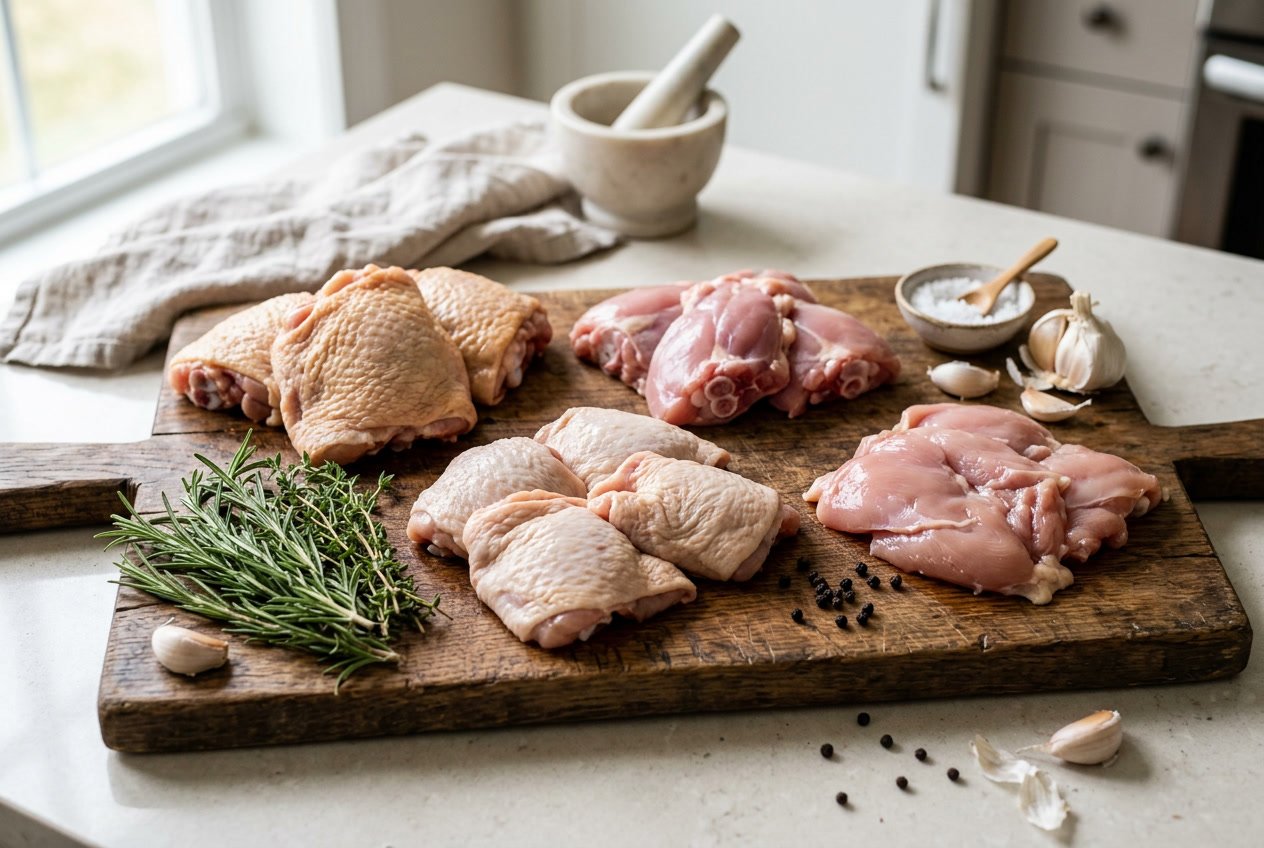
Choose based on cooking time, texture, and whether you want crispy skin or easy shredding.
Bone-in cuts hold moisture and flavor for long cooks; boneless shorten cook time and work well for quick sears and stir-fries.
Bone-In vs. Boneless Chicken Thighs
Bone-in chicken thighs keep heat and flavor close to the meat.
They work best when you braise, roast, or grill.
Use bone-in when you need richer flavor and forgiving texture.
Pull them at 175°F–185°F for gelatinized collagen that yields tender results.
Expect longer cook times: 35–45 minutes at 400°F for oven roasting.
Boneless chicken thighs cook faster and are easier to cut or shred.
They shine in pan-searing, stir-fries, and pressure-cooker meals where you want quick, even cooking and sliceable pieces.
Pull boneless at 165°F–170°F to avoid drying.
Use boneless for tacos, sandwiches, and weeknight dinners where speed and convenience matter.
Skin-On vs. Skinless Chicken Thighs
Skin-on chicken thighs give you concentrated fat and flavor.
The skin crisps when you dry, salt, and roast or pan-sear at high heat.
For crispy results, pat the skin completely dry.
Start skin-side down in a cold pan or use a wire rack in a 400°F–425°F oven, and don’t crowd the pieces.
Skin-on thighs also handle grilling and high-heat broiling well.
Skinless chicken thighs reduce cooking time and fat, and they absorb marinades quickly.
Choose skinless for braises, curries, and dishes where you want even sauce coverage or immediate shredding.
They’re ideal for the Instant Pot or for recipes that call for lower surface fat and uniform texture.
Best Cooking Methods for Chicken Thighs
Choose methods that protect moisture, render fat, and produce either a crispy exterior or a silky interior depending on the dish.
Focus on heat control, spacing, and finishing techniques to get consistent results.
Roasting and Baking
Roasting and baking work well when you need even cooking for multiple thighs at once.
Preheat the oven to 400°F–425°F and place thighs skin-side up on a wire rack set over a rimmed sheet pan.
This lets fat drip away and air circulate for crispy baked chicken thighs.
Bone-in, skin-on thighs typically take 35–45 minutes; boneless take 20–30 minutes.
Pat skin fully dry and salt ahead of time to draw out moisture and improve browning.
For sheet-pan dinners, space thighs 1–1.5 inches apart so drippings don’t cause steaming.
To boost crispiness, finish under the broiler 2–4 minutes or start skin-side down in an oven-safe skillet to render fat before transferring to the oven.
You can also use the air fryer as a fast alternative: 400°F for 22–28 minutes (bone-in) or 16–20 minutes (boneless) yields crispy chicken thighs with minimal fuss.
Braising and Slow Cooking
Braising and slow cooking turn thighs into tender, fall-apart meat by breaking down collagen into gelatin.
Brown the thighs first in a skillet to develop color, then add aromatics and a flavorful liquid (stock, wine, or tomato).
Simmer covered at low heat.
For stovetop or oven braises, cook gently for 45–90 minutes until the meat reaches 175°F–185°F and shreds easily.
In a slow cooker, cook on low for 6–7 hours or high for 3–4 hours for reliably tender results.
Transfer to a hot pan or broiler for a minute if you want a hint of crispness.
Braised chicken thighs pair well with porous sauces that cling to shredded meat.
Use bone-in thighs for deeper flavor and better texture in long-cooked preparations.
Top Chicken Thigh Recipes for Every Occasion
Chicken thighs give you reliable juiciness, strong flavor, and forgiving cook times across quick weeknight meals, international recipes, and large-party fare.
You can use them bone-in or boneless, skin-on for crisping, or skinless for saucier dishes.
Weeknight Dinner Favorites
For busy nights choose recipes that cook quickly or deliver big returns with minimal effort.
Pan-seared or oven-roasted chicken thighs crisp skin in 25–35 minutes and pair well with roasted potatoes or a simple salad.
Use boneless, skinless thighs for fast skillet dinners like smothered chicken with a pan gravy.
Toss thighs in a one-pan sheet-dinner with potatoes and vegetables to save cleanup time.
Instant Pot chicken thighs reduce braise and stew times.
Pressure-cook thighs with tomatoes and mushrooms for a quick chicken cacciatore.
Make a creamy chicken stroganoff by pressure-cooking then finishing with sour cream.
Marinate thighs in citrus, soy, or a yogurt-based mix for 20–30 minutes to boost flavor without adding prep time.
This keeps the meat juicy and gives you ready-to-serve weeknight dinners in under an hour.
International Dishes Featuring Chicken Thighs
Chicken thighs stand up well to bold international sauces and long simmering.
Use them in curries, adobo, and braised stews where the connective tissue melts and enriches the sauce.
For Southeast Asian profiles, simmer chicken adobo with soy, vinegar, and garlic.
The thigh’s fat balances the tang.
For South Asian flavors, make a tomato-based chicken curry that tolerates longer simmering and yields tender, fall-apart meat.
Japanese karaage or grilled chicken thighs give you texture.
A thin potato-starch coating or high-heat grill produces a crisp exterior while preserving interior juiciness.
Bourbon chicken adapts well to thighs.
Caramelized sauce clings to the meat and stays moist.
Choose bone-in thighs for deeply flavored braises and boneless for faster stovetop or wok dishes.
Crowd-Pleasing Party Recipes
When serving a group, pick recipes that scale, travel, and hold heat without drying.
Slow-roasted or braised thighs—like honey-garlic or apricot-baked styles—retain moisture and reheat well.
Sheet-pan dinners with chicken thighs, sausage, peppers, and potatoes feed many with one pan.
Guests can serve themselves and flavors improve slightly after resting.
For buffet-style events, prepare sauced options such as teriyaki or bourbon chicken in a slow cooker to keep thighs warm and tender.
Grilled chicken thighs marinated in advance also work well for backyard parties.
They crisp on the grill and stay juicy at room temperature for service.
Label options clearly (spicy, gluten-free, dairy-free) so guests know what fits their needs.
You can cook batches efficiently.
Quick and Easy One-Pot or Appliance Chicken Thigh Meals
You can get a full, flavorful dinner with minimal hands-on time by using a pressure cooker, slow cooker, or sheet pan.
Focus on simple aromatics, a reliable liquid (broth, salsa, or a vinegar-based brine), and one cooking temperature to keep thighs juicy and well-seasoned.
Instant Pot Chicken Thigh Ideas
Use bone-in or boneless thighs for fast, tender results in about 10–15 minutes at high pressure.
Sear the thighs first for color, then add 1 to 1½ cups of liquid—chicken broth, salsa, or a mix of soy sauce and water—so the pot reaches pressure and the meat stays moist.
Try a classic adobo-style mix: vinegar, soy, garlic, bay leaf, and black pepper.
It cooks quickly and yields punchy flavor.
For rice-forward one-pot meals, add rinsed rice and reduce liquid slightly.
Freeze-thawed or raw vegetables steam well on top.
Release pressure naturally for 5–10 minutes to keep juices locked in.
Use the sauté function after pressure cooking to thicken sauces or crisp the skin briefly.
Slow Cooker and Sheet Pan Meals
For set-and-forget slow cooker dinners, brown thighs first if you want deeper flavor.
Combine with root vegetables, canned tomatoes, or curry paste and ½–1 cup broth.
Cook on low for 4–6 hours or high for 2–3 hours until meat falls off the bone.
Adjust salt at the end.
Slow cooker Mexican, Mississippi-style, and coconut curry versions all adapt well.
Sheet-pan chicken thighs roast at 425°F for 25–35 minutes with vegetables spread in a single layer.
Marinate or toss thighs with oil, mustard, or chimichurri.
Add potatoes, carrots, or broccoli that finish in the same time.
For extra crisp skin, start skin-side down in a hot skillet for 5 minutes, then transfer to the sheet pan.
Comfort Food and Soups Using Chicken Thighs
Chicken thighs bring rich flavor, moist texture, and forgiving cooking time to recipes that benefit from slow simmering or braising.
You’ll get deeper broth, tender meat, and cheaper protein whether you’re making a stew, braise, or a classic soup.
Classic Stews and Braises
Use bone-in, skin-on thighs for stews and braises to extract collagen and fat that enrich the sauce.
Brown the thighs first to build caramelized flavor, then deglaze with stock, wine, or tomato.
Simmer gently until the meat pulls from the bone.
Vegetables like carrots, onions, and celery hold up well.
Add root vegetables early and delicate greens near the end.
For seasoning, thyme, bay leaf, and a splash of vinegar or lemon brighten the dish.
Serve over mashed potatoes, polenta, or buttered noodles to absorb the sauce.
Thighs tolerate long cooking without drying, so you can plan one-pot meals that reheat well and feed a crowd.
Soup Recipes with Chicken Thighs
Chicken thighs make broths richer and stay tender after long simmering.
Use them for chicken noodle soup, chicken tortilla soup, and chicken and wild rice soup.
Simmer bone-in thighs for 30–60 minutes, skim foam, then remove and shred the meat before returning it to the pot.
For chicken noodle soup, cook noodles separately and add before serving to prevent soggy pasta.
For chicken tortilla soup, finish with charred tomatoes, cumin, cilantro, and crisp tortilla strips.
Add shredded thigh meat at the end to keep it juicy.
In chicken and wild rice soup, toast the rice, simmer in the thigh-enriched broth, and stir in cream or a roux for body.
The thigh meat’s fat helps create a silky mouthfeel without adding heavy cream.
Tips for Ensuring Juicy and Flavorful Chicken Thighs
Keep the skin dry for crispness. Season or brine to maintain moisture.
Control the cooking temperature so the connective tissue breaks down without drying the meat.
Marinating and Seasoning
Brine chicken thighs in a salt-forward solution or a flavorful marinade to lock in moisture. To make a basic brine, dissolve 1/4 cup kosher salt and 1/4 cup sugar per quart of water.
Soak bone-in, skin-on thighs for 30 minutes to 4 hours. Pat them dry before cooking to achieve crispy skin.
If you choose a marinade, combine an acid like vinegar, lemon, or yogurt with oil and aromatics. Marinate for 30 minutes to overnight.
Using yogurt or enzyme-rich ingredients such as pineapple or papaya for longer periods tenderizes more but can make the texture mushy if overdone.
Season generously with salt and a complementary spice blend. Garlic powder, smoked paprika, black pepper, and thyme work well.
Score the skin lightly to help flavors penetrate without losing juices.
Cooking Times and Temperatures
Sear the chicken on medium-high heat skin-side down for 6–8 minutes until golden and crisp. This step renders fat and creates crisp skin while keeping the interior moist.
Finish cooking in a 400°F (205°C) oven for 20–25 minutes for bone-in thighs. For boneless thighs, bake for 15–20 minutes until the internal temperature reaches 165°F (74°C).
For extra tenderness, cook bone-in thighs to 175–185°F (79–85°C). Higher temperatures help soften connective tissue and make the meat juicier.
Check the temperature with a meat thermometer. Rest the thighs for 5–10 minutes before slicing to let juices redistribute.
For slow-cooked or braised dishes, simmer on low for 3–4 hours until the meat becomes fall-apart tender. Reduce the cooking liquid to concentrate flavor and spoon it over the thighs for added richness.


