
What Are Chicken Thighs? Everything You Need to Know
Chicken thighs are the flavorful, forgiving part of the bird that cooks well across many techniques. You can roast, grill, braise, or fry them with great results.
A chicken thigh is the dark meat from the upper leg of the bird. It’s richer and more forgiving than breast meat, available bone-in or boneless, with or without skin, and well suited to a wide range of recipes.
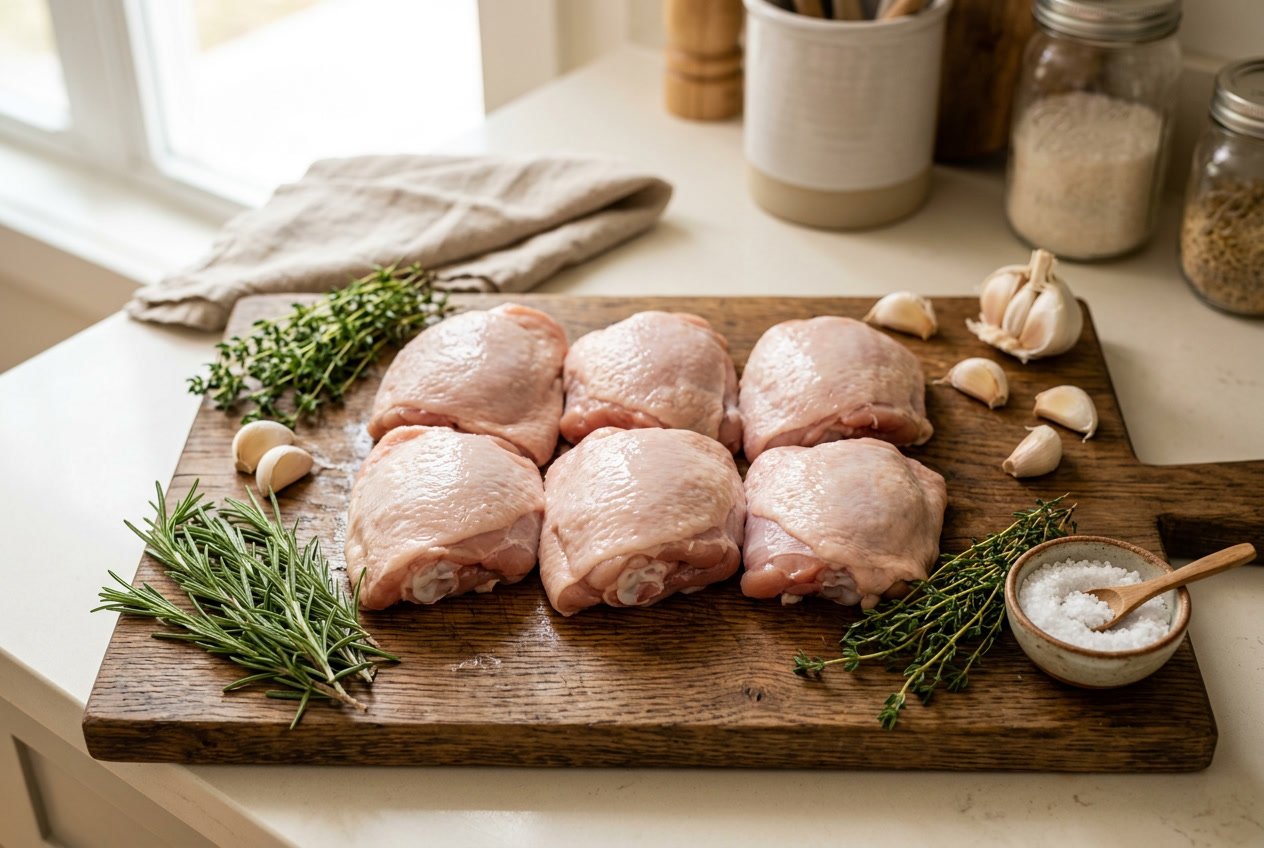
This article explains how to choose between bone-in, boneless, skin-on, and skinless thighs. You’ll also get tips on nutrition, cooking, marinades, favorite recipes, serving pairings, and safe selection and storage.
What Are Chicken Thighs?
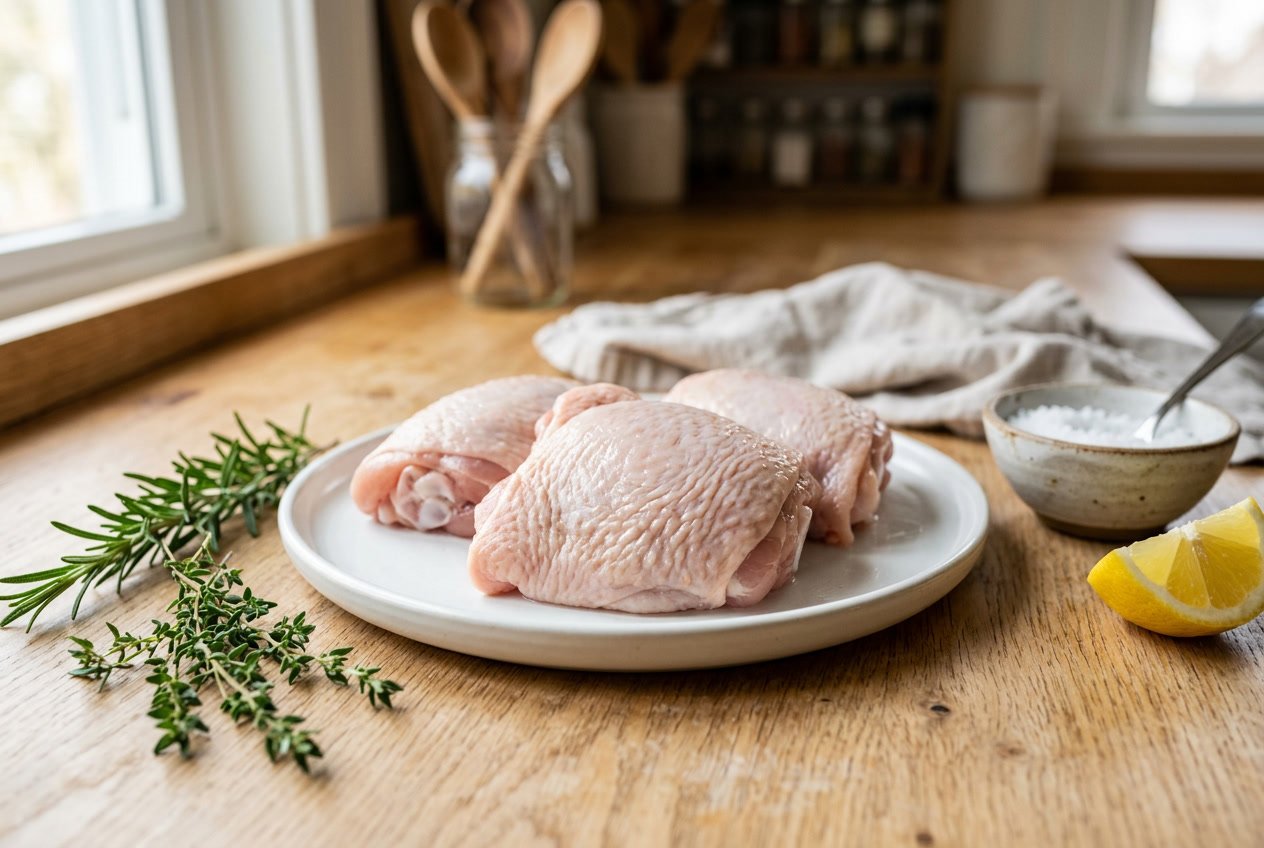
Chicken thighs are the upper part of a bird’s leg. They have higher fat content and stay moist through many cooking methods.
You’ll find them sold bone-in or boneless, with skin on or removed. They often cost less per pound than breasts.
Where Chicken Thighs Come From
The thigh sits between the hip and the knee on a chicken’s leg. It connects to the body at the hip joint and to the drumstick at the knee joint.
When you buy a whole leg, the thigh and drumstick may remain attached. Butchers often separate them into individual cuts.
You can buy thighs as:
- Bone-in, skin-on — best for roasting, braising, and grilling.
- Boneless, skinless — quick to cook and good for sautés and skewers.
- Thigh fillets — trimmed boneless pieces for uniform portioning.
Thighs are dark meat because the muscles work more for standing and walking. This affects the meat’s color and fat content.
Chicken Thighs vs. Other Chicken Cuts
Thighs contain more intramuscular fat and connective tissue than breast meat. This gives richer flavor and a higher tolerance for longer or higher-heat cooking without drying out.
A 3-ounce skinless thigh typically has more calories and fat than a 3-ounce breast, but it offers more flavor per bite.
Compared with drumsticks, thighs are meatier and easier to slice or shred. Wings and tenderloins are smaller and cook faster, while backs and necks are mainly for stock.
Choose thighs when you want substantial meat, flavor, and resilience during slow or high-heat methods.
Flavor and Texture of Chicken Thighs
Thighs deliver a deeper, meatier taste than breast because of higher fat and collagen. When you cook them low and slow, collagen breaks down into gelatin, producing tender, juicy chicken.
When you cook them hot and fast, the skin crisps and renders fat, giving a savory contrast to the tender interior.
For maximum juiciness:
- Cook to 165–175°F depending on method; thighs remain tender at slightly higher temps than breasts.
- Use marinades or brines to boost moisture and seasoning penetration.
Leaving skin on for roasting or searing protects the meat and adds texture.
Types of Chicken Thighs
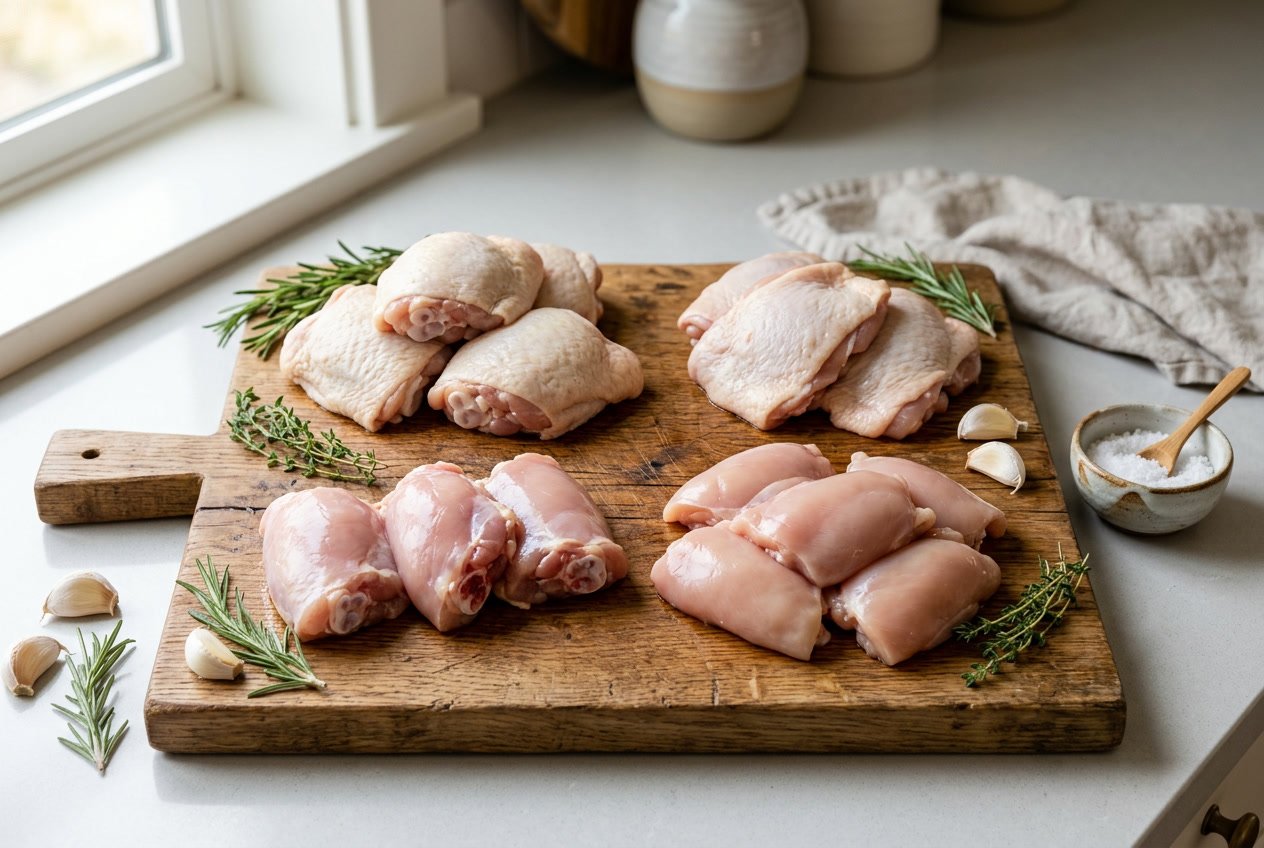
You’ll find thighs sold with or without the bone, and with or without the skin. Each combination affects flavor, cooking time, and how you should handle and store the meat.
Bone-In Chicken Thighs
Bone-in chicken thighs include the femur and often a portion of the joint. The bone slows heat transfer, so these thighs take longer to reach 165°F (74°C) than boneless pieces.
That longer cook time helps render fat and release marrow flavors, which boosts richness in braises, roasts, and slow-cooked dishes.
If you roast or grill, you get juicier meat and better texture around the bone. When cutting, use a sharp knife to work along the bone if you want to debone after cooking.
Bone-in thighs also cost less per pound in many markets, so they’re economical for family meals.
Boneless Chicken Thighs
Butchers remove the meat from the bone and trim it to make boneless chicken thighs. They may be sold as whole fillets or chopped.
They cook faster and more evenly than bone-in thighs, making them ideal for stir-fries, pan-searing, and quick weeknight recipes. Because they heat through quickly, watch cooking time closely to avoid overcooking.
Boneless thighs handle marinades and breading well and are easier to portion and stuff. They typically have a bit less of the deep flavor that bone-in pieces deliver, but their higher surface area and quicker cook time make them versatile for high-heat techniques and recipes that require uniform thickness.
Skin-On vs. Skinless Chicken Thighs
Skin-on thighs keep fat and moisture during cooking. The skin crisps up when roasted or fried and adds texture and flavor.
If you want a browned, crackling exterior, choose skin-on. Leave skin on for roasts, pan-frying, or braises where you’ll crisp the skin at the end.
Skinless thighs are leaner and reduce overall fat in the dish. They absorb marinades faster and are easier to use in preparations where you want immediate seasoning contact or lower surface fat.
You can always remove skin after cooking, but it won’t crisp once discarded before cooking.
Nutritional Value and Benefits
Chicken thighs deliver concentrated protein, measurable amounts of iron and zinc, and more fat than breasts. This helps keep dishes moist and satisfying.
They work well when you need filling, nutrient-dense portions that tolerate longer cooking without drying out.
Protein and Fat Content
A cooked, boneless, skinless chicken thigh (about 100 g) typically provides roughly 25–28 g of protein and around 9–11 g of total fat. Protein supports muscle repair and satiety; one thigh often supplies a substantial portion of an adult’s per-meal protein target.
Fat in thighs includes both saturated and unsaturated types. The extra fat raises calories compared with breast meat but preserves moisture and tenderness during cooking.
If you remove the skin you cut fat and calories notably, while keeping most of the protein.
Grilling or roasting keeps fat content close to the natural level, while frying or adding heavy sauces increases total calories and saturated fat. For tender chicken thighs, use moderate heat and rest before slicing to retain juices.
Cost and Affordability
Chicken thighs tend to cost less per pound than boneless chicken breasts, making them a budget-friendly protein for weekly meal planning. You can buy thighs bone-in or boneless; bone-in packages are usually the cheapest option per serving.
Their price point and forgiving cooking properties reduce waste. Thighs remain tender even when cooked longer, so you’re less likely to overcook and discard them.
Frozen thighs offer further savings and preserve most nutrients. Buying in bulk and portioning into meal-sized packages helps you control costs and ensures you always have tender chicken thighs ready for recipes.
Why Chicken Thighs Are Popular
People favor thighs for flavor and texture. Dark meat contains more myoglobin, which gives a richer taste and a juicier bite than white meat.
That natural richness pairs well with marinades, slow-cooking, and high-heat searing. Thighs also deliver micronutrients at higher levels than breasts—particularly iron, zinc, and several B vitamins—which supports energy metabolism and immune function.
Thighs adapt to many cuisines, tolerate diverse cooking techniques, and stay tender. You get consistent results for weeknight dinners, barbecue, or braised dishes.
How to Cook Chicken Thighs
Focus on temperature, timing, and simple prep to get juicy meat and, when desired, crispy skin. Pick bone-in, skin-on for texture and flavor; use boneless for faster weeknight meals.
Baked Chicken Thighs
Preheat your oven to 400–425°F (200–220°C) for skin-on, bone-in thighs; 400°F works well for boneless. Pat thighs dry, season with salt, pepper, and a little oil, and arrange skin-side up on a rimmed sheet pan or in a shallow roasting pan.
Bake uncovered for about 30–40 minutes for bone-in, skin-on, or 20–25 minutes for boneless, until an internal thermometer reads 175–185°F for tender dark meat (or 165°F if you prefer minimal carryover).
For crispy baked chicken thighs, finish under the broiler 1–2 minutes, watching closely. Let thighs rest 5–10 minutes before cutting to let juices redistribute.
Use a wire rack on the sheet pan to help the skin crisp and keep the bottom from steaming.
Grilled Chicken Thighs
Preheat grill to medium-high (about 400°F). Oil the grates to prevent sticking and pat thighs dry.
Marinate or rub with spices for at least 30 minutes if time allows. For bone-in, skin-on thighs, grill skin-side down first for 6–8 minutes to render fat and develop grill marks, then flip and cook another 10–12 minutes, moving to indirect heat if flare-ups occur.
For boneless, cook 6–8 minutes per side. Target 175–185°F for bone-in; 170–180°F for boneless.
Let the meat rest a few minutes after grilling. Slice against the grain for best texture.
Use a thermometer rather than time alone, since grill temperature and cut thickness vary.
Roasted Chicken Thighs
Roasting at 425°F gives deeply browned, crispy chicken thighs while keeping meat juicy. Toss thighs with oil and seasonings; arrange with space between pieces so air circulates and skin crisps evenly.
Roast bone-in, skin-on thighs 35–45 minutes depending on size, checking for 175–190°F for very tender results. For a saucier roast, add vegetables beneath the thighs to catch drippings and roast at 400°F; you may need to increase time by 5–10 minutes.
For extra-crispy chicken thighs, start at 450°F for the first 10 minutes, then lower to 400°F to finish. Rest briefly before serving so the juices settle.
Air Fryer Chicken Thighs
Preheat the air fryer to 380–400°F. Pat thighs dry and lightly oil; a thin coating of oil helps the air fryer produce crispy skin without deep frying.
Cook boneless thighs 12–16 minutes, flipping once halfway; cook bone-in, skin-on thighs 18–24 minutes, flipping at the midpoint. Check for 170–185°F depending on whether you want slightly firmer or more fall-apart dark meat.
For extra crispiness, raise the final 2–3 minutes to 400–420°F or use a short broil if your model allows.
Avoid overcrowding the basket; leave space for hot air to circulate. Let rest 5 minutes before serving to preserve juiciness and finish setting the crust.
Seasoning and Marinades
Use a balance of salt, acid, and fat to build flavor and tenderize. Choose spices that complement the thigh’s rich, slightly fatty meat.
Layer herbs or marinades so flavors penetrate without overpowering.
Essential Spices for Chicken Thighs
Start with salt and freshly ground black pepper; they are essential for seasoning that reaches the meat. Add paprika for color and a mild smoky-sweet note. Use 1–2 teaspoons per pound for a noticeable lift.
Garlic powder and onion powder provide background savoriness without adding moisture, so they work well in dry rubs. Cumin or chili powder add warmth if you want a bolder profile; use sparingly (½–1 teaspoon per pound) to avoid masking the chicken.
For a classic chicken seasoning, combine: 1 tbsp salt, 1 tsp black pepper, 1 tbsp paprika, 1 tsp garlic powder, 1 tsp onion powder. Rub under and over the skin to season evenly.
If you prefer a wet marinade, reduce the salt by half and balance with 2–3 tbsp acid (lemon juice or vinegar) and 2–4 tbsp oil so the spices suspend and coat the thighs.
Herbs and Flavor Combinations
Oregano and thyme work well for chicken thighs. Both herbs pair with citrus, garlic, and olive oil and can handle high heat.
Use 1–2 teaspoons dried oregano or 1 tablespoon fresh chopped. Thyme works at a similar ratio.
Combine the herbs with a marinade of 3 tablespoons olive oil, 2 tablespoons lemon juice, 2 minced garlic cloves, 1 teaspoon dried oregano, 1 teaspoon dried thyme, salt, and pepper. Marinate for 30 minutes to 4 hours.
For Mediterranean flavor, add oregano, lemon zest, and a pinch of crushed red pepper. Tuck fresh thyme sprigs under the skin before roasting for an herb-forward taste.
Mix honey or maple syrup with soy sauce and paprika for a sticky glaze that complements thyme or oregano if you want a sweeter contrast.
Tips for Crispy and Juicy Results
Pat the skin dry with paper towels before applying a dry rub or oil-based marinade. Dry skin crisps better.
If you use a wet marinade, blot the thighs before cooking to help browning. Cook skin-side down first on medium-high heat to render fat and create a crisp surface.
Finish cooking on indirect heat or in the oven until the internal temperature reaches 165°F. Use a probe thermometer to avoid overcooking.
Rest the thighs for 5–10 minutes after cooking so juices redistribute. Sprinkle finishing salt and cracked black pepper just before serving for extra texture.
Do not marinate chicken in acidic mixtures for more than 24 hours, as acids can make the meat mushy.
Popular Chicken Thigh Recipes
Chicken thighs adapt well to high-heat searing, long braises, and quick pressure-cooker meals. You can highlight crispy skin, deeply flavored sauces, or easy shredding for tacos, soups, and sandwiches.
Chicken Thigh Recipe Ideas
Use bone-in, skin-on thighs for roasting and braising. Choose boneless thighs for quick sautéing and slicing.
Try pan-seared thighs with lemon-olive tapenade for a crispy-skinned roast. Brown boneless thighs and finish them in a skillet with mushrooms and a mustard-cream sauce for a simple chicken stroganoff twist.
Braise thighs with onions, garlic, and spices until they fall apart for shredded chicken. Use the shredded meat in tacos, enchiladas, or chicken tortilla soup.
Quick weeknight sauces include gochujang glaze, honey-soy, or a tomato-based cacciatore-style braise. These sauces balance the richness of the thigh with acid or sweetness.
Weeknight Dinners with Chicken Thighs
Choose speed or low-effort meals for weeknight dinners. Roast sheet-pan chicken thighs with potatoes and vegetables in 30–40 minutes for a one-pan meal.
Use an Instant Pot to make chicken adobo or quick chicken curry. Pressure cooking shreds thighs quickly and locks in sauce flavor.
Make smothered chicken or beer-braised onion chicken in a Dutch oven for hands-off comfort. Serve with rice or noodles for a hearty plate.
International Chicken Thigh Dishes
Explore global recipes that showcase the versatility of chicken thighs. Filipino chicken adobo braises thighs in soy, vinegar, and garlic for a tangy sauce.
Simmer thighs in coconut milk with curry paste and warm spices for a rich curry. Thighs absorb spices and stay tender during long cooking.
Try char siu-style roasted thighs with a sweet-salty glaze. North African chermoula braises thighs with herbs, lemon, and cumin.
These regional methods use the thigh’s fat and connective tissue to create rich sauces and tender meat for rice, flatbreads, or pasta.
Serving Suggestions and Pairings
Choose sides that balance the chicken’s richness and add texture. Assemble simple combinations like a creamy starch, a bright vegetable, and bread or salad.
Side Dishes for Chicken Thighs
Mashed potatoes pair well with roasted or braised chicken thighs. Serve buttery, well-seasoned mashed potatoes to absorb juices and consider adding roasted garlic or chives.
Roasted vegetables add color and caramelized sweetness. Toss Brussels sprouts, carrots, or sweet potato wedges with olive oil and salt, then roast at 425°F until browned.
For lighter options, serve a crisp green salad with lemon vinaigrette to cut grease and add acidity. Grilled corn or garlic bread offer starch variety.
If you serve a saucy thigh, such as teriyaki or tomato braise, offer rice pilaf or crusty bread to soak up the sauce.
Meal Prep and Leftover Ideas
Cook extra thighs and refrigerate in a shallow airtight container for up to 4 days. Use sliced cold thighs on salads or in sandwiches with mustard or yogurt-based dressings.
Shred thighs for tacos, fold chopped thighs into fried rice, or stir them into creamy pasta with peas. Reheat gently in a skillet with a splash of broth to keep the meat moist.
Freeze portions in sauce for up to 3 months. Label with date and intended use, such as “taco filling” or “pasta sauce,” for easy repurposing.
Selection, Storage, and Food Safety
Choose firm, pinkish thighs without a strong odor. Keep them cold from store to home.
Handle, refrigerate, and cook chicken to 165°F (74°C) to prevent illness.
How to Buy Fresh Chicken Thighs
Look for thighs that feel cold and come in clear packaging with minimal liquid. Avoid any package with a sour or ammonia-like smell, as that means spoilage.
Check labels for sell-by or pack dates and pick the most recent. For bone-in thighs, check that bones aren’t discolored or dry at the ends.
Expect even color and minimal bruising on skin-on thighs. Buy fresh and refrigerate immediately at 40°F (4°C) or below if you plan to cook within two days.
For longer storage, buy frozen thighs or freeze them before the refrigerator window closes.
Storing and Freezing Chicken Thighs
Store raw thighs on the bottom shelf in their original wrap or in a sealed container to stop drips. Use raw thighs within 1–2 days.
Keep cooked thighs in airtight containers and use them within 3–4 days.
Wrap thighs tightly in heavy-duty freezer bags or vacuum-seal them to prevent freezer burn. Label with the date.
Use raw thighs within 6–9 months and cooked thighs within 2–6 months for best quality.
Thaw frozen thighs in the refrigerator, under cold running water (change water every 30 minutes), or in the microwave if you will cook them immediately. Never thaw on the counter.
Check with a food thermometer to confirm cooked thighs reach 165°F (74°C) before serving.


