
Temperature When Chicken Thighs Are Done: Your Essential Guide
You want chicken thighs that are safe and juicy, not dry or uncertain.
Aim for at least 165°F for safety, but for tender, melt-in-your-mouth dark meat, let thighs reach 175–195°F depending on the texture you want.
Lower in that range keeps them firm and juicy.
Higher makes them more tender as connective tissue breaks down.
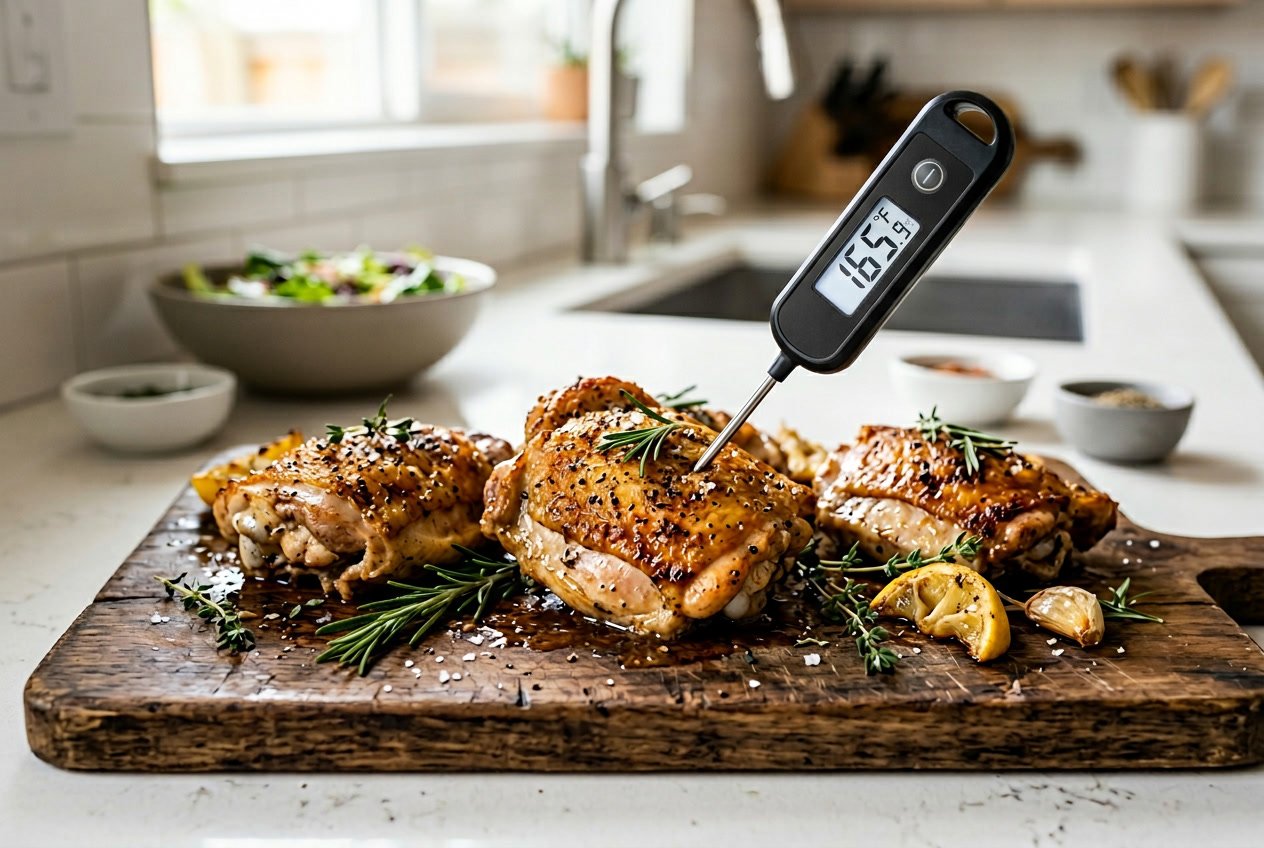
This guide shows how to check temperature accurately.
It covers how cooking method and bone-in vs. boneless affect ideal targets, and what temperatures give the best texture and flavor.
Follow simple thermometer tips and a clear temperature chart to take the guesswork out of every batch you cook.
The Safe Internal Temperature for Chicken Thighs
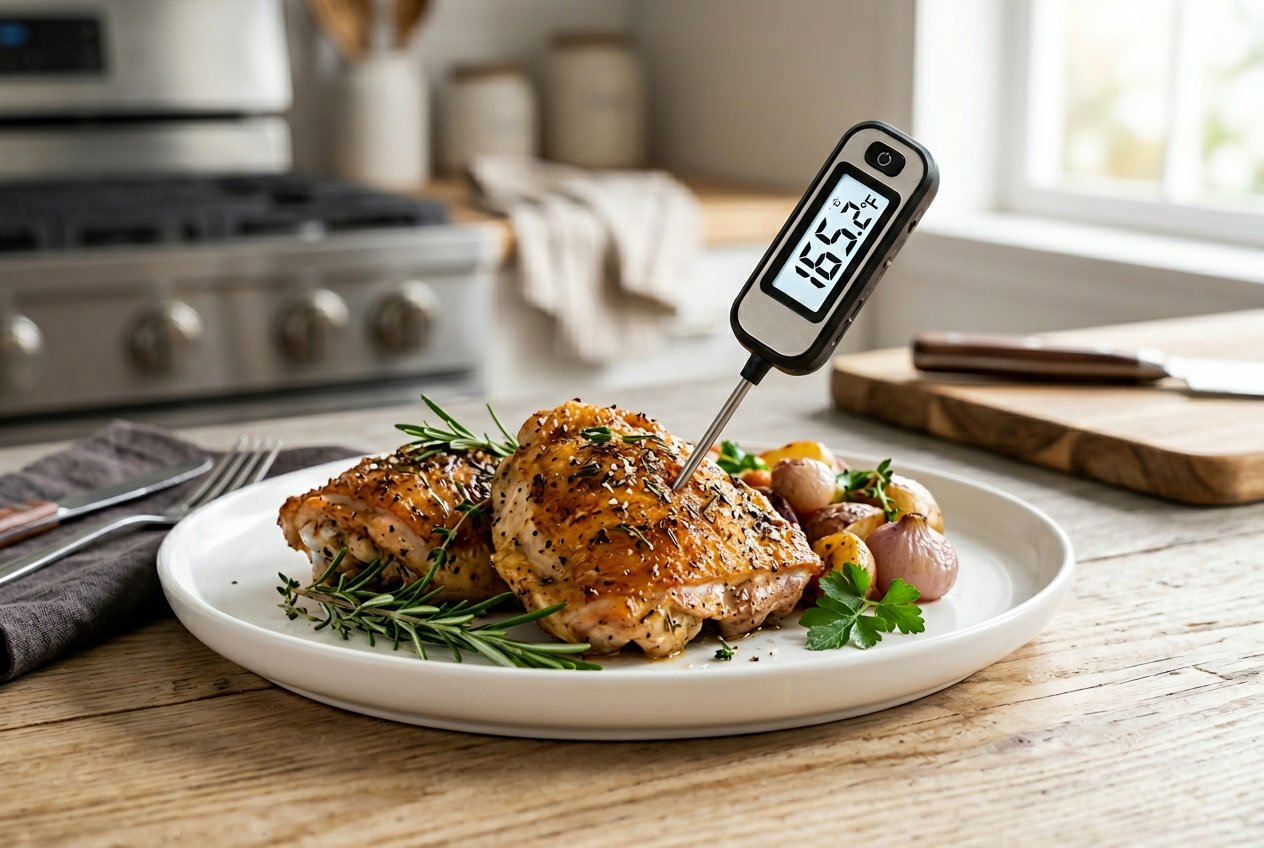
Cook chicken thighs to a precise internal temperature to kill common pathogens and ensure safe eating.
Use an instant-read thermometer inserted into the thickest part of the thigh, avoiding bone, and check temperature near the end of cooking.
USDA Guidelines for Doneness
The USDA sets the safe minimum internal temperature for all poultry at 165°F (74°C).
Take this reading at the thickest part of the thigh, not touching bone.
When the thermometer hits 165°F, harmful bacteria are destroyed and the meat is safe to serve.
Follow these steps:
- Insert the thermometer horizontally into the center of the thigh.
- For bone-in thighs, test near but not on the bone.
- Allow a short resting period; carryover heat can raise temperature slightly.
Why 165°F (74°C) Is Crucial
At 165°F (74°C), Salmonella and Campylobacter are inactivated quickly enough to prevent foodborne illness.
Reaching this temperature throughout the thickest part of the thigh ensures all internal tissue is safe.
Temperature matters more than time alone.
A thermometer reading gives you an objective measure, unlike visual cues such as color or juices.
Even dark meat that looks cooked can harbor bacteria if it hasn’t reached 165°F.
Using a calibrated instant-read thermometer removes guesswork and reduces your risk of serving unsafe chicken.
Dangers of Undercooked Chicken
Undercooked chicken thighs can harbor Salmonella and Campylobacter, both of which cause gastrointestinal illness with symptoms like diarrhea, fever, and abdominal cramps.
Vulnerable people—young children, elderly adults, pregnant people, and immunocompromised individuals—face higher risk of severe outcomes.
Eating chicken that hasn’t reached 165°F also increases the chance of cross-contamination in your kitchen.
Touching juices from undercooked thighs can spread bacteria to utensils, cutting boards, and ready-to-eat foods.
Prevent this by cooking to 165°F, using a thermometer, and practicing safe handling: wash hands, sanitize surfaces, and avoid reusing marinades unless boiled.
How To Check Chicken Thighs’ Internal Temperature
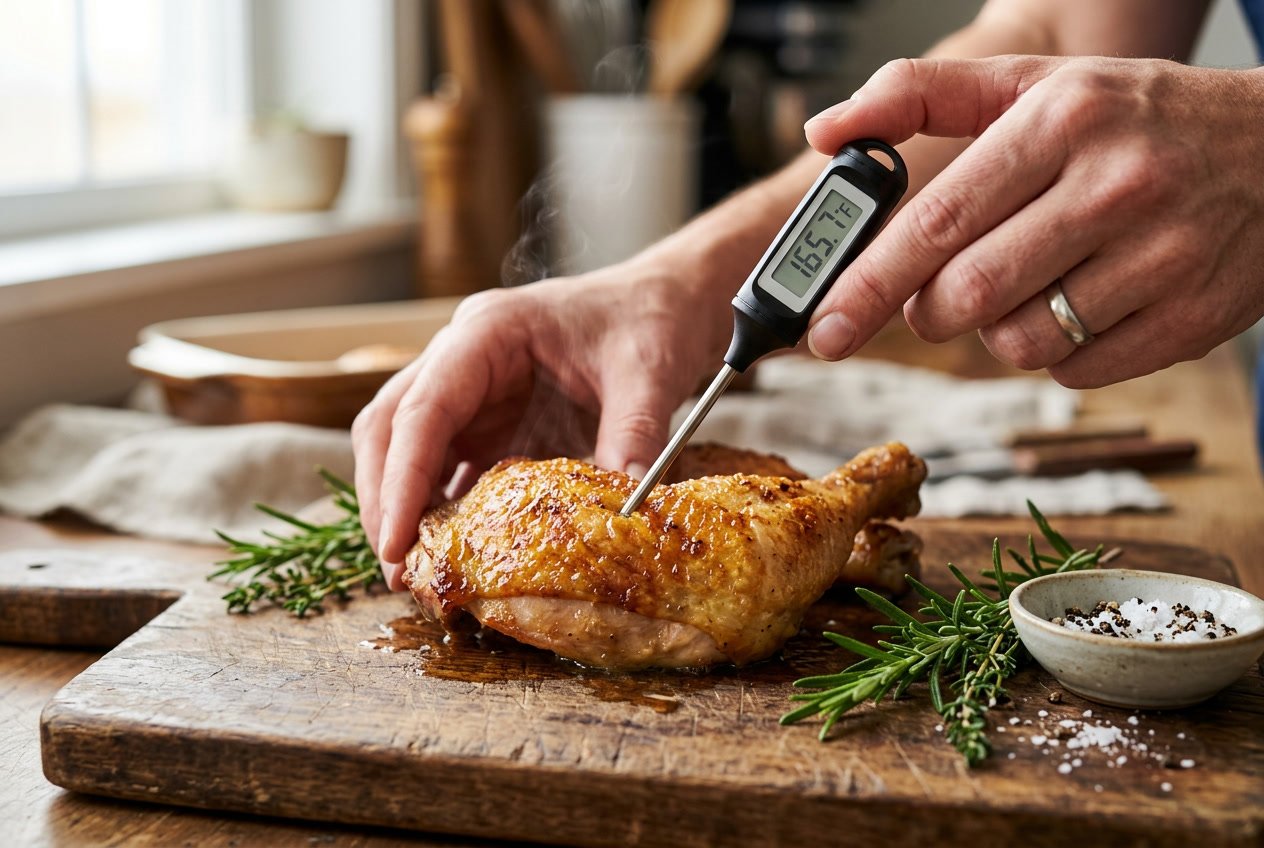
Use a reliable thermometer.
Aim for the right spot in the meat, and avoid touching bone to get an accurate reading.
Check bone-in and boneless thighs slightly differently and let the probe sit for a steady reading before you decide to pull the meat.
Using a Meat Thermometer
Choose a digital probe or instant-read meat thermometer with a clear display and a probe at least 2–3 inches long.
Insert the probe into the thickest part of the thigh and wait for the reading to stabilize.
Most quality instant-read models take 5–10 seconds for a steady number, while leave-in probes will take longer during roasting.
Look for the USDA minimum of 165°F (74°C) for safety.
For bone-in thighs, remove them at 175°F–185°F for more tender texture, but always verify with the thermometer.
Keep the thermometer clean and calibrated.
Wipe the probe with hot soapy water before and after use.
If your model allows, check calibration in ice water (should read 32°F / 0°C) or boiling water (approx. 212°F / 100°C at sea level).
Finding the Thickest Part
Identify the thickest part of the thigh by feeling along the meat toward the bone.
For boneless thighs, this is usually the center; for bone-in thighs, it’s the muscle around the bone but not touching it.
Position the probe horizontally so the tip reaches the center of that thickest portion.
Insert the probe from the side rather than the top when needed to avoid going through to the skin or the bone.
Take multiple readings if pieces vary in size.
Test the largest thigh in the pan first, since smaller pieces will reach temperature sooner.
Avoiding Bone Contact
Bone conducts heat differently and gives falsely high readings if the probe touches it.
Push the probe toward the center of the meat and keep at least 1/4 inch (6 mm) of meat between the tip and any bone.
If you hit bone, withdraw and reposition the probe deeper in the muscle away from the bone.
Re-check until the reading holds steady for a few seconds.
When using a leave-in probe on a roast or sheet pan, angle the probe so the tip sits in the meat’s core.
Use visual markers—like the widest cross-section—to guide placement and avoid repeated probing that can release juices.
Instant-Read Thermometer Tips
Preheat or warm the thermometer if the manufacturer recommends it.
Hold the probe steady and give the display time to stabilize rather than moving it around.
For quick checks while searing or grilling, insert the instant-read probe through the side to the center, then pull straight out between checks.
Clean the probe between checks to avoid cross-contamination and to keep readings consistent.
For battery-powered models, watch battery level and replace before a long cook.
If readings jump or take too long, test the unit in ice water to confirm accuracy or swap to a backup thermometer.
Temperature Variations by Cooking Method
The safe minimum is 165°F, but optimal texture for thighs often comes at higher temps.
Different methods reach that texture by focusing on either surface crisping or internal collagen breakdown.
Oven Baking and Roasting
When you roast at 400–425°F (about 200–218°C), bone-in, skin-on thighs usually finish in 35–45 minutes.
Boneless thighs take 20–30 minutes.
Use an instant-read thermometer in the thickest part, avoiding bone.
Pull bone-in at about 175°F for tender, juicy results, and boneless around 165–170°F to avoid drying.
For crisp skin, place thighs skin-side up on a wire rack over a rimmed sheet pan so hot air circulates and fat drips away.
If you prefer a slower roast, cook at 375°F (190°C) and expect longer times.
Check temp rather than time alone.
Grilling Chicken Thighs
Grilling uses two zones: sear over direct high heat, then finish over indirect heat.
Sear skin-side down for 5–7 minutes to render fat and develop color, then move to indirect heat.
Aim for 175°F for bone-in thighs.
Boneless can be removed closer to 165–170°F.
Watch for flare-ups from dripping fat and avoid pressing the thighs.
Use a meat thermometer through the thickest part and keep the lid closed while finishing to maintain consistent heat.
Pan Searing and Broiling
For pan searing, start skin-side down in a cold or room-temperature pan to slowly render fat, then increase to medium-high.
Sear 7–10 minutes undisturbed until the skin crisps, flip briefly, and finish in oven at 400–425°F if needed.
Pull boneless thighs at 165–170°F.
Bone-in benefit from finishing to 175°F.
Broiling delivers intense top heat; use it to crisp skin after cooking through.
Broil 3–5 minutes with the rack 6–8 inches from the element.
Watch closely to avoid burning and confirm internal temp with a thermometer.
Sous Vide and Slow Cooking
Sous vide gives precise control.
Set the water bath to 145–165°F depending on texture.
At 150–155°F you get tender, slightly firm thighs.
At 165°F they become noticeably softer.
After sous vide, sear skin-side at high heat for 1–2 minutes per side to crisp.
Slow cooking and braising target collagen breakdown.
Cook on low for 6–7 hours or high 3–4 hours until meat reaches tenderness equivalent to 175–185°F internal texture.
Finish under a broiler or in a hot pan for any desired surface crisp.
Bone-In vs. Boneless Chicken Thighs
Bone-in thighs take longer to cook but gain tenderness from higher finish temperatures.
Boneless thighs cook faster and need lower pull temps to avoid drying.
Pay attention to internal temperature targets, cooking time differences, and resting to capture carryover heat and preserve juiciness.
Differences in Cooking Times
Bone-in chicken thighs require more time because the bone slows heat transfer.
Expect about 35–45 minutes at 400°F in the oven for bone-in, skin-on pieces.
Boneless, skinless thighs take roughly 20–25 minutes at the same temperature.
On a grill, sear bone-in over direct heat for 5–6 minutes then move to indirect heat for another 20–25 minutes.
Boneless typically need 5–7 minutes per side over medium-high direct heat.
Thickness and starting temperature matter.
A large boneless thigh may approach the time of a small bone-in thigh.
Use an instant-read thermometer in the thickest part, avoiding bone, to judge doneness accurately.
Tips for Juicy Chicken
Pull boneless thighs at 165°F to keep them moist.
Pull bone-in thighs closer to 175°F–185°F to convert collagen into gelatin and improve tenderness.
Pat skin dry and season; dry skin crisps faster and helps render fat.
Don’t overcrowd the pan or air fryer.
Leave 1–1.5 inches between pieces so heat circulates and moisture escapes.
If you brine or marinate, limit acidic marinades to under 24 hours to avoid mushy texture.
For high-heat methods, start skin-side down in a cold pan to slowly render fat, or use a wire rack in the oven to let drippings fall away and the skin crisp evenly.
Carryover Cooking and Resting
Carryover cooking raises internal temperature after removal.
Bone-in thighs can climb 5°F–10°F, while boneless typically rise 3°F–5°F.
Remove bone-in at about 170°F if you aim for a resting finish near 175°F.
Remove boneless at 162°F to finish around 165°F.
Rest meat 5–10 minutes on a cutting board, tented loosely with foil if you like.
Resting redistributes juices and lets collagen-settled gelatin settle into fibers, yielding juicier chicken.
Slice against the grain after resting to keep juices locked in and maximize tenderness.
Optimal Temperature for Texture and Flavor
You need safe doneness and a plan to get the texture and skin you want.
Target temperatures, resting time, and finishing heat determine whether thighs end up tender, juicy, or crisp.
Tender Chicken Thighs
For the most tender dark meat, aim for an internal temperature between 165°F and 175°F (74–79°C) measured in the thickest part without touching bone.
At 165°F the meat is safe.
Holding it slightly higher lets collagen begin to break down and makes fibers more forgiving.
Use low, steady heat when you want tenderness.
Oven at 325–350°F (160–175°C) or gentle braising converts collagen slowly.
If you cook sous vide, use 145°F (63°C) for extended times per proven pasteurization tables.
Rest thighs 5–10 minutes after cooking.
Carryover raises temperature 3–5°F and redistributes juices, improving tenderness.
Achieving Crispy Skin
To get crisp skin, finish thighs under high heat.
Start by rendering fat at medium heat, then transfer to a 425–450°F (220–230°C) oven or use a hot skillet to crisp the exterior.
Pat skin dry and season; moisture prevents browning.
Use a cast-iron skillet or broiler for direct, high-heat contact.
Crisping works best after the meat has reached at least 160–165°F internally so you don’t overcook the flesh while waiting for the skin.
For consistent results, use a two-stage method.
Cook to target internal temp (165–175°F), rest briefly, then apply 3–7 minutes of very high heat just long enough to crisp skin without pushing the meat too far beyond its target.
Cooking Past 165°F for Melt-In-Your-Mouth Results
When you cook above 165°F, you improve mouthfeel because more collagen breaks down around 170–185°F (77–85°C). Thighs cooked in the 175–185°F range turn “fall-apart” and silky, especially with slow-roasting or braising.
Check temperature with a reliable instant-read thermometer. Higher final temps make thighs softer but slightly less juicy.
Lower oven temperatures (275–300°F) and longer cook times help prevent drying while reaching higher internal temperatures.
If you want both tenderness and crisp skin, pull thighs at 165–170°F, let them rest, and then finish under high heat for crispness. Avoid raising the internal temperature during the crisping phase.
Table: quick reference
- Safe minimum: 165°F (74°C)
- Tender range: 165–175°F (74–79°C)
- Very tender/melt-in-mouth: 175–185°F (79–85°C)
- High-heat finish: 425–450°F (220–230°C)
Seasoning, Marinating, and Preparation Tips
Lock in moisture and build flavor by choosing the right acids, salts, and aromatics for your cooking method. Small changes in timing and technique—like brine vs. quick marinade or dry rub vs. wet sauce—affect texture and taste.
Marinades for Chicken Thighs
Balance acid, fat, salt, and aromatics in your marinade. Mix 1 part acid (lemon juice, vinegar, or yogurt) with 2–3 parts oil, 1–2 teaspoons salt per pound of meat, and aromatics like garlic, ginger, or soy.
Marinate boneless thighs for 30–90 minutes to add flavor without changing texture. Bone-in thighs can marinate up to 12 hours for deeper flavor.
Add umami boosters like soy sauce, fish sauce, or miso for savory depth. If grilling or charring, include a tablespoon of sugar or honey to help browning, but keep cook times short to avoid burning.
Discard marinade that touched raw chicken, or boil it before serving as a sauce.
Seasoning for Maximum Flavor
Season early and in layers. Pat thighs dry, then add kosher salt evenly—about 1 teaspoon per pound—at least 20–30 minutes before cooking.
Add a dry rub of paprika, black pepper, garlic powder, and a touch of cayenne if you want heat.
If you use a sauce or glaze, brush it on during the last 5–10 minutes of cooking to prevent burning and keep flavors bright.
For pan-searing, season again just before searing for a strong crust. Finish with fresh herbs or a squeeze of citrus to brighten the meat.
Brining and Marinating Processes
Brining uses salt and sometimes sugar to change meat texture and keep it moist. Mix 4 cups water, 1/4 cup kosher salt, and 2 tablespoons sugar per 2–3 pounds of thighs.
Submerge thighs for 30 minutes to 4 hours in the fridge. Longer brines make meat juicier but can cause a firmer texture if overdone.
If you brine, use less salt in later steps. For extra flavor, brine first, rinse, then marinate briefly—keep this second step under 3 hours.
Always refrigerate during brining or marinating and use food-safe containers or sealed bags.
Internal Temperature Chart for Chicken Cuts
Use an instant-read thermometer and check the thickest part of the meat, avoiding the bone.
Comparing Chicken Thighs and Chicken Breasts
Thighs have more collagen and fat, so they benefit from higher pull temperatures that turn collagen into tender gelatin.
For bone-in, skin-on thighs, aim for 175–185°F (79–85°C) for juicy results. Boneless thighs taste best at 165–175°F (74–79°C) to prevent drying.
Breasts are lean and cook faster. They should reach 165°F (74°C) and can be removed right at that temperature.
Insert the probe into the thickest part of the breast. Let both cuts rest for 3–5 minutes so temperature evens out and juices redistribute.
Reference Temperatures for All Cuts
Below are practical internal temperatures to use as pull targets, with brief notes on texture and safety.
-
Whole chicken: Check both the thickest part of the thigh and breast for 165°F (74°C).
-
Bone-in, skin-on thighs: Aim for 175–185°F (79–85°C) for tender, gelatin-rich meat.
-
Boneless thighs: Use 165–175°F (74–79°C) to balance juiciness and tenderness.
-
Chicken breasts (boneless or bone-in): Pull at 165°F (74°C) for safe, moist results. Remove at 160°F if you plan a 3–5 minute rest to reach 165°F through carryover.
-
Wings: Cook to 165°F (74°C). Ensure sauce and skin reach safe temps.
Avoid touching bone with the thermometer. Use these numbers as targets, and adjust slightly for cooking method and desired texture.


