
Temperature When Chicken Thighs Are Cooked: Complete Guide
You want chicken thighs that are both safe and delicious, not overcooked or underdone. Aim for at least 165°F (74°C) for safety.
For juicy, tender bone-in thighs, let them reach about 175–185°F. At this range, collagen breaks down and the meat becomes more flavorful.
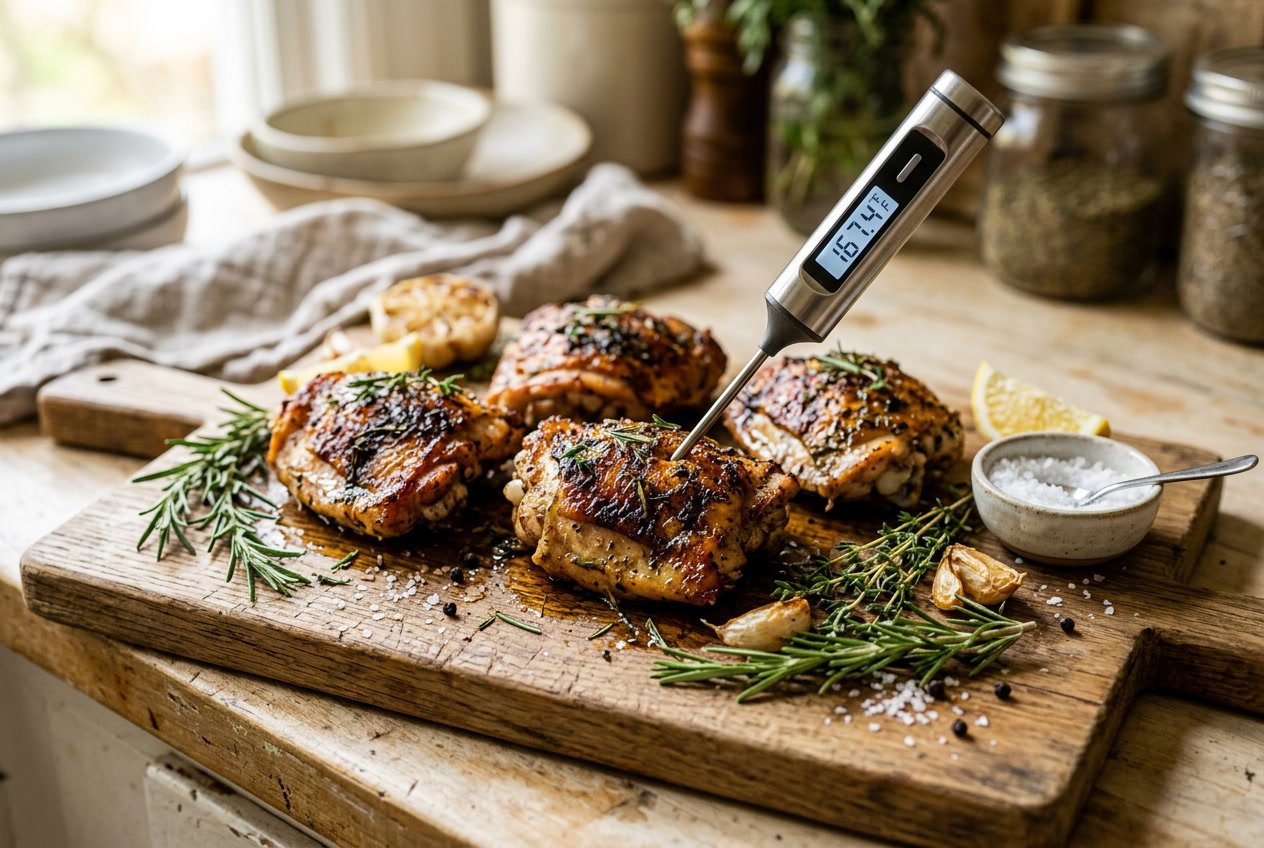
This guide explains how to measure internal temperature accurately. Learn why boneless and bone-in thighs behave differently and which cooking methods work best for each.
Follow these tips for timing, texture cues, and simple techniques to get consistent results.
Minimum Safe Internal Temperature for Chicken Thighs
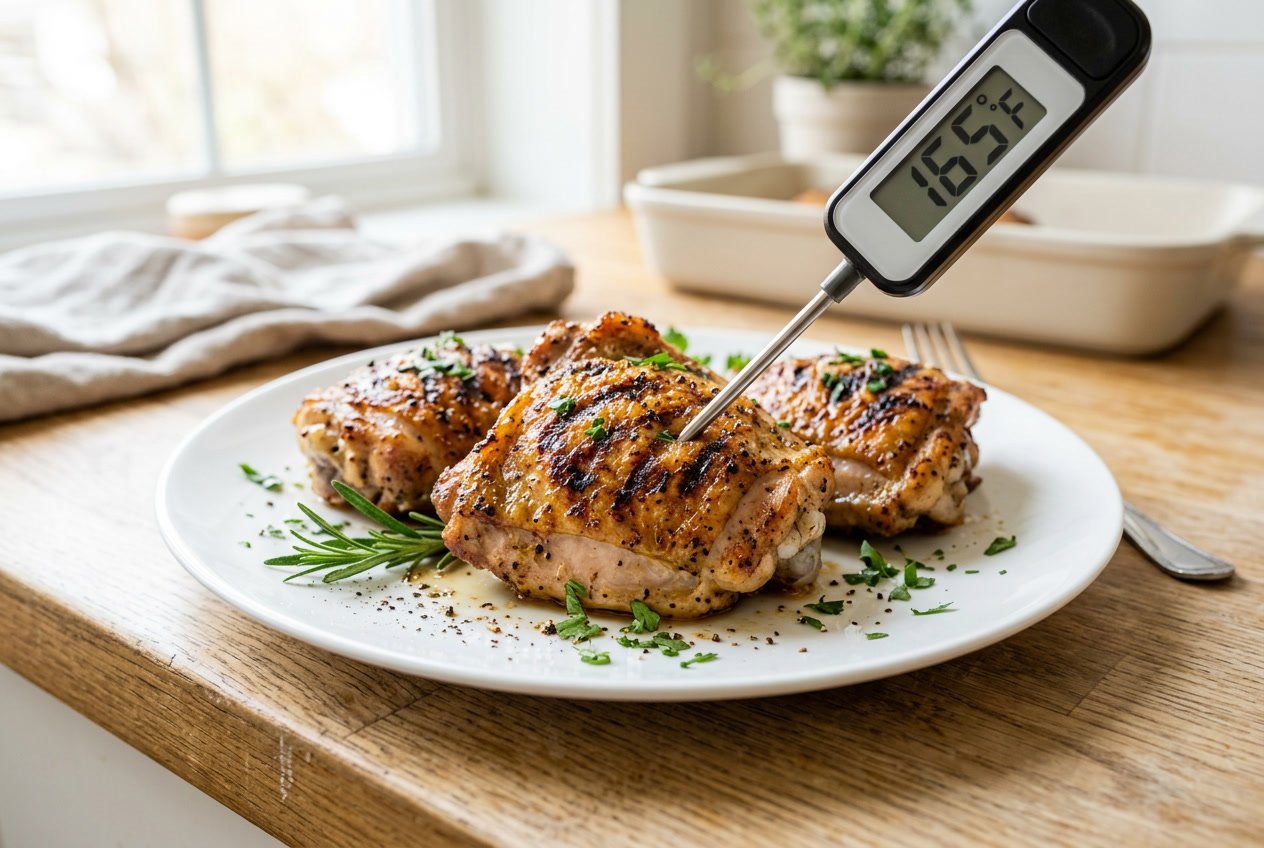
You must cook chicken thighs to a safe internal temperature to kill harmful bacteria. Use an instant-read or probe thermometer at the thickest part of the thigh, avoiding bone, to confirm doneness.
USDA Guidelines for Poultry Safety
The USDA sets the minimum safe internal temperature for all poultry at 165°F (74°C). Trust this threshold regardless of cut, cooking method, or recipe.
Insert a calibrated thermometer into the fleshiest part of the thigh without touching bone or fat. For bone-in thighs, check at least two spots near the thickest area because heat distributes unevenly around bones.
If you use a leave-in probe, verify its placement before cooking and again after resting. Let digital thermometers stabilize for an accurate reading.
Why 165°F (74°C) Matters
When you reach 165°F (74°C), common poultry pathogens like Salmonella and Campylobacter are reduced to safe levels. The temperature refers to the internal meat temperature at the thickest point.
You may choose to cook dark meat higher, up to 175–185°F, for better texture. That choice is about tenderness and collagen breakdown, not safety.
Dangers of Undercooked Chicken
If you eat chicken that has not reached 165°F (74°C), you risk bacterial infection. Symptoms from Salmonella or Campylobacter can include diarrhea, fever, and cramps.
Visual cues like clear juices or lack of pink color are unreliable. Thighs can appear pink even at safe temperatures.
Rely on a thermometer rather than appearance. If your thermometer reads below 165°F (74°C), continue cooking and recheck until the safe temperature is reached.
Optimal Temperature Range for Juicy Chicken Thighs
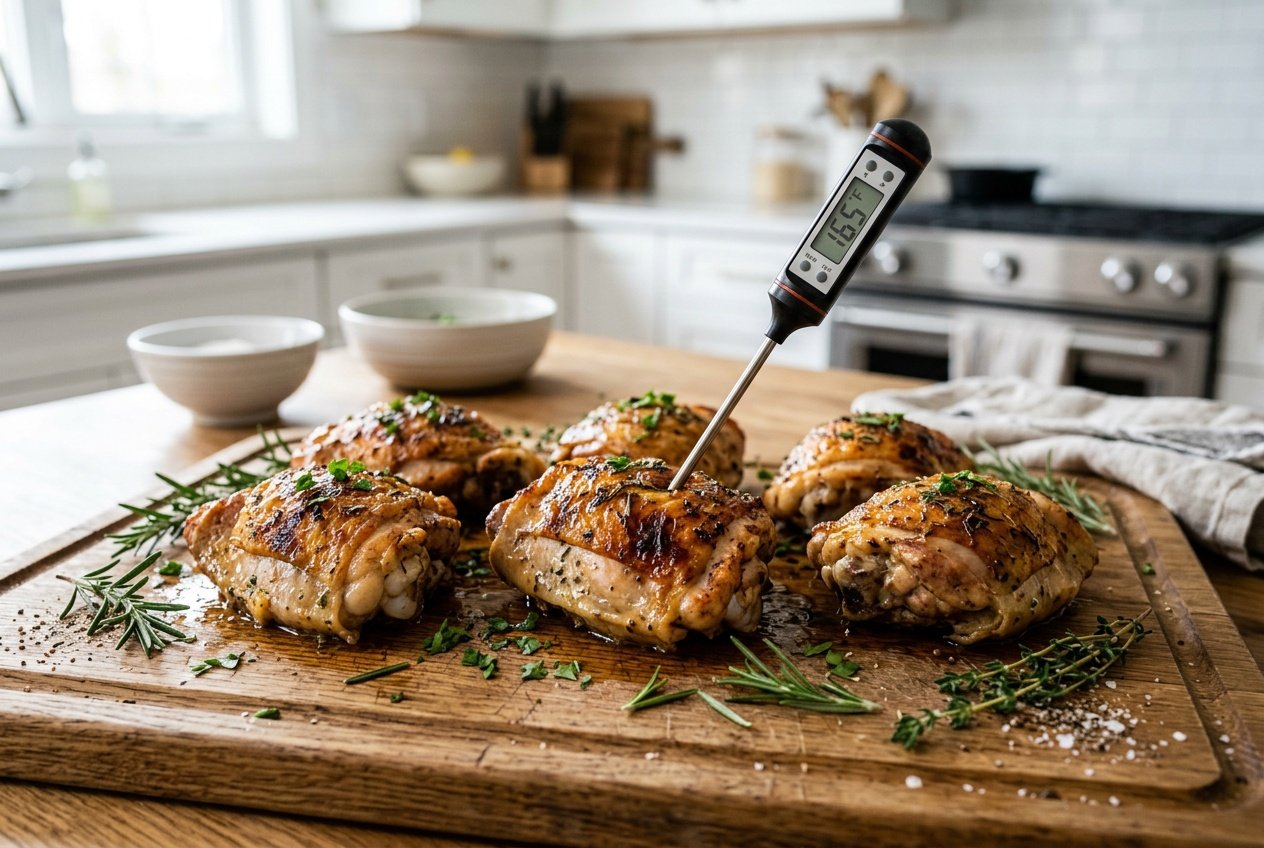
Choose a target temperature that balances safety and tenderness. Your choice affects whether you get firm, sliceable meat or fall-off-the-bone richness.
Ideal Temperatures for Texture and Flavor
For safe minimum doneness, cook to 165°F (74°C). Boneless chicken thighs will be fully cooked and moist at this temperature.
For more tender, richer thigh meat, cook to 175–185°F (79–85°C). At this range, bone-in chicken thighs remain juicy while the meat loosens from the bone.
Oven-roasted chicken thighs at 375–425°F typically hit these temperatures in 30–50 minutes, depending on size. For very tender, shreddable thighs, aim for 190–195°F (88–91°C).
Always measure in the thickest part and avoid touching bone for accurate readings.
How Collagen Breakdown Impacts Tenderness
Collagen in dark meat begins converting to gelatin as internal temperature rises above about 140°F (60°C). The process accelerates through the 160–195°F window and changes the texture.
At 175–185°F, enough collagen has transformed to make meat tender without turning it mushy. Bone-in chicken thighs benefit most because the bone and surrounding tissue release flavor and support even heat distribution.
Use an instant-read thermometer in the thickest flesh, not the bone. Rest the thighs 5–10 minutes after cooking to let juices redistribute.
Risks of Overcooking
If you overcook boneless chicken thighs to excessively high temperatures or cook too long at high heat, the meat can dry out. Boneless cuts reach desired texture faster than bone-in, so watch timing closely.
Exceeding about 205–210°F breaks down structural proteins too much, producing a stringy, mealy texture. High oven temperatures can scorch skin before the interior reaches your target.
Use a two-stage approach: moderate heat to render fat, then higher heat or broil briefly for crisp skin. Use proper thermometer technique and rest times to avoid overcooking.
How to Accurately Measure Chicken Thigh Temperature
Use a reliable thermometer, the right insertion point, and consistent technique to ensure safety and juiciness. Simple mistakes like hitting bone or shallow insertion produce unreliable results.
Using a Meat Thermometer
Use a calibrated meat thermometer designed for poultry. Digital models are easiest to read and usually more accurate than analog probes.
If your thermometer has an adjustable probe, make sure the tip extends at least 1 inch into the meat for solid readings. Clean the probe with hot, soapy water before and after each use.
For oven roasts, use a leave-in probe that connects to an external display so you can monitor temperature without opening the oven. For quick checks, a handheld instant-read thermometer works well.
Verify your thermometer’s accuracy periodically by testing it in ice water and boiling water.
Instant-Read Thermometer Techniques
An instant-read thermometer gives fast results but needs correct technique. Insert the probe and wait until the digital display stabilizes.
Avoid rapid in-and-out pokes; the probe needs a steady reading from the core of the meat. Hold the thigh steady and insert the probe parallel to the bone, angling toward the center of the thickest part.
If the probe is too short to reach the center, probe from the opposite side. For multiple thighs, test the largest piece and then spot-check others near the bone.
If you check during cooking, close the oven or grill quickly to prevent heat loss. Wipe the probe clean between checks.
Proper Probe Placement
Target the thickest part of the thigh because that area takes longest to reach the safe temperature. Aim for the midpoint of the muscle, not the surface or near the skin.
Avoid touching bone; bone conducts heat and will show a falsely high reading. For bone-in thighs, insert the probe from the side so the tip sits midway between the bone and the outer skin.
For boneless thighs, probe straight into the center. Ensure the probe tip is fully embedded in muscle.
For typical store-bought thighs, the correct placement is roughly 1/2–1 inch from the bone, but adjust for very large pieces.
Avoiding Common Temperature Reading Errors
Do not rely on visual cues alone. Waiting too briefly after inserting the thermometer gives a low reading; wait for stabilization.
Leaving a probe touching a hot pan or grill surface gives a false high reading. Avoid placing the probe in fatty pockets, gristle, or very near the skin.
If you use a leave-in probe, secure it so the tip stays in place during movement. Account for carryover cooking: if you prefer juicier meat, pull thighs at about 160°F (71°C) and rest them; the internal temperature will rise to 165°F (74°C) as they rest.
Cooking Methods and Approaches for Chicken Thighs
Choose the right cooking method and internal temperature to control texture and safety. Use an instant-read thermometer and aim for a target range that matches your desired tenderness.
Baking Chicken Thighs in the Oven
Baking gives reliable, hands-off results for both bone-in and boneless thighs. Preheat the oven to 400°F (204°C) for crispy skin.
Arrange thighs skin-side up on a rimmed sheet or shallow pan so hot air circulates around each piece. Season with salt and pepper or a marinade, and space pieces at least 1 inch apart.
Bake times vary: boneless thighs usually finish in 20–30 minutes, bone-in in 30–40 minutes. Use an instant-read thermometer in the thickest part, avoiding bone.
For crispier skin, broil 1–3 minutes at the end while watching closely. Rest thighs 5–10 minutes before serving.
Roasting Techniques for Maximum Flavor
Roast at 375–425°F (190–220°C) depending on whether you prefer a longer gentle cook or faster caramelization. Use a roasting pan or sheet with a rack to lift thighs above rendered fat.
For bone-in roasted chicken thighs, aim for 175–195°F (79–91°C) if you want very tender meat. Insert thermometer near the bone for an accurate reading.
Add aromatics like garlic, thyme, lemon slices, or vegetables to the pan. If roasting a whole tray of mixed pieces, stagger cooking times or remove smaller pieces earlier.
Key Tips for Braising, Grilling, and Frying
For braising, brown thighs first, then simmer in enough liquid to come partway up the sides. Braise at low simmer or in a 300°F (150°C) oven until internal temp reaches 175–195°F.
For grilling, use two-zone heat for bone-in thighs. Sear over high direct heat, then move to indirect heat to finish. Aim for 165°F minimum; 175–190°F gives juicier results.
For frying, maintain oil at 325–350°F (163–177°C). Fry bone-in thighs 12–18 minutes; boneless cook faster. Drain and rest briefly. Always check internal temp to confirm safety.
Differences Between Bone-In and Boneless Chicken Thighs
Bone-in thighs retain moisture longer and cook more slowly. Boneless thighs heat through faster and give you more predictable timing.
The presence of bone and different thickness affect both target temperatures and how you check doneness.
Temperature Guidelines by Cut
Bone-in thighs benefit from higher final internal temps for connective-tissue breakdown. Aim for 175–195°F (79–91°C) depending on texture you want.
Insert the thermometer into the thickest part of the meat, avoiding contact with bone for an accurate reading. For boneless thighs, target 165–175°F (74–79°C) for juicy, sliceable meat.
Boneless pieces reach safe temperatures sooner, so remove them at the lower end unless you want very soft, shreddable texture. Always use an instant-read thermometer and measure at the center.
Time Differences and Doneness Checks
Bone-in thighs take longer because heat transfers more slowly past bone and through thicker tissue. Expect roughly 10–20 minutes longer in the oven or on the grill versus boneless pieces of the same size.
Check doneness with a thermometer and by texture. Use an instant-read thermometer away from bone.
Press the meat—bone-in will feel firmer at 175°F and softer as it approaches 190–195°F. Boneless will yield more quickly and feel springier around 165–175°F.
If you’re braising, probe tenderness is as important as temperature for bone-in thighs.
Visual and Textural Signs Chicken Thighs Are Cooked
Look for clear juices, meat that pulls away from the bone, and a firm but springy texture. These cues help you judge doneness quickly, but always confirm with an internal temperature check.
Color, Juices, and Texture Cues
Color varies. The outside should look opaque and browned if you sear or roast it.
Inside, dark meat can stay slightly pink near the bone and still be safely cooked.
Pierce the thickest part with a knife or skewer to check the juices. Juices should run clear or slightly amber.
If you see thick, bloody, or bright red juices, the meat needs more cooking.
Texture is important. Press the meat with your fingertip or tongs.
Cooked thighs feel firm and spring back slightly. Meat that pulls away from the bone is usually done.
Do not rely only on color. Marinades, the bird’s age, and gas ovens can change the color without affecting safety.
Why Temperature Is More Reliable Than Appearance
Internal temperature provides a precise safety and quality metric. Insert an instant-read thermometer into the thickest part, avoiding bone.
Aim for 165°F (74°C) for immediate safety. Many chefs prefer 175–185°F (79–85°C) for thighs to break down connective tissue and improve tenderness.
Heat changes appearance and texture in nonlinear ways. Myoglobin, bone marrow pigments, and marinades can make meat look pink even after safe cooking.
Overcooking can produce clear juices but dry, stringy meat. Use visual and textural cues to guide timing, then confirm with temperature for both safety and the texture you want.


