
Temperature at Which Chicken Thighs Are Done: Safe & Succulent Results
You want chicken thighs that are safe and juicy without guessing. Pull boneless thighs at about 165°F, and aim for 175°F–185°F for bone-in thighs to break down collagen and get a more tender, juicy result.
This guide explains how to measure doneness accurately and how temperature affects texture. It also covers how cooking methods can change timing.
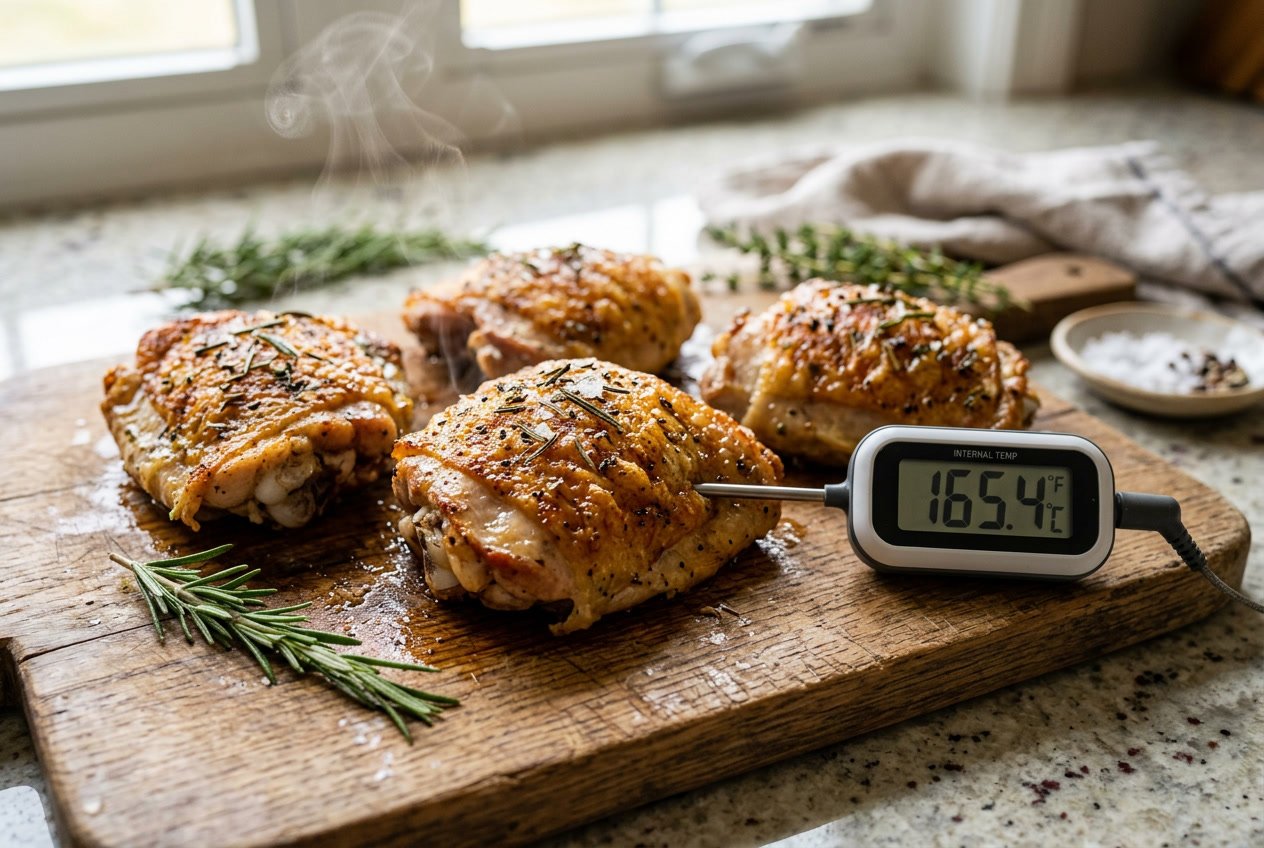
Follow clear steps for using a thermometer and choosing target temperatures for different outcomes. Adjust your approach for oven, grill, pan, or slow-cooker methods to get your preferred results.
Safe Internal Temperature for Chicken Thighs
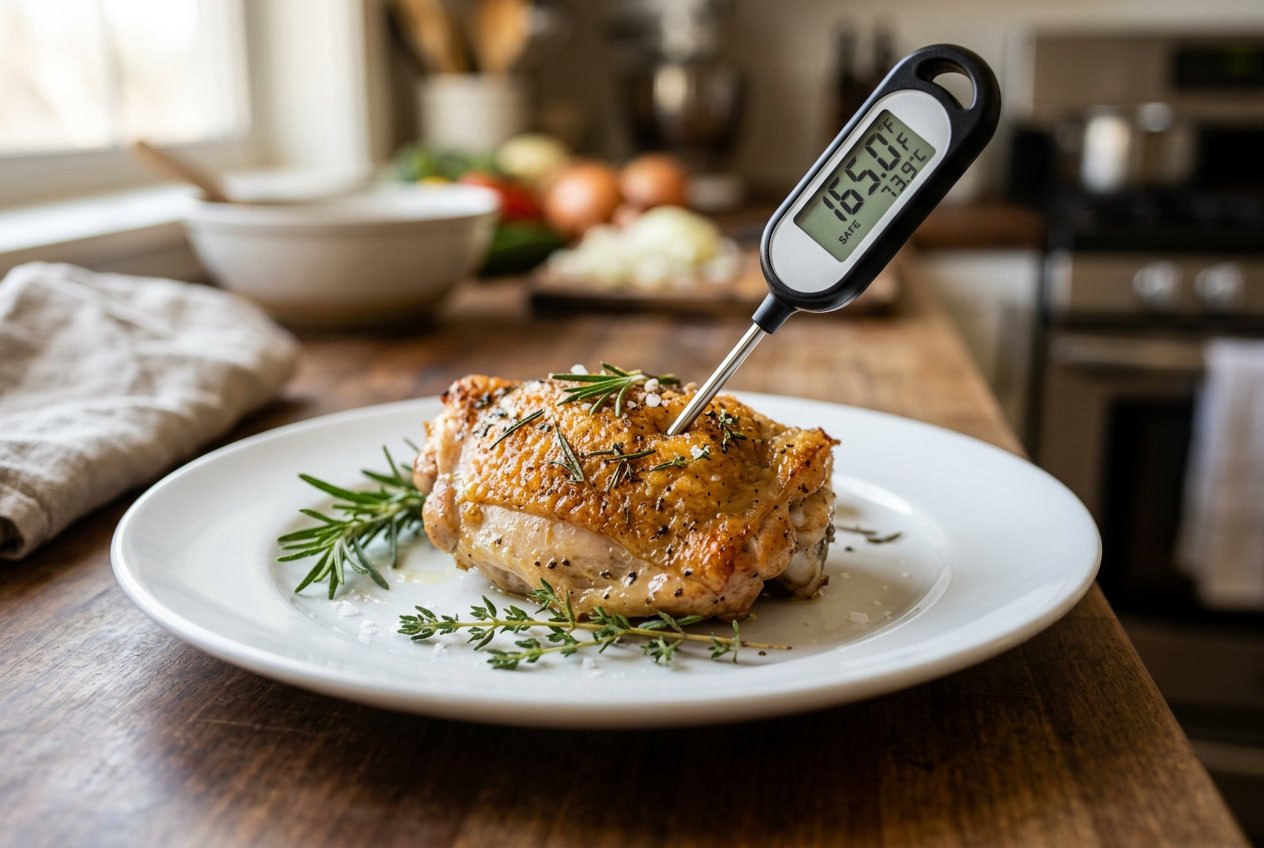
Cook chicken thighs to a temperature that ensures safety and matches your desired texture. Measure at the thickest part, avoiding bone, and use an instant-read thermometer for accuracy.
USDA Guidelines for Chicken Thighs
The USDA sets the safe minimum internal temperature for all poultry at 165°F (74°C), measured at the thickest point. Insert the thermometer into the meatiest section without touching bone to avoid false high readings.
Reaching 165°F kills harmful bacteria like Salmonella. After hitting 165°F, carryover cooking can raise the temperature a few degrees while the meat rests.
If you brine or marinate, follow safe handling and refrigeration times to avoid cross-contamination before cooking.
Optimal Temperature Range for Best Texture
For bone-in, skin-on thighs, aim for 175–185°F to convert collagen into gelatin for tender, juicy meat. Pulling bone-in thighs at 175°F gives tender results, while 185°F creates a fall-apart texture ideal for shredding.
Boneless thighs contain less connective tissue, so keep them near 165–170°F to avoid drying. Use an instant-read thermometer and take readings in the thickest part.
Confirm doneness with temperature rather than appearance, since color and juices can mislead.
Risks of Undercooked Chicken Thighs
Eating undercooked chicken thighs can cause foodborne illness from pathogens such as Salmonella and Campylobacter. Symptoms may include stomach cramps, diarrhea, fever, and vomiting.
Undercooked dark meat may look done on the surface but remain unsafe inside. Always check the internal temperature; if it’s below 165°F, return the thighs to heat until they reach a safe reading.
Vulnerable people, such as young children, older adults, pregnant people, and immunocompromised individuals, face higher risk and should never eat chicken that hasn’t reached the safe temperature.
How to Measure Chicken Thigh Doneness Accurately
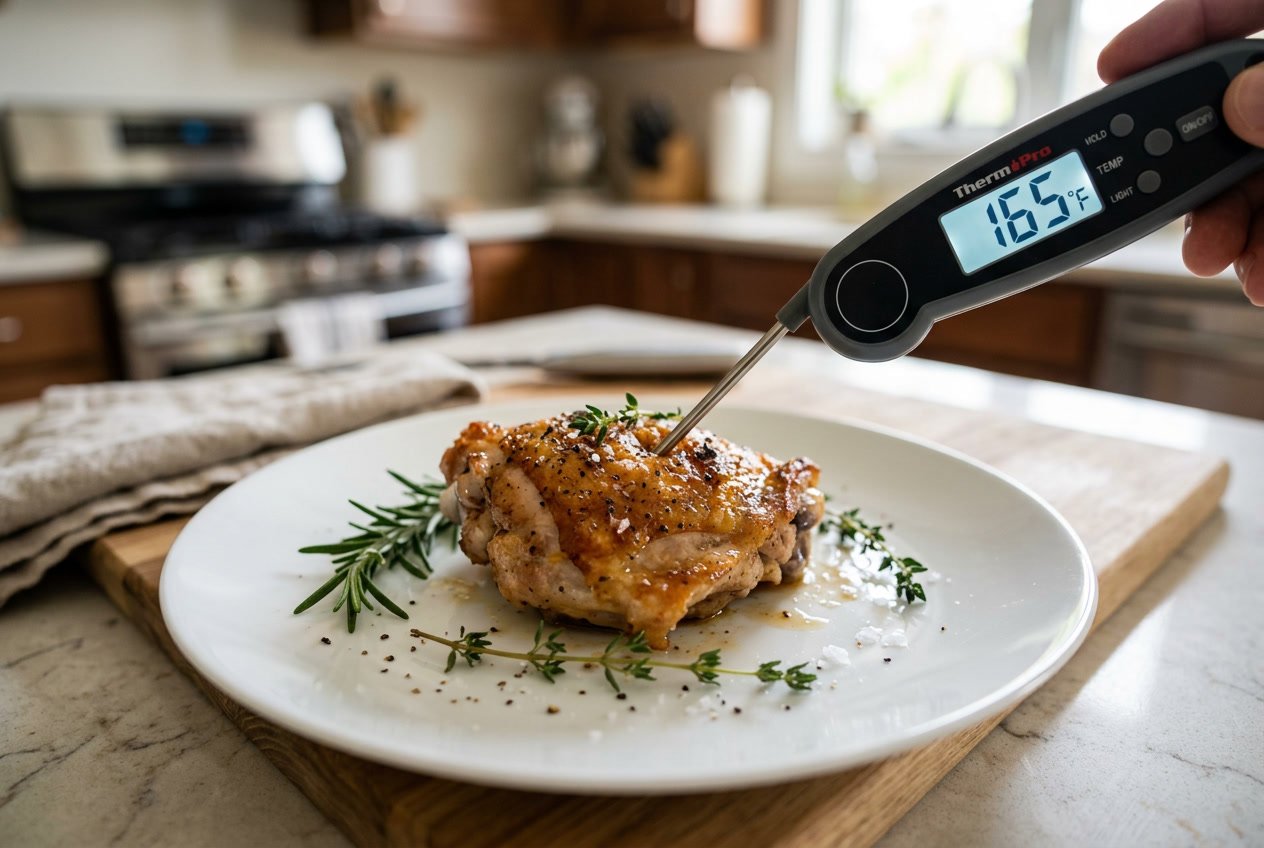
Use an accurate thermometer and place the probe in the thickest part of the thigh, away from bone. Choose the right type of thermometer for your cooking method.
Proper Use of a Meat Thermometer
Clean and calibrate your meat thermometer before use. Wipe the probe with hot, soapy water or alcohol, then check calibration in ice water or boiling water.
Insert the probe so the tip reaches the center of the thickest portion of the thigh without touching bone. Hold the probe steady until the reading stabilizes.
After reading, remove the thermometer, note the temperature, and sanitize the probe. For multiple pieces, check several thighs to confirm even cooking.
Aim for at least 165°F (74°C) for safety. Many cooks prefer 175–185°F for tender dark meat.
Choosing Between Instant-Read and Leave-In Thermometers
Instant-read thermometers give fast, accurate end-point checks and work well for quick verification before serving. They are handheld, easy to store, and ideal for pan-frying, grilling, and air-fryer finishes.
Leave-in thermometers monitor temperature throughout cooking and are best for oven roasting or longer grill sessions. Use a leave-in probe if you want to track carryover cooking or maintain a target temp without opening the oven.
If you cook many batches or roast whole trays, pair a leave-in probe for continuous monitoring with an instant-read for spot checks. Choose models with a clear digital display and a probe long enough to reach the center of a thigh.
Where to Place the Thermometer Probe
Aim the probe at the thickest part of the thigh muscle, avoiding the bone by at least 1/4 inch. Bone conducts heat differently and gives falsely high readings if the probe touches it.
For bone-in thighs, angle the probe parallel to the bone and push deep enough so the tip sits in the center of the meat. For boneless thighs, insert straight into the middle from the side to reach the center point.
If you check multiple thighs, test the largest or the ones nearest the bone. Record the highest accurate reading you get to determine doneness for the entire batch.
Finding Tender Chicken Thighs: The Role of Temperature
Temperature controls how connective tissue, fat, and muscle fibers change and guides the final texture you get from thighs. Target temperatures and resting time let you control whether the meat is firm and sliceable or falling-apart tender.
How Higher Temperatures Affect Texture
Cooking thighs to higher internal temperatures (175–195°F / 79–91°C) lets more fat render and more collagen convert to gelatin. At 165°F the meat is safe and fully opaque, but it can still feel slightly firm and cling to the bone.
Raising the temperature to about 175°F generally yields juicier, more tender meat. If you push toward 185–195°F, the thigh becomes pull-apart tender as connective tissue melts.
Use gentle, sustained heat such as low oven roast, braise, or indirect grill to avoid drying the muscle fibers while reaching those higher temps. Use a thermometer in the thickest part for precise control.
Collagen Breakdown and Juiciness
Collagen begins to soften around 160°F but needs prolonged time and higher temperatures to fully convert to gelatin. That transformation gives thighs a silky, moist mouthfeel and thickens pan liquids.
Faster high-heat methods won’t give collagen enough time to break down. If you want gelatin-rich tenderness, cook slowly so the internal temperature moves through the 140–190°F zone gradually.
Braises or low-and-slow roasts maximize collagen conversion while minimizing moisture loss. For precise control, sous vide at 165–175°F for several hours, then sear to finish.
Carryover Cooking and Resting Periods
Carryover cooking raises internal temperature by a few degrees after you remove the thighs from heat, typically 3–8°F depending on size and cooking method. Pull the thighs from heat a few degrees below your target if you plan to rest them.
Resting for 5–15 minutes lets juices redistribute and the gelatin set, which improves sliceability and moisture retention. For larger bone-in thighs or braised pieces, rest toward the longer end.
If you cut immediately, juices escape and the meat will seem drier. Let it rest and your thighs will stay tender and juicy.
Cooking Methods and Their Impact on Internal Temperature
Different cooking methods affect how quickly thighs reach temperature and how connective tissue responds. Pay attention to starting temperature, heat source, and whether thighs are bone-in or boneless to hit the target internal temperature and desired texture.
Baking Chicken Thighs in the Oven
Baking at 400°F–425°F gives reliable, even heat for oven-baked chicken thighs. Place bone-in, skin-on thighs on a wire rack over a rimmed sheet pan so hot air circulates and fat drips away.
This reduces steaming and helps the skin crisp while the interior climbs to temperature. Use an instant-read thermometer in the thickest part, avoiding bone.
Boneless thighs usually hit 165°F–170°F in 20–25 minutes. Bone-in thighs need 35–45 minutes and often benefit from being pulled at 175°F–185°F.
Don’t open the oven frequently, as each peek drops internal temperature and extends cook time. For crisp skin, pat thighs dry, salt ahead, and start at a higher temperature.
Let thighs rest 5–10 minutes after baking so carryover heat evens the internal temperature and juices redistribute.
Roasting Chicken Thighs
Roasting uses higher heat and longer exposure than baking, which intensifies browning and renders fat more fully. Set the oven to 425°F or higher for roasting chicken thighs to speed browning while the interior reaches safe temperatures.
Arrange thighs skin-side up on a rack or in a shallow roasting pan with space between pieces. Bone-in thighs roasted at this temperature generally need 35–45 minutes; boneless will finish faster.
For texture, aim to pull bone-in thighs around 175°F–185°F. For boneless, 165°F–170°F prevents dryness.
Roasting with aromatics or vegetables adds moisture and flavor but can increase cooking time if they crowd the pan. Use a thermometer probe if you roast a large batch.
Grilling Chicken Thighs
Grilling chicken thighs exposes them to direct, high heat and flare-ups from rendered fat. Use a two-zone fire for bone-in pieces.
Sear skin-side down over direct heat for 4–6 minutes to develop char, then move to indirect heat to finish cooking gently. Boneless thighs can cook entirely over direct medium-high heat for about 5–7 minutes per side.
Bone-in thighs benefit from indirect heat until they register 175°F–185°F at the thickest part. Always check near the bone, where heat lags most.
Watch for flare-ups and avoid pressing the meat, which squeezes out juices. Rest thighs briefly after grilling to allow carryover heat to finish the process.
How Long to Cook Chicken Thighs Based on Method
You need firm targets for time and technique so the thighs reach 165°F safely while staying juicy. Times change with bone-in vs. boneless, oven temp, and cooking method.
Oven and Baking Times
Bone-in, skin-on thighs at 400°F (200°C) typically take 35–45 minutes. Check an instant-read thermometer in the thickest part, away from bone; the meat is done at 165°F (74°C).
If you want crispier skin, start at 425°F for 25–35 minutes or use a 500°F blast for the first 10 minutes, then drop to 400°F to finish. Boneless, skinless thighs usually bake faster: 20–30 minutes at 425°F or 25–30 minutes at 400°F.
Arrange thighs on a rimmed sheet with space between pieces for even air circulation. Tent with foil for the last 5 minutes if the exterior is browning too quickly.
Check for clear juices and no pink near the bone for bone-in thighs. For both types, a firm, springy feel signals doneness.
Rest the thighs 5 minutes after baking to let juices redistribute.
Grilling and Pan-Frying Durations
For direct grilling, cook bone-in, skin-on thighs over medium-high heat (about 400–450°F grill surface) for 20–30 minutes, flipping every 5–7 minutes to avoid hot spots. Target 165°F in the thickest part.
Use a probe thermometer inserted horizontally for accuracy. Boneless thighs on the grill or in a hot skillet take 6–10 minutes per side over medium-high heat.
In a skillet, preheat oil until shimmering, then sear one side for 3–5 minutes before lowering heat to finish. Avoid crowding the pan; work in batches to maintain a steady temperature.
Let grilled or pan-fried thighs rest 3–5 minutes before slicing. This short rest keeps the meat tender.
Slow Cooking and Pressure Cooking Timing
Cook bone-in thighs in a slow cooker on LOW for 6 to 7 hours or on HIGH for 3 to 4 hours. For boneless thighs, cook on LOW for 3 to 4 hours or on HIGH for 1.5 to 2.5 hours.
Check that slow-cooked chicken reaches 165°F before removing. If you want the meat to shred easily, keep it on the low setting a bit longer.
Pressure cookers like the Instant Pot reduce cooking time. Cook boneless thighs at high pressure for 8 to 10 minutes, then let them naturally release for 5 to 10 minutes.
Cook bone-in thighs at high pressure for 10 to 12 minutes, using a 10-minute natural release. After releasing pressure, check the internal temperature. If it’s below 165°F, cook under pressure a bit longer.
Practical Tips for Cooking Perfect Chicken Thighs
Measure internal temperature, give the meat resting time, and choose cooking methods that keep skin crisp and meat juicy. Simple steps like proper thermometer placement, correct salt timing, and handling frozen thighs well can improve your results.
Visual and Texture Cues for Doneness
Use a thermometer and insert it into the thickest part of the thigh without touching the bone. Aim for 165°F (74°C) as the minimum safe temperature.
If you like juicier meat, pull the thighs at 160°F and let them rest for 5 to 10 minutes so carryover heat brings them to 165°F. The meat should look opaque and the juices should run clear.
Slight pink near the bone can occur in well-cooked dark meat, so don’t rely on color alone. Properly cooked thighs feel springy and slightly firm.
Use a quick-read digital probe for best accuracy. Rest the thighs on a tray covered loosely with foil to keep juices in and allow even temperature distribution.
Benefits of Marinating Chicken Thighs
Marinating boosts flavor and helps retain moisture. Use a basic brine of 1 tablespoon kosher salt per cup of water for 1 to 2 hours to season the meat and help it hold juices.
Acidic marinades like vinegar or citrus add brightness but should only be used for 30 to 60 minutes to avoid a mushy texture. Oil-based marinades with herbs and spices work well for longer periods and help with browning and crisp skin, especially if you pat the skin dry before cooking.
If time is short, use a dry rub and let the thighs sit for 30 minutes at room temperature. For best results, refrigerate marinated thighs, then bring them to room temperature for 15 to 30 minutes before cooking to ensure even heat penetration.
Cooking Chicken Thighs from Frozen
You can cook thighs from frozen safely, but you should expect longer cook times and use different techniques. For oven baking, set the temperature to 375°F (190°C) and plan on 50–60 minutes for bone-in, frozen thighs. Check the internal temperature at the thickest point.
Do not start on high direct heat, as this can over-brown the exterior while the interior stays undercooked. Instead, cover the chicken and bake for the first portion of time to let heat reach the center. Uncover for the last 10–15 minutes to crisp the skin.
If you use an Instant Pot, add 1 cup of liquid and pressure-cook for about 15–18 minutes for frozen boneless thighs. Use a quick release and broil to finish if desired.
Always check that the internal temperature reaches 165°F (74°C) before serving.


