
Temperature at Which Chicken Thighs Are Cooked: Safe, Tender, and Juicy Results
You want safe, juicy chicken thighs that balance tenderness and flavor. Cook boneless thighs to at least 165°F (74°C) and pull bone-in, skin-on thighs closer to 175°F–185°F for more tender, gelatin-rich results.
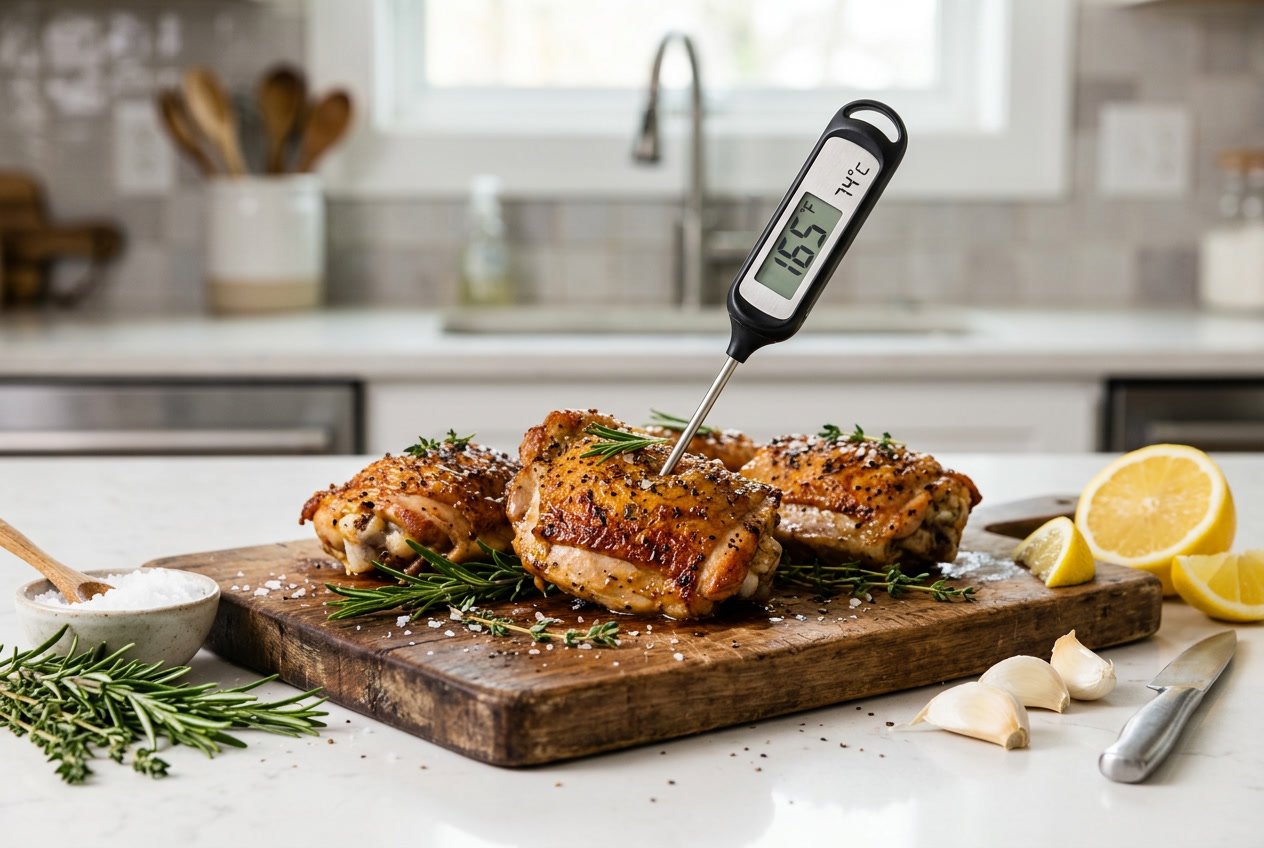
This guide explains how to measure internal temperature, how different cooking methods and cuts affect temps and times, and tips to keep skin crispy and meat moist. You’ll stop guessing and start hitting perfect thighs every time.
Understanding the Ideal Temperature for Chicken Thighs
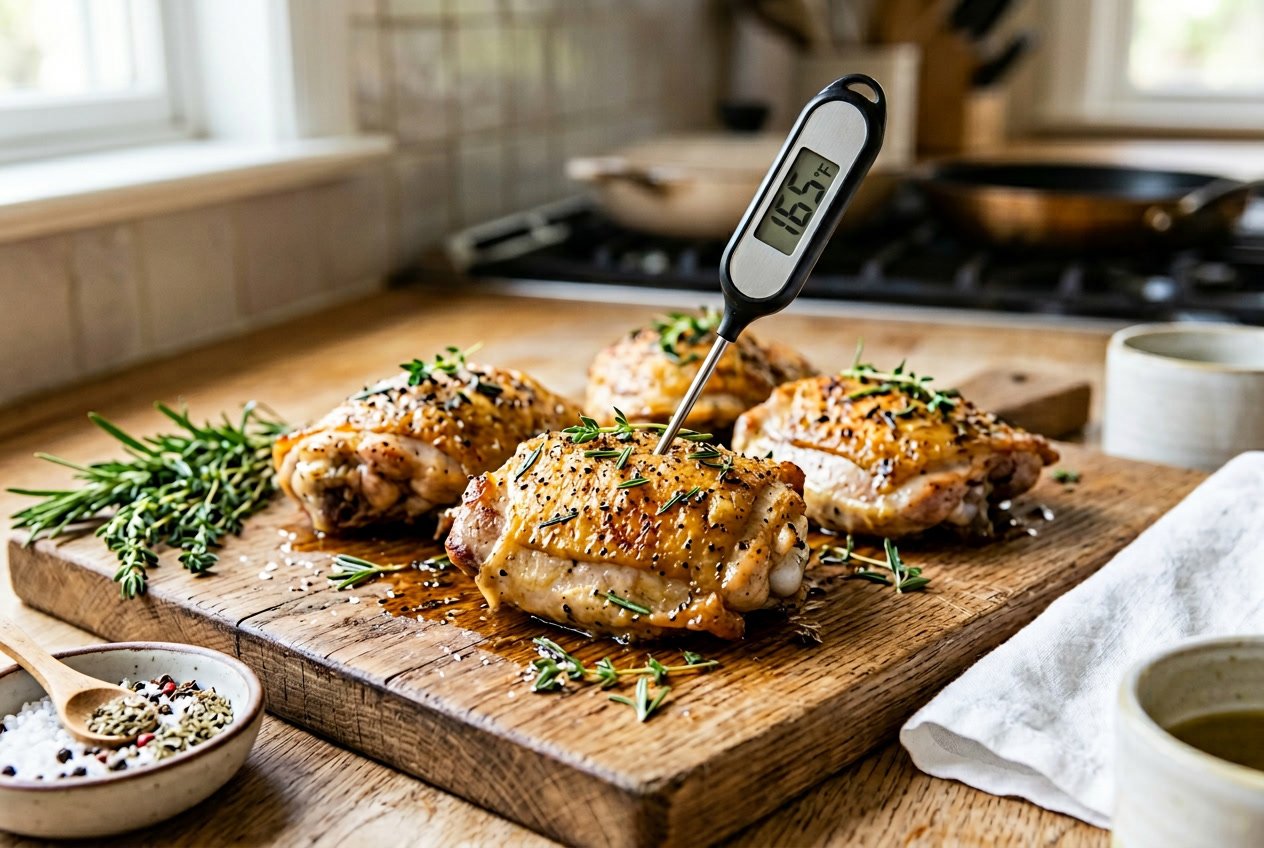
Aim for a temperature that ensures safety while breaking down connective tissue for tenderness. Target temperatures depend on whether you want immediate safety or slow-cooked texture.
Safe Internal Temperature Guidelines
Cook chicken thighs to a minimum internal temperature of 165°F (74°C). Measure with an instant-read thermometer in the thickest part, avoiding bone contact.
That temperature meets USDA food-safety standards and destroys common pathogens like Salmonella. If you cook at lower temperatures, increase the cooking time to achieve the same safety.
Use a calibrated thermometer and insert it at least ¼ inch away from bone. Wait for the display to stabilize before recording.
Carryover cooking can raise the internal temp by a few degrees after removing the thighs from heat. Remove bone-in pieces at 160–162°F if you plan to rest them to reach 165°F.
Optimal Temperature for Tenderness
For maximum tenderness, aim for higher internal temperatures—175–195°F (79–90°C)—especially for bone-in thighs. Collagen and connective tissue convert to gelatin across this range, yielding juicy, shreddable meat.
Slow-roasting, braising, or indirect grilling keeps the meat in the 140–195°F window long enough for collagen to dissolve without drying the muscle fibers. If you want classic tender thigh texture, aim for at least 175°F. For very soft, falling-apart meat, push toward 190–195°F while monitoring moisture.
Avoid cooking beyond 210°F, which can make the meat stringy and degrade flavor. Adjust time and method instead of simply increasing temperature.
Why Temperature Matters for Chicken Thighs
Temperature controls food safety and the transformation of dark meat. Thighs contain more connective tissue than breasts, so higher or longer cooking converts collagen into gelatin, producing tenderness.
Reaching 165°F quickly ensures safety but doesn’t fully break down connective tissue. Holding the meat within the collagen-breakdown range (140–195°F) for enough time lets you balance safety and texture.
Probe the thickest point, avoid bone, rest the thighs 5–10 minutes for carryover, and choose cooking methods that suit your target temperature and texture.
How to Accurately Measure Chicken Thighs’ Internal Temperature
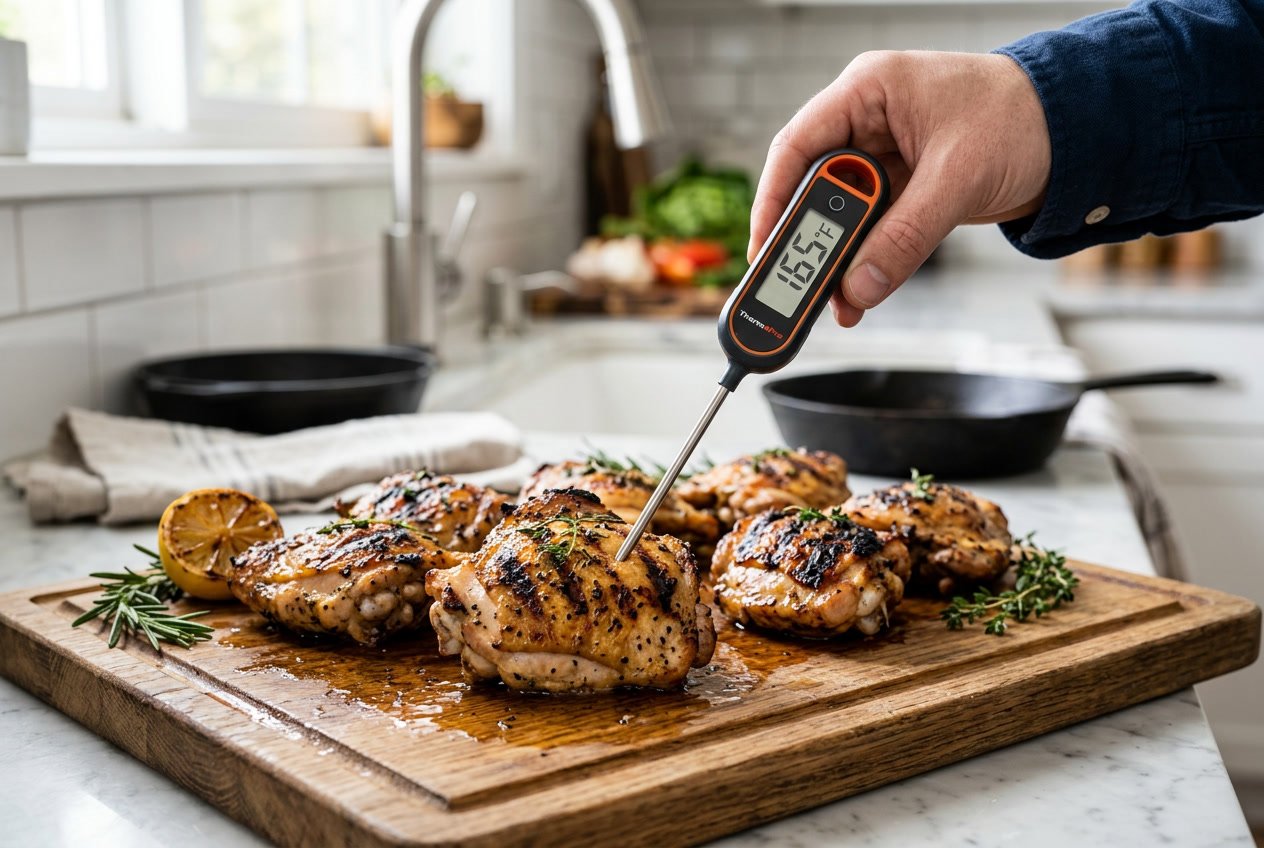
Check the thickest part of the meat and avoid the bone. Use a reliable instant-read thermometer that gives a stable reading within a few seconds.
Using an Instant-Read Thermometer
Choose a digital instant-read thermometer with a probe long enough to reach the center of the thigh. Calibrate it against ice water (32°F / 0°C) occasionally to ensure accuracy.
Insert the probe into the thickest part, pushing the tip at least 1–1.5 inches into the meat. Wait for the reading to stabilize before recording.
If you cook multiple thighs, check two or three pieces to confirm even cooking. Clean the probe with hot soapy water between checks.
Avoiding the Bone When Checking Temperature
Position the probe so it does not touch bone. Bone conducts heat faster and gives a falsely high reading.
Aim the probe toward the middle of the muscle mass, parallel to the bone but not touching it. For bone-in thighs, insert from the side into the meatiest area. For boneless thighs, insert from the top into the deepest center.
If you hit bone, reposition and recheck. Multiple checks around the thickest area help avoid misleading readings.
Visual and Texture Signs of Doneness
Use visual checks as secondary confirmation, not a replacement for a thermometer. Properly cooked thighs show clear juices when pierced, and the meat near the bone should no longer appear raw-pink.
Feel the thigh for firmness; cooked dark meat gives some resistance but still yields slightly when pressed. For bone-in thighs, the meat will begin to pull back slightly from the bone when fully cooked.
Combine these signs with an internal temperature reading to confirm doneness.
Cooking Methods and Recommended Temperatures
You’ll find specific temps and techniques for each cooking method below. Focus on internal temperature first, then adjust heat and time for crisp skin or falling-apart tenderness.
Baking and Roasting Chicken Thighs
Bake bone-in thighs at 375°F (190°C) for even cooking; expect 35–45 minutes depending on size. Use an instant-read thermometer in the thickest part, avoiding bone. Target 175°F (79°C) for tender, juicy meat, or 190–195°F (88–91°C) for very soft texture.
For crisp skin, start at 425°F (220°C) for 20–25 minutes, then drop to 375°F and finish until the internal temp reaches your target. Arrange thighs skin-side up on a rack over a sheet pan to let hot air circulate.
Rest thighs 5–10 minutes after roasting. For boneless thighs, reduce bake time to 20–30 minutes and check at the lower end of the range.
Grilling Chicken Thighs
Preheat grill to medium-high (400–450°F) for searing, then move thighs to indirect heat to finish. Sear bone-in thighs over direct heat 3–4 minutes per side to brown skin, then transfer to indirect heat until internal temp reaches 175°F for firm, juicy meat or up to 195°F for very tender results.
For boneless thighs, cook over medium heat (350–375°F) about 6–8 minutes per side, flipping once. Trim excess skin or use a two-zone fire to avoid burning while reaching a safe internal temperature.
Use a thermometer inserted away from bone. Rest grilled thighs 5 minutes before serving.
Sautéing and Pan-Frying Chicken Thighs
Sauté boneless thighs over medium-high heat in a skillet with oil, 4–6 minutes per side depending on thickness. Aim for an internal temp of 165–175°F; 165°F is safe, but 175°F yields more tender dark meat.
For bone-in pan-frying, start skin-side down on medium-high to render fat and crisp skin, then finish in a 375°F oven or cover and cook gently until internal temp reaches your target.
Keep thighs in a single layer and don’t crowd the pan. Use a thermometer rather than timing alone, and let pieces rest briefly before slicing.
Slow Cooking and Other Methods
Slow cooking, braising, or sous-vide uses low temperature and time to break down collagen. Braise thighs in a covered pan at 300–325°F in the oven or simmer gently on the stove until internal temp reaches 175–195°F and meat is fork-tender.
Sous-vide settings commonly range from 145°F for 1.5–4 hours (for safe pasteurization with retained juiciness) up to 165°F for 1–2 hours for a firmer texture. After sous-vide, quickly sear skin-side down in a hot pan or under a broiler to crisp.
For slow cookers, use low for 4–6 hours or high for 2–3 hours. Ensure the final internal temp meets safety guidelines (165°F minimum).
Bone-In, Boneless, Skin-On, and Skinless Chicken Thighs
Bone-in thighs take longer to reach temperature but hold heat. Boneless thighs cook faster and more evenly.
Skin adds flavor and protects meat during high-heat methods. Skinless thighs reduce fat and crisp less easily.
Bone-In vs. Boneless Cooking Differences
Bone-in chicken thighs need more time to hit a safe internal temperature because the bone slows heat transfer. Plan for roughly 35–45 minutes at 375–400°F (190–200°C) when roasting. Grill or pan times increase by several minutes per side compared with boneless pieces.
Boneless chicken thighs cook faster and more predictably—often 20–30 minutes in a 400°F oven or 5–8 minutes per side on the stovetop. They suit quick sautés, stir-fries, and recipes where uniform thickness matters. If you de-bone at home, expect slightly drier results at the same endpoint temperature. Consider a slightly lower finish temperature (while still safe) or brief resting to retain juices.
Skin-On vs. Skinless Texture and Fat Content
Skin-on chicken thighs create a barrier that preserves moisture and renders fat into the meat during high-heat cooking. That promotes crispy skin and richer flavor when you roast at 400–425°F or sear in a hot skillet before finishing in the oven.
Skinless thighs trim visible fat and lower calories, but they brown less and can dry faster under direct heat. For skinless cuts, cook slightly shorter or use moist-heat methods (braise, slow-cook) to keep tenderness. In both cases, target the same safe internal temperature and rest the meat 5–10 minutes to redistribute juices.
Cooking Times by Method and Temperature
Aim for an internal temperature of at least 165°F (74°C) for safety, but target 175–185°F (79–85°C) for more tender thighs. Times vary by method, oven temp, bone-in vs boneless, and whether the pieces are frozen.
How Long to Bake Chicken Thighs
Bake bone-in, skin-on thighs at 375°F (190°C) for about 40–50 minutes. Check for 175°F (80°C) for best texture. At 400°F (200°C) you’ll reduce time to roughly 35–45 minutes.
Boneless, skinless thighs take less time: 20–30 minutes at 400°F or 25–35 minutes at 375°F. Use a meat thermometer in the thickest part without touching bone.
Pat skin dry and place thighs skin-side up on a rack or sheet pan for even browning. Rest 5–10 minutes after baking to let juices redistribute.
How Long to Grill or Sauté Chicken Thighs
Grill bone-in thighs over medium heat (about 350–400°F grill surface) for 25–35 minutes, turning every 6–8 minutes, until the thickest part reads 175°F. Boneless thighs need 10–15 minutes over medium-high heat, flipping once, to reach 165–175°F.
For sautéing or pan-searing, start skin-side down in a hot skillet to render fat and crisp skin, 6–8 minutes undisturbed. Finish in the oven at 375°F for 10–15 minutes for bone-in, or flip and cook 6–10 more minutes for boneless. Always confirm doneness with a thermometer.
Cooking Chicken Thighs from Frozen
You can bake frozen thighs without thawing, but allow extra time. For bone-in, skin-on thighs at 400°F, plan 50–60 minutes; at 375°F expect 55–70 minutes. Boneless frozen thighs usually require 30–40 minutes at 400°F.
Avoid starting frozen thighs in a cold pan. Bake covered for the first portion of cooking to ensure even heat penetration, then uncover and increase temp for the last 10–15 minutes to brown the skin. Always verify the internal temperature reaches at least 165°F, and prefer 175°F for best texture.
Enhancing Juiciness and Flavor in Chicken Thighs
Follow simple, targeted steps to lock in moisture and build flavor. Use an effective marinade, control temperature during cooking, and rest and store the chicken properly.
Marinating Techniques for Chicken Thighs
Marinate chicken thighs for at least 30 minutes and ideally 2–6 hours for boneless cuts. Bone-in thighs benefit from up to 12 hours of marinating.
Balance acid (like vinegar, lemon juice, or yogurt) and oil with salt to season and tenderize. Acids break down surface proteins and help flavor penetrate.
Oil carries fat-soluble aromatics such as garlic, paprika, and herbs. Use a rough ratio of 3 parts oil, 2 parts acid, and 1 part salty element like soy sauce or dissolved kosher salt.
Add aromatics and a pinch of sugar for browning. Pat thighs dry before searing or roasting to ensure crisp skin.
Do not rinse off the marinade unless it was a heavy brine. If you choose to brine, use 4% salt by weight (about 1 tablespoon kosher salt per cup of water) and soak for 30 minutes to 4 hours.
Label and refrigerate marinating chicken. Discard used marinade or bring it to a boil for 3 minutes before using as a sauce.
Tips for Preventing Overcooking
Aim for an internal temperature of 175–185°F (79–85°C) for tender chicken thighs. This range melts collagen into gelatin and improves juiciness.
Insert an instant-read thermometer into the thickest part, avoiding the bone, for accurate readings. Remove thighs from heat at the lower end of your target and let carryover raise the temperature a few degrees.
Use two-stage cooking for crisp skin and even doneness. Start skin-side down in a hot pan to render fat, then finish in a 400°F (200°C) oven until the thermometer reads the target temperature.
For grilling, sear the thighs and then use indirect heat to avoid burning the exterior before the interior cooks. Monitor time: boneless thighs usually need 15–25 minutes, and bone-in thighs need 30–45 minutes depending on size.
Proper Resting and Storage for Cooked Thighs
Let cooked chicken thighs rest for 5–10 minutes under loose foil so the juices redistribute. This helps reduce moisture loss when you slice or shred the meat.
Resting also evens the internal temperature and results in a more tender piece. Avoid pressing or cutting the chicken immediately to help preserve moisture.
Place cooked chicken thighs in airtight containers within two hours after cooking. Keep them refrigerated at 40°F (4°C) or below and use within 3–4 days.
For longer storage, freeze the chicken in portion-sized airtight bags or vacuum-seal packs. Label with the date and use within 3 months for best quality.
Reheat gently to an internal temperature of 165°F (74°C) to keep the chicken tender and prevent it from drying out.


