
Should Chicken Thighs Rest After Cooking? Expert Resting Tips
You want juicy, flavorful chicken thighs every time. A short rest after cooking often makes that difference.
Let thighs rest for a few minutes after dry-heat cooking like grilling, roasting, or pan-searing. This usually improves juiciness and makes slicing neater.
Braised or sauced thighs don’t need the same pause.
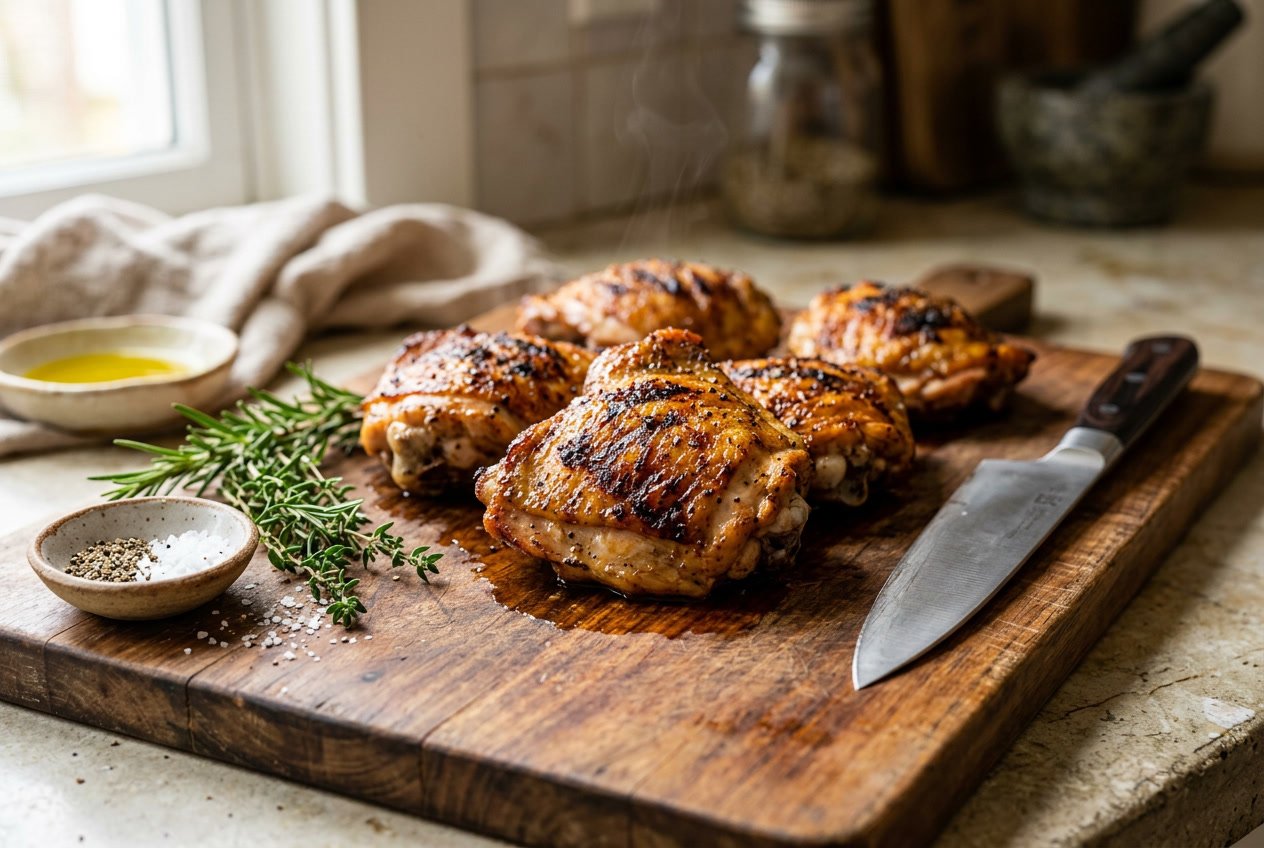
This post explains why resting works and how long to wait for different methods. You’ll also learn simple practices to keep skin crisp and meat moist.
Why Resting Chicken Thighs Matters
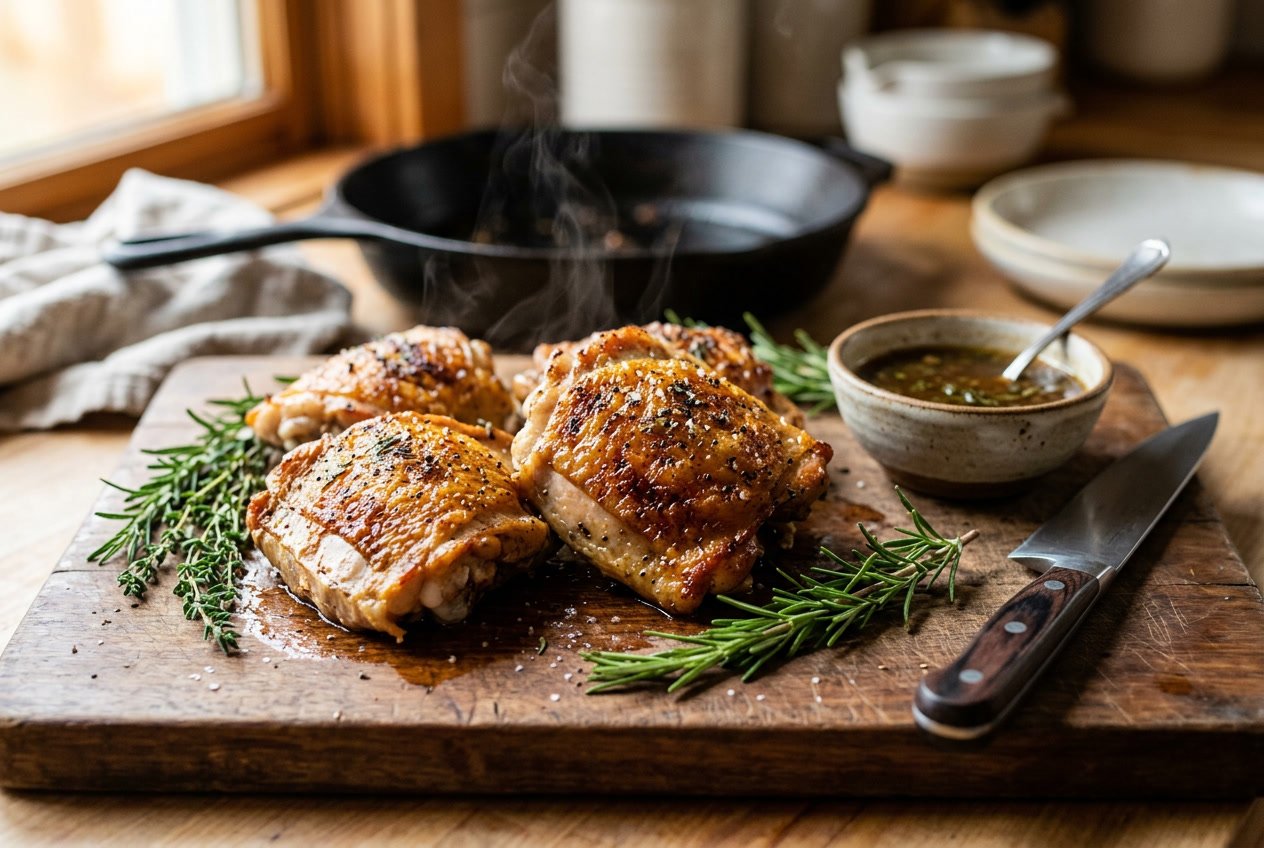
Resting chicken thighs lets internal juices redistribute and the temperature equalize. This pause affects how moist and tender the meat will be when you cut into it.
Juiciness and Moisture Retention
When you remove thighs from heat, muscle fibers that contracted during cooking begin to relax. That relaxation allows some of the liquid pushed to the center to move back into the surrounding tissue.
If you slice immediately, those center juices escape onto the cutting board, leaving the meat drier. Aim for about 5–10 minutes for individual thighs; bone-in pieces and larger portions may need the upper end of that range.
Lightly tent the thighs with foil to retain heat without trapping steam. This preserves the skin’s crispness while keeping the interior moist.
Use a meat thermometer to confirm the internal temperature stabilizes rather than dropping quickly. Letting temperature equalize prevents carryover cooking from overshooting your target and minimizes moisture loss when you carve.
Flavor Enhancement
Resting lets dissolved flavor compounds re-distribute through the meat instead of pooling centrally. Each bite carries more of the seasoning and rendered fat, so the thigh tastes more uniformly seasoned.
If you brined, marinated, or applied a rub, resting helps those flavors settle into the muscle. The brief cooling also reduces volatile aroma loss, so aromatics from herbs, garlic, or citrus remain perceptible when you serve.
Do not tightly wrap thighs in plastic or foil. A loose tent encourages flavor retention while maintaining the temperature needed for gentle carryover integration.
Texture Improvement
Texture depends on both collagen breakdown and how the fibers reabsorb moisture after cooking. Resting gives residual heat time to finish breaking down connective tissue in dark meat, making the thigh more tender.
Proper rest also prevents the exterior from becoming gummy. Steam trapped by tight wrapping softens the skin; a light foil tent lets excess steam escape so the crust stays crisp while the interior relaxes.
If you overrest until the meat cools too far, briefly reheat in a low oven (200°F / 95°C) for a couple minutes to bring temperature back.
How Resting Works: The Science Behind the Process
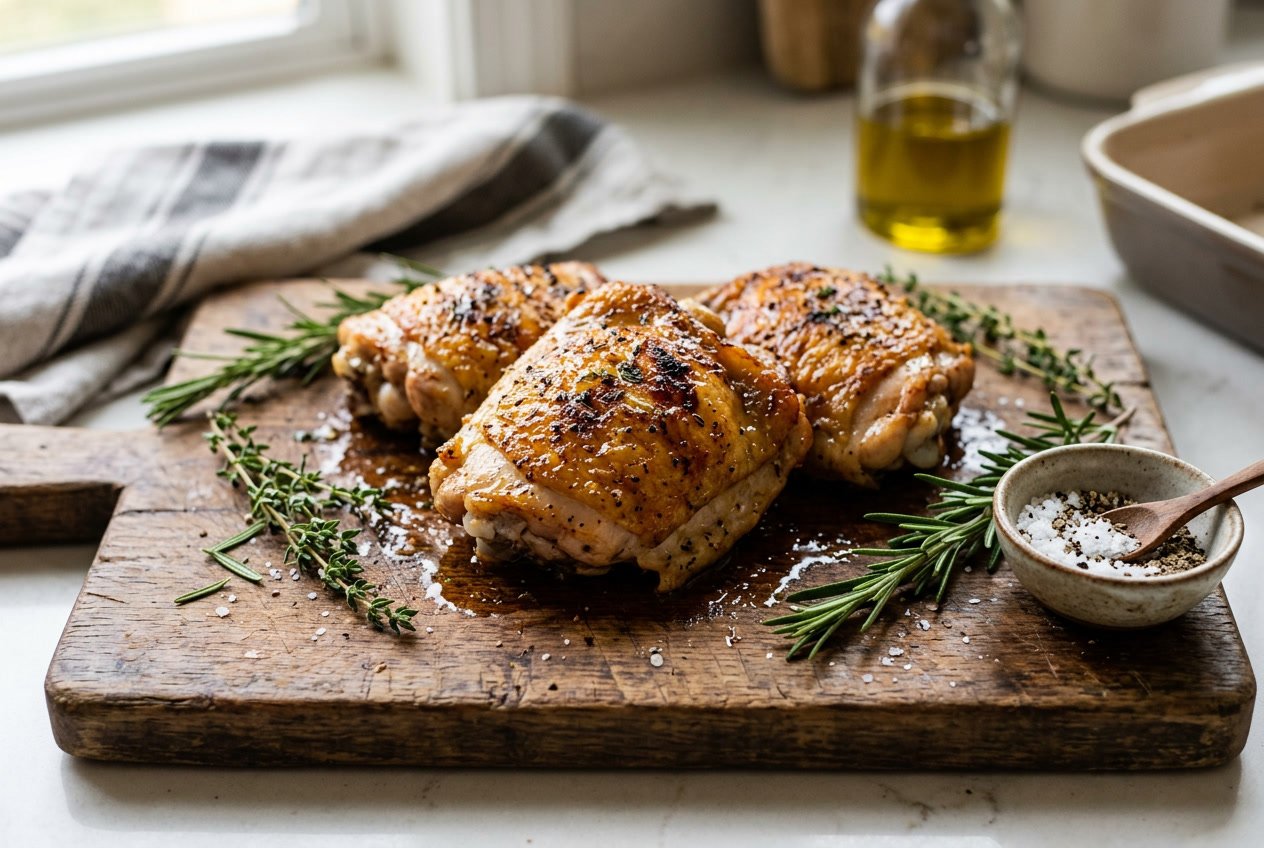
Resting locks in juices and lets heat continue to move through the thigh. Proteins relax and rebind moisture, improving texture and preventing excessive juice loss when you cut into the meat.
Heat and Protein Changes
When you remove thighs from heat, proteins that tightened during cooking begin to relax. Muscle fibers contract as they heat, squeezing out water; during rest, those fibers loosen slightly and permit some reabsorption of moisture.
This change happens mostly within the first few minutes. A 5–10 minute rest balances relaxation with retained warmth.
Collagen in dark meat like thighs also changes with temperature. At higher temperatures collagen converts to gelatin, which makes the meat tender and helps hold juices.
If you overcook or over-rest until the meat cools too much, fats solidify and the perceived juiciness drops. Use a probe thermometer to confirm the internal temperature reached 165°F before resting.
Juice Redistribution
Cooking forces juices toward the center and toward bone or heat source. When you let thighs rest, internal pressure equalizes and liquids move back through the muscle fibers.
That redistribution reduces the amount of clear liquid you’ll lose on the cutting board. You get more even moisture throughout each piece.
Place thighs on a cutting board or wire rack and tent loosely with foil to slow heat loss while allowing steam to escape. Avoid tightly wrapping, which traps condensation against the skin and can soften it.
For thicker or bone-in thighs, give the liquids a few extra minutes. The bone holds heat and delays full redistribution.
Carryover Cooking Effects
Carryover cooking raises the internal temperature after you remove the thigh from heat because residual heat flows from hot outer layers inward. For typical bone-in thighs, expect a 3–8°F rise; boneless pieces usually climb less.
Plan for carryover cooking by removing thighs from heat a few degrees below your target, especially with larger or bone-in pieces. If you need to keep thighs warm without overcooking, tent loosely with foil or use a low oven (around 175–200°F) for short holding periods.
Monitoring with a thermometer prevents overshoot and preserves the texture you want.
Recommended Resting Time for Chicken Thighs
Rest chicken thighs long enough for juices to redistribute and for carryover cooking to finish, but not so long that they cool. Use a short tent of foil to keep the surface warm while letting steam escape.
Ideal Resting Duration
Aim for 5–10 minutes for most thighs. This window lets internal juices move back into the meat fibers without dropping the serving temperature too far.
If thighs are small or boneless, 3–5 minutes often suffices. For larger or thicker pieces, lean toward 8–10 minutes to allow the center to equilibrate.
Tent loosely with foil rather than wrapping tightly. Tight wrapping traps steam and softens skin, while a loose tent preserves crust and keeps the meat warm.
Resting Time for Different Cooking Methods
Dry-heat methods require a longer rest than moist-heat methods. Grilling, roasting, pan-searing, and air-frying benefit from 5–10 minutes of rest because surface moisture is lower and juices are pushed toward the exterior during cooking.
If you braise or simmer thighs in liquid, you can serve them almost immediately. The cooking liquid keeps the meat moist and the juices stay distributed.
For fried thighs, rest 5–10 minutes to let oil settle and juices reabsorb. Quick pan-seared or thin-cut thighs can rest 3–5 minutes.
Use a cutting board with a rim or a platter to catch any juices, then spoon them back over the thighs before serving.
Bone-In versus Boneless Thighs
Bone-in thighs retain heat longer and need slightly more rest. Plan for 7–10 minutes for bone-in pieces so residual heat near the bone finishes the cook without drying outer meat.
Boneless thighs typically need 3–6 minutes. They cool faster and have no bone to continue cooking the interior, so shorter rest preserves serving temperature and juiciness.
When slicing, avoid cutting into the bone immediately. Let bone-in thighs rest to prevent juices from pooling at the cut surface and to keep meat tender.
Best Practices for Resting Chicken Thighs
Rest your chicken thighs for a short, controlled period to let juices redistribute and internal temperature stabilize. Use light foil tenting and check temperature with a probe.
Keep the resting area warm but ventilated to preserve skin texture.
Tenting with Foil
Lightly tent each thigh with a sheet of aluminum foil immediately after removing from heat. Fold the foil so it does not touch the skin.
This traps warmth while allowing steam to escape and helps prevent soggy skin. Avoid tightly wrapping the thighs.
Tight wrap traps moisture and softens the skin, while loose tenting maintains surface texture and slows heat loss. If you’re resting a tray of thighs, create a small peak over each piece.
If you plan to serve within 10 minutes, tenting at room temperature is fine. For longer holds, place the tented thighs in a low oven (about 200°F / 95°C) or a warming drawer.
Using a Meat Thermometer
Insert an instant-read probe into the thickest part of the thigh, avoiding bone, right before resting and again after 5–7 minutes. You want the internal temperature to be at or slightly above 165°F (74°C) for safety.
Carryover cooking typically raises it a few degrees after removal. Use a leave-in probe for larger batches if you need continuous monitoring while the thighs rest.
Set an alert for 165–170°F (74–77°C) so you can remove the thighs from holding heat before they overcook. Calibrate or check your thermometer regularly.
A small temperature error will change doneness and moisture levels significantly. Verify accuracy with an ice-water or boiling-water test when in doubt.
Resting Environment Tips
Choose a warm, draft-free spot for resting to prevent rapid heat loss. Countertops near vents or open windows will cool the meat quickly.
Use an insulated cutting board or a shallow pan to collect any juices. Keep the thighs uncovered if you want to preserve crisp skin and plan to serve within five minutes.
For 5–10 minute rests, tent with foil as described. If you need to hold them longer, use a low oven set to 200°F (95°C) or a warming drawer and monitor with a thermometer.
Collect drippings on a rimmed tray and use them for sauce or gravy. Letting juices pool on the board or plate prevents loss of flavor and gives you the option to spoon them back over the thighs when plating.
Factors Affecting Rest Time
Rest time for chicken thighs depends on how you cooked them, how large or thick the pieces are, and the temperature they reached. These specifics determine how much carryover cooking will happen and how long you should let chicken rest to keep it juicy and safe.
Cooking Method
The cooking method controls surface heat and how quickly the interior reaches temperature. High-heat methods like grilling or pan-searing create a strong temperature gradient between the exterior and the center.
When you remove thighs from a hot grill or skillet, carryover cooking can raise the internal temperature several degrees. Tent the thighs loosely to retain heat without trapping steam.
Lower, gentler methods such as baking or braising heat the meat more evenly. Thighs cooked in the oven usually need a shorter rest because temperature equalization is already mostly achieved.
If you used a crisping step (broil or sear) after braising, give a slightly longer rest to let juices redistribute and the crust relax. If you finish on indirect heat, expect moderate carryover cooking.
For smoky, high-heat barbecue, add a minute or two to resting time compared with oven roasting.
Thickness and Size
Thickness and size dictate how long heat and juices take to equalize. A single small boneless thigh will typically need only 5 minutes of rest.
A bone-in, large thigh may benefit from 8–10 minutes. The bone slows heat transfer and holds heat, so juices collect around it and need more time to redistribute.
If you cook multiple thighs at once, the thicker pieces will continue cooking longer than thin ones. Slice thicker cuts against the grain after resting to preserve tenderness.
If the thickest part is under 1 inch, 5 minutes usually suffices. For 1–1.5 inches, rest 7–10 minutes.
Initial Temperature
The internal temperature at removal sets how much residual cooking will occur and how long you should rest chicken. Pull thighs from heat at about 160°F (71°C) if you expect 165°F (74°C) after carryover cooking.
If you remove them at 165°F, rest mostly prevents juice loss rather than raising temperature. Measure in the thickest part, avoiding bone.
If the temperature is below safe range, return thighs to heat briefly. If thighs are significantly above 165°F, shorter rest helps avoid further drying.
For those a few degrees below, aim for a full 8–10 minute rest with loose foil to allow the temperature to finish rising while juices redistribute.
Common Mistakes When Letting Chicken Rest
Resting affects juiciness, temperature carryover, and skin texture. Small timing or handling errors can make thighs drier, cooler, or soggy.
Cutting Too Soon
If you cut into chicken thighs immediately after cooking, juices that migrated toward the surface during heating will pour out. That liquid contains both moisture and flavor.
Losing it makes the meat seem drier and less flavorful. Wait the recommended time for your method — roughly 3–5 minutes for pan-seared or air-fried thighs and 5–10 minutes for roasted or grilled bone-in thighs.
Use a timer and a meat thermometer. If the internal temp is 165°F when removed, expect it to rise another few degrees while resting.
Slice only after the rest period finishes and juices have redistributed. Keep thighs spaced on a board or platter so steam can escape.
Piling pieces or slicing immediately defeats the purpose of letting chicken rest after cooking.
Resting Too Long
If thighs rest for more than 10–15 minutes, they cool below serving temperature and their texture can change. Extended rests also let the meat stiffen and may allow surface bacteria to grow if left at room temperature too long.
If you need more time, place thighs in a low oven (about 175–200°F) or tent them briefly with foil while you monitor with a thermometer. Avoid holding them at very high heat, as that will continue cooking and dry the meat.
For short delays, loosely tenting preserves warmth without trapping excessive steam that softens the skin. Use holding methods only when you’ll plate within 20–30 minutes.
Improper Covering
When you tightly wrap chicken in foil or seal it in an airtight container, steam and moisture get trapped. This makes the crisp skin lose its crunch and creates a steamed texture on the surface.
If you want to keep the skin crisp, tent the chicken loosely with foil so steam can escape. You can also leave it uncovered.
For bone-in thighs, tenting helps prevent the chicken from cooling too quickly while still letting moisture escape. If you collect pan juices on the platter, spoon them back over the thighs just before serving to restore moisture without losing crispness.
Remember: a tight cover leads to soggy skin, while a loose tent keeps the chicken warm and preserves texture.


