
Should Chicken Thighs Rest? The Definitive Guide to Juicier Meat
Let chicken thighs rest after cooking for about 5 to 10 minutes to keep them juicy and let carryover heat finish the cook.
Letting them rest briefly prevents juices from running out when you cut into the meat and gives the temperature time to even out. Your thighs stay moist and flavorful.
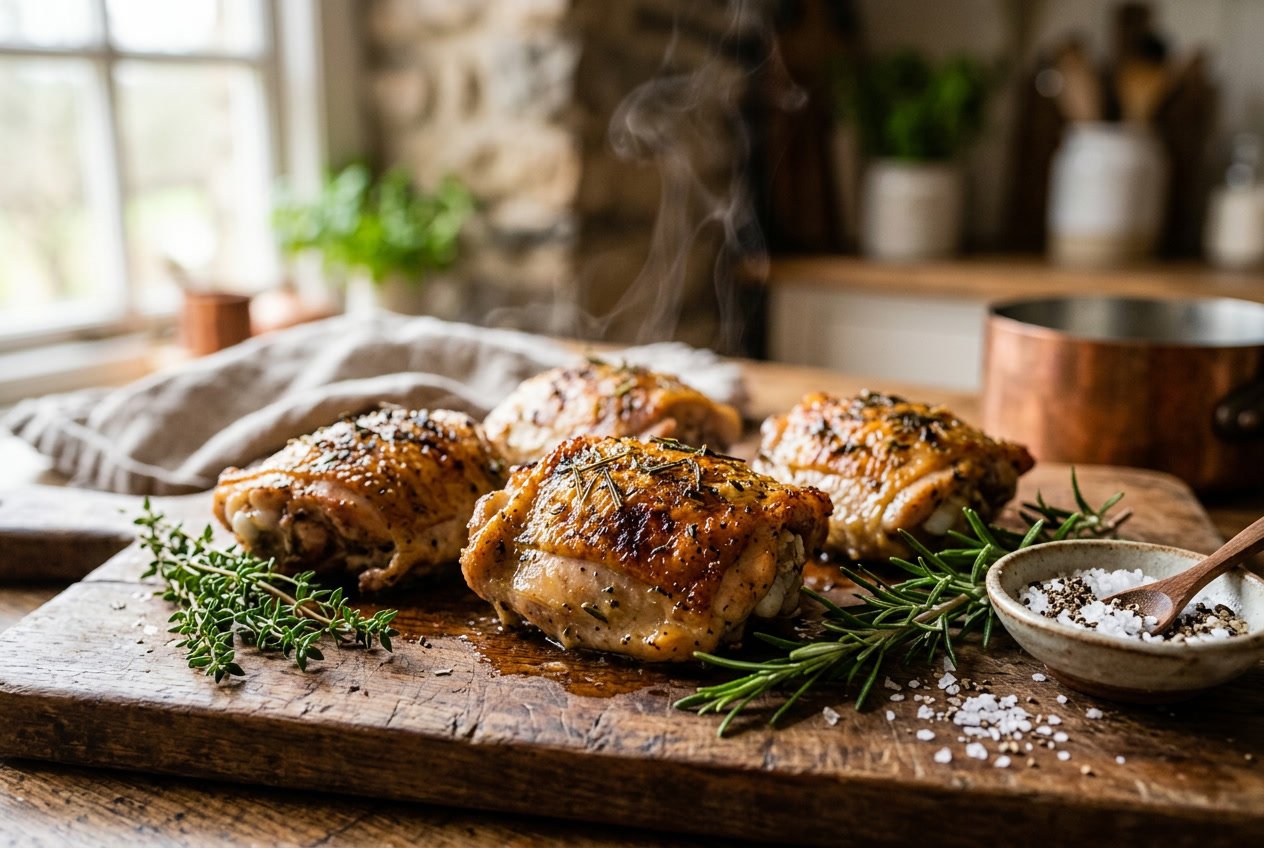
Use this guide to learn what happens inside the meat during rest, how bones or size change the timing, and simple practices like tenting or using a wire rack. These steps help you get a reliably satisfying meal every time.
Why Resting Chicken Thighs Matters
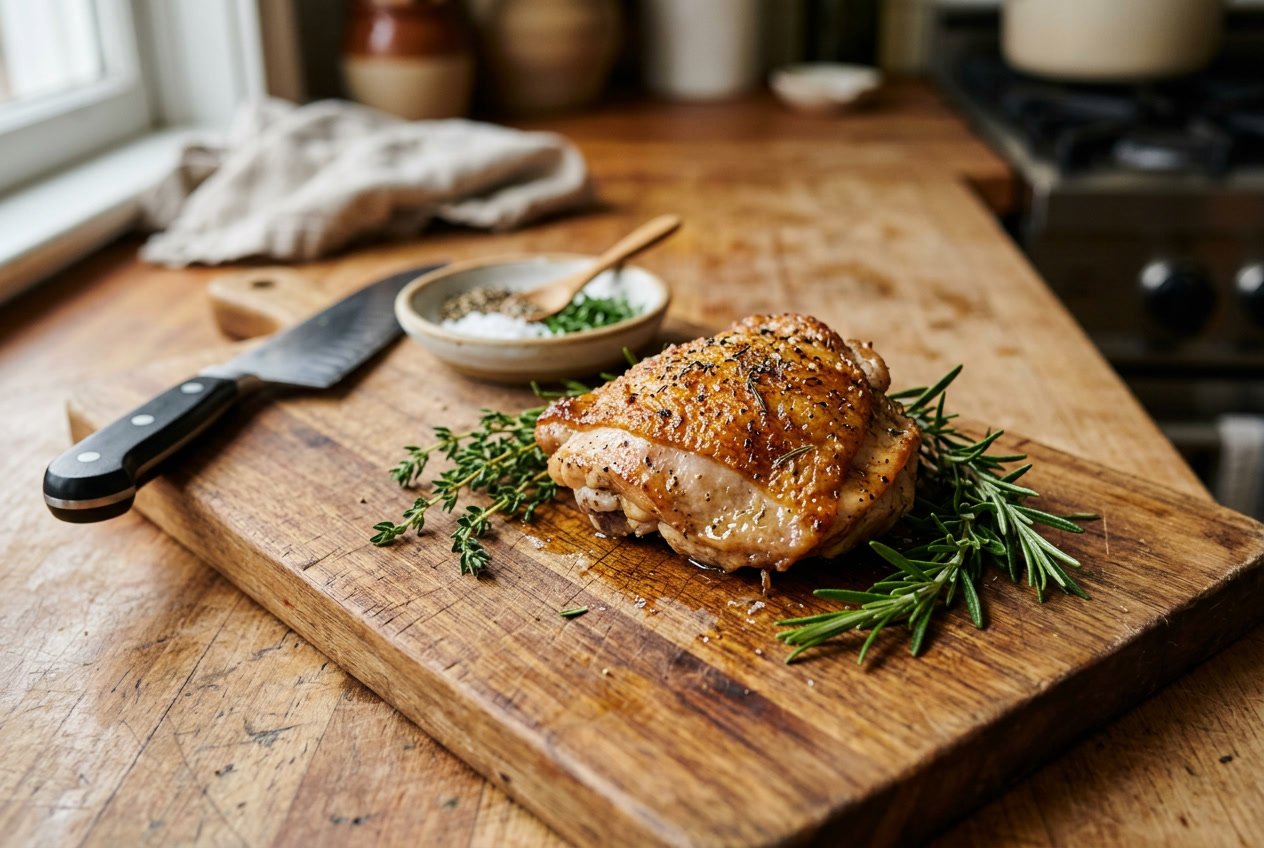
Resting chicken thighs preserves moisture, allows internal heat to stabilize, and protects skin texture.
These effects directly influence how juicy, safe, and enjoyable the thighs are when you serve them.
Juice Redistribution in Chicken Thighs
When you remove thighs from heat, muscle fibers relax and juices move from the center toward equilibrium.
If you cut immediately, those juices run out onto the board and the meat ends up drier.
Rest for about 5–10 minutes for typical bone-in or boneless thighs.
Tent loosely with foil to hold heat without trapping steam; this keeps skin from getting soggy.
For thicker pieces, lean toward the longer end of the range.
Place thighs on a wire rack over a sheet pan so air circulates under the meat.
This prevents pooling and helps juices redistribute evenly, so every bite stays moist.
Carryover Cooking Explained
Carryover cooking raises the internal temperature after you remove the thighs from heat.
With chicken thighs, expect a 3–8°F (about 2–4°C) rise depending on size and cooking method.
Measure at the thickest point away from bone before resting; reach 165°F (74°C) for safety.
Use carryover as a finishing increase, not the primary way to hit safe temperature.
If you want to hold temperature without overcooking, tent loosely or use a low oven (175–200°F).
For large batches, keep pieces warm while avoiding prolonged resting that cools the meat below serving temperature.
Impact on Flavor and Texture
Resting lets fat and connective tissue in thighs reabsorb juices, which improves mouthfeel and tenderness.
Fat melts into the meat during rest, so flavor disperses instead of concentrating in one spot.
Fibers relax and become less tense, making slices cleaner and chewier.
For crisp skin, remove foil after a few minutes or rest skin-side up to limit trapped steam.
Avoid over-resting beyond 15 minutes for single thighs; extended rest cools and can dry the surface.
If timing is tight, even a short 3-minute rest yields better results than none, but 5–10 minutes is the practical sweet spot.
The Science Behind Resting Meat
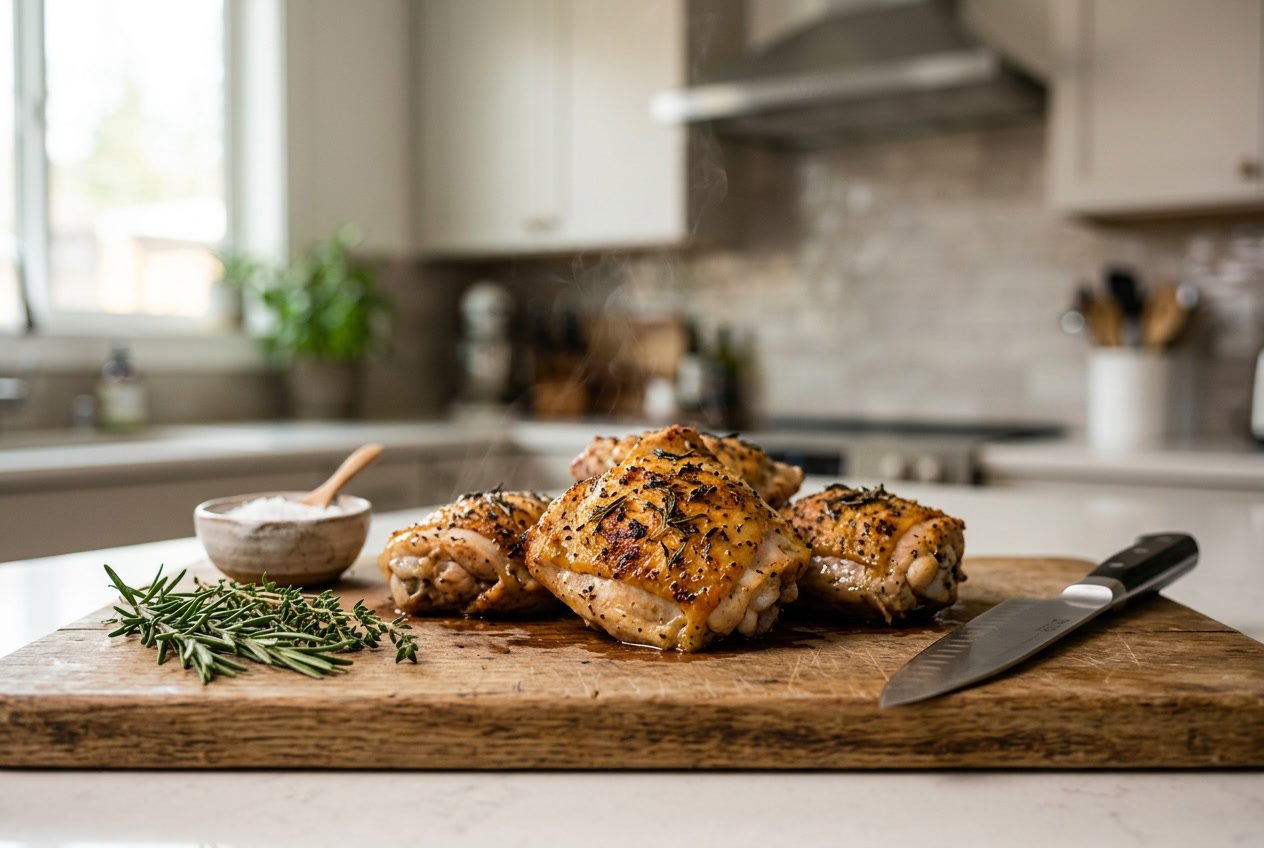
Resting lets residual heat and internal forces redistribute moisture and finish gentle cooking near bones.
This process affects texture, juiciness, and safe serving temperature for chicken thighs.
What Happens Inside the Thigh While Resting
When you remove a thigh from heat, temperature gradients remain: the exterior is hotter than the interior.
Heat continues to move inward for a short time, often raising the internal temperature by a few degrees, especially near the bone.
Juices driven toward the center during cooking begin to slow and spread back through the muscle as the temperature evens out.
That reduces the amount of liquid lost when you cut the meat, so your chicken stays juicier.
Bones retain heat and keep surrounding meat warmer longer.
For bone-in thighs, carryover cooking lasts a bit longer than for boneless pieces.
Let thighs rest 5–10 minutes to balance finished temperature and moisture retention.
Protein Relaxation and Moisture Retention
Heat causes muscle proteins like myosin to coagulate and contract, squeezing out water during cooking.
As the thigh cools slightly, those proteins partially relax and stop forcing moisture outward.
Relaxed proteins allow some expelled juices to redistribute into the muscle fibers.
That reabsorption improves tenderness and reduces drip when you slice the thigh, so your cooked chicken is noticeably juicier.
If you wrap loosely with foil, you slow cooling without steaming the skin.
That keeps the thigh warm while allowing proteins to relax and juices to rebind.
How Long Should Chicken Thighs Rest?
Let the meat sit so juices redistribute and residual heat finishes the cook.
Aim for brief rests after dry-heat methods and minimal or no rest after moist cooking.
Optimal Resting Time for Different Cooking Methods
For roasting, grilling, or pan-searing, rest thighs for about 5–10 minutes.
That window lets juices move back into the muscle and permits modest carryover cooking without cooling the meat too much.
If you pan-fry or air-fry smaller boneless thighs, 3–5 minutes often suffices because they lose surface heat quickly.
Skip a long rest for braised or stewed thighs cooked in liquid.
The sauce keeps the meat moist, so you can serve almost immediately.
Tent loosely with foil to retain warmth while allowing steam to escape and preserve crisp skin.
Rest Time for Bone-In vs. Boneless Thighs
Bone-in thighs need the full 5–10 minute rest.
The bone holds heat and causes more carryover cooking near the center; a longer rest evens the temperature and prevents juices from running out when you cut.
Boneless thighs cool and equilibrate faster; 3–5 minutes usually gives you juicy results and avoids overcooking.
If you plan to slice the meat, rest on a cutting board and pour any collected juices back over the thighs before serving.
Always check that the internal temperature reaches a safe level (165°F) before resting, then rely on the recommended rest times to finish the cook and retain moisture.
Best Practices for Resting Chicken Thighs
Resting keeps juices in the meat, allows carryover cooking to finish, and preserves a crisp skin if handled correctly.
Follow specific steps for timing, placement, and light tenting to get consistent, juicy thighs.
How to Rest Chicken Properly
Transfer thighs immediately from the heat source to a clean cutting board or shallow platter.
Space pieces so steam can escape; do not stack them.
For bone-in thighs, plan 5–10 minutes; for boneless, 3–5 minutes usually suffices.
Leave thighs undisturbed while resting.
Use an instant-read thermometer to confirm carryover cooking: the internal temp will typically rise 2–5°F (1–3°C).
If you need to hold them longer than the target rest time, keep them in a low (150–170°F / 65–77°C) oven to avoid cooling too much.
Before carving, tilt the platter and spoon any pooled juices back over the meat to return moisture to the surface.
Slice against the grain for the most tender bites.
Foil Tenting and Heat Retention Tips
Lightly tent thighs with a single sheet of aluminum foil to retain heat without trapping steam.
Leave a small gap between foil and meat to let moisture escape; tight wrapping makes skin soggy.
Use foil only for 5–10 minutes. Longer holds will soften crusts and dry the interior.
If you cook multiple batches, keep finished thighs on a wire rack over a sheet pan.
This preserves air circulation and keeps bottoms crisp.
For short holds under 10 minutes, a warm oven (set to 150–170°F / 65–77°C) works better than tight foil.
Avoid covering with cloths; they retain more moisture and lower surface temperature unevenly.
Avoiding Common Resting Mistakes
Don’t cut immediately after cooking.
Slicing too soon releases concentrated juices onto the board, leaving meat drier.
Also avoid piling thighs; trapped steam softens skin and dilutes flavor.
Don’t assume all methods need the same rest time.
Braised or sauced thighs often don’t benefit from resting because the liquid maintains moisture.
Over-resting cools the meat too much; under-resting prevents carryover cooking, especially near the bone.
Don’t discard the juices on the platter.
Use them as a finishing sauce or spoon them back over the thighs for added flavor and moisture.
Benefits of Resting Chicken Thighs
Resting chicken thighs after cooking helps retain juices, finish carryover cooking, and makes the meat easier to slice and serve.
A short wait also concentrates flavors and prevents pooled juices from running onto your plate.
Enhanced Juiciness and Tenderness
When you remove thighs from heat, the internal temperature continues to rise slightly and the muscle fibers relax.
That relaxation lets some moisture move back into the meat instead of spilling out when you cut it, which keeps each bite juicier.
This effect is stronger with dark meat like thighs because they contain more fat and connective tissue than breasts.
A 3–10 minute rest is usually enough for typical thigh sizes.
Bone-in pieces often benefit from the longer end of that range because the bone holds heat and promotes gentle finishing.
Transfer thighs to a clean platter and tent loosely with foil.
That traps warmth but allows steam to escape so the skin stays crisp while the interior stays tender.
Easier Carving and Serving
Resting firms the thighs just enough to make clean, neat slices without shredding the meat.
If you cut immediately, juices pour out and the meat falls apart, which complicates plating and portion control.
For bone-in thighs, resting helps the meat separate from the bone slightly, so you can remove the bone or carve around it more easily.
Boneless thighs also slice better after a brief rest, giving consistent thickness for even presentation and predictable serving sizes.
Space pieces apart on the platter while resting.
That prevents steaming each other and preserves surface texture for a better final appearance.
Flavor Development During Rest
A short rest period concentrates flavors because juices redistribute and mingle with rendered fat.
That redistribution spreads seasoning and any pan juices more evenly through the meat, so flavors taste balanced.
If you collect drippings on the platter, spoon them back over the thighs just before serving to reintroduce seasoning and fat.
Lightly tenting avoids soggy skin while preserving aromas that make the first bite more flavorful.
Aim for the appropriate rest time for the cut and cooking method to get maximum flavor without losing heat.
Factors That Influence Resting Needs
Resting time varies with how you cook the thighs and how you plan to serve them.
Consider heat retention, thickness, and whether you need to hold pieces warm before plating.
Cooking Method and Thigh Thickness
How you cook the thighs changes carryover heat and moisture behavior.
Bone-in, skin-on thighs retain more heat because the bone and skin act as insulators.
Expect 8–10 minutes of resting for average-sized pieces.
Boneless thighs cool faster and typically need 5–7 minutes to let juices redistribute.
Searing or high-heat grilling produces a hot exterior and greater juice migration toward the center.
Resting after these methods prevents juice loss when you cut the meat.
If you finish thighs in a low oven after searing, reduce rest slightly because internal temperatures equalize more gradually.
Use a probe thermometer to confirm 165°F (74°C) before resting, then tent loosely with foil to preserve surface texture without trapping steam.
Impact of Serving Style and Portion Size
How you serve determines how long you should hold the meat before plating. If you want to serve individual pieces right away, let each thigh rest 5–10 minutes depending on size so juices reabsorb and slices stay moist.
For family-style service, stack thighs carefully or keep them on a wire rack. Stacked pieces trap heat and extend resting time but can cause soggy skin.
Larger or thicker thighs need a longer rest to let heat move inward and redistribute juices evenly. If you need to hold cooked thighs longer than 10 minutes, keep them in a low oven (under 200°F/95°C) or loosely tent them to maintain a safe serving temperature without overcooking.


