
Should Chicken Thighs Be Washed Before Cooking? Food Safety Explained
Do not wash chicken thighs before cooking.
Washing raw poultry spreads bacteria like Salmonella and Campylobacter across your sink, countertops, and utensils. Proper cooking kills those pathogens.
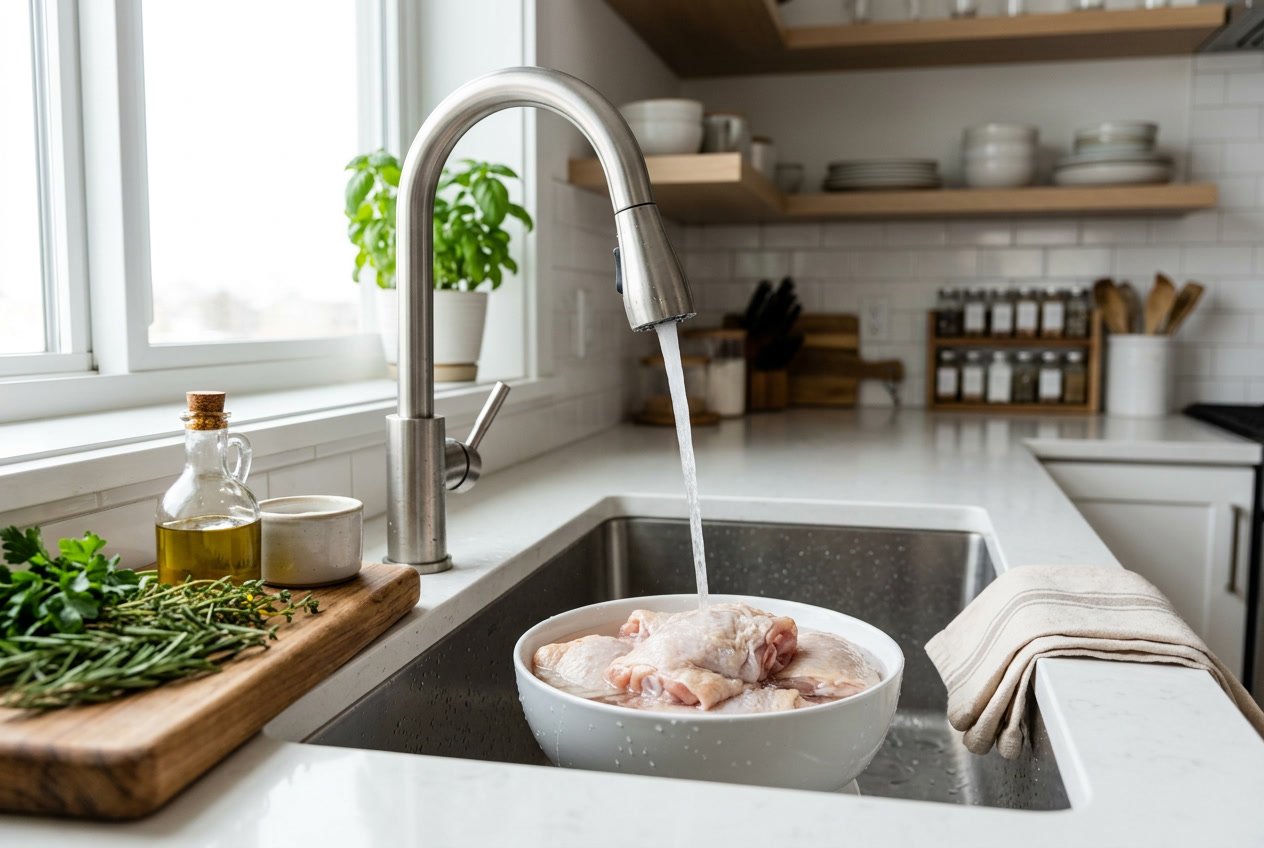
If you’ve always rinsed meat because it feels cleaner, you can use safer, evidence-based steps to handle and prep chicken thighs without that risky habit.
You’ll learn how to trim, dry, store, and cook for the best texture and food safety, plus how cultural habits and personal preferences fit into smart kitchen practice.
Should Chicken Thighs Be Washed Before Cooking?
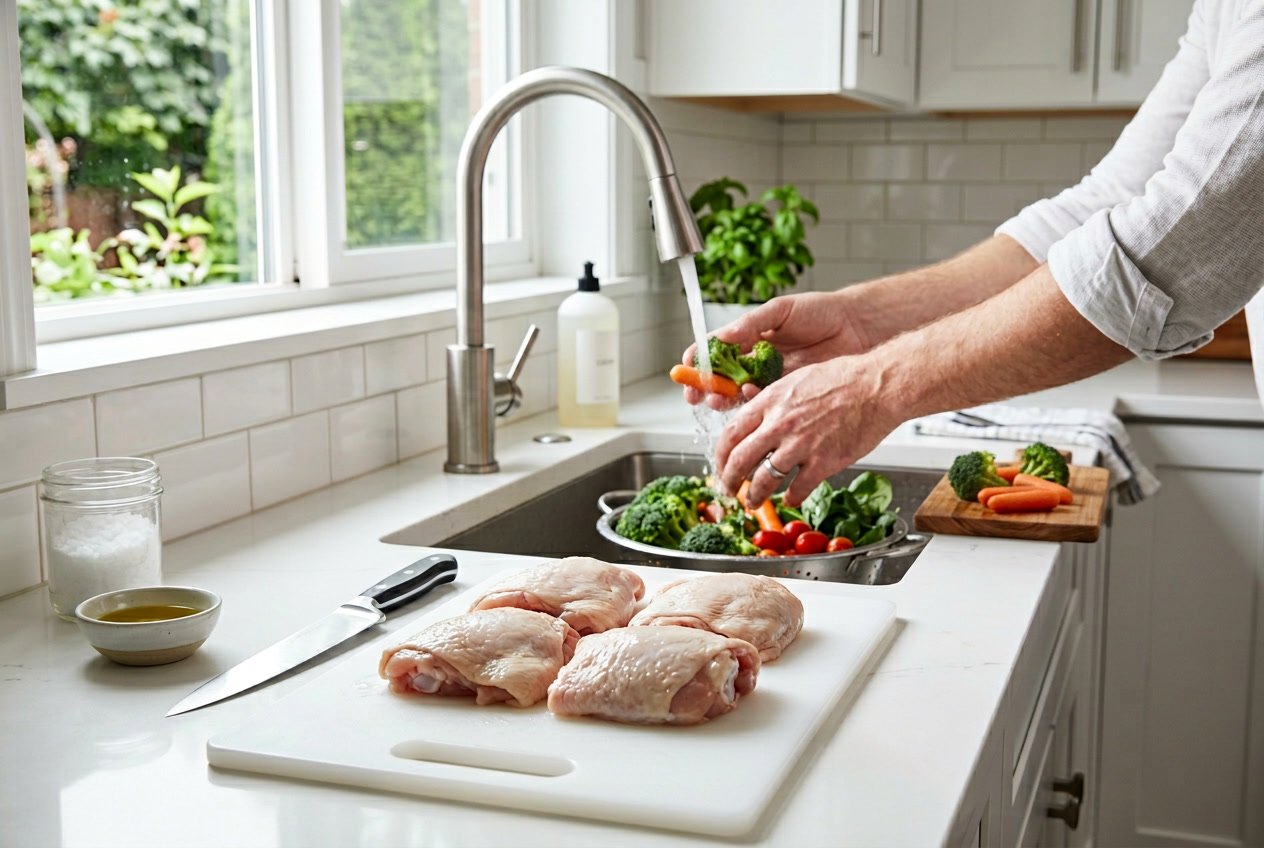
You do not need to wash chicken thighs to make them safe to eat.
Proper handling, surface cleaning, and reaching the right internal temperature matter far more than rinsing raw poultry.
Current Food Safety Guidelines
Government food-safety agencies advise against washing raw chicken.
The USDA and similar authorities warn that rinsing chicken thighs or any raw poultry can spread bacteria to countertops, utensils, and nearby foods through splashing water.
They recommend you handle raw chicken with clean hands, keep it separate from ready-to-eat foods, and sanitize any surfaces or tools that touch the meat.
Use paper towels to pat meat dry if you want less surface moisture, then discard the towels immediately and wash your hands.
Follow storage rules: keep raw chicken in a sealed container on the bottom fridge shelf and cook or freeze within 1–2 days to limit bacterial growth.
Risks of Washing Raw Chicken
When you wash raw chicken thighs under a faucet, water droplets can carry Salmonella and Campylobacter beyond the sink area.
Those droplets can land on cutting boards, sponges, or other foods, raising cross-contamination risk that washing won’t remove.
Washing gives a false sense of cleanliness.
If you rinse, you must thoroughly clean and sanitize the sink, faucet, counters, and any utensils exposed to splatter.
That extra work often exceeds the limited benefit of removing visible debris or blood.
If you worry about packaging residue or bone fragments, inspect and trim the meat with a clean knife instead of rinsing.
Patting dry removes excess moisture without producing contaminated spray.
The Role of Cooking Temperature
Cooking chicken thighs to an internal temperature of 165°F (74°C) kills pathogenic bacteria on the surface and inside the meat.
Use a digital instant-read thermometer in the thickest part of the thigh—avoid touching bone—to confirm doneness.
Proper cooking makes washing unnecessary for safety.
However, safe handling still matters: avoid cross-contamination while seasoning, marinating, or moving raw chicken.
If you marinate, do so in the refrigerator and discard used marinade or boil it before reuse to kill any pathogens.
Potential Dangers of Washing Chicken Thighs
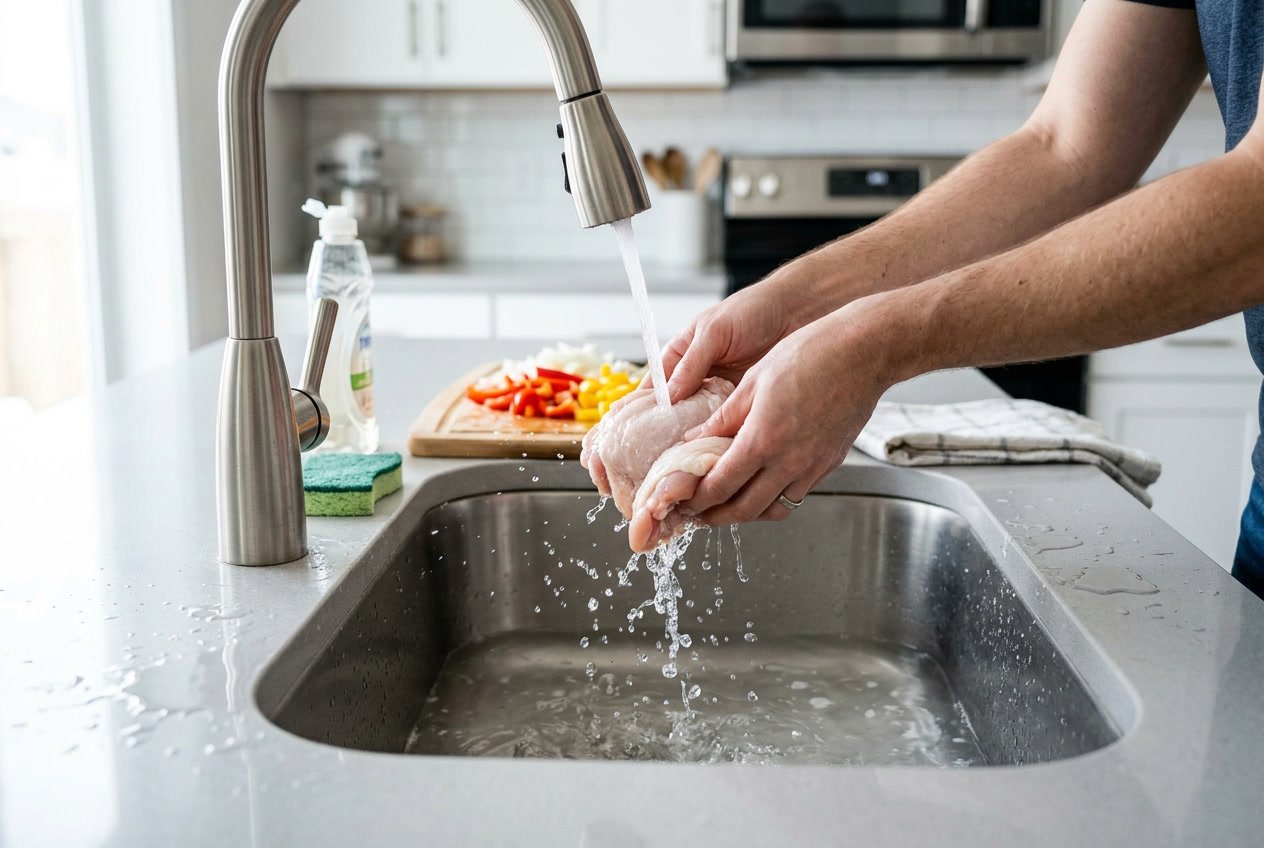
Washing chicken thighs can move harmful bacteria from the meat to sinks, countertops, utensils, and other foods.
Proper handling and surface cleaning matter more than rinsing.
Cross-Contamination Risks
When you rinse raw chicken, water droplets can fling microscopic particles up to several feet, landing on nearby surfaces and foods.
If those droplets reach cutting boards, salad greens, or knives, you create direct cross-contamination pathways that simple wiping may not remove.
You can reduce that risk by never washing chicken and by preparing ready-to-eat items (like salads) before you touch raw poultry.
If raw juices touch a surface, clean with hot, soapy water and then apply a sanitizer.
Wash your hands for 20 seconds immediately after handling raw chicken to prevent transfer to other items.
Spread of Bacteria in the Kitchen
Pathogens commonly found on raw poultry—Salmonella and Campylobacter—can survive in sink basins, on faucet handles, and on cloth towels if you rinse chicken.
Studies show many sinks retain bacteria even after an attempted clean, so rinsing often increases the area contaminated in your kitchen.
Limit spread by patting thighs dry with a disposable paper towel if you need to remove debris, then discard it and wash your hands.
Clean sponges and reusable towels frequently or replace them, and sanitize high-touch areas after any contact with raw chicken to prevent bacteria from moving to your food or utensils.
Proper Handling and Preparation of Chicken Thighs
Follow strict hygiene, temperature, and surface control when you handle raw chicken.
Focus on preventing cross-contamination and ensuring thighs reach the safe internal temperature during cooking.
Safe Handling Practices
Treat raw chicken as a contamination risk and keep it separate from ready-to-eat foods.
Store thighs on the bottom shelf of your fridge in a sealed container to prevent drips.
Use a dedicated cutting board and knife for raw poultry.
If you must reuse tools, wash them in hot soapy water or run them through the dishwasher before using them on other foods.
Wash your hands with soap and warm water for at least 20 seconds before and after touching raw chicken.
Sanitize countertops and sink areas after prepping thighs using a bleach solution (1 teaspoon bleach per quart of water) or a commercial kitchen sanitizer.
Thaw frozen thighs safely in the refrigerator or in sealed plastic submerged in cold water, changing the water every 30 minutes and cooking immediately after thawing.
Preparing Chicken Thighs for Cooking
Avoid rinsing thighs under running water.
Instead, pat thighs dry with disposable paper towels to remove excess moisture, discard towels immediately, and sanitize surfaces.
Trim excess fat or skin on a clean board if desired, and season or marinate in the refrigerator.
If you marinate, keep thighs in a sealed container and never reuse marinade unless you boil it first.
Use a probe thermometer to confirm the thickest part of each thigh reaches 165°F (74°C).
Rest cooked thighs for 3–5 minutes before serving to let juices redistribute.
Drying and Trimming Chicken Thighs for Best Results
Pat the chicken dry with paper towels to remove surface moisture.
Trim any loose fat or ragged skin with a sharp knife or kitchen shears.
Proper drying and trimming improve browning, reduce splatter, and help seasoning stick.
Importance of Pat Drying
Pat each thigh dry on both sides with clean paper towels until no visible moisture remains.
Moisture on the surface creates steam during cooking, which prevents the skin from crisping and reduces browning.
Removing it lets the Maillard reaction occur more quickly.
After patting dry, discard the towels immediately and wash your hands and the work area to avoid cross-contamination.
For skinless chicken thighs, drying still matters: removing excess moisture helps marinades penetrate and prevents soggy texture during searing or grilling.
If you have time, leave the thighs uncovered on a rack in the refrigerator for 30–90 minutes to air-dry the surface.
This step further improves crisping for skin-on thighs but is optional for skinless cuts.
Trimming Excess Fat and Skin
Place the thigh skin-side up and use a small, sharp knife to trim away large flaps of skin and thick white fat near the bone.
Remove loose bits that will shrivel and burn during high-heat cooking.
Leave a thin layer of fat if you want flavor and juiciness.
For skinless chicken thighs, check for membrane or cartilage and peel or cut it away so the piece lies flat and cooks evenly.
Trim uneven edges to promote uniform cooking time and prevent thin tips from drying out.
Keep a separate cutting board and sanitize utensils after trimming raw chicken thighs.
Label and date any trimmed pieces you refrigerate or freeze to maintain safe storage.
Storing and Freezing Raw Chicken Thighs
Keep raw chicken thighs cold, sealed, and clearly dated so you know when to use or freeze them.
Proper storage limits bacterial growth and preserves quality whether you plan to cook the thighs within two days or freeze them for later.
How to Store Raw Chicken Thighs Safely
Store raw chicken thighs in the coldest part of your refrigerator at 40°F (4°C) or below.
Keep them in their original packaging if unopened.
If opened, transfer the thighs to a leakproof container or a sealed plastic bag to prevent juices from contaminating other foods.
Place the container on the lowest fridge shelf to avoid drips onto ready-to-eat items.
Use fresh raw thighs within 1–2 days of purchase for safety and best texture.
If you marinate the thighs, do so in the fridge, not on the counter, and discard marinade that has touched raw meat unless you boil it before using.
Label the package with the date received or opened.
That step helps you track use-by time and avoid accidental spoilage.
Freezing Chicken Thighs for Future Use
Freeze chicken thighs if you won’t cook them within 1–2 days.
For the best texture, wrap individual thighs or small portions tightly in plastic wrap or parchment, then place them in a heavy-duty freezer bag or vacuum-seal pouch to remove as much air as possible.
Lay thighs flat in a single layer on a tray to freeze quickly.
Then stack or store upright in the freezer.
Raw chicken thighs maintain good quality for about 6–9 months.
Label each package with the freeze date to manage rotation.
Thaw frozen thighs safely in the refrigerator overnight or use the defrost setting on a microwave if you’ll cook them immediately.
Never thaw at room temperature; that increases bacterial risk.
Cultural Perspectives and Personal Preferences
Practices around cleaning chicken thighs vary by culture and individual habit.
Some people view rinsing or treating poultry as essential; others avoid it to reduce bacterial spread.
Cultural Variations in Cleaning Chicken
In many households across the Caribbean, Africa, and parts of Asia, people rinse chicken with water, vinegar, lemon, or salt before cooking.
Those techniques aim to remove visible residue, odors, or tiny feather bits and are often taught by older family members as part of food preparation rituals.
Chefs in professional kitchens in the U.S. and Europe typically skip rinsing because they rely on refrigeration, trimming, and heat to ensure safety.
Health agencies in several countries advise against washing poultry because water can splash bacteria onto surfaces.
If you follow a cultural method, keep cross-contamination controls: isolate the sink area, sanitize surfaces, and launder towels used during cleaning.
Personal Comfort and Habitual Practices
Your personal comfort often determines whether you wash chicken thighs before cooking. If you grew up rinsing poultry, you may feel that a quick rinse is necessary, even though cooking to 165°F eliminates pathogens.
If you learned food safety from public-health guidance, you probably avoid rinsing to reduce kitchen contamination risk. Use a dedicated cutting board and wash your hands thoroughly for at least 20 seconds.
Disinfect any surfaces that touch raw chicken. If you choose to rinse, dry the area and sanitize it immediately to prevent bacterial spread.


