
Should Chicken Thighs Be Slightly Pink? Safety, Science, and Cooking Tips
You might notice a faint pink tint in chicken thighs and wonder if that means danger.
If the thickest part of the thigh reaches 165°F (74°C), a slight pink color alone does not mean the meat is unsafe.
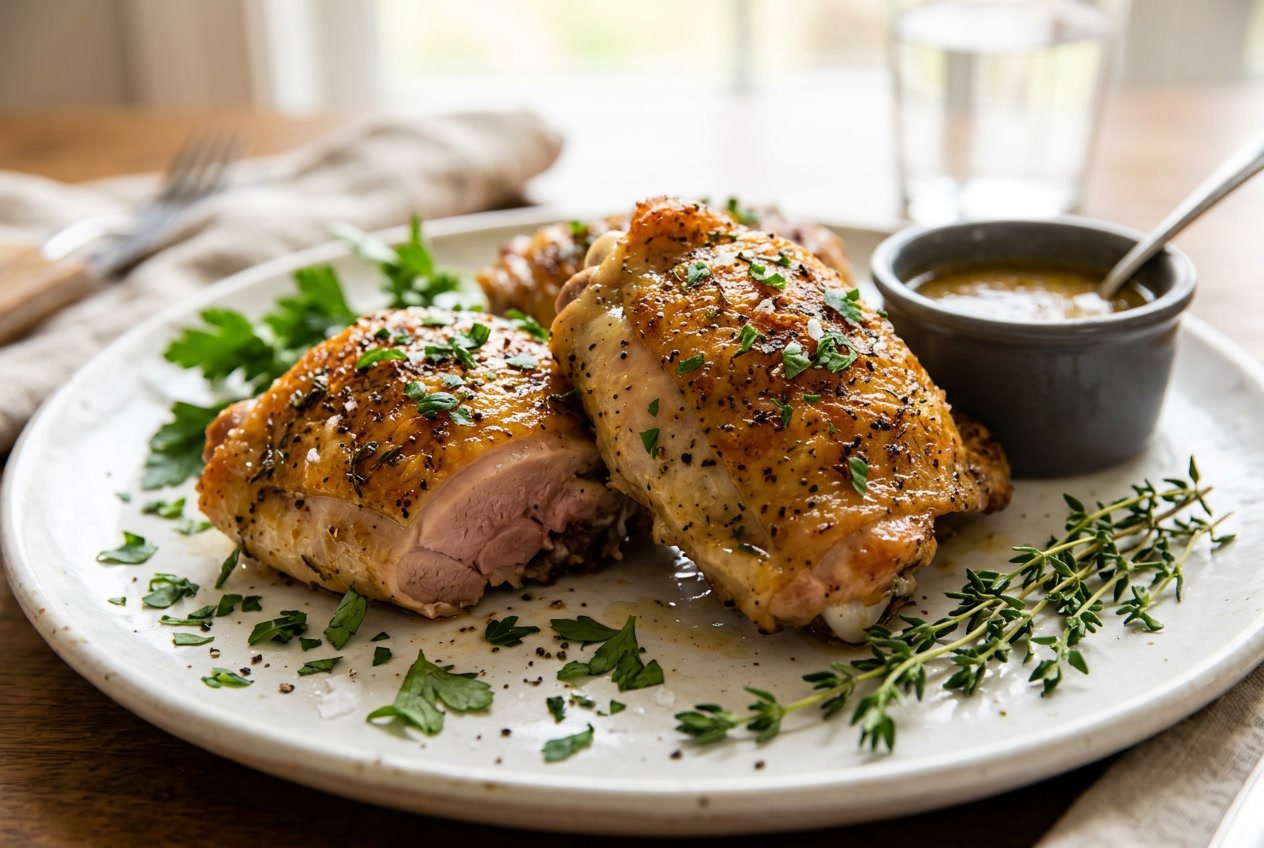
Color can mislead, so trust the correct temperature and look for other signs to confirm doneness.
You can check for safety risks, learn how bone, age, and feed affect color, and use simple checks and proper post-cooking handling to keep meals tasty and safe.
Understanding Chicken Thigh Color
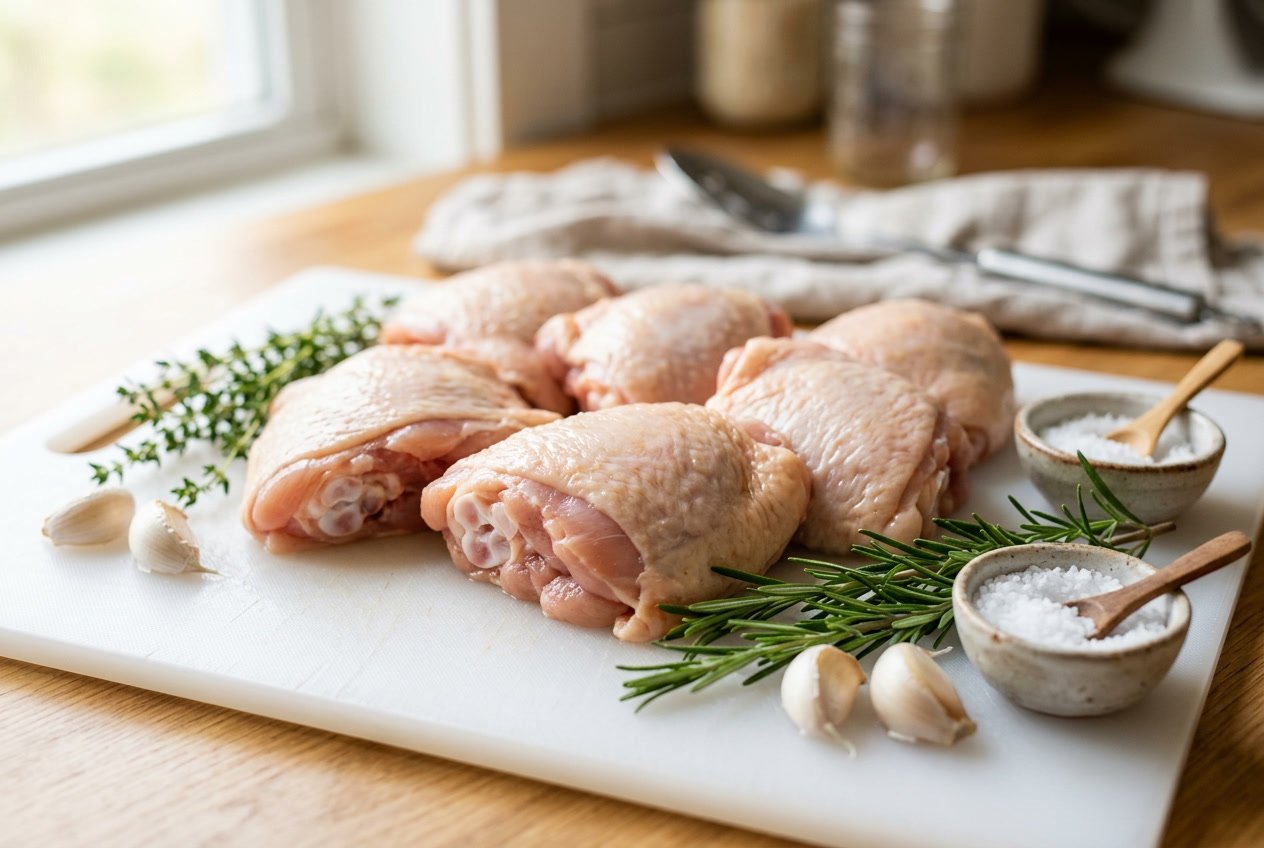
Thigh meat can look pink even when safe.
Myoglobin in dark meat and meat near the bone often keep a pink tint.
Why Chicken Thighs Can Remain Pink
Chicken thighs contain more water, connective tissue, and fat than breast meat, which affects how they cook and how color develops.
These factors slow heat penetration, so the meat stays moist and sometimes shows a pink hue even when the internal temperature has reached 165°F (74°C).
Cooking methods matter. Indirect heat, smoking, or brining can preserve pink tones by altering pH or adding nitrites.
If you overcook to remove every hint of pink, you sacrifice texture and flavor in thighs.
Use a calibrated instant-read thermometer in the thickest part of the thigh, away from bone, to confirm safety rather than relying on color.
Myoglobin and Dark Meat
Myoglobin is the oxygen-binding protein that gives dark meat its deeper color compared with white breast meat.
Thigh muscles work more during the bird’s life and therefore hold more myoglobin, which can leave a pink or reddish cast after cooking.
Heat denatures myoglobin and typically turns it from red to brown, but the denaturation process depends on temperature, time, and pH.
Lower cooking temperatures for longer times, such as sous-vide or slow roasting, can change protein structure differently and preserve a pink tone while still achieving safe pathogen reduction.
Higher myoglobin content explains the color difference; it is not, by itself, proof of undercooking.
Pink Near the Bone Explained
Meat adjacent to bone often appears pink because bone marrow pigments can leach into surrounding tissue during cooking.
Younger birds and those frozen then cooked can show stronger pinking near the bone due to marrow and residual hemoglobin.
Thermal conductivity is lower at the bone, so that area can finish at a slightly different rate than the muscle farther from the bone.
Insert your thermometer next to but not touching the bone to get an accurate internal reading.
If the thermometer reads 165°F (74°C) in the thickest part of the thigh, meat that remains slightly pink near the bone is generally safe.
Safe Internal Temperature for Chicken Thighs
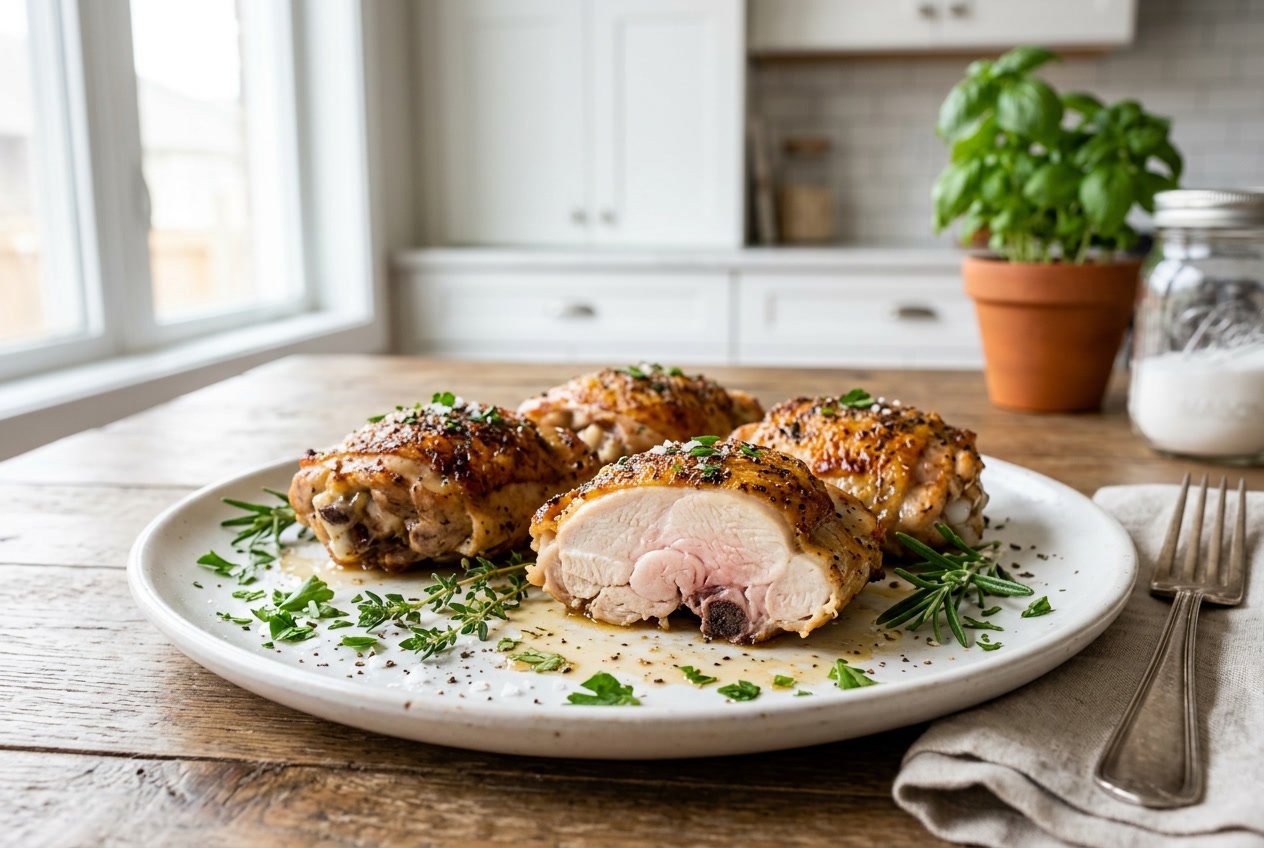
Rely on exact temperatures and a proper thermometer, not color alone, to know when thighs are safe and at their best.
Follow tested temperature targets and check the thickest part near the bone.
USDA Guidelines: 165°F (74°C)
The USDA sets the safe minimum internal temperature for all poultry at 165°F (74°C).
Bring the thickest part of a chicken thigh to that temperature to kill Salmonella and Campylobacter.
Measure near the bone for bone-in thighs, because the center closest to bone heats more slowly.
Let thighs rest 5–10 minutes after removing them from heat.
Carryover cooking typically raises the internal temperature by 1–3°F, and resting helps juices redistribute without lowering safety.
For dark meat textures you prefer, you can cook slightly higher (for example, 175–195°F) for more fall-off-the-bone tenderness, but 165°F remains the non-negotiable safety floor.
Using a Meat Thermometer
Use an instant-read or probe thermometer for accurate results.
Insert the probe into the thickest part of the thigh, angled to avoid bone; if the tip touches bone, reposition until the reading reflects the center of the meat.
Digital instant-read thermometers give fast, reliable readings and are recommended over visual checks.
Calibrate your thermometer periodically by testing it in ice water (should read 32°F / 0°C) and boiling water (roughly 212°F / 100°C at sea level).
Clean the probe between uses to avoid cross-contamination.
If you cook multiple pieces, spot-check a few thighs rather than assuming uniform doneness across a batch.
Juices Run Clear: Visual vs. Actual Safety
Clear juices are not a reliable indicator of safety.
Dark meat can remain slightly pink even at 165°F (74°C) because of myoglobin and hemoglobin near the bone.
Relying on color risks undercooking or overcooking; a thermometer gives precise, objective confirmation.
If you see pink near the bone, check temperature rather than cutting more.
For bone-in thighs, probe depth matters. Surface color and juice appearance can mislead you.
Use temperature as your primary measure and visual signs only as supplementary cues.
Food Safety Concerns and Pathogen Risks
Treat pink or slightly pink chicken thighs as a visual question, not a safety test.
Measure internal temperature and follow handling rules to control bacterial risks.
Salmonella and Campylobacter Risks
Salmonella and Campylobacter are the two bacteria most commonly linked to raw or undercooked poultry.
Both can cause diarrhea, fever, and abdominal cramps within hours to days after exposure, and they pose higher risk for young children, older adults, pregnant people, and anyone with a weakened immune system.
These pathogens live on raw chicken skin and inside muscle tissue.
Proper cooking to an internal temperature of 165°F (74°C) in the thickest part of the thigh kills them reliably.
Cross-contamination is a major vector. Use separate cutting boards, wash utensils and hands after touching raw chicken, and never reuse marinades that contacted raw meat unless boiled first.
Undercooked Chicken and Foodborne Illness
Undercooked chicken can harbor surviving Salmonella or Campylobacter even if meat looks firm or juices appear clear.
Relying on color or texture risks foodborne illness because myoglobin and bone marrow can leave a pink tint despite safe temperatures.
Use a calibrated instant-read thermometer inserted away from bone to confirm 165°F (74°C).
If you store cooked thighs, refrigerate within two hours at 40°F (4°C) or below and use within 3–4 days to limit bacterial growth.
When reheating leftovers, heat to 165°F again to ensure any bacteria that multiplied during storage are destroyed.
Factors That Influence Chicken Thigh Color
Several variables change the appearance of cooked thighs: how you cook them, whether you brine or marinate them, and the bird’s age and breed.
These factors affect myoglobin, surface reactions, and heat penetration, determining whether the meat stays pink near the bone or turns uniformly tan.
Cooking Methods and Equipment
Your choice of method and tools strongly affects heat distribution and surface chemistry.
High-heat grilling or broiling sears the exterior quickly, often leaving the interior near the bone slightly pink even when fully cooked.
Oven roasting at moderate, steady heat promotes more even color change throughout the thigh.
Smoking and low-temperature smoking introduce compounds that bind with myoglobin and can produce a persistent pink smoke ring.
Slow cooking and braising allow collagen to break down and meat to remain moist; these methods can preserve a pinkish hue because they keep temperatures lower for longer and limit direct surface browning.
Always use a probe or instant-read thermometer in the thickest part without touching bone to confirm safety.
Equipment matters too. A heavy cast-iron skillet retains and transfers heat faster than a thin pan, changing how quickly the meat firms and the exterior browns.
If you want less pink near the bone, raise internal temperature slightly above 165°F (74°C) and rest the meat so carryover cooking evens the color.
Brining and Marinating Chicken
Salt-based brines and acidic marinades change meat chemistry and color.
When you brine thighs in a salt solution, the brine penetrates muscle fibers and increases moisture retention.
That added moisture can make the meat look pinker after cooking because the surface dries less and the interior remains juicier.
Acidic marinades, such as citrus, vinegar, or yogurt, partially denature proteins before cooking, which can alter how myoglobin reacts to heat and sometimes preserve a deeper color.
Sugar-containing glazes or marinades promote browning on the surface while leaving the interior moist and potentially pink.
If you brine or marinate for long periods, reduce cooking time slightly and rely on a thermometer rather than color to judge doneness.
Age and Breed of Chicken
The bird’s physiology directly affects meat color and texture.
Younger chickens (broilers) typically have less fat and different muscle fiber composition, which can produce a more noticeable pink tint when cooked.
Older birds and certain heritage breeds often develop darker, more intensely colored thighs due to higher myoglobin content.
Breed-specific factors matter if you source specialty poultry; some breeds naturally yield darker leg meat.
The bird’s diet and activity level influence myoglobin levels and fat distribution, changing both flavor and color after cooking.
When you encounter persistent pink near the bone, consider the source of the chicken as well as cooking variables before assuming undercooking.
Visual and Sensory Cues to Doneness
Look for tactile and visual signs: how the meat feels, what the juices look like, and how the surface has browned.
These cues together help you know whether thighs are safe and palatable.
Texture and Firmness
Press the thickest part of the thigh with a fingertip or the back of a spoon.
If it feels soft and jelly-like, the meat is undercooked; if it yields slightly and then springs back, it’s likely done.
Fully cooked thighs should feel firmer than raw but still give a bit under pressure.
When you slice or pull the meat, it should separate into moist strands rather than cling together in a rubbery mass.
For bone-in thighs, the meat will often pull away slightly from the bone when collagen has broken down.
Rest the thighs 5–10 minutes before checking; this firms the texture and redistributes juices.
Juices and Color Clues
Pierce the thickest part near the bone and observe the juices.
Ideally, the juices run clear; any persistent pink or red tinge suggests more cooking is needed.
Clear juices indicate proteins have coagulated and the interior has reached a safe temperature.
Expect a little pink near the bone in some dark meat even when fully cooked.
Use the juice color alongside texture and temperature.
If you see opaque, white meat throughout and the juices are clear, you can be confident the thigh is done.
Surface Browning and Presentation
Check skin-on thighs for even, golden-brown color.
Crisp, browned skin signals proper Maillard reaction and usually means the surface reached sufficient heat without overcooking the interior.
Avoid relying solely on color; a deeply browned exterior can mask an undercooked center.
For boneless thighs, look for uniform browning and slight shrinkage.
If the surface is pale and flabby, the thighs likely need more time at higher heat to develop texture and flavor.
Present cooked thighs with the skin or surface dry and intact, not soggy from excess juices.
Proper Storage and Handling After Cooking
Keep cooked chicken thighs cold within two hours of plating.
Use a thermometer for reheating, prevent cross-contact with raw foods, and store in airtight containers to preserve quality and safety.
How to Store Cooked Chicken Thighs
Cool thighs to room temperature no longer than 2 hours after cooking, or 1 hour if ambient temperature is above 90°F (32°C).
Place pieces in shallow, airtight containers or wrap tightly in foil or plastic to speed cooling and limit bacterial growth.
Label containers with date and refrigerate at 40°F (4°C) or below.
Consume within 3–4 days or freeze at 0°F (-18°C) for 2–6 months for best quality.
Freeze single layers on a tray first if you want to store portions separately.
If you refrigerate hot food, leave a little headspace in containers to allow rapid cooling.
Avoid leaving thighs in large, deep pots; they cool slowly and increase risk of bacterial growth.
Reheating and Maintaining Safety
Reheat thighs until the internal temperature reaches 165°F (74°C).
Use an instant-read thermometer in the thickest part, avoiding bone contact for an accurate reading.
You can reheat in the oven (350°F/175°C until 165°F), on the stovetop with a covered pan, or in a microwave.
If using a microwave, rotate pieces and check temperature in multiple spots to avoid cold centers.
Reheat once only.
If leftovers have sat longer than 4 days or smell off, discard them.
When thawing frozen thighs, do so in the refrigerator, under cold running water, or in the microwave; never thaw at room temperature.
Avoiding Cross-Contamination
Always use separate cutting boards, utensils, and plates for raw and cooked chicken.
Never place cooked thighs back on the same surface that held raw chicken unless you have washed that surface with hot, soapy water.
Wash your hands for 20 seconds after handling raw chicken and before touching cooked food.
Sanitize countertops, sinks, and tools with a bleach solution (1 tablespoon bleach per gallon of water) or a commercial kitchen sanitizer after they come into contact with raw poultry.
When you pack lunches or transport cooked thighs, keep them in insulated containers with ice packs to maintain 40°F (4°C) or below until you serve them.
Label stored portions to prevent accidental reuse of spoiled or previously thawed items.


