
Should Chicken Thighs Be Pink When Cooked? Safety & Science Explained
You may notice a pink tint in the meat near the bone or in the center of a chicken thigh and wonder if it’s unsafe.
If the thickest part of the thigh reaches 165°F (74°C) on a meat thermometer, the chicken is safe to eat even if it still looks a little pink.
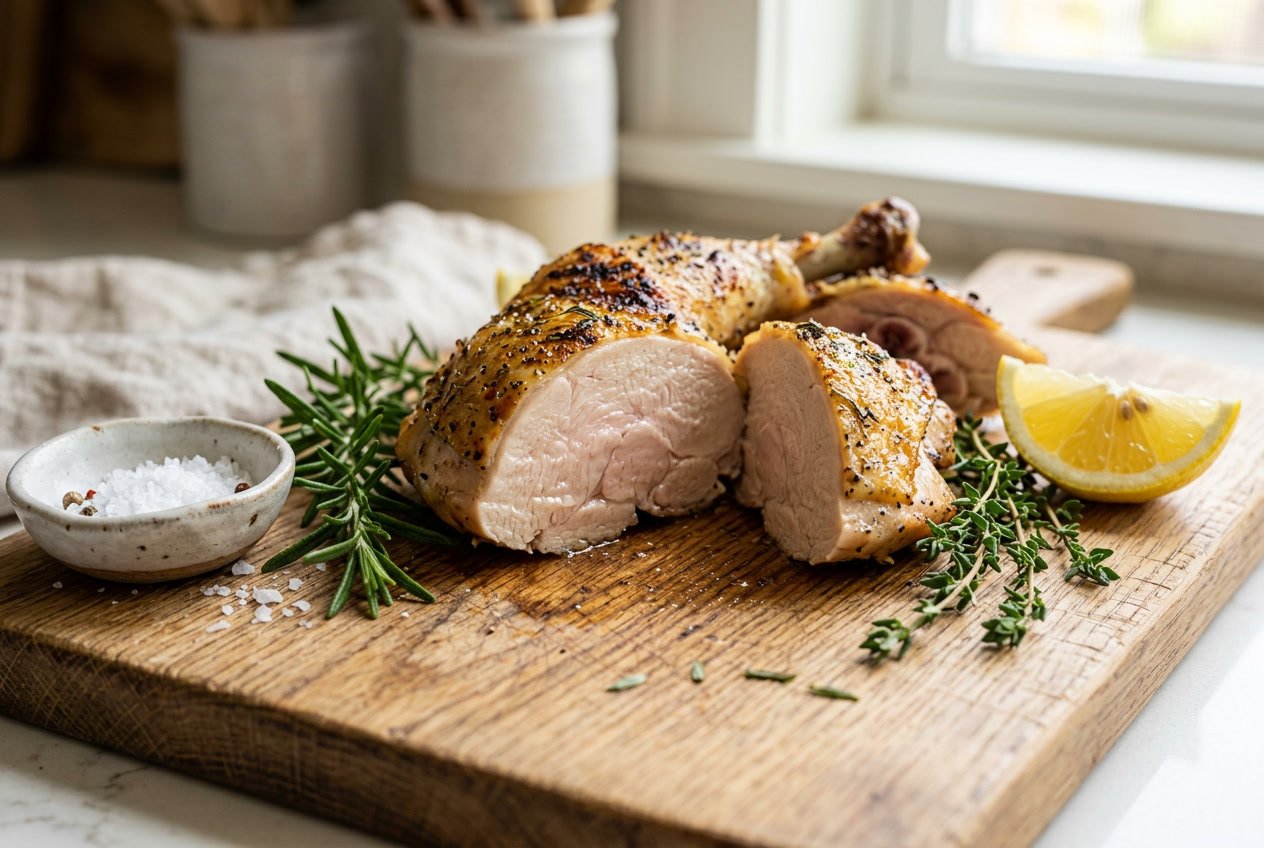
Dark meat can stay pink due to myoglobin, smoking, brining, and cooking method.
Check doneness with a thermometer for confidence at the table.
Can Chicken Thighs Be Pink When Fully Cooked?
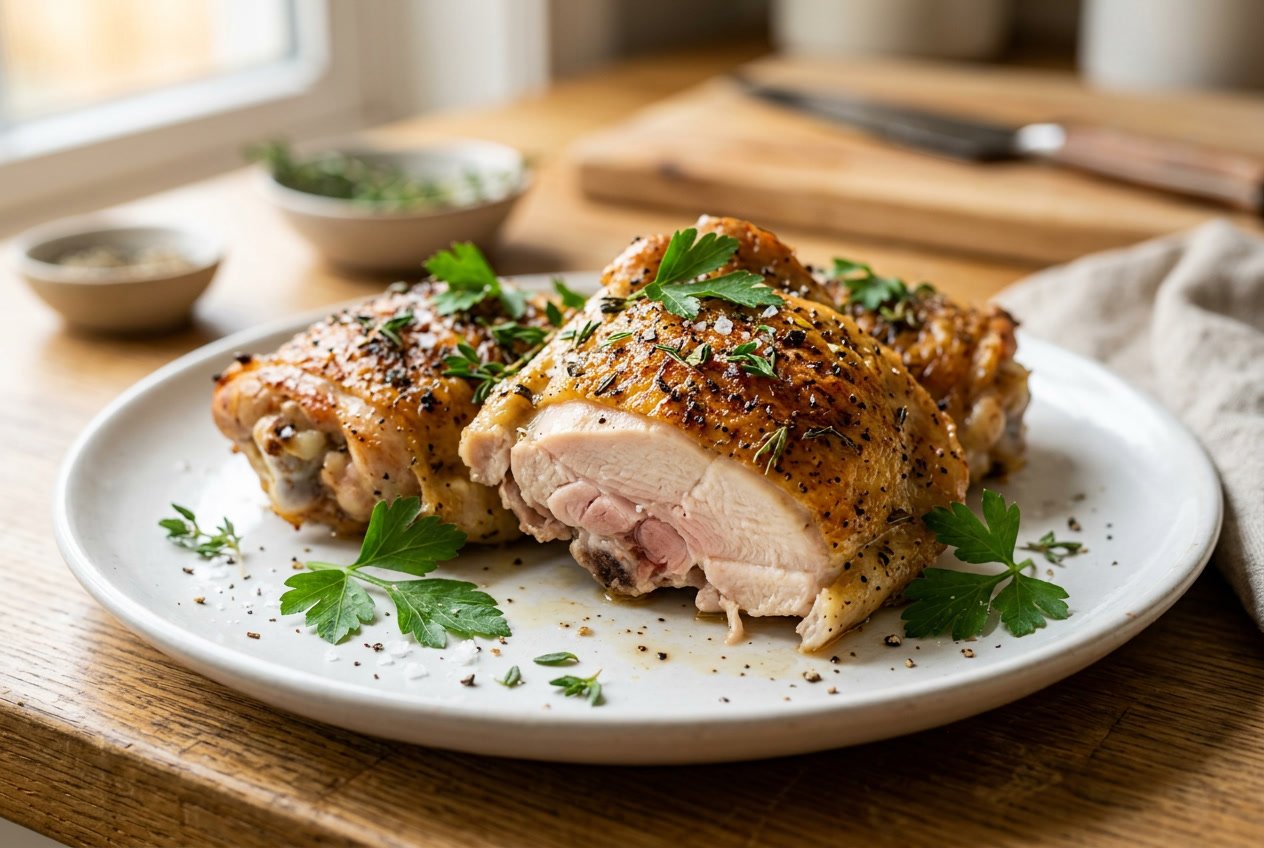
Rely on temperature and safety cues, not color alone, because thighs contain more myoglobin and can stay pink even after bacteria are killed.
A meat thermometer and clear juices give reliable evidence of doneness.
Why Pink Chicken Thighs May Appear Safe
Dark meat like chicken thighs contains higher myoglobin than breast meat, so it can retain a pink tint after reaching safe temperatures.
If the thickest part of the thigh reads 165°F (74°C) or higher on a probe thermometer, the chicken is safe.
Bone marrow pigment can seep toward the meat during roasting, and smoking or curing reactions can fix pink hues.
Brining or marinades with salt and certain chemicals can also change surface color even when the interior is fully cooked.
Check juices as a secondary cue: clear juices and a thermometer reading together indicate safety.
Relying only on color risks overcooking and unnecessary worry.
Pink vs. Undercooked Chicken Thighs
Undercooked chicken will be soft, gelatinous, and often show blood near the bone.
Safe, fully cooked thighs will be firm and easily pull apart.
Temperature stays the definitive test—165°F (74°C) in the thickest part ensures doneness regardless of pinkness.
Visual signs that suggest undercooking include persistent translucent flesh and juices that are red or deep pink.
Use this quick checklist when unsure:
- Thermometer: 165°F+ — safe.
- Texture: firm, not rubbery.
- Juices: mostly clear, not bloody.
If your thermometer reads below 165°F or you observe red juices, continue cooking.
Visual Cues and Their Limitations
Color and “juices run clear” are common heuristics, but they have limits.
Myoglobin and bone marrow can make safe thighs look pink near the bone, and smoking or brining can leave a pink ring despite full cooking.
A simple two-step approach reduces risk:
- Insert a probe thermometer into the thickest part of the thigh without touching bone.
- Confirm juices are mostly clear and texture is firm.
Avoid relying on single visual cues.
Use the thermometer first, then check texture and juices to confirm doneness.
The Science Behind Pink Chicken Thighs
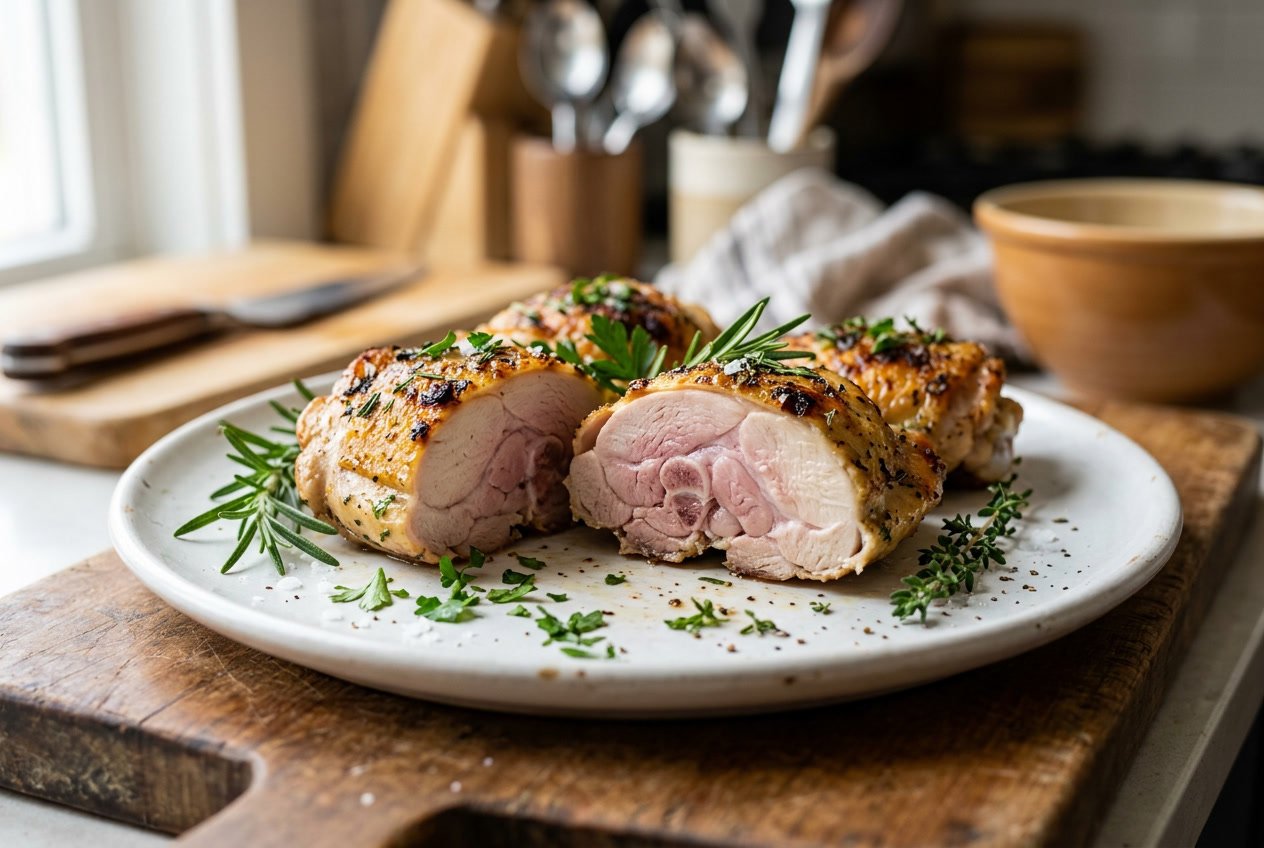
Thigh meat can stay pink after cooking because of pigments, bone proximity, and bird age.
These factors make pink hues more common in some chicken thighs.
The Role of Myoglobin in Meat Color
Myoglobin is a protein in muscle that stores oxygen and gives meat its red or pink tint.
Dark muscles used more by the bird, like thighs, contain higher myoglobin concentrations than breast.
When you heat myoglobin it changes chemically; at certain temperatures it turns brownish, but it can remain pink at 165°F (74°C) depending on conditions.
A reliable thermometer tells you safety, because color alone can mislead you.
Factors such as pH, cooking method, and presence of curing agents also affect myoglobin’s color change.
Lower pH or smoking can deepen pink tones; exposure to certain salts or nitrites can stabilize pink pigments.
Impact of Dark Meat on Color Retention
Dark meat, like chicken thighs, contains more myoglobin and connective tissue than white meat.
That composition means thighs hold moisture and color differently during cooking.
Fat and collagen in thighs insulate muscle fibers, slowing the full browning or color transition you see in breasts.
Thighs can therefore appear pinker near the center or around the bone even after reaching safe temperatures.
Cooking methods that apply dry heat quickly may create a browned surface while the interior remains pink-tinted.
Low-and-slow methods render collagen and can leave meat uniformly darker but still sometimes pink.
Bone Marrow and Age Factors
Bone proximity affects color because marrow pigments and hemoglobin residues can leach into adjacent meat during cooking.
Areas close to the bone commonly retain a pink ring or tint even when the thickest meat reaches 165°F (74°C).
Younger birds often show stronger pinking because their bones and marrow contain more residual blood and softer bone structures.
Breed and rearing conditions also matter; free-range or more active birds develop different myoglobin levels than less active ones.
When you slice a thigh and see pink near the bone, check the thermometer in the thickest part away from bone to verify safety.
Pink near bones is frequent and not by itself proof of undercooking.
Determining Chicken Thigh Doneness Safely
Check internal temperature, look for clear juices, and place the probe in the thickest part to avoid bone contact.
Use a reliable meat thermometer and follow USDA temperature guidance for poultry.
Using a Food Thermometer Correctly
Use a calibrated meat thermometer or an instant-read probe to measure doneness.
Insert the probe into the thickest part of the thigh without touching bone, gristle, or fat to avoid false highs or lows.
Wait for the thermometer display to stabilize before reading.
Clean the probe between uses and sanitize it after contact with raw chicken to prevent cross-contamination.
If you’re using a leave-in probe for roasting, set an alarm near your target temperature so you don’t overcook.
Always verify with a second spot if the first reading seems inconsistent.
Safe Internal Temperature Guidelines
The USDA recommends an internal temperature of 165°F (74°C) for all poultry to ensure harmful bacteria are destroyed.
For dark meat like thighs, many cooks cook to 175–185°F to break down connective tissue and achieve a more tender texture, but 165°F is the minimum safe doneness.
Measure temperature in degrees Fahrenheit or Celsius, and avoid relying on color alone.
Trust the thermometer reading over visual cues when determining safety.
If juices run clear and the thermometer reads 165°F or higher, the chicken is safe to eat.
When cooking to higher temps for texture, plan for slightly longer cook times and resting.
Thermometer Placement Tips
Place the probe in the center of the thickest part of the thigh; angle it so the tip sits mid-meat rather than against the bone.
Bone contact yields an artificially high reading and can make undercooked meat seem done.
For bone-in thighs, insert the probe from the side toward the bone, stopping a few millimeters away from it.
For boneless, center the probe lengthwise where the meat is thickest.
When checking multiple pieces, test the thickest thigh from each batch.
Record typical cook times and probe positions for your oven or grill to improve consistency.
Food Safety Risks of Undercooked Chicken
Undercooked chicken can expose you to bacteria that cause serious gastrointestinal illness.
You need to know which pathogens pose the greatest risk and how to spot true spoilage versus safe-but-pink meat.
Dangers of Salmonella and Campylobacter
Salmonella and Campylobacter are the two pathogens most commonly linked to raw or undercooked poultry.
Both can cause symptoms such as diarrhea, abdominal cramps, fever, and vomiting within 6–72 hours after exposure.
These bacteria are often present on the surface of whole birds and can be mixed into ground or torn meat.
Cooking to an internal temperature of 165°F (74°C) in the thickest part of the thigh reliably kills them.
Signs of Spoilage Versus Undercooking
Spoilage and undercooking look different and have different risks.
Spoilage signs include a sour or ammonia-like odor, sticky or slimy texture, and a gray-green discoloration.
If you detect any of these, discard the chicken—cooking will not make spoiled meat safe.
Undercooked chicken may be properly smelling and textured but still show pinkness near the bone or juices that aren’t clear.
Use a thermometer to confirm safety: 165°F (74°C) at the thickest point, avoiding bone contact.
If you see pink but temperature is safe, the meat can be eaten; if temperature is low, continue cooking.
Preventing Foodborne Illness at Home
Control cross-contamination by using separate cutting boards and utensils for raw poultry and ready-to-eat foods.
Wash hands for at least 20 seconds after handling raw chicken and sanitize surfaces with a bleach or commercial kitchen sanitizer solution.
Never rinse raw chicken under running water; rinsing spreads bacteria by splashing.
Thaw poultry in the refrigerator, in cold water changed every 30 minutes, or in the microwave—never at room temperature.
When cooking, avoid overcrowding pans and use a thermometer to check multiple spots in the thickest part of the thigh.
Refrigerate leftovers within two hours at 40°F (4°C) or below and eat within 3–4 days.
Factors Affecting Chicken Thigh Color
Several variables change how chicken thighs look after cooking: the heat source and timing, what you soak or rub into the meat, and whether you expose it to smoke.
These factors change myoglobin and surface chemistry, so color can vary even when the meat is safe.
Cooking Methods That Influence Color
Different methods move heat and moisture through the thigh in distinct ways.
High, direct heat (grilling, pan-searing) browns the surface quickly but can leave the interior pinker near the bone because heat transfer is uneven.
Low-and-slow methods (braising, slow roasting) produce more uniform color and softer connective tissue, which may reduce visible pinkness.
Use a meat thermometer to check the thickest part of the thigh; color alone can mislead.
Bone-in thighs often show a pink ring near the bone due to slower heating.
If you roast at very high temperatures, the exterior will darken while the center can retain a pink tint despite reaching safe temperature.
Marinating, Brining, and pH Effects
Acidic marinades and salt brines change protein structure and surface color.
Acidic ingredients (vinegar, citrus) denature proteins, which can make the meat look paler or sometimes more pink, depending on concentration and contact time.
Brining increases moisture and can intensify color by altering light scattering in the meat.
Salt-driven protein changes also help retain juices and make thighs appear juicier and sometimes darker.
Strong curing agents or certain spices (paprika, turmeric) will tint the surface.
Always follow recommended marinating times; over-marinating with acid can produce a mushy texture without improving color or safety.
Smoking and Pink Rings
Smoking introduces chemical reactions that create stable pink hues near the meat surface.
Nitric compounds in smoke react with myoglobin to form a pink “smoke ring” that can extend a few millimeters to centimeters inward.
This ring does not indicate undercooking.
Cold smoking and hot smoking differ: hot smoking both cooks and flavors the meat, while cold smoking mostly adds color and smoke compounds without fully cooking.
When you see a distinct pink band beneath the crust, use internal temperature rather than color to judge doneness.
Best Practices for Cooking Chicken Thighs
Aim for tender meat, rendered fat, and no food-safety risk.
Use a thermometer, control heat, and handle raw thighs to prevent cross-contamination.
How to Achieve Safe and Juicy Results
Use an instant-read meat thermometer to check doneness.
Insert it into the thickest part of the thigh without touching bone.
Pull bone-in thighs at 175°F–185°F for tender results and boneless thighs at 165°F–170°F to avoid drying.
Relying on color alone can mislead you—pink near the bone can exist even when the thermometer reads safe.
Start skin-side down in a cold or moderate pan to slowly render fat, or roast at 400°F–425°F on a wire rack to keep skin crispy.
For grilling, sear over direct heat then finish over indirect heat until the thermometer target is reached.
Rest thighs 5–10 minutes after cooking so juices redistribute; the internal temp will rise slightly during rest.
Storing and Reheating Cooked Thighs
Cool cooked thighs to room temperature within two hours after cooking. Place them in airtight containers and refrigerate.
Store in the fridge for up to 4 days. You can also freeze them for up to 3 months by wrapping each piece individually and removing excess air to reduce freezer burn.
Label each package with the date to track freshness.
Reheat thighs in a 350°F oven on a wire rack for 10 to 15 minutes to restore some crispness. You can also use an air fryer at 350°F for 6 to 8 minutes.
If you use a microwave, cover the chicken and heat in short intervals. Finish under a broiler or in a hot pan to revive the skin texture.
Check that the internal temperature reaches 165°F before serving.
Avoiding Cross-Contamination
Treat raw thighs as a high-risk surface for pathogens. Use separate cutting boards and utensils for raw poultry and ready-to-eat foods.
Thoroughly sanitize cutting boards and utensils between uses with hot, soapy water. Rinse them with a solution of 1 tablespoon bleach per gallon of water if needed.
Never place cooked chicken back on a plate that held raw thighs. Wash your hands for at least 20 seconds after handling raw chicken.
Keep raw packaging and drippings away from other foods in your fridge. This helps keep your kitchen safe while you cook.


