
Should Chicken Thighs Be Covered When Baking? Expert Insights and Methods
You want juicy meat and, depending on your goal, either tender skin or crispy skin. Cover chicken thighs part of the time to trap moisture and prevent drying, then uncover near the end to let the skin brown and crisp.
That approach balances both outcomes without much fuss.
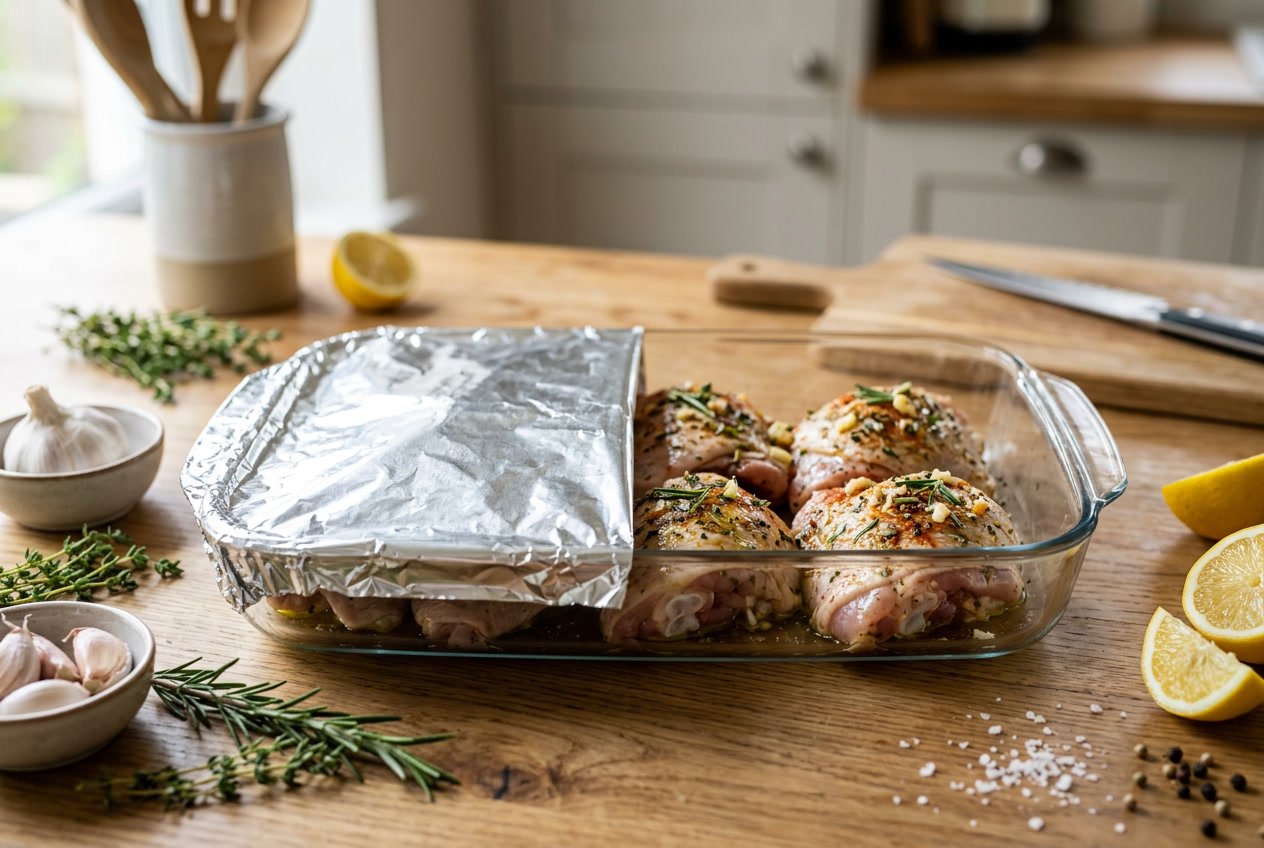
This post explains when to keep the foil on, when to take it off, and how oven temperature, bone-in versus boneless cuts, and timing change the result.
Follow the practical steps and small tweaks here to get consistently juicy, flavorful baked thighs every time.
Should Chicken Thighs Be Covered When Baking?
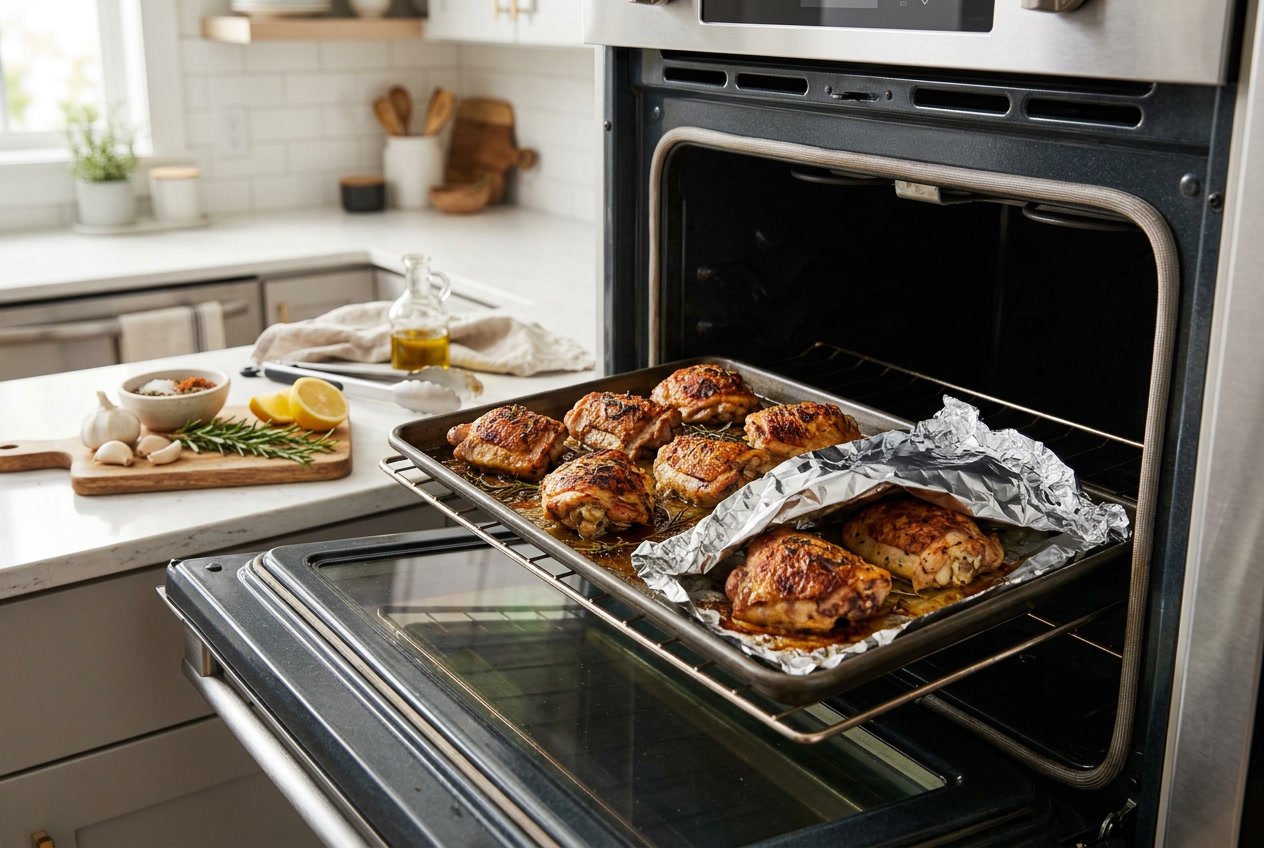
Covering chicken thighs traps steam and keeps the meat very moist. Leaving them uncovered promotes browning and crispy skin.
Choose whether to cover based on whether you prioritize juiciness, skin texture, or a balance of both.
How Covering Affects Moisture and Texture
When you cover chicken thighs with foil or a lid, you create a mini-steam environment that reduces moisture loss from the meat.
This helps bone-in thighs or thicker pieces stay tender at high temperatures, as the trapped steam keeps the interior moist and helps prevent overcooking.
The trade-off is skin and surface texture. If you cover thighs for the entire bake time, the skin won’t render and crisp.
It may remain pale and slightly rubbery because the steam prevents browning. Use covering when your priority is juicy oven-baked chicken thighs rather than crispy skin.
When to Leave Chicken Thighs Uncovered
Leave thighs uncovered if you want browned, crispy skin and roasted flavor. Bake skin-side up on a wire rack or baking sheet at 400–450°F so hot, dry air can render fat and create a crunchy surface.
Uncovered baking works best with bone-in, skin-on thighs, and when you’ve patted the skin dry or used a light dusting of baking powder to speed dehydration.
Monitor internal temperature (165°F) to avoid drying. Thin or boneless thighs need less time and are more likely to dry out if left uncovered too long.
Partial Covering Techniques
Use a hybrid approach to get both moisture and crispness. Start covered to cook the meat gently, then remove the foil for the last 10–20 minutes to brown the skin.
Alternatively, begin uncovered to develop color, then tent foil for the final minutes if the exterior risks over-browning before the interior reaches 165°F.
Tent foil about 1 inch above the thighs to allow air flow while retaining some steam. Use a wire rack so thighs don’t sit in rendered fat.
Check temperature with a probe thermometer. These partial covering techniques help you control juiciness and achieve the desired skin texture when baking chicken thighs.
Benefits of Covering Chicken Thighs in the Oven
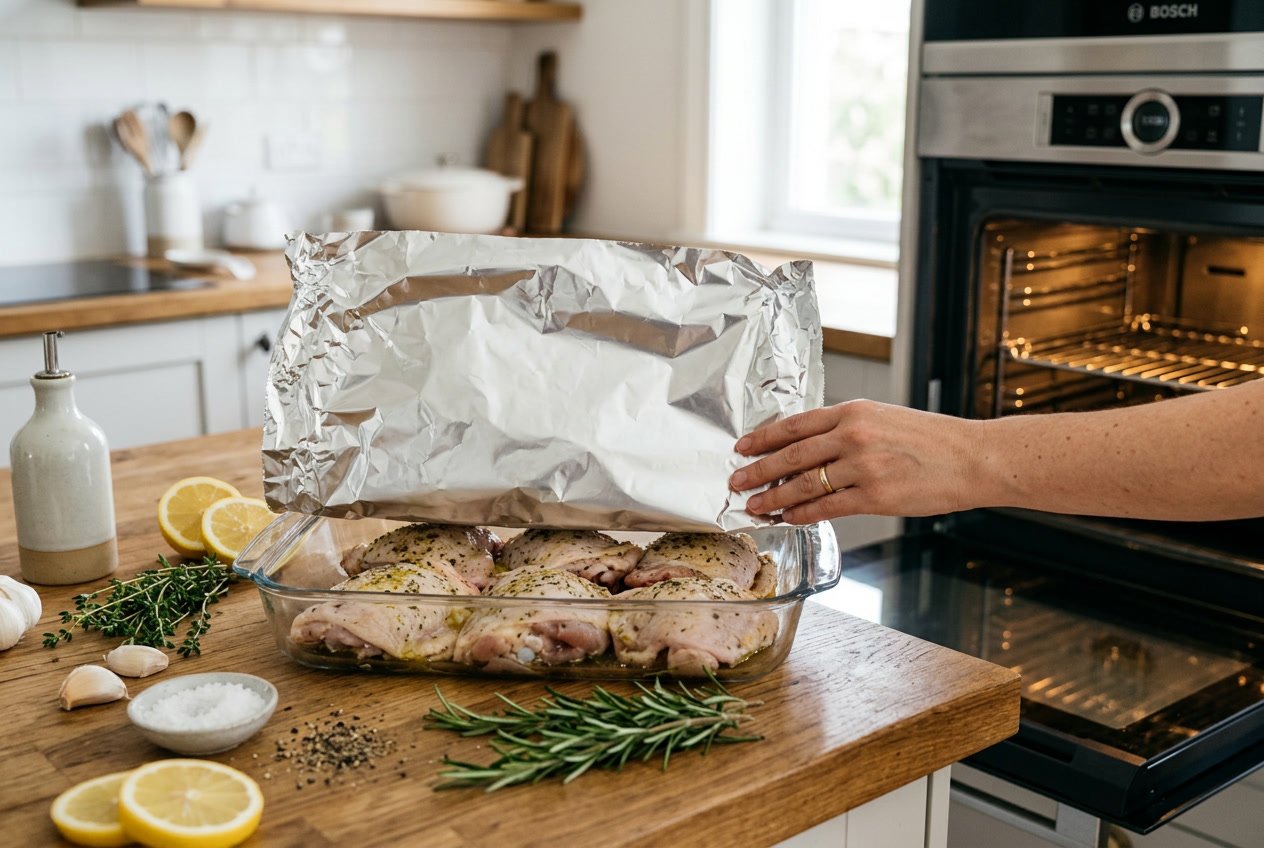
Covering chicken thighs in the oven helps trap steam, regulate surface temperature, and concentrate flavors.
These effects keep the meat juicy, promote even doneness, and let marinades or glazes penetrate more effectively.
Moisture Retention and Juiciness
When you cover chicken thighs with foil, steam generated by the meat stays inside the pan instead of escaping into the oven.
That trapped steam reduces surface evaporation and slows moisture loss from the interior.
This matters most when you cook at moderate temperatures or for longer periods. Covered thighs lose less weight and stay juicier than uncovered ones.
Use a tight foil tent or a snug lid to create a humid environment. If you glaze or baste the thighs, the cover helps redistribute those juices over the skin and meat during cooking.
Remove the cover near the end if you want to finish with a bit of browning while preserving most of the retained juices.
Even Cooking Results
When you cover the pan, you even out the heat around each thigh by reducing direct drying on the top surface. You get fewer overcooked edges and less risk of undercooked pockets near the bone.
Covering works well for mixed-size pieces or bone-in thighs, where thickness varies and the bone can slow internal heating.
A covered pan also minimizes hot spots from oven air currents. You can rely on more consistent internal temperatures across the batch.
If you need crisp skin later, start covered to reach safe internal temperature, then uncover and broil for 3–6 minutes to finish the exterior without overcooking the meat.
Flavor Infusion During Baking
Covering chicken thighs concentrates the aroma and liquids released during cooking, which helps sauces and marinades penetrate the flesh.
You’ll notice stronger taste from rubs, citrus, or herb-based marinades when you cover the dish. The moist environment encourages flavor compounds to stay in contact with the meat instead of evaporating into the oven.
If you’re using a sauce or glaze, cover the thighs for most of the bake so the sauce melds into the meat. Uncover in the last minutes to caramelize surface sugars for added texture.
How Baking Uncovered Impacts Chicken Thighs
Baking uncovered changes surface moisture and heat exposure, which directly affects skin texture and flavor development.
Expect faster browning and more intense taste when you leave the thighs exposed to oven air.
Achieving Crispy Skin
When you bake chicken thighs uncovered, the oven’s dry heat evaporates surface moisture quickly. Pat the skin dry before seasoning; that single step speeds up browning and helps fat render, producing a crisp, golden exterior.
Use 400–425°F (200–220°C) for bone-in, skin-on thighs to balance doneness and crisping. Arrange thighs skin-side up on a rack or a lightly oiled sheet pan so hot air circulates around each piece.
Flip only if one side browns unevenly.
If the thighs cook through to 165°F (74°C) but the skin isn’t crisp enough, finish under a 2–4 minute broil while watching closely.
For juicy chicken thighs, avoid overbaking. Internal temperature and resting for 5–10 minutes lock in juices while preserving crisp skin.
Flavor Concentration and Browning
Baking uncovered concentrates flavors by reducing surface moisture and enabling direct browning reactions.
The Maillard reaction creates savory compounds. You’ll notice deeper roasted notes in oven-baked chicken thighs compared with covered cooking.
Seasoning applied to dry skin adheres better and forms a more pronounced crust. Aromatics like smoked paprika, garlic powder, and kosher salt brown and slightly caramelize, intensifying the overall profile.
If you want juicy chicken thighs with strong exterior flavor, start uncovered for most of the bake time.
Monitor internal temperature to prevent drying: remove at 160–162°F (71–72°C), then rest to reach a safe 165°F (74°C) while retaining juices.
Baking Methods and Step-by-Step Process
Prepare, decide when to cover, and finish uncovered to get juicy meat and crisp skin.
Follow specific temps, timing, and simple techniques for skin-on oven-baked chicken thighs.
Preparation and Seasoning
Pat the thighs dry with paper towels; removing surface moisture helps the skin crisp.
Trim excess fat and, if using skin-on chicken thighs, gently lift the skin to season directly on the meat for deeper flavor.
Season both sides: sprinkle kosher salt (about 1 tsp per thigh), freshly ground black pepper, and 1 tsp paprika for color.
Add garlic powder or dried thyme under the skin if you want deeper seasoning. Lightly coat the skin with 1 tbsp oil per 4 thighs to promote browning.
Arrange thighs on a wire rack set over a rimmed baking sheet so air circulates beneath.
If you don’t have a rack, space them at least 1 inch apart on the pan to avoid steaming.
Covering with Foil: When and How
Cover with foil when you need to retain moisture or shield from over-browning during longer cooks.
Use foil for bone-in thighs if you plan a lower-temperature, longer bake (325–350°F) to prevent the exterior from drying before the interior reaches 165°F (74°C).
To cover properly: tent a sheet of foil loosely over the pan, leaving space above the skin to allow some air flow.
Remove foil for the last 10–15 minutes to restore surface drying if you started covered.
If thighs brown too quickly, lower the oven by 25°F or re-cover loosely until the internal temperature is close to 160°F (71°C).
Avoid sealing foil tightly over skin-on chicken; trapped steam softens the skin and prevents crisping.
Finishing Uncovered for Crispiness
Finish uncovered on high heat to render fat and crisp the skin.
Increase oven temperature to 400–450°F for the last 10–15 minutes, or move the pan to the top rack for more direct heat.
Use an instant-read thermometer to confirm the internal temp is 165°F (74°C) in the thickest part near the bone.
Rest thighs 5–10 minutes loosely tented with foil to let juices redistribute without steaming the skin.
If you want extra crispness, broil 1–2 minutes at the end, watching closely to avoid burning.
Factors That Affect Baking Time and Results
Several practical variables change how long you should bake chicken thighs and whether covering them helps.
Pay attention to bone presence, oven temperature, and the size and starting temperature of the thighs to hit safe internal temperature while keeping meat juicy and skin-textured as you prefer.
Impact of Bone-In vs. Boneless Thighs
Bone-in, skin-on thighs take longer than boneless, typically 35–45 minutes at 375°F for oven-baked chicken thighs, because the bone slows heat transfer.
The bone also helps retain moisture, so you can bake bone-in uncovered longer without drying the meat, which favors crisp skin.
Boneless, skinless thighs usually finish in about 20–30 minutes at 375°F.
They cook faster and dry out earlier, so covering them with foil for part of the bake or lowering oven temperature can preserve juiciness.
If you want crispy edges on boneless thighs, uncover for the last 5–10 minutes.
Always use a thermometer: remove thighs at about 160–163°F and rest to reach 165°F.
That ensures tenderness without overcooking.
Oven Temperature and Timing
Higher oven temperatures (425–450°F) crisp skin and shorten bake time: bone-in thighs can finish in 25–35 minutes; boneless in 15–22 minutes.
Lower temperatures (325–350°F) give more even cooking and are forgiving if you cover the thighs to retain moisture.
If you bake chicken thighs uncovered, use higher heat or a final broil to get crisp skin.
If you cover with foil, reduce time slightly or raise temperature toward the end to brown the surface.
Use the internal temperature, not time alone, to judge doneness.
Convection ovens speed cooking by about 10–15% and promote browning; subtract time or lower temperature accordingly.
Size, Thickness, and Starting Temperature
Thicker thighs and larger pieces need more time. A 4–5 oz boneless thigh will finish much sooner than a 7–9 oz bone-in thigh.
If pieces vary on the pan, remove smaller ones earlier to avoid overcooking.
Cold-from-fridge thighs add 5–10 minutes compared with room-temperature thighs.
Pat the skin dry for uncovered baking; moisture on the surface delays crisping.
If you start with a sear (3–4 minutes per side) you can shorten oven time and improve crust without covering.
Measure at the thickest part without touching bone.
Rest for 5–10 minutes after baking to allow carryover cooking and redistribute juices.
Tips for Making Juicy and Flavorful Baked Chicken Thighs
Pat skin dry, use the right fat and salt, and give the meat time to rest after cooking.
Small technique choices—skin-on vs. skinless, a short brine, and where you finish in the oven—determine whether your chicken thighs stay juicy and well seasoned.
Choosing Between Skin-On and Skinless
Choose skin-on chicken thighs when you want crispy, flavorful skin and extra juiciness.
The skin renders fat during high-heat baking (400–425°F), basting the meat and protecting it from drying.
For best results, pat the skin thoroughly dry with paper towels and rub a thin layer of oil to promote crisping.
Pick skinless thighs when you need lower fat or plan to shred the meat for salads or tacos.
Reduce oven time slightly and watch internal temperature closely; boneless skinless thighs cook faster and can dry if left too long.
If you want both flavor and lower fat, sear skinless thighs briefly in a hot pan to develop browning before finishing in the oven.
Marinades, Brines, and Seasonings
Brine chicken thighs in a simple solution of 1/4 cup salt per quart of water for 30 minutes to 2 hours to boost juiciness and ensure even seasoning.
For a faster method, dry-brine by sprinkling 3/4 to 1 teaspoon kosher salt per pound and refrigerate uncovered for at least 30 minutes.
Marinades should include an acid like vinegar or citrus, oil, and aromatics. Marinate for 30 minutes to 4 hours to avoid mushy meat.
Rub blends with garlic powder, paprika, black pepper, and a touch of sugar improve browning and flavor.
If you use skin-on thighs, apply most of the spice under the skin and a lighter coat on top to help keep the skin crisp.
Resting and Serving Suggestions
Let baked chicken thighs rest for 5–10 minutes on a warm plate or cutting board. This allows juices to redistribute and keeps the meat moist when you cut into it.
If you’re concerned about cooling, loosely tent with foil. Avoid sealing tightly, as this traps steam and softens the skin.
Serve oven-baked chicken thighs with acidic or fresh sides to balance the richness. Try lemon-dressed greens, quick-pickled onions, or a bright salsa.
Reheat leftovers in a 375°F oven or air fryer for 8–10 minutes to restore crisp skin and keep the chicken juicy.


