
Pros and Cons of Chicken Thighs: Nutrition, Flavor, and Versatility
You want a flavorful, forgiving piece of meat that holds up to bold seasoning and moist cooking. Chicken thighs deliver that.
They contain more fat and slightly more calories than breasts. Thighs also supply iron, zinc, B vitamins, and satisfying texture, so they can fit into a healthy diet when you manage portions and cooking methods.

Chicken thighs offer rich flavor, a distinct nutrient profile, and versatility in cooking. You can compare them to chicken breasts to decide which cut suits your needs.
What Are Chicken Thighs?
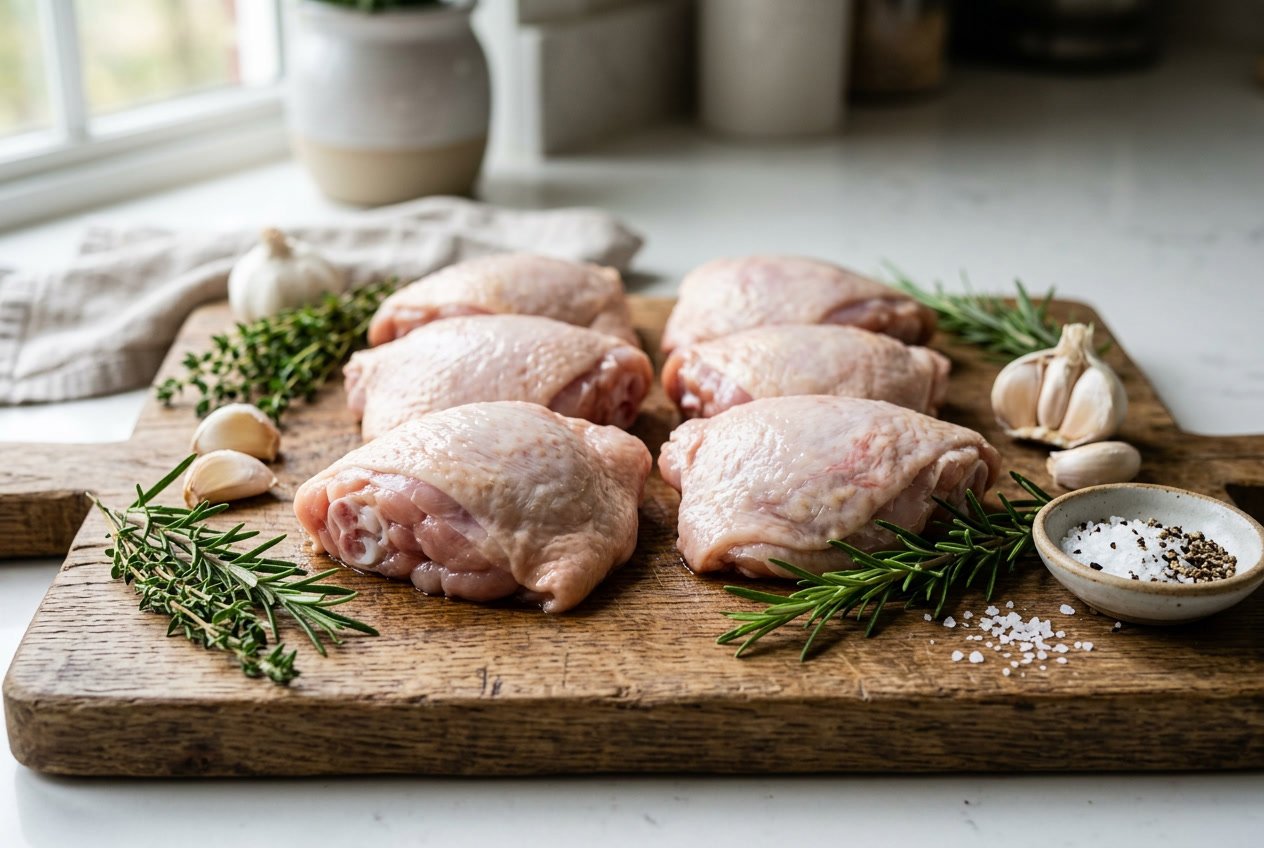
Chicken thighs are the upper portion of a chicken’s leg, located between the drumstick and the body. They deliver rich flavor, higher fat content than breast meat, and a tender texture that holds up well to longer cooking.
Types of Chicken Thighs
Bone-in chicken thighs include the thigh bone and often the skin. The bone boosts flavor and helps the meat stay moist during roasting or braising.
You’ll find bone-in thighs sold bone-up for roasting or frenched for presentation. Cooking times are slightly longer than boneless.
Boneless, skinless chicken thighs have the bone and skin removed. They cook faster and are easier to portion for stir-fries or skewers.
Boneless thighs absorb marinades quickly and trim more easily for lower-fat recipes when you want to limit saturated fat.
Skin-on thighs still carry the skin. You can remove it after cooking to reduce fat while keeping moisture.
Skinless chicken thighs omit that layer to cut saturated fat and calories without losing the thigh’s characteristic juiciness.
Dark Meat vs White Meat
Dark meat comes primarily from the thigh and drumstick and contains more myoglobin and connective tissue than white breast meat. That composition gives you deeper flavor, more fat, and a softer mouthfeel when cooked properly.
Dark meat holds moisture better during high-heat cooking and slow methods like braising. It also supplies slightly higher amounts of iron and zinc compared with white meat.
White meat—chicken breast—is leaner and cooks faster but dries out more easily. If your priority is lower fat per serving, choose breast. If you want flavor and resilience to various cooking methods, pick chicken thighs.
Nutritional Profile of Chicken Thighs

Chicken thighs deliver concentrated protein, moderate calories, and a higher fat content than breast meat. They also provide several B vitamins, iron, zinc, phosphorus, and notable amounts of selenium.
Macronutrient Breakdown
A 100-gram cooked, skinless chicken thigh typically provides about 200–210 calories and roughly 25–26 grams of protein. That protein is complete, supplying all essential amino acids useful for muscle repair and maintenance.
Total fat runs near 9–11 grams per 100 g for skinless thighs and rises substantially if the skin is left on. Protein density remains high even as calories increase with added fat.
Quick reference (approx. per 100 g cooked, skinless):
- Calories: ~200–210 kcal
- Protein: ~25–26 g
- Total fat: ~9–11 g
These values vary with skin, cooking method, and portion size, so adjust portions if you track energy intake.
Key Vitamins and Minerals
Chicken thighs supply several B vitamins that support energy metabolism. Niacin (vitamin B3) and vitamin B6 appear in useful amounts per 100 g, while vitamin B12 is present in smaller but meaningful quantities.
Iron and zinc are higher in thighs than in many white-meat portions, helping with oxygen transport and immune function. Phosphorus supports bone health and cellular energy, and selenium contributes antioxidant activity and thyroid function.
Typical micronutrient notes (per 100 g cooked):
- Niacin: significant
- Vitamin B6 & B12: measurable amounts
- Iron: ~1–1.5 mg
- Zinc: ~2 mg
- Phosphorus & selenium: present at useful levels
Fat Content and Types of Fats
Most of the extra calories in thighs come from fat. The fat profile includes saturated fat, monounsaturated fat (MUFA), and polyunsaturated fat (PUFA).
Skinless thighs typically contain roughly 2–3 g saturated fat per 100 g and a larger share of MUFA and PUFA. Monounsaturated fats make up a meaningful portion and are considered heart-friendly when they replace saturated fats in the diet.
Polyunsaturated fats include small amounts of omega-6; omega-3 content is low in chicken. Cooking methods and skin presence change total fat and the ratio of these fats.
Practical tips:
- Remove skin to cut fat by about half and lower saturated fat.
- Grill or bake instead of frying to avoid added fats from cooking oil.
Cholesterol and Heart Health
A 100-gram cooked chicken thigh contains roughly 90–100 mg of cholesterol. Dietary cholesterol contributes to total intake, but your overall saturated fat intake and dietary patterns weigh more heavily on blood lipids than cholesterol alone.
Because thighs contain more total and saturated fat than breasts, choose skinless cuts and cooking methods that limit added saturated fats if you monitor heart disease risk.
Balance thighs with vegetables, whole grains, and sources of unsaturated fats to maintain healthier blood lipid profiles.
Actionable points:
- Limit portion sizes if you follow a low-saturated-fat plan.
- Pair thighs with foods rich in unsaturated fats (olive oil, nuts) and fiber to support heart health.
Flavor, Texture, and Culinary Appeal
Chicken thighs deliver richer taste, higher fat, and more forgiving moisture control than leaner cuts. Their skin and bone change both texture and flavor in measurable ways you can use to improve dishes.
Flavor Differences Compared to Chicken Breasts
Thighs have more intramuscular fat and connective tissue than chicken breast, which gives them a deeper savory profile and noticeable umami. You’ll taste meatiness and a slightly sweeter, more complex note when compared side-by-side with the cleaner, milder flavor of breast meat.
Because thighs absorb marinades differently, you can use bolder sauces and longer marination times without losing texture. If you prefer subtler profiles, use acidic marinades sparingly. Strong spice blends and soy-based glazes pair particularly well with thigh flavor.
Moisture and Juiciness
Thighs naturally retain moisture better than chicken breast thanks to higher fat content and more collagen. When you cook thighs, that collagen breaks down into gelatin, which keeps the meat tender even if you slightly overshoot the internal temperature.
For skinless chicken thighs, you still get superior juiciness versus breast. Monitor cooking time closely because the lack of skin reduces surface insulation.
Use a thermometer (target ~165–175°F depending on method) and rest the meat to let juices redistribute.
Role of Skin and Bone
Skin-on, bone-in thighs provide the richest flavor and most forgiving texture. The skin renders fat and crisps, adding contrast and mouthfeel, while the bone conducts heat and releases collagen and marrow flavors during slow roasting or braising.
If you remove the skin or buy boneless thighs, you trade some flavor for convenience and faster cooking. Skinless chicken thighs work well in stews and stir-fries where crispness isn’t needed.
Boneless thighs are easier to portion and marinate, but expect slightly less depth than bone-in thighs.
Pros of Chicken Thighs
Chicken thighs deliver concentrated nutrition, satisfying portions, and forgiving cookery. You get high-quality protein, important B vitamins and minerals, and a cut that stays moist and flavorful through many cooking methods.
Rich Source of Essential Nutrients
A 3-ounce cooked chicken thigh typically gives you about 20–26 grams of protein and meaningful amounts of vitamin B6, niacin, selenium, iron, and zinc. Those B vitamins support energy metabolism and nerve function, while selenium and zinc contribute to immune defense and antioxidant systems.
If you remove the skin you cut saturated fat but keep most micronutrients and protein. For people monitoring iron or zinc intake—such as women of reproductive age—thighs provide more of those minerals per serving than breast meat.
Choose boneless, skinless thighs for leaner meals or bone-in for extra flavor. Both still supply protein that supports tissue repair and nutrient needs.
Greater Satiety and Muscle Growth
The higher fat content in thighs increases satiety compared with breast alone, helping you control portions and reduce snacking between meals. That sense of fullness can aid weight management when you pair thighs with fiber-rich vegetables and whole grains.
Protein in chicken contributes directly to muscle protein synthesis. Athletes and regular strength trainers can use thighs as part of a post-workout meal to supply essential amino acids for recovery.
Aim to include a 3–6 ounce portion alongside carbs and vegetables to support muscle growth and replenish glycogen.
Because thighs combine fat and protein, they also slow digestion, which stabilizes blood sugar and sustains energy through training or long workdays.
Culinary Versatility and Cooking Forgiveness
Thighs tolerate longer cooking times and a wider range of methods—roasting, braising, grilling, or slow cooking—without drying out. That forgiving nature reduces the risk of overcooking and helps you achieve tender results even when preparing large batches.
You can season thighs boldly or simply. They pair well with strong flavors (spices, marinades, and acidic sauces) that boost satisfaction without adding much sodium.
For meal prep, bone-in thighs add flavor to broths and stews. Boneless, skinless thighs speed up weeknight cooking while still delivering protein for recovery and daily needs.
Cons of Chicken Thighs
You should weigh higher fat, calorie, and saturated-fat content against the flavor and cost benefits. These factors can affect portion control, dietary goals like weight loss, and blood lipid management.
Higher Fat and Calorie Content
Chicken thighs contain more fat and calories than chicken breasts. A 3-ounce cooked skinless thigh typically provides roughly 140–170 calories and about 8–12 grams of fat, compared with about 110–130 calories and 2–4 grams of fat in a comparable breast portion.
That extra fat increases meal energy density, so a single serving can add 50–60 extra calories or more depending on cooking method.
If you track daily calories, those differences matter. Fried or skin-on preparations amplify both fat and calories substantially.
To limit intake, choose boneless, skinless thighs, trim visible fat, or use low-fat cooking methods such as grilling or roasting.
Potential Concerns for Weight Loss Diets
For a calorie-restricted weight loss plan, higher-fat cuts can make hitting your target harder. Because fat supplies 9 calories per gram (vs. 4 for protein/carbs), a few extra grams of thigh fat can erode your calorie budget quickly.
This can reduce the amount of vegetables, whole grains, or snacks you can include while staying under your daily limit.
You can still include thighs, but you must adjust portions and sides. Consider 2–3 ounces of thigh paired with high-fiber vegetables or swap in breast meat on days when you need lower calories.
Meal prep that measures portions will help you avoid unintentional calorie overshoot.
Saturated Fat and Cholesterol Impacts
Chicken thighs contain more saturated fat and modest cholesterol compared with leaner cuts. A 3-ounce cooked thigh may have around 3–4 grams of saturated fat and roughly 60–80 mg of cholesterol.
Higher saturated fat intake can raise LDL cholesterol in many people, which is a risk factor for heart disease.
If you have elevated LDL or follow a heart-healthy diet, limit skin-on thighs and choose skinless thighs cooked without added saturated fats (butter, heavy sauces).
Swap in plant-based fats (olive oil) and increase soluble-fiber foods that help lower cholesterol, such as oats, beans, and certain fruits.
Chicken Thighs vs Chicken Breasts
Chicken thighs contain more calories and fat but deliver richer flavor and juicier texture. Chicken breasts are leaner and higher in protein per ounce.
Price differences, cooking tolerance, and how filling each cut feels also influence which you should choose for a recipe or diet.
Nutritional Differences
A 100 g cooked, skinless chicken breast provides about 165 kcal and roughly 31 g protein.
A comparable chicken thigh gives closer to 175–180 kcal and about 24–25 g protein, with roughly double the total fat.
If you track calories or saturated fat, you lower your per-serving intake by choosing chicken breast.
If you prioritize micronutrients like iron, zinc, or vitamin B12, chicken thighs often score higher gram-for-gram.
Removing skin reduces fat and calories for both cuts by about 25–30%.
The higher fat in thighs can increase fullness for some people even though breasts usually supply more protein per calorie.
Cost Considerations
You’ll often pay less per pound for thighs than for boneless, skinless breasts.
Retail price gaps vary by region and by whether the product is organic, pre-marinated, or boneless.
Buying bone-in thighs or bulk packages reduces cost further, but bones change yield and cooking time.
If budget matters and you cook for a family, thighs stretch a dollar farther while still delivering protein.
If you count cost per gram of protein, breasts can be competitive because of their higher protein density.
Compare price-per-protein when shopping.
Flavor and Cooking Results
Thighs contain more intramuscular fat and connective tissue, which keeps them moist during long cooking and adds savory taste.
They tolerate higher heat and longer braises without drying out, making them better for stews, roasting with skin, and slow-cooker dishes.
Breasts dry out more easily if overcooked, so you must watch time and temperature closely.
They work best for quick grilling, poaching, or thin-cut preparations where lean texture and higher protein shine.
If your priority is bold flavor and juicy mouthfeel, choose thighs.
If you want a lower-fat, higher-protein cut for lean meals, choose breasts and use careful cooking to preserve moisture.
Healthy Cooking Methods for Chicken Thighs
You can keep chicken thighs flavorful while reducing added fat and harmful compounds by choosing methods that limit deep-frying, control cooking temperature, and pair the meat with vegetables and whole grains.
Focus on techniques that render fat away from the meat, preserve juiciness, and let you use minimal oil or calorie-dense sauces.
Grilling, Baking, and Roasting
Grilling, baking, and roasting let you cook thighs with little added fat while developing good flavor.
Grill over medium-high heat (about 400–450°F) to get a crisp exterior; flip once and aim for an internal temperature of 165°F.
Use indirect heat or a cooler part of the grill for thicker pieces to avoid burning the outside before the center cooks.
Bake or roast at 375–425°F depending on size.
Place thighs on a rack over a tray so rendered fat drips away.
For skin-on thighs, start skin-side up; finish skin-side down or under a broiler briefly for crisping.
A light brush of oil or a spray is sufficient—1 teaspoon per thigh reduces sticking without adding many calories.
Avoid charred surfaces when grilling by trimming excessive fat, using marinades with lower sugar, and not overcooking.
Serve with roasted vegetables and a whole-grain side like farro or brown rice to balance the meal.
Stir-Frying and Poaching
Stir-frying gives fast cooking and good texture with controlled fat.
Cut boneless thighs into uniform strips, preheat the pan until hot, and use 1–2 teaspoons of oil total for several servings.
Cook in batches to avoid crowding; high heat and short time preserve juiciness.
Add lots of vegetables—bell peppers, broccoli, snow peas—and finish with a splash of low-sodium soy or citrus for flavor.
Poaching keeps thighs very moist and uses no added fat.
Submerge thighs in simmering (not boiling) broth, water with aromatics, or a light tomato-based liquid until they reach 165°F.
Poached thighs shred easily for salads, grain bowls, or soups.
Use the poaching liquid as a base for a vegetable-forward sauce or to cook whole grains for extra flavor.
Using Marinades and Pairings
Marinades improve flavor and can reduce formation of harmful compounds when grilling.
Use acid (vinegar, citrus) plus a small amount of oil and herbs; limit sugar to prevent excessive charring.
Marinate 30 minutes to 8 hours—longer for bone-in pieces—then pat dry before cooking to encourage browning rather than steaming.
Pair thighs with vegetables and whole grains to make meals healthier and more filling.
Think roasted Brussels sprouts, sautéed greens, or a colorful vegetable stir-fry alongside quinoa, bulgur, or barley.
For sauces, choose yogurt-based, tomato-based, or herb vinaigrettes instead of cream-heavy or sugary glazes to keep calories and saturated fat lower.
Choosing the Best Chicken Thighs
Look for thighs that match your cooking plan and budget.
Decide between bone-in for slow roasting or boneless for quick sautés, check sell-by dates, and note if the package is sealed without excess liquid.
Organic and Free-Range Options
If you prioritize reduced pesticide and antibiotic exposure, choose organic chicken thighs labeled USDA Organic.
These birds must meet organic feed and antibiotic restrictions.
Free-range chicken means birds had outdoor access, which can improve bird welfare but doesn’t guarantee organic feed or antibiotic rules.
Expect to pay more for organic or certified free-range thighs.
Inspect packaging for certification seals and the production date.
Smaller farms sometimes sell pasture-raised or truly free-range thighs without national labels; ask the vendor about feed, outdoor access duration, and antibiotic history.
Organic and conventional thighs behave the same during cooking.
Flavor differences are subtle and depend more on diet and processing than labels.
Safety and Food Handling
Treat all raw chicken thighs as a potential Salmonella risk. Always refrigerate at 40°F (4°C) or below and use within 1–2 days.
Freeze at 0°F (-18°C) for longer storage. Thaw frozen thighs in the refrigerator, not on the counter.
If you need a quicker method, use the microwave or a cold-water bath and cook immediately. Use separate cutting boards to avoid cross-contamination.
Wash hands and surfaces with hot, soapy water after contact with raw chicken. Cook thighs to an internal temperature of 165°F (74°C) measured at the thickest point.
For dark meat, you can let them reach 175–185°F if you prefer more tender results. Inspect packaged organic or free-range thighs for odd odors or sliminess and discard if present.
If you suspect Salmonella from undercooked or mishandled chicken, seek medical advice promptly. Save packaging for traceability if needed.


