
Is the Chicken Thigh Healthy? Nutrition, Benefits, & Preparation
You can enjoy chicken thighs as part of a healthy diet when you focus on portion size and preparation.
Chicken thighs deliver solid protein and important nutrients. When you choose skinless cuts and cook with minimal added fat, they fit neatly into balanced meals.
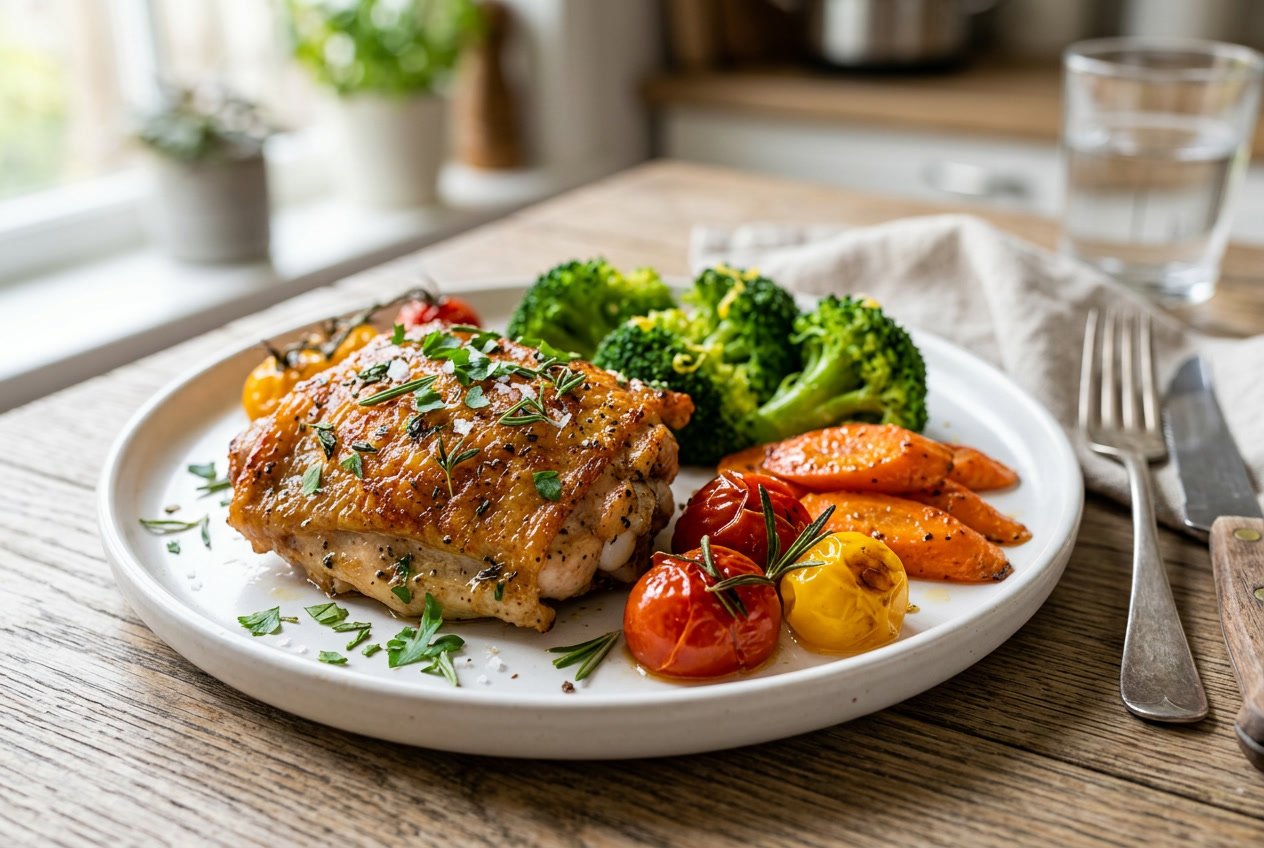
This article breaks down the nutrition behind thighs, explains their health benefits and possible downsides, compares them to chicken breasts, and shows the healthiest cooking and serving choices so you can make practical food decisions that match your goals.
Chicken Thigh Nutrition Facts

Chicken thighs deliver concentrated protein, notable amounts of fat, and a range of vitamins and minerals that support muscle, metabolism, and immunity.
Many people choose skinless or boneless skinless chicken thighs to reduce calories and saturated fat while keeping the same protein per serving.
Macronutrient Profile
A 3-ounce (about 85 g) cooked, skinless chicken thigh typically provides roughly 160–170 calories, 18–22 g protein, and 8–10 g total fat.
Protein supplies the bulk of calories and delivers all nine essential amino acids, making chicken thigh nutrition a reliable source for muscle repair and satiety.
Fat content includes about 1.5–3 g saturated fat in the skinless portion. Keeping the skin off reduces both calories and saturated fat substantially.
Carbohydrates are effectively zero, so chicken thighs fit low-carb and ketogenic meal plans.
If you use boneless skinless chicken thighs, you get similar macros but slightly less fat per serving compared with bone-in cuts.
Micronutrient Content
Chicken thighs supply key minerals and B vitamins that many people need regularly.
A typical serving offers iron (~1 mg), zinc (~2 mg), selenium (~20 mcg), and potassium (~200–250 mg), nutrients that support immune function, thyroid activity, and electrolyte balance.
B vitamins appear in meaningful amounts. Niacin (B3) and vitamin B12 help energy metabolism and red blood cell formation.
Compared with white meat, thighs often contain higher levels of iron and zinc, which matter if you’re aiming to boost those micronutrients without red meat.
These values vary by cooking method and whether the thigh is skin-on or seasoned with sodium-heavy marinades.
Skin-On vs. Skinless Chicken Thighs
Keeping the skin increases calories and fat. A 3-ounce roasted thigh with skin can rise to ~270–280 calories and 16–18 g fat, with saturated fat also higher.
Removing the skin drops those numbers substantially. This is the simplest way to lower energy density while preserving protein.
Flavor and juiciness often improve with skin-on cooking because the fat helps retain moisture.
If you choose skinless chicken thighs or boneless skinless chicken thighs, you trade some richness for a leaner profile that fits calorie- or saturated-fat-controlled diets.
Adjust sauces and seasonings to avoid replacing skin fat with high-calorie dressings or salty rubs.
Health Benefits of Chicken Thighs
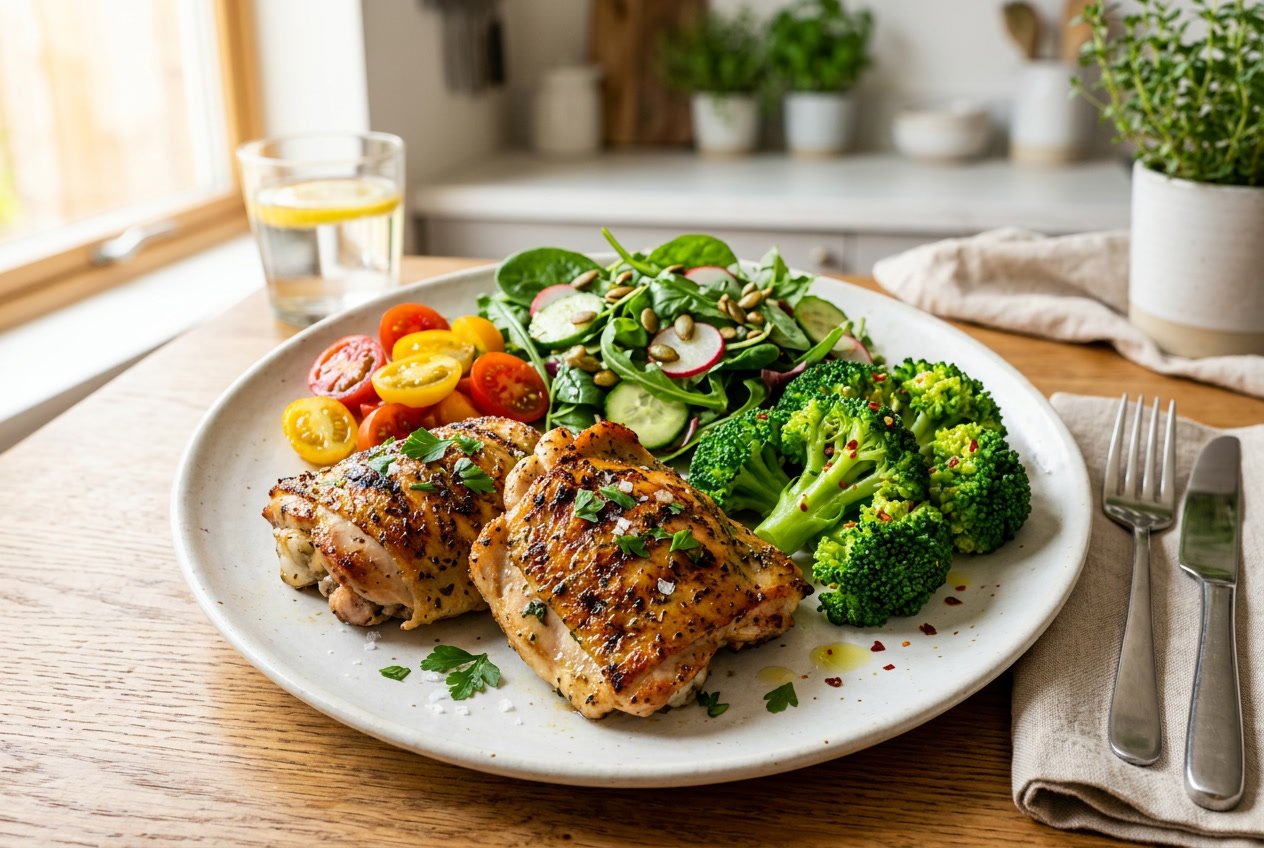
Chicken thighs provide a concentrated source of protein, important vitamins and minerals, and fats that can help you feel full between meals.
They work well in budget-friendly meal plans and adapt to healthy cooking methods like grilling, baking, or braising.
Protein Quality and Muscle Support
Chicken thighs deliver complete protein, meaning they contain all nine essential amino acids your body cannot make.
A 3–4 ounce cooked serving typically supplies roughly 20–32 grams of protein depending on portion size, which supports muscle repair, maintenance, and daily protein targets.
If you train or aim to preserve lean mass as you age, the higher fat content in thighs does not reduce their value for muscle protein synthesis.
Combine thighs with a carbohydrate source after exercise to support glycogen replenishment and recovery.
Choosing skinless thighs lowers added fat while keeping the protein density high.
Essential Micronutrients for Wellness
Thigh meat provides minerals and B vitamins in higher amounts than white meat in some cases.
Expect notable amounts of iron, zinc, selenium, potassium, and B12 per typical serving—nutrients that support energy metabolism, immune function, and oxygen transport.
If your diet is low in red meat or seafood, chicken thighs can help fill gaps in iron and zinc without a large cost.
Cooking methods matter. Retaining juices in braises or using the broth preserves water-soluble vitamins and minerals better than high-heat, dry cooking.
Satiety and Weight Management
The combination of protein and modest fat in chicken thighs promotes satiety, which can help control calorie intake across a meal.
Fat slows gastric emptying and paired protein increases fullness signals, both of which reduce the likelihood of snacking soon after eating.
To use thighs in a weight-aware plan, remove the skin or choose portion-controlled servings and pair the meat with vegetables and whole grains.
Methods like grilling or baking with herbs rather than heavy sauces keep calories moderate while preserving flavor.
Potential Downsides and Considerations
Chicken thighs deliver flavor and nutrients, but they also add more fat, calories, and cholesterol than lean white meat.
Pay attention to portion size, cooking method, and frequency to keep them fitting within a balanced diet.
Fat and Calorie Content
A 3-ounce cooked, skinless chicken thigh contains roughly 160–170 calories and about 8–9 grams of total fat, with roughly 2 grams saturated fat.
If you eat the skin, a similar portion can jump to about 275–280 calories and 18 grams of fat, so the skin makes a meaningful difference in energy and fat intake.
If you’re tracking calories or limiting saturated fat, measure portions and prefer skinless thighs.
Use low-fat cooking methods such as grilling, baking on a rack, broiling, or steaming, and trim visible fat before cooking.
Sauces, breading, or frying can easily add hundreds of extra calories, so account for those when planning meals.
Cholesterol and Heart Health
A 3-ounce serving of chicken thigh has about 100–110 mg of cholesterol.
If you consume multiple animal-based cholesterol sources in one meal, your daily intake can climb quickly, which matters if you have elevated LDL cholesterol or specific heart-disease risk factors.
To reduce cardiovascular risk, pair thighs with high-fiber foods such as vegetables, legumes, and whole grains, and limit added salt and saturated fats in the recipe.
Consider replacing some servings of dark meat with leaner proteins or plant proteins on days when you already consume other high-cholesterol foods.
Monitor your blood lipids and follow guidance from your clinician if you have existing heart disease or high cholesterol.
Comparing Chicken Thighs and Chicken Breasts
Thighs contain more fat and calories but also more iron and zinc.
Breasts deliver more protein per ounce and fewer calories.
Your choice will depend on calorie targets, flavor preference, and cooking method.
Nutrition Comparison
For 100 g cooked, skinless portions, boneless skinless chicken thighs typically provide about 179 kcal, ~24–25 g protein, and ~8 g total fat.
Chicken breast nutrition for the same amount usually runs about 165 kcal, ~30–31 g protein, and ~3–4 g fat.
A breast gives roughly 6–7 g more protein and about 4–5 g less fat per 100 g than a thigh.
Micronutrients differ too. Thighs tend to be higher in iron, zinc, and vitamin B12, which helps if you need more hematologic or trace mineral support.
Breasts often contain slightly more vitamin B6 and choline.
If sodium is a concern, check labels. Processed or pre-marinated cuts can add substantial salt compared with plain boneless skinless chicken thighs or breasts.
Taste, Texture, and Price Differences
You’ll notice thighs stay juicier and more forgiving in cooking because of higher fat content.
They resist drying when braised, roasted, or grilled.
Breasts dry out faster and benefit from brining, lower heat, or shorter cooking times to keep texture tender.
In flavor, thighs deliver a richer, more pronounced chicken taste.
Breasts are milder and absorb marinades more readily.
Price varies by market and supply, but thighs often cost less per pound than breasts.
For meal planning, choose thighs when you want budget-friendly, flavorful dishes and breasts when you prioritize lean protein and lower calories.
Healthiest Cooking Methods for Chicken Thighs
Choose methods that render fat away, preserve moisture, and limit added oils and salt.
Focus on baking or high-heat dry techniques, use minimal added fat, and rely on herbs, acids, and spices for flavor.
Baking and Roasting
Bake chicken thighs at 400–425°F (200–220°C) to get crispy skin while allowing excess fat to render into the pan.
Arrange thighs on a wire rack over a sheet pan so rendered fat drips away. This reduces surface grease and shortens roasting time.
Pat the skin dry and season with salt sparingly, plus herbs like rosemary, thyme, or smoked paprika for flavor without extra calories.
Use bone-in, skin-on thighs for better moisture retention. If you want lower fat, remove skin after baking—the meat stays juicier than breast meat when cooked this way.
If you bake boneless, skinless chicken thighs, reduce oven time and cover with a light sauce or broth to prevent drying.
Use a meat thermometer and aim for 165°F (74°C) in the thickest part to ensure safety without overcooking.
Grilling and Air Frying
Grill at medium-high heat to char fat and impart flavor without added oils.
Place thighs over indirect heat after searing to finish cooking evenly. This lowers charring risk and keeps the interior juicy.
Watch for flare-ups from dripping fat and move pieces if flames grow.
Air frying replicates deep-fried texture with far less oil.
Spray or brush a teaspoon of oil on the skin or use no oil for boneless, skinless thighs.
Arrange in a single layer and flip once to promote even browning.
Air-fried thighs crisp quickly at 375–400°F (190–200°C) and finish well with a squeeze of lemon or vinegar to brighten flavor.
Both methods benefit from a short rest (5–10 minutes) to redistribute juices.
Check temperature for doneness rather than cutting into the meat.
Reducing Added Fats and Sodium
Replace heavy oil-based marinades with yogurt, citrus, or vinegar-based marinades to tenderize without excess fat.
Use measured amounts of heart-healthy oils (1–2 teaspoons per pound) when needed and apply with a brush for control.
Season with garlic, onion powder, smoked paprika, herbs, and citrus zest instead of large amounts of salt.
If you use store-bought sauces, pick low-sodium labels or dilute them with tomato paste and water to cut sodium per serving.
When you follow recipes that call for pan-frying, finish in the oven on a rack to let excess oil drip away.
Trim visible fat before cooking and discard pooled fat from the baking sheet to reduce total fat content in your finished dish.
Selecting and Serving Chicken Thighs for a Balanced Diet
Choose thighs that match your cooking plan and nutrition goals.
Leaner, boneless skinless chicken thigh pieces reduce added fat and are faster to cook.
Bone-in or skin-on thighs add flavor and can stay juicier in long braises.
Aim for clear portion control and pairings that boost fiber, vitamins, and whole grains.
Portion Sizes and Meal Pairings
A single serving of cooked chicken thigh is about 3–4 ounces (85–115 g), which typically equals one boneless skinless chicken thigh for many brands.
If you eat higher protein meals or have greater calorie needs, two boneless skinless chicken thighs (6–8 oz) works. Otherwise, plan one thigh per person.
Pair thighs with high-fiber sides to balance fat and calories.
Good combinations: 1 boneless skinless chicken thigh plus 1 cup steamed broccoli and 1/2 cup cooked quinoa, or 2 small skinless chicken thighs with a large salad with beans and a vinaigrette.
For family meals, set 3–4 thighs per adult per week as a simple guideline if you rotate proteins.
Watch added fats during cooking.
Baking, grilling, or braising with minimal oil keeps portions controlled.
Measure dressings and sauces in tablespoons to prevent hidden calories.
Incorporating Skinless and Boneless Chicken Thighs
Choose boneless skinless chicken thighs when you want lower fat, quicker cooking, and easy portioning. They roast in 20–25 minutes at 400°F (200°C) and shred quickly for tacos, bowls, or salads.
Their protein content (around 20 g per 3 oz) helps maintain muscle while reducing saturated fat compared to thighs with skin. Use skin-on or bone-in thighs for slow-cooked dishes where flavor and moisture matter.
If you cook with skin-on thighs, remove the skin after cooking to lower fat intake while keeping taste. For meal prep, cook several boneless skinless chicken thighs and portion them into 3–4 oz containers.
Pair chicken with veggies and whole grains for balanced lunches. Label cooked portions with weight or count to keep servings consistent.
Check packaging for “boneless skinless chicken thighs” or “skinless chicken thigh” to get the cut you need.


