
Is It Ok To Boil Chicken Thighs? Timing, Tips, and Methods
You can safely boil chicken thighs. Boiling gives you a simple way to get tender, fully cooked meat for soups, salads, and meal prep.
Boil until the internal temperature reaches 165°F (74°C). This ensures safety while keeping the meat juicy when you follow proper timing for bone-in, boneless, fresh, or frozen thighs.
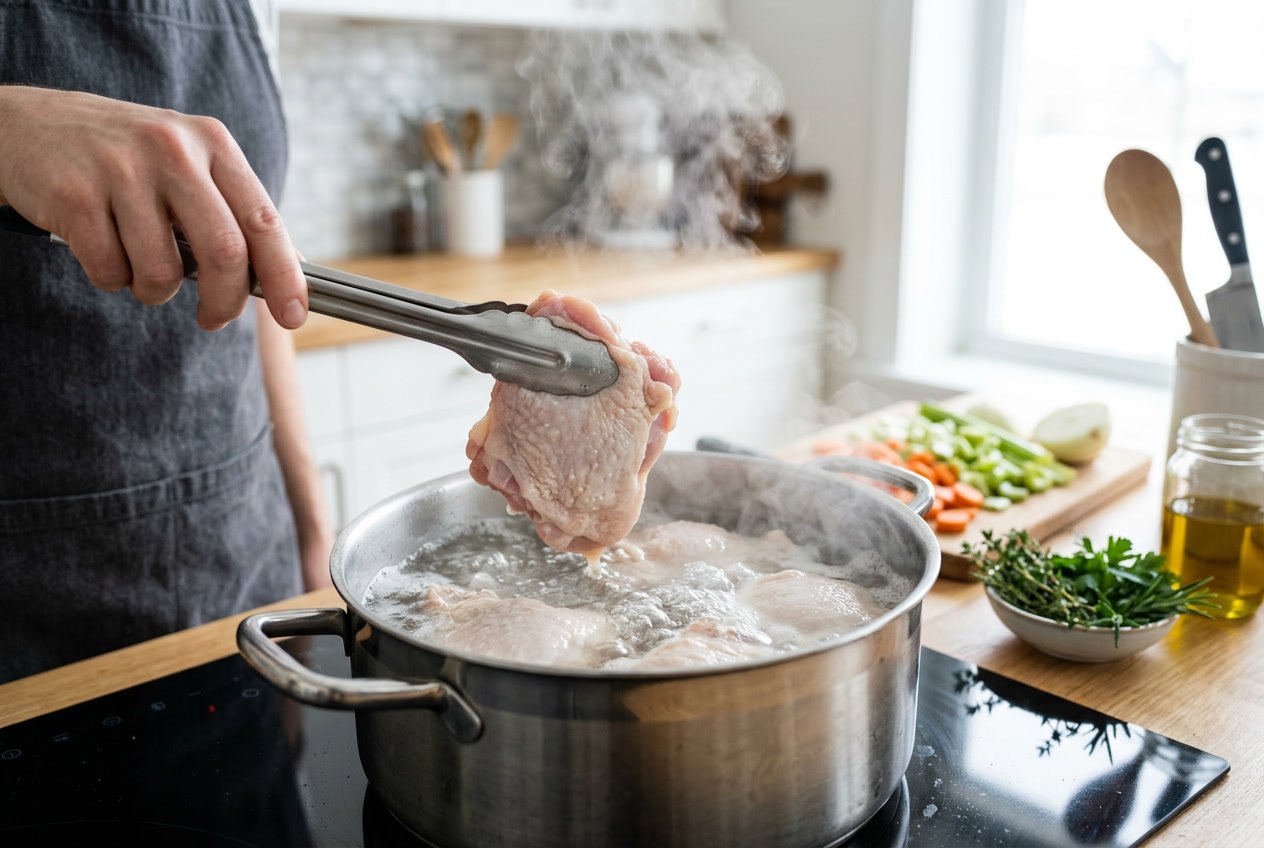
If you want dependable results, boil chicken thighs for tender meat and a flavorful broth. Follow step-by-step methods, use exact timing for different types, and handle frozen or fresh pieces properly.
You can add flavor to the poaching liquid and use boiled thighs in various meals. These tips help you cook confidently every time.
Is It Ok To Boil Chicken Thighs?
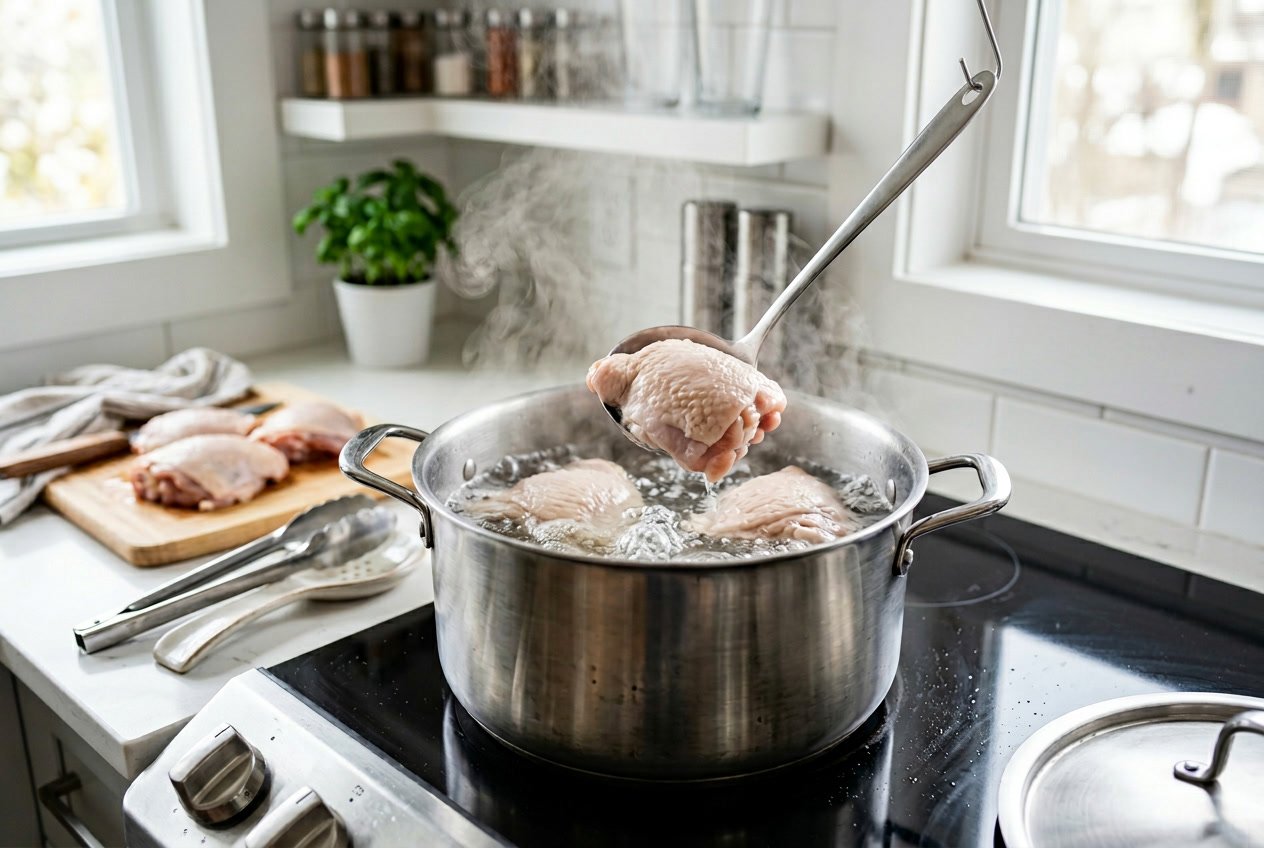
Boiling chicken thighs is a safe, practical way to cook meat for soups, salads, and shredding. You can control flavor and doneness, and boiling works for both fresh and frozen thighs.
Safety and Health Considerations
Cook chicken thighs until the internal temperature reaches 165°F (74°C). Use an instant-read thermometer in the thickest part, avoiding bone contact, to confirm doneness.
Check near the bone for bone-in thighs since heat conducts slower there. Keep the chicken fully submerged and maintain a gentle simmer to reduce surface drying and uneven cooking.
Skim foam and impurities for a clearer broth. Store cooled boiled chicken in airtight containers in the fridge for up to 3 days or freeze for up to 3 months.
If you start from frozen, add about 15–20 minutes to the usual boiling time and ensure the center reaches 165°F. Always reheat leftover boiled chicken to at least 165°F before eating.
Boiled Chicken Thighs Compared To Other Methods
Boiling preserves moisture and yields tender, shreddable meat that’s ideal for stews, tacos, and salads. Roasting or pan-searing gives more browning and a crispier texture.
If you want crispy skin or extra flavor, sear boiled thighs briefly in a hot pan or under a broiler after boiling. Boneless thighs cook faster, usually 15–25 minutes, while bone-in thighs often need 25–40 minutes depending on size.
Add broth and aromatics like onion, garlic, bay leaf, and peppercorns to boost flavor.
Boiling Chicken Thighs for Special Diets
Boiled chicken thighs fit many diets because you control added fat and sodium. For low-fat plans, remove skin before or after boiling and skim fat from cooled broth.
For higher-protein or keto diets, keep skin and simmer in bone broth for extra calories and collagen. If you follow low-sodium guidelines, avoid adding salt to the poaching liquid and season portions when serving.
For paleo or Whole30, use compliant herbs and a homemade bone broth base. Adjust seasoning and broth to fit any specific dietary restrictions.
How To Boil Chicken Thighs
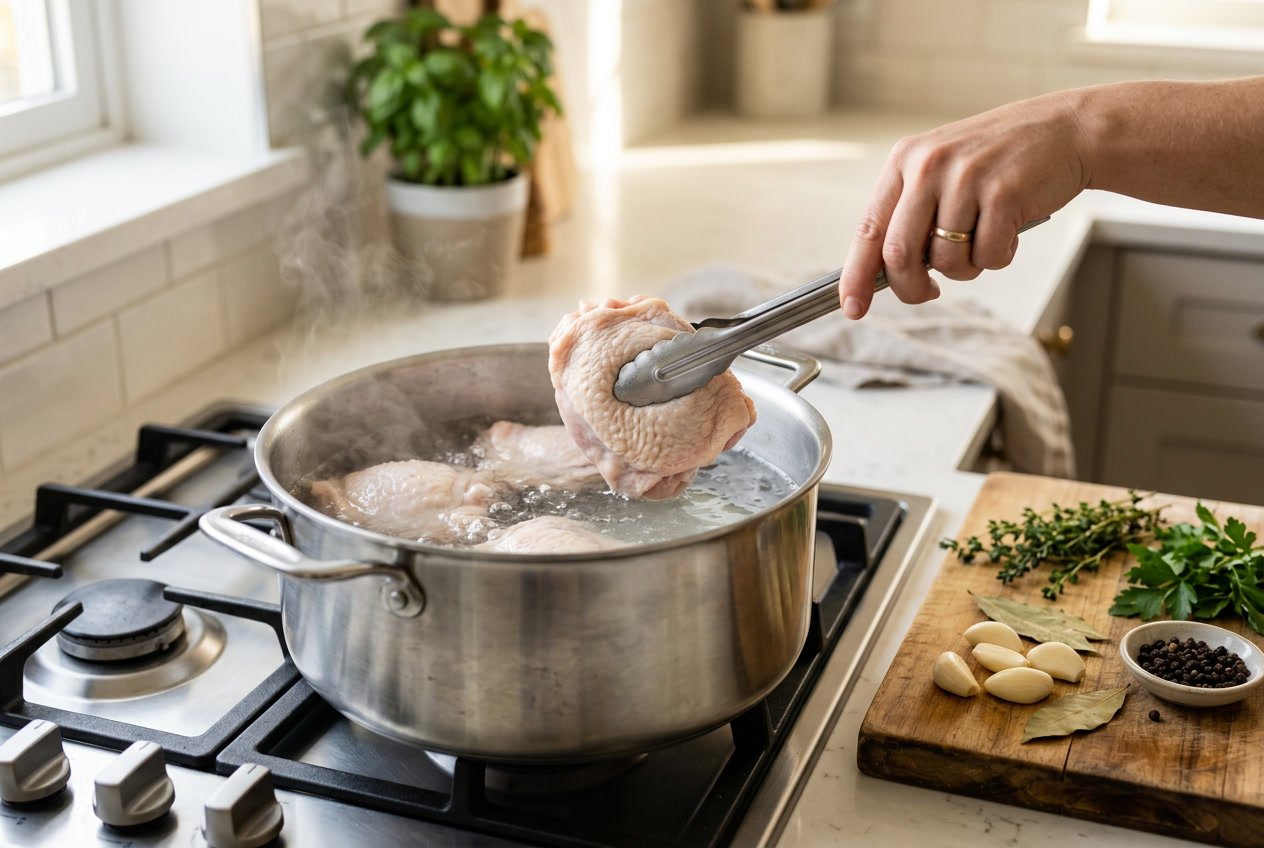
Boiling chicken thighs gives you tender meat and a flavorful liquid when you control temperature, timing, and seasoning. Focus on a gentle simmer and verify doneness with a thermometer.
You can use the broth for soups or sauces.
Preparation and Seasoning Tips
Trim excess fat and pat thighs dry so seasoning sticks and broth stays cleaner. For basic seasoning, salt the cooking liquid and add a halved onion, crushed garlic, and whole peppercorns for every 2–3 pounds of chicken.
Add 1–2 teaspoons of vinegar or a squeeze of lemon after cooking for a brighter finish. Add fresh herbs like parsley stems or thyme sprigs to the pot, then remove stems before storing the broth.
Cut boneless thighs into smaller pieces for faster, even cooking. If you plan to shred, cook to 165°F then rest 5 minutes before pulling.
Skin-on thighs add body to the broth. Remove fat after chilling if you prefer a leaner liquid.
Bone-In Versus Boneless Thighs
Bone-in thighs produce richer broth because collagen and marrow release into the liquid during simmering. Expect a longer cook time and check temperature near the bone.
Use bone-in thighs when you want stock for soups or extra flavor in rice and stews. Boneless, skinless thighs cook faster—typically 15–20 minutes in a gentle simmer—and are easier to shred for salads, tacos, or sandwiches.
They also give you meat without the need to debone after cooking. If you start from frozen, add time: boneless frozen pieces need about 25–30 minutes, while frozen bone-in can take 40–50 minutes.
Keep pieces in a single layer and avoid crowding so heat reaches every piece evenly.
Tools and Equipment
Use a heavy-bottomed pot that holds the thighs in a single layer with about 1 inch of liquid above the meat. A wide pot helps heat circulate and prevents uneven cooking.
Have an instant-read thermometer to check the thickest part of the thigh. Use a slotted spoon or tongs to remove pieces without splashing.
A fine-mesh skimmer or spoon helps remove foam for clearer broth. Other helpful items include a lid to hold heat, a strainer to separate solids when saving the broth, and shallow containers for rapid chilling of leftovers.
How Long To Boil Chicken Thighs
Boiling time depends on whether the thighs are boneless or bone-in and whether they start fresh or frozen. Aim for an internal temperature of 165°F (74°C) and adjust cooking time to reach that safely without overcooking.
Boiling Times for Fresh Chicken Thighs
Fresh boneless, skinless chicken thighs usually take about 15–20 minutes in simmering water. Start with cold water, bring to a gentle boil, then reduce to a simmer for juicier meat.
Check the thickest piece with a probe thermometer. It should read 165°F (74°C).
Fresh bone-in thighs need more time, generally 25–30 minutes at a gentle simmer. The meat near the bone heats slower, so use a thermometer inserted beside the bone.
If you want very tender, shreddable meat, extend simmering to 35–45 minutes while monitoring temperature to avoid drying the outer meat.
Tips:
- Keep thighs submerged for even cooking.
- Skim foam during the first few minutes for a clearer broth.
- Reduce heat to a gentle simmer to prevent toughening.
Boiling Times for Frozen Chicken Thighs
You can boil frozen thighs without thawing, but add roughly 15–20 minutes to cooking times. Frozen boneless thighs typically take about 30–35 minutes.
Frozen bone-in thighs take about 45–50 minutes. Bring water to a boil, then cover and simmer.
Stir or rearrange pieces once thawed so heat distributes evenly. Avoid a long, high rolling boil after the pieces have thawed, as that can overcook the exterior before the interior reaches safe temperature.
Always confirm internal temperature at the thickest point (165°F/74°C).
How To Know When Chicken Thighs Are Done
Use a digital probe thermometer for reliable doneness: 165°F (74°C) is the safe minimum. Insert the probe into the thickest part of the thigh, avoiding bone, and wait for the reading to stabilize.
If you don’t have a thermometer, cut into the thickest area. Juices should run clear and meat should not be pink.
For bone-in thighs, test near the bone. Properly cooked thighs will be tender and pull apart easily when shredded but still moist.
If meat feels rubbery or fibers are tight, it likely needs a few more minutes at a gentle simmer.
Boiling Frozen Versus Fresh Chicken Thighs
You can boil either frozen or fresh chicken thighs. They differ in cook time, safety steps, and final texture.
How To Boil Frozen Chicken Thighs Safely
Place frozen thighs in a single layer in a large pot. Cover with cold water or broth so the pieces are fully submerged.
Use cold liquid to help the meat pass through the temperature danger zone more evenly. Bring to a gentle simmer to avoid toughening the exterior while the center remains cold.
Frozen bone-in thighs usually take about 30–40 minutes to reach 165°F (74°C). Boneless pieces will take less time.
Use an instant-read thermometer inserted into the thickest spot to confirm doneness. Avoid adding salt or acidic ingredients until the meat nears doneness, since they can increase cooking time or toughen proteins early.
If needed, gently stir after the water warms to keep thighs from clumping.
Seasoning and Texture Differences
Fresh thighs absorb brines, rubs, and aromatics more readily than frozen ones. Marinate fresh thighs for at least 30 minutes or add herbs, bay leaves, garlic, and whole spices to the poaching liquid when boiling frozen pieces.
Boiling frozen chicken tends to produce slightly drier, firmer meat because the surface heats quickly while the center takes longer. To preserve tenderness, cook at a low simmer, remove thighs promptly when the thermometer reads 165°F (74°C), and rest them for 5–10 minutes before shredding or serving.
If you plan to crisp skin afterwards, parboil first, then pat dry and finish under a broiler or in a hot skillet. This two-step method gives you cooked-through meat with better final texture.
Tips for Perfectly Boiled Chicken Thighs
Choose a liquid that supports the final use of the chicken and control heat so the meat stays tender. Season the cooking liquid and skim foam for a clear broth if you plan to use it.
Best Water and Liquid Choices
Use cold water to start. It helps heat penetrate evenly and prevents exterior overcooking.
Cover chicken thighs with at least 1–2 inches of liquid so all pieces stay submerged. For cleaner flavor, use low-sodium chicken broth or a 50/50 mix of water and broth.
Broth adds depth without extra salt if you control seasoning later. If you’re making soup or stock, add chopped onion, carrot, and celery to the pot for a richer, gelatinous liquid, especially from bone-in thighs.
When boiling frozen thighs, plan on about 15–25 minutes for frozen boneless and 45–50 minutes for frozen bone-in. Always aim for 165°F (74°C) internal temp.
Flavor Boosters and Aromatics
Add whole spices and aromatics at the start. Bay leaves, peppercorns, smashed garlic, and a quartered onion release flavor gradually.
Add fresh herbs like thyme or parsley in the last 10 minutes to avoid bitterness. Salt the liquid early to season the meat throughout; about 1 teaspoon salt per quart of liquid is a practical starting point.
Taste the broth and adjust after cooking if you’ll use it as a sauce or soup base. For a bright finish, add a splash of acid—lemon juice or a tablespoon of vinegar—after the thighs are cooked and off the heat.
If you plan to crisp skin, remove thighs after boiling, pat dry, then sear skin-side down in a hot skillet or broil for 2–3 minutes.
Avoiding Common Boiling Mistakes
Do not boil at a rolling boil. Maintain a gentle simmer to preserve moisture and avoid rubbery texture.
Cook thighs by size and type: boneless thighs need roughly 10–15 minutes; bone-in thighs generally take 20–30 minutes. Use a thermometer to confirm 165°F (74°C) at the thickest part.
Don’t overcrowd the pot. Work in batches or use a larger pot so each thigh sits in a single layer if possible.
Skim foam and impurities early for clearer broth. Let thighs rest 5 minutes after cooking to let juices redistribute before slicing or shredding.
How To Use Boiled Chicken Thighs
Boiled chicken thighs give you tender meat and flavorful broth you can use across meals. You can shred or slice the thighs for ready-to-eat protein.
You can save the cooking liquid as a base for soups, grains, or sauces.
Shredding and Meal Prep Ideas
Shred warm thighs with two forks or let them rest 5–10 minutes, then pull apart. Resting preserves juices and makes shredding easier.
Use bone-in thighs for more flavor when boiling. Remove bones before shredding.
Pack shredded chicken into meal-size portions: 1 cup (about 140–150 g) per salad, 1–1.5 cups per sandwich, or 2 cups for a casserole. Season portions with salt, pepper, and a squeeze of lemon or a tablespoon of your favorite sauce before storing to keep them tasting fresh.
Turn shredded thighs into quick meals. Try taco filling with salsa and cumin, chicken salad with Greek yogurt and celery, or stir into fried rice with scallions and soy sauce.
Use your boiled thighs recipe for recipes that call for cooked chicken. This saves you 15–20 minutes of prep time.
Saving and Using Chicken Broth
Strain the cooking liquid through a fine-mesh sieve to remove solids and fat. Cool quickly by placing the pot in an ice bath, then refrigerate.
Fat will solidify on top for easy removal. Use the broth within 4–5 days refrigerated or freeze in 1- to 2-cup portions for up to 6 months.
Freeze in ice-cube trays for small amounts to add to sauces or to deglaze a pan. Use 1–2 cups to simmer rice or quinoa for more flavor.
Replace stock in soups and stews with your broth. Reduce it on the stove to concentrate flavor for gravies.
Add herbs and aromatics to warmed broth for an instant, light soup.
Storing and Reheating Boiled Chicken Thighs
Cool chicken within two hours of cooking. Refrigerate it in shallow airtight containers.
Store shredded or whole thighs in the fridge for up to 4–5 days. Freeze them for up to 6 months in vacuum-seal or freezer bags with as much air removed as possible.
To reheat in the oven, place thighs in a covered dish with 2–3 tablespoons broth. Heat at 325°F (160°C) for 12–15 minutes until the internal temperature reaches 165°F (74°C).
For stovetop reheating, add chicken to a skillet with a few tablespoons of broth. Cover and warm over medium-low for 5–8 minutes.
Reheat shredded chicken in the microwave in short bursts of 30–45 seconds. Stir and check the temperature between intervals.
Always make sure the meat reaches 165°F (74°C) before serving.


