
Is Chicken Thighs White or Dark Meat? Nutrition, Flavor & More
Chicken thighs are dark meat. They come from muscles used for walking, so they contain more myoglobin and fat than breast meat.
This gives them a richer color, greater juiciness, and a bolder flavor.
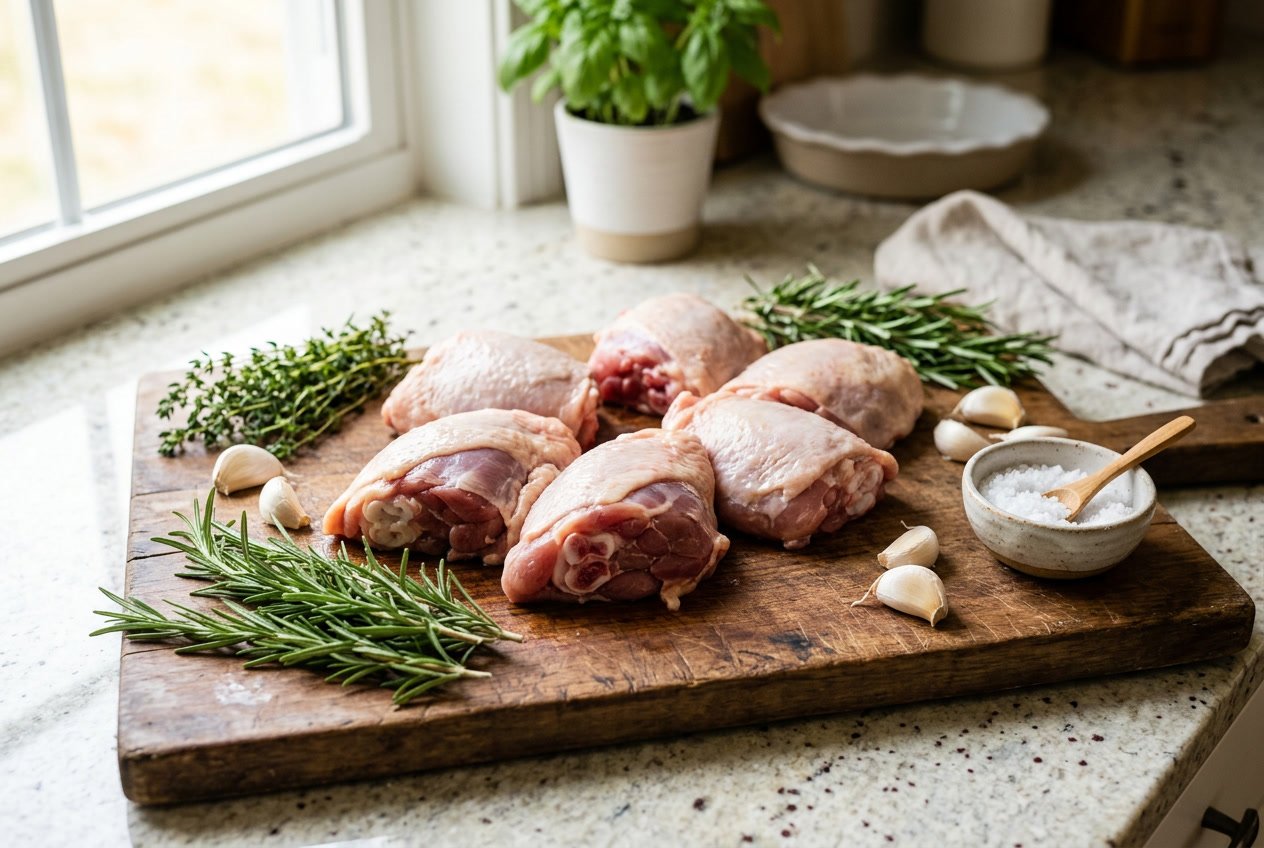
If you care about nutrition, cooking, or flavor, knowing that thighs are dark meat helps you choose the right techniques and recipes.
You can learn why meat darkens, compare nutrition and taste, and see how thighs behave differently than white cuts.
Are Chicken Thighs White or Dark Meat?
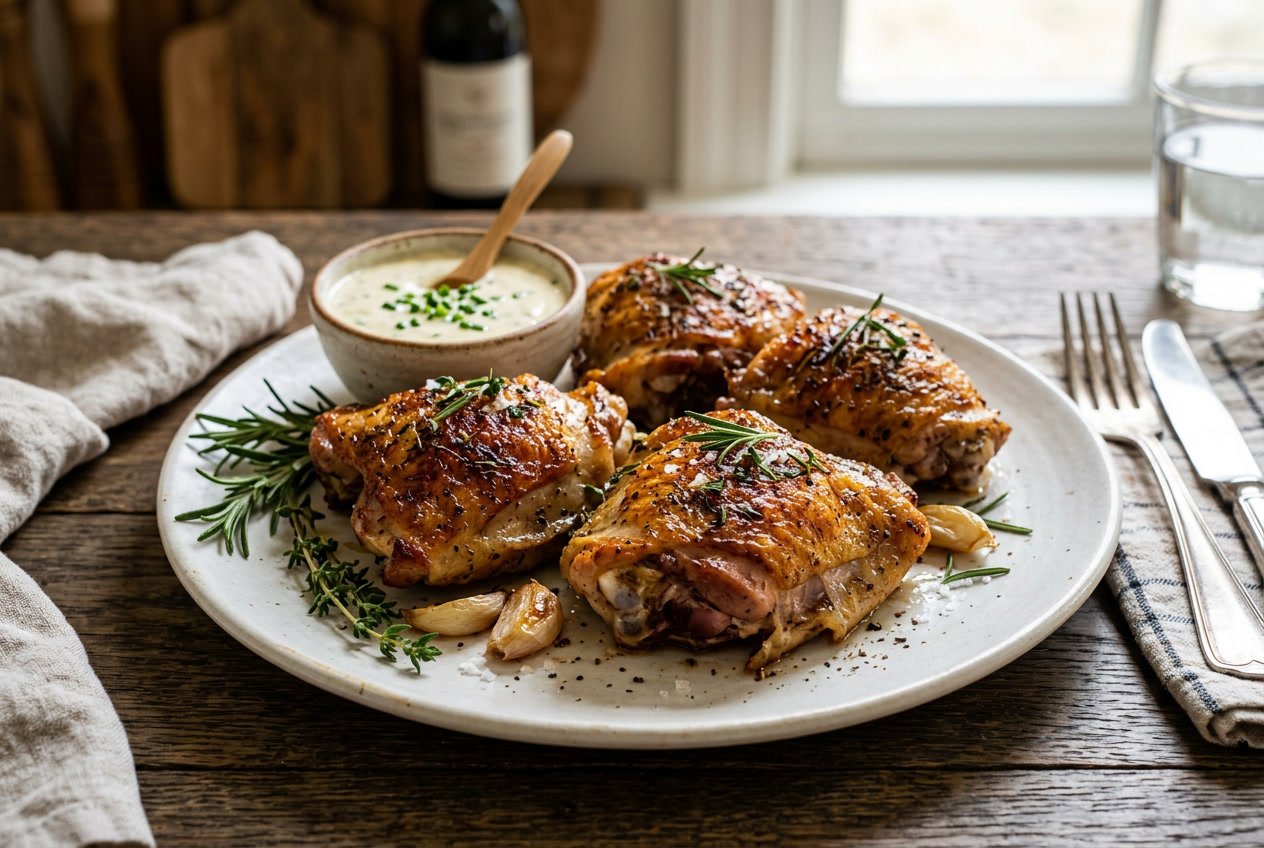
Chicken thighs are dark meat. They come from the bird’s leg region and contain more myoglobin and fat than breast meat.
This means they deliver richer flavor and greater juiciness when cooked.
Classification of Chicken Thighs
Chicken thighs count as dark meat because they attach to muscles used for locomotion.
Those muscles need more oxygen over long periods, so they contain higher myoglobin levels than breast meat.
You’ll usually see thighs sold bone-in or boneless, skin-on or skinless, but the underlying classification as dark meat doesn’t change.
Thighs have more fat and slightly more calories per ounce than white meat, and they provide more iron and zinc.
If you want protein with a richer mouthfeel, choose thighs over breast.
Visual and Structural Differences
Dark meat like thighs appears deeper pink or reddish before cooking and stays slightly darker after cooking.
Thigh muscle fibers are more oxidative, denser in connective tissue, and contain more intramuscular fat.
This makes the texture more tender and forgiving to higher-heat or longer cooking methods.
White meat from the breast looks pale and has fast-twitch fibers; it cooks faster and dries out more easily if overcooked.
Why the Distinction Matters
Knowing thighs are dark meat guides cooking method and timing.
Use higher-heat searing, braising, grilling, or slow-cooking to take advantage of their fat and connective tissue.
Thighs add flavor and iron to dishes, while breast is leaner if you need lower fat or calories.
Thighs often cost less and can replace breast in many recipes, but expect a different texture and flavor profile when you do.
What Makes Meat White or Dark?

Color, fat, and muscle use determine whether a piece of chicken appears white or dark.
These factors also affect flavor, cooking behavior, and nutrient differences between cuts.
Role of Myoglobin in Meat Color
Myoglobin is a red protein in muscle fibers that stores oxygen.
Muscles with high myoglobin content look darker; low-myoglobin muscles look paler.
Slow, continuously used muscles like thighs and drumsticks contain more myoglobin because they need oxygen for endurance work.
That higher myoglobin concentration gives dark meat its deeper color and contributes to a richer flavor profile.
Breast muscles, used for short bursts of flight, rely more on anaerobic metabolism and contain less myoglobin.
This lower myoglobin level produces the pale color you recognize as white meat and makes breast meat leaner and milder in taste.
Muscle Fiber Types
Muscle fibers fall into two broad categories: fast-twitch and slow-twitch.
Each type influences color, fat content, and cooking behavior.
Fast-twitch fibers power quick, explosive movements and fatigue rapidly.
They rely on glycogen rather than oxygen, so they contain less myoglobin and appear as white meat.
Chicken breast is predominantly fast-twitch, which explains its low fat and tendency to dry out if overcooked.
Slow-twitch fibers support sustained activity and require oxygen.
They contain more myoglobin and more intramuscular fat, so they form dark meat.
Thighs and legs have many slow-twitch fibers; this gives them better moisture retention and a more savory flavor when cooked slowly.
Common Chicken Cuts
Knowing which cuts are white or dark helps you choose the right cooking method.
Use this quick guide when planning meals.
-
White meat chicken:
- Boneless, skinless breast
- Wing tips (partially white depending on muscle)
- Characteristics: low fat, mild flavor, fast-cooking
-
Dark meat chicken:
- Thighs, drumsticks, whole legs
- Characteristics: higher myoglobin, more fat, juicier after long cooking
-
Mixed or variable:
- Wings and whole birds contain both types; skin-on pieces have added surface fat that affects flavor and browning.
Choose thighs and legs for braising, grilling, or slow-cooking.
Choose breasts for quick pan-searing or grilling when you want lean protein.
Nutritional Profile of Chicken Thighs
Chicken thighs deliver more calories and fat than the breast.
They also provide higher iron and a richer mouthfeel.
Expect significant differences between skin-on and skinless cuts, and plan portions based on whether you weigh meat raw or cooked.
Fat Content and Calories
A 100 g raw, skin-on chicken thigh typically contains about 16 g total fat and about 220 kcal.
The boneless, skinless equivalent drops to roughly 4 g fat and about 120 kcal.
Much of the extra calories in skin-on thighs come from the skin and subcutaneous fat.
Removing the skin cuts calories by about 50–70 kcal per thigh.
Fat composition leans toward monounsaturated and polyunsaturated fats, with saturated fat usually under 5 g per 100 g for skin-on meat.
If you want higher fat for keto or satiety, keep the skin.
If you want lower calories and less fat, choose skinless chicken thighs or trim visible fat.
Protein and Key Nutrients
Per 100 g cooked, boneless skinless thigh, expect roughly 25–28 g protein.
Thighs supply B vitamins, especially niacin and B12, plus heme iron and zinc at higher levels than breast meat.
If you track macros, note that cooked weight concentrates nutrients as water cooks off.
Use cooked entries if you weigh after cooking, and raw entries if you weigh before.
Comparison: Thighs vs. Breasts
Chicken breasts (skinless, boneless) average about 100–120 kcal and about 20–24 g protein per 100 g raw with about 1–4 g fat.
Thighs (skinless, boneless) provide about 120–140 kcal, about 20 g protein, and about 4–7 g fat for the same raw weight.
The trade-off is modestly higher calories and fat for more iron and moisture in thighs.
For lean-protein goals, boneless chicken breast gives the lowest fat-per-calorie ratio.
For flavor, cooking tolerance, and slightly higher micronutrients, skinless or skin-on thighs offer advantages.
Choose cuts based on your calorie budget, desired fat intake, and whether you prefer juicier meat.
Flavor and Texture
Chicken thighs deliver a noticeably richer taste and a denser mouthfeel than breast meat.
Expect higher fat, more connective tissue, and greater moisture retention that affect both flavor intensity and how the meat responds to cooking.
Why Thighs Taste Richer
Thighs taste richer because they contain more intramuscular fat and myoglobin than breast meat.
Fat carries and amplifies savory compounds, so the thigh’s higher fat content boosts umami and overall depth of flavor.
Connective tissue in the thigh breaks down during cooking into gelatin, which adds body to sauces and a satisfying mouth-coating texture.
Bone-in thighs contribute additional flavor through marrow and collagen released while cooking.
If you want maximum flavor, cook thighs low and slow or braise them to convert collagen into gelatin.
For quicker methods, sear to develop browning that intensifies the rich notes.
Juiciness and Moisture Retention
Thighs retain moisture better because they have higher fat and collagen levels and a greater proportion of slow-twitch muscle fibers.
These factors reduce the risk of drying out during longer cooking times.
You can measure doneness with a thermometer (165°F/74°C minimum).
Resting the thighs for 5–10 minutes helps redistribute juices and improves perceived juiciness.
Avoid overcooking; extended high heat will render fat but also tighten proteins and squeeze out moisture.
Quick techniques to boost moisture retention:
- Brine or marinate to increase water content and seasoning penetration.
- Use skin-on, bone-in pieces when roasting for insulated cooking.
- Cook at moderate temperatures or use moist-heat methods like braising or slow-cooking.
Cooking with Chicken Thighs
Chicken thighs give you flexibility.
They handle high heat, long braises, and repeated handling without drying out.
Their higher fat and connective tissue translate to forgiving cooking and strong flavor across grilled, fried, and slow-cooked dishes.
Cooking Methods for Thighs
Use thighs for grilling, frying, roasting, braising, and slow-cooking depending on your goal.
For grilled chicken, sear skin-on thighs over medium-high heat for 6–8 minutes per side until skin crisps, then finish indirect if needed.
For fried chicken, brine or buttermilk-bathe the thighs, dredge in seasoned flour, and fry at 325–350°F for even cooking and a crisp exterior.
Braising and slow-cooking work best for bone-in pieces.
Simmer thighs in a flavorful liquid at low heat for 45–90 minutes until the meat is tender and pulls from the bone.
For quick meals, use boneless thighs.
Sauté over medium-high heat 5–8 minutes per side until browned and cooked through.
Bone-In vs. Boneless and Skin-On vs. Skinless
Choose bone-in, skin-on thighs when you want deeper flavor and moisture.
Bones slow heat transfer and add richness; skin crisps and protects meat during grilling and roasting.
Expect slightly longer cook times—plan an extra 5–15 minutes depending on thickness.
Pick boneless, skinless thighs for faster, uniform cooking and easier slicing for salads, tacos, or stir-fries.
They brown quickly but lose a layer of protection, so watch heat and consider a quick marinade or light oil to prevent sticking.
For fried chicken, skin-on bones give the best texture.
For sauces or quick sautés, boneless skinless cuts save time.
Cooking Temperatures and Food Safety
Use a meat thermometer to confirm doneness.
Insert into the thickest part without touching bone.
The USDA minimum safe temperature is 165°F (74°C) for poultry.
Many chefs cook dark meat to 175–180°F (79–82°C) for tender results because thighs contain more connective tissue that breaks down at higher temps.
Rest cooked thighs 5–10 minutes before cutting to let juices redistribute.
Chill leftovers within two hours and store in airtight containers.
Refrigerate cooked chicken 3–4 days or freeze up to 9–12 months.
When reheating, bring internal temperature back to 165°F to ensure safety.
Choosing Between White Meat and Dark Meat
You’ll weigh nutrition, cost, and cooking fit when picking between thighs and breasts.
Consider how the meat will be used in a recipe, how much time you have, and the flavor profile you want.
Health Considerations
Dark meat (thighs and legs) contains more fat and slightly more calories than white meat (breast and wings).
If you remove the skin, a 3-ounce cooked thigh typically supplies more iron and zinc than a comparable breast.
If you limit saturated fat or calories, choose skinless breast meat.
For balanced meals, use thighs sparingly or trim excess fat.
Pregnant people and immunocompromised individuals should cook all cuts to 165°F (74°C) and handle raw chicken carefully to avoid cross-contamination.
Cost and Availability
Thighs and drumsticks usually cost less per pound than boneless, skinless breasts.
Retailers price breasts higher because of demand and convenience.
Thighs often sell as bone-in or boneless packs, and whole chicken sales sometimes shift prices seasonally.
You can buy a whole chicken to mix white and dark meat economically.
Roast the whole bird to get both textures and use leftovers in soups or other recipes.
Buying in bulk or on sale and freezing portions extends value without sacrificing quality.
Best Uses in Recipes
Use thighs when you want richer flavor and forgiving cooking. Braises, stews, curries, and slow-cooked shredded chicken all benefit from dark meat.
Thighs hold up to long braising and high-heat grilling without drying. They work well for barbecue and many ethnic dishes.
Choose breast for quick pan-sears or stir-fries. Use it in dishes where you want a lean, mild protein.
Roast a whole chicken to combine crisp skin with moist dark meat. You can turn leftovers into salads, tacos, or a simple chicken and rice recipe using both white and dark portions.


