
Is Chicken Thighs White Meat? Full Guide to Chicken Cuts & Types
You probably notice labels like white meat and dark meat at the grocery store and wonder where thighs fit.
Chicken thighs count as dark meat because their muscles contain more myoglobin and work for sustained activity. This gives them a deeper color and richer flavor.
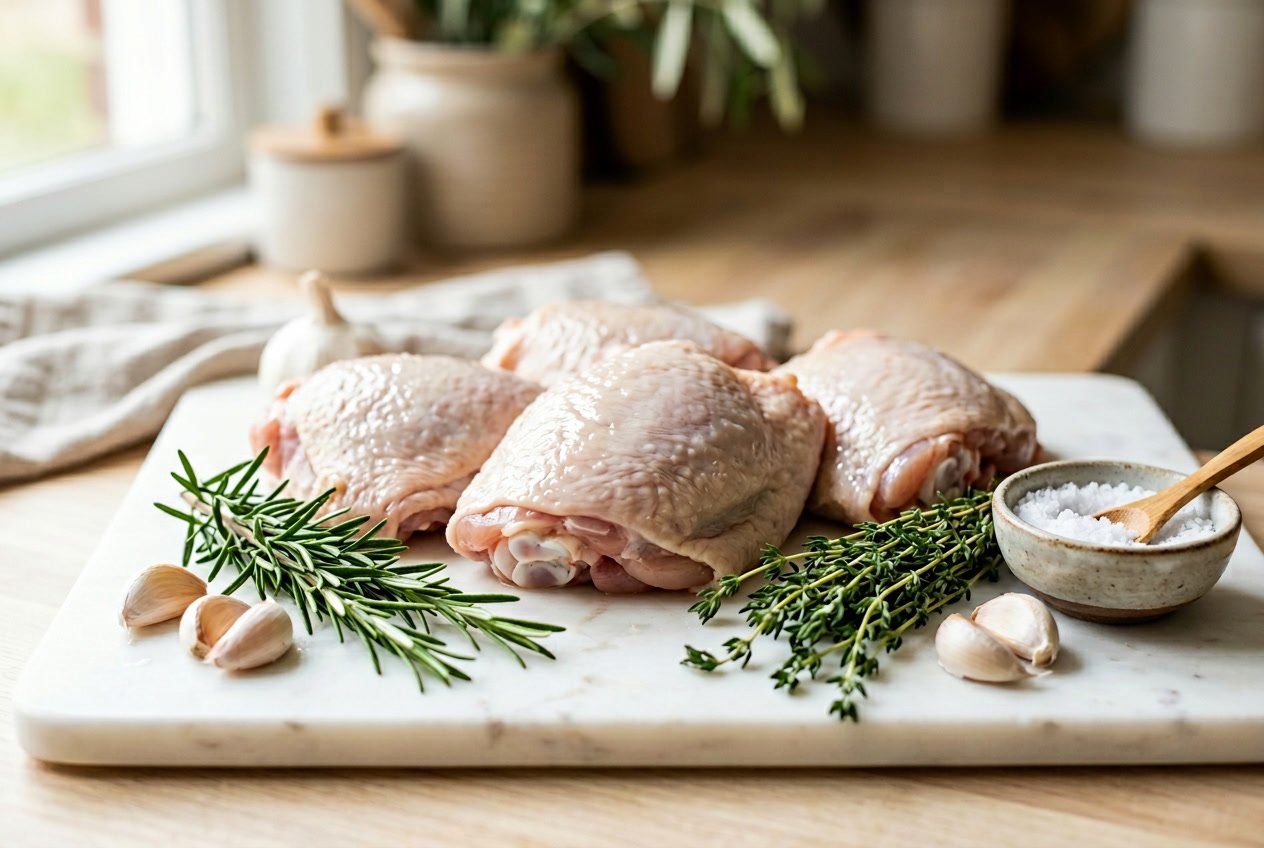
If you care about taste, cooking behavior, or nutrition, knowing thighs are dark meat changes how you shop and cook.
You’ll learn about the muscle science behind this, how thighs compare to breasts and wings, and how those differences affect nutrition and the best ways to prepare them.
Are Chicken Thighs White Meat?
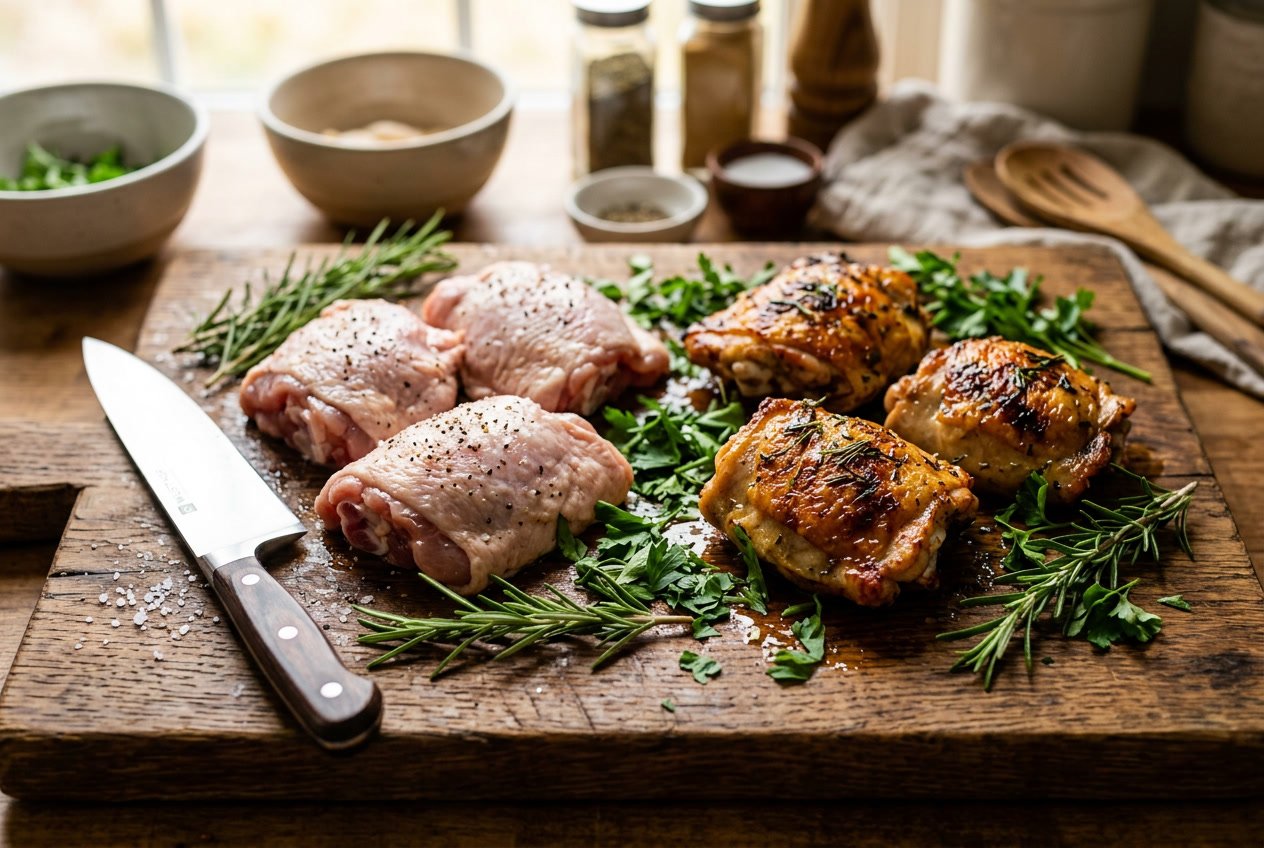
You’ll learn whether thighs count as white meat, how they differ from breast meat in color and composition, and which common misunderstandings to ignore.
Expect clear facts about myoglobin, fat content, and typical culinary uses.
Chicken Thighs Classification
Chicken thighs count as dark meat.
They come from the bird’s upper leg, a muscle group used frequently for standing and walking, which increases myoglobin levels.
Myoglobin is the iron-containing protein that gives thigh meat its deeper red-brown color compared with breast meat.
Thighs contain more intramuscular fat than breasts, which makes them juicier and richer in flavor.
If you remove the skin, thighs still retain higher fat and calorie counts per ounce than skinless breast, but they also deliver slightly more iron and certain B vitamins.
For labeling and cooking, treat thighs as dark meat.
Differences From Chicken Breast
Breast meat is white meat from the pectoralis major, muscles the bird uses less for sustained activity.
That limited use means lower myoglobin, a paler color, and a leaner texture.
A typical 3-ounce cooked portion of skinless breast has fewer calories and less fat than the same portion of skinless thigh.
Texture and cooking behavior differ a lot.
Breast dries out faster when overcooked because it contains less fat, so quick, high-heat methods or brining work best.
Thighs handle longer, moist cooking and higher temperatures without becoming dry, which makes them better for braising, stews, and grilling.
Common Myths About Chicken Thighs
Myth: “Thighs are unhealthy compared to breast.” Thighs have more fat, but that fat makes them more flavorful and less likely to dry out.
If you remove skin, the difference in saturated fat narrows, and thighs provide comparable protein with more iron and zinc.
Myth: “All dark meat is bad.” Dark meat simply reflects different muscle use and myoglobin content.
It is not intrinsically inferior; it offers different culinary uses and nutrient balances.
Myth: “Wings aren’t white meat.” Wings count as white meat along with breast because their muscles are used less for sustained activity, even though they often have more skin and fat than the breast.
White Meat vs. Dark Meat Explained

Chicken cuts differ by muscle type, color, flavor, and nutrient content.
That helps you choose between lean breast cuts and richer leg or thigh cuts for cooking and nutrition.
What Is White Meat
White meat includes the breast and wing muscles of chicken.
These muscles rely mostly on fast-twitch fibers for short bursts of activity like flight, so they contain low levels of myoglobin.
Because myoglobin is low, the meat appears pale after cooking and has a milder flavor.
White meat is leaner and typically lower in fat and calories per ounce than dark meat.
If you track calories or want a neutral-flavored protein that takes marinades well, white meat chicken often fits your needs best.
What Is Dark Meat
Dark meat includes the thighs and drumsticks, muscles the bird uses for standing and walking.
Those muscles contain more slow-twitch fibers and higher myoglobin concentrations, giving the meat a darker color and deeper flavor.
Dark meat also contains more intramuscular fat and connective tissue, which helps it stay moist during longer cooking and adds savory richness.
If you prefer juicier texture or plan methods like braising, roasting, or grilling, dark meat chicken performs reliably and resists drying out.
Key Differences in Taste and Texture
Taste differences come mainly from myoglobin and fat.
Dark meat tastes more savory and pronounced because of higher myoglobin and fat content, while white meat tastes milder.
Texture varies with muscle function.
White meat is firmer and can become dry if overcooked.
Dark meat is more tender and forgiving due to extra fat and collagen, which convert to gelatin with slow cooking.
Choose white meat for quick, high-heat methods and dark meat for slow, moist techniques or when you want bolder flavor.
Nutritional Profiles Compared
Per serving, white meat generally provides fewer calories and less total fat than dark meat.
For example, a 3-ounce cooked skinless chicken breast will often have fewer calories and less saturated fat than the same portion of thigh.
Dark meat supplies slightly higher amounts of iron, zinc, and some B vitamins, because myoglobin and richer tissue concentrate those micronutrients.
If you need lower fat intake, prioritize white meat.
If you need iron or prefer higher flavor and moisture, dark meat chicken can be a better choice.
Muscle Fiber Types and Their Role
Chicken meat color and cooking behavior depend on the dominant muscle fiber types, their energy systems, and the oxygen-storing protein myoglobin.
Fibers used for quick bursts differ structurally and chemically from fibers built for sustained activity.
Myoglobin concentration links fiber type to the familiar white or dark appearance.
Fast-Twitch Muscle Fibers
Fast-twitch fibers (type II) support rapid, high-force movements like wing flapping.
They rely mainly on anaerobic metabolism, use glycogen as fuel, and fatigue quickly.
In poultry, breast muscles have a high proportion of fast-twitch fibers.
That composition makes breast meat pale, leaner, and prone to drying if overcooked.
Fast-twitch fibers have fewer capillaries and low myoglobin content.
This reduces oxygen storage and gives the tissue a lighter color and milder flavor.
Cooking tip: cook quickly at higher heat or use moist methods to preserve juiciness.
Nutritionally, these fibers provide lean protein with lower intramuscular fat than slow-twitch tissues.
Slow-Twitch Muscle Fibers
Slow-twitch fibers (type I) support endurance activities like standing and walking.
They use aerobic metabolism, contain more mitochondria, and resist fatigue.
Thigh and leg muscles in chickens have more slow-twitch fibers.
Those fibers have higher intramuscular fat and connective tissue, contributing to tenderness and richer flavor.
Slow-twitch fibers feature dense capillary networks and elevated myoglobin levels.
That increases oxygen storage and produces the darker red-brown color typical of dark meat.
Cooking tip: thighs handle longer, slower cooking (braising, roasting) that breaks down collagen.
You’ll get juicier results and more pronounced flavor from slow-twitch–rich cuts.
Myoglobin and Meat Color
Myoglobin is an oxygen-binding protein in muscle cells; its concentration strongly influences meat color.
More myoglobin yields a redder, darker appearance; less produces pale, white meat.
Fast-twitch fibers have low myoglobin, so breast meat appears light.
Slow-twitch fibers contain high myoglobin, so thighs and legs look darker and taste more savory.
Myoglobin also affects nutrition: it carries heme iron, so dark meat provides slightly more iron per serving.
During cooking, myoglobin changes chemically (color shifts with temperature), which alters visual doneness and perceived juiciness.
Different Chicken Cuts and Their Classification
Color and location determine whether a cut is white or dark meat.
Muscles used for sustained activity (legs, thighs, neck) are darker.
Those used less (breast, tenderloins) are paler and leaner.
Chicken Wings and White Meat
Wings include three parts: drumette, flat (wingette), and tip.
The drumette is often classified as white meat because it connects to the breast muscles and has similar muscle fiber composition.
Flats and tips contain slightly more myoglobin and can taste closer to dark meat, but they’re typically served and cooked like white meat.
When you buy wing portions, look for drumettes if you want the leaner, meatier piece.
Wings are also commonly used whole for stocks; the tips add collagen and flavor but little meat.
Drumsticks and Dark Meat
Drumsticks are dark meat.
They come from the lower leg and contain more myoglobin and fat, which gives them richer flavor and greater resilience to long cooking.
You’ll use drumsticks for grilling, roasting, braising, or frying when you want tender, juicy results that tolerate higher temperatures and longer times.
Bone-in drumsticks help retain moisture; boneless versions will still be darker and more forgiving than breast.
Drumsticks and thighs together form the leg quarter, often sold as economical dark-meat portions.
Tenderloins, Back, and Other Parts
Tenderloins are small strips of white meat located beneath the breast; they cook quickly and stay tender in high-heat methods.
The back, neck, feet, and oyster pieces are generally used for stocks or slow braises because they provide collagen, bones, and concentrated flavor rather than large amounts of meat.
Organ meats like liver and hearts are not classified by white or dark in the same way; they’re considered offal and used for pâtés, gravies, or specialty dishes.
If you want lean, quick-cooking pieces, choose breast and tenderloins.
For flavor-building liquids, save backs, necks, and feet for stock.
Understanding Whole Chicken
A whole chicken contains both white and dark meat: breasts and tenderloins (white), thighs and drumsticks (dark), plus wings that sit between classifications.
When you roast or spatchcock a whole bird, breasts can dry before thighs reach doneness.
Use lower heat, tent breasts, or start thighs first to manage temperatures.
Buying whole gives you access to backs, necks, and tips for stock, and the giblets (liver, heart) if included.
Choosing a whole bird gives you value and lets you portion cuts according to recipe needs.
Nutritional Comparison: Chicken Thighs vs. Other Cuts
Thighs deliver more fat and some extra iron, while breasts give you more lean protein per gram.
Choosing skinless or boneless versions shifts calories and fat more than it changes protein.
Fat Content and Calories
Boneless skinless chicken thighs contain noticeably more fat than boneless chicken breast.
Per 100 g raw, a skinless thigh typically provides about 4–7 g of fat, while a skinless breast provides roughly 1–3 g.
That difference raises thigh calories to about 120–170 kcal per 100 g, compared with roughly 100–130 kcal for the breast.
If you leave the skin on, calories and fat jump substantially.
One skin-on thigh adds roughly 50–100 extra calories and several grams of saturated and monounsaturated fat because the skin holds much of the lipid content.
For weight-control goals choose boneless skinless cuts.
For satiety or higher-fat diets, skinless thighs retain flavor with moderate fat.
Vitamins and Minerals
Thighs contain more iron and zinc than breasts because leg muscles have higher myoglobin.
A 100 g serving of skinless thigh commonly delivers more heme iron and slightly higher levels of B12 and niacin than the same weight of breast.
That makes thighs a better choice if you need dietary iron or want to increase certain B vitamins.
Breasts still provide important nutrients—particularly niacin and selenium—while remaining lower in fat.
If you remove skin or bones, mineral density shifts little per gram of protein, but cooking concentrates minerals as water evaporates.
Choose boneless cuts when you want predictable portion sizes for nutrient tracking.
Protein Content
Per gram, boneless chicken breast gives you the highest protein concentration.
Cooked, boneless skinless breast typically provides about 30–32 g protein per 100 g, while cooked boneless skinless thigh gives about 24–28 g.
That gap matters when you target precise protein goals like post-workout recovery.
However, thighs still supply a substantial amount of high-quality animal protein and digest more slowly due to higher fat content.
If you need maximum protein with minimal calories, choose boneless chicken breast.
If you want protein plus extra calories and a moister texture, boneless skinless chicken thighs offer a practical balance.
Culinary Uses and Cooking Methods for Chicken Thighs
Chicken thighs deliver rich flavor, forgiving texture, and flexible cooking times.
You can sear, roast, grill, braise, or slow-cook them to get crispy skin, fall-apart tenderness, or concentrated flavor depending on the method you choose.
Versatile Cooking Techniques
Sear then finish in the oven to achieve crisp skin and juicy meat. Heat an oven-safe skillet over medium-high, sear skin-side down for 6 to 8 minutes until golden, then transfer to a 375 to 400°F oven for 15 to 25 minutes depending on whether the meat is bone-in or boneless.
Check for a 165°F internal temperature. Grilling gives char and smoke; preheat to medium-high and grill 5 to 7 minutes per side for boneless, slightly longer for bone-in.
Braise or slow-cook at low heat, using a 300 to 325°F oven or 6 to 8 hours in a slow cooker, to break down collagen for dishes like coq au vin or stews. Pan-fry with a light dredge to get an extra-crispy crust for quick dinners.
Skin-On vs. Skinless Thighs
Skin-on thighs render fat that bastes the meat and creates crisp, browned skin when roasted or pan-seared. Pat the skin dry, salt well, and roast skin-side up on a rack for even airflow and a crisp finish.
Skinless thighs cook faster and give a leaner result, making them ideal for stir-fries, curries, and kebabs. They absorb marinades more readily.
For quick curries or grilled kebabs, use boneless skinless thighs to reduce cook time and make serving easier. For both convenience and flavor, try boneless skin-on thighs and remove the skin after cooking.
Flavor and Recipes
Chicken thighs pair with bold flavors. Garlic, smoked paprika, soy, citrus, and wine all complement the meat’s richness.
Use bone-in thighs in long-simmering dishes like coq au vin. The bone and connective tissue add deeper flavor.
Boneless chicken thighs work best when you need uniform pieces for stir-fries or tacos.
For braises or stews, sear the chicken first to develop Maillard flavors. Then add liquid such as wine, stock, or tomatoes and simmer until tender.
For grilling, marinate the chicken for 30 to 60 minutes to let the flavors penetrate the meat without making it mushy.


