
Is Chicken Thighs or Breasts Healthier? Nutrition Facts & More
Deciding between chicken thighs and breasts depends on your goals. Breasts are leaner and lower in calories, while thighs contain more fat, iron, zinc, and offer a bit more flavor.
If you want lower calories and less fat for weight or heart-health reasons, choose skinless chicken breast. If you want more iron, zinc, and a juicier texture, choose skinless chicken thigh.
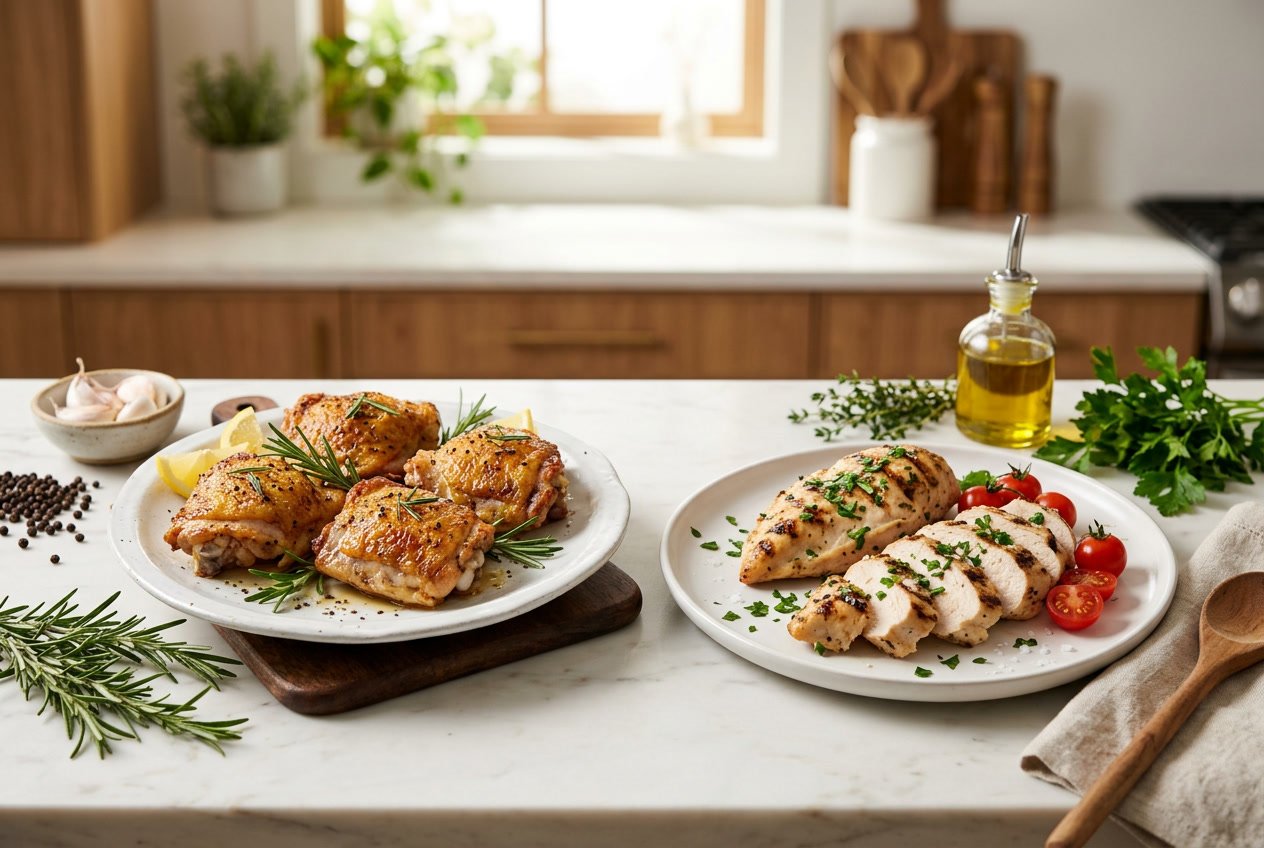
You can compare protein, fat, vitamins, myoglobin, and cooking methods to see how they change the health picture. This guide gives practical comparisons on nutrients and how skin and cooking impact calories, fat, flavor, and cost.
Chicken Thighs vs Chicken Breasts: Nutritional Comparison

Chicken thighs and breasts mainly differ in calories, fat, and protein. Thighs give more fat and flavor, while breasts give more lean protein and fewer calories.
Macronutrient Differences
Chicken thighs have more total fat than breasts, including a higher share of saturated fat if you leave the skin on. That higher fat content raises calories and makes recipes juicier and more flavorful.
Breasts are much lower in fat and serve as a broad source of lean protein. They deliver fewer calories per ounce and less saturated fat, which helps if you track saturated fat for heart health.
Micronutrients vary too. Breasts provide more vitamin B6, selenium, and phosphorus per gram, while thighs have slightly more iron and zinc due to their darker meat and higher myoglobin.
Calorie and Fat Content
A 100 g serving of raw, skinless chicken breast usually contains about 110–120 kcal and 1–3 g total fat.
A 100 g serving of raw, skinless chicken thigh contains about 200–220 kcal and 10–15 g total fat. Skin can add another 70–100+ kcal and several grams of saturated fat per serving.
If you want to reduce daily calories or saturated fat, remove the skin and choose breasts. If you need higher calories or want richer flavor and moisture, thighs provide more energy per serving and perform well in longer, slower cooking.
Protein Levels
Chicken breast provides more protein per 100 g than thighs. Expect about 22–24 g in breast versus 16–19 g in thigh (raw, skinless).
You can increase the protein by eating a larger portion of thighs or combining them with other lean proteins. For high-protein meals with fewer calories, choose breasts. For balanced meals that prioritize flavor and higher energy, choose thighs.
Vitamins and Minerals in Chicken Cuts

Chicken breasts and thighs differ in certain micronutrients that affect iron status, immune function, bone health, and nerve function. Thighs usually contain more iron and zinc, while breasts supply phosphorus, potassium, and some B vitamins.
Iron and Zinc Content
Chicken thighs provide more iron per serving than breasts due to their darker muscle tissue. A 100 g cooked thigh typically contains around 0.8–1.0 mg of iron, while breast meat has about 0.6–0.8 mg.
Thighs also supply more zinc per 100 g (about 1.2–1.5 mg) compared to breasts (around 0.8–1.0 mg). Zinc supports immune response and wound healing.
If you rely on poultry as a main animal-protein source, rotating thighs into meals helps maintain iron and zinc levels.
Phosphorus and Potassium
Both cuts provide phosphorus, which is essential for bone and cellular energy metabolism. Cooked chicken breast gives about 200–260 mg of phosphorus per 100 g, while thighs offer a similar but sometimes slightly lower amount.
Breast meat tends to be slightly richer in potassium, usually in the 300–350 mg per 100 g range. Thighs provide a bit less.
If you monitor potassium for blood pressure or muscle cramps, include breast portions along with potassium-rich vegetables.
Vitamin B12 and Choline
Chicken provides vitamin B12 and choline, which are important for nerve health and methylation. Thighs generally contain more B12 than breasts; a 100 g serving of thigh can provide around 0.3–0.6 µg, while breast meat offers about 0.2–0.4 µg.
Choline appears in both cuts and supports liver function and neurotransmitter synthesis. Typical values range from 55–75 mg per 100 g, with thighs often at the higher end.
If you aim to meet the adequate intake for choline, using thighs regularly alongside eggs, dairy, or legumes can help.
The Role of Myoglobin: White Meat vs Dark Meat
Myoglobin determines the color and some nutrient differences between chicken breast and thighs. It also influences texture, flavor, and small shifts in fat and iron content.
Differences in Color and Nutrient Content
Myoglobin is a muscle protein that stores oxygen. Muscles used more often have higher myoglobin and appear darker.
Thighs and drumsticks are dark meat because they contain more myoglobin than breast meat, which looks pale.
White meat (breast) typically contains less fat and slightly more protein per ounce. Dark meat (thigh) contains more intramuscular fat and modestly higher iron and some B vitamins because myoglobin holds iron.
If you track saturated fat or total calories, choose breast more often. If you need slightly more iron or prefer juicier meat, thighs offer that.
Impact of Myoglobin on Flavor and Nutrition
Myoglobin affects flavor by carrying more iron and supporting oxidative processes during cooking, which gives dark meat a richer, meatier taste. The extra fat in thighs also preserves moisture, so you notice tenderness and stronger savory notes compared with leaner breast meat.
Myoglobin’s iron content contributes to the small difference in mineral content between dark and white meat. Cooking methods also interact with myoglobin. High-heat breading and frying add fat, while grilling or roasting keeps nutrient differences minimal.
Effects of Cooking Methods on Healthiness
Cooking methods change calories, fat content, and nutrient retention. Grilling, baking, or roasting reduces added fat, while frying increases calories and saturated fat.
Always cook to a safe internal temperature to destroy pathogens.
Grilled, Baked, and Roasted Chicken
Grilling, baking, and roasting let fat drip away or stay minimal when you remove the skin. For 100 g of skinless roasted chicken breast versus thigh, breasts have much less fat.
Grilling produces similar lean results if you avoid sugary marinades. Use a rack or perforated tray when roasting to collect rendered fat below the meat.
That reduces total fat per serving and prevents the meat from sitting in grease.
Marinades with acid (lemon, vinegar) and herbs add flavor without extra calories. Oil-based marinades increase calories proportionally.
When you grill, avoid heavy charring. High-temperature blackening can form compounds you may want to minimize.
Cook until the thickest part reaches 165°F (74°C) to ensure safety without overcooking.
Fried Chicken and Added Fats
Frying, whether shallow or deep, increases calories and fat because the meat absorbs oil during cooking. Breaded coatings add refined carbs and trap more oil, turning a lean breast into a high-calorie entrée.
Thighs absorb and retain more oil than breasts because of higher fat content, so frying intensifies their calorie difference.
If you fry, use oils with higher smoke points such as refined avocado or peanut oil. Maintain proper oil temperature to limit absorption.
Drain on paper towels and avoid heavy batters to reduce added fat.
Repeated use of the same frying oil degrades it and raises levels of harmful oxidation products.
Safe Cooking Temperatures
Cooking to the correct internal temperature kills pathogens without overcooking the meat. Insert an instant-read thermometer into the thickest part; the safe target for chicken is 165°F (74°C).
Hold the temperature briefly to ensure safety. Carryover heat will continue to raise internal temperature slightly after you remove the chicken from heat.
Rest the meat for a few minutes before cutting to allow juices to redistribute.
Skinless vs Skin-on: Health Implications
Removing or keeping the skin changes calories, fat type, and how moist the meat stays during cooking. Choosing skin-on adds more saturated fat and calories.
Skinless Chicken Breast and Thighs
Skinless chicken breast is the leanest common cut. A 100 g cooked skinless breast typically provides about 30 g protein and 3–4 g total fat, making it attractive for weight management and lower-fat diets.
Skinless chicken thighs deliver more flavor and slightly more fat than breast. The same 100 g cooked portion of skinless thigh gives roughly 20–22 g protein and 8–10 g fat, including more monounsaturated and some saturated fat.
Choose skinless breast when you want the lowest calorie and fat profile per serving. Pick skinless thighs when you want richer taste and tenderness while still keeping overall fat lower than skin-on options.
How Skin Affects Cholesterol and Calories
Chicken skin adds calories mainly from fat. A single skin layer can add about 50–70 calories and 5–7 g fat per 100 g portion.
Much of that fat is saturated or mixed fat that can raise LDL cholesterol if you eat it frequently in excess.
If you monitor cholesterol, swapping skin-on for skinless cuts reduces saturated fat intake and total calories per meal.
You can regain some juiciness by using marinades, braising, or lower-temperature cooking to avoid extra saturated fat while keeping protein intake high.
Texture, Flavor, and Cost Considerations
Chicken cuts differ in mouthfeel, cooking tolerance, and price. These differences affect how you choose a cut for a recipe or diet.
Connective Tissue and Collagen
Thighs come from more exercised muscles and contain more connective tissue and collagen than breasts. Collagen breaks down into gelatin when cooked slowly, which gives thighs a silkier, more tender texture in braises, stews, and slow roasts.
If you cook thighs quickly at high heat, the extra connective tissue helps resist drying. Thighs remain forgiving in pan-sears and on the grill.
Breasts have less connective tissue and collagen, so they become dry and tough if overcooked.
To use breasts well, employ quick, moist methods such as poaching, sous-vide, or brief high-heat sears. Rest the meat after cooking.
For thighs, favor longer, lower-temperature methods when you want gelatin-rich mouthfeel, or cook hot for a juicy, resilient result.
Taste and Juiciness
Thighs contain higher intramuscular fat than breasts, which increases flavor intensity and juiciness. That fat carries fat-soluble flavor compounds and spices, so thighs pair well with bold marinades, long-simmered sauces, and strong seasonings.
Breasts taste milder and absorb marinades and spice profiles quickly, making them versatile in salads, stir-fries, and dishes where you want other ingredients to stand out.
Because breasts are leaner, you must guard against overcooking. Use a meat thermometer (internal 165°F / 74°C) or shorter cooking time to maintain moisture.
If you value richer mouthfeel without added fat, choose thighs. If you prefer a neutral canvas or lower fat per serving, choose breasts and use techniques that add moisture without excess calories.
Price and Accessibility
Thighs usually cost less per pound than breasts, especially when you buy them bone-in and skin-on.
That price difference matters if you cook for families or prepare meals for the week.
Bones in thighs add weight and flavor during cooking, so they stretch farther in recipes.
Boneless, skinless breasts often cost more but save prep time and make portion control easier for calorie-focused meals.
Availability depends on your region and retailer.
Both frozen thighs and breasts can offer budget-friendly options.
For maximum value, buy thighs on sale and remove the skin for a leaner, affordable protein that still tastes great.
