
Is Chicken Thighs or Breast Healthier? Nutrition, Benefits, and Best Uses
Both chicken thighs and breasts can be healthy depending on your goals and cooking choices. If you need lower calories and higher lean protein for weight or post-workout meals, choose chicken breast. If you want more flavor, satiety, and extra iron and zinc, choose chicken thighs.
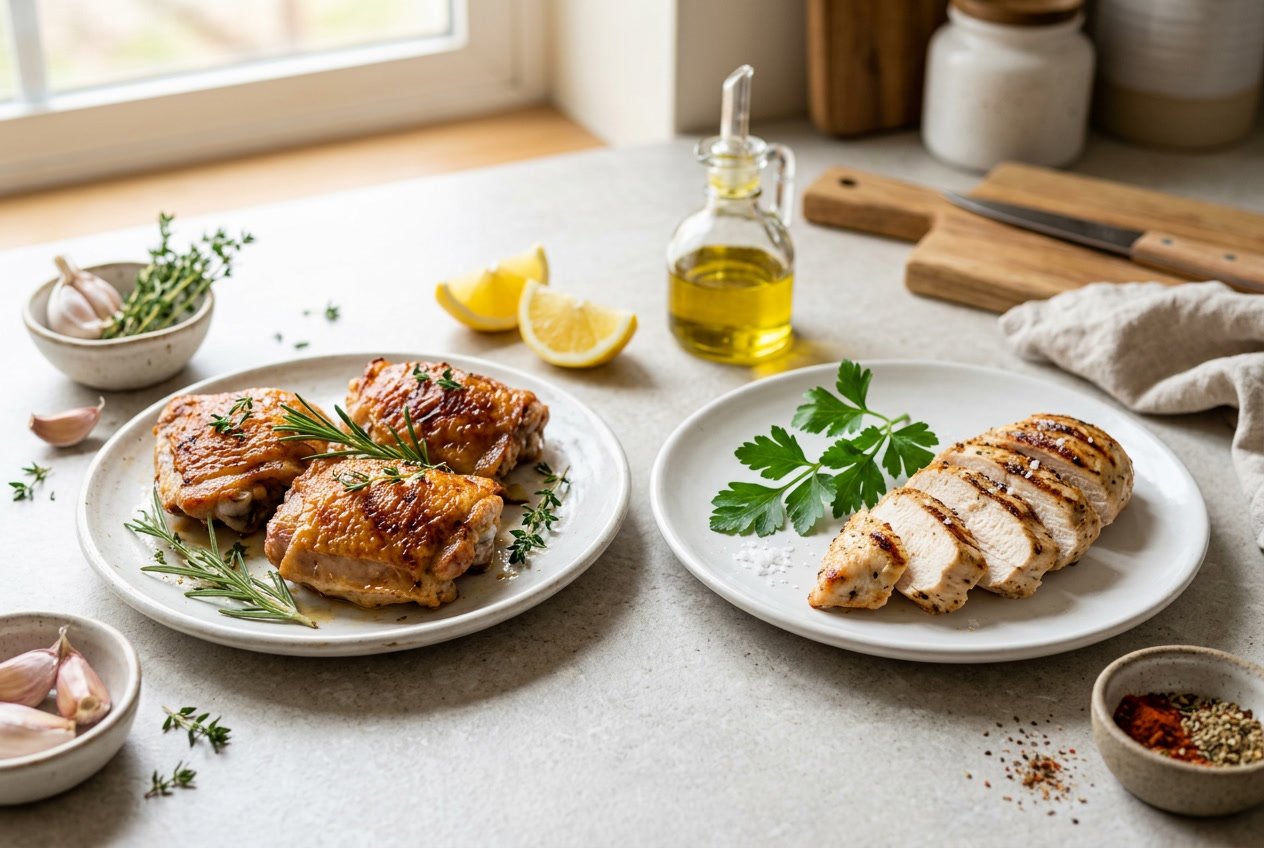
This article compares key differences, provides nutrition facts, explains how skin and cooking methods affect health, and gives tips to help you pick the best cut for your meals and goals.
Chicken Thighs vs Breast: Key Differences

You’ll find meaningful differences in anatomy, nutrition, and eating experience between chicken thighs and chicken breast. These differences affect cooking time, flavor, and how they fit into your diet.
Cut and Muscle Composition
Chicken breast consists of a single large pectoral muscle with low connective tissue and very little intramuscular fat. That structure makes the breast lean and quick to cook. It dries out faster if overcooked because it contains less fat to keep it moist.
Chicken thigh contains smaller, more frequently used leg muscles with more connective tissue and visible fat. The extra fat and collagen release during cooking, keeping the thigh juicier and more forgiving at higher temperatures. Thighs require longer, slower cooking for the most tender result.
White Meat vs Dark Meat
White meat, like chicken breast, contains less myoglobin and fewer lipids. That results in lower calories and total fat per equal weight, which is useful if you track saturated fat or total calories.
Dark meat, like chicken thighs, has higher myoglobin and higher fat content, which increases calories but also provides more zinc, iron, and vitamin B12 per serving. If you prioritize micronutrients like iron or prefer a slightly higher fat profile for satiety, thighs deliver more of those nutrients per ounce.
Taste and Texture
Chicken breast has a neutral flavor and firm, sliceable texture. It absorbs marinades readily and works well in quick sautés, salads, and sandwiches where a mild flavor is desirable.
Chicken thigh offers richer flavor and a softer, more succulent bite. The added fat and collagen provide a pronounced, savory taste and a tender, silky mouthfeel after braising, grilling, or roasting. Use thighs for a bolder chicken presence in stews, tacos, or slow-cooked dishes.
Nutritional Comparison of Chicken Thighs and Breast

Chicken thighs and breasts differ mainly in calories, fat, and certain micronutrients, while both provide high-quality protein. Choosing between skinless chicken breast and skinless chicken thigh depends on whether you want lower calories and saturated fat or more flavor and higher caloric density.
Calories and Macronutrients
Skinless chicken breast is leaner. Per 100 g raw, it typically provides about 110–120 kcal with roughly 1–3 g total fat. That lower fat content makes it a common choice if you’re cutting calories or limiting saturated fat intake.
Skinless chicken thighs usually deliver about 200–220 kcal per 100 g raw and contain more total fat—often 8–14 g—with higher saturated fat. The extra fat increases calories and contributes to juiciness and flavor.
If you follow a higher-fat plan (like keto), you may prefer thighs for their energy density. If you’re focused on calorie control or heart-healthy fat targets, skinless chicken breast better fits those goals. Grilling or baking without added fat preserves the lean profile of both cuts.
Vitamins and Minerals
Thighs and breasts supply similar B vitamins but differ in some minerals and micronutrient density. Skinless chicken thighs tend to have slightly higher iron and zinc per serving, which supports oxygen transport and immune function.
Skinless chicken breast provides more vitamin B6, selenium, and phosphorus per 100 g, nutrients important for metabolism, antioxidant defense, and bone health.
If you need extra iron or zinc, such as if your diet is low in red meat, choose thighs more often. If you want higher selenium and B6 with fewer calories, prioritize skinless chicken breast. Varied intake of both cuts helps cover micronutrient needs.
Protein Content
Both cuts are strong sources of lean protein, but skinless chicken breast contains more protein per calorie and per 100 g. Typically, 100 g raw skinless chicken breast yields about 22–24 g protein. The same amount of skinless chicken thigh gives about 17–19 g.
Skinless chicken breast is more efficient for meeting protein targets, useful if you’re aiming for muscle maintenance, sports nutrition, or satiety on limited calories.
If you choose thighs, match protein intake by increasing portion size or adding other high-protein foods. For high-protein diets, skinless chicken breast helps you reach protein goals with fewer extra calories.
Health Impacts and Dietary Considerations
Choose between chicken breast and thigh based on your calorie needs, fat targets, and meals where you need longer-lasting fullness. Both provide high-quality lean protein and important B vitamins, but their differing fat and calorie profiles change how they fit into your diet.
Weight Management
If you track calories or aim to lose body fat, skinless chicken breast gives you more protein per calorie. A 100 g cooked skinless breast typically supplies about 22–25 g protein and roughly 100–120 kcal, so it helps you reach protein targets while keeping energy intake lower.
Thighs contain more fat and thus more calories per serving. If you do not adjust portion size, the extra energy may slow weight loss. However, if you need denser meals for muscle gain or high energy days, thighs can help you meet calorie needs without large volumes of food.
Weigh portions or use consistent serving sizes (e.g., 3–4 oz cooked) so your protein intake stays reliable regardless of cut. Remove the skin when you want to lower calories and saturated fat.
Cardiovascular Health
Saturated fat and total calorie intake influence heart disease risk more than the choice of white or dark poultry alone. Skinless chicken breast is lower in total and saturated fat than thigh meat, so it helps limit saturated fat intake when you replace higher-fat animal foods.
Thighs contribute more monounsaturated and saturated fats. If you already consume a diet high in saturated fat, favoring breasts and removing skin reduces LDL-raising fats. Cooking methods and what you eat with the chicken (vegetables, whole grains, sauces) affect your lipid profile more than the cut by itself.
If you have elevated LDL cholesterol, aim for lean protein choices most days, include oily fish for omega-3s, and limit added fats. Use thighs selectively when you need extra calories and flavor.
Satiety and Fullness
Fat slows gastric emptying and increases meal satisfaction, so thighs often leave you feeling fuller longer than breasts. That extra satiety can reduce snacking and total daily intake for some people.
Breasts digest faster and can leave you hungry sooner unless you pair them with fiber, healthy fats, or complex carbs. Combining a breast portion with avocado, olive oil-dressed salad, or beans boosts both taste and sustained fullness.
If appetite control is a priority, experiment with both cuts. Use thighs on days you need greater satiety and breasts when you want to limit calories yet meet high protein targets.
Effect of Skin and Cooking Methods on Health
Removing skin cuts calories and saturated fat. Cooking method changes both fat content and formation of harmful compounds. Choosing skinless cuts and gentler cooking methods helps you keep calories down and preserve protein and micronutrients.
Skin-On vs Skinless
Skin contains most of the visible fat on a chicken piece. If you remove the skin before cooking, you typically reduce total fat and calories by about 25–30%, which matters when you track intake or limit saturated fat.
For chicken thighs, leaving the skin on keeps meat juicier but adds more calories per serving than a skinless thigh or breast.
If sodium or added preservatives are a concern, check packaging. Pre-seasoned or processed skin-on pieces often contain extra salt. When you want flavor without the extra fat, remove the skin and use herbs, citrus, or low-fat marinades on skinless chicken.
Healthiest Cooking Methods
High-heat frying and heavy breading add fat and calories and can form more advanced glycation end products and acrylamide. Avoid frying when you want lower-calorie, lower-risk meals.
Prefer grilling, baking, roasting, poaching, or steaming to reduce added fat. Grilling or baking skinless chicken breasts or thighs lets excess fat drip away; place the meat on a rack to keep it out of pooled fat.
Poaching and steaming keep meat moist without added oil, useful for skinless chicken and for lean breasts that dry out. If you grill or roast thighs, trim pronounced blackened bits to reduce consumption of compounds linked to cancer risk.
Practical Uses and Choosing the Healthier Option
Chicken breasts and thighs offer different nutrient profiles and culinary roles that affect how they fit into your meals and goals. Use breasts when you need lean protein with low calories. Use thighs when you want more flavor, moisture, and a bit more iron and zinc.
Adapting to Your Dietary Goals
If you aim to lose fat or control calories, choose skinless chicken breast. A 100 g serving gives about 22–23 g protein and roughly 100–110 kcal, so it fits into calorie targets and supports higher-protein meals around workouts.
Cook quickly (grill, poach, or stir-fry) and add healthy fats separately, such as olive oil or avocado, to aid fat-soluble vitamin absorption.
If you need more calories, longer satiety, or higher iron or zinc intake, choose skinless chicken thighs. A 100 g serving typically contains 18–19 g protein and 140–150 kcal with higher fat content. This slows digestion and enhances flavor in braises, stews, and oven-roasted dishes.
For muscle gain or general maintenance, either cut works. Match total daily protein and calories to your plan. Rotate both cuts to balance flavor, micronutrients, and meal satisfaction.
Budget, Flavor, and Versatility
Thighs usually cost less per pound in many markets, so they stretch your food budget and work well in batch-cooked meals. Breasts can cost more but allow precise calorie control for meal prep.
Thighs stay moist under longer cooking and in high-heat methods. Use them in curries, shredding, or slow-cooked recipes. Breasts have a milder taste and benefit from marinades, brines, or quick high-heat cooking to avoid dryness.
Tips:
- Remove skin to make both cuts leaner. Keep skin on for roasting when crispness and flavor matter.
- Use breasts for salads, sandwiches, and post-workout meals where low fat and high protein matter.
- Use thighs for tacos, stews, and recipes where mouthfeel and richness improve satiety.
Choose the cut that fits the specific meal, portion targets, and flavor you want that day.
Maximizing Nutrition: Tips for Healthy Chicken Meals
Balance protein, fat, and micronutrients while using cooking methods that preserve moisture and limit added calories. Choose skinless cuts when you want less fat, and use thighs or cooking techniques that keep meals satisfying without excess saturated fat.
Combining Cuts for Balanced Nutrition
Mix skinless chicken breast and skinless chicken thighs across meals to get both lean protein and satisfying fats. Use breasts on days when you need higher protein with fewer calories—grilled or baked breast works well for salads and post-workout meals.
Reserve thighs for recipes where longer cooking or richer flavor helps satiety, such as stews or oven-baked dishes. Thighs add iron and zinc and slow digestion, which can reduce snacking between meals.
When meal-prepping, cook a batch with breasts and another with thighs. Combine portions to reach your target macros. For example, 100 g grilled breast plus 50 g baked thigh gives higher protein with moderate fat and flavor. Trim visible fat and remove skin if you want lower saturated fat without losing all juiciness.
Pairing Chicken with Other Healthy Foods
Pair chicken with fiber-rich vegetables and whole grains to improve nutrient absorption and fullness. Add leafy greens, roasted cruciferous vegetables, or a quinoa pilaf to increase fiber, vitamin C, and B vitamins that support iron uptake from thighs.
Include a small source of healthy fat, such as an olive oil drizzle or avocado slices, when you eat lean breast. This addition helps your body absorb fat-soluble vitamins in the meal.
Keep portions modest. Typically, 1 teaspoon of olive oil or 30 grams of avocado suffices.
Use herbs, spices, citrus, and low-sodium marinades to boost flavor without added calories. Marinate chicken in lemon, garlic, and herbs for grilling.
For baked dishes, use paprika, cumin, and a light yogurt rub. These techniques keep chicken moist and reduce the need for fatty sauces.


