
Is Chicken Thighs or Breast Better? Nutrition, Taste, and Uses Compared
You want a simple answer: it depends on your goals. Choose breast for lower calories and higher protein per ounce, and choose thigh for richer flavor, more fat, and greater satiety.
If you want lean protein and fewer calories, pick chicken breast. If you want juicier, more satisfying meals with extra iron and flavor, pick chicken thigh.
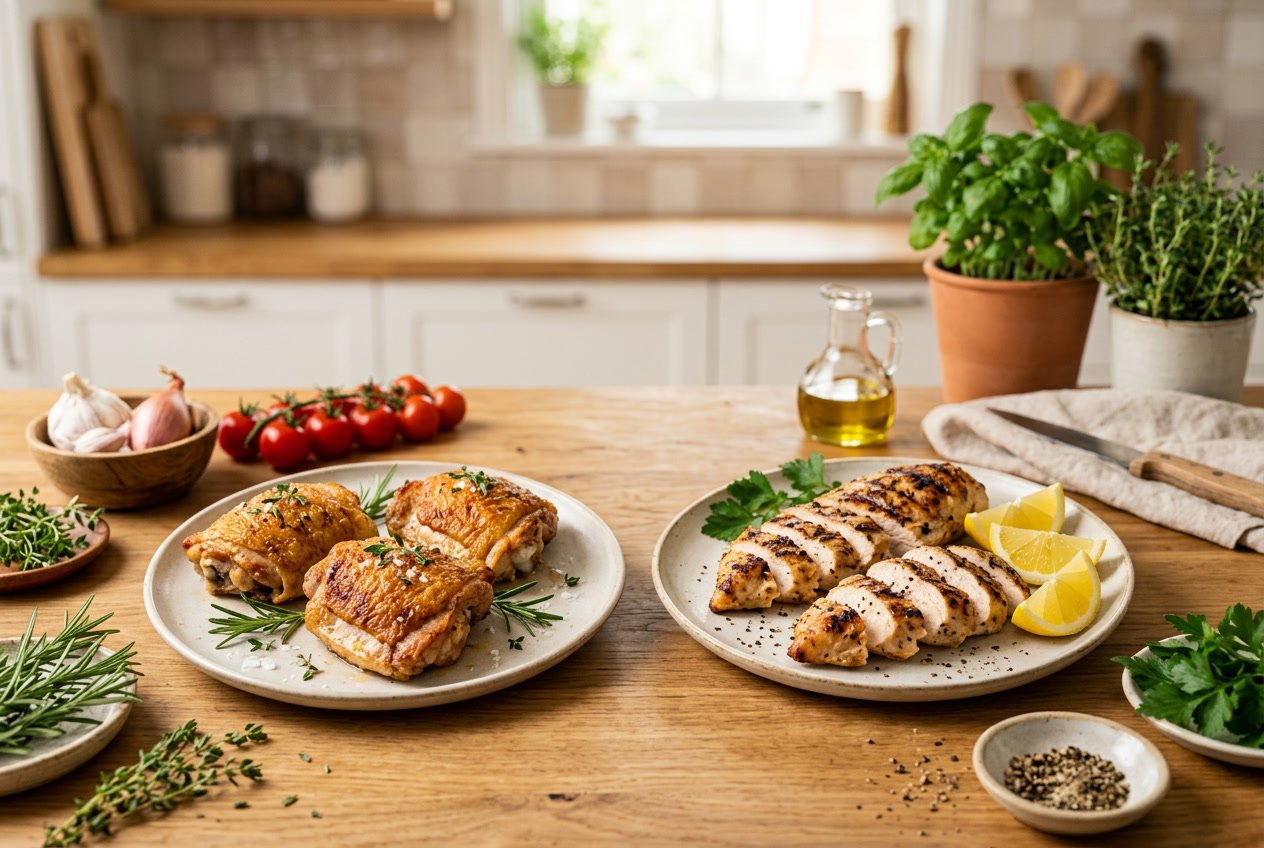
This post explains the practical differences that matter: nutrition, health goals, taste and texture, cooking methods, and cost. You’ll find clear comparisons and tips to help you decide which cut to use for specific meals.
Chicken Thighs vs Breast: Key Differences

You’ll find meaningful differences in flavor, fat content, and common cooking uses between thighs and breasts. These differences affect taste, nutrition, and how you should cook each cut.
What Are Chicken Thighs?
Chicken thighs come from the upper part of the bird’s leg. They are dark meat with more intramuscular fat and connective tissue than breasts, giving them a richer flavor and a forgiving texture when cooked.
Thighs are sold bone-in or boneless, and with or without skin. Bone-in, skin-on thighs stay juicier but take longer to cook. Boneless, skinless thighs cook faster and are easier to portion.
Thighs have higher total fat and slightly more calories per ounce than breasts, plus more iron and zinc. Use thighs for tender, moist meat in braises, stews, grilling, or recipes that tolerate longer cook times.
What Are Chicken Breasts?
Chicken breasts are the pectoral muscles and are considered white meat with very low fat when skinless. They provide a higher protein-to-calorie ratio than thighs, making them common for calorie-controlled and high-protein meals.
Breasts come bone-in or boneless, and skinless boneless breasts are the leanest option. They dry out quickly if overcooked, so quicker, higher-heat methods or brining help maintain juiciness.
You’ll get fewer calories and less saturated fat from breasts, plus good amounts of B vitamins and selenium. Choose breasts for lean protein in salads, sandwiches, stir-fries, or fast-cooking dishes.
White Meat vs Dark Meat
White meat (breast) and dark meat (thigh) differ in muscle fiber type and myoglobin content, which affects color, flavor, and cooking behavior. Dark meat contains more myoglobin and fat, so it’s darker, more flavorful, and more tolerant of longer cooking.
White meat is leaner and milder but more prone to dryness. Breasts suit quick, high-heat methods and precise timing. Thighs suit slow-cooking, braising, and grilling, where fat keeps the meat moist.
Compare key practical points:
- Calories/fat: thighs > breasts
- Protein per ounce: breasts ≥ thighs
- Best cooking methods: breasts = quick sear, poach, grill; thighs = roast, braise, slow-cook
Match the cut to your recipe and dietary needs for the best result.
Nutrition Comparison: Chicken Thighs vs Breast
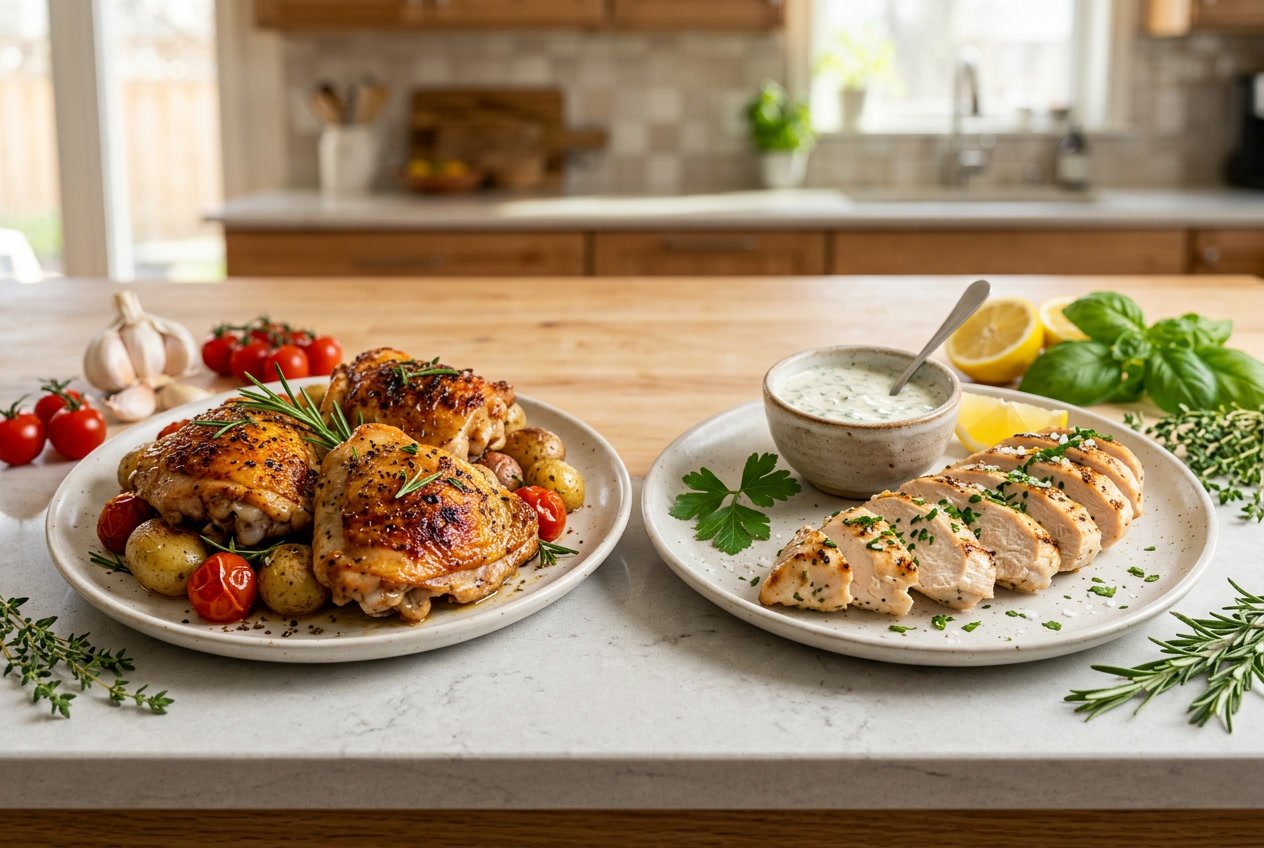
Chicken breast and thighs differ mainly in calories, fat, and certain micronutrients. Choose skinless chicken breast for fewer calories and less saturated fat. Choose skinless chicken thighs if you prioritize flavor, juiciness, and slightly higher levels of some minerals.
Calories and Macronutrients
Skinless chicken breast is leaner. A 3-ounce (85 g) cooked skinless chicken breast typically provides about 140 calories, ~26 g protein, and ~3 g total fat with ~1 g saturated fat. This makes it a strong choice for high protein per calorie.
Skinless chicken thighs are higher in calories and fat. The same 3-ounce cooked portion of skinless chicken thigh delivers roughly 170–200 calories, ~21–22 g protein, and ~9–12 g total fat with ~2–3 g saturated fat. The extra fat increases energy density and enhances juiciness.
If you keep the skin on, calories and saturated fat rise substantially for both cuts. For weight- or fat-focused plans, remove the skin and favor breast. For calorie needs or satiety from fat, thighs with skinless or light-skin options work well.
Micronutrient Content
Thighs contain higher amounts of some minerals. Skinless chicken thigh typically provides more iron, zinc, and B vitamins like niacin and B12 per serving than breast. Those nutrients support energy metabolism and immune function.
Breast offers lower fat-related micronutrient differences but still supplies selenium and phosphorus in useful amounts. Skin removal affects vitamin A and fat-soluble nutrient content less than overall fat content.
If you have mild iron needs or want richer mineral intake, choose skinless chicken thighs. If minimizing fat intake is more important, skinless chicken breast delivers essential micronutrients with fewer calories.
Protein Quality and Lean Protein
Both cuts supply complete, high-quality protein with all essential amino acids. Skinless chicken breast yields more protein per calorie, making it efficient for lean-protein goals like muscle maintenance while managing calories.
Skinless chicken thighs contain slightly less protein per ounce but still provide substantial complete protein for recovery and satiety. The additional fat in thighs slows digestion, which can increase fullness after a meal.
For strict lean-protein targets or calorie-restricted plans, favor skinless chicken breast. If you want a balance of protein plus flavor and satiety, skinless chicken thighs serve as a solid alternative.
Health Considerations and Dietary Goals
Choose cuts based on calories, fat, and protein relative to your goals. Cooking method and whether the meat is skin-on or processed changes nutrient values substantially.
Weight Loss and Satiety
If you aim to reduce calories, skinless chicken breast gives you fewer calories and less fat per serving than skinless chicken thigh. A 100 g serving of roasted, skinless breast typically provides significantly more protein per calorie, which helps you hit protein targets while keeping total energy lower.
Higher protein density supports fullness. Include 3–4 oz (85–115 g) of breast in meals to help control appetite.
If you prefer more satisfying texture, skinless chicken thighs contain more fat, which can increase satiety and meal enjoyment. Use thighs in smaller portions or remove the skin and trim visible fat to moderate calories while keeping flavor.
Baking, grilling, or roasting without added oil keeps calories lower. Avoid breading and frying to prevent added fats that undermine weight-loss plans.
Heart Health and Fat Content
For heart-health conscious choices, prioritize lean protein. Skinless chicken breast has less total and saturated fat than skinless chicken thigh, which helps lower saturated-fat intake per meal.
Consuming lower saturated fat supports healthier LDL cholesterol levels over time. If you choose thighs, remove the skin and use low-fat cooking methods to reduce total fat intake.
Also consider portion control and meal composition. Pair either cut with vegetables, whole grains, and healthy fats like olive oil to keep overall dietary saturated fat moderate and to increase fiber and micronutrient intake.
Processed or pre-seasoned poultry can contain added sodium. Check labels to avoid excess sodium that can affect blood pressure and heart risk.
Muscle Gain and Protein Needs
When building or preserving muscle, total daily protein and timing matter more than which cut you pick. Skinless chicken breast supplies more grams of protein per 100 g than skinless chicken thigh, making it efficient for meeting a protein target such as 1.2–2.0 g/kg body weight for active adults.
Include 20–40 g of high-quality protein per meal. 3–5 oz (85–140 g) of breast commonly delivers that amount.
Thighs still contribute quality protein and add more iron and zinc, which support recovery and immune function. Use thighs when you need extra calories or variety, but rely on breast to hit tight protein targets with fewer calories.
Flavor, Texture, and Cooking Experience
You’ll see how flavor and fat affect taste, which cut stays juicy under different heat, and which techniques suit baked, grilled, or pan-cooked preparations.
Taste Profiles of Each Cut
Chicken thighs carry more intramuscular fat and connective tissue, giving them a deeper, savory flavor that holds up to bold sauces and spices. When you use thighs in braises, stews, or grilled chicken, the fat renders and boosts umami. Bone-in thighs add extra depth during slow cooking.
Chicken breasts taste milder and cleaner because they are leaner. That neutrality makes breasts ideal for marinades, lemon-herb preparations, or dishes where you want other ingredients to shine. In baked chicken or quick pan-seared recipes, breasts absorb seasoning but can taste bland if under-seasoned.
If you prefer robust, savory notes, choose thighs. If you want a neutral canvas for vibrant sauces or salads, pick breasts.
Juiciness and Tenderness
Thighs remain forgiving under higher temperatures because fat and collagen convert to gelatin, keeping meat moist even when cooked longer. Skin-on or skinless chicken thighs are good for slow roasting, braising, and reheating without drying out.
Breasts dry out faster because they contain less fat and connective tissue. Control temperature and time—sous-vide, quick searing, or brief baking at moderate heat—to retain tenderness. Rest breast meat briefly after cooking to let juices redistribute and reduce dryness.
For grilling chicken, thighs tolerate flare-ups and longer cook times. For quick stir-fries or lean protein dishes, breasts deliver firm texture if you avoid overcooking.
Common Culinary Uses
Use thighs when you want flavor and resilience. Stews, curries, baked chicken dishes, and grilled chicken thighs excel with longer cooks or glaze finishes.
Boneless, skinless chicken thighs work well for stir-fries and kebabs because they stay juicy and take bold marinades.
Use chicken breasts for sandwiches, salads, and lighter preparations where you want a clean, fibrous bite. Skinless chicken breasts perform best in pan-seared or oven-baked recipes that cook quickly or use a brine or marinade to add moisture.
Practical tips:
- For baked chicken, add a short brine or a high-fat sauce when using breasts.
- For grilled chicken, prefer thighs for forgiving results and breasts for rapid, high-heat sears.
- When you need to cook chicken thighs ahead, braise and finish under high heat to crisp skin without drying meat.
Best Cooking Methods for Chicken Thighs and Breast
Pick methods that protect moisture for breasts and break down connective tissue in thighs. Use higher heat and quick timing for breasts. Use longer, gentler or higher-heat rendering for thighs.
Grilling and Roasting
Grilling gives you crisp skin and direct char for bone-in thighs and whole breasts. Grill chicken thighs over medium-high heat (375–450°F/190–230°C) until skin is brown and internal temp reaches 175°F (80°C). This renders fat and yields tender meat.
For boneless skinless chicken thigh, watch for flare-ups and cook 6–8 minutes per side depending on thickness.
For chicken breasts, use two-zone heat. Sear over high heat 2–3 minutes per side, then move to indirect heat until 160–165°F (71–74°C). Rest breasts 5 minutes to let carryover heat finish cooking and preserve juiciness.
Roasting in a 400°F (205°C) oven works similarly: thighs 30–40 minutes, breasts 20–30 minutes based on size.
Use a probe thermometer, oil and salt, and avoid prolonged direct high heat on breasts or they’ll dry.
Baking and Sautéing
Baking is reliable for evenly cooked chicken. Use a rimmed sheet or shallow pan and an oven at 375–400°F (190–205°C). For skin-on thighs, bake 30–40 minutes until 175°F (80°C). For skinless chicken thigh, reduce time slightly and check at 25 minutes to avoid overcooking.
For breasts, bake 18–25 minutes depending on thickness. Brine or marinate first to improve moisture retention.
Sautéing is best for thin-cut breasts or cut-up thigh pieces. Heat a skillet to medium-high, add oil, and cook breasts ~3–5 minutes per side. Flip once.
Thigh pieces need a bit longer—about 5–7 minutes per side—because of greater connective tissue. Finish with a quick pan sauce from deglazed juices to add flavor and counter dryness.
Slow Cooking and Braising
Slow cooking and braising work best for thighs because the low and slow process dissolves collagen and keeps the meat moist.
To braise chicken thighs, sear them skin-side down first. Add aromatics and liquid such as stock, wine, or tomatoes. Then simmer covered for 35 to 50 minutes until the meat reaches 175 to 185°F and pulls slightly from the bone.
Chicken breasts turn dry and stringy with long slow-cooker times. If you use a slow cooker for breasts, cook on low for 2 to 3 hours and add plenty of liquid and acid like lemon or vinegar to help tenderness.
You can also cut breasts into pieces and remove them early. For shredded chicken from thighs, cook on low for 4 to 6 hours or on high for 2 to 3 hours. Shred the meat directly in the cooking liquid for maximum juiciness.
Affordability and Practical Considerations
You’ll balance price, yield, storage, and how you plan to cook the meat.
Small differences in per-pound cost, edible yield, and sale timing often determine the best buy for your budget.
Cost Differences
Thighs usually cost less per pound than breasts, especially for bone-in or skin-on cuts.
Conventional boneless skinless chicken breasts tend to be priced higher because of demand, while boneless skinless thighs usually cost less.
Adjust for edible yield before buying. A pound of boneless skinless breast gives more usable meat than a pound of bone-in thighs.
If thighs cost $2.00 per pound and breasts cost $3.50 per pound, calculate cost per edible pound by dividing price by yield percentage to compare true value.
Look for sales, bulk packs, and organic labels. Organic or free-range breasts and thighs can raise prices by a lot.
Buying frozen family packs or deboning thighs yourself can narrow the price gap and often saves money compared to single-serving packaged breasts.
Meal Planning and Versatility
Choose breasts when you want lean, neutral-flavored meat for quick cooking, salads, or stir-fries.
Skinless chicken breasts sear and shred cleanly, which suits meal-prep portions and meals that focus on macros.
Pick thighs for slow-cooked dishes, braises, and recipes that need higher fat and connective tissue.
Thighs handle longer cooking and reheating without drying, making them better for casseroles and stews.
Mix cuts to stretch your budget and add flavor.
Use thighs in dishes where moisture and richness matter.
Reserve skinless breasts for quick, low-fat meals.
Plan portions, freezing, and recipes around whichever cut goes on sale to reduce waste and cost.


