
Is Chicken Thighs Fatty? Fat Content, Nutrition & Health Tips
You might love their flavor and worry about the fat. Chicken thighs are higher in fat than breasts, but much of that comes from the skin and can be controlled by how you buy and cook them.
Expect more calories and more saturated fat with skin-on thighs. Choose skinless or trim visible fat if you want a leaner option without losing the juicy texture you enjoy.
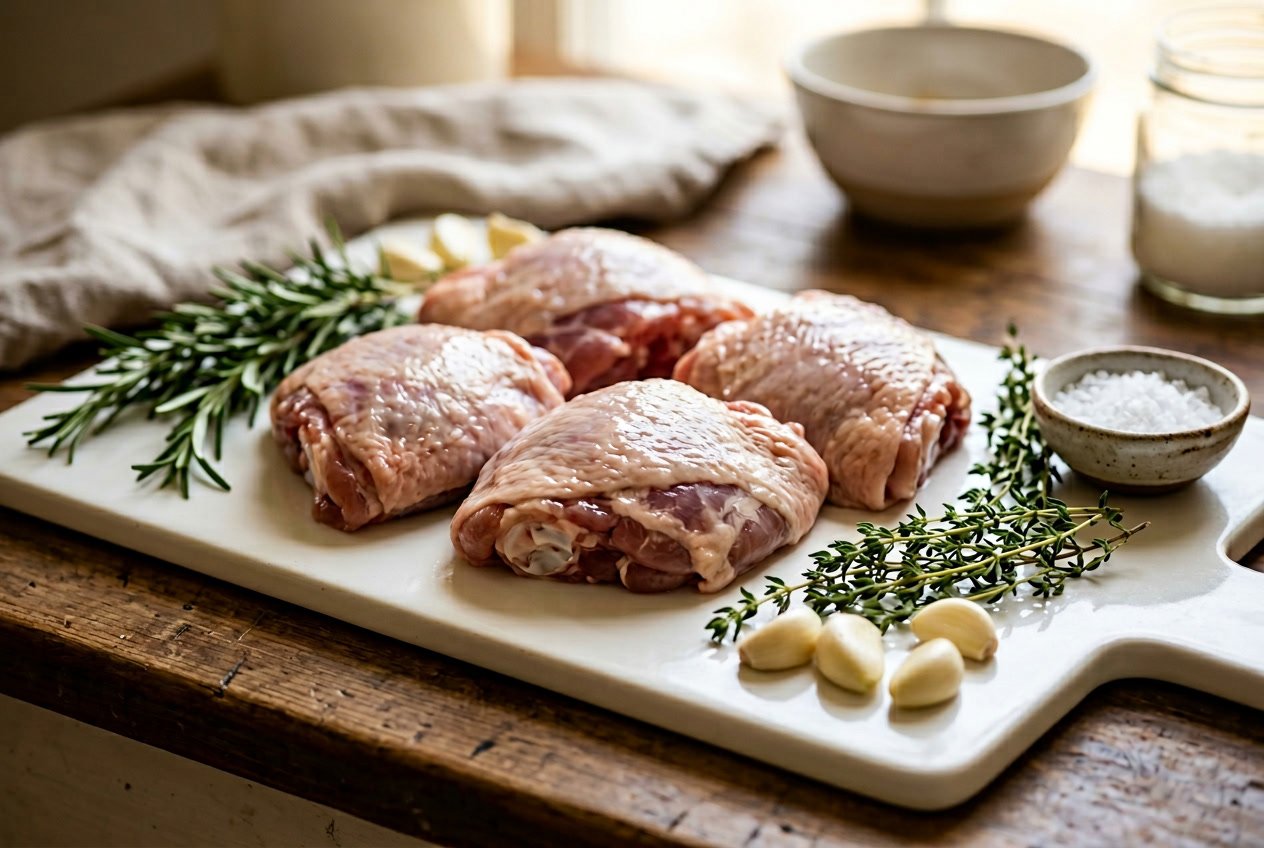
If you remove the skin and use grilling, baking, or air-frying, you can fit chicken thighs into a balanced, weight-aware diet while still enjoying rich flavor and useful nutrients like B vitamins, iron, and protein.
This article explains how fatty thighs are, what kinds of fat they contain, how they compare to other cuts, and practical cooking tips so you can decide when and how to include them in your meals.
How Fatty Are Chicken Thighs?
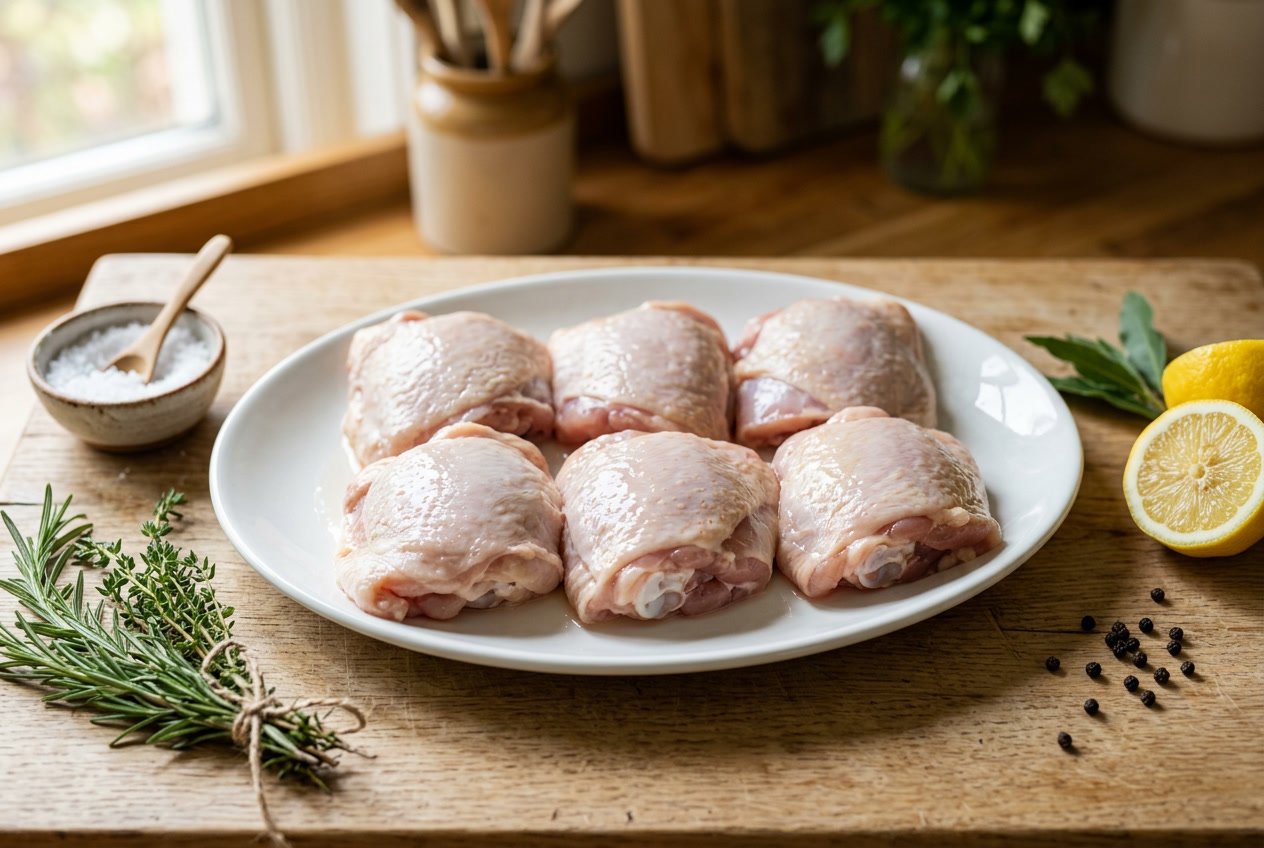
Chicken thighs contain noticeably more fat than white meat. The amount depends on whether the skin is present and whether the cut is boneless.
You’ll find both saturated and unsaturated fats. Skin and visible fat account for most of the difference between cuts.
Typical Fat Content in Chicken Thighs
A cooked, skinless chicken thigh (about 100 g) usually contains roughly 8–10 grams of total fat and about 2 grams of saturated fat.
That portion also supplies around 24–27 grams of protein and roughly 170–210 calories, so fat contributes a significant share of the calories.
Most of the fat sits in the muscle and under the skin rather than evenly distributed.
You’ll get more monounsaturated and polyunsaturated fats than saturated, which is relevant if you monitor heart-healthy fat types.
Use this quick reference:
- Total fat: ~8–10 g per 100 g (skinless, cooked)
- Saturated fat: ~2 g per 100 g
- Protein: ~24–27 g per 100 g
Fat in Skinless vs Skin-On Chicken Thighs
Keeping the skin nearly doubles the fat and calorie counts for the same weight.
For a 100 g thigh with skin, expect roughly 15–18 g total fat and about 4–5 g saturated fat.
The skin holds a concentrated amount of fat and raises energy density. Leaving it on increases portion calories by about 30–50%.
If you remove the skin before eating, you cut most of the extra fat while retaining the thigh’s protein and minerals.
Cooking method also matters. Roasting can render and drip away some fat, while frying or cooking in added oil increases final fat content.
Fat Content in Boneless Skinless Chicken Thighs
Boneless skinless chicken thighs match skinless bone-in thighs closely on a per-weight basis for muscle fat.
Expect ~8–10 g total fat and ~2 g saturated fat per 100 g cooked boneless skinless thigh.
Because the bone and skin are removed, portion size control matters. A boneless thigh often weighs less, so per-piece fat and calories can look smaller.
Boneless skinless thighs still provide higher fat than breast meat, but they deliver richer flavor and remain a practical choice for moderate-fat diets like low-carb or Mediterranean-style plans.
Check nutrition labels when available, since commercial trimming and processing can change fat levels slightly.
Types of Fat in Chicken Thighs
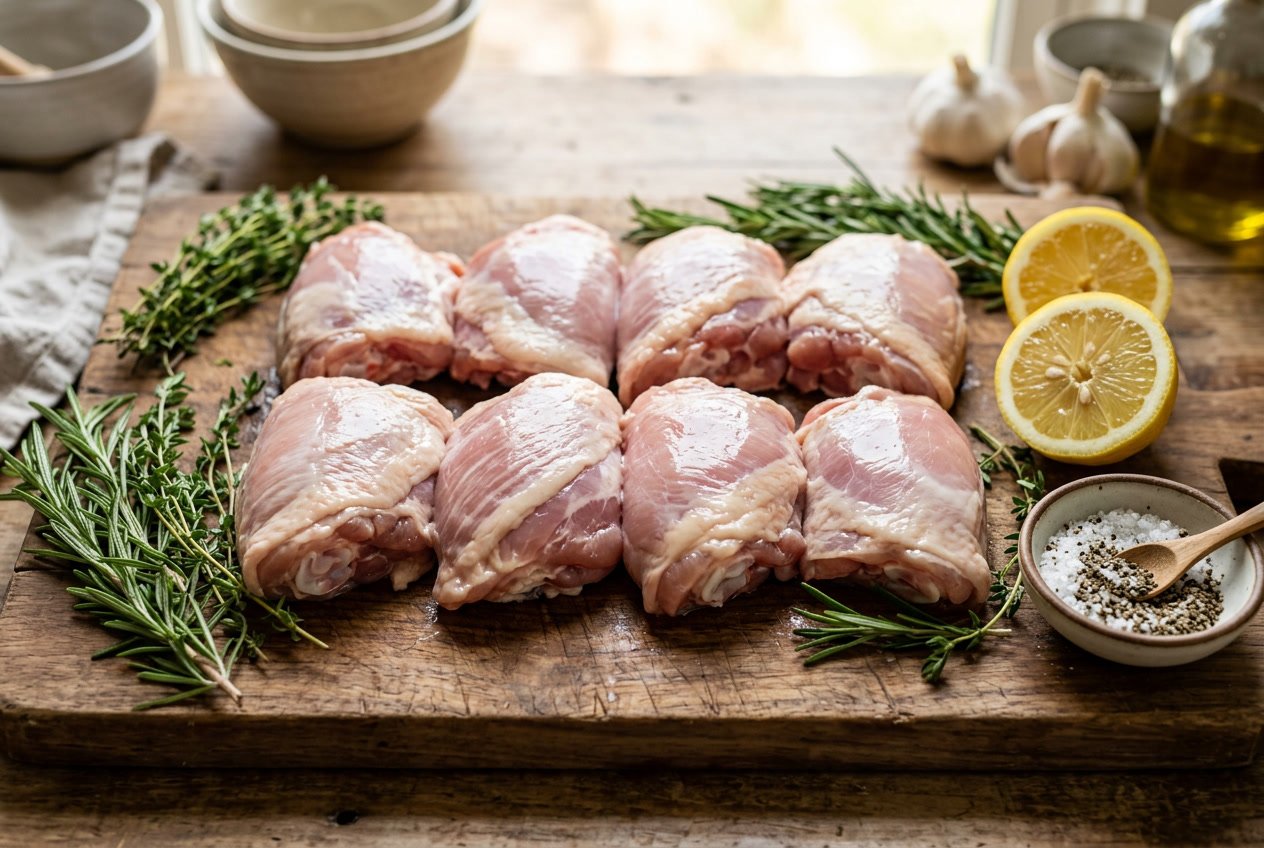
Chicken thighs contain both visible fat in the skin and intramuscular fat within the meat. Most of that fat is unsaturated, but saturated fat is present too and concentrates more in the skin than the lean meat.
Saturated and Unsaturated Fats Explained
Saturated fat has no double bonds in its fatty acids and tends to be solid at room temperature. In chicken thighs, saturated fat is higher when the skin is left on.
A skin-on thigh can contain several grams more saturated fat per 3–4 ounce serving than a skinless thigh.
Unsaturated fats include monounsaturated (MUFA) and polyunsaturated (PUFA) fats, which have one or more double bonds.
Thigh meat is relatively rich in MUFAs like oleic acid and contains PUFAs such as omega-6 linoleic acid. These fats remain liquid at room temperature and are the majority of the total fat in dark meat.
When you remove the skin, total fat drops substantially and the proportion of unsaturated to saturated fat improves.
Cooking methods that allow fat to render away, like grilling or roasting on a rack, reduce the final saturated-fat intake compared with frying or eating skin.
Nutritional Impact of Different Fat Types
Saturated fat raises LDL cholesterol more than unsaturated fats do. Eating skinless thighs or trimming visible fat helps manage saturated-fat intake.
For example, a boneless skinless 3-ounce cooked thigh typically contains about 6–9 grams total fat with roughly 1–3 grams saturated, whereas the same portion with skin can double those numbers.
Monounsaturated fats in thighs can support healthy cholesterol profiles when they replace saturated fats in your diet.
Polyunsaturated fats, including some omega-6s, are essential for cell function but should be balanced with omega-3s from other foods.
You should consider portion size and preparation. Pair a skinless thigh with vegetables and whole grains to get protein, iron, zinc, B vitamins, and a healthier fat profile than a skin-on, fried preparation.
Chicken Thighs Nutrition Profile
Chicken thighs deliver concentrated protein and more fat than breast meat. Nutrient density changes if the skin or bone remain.
Expect roughly 100 g of cooked thigh to provide about 200–210 calories, around 25–26 g protein, and roughly 9–10 g total fat when skinless. Skin-on portions raise the fat and calorie counts substantially.
Key Nutrients Beyond Fat
You get more than fat and protein from a chicken thigh. Per 100 g cooked, thighs supply iron and zinc in amounts higher than comparable breast portions, supporting oxygen transport and immune function.
Selenium and B vitamins (especially niacin and B12) are present too, which aid energy metabolism and nervous-system health.
If you choose boneless skinless chicken thigh nutrition, you preserve many micronutrients while cutting saturated fat and calories.
Minerals like phosphorus and small amounts of potassium appear as well, making thighs a useful source of multiple essential nutrients in a single serving.
Caloric Value and Protein Content
A typical 100 g serving of cooked, skinless chicken thigh contains about 200–210 kcal. That yields roughly 25–26 g of high-quality, complete protein.
Protein density is slightly lower ounce-for-ounce than breast meat, but the difference is modest.
If you keep the skin, calories rise to roughly 260–290 kcal per 100 g and fat increases by several grams, with added saturated fat.
For weight or fat intake control, opt for boneless skinless chicken thigh portions and measure servings to match your daily calorie and macronutrient targets.
Health Benefits of Chicken Thighs
Chicken thighs provide concentrated protein, healthy unsaturated fats, and several minerals that support energy, immunity, and satiety. Removing the skin cuts saturated fat substantially while preserving most nutrients.
Role in a Balanced Diet
You get about 20–32 grams of high-quality protein per 3–4 ounce cooked serving. This supports muscle repair and keeps you full longer than some leaner cuts.
The additional fat slows digestion, helping with appetite control and stable energy between meals.
If you remove the skin, total fat and saturated fat drop markedly, making thighs closer to breast meat in calorie profile while keeping flavor.
Cooking methods matter. Grilling, roasting, or air frying reduces added fat compared with deep-frying or heavy breading.
Use thighs 2–3 times weekly as part of varied meals with vegetables and whole grains to balance calories and nutrients.
Micronutrients and Health Perks
Thighs provide higher amounts of iron, zinc, selenium, and B vitamins per ounce than breasts.
Iron and B12 support red blood cell formation and energy. Zinc aids immune response and wound healing.
Selenium contributes antioxidant defense and thyroid function.
Most of the fat in thighs is monounsaturated and polyunsaturated, which can benefit cholesterol levels when you limit saturated fat elsewhere in your diet.
Choose skinless thighs and lean cooking techniques to keep these micronutrient advantages without excess saturated fat.
Chicken Thighs Compared to Other Cuts
You can compare thigh meat against breast meat in calories, fat, and micronutrients. Skin, cooking, and portion size all affect those numbers.
Chicken Thighs vs Chicken Breasts
A cooked 3–4 oz boneless skinless chicken thigh typically has about 160–180 calories and 9–13 g total fat. A same-sized boneless skinless chicken breast has roughly 120–140 calories and 2–4 g fat.
Most of the extra calories in thighs come from fat, not protein. Both cuts deliver about 20–30 g protein per 4 oz cooked serving.
Saturated fat is higher in thighs, but much of the fat is monounsaturated and polyunsaturated.
Removing the skin cuts total and saturated fat substantially. A skin-on thigh can nearly double the fat compared with a skinless thigh.
Choose breasts if you prioritize minimal fat and fewer calories per serving.
Choose boneless skinless chicken thighs if you want more iron, zinc, and a juicier texture with modestly higher fat.
Nutritional Differences Among Cuts
Beyond thighs and breasts, other cuts like wings and drumsticks vary. Wings and skin-on pieces often contain the most fat per ounce.
Thighs sit between very lean breast meat and fattier wings for both calories and fat percentage.
Micronutrients differ. Thighs provide more heme iron, zinc, and B vitamins ounce-for-ounce than breasts, which can matter if you track iron intake or nutrient density.
If you follow low-carb or moderate-fat plans, boneless skinless chicken thigh nutrition can be advantageous because the extra fat increases satiety and fits some macronutrient targets.
Cooking method changes the final nutritional profile.
Grilling or roasting lets some fat render away. Frying or breading adds fat and calories, so count preparation when comparing cuts.
Cooking Methods and Fat Content
Different cooking methods change how much fat stays in a chicken thigh and how many extra fats you add.
Removing skin, avoiding deep frying, and choosing dry-heat methods are the simplest ways to lower saturated fat and calories.
How Frying, Baking, and Grilling Affect Fat Levels
Frying, especially deep-frying, increases fat and calories because the thigh absorbs oil.
A skin-on thigh fried in oil can add several grams of fat per serving compared with the same piece roasted.
Pan-frying with a thin layer of oil still adds more fat than dry-heat cooking, so measure oil or use a nonstick pan.
Baking or roasting lets some fat render and drip away if you use a rack. Bake at 375–425°F (190–220°C) for even cooking; this normally yields about 6–10 g total fat for a 3–4 oz cooked boneless, skinless thigh depending on doneness.
Brining or marinating with acidic ingredients like lemon, yogurt, or vinegar won’t increase fat and can improve moisture so you can skip extra butter or oil.
Grilling allows fat to drip off and adds minimal added fat if you skip marinades with oil.
Use indirect heat for thicker thighs to avoid charring while still reducing retained fat.
Best Cooking Practices for Healthier Thighs
Choose boneless, skinless thighs when your priority is lower saturated fat.
If you keep skin, remove it after cooking to retain moisture while cutting surface fat.
Trim visible pockets of fat before cooking.
Marinate thighs with oil-free or low-oil mixes. Use citrus, vinegar, herbs, garlic, and spices to add flavor without raising fat.
If you use oil in a marinade, measure it—1 tablespoon contains about 14 g fat—so dilute or reduce quantity.
Use baking on a wire rack, grilling with moderate heat, or broiling to let fat render away.
If you pan-sear for flavor, finish in the oven and blot excess fat with a paper towel.
Aim for internal temperature of 165°F (74°C) to ensure safety without overcooking.
Are Chicken Thighs Fattening or Ok for Weight Loss?
Chicken thighs provide concentrated protein and more fat than breast meat. You can fit them into a weight-loss plan when you control portions, remove the skin, and choose low-calorie cooking methods.
Focus on exact serving sizes and cooking technique to keep calories and saturated fat in check.
Portion Sizes and Healthy Eating Strategies
Aim for a cooked portion of 3–4 ounces (about 85–115 g) per meal. This size typically supplies about 20–30 g protein and keeps calories near 150–220 for skinless thighs.
Use a food scale or visual cues. A palm-sized piece equals one serving.
Choose skinless thighs to cut total and saturated fat. Grill, roast, or braise so excess fat drains away.
Avoid breading and deep-frying. Pair the thigh with high-fiber sides such as nonstarchy vegetables or a half cup of cooked whole grains to boost satiety without many extra calories.
Track meal calories if you’re aiming for a deficit. Swapping one thigh for a breast occasionally lowers fat and calories.
Incorporating Chicken Thighs for Weight Goals
Plan meals with a thigh served alongside vegetables and a controlled carbohydrate portion.
For example, pair 3.5 oz skinless grilled thigh with 1 cup roasted broccoli and 1/2 cup cooked quinoa. This combination balances protein, fiber, and carbs without excess calories.
Use nonstick pans, spray oil, acid marinades, and herbs to add flavor and reduce added fat.
Limit high-calorie sauces and keep added fats like oil or butter to under 1 tablespoon per meal when possible.
Count the thigh’s calories within your daily target if you want steady weight loss.
Include thighs 2 to 4 times weekly while controlling portions and avoiding frying.


