
How Was the First Chicken Made: Tracing Evolution and Domestication
You want to know how the first chicken came into being. The scientific answer centers on gradual change: a bird very much like a chicken laid an egg containing mutations that produced the first true chicken.
The first chicken hatched from an egg laid by a nearly‑chicken ancestor after tiny genetic changes accumulated over generations.
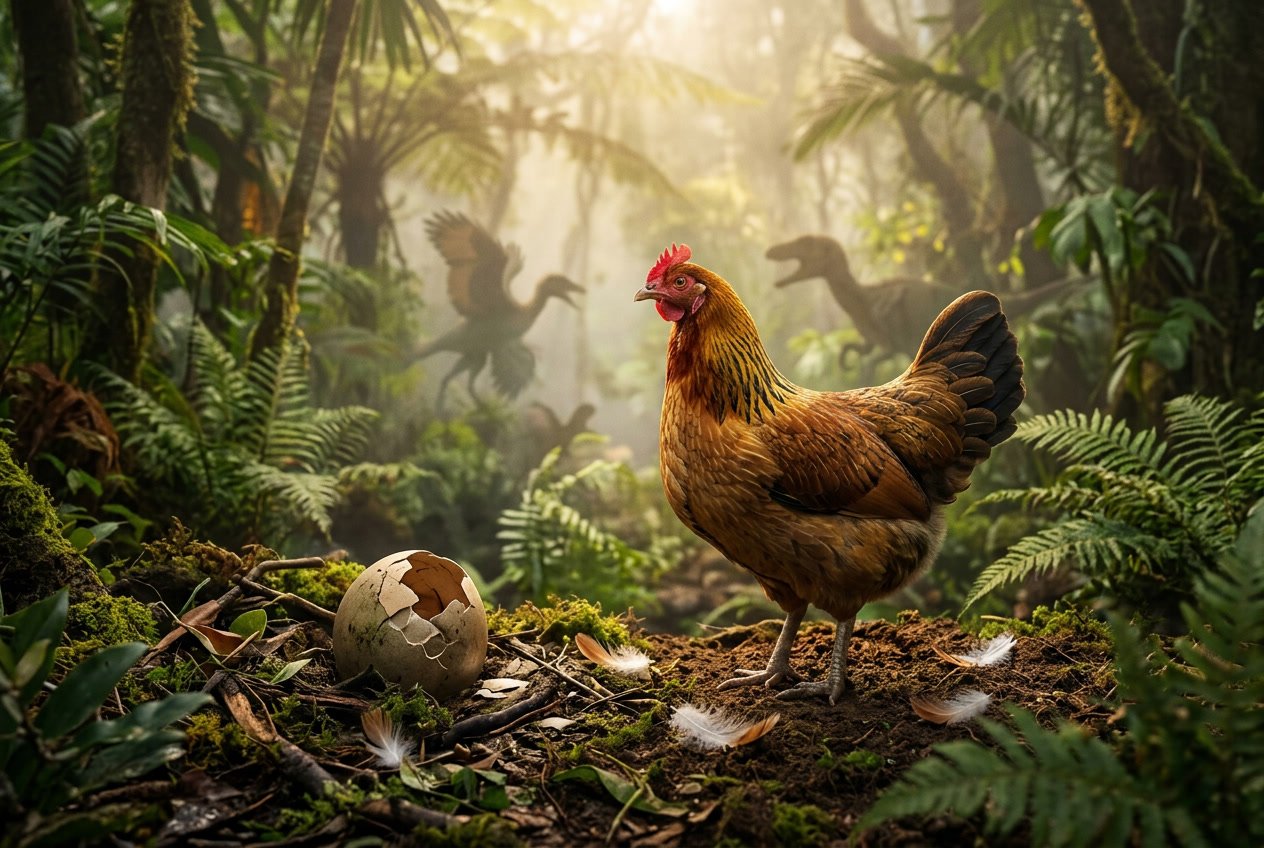
You’ll follow a path from ancient egg‑laying ancestors and junglefowl roots through human domestication and selective breeding. Human choices shaped modern varieties.
Expect clear explanations of evolutionary steps, the role of wild red junglefowl, and how genetics and human choices turned ancestral birds into today’s chickens.
Evolutionary Origins of Chickens
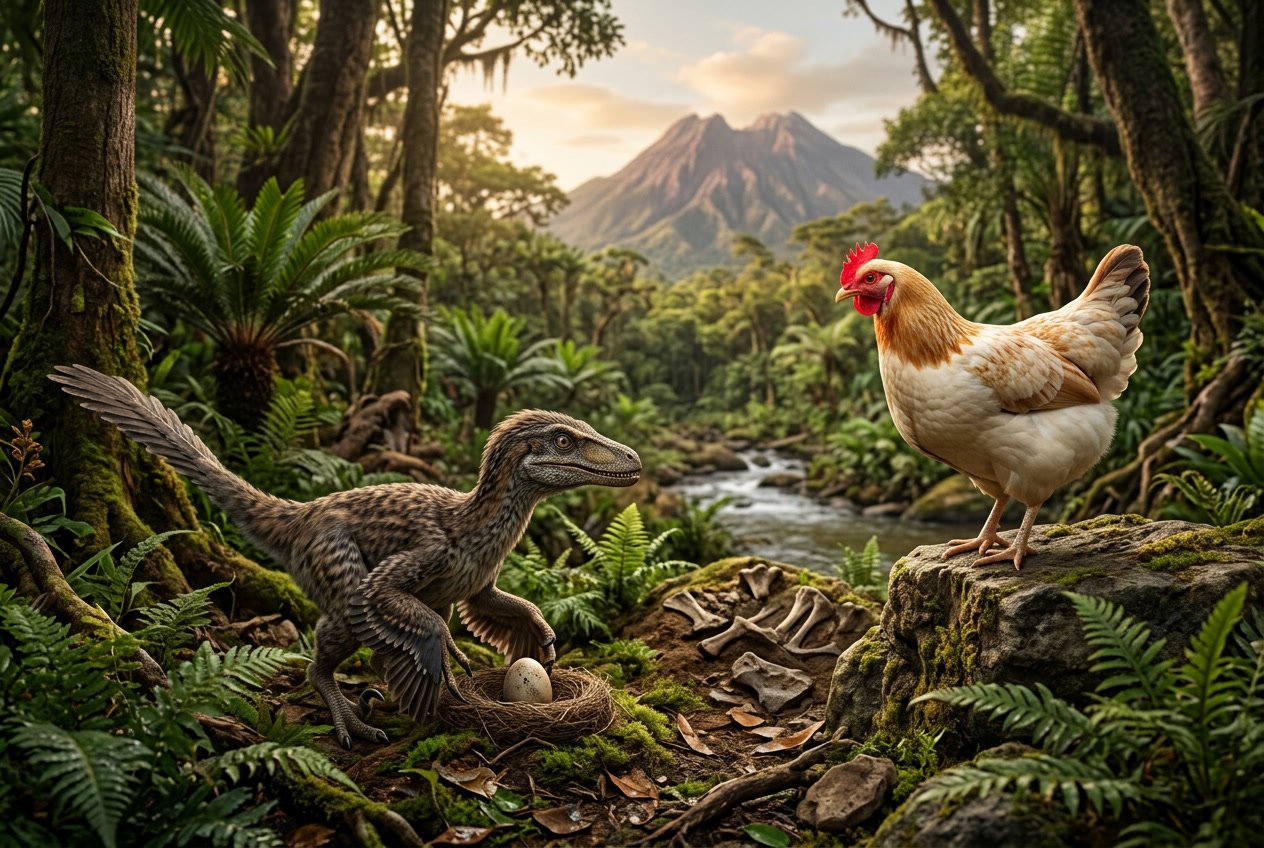
Chickens descend from meat-eating dinosaurs. Archaeopteryx matters for bird origins, and genomic evidence connects Gallus gallus to ancient theropods.
From Theropod Dinosaurs to Birds
Theropod dinosaurs, a group that includes Velociraptor and Tyrannosaurus relatives, showed key features that led to birds: hollow bones, three-toed feet, and feathers for insulation or display.
Many small theropods had asymmetrical feathers and wing-like forelimbs long before true flight evolved.
Fossil finds from the Jurassic and Cretaceous record a gradual shift. Limb proportions changed, the hand fused into a wing, and the tail shortened into a pygostyle.
Those anatomical changes altered locomotion and balance, enabling gliding and later powered flight.
This lineage of morphological transformations set the stage for the avian body plan you recognize in modern chickens.
Significance of Archaeopteryx
Archaeopteryx, from about 150 million years ago, carries a mix of dinosaur and bird traits. It had flight-capable feathers and an avian shoulder girdle, yet retained teeth, a long bony tail, and clawed fingers.
Archaeopteryx preserves both feathers and non-avian skeletal features, showing that feathers evolved before modern avian flight mechanics fully formed.
You can treat it as a snapshot showing how feathers and other bird-like traits were already present in theropod relatives of birds.
Genetic Evidence Linking Chickens to Dinosaurs
Modern genetic work connects Gallus gallus (the red junglefowl and ancestor of domestic chickens) to deep avian ancestry traceable to theropods.
Comparative genomics shows conserved gene families involved in feather development, limb patterning, and metabolic regulation across birds and theropod-derived lineages.
Sequenced regions of the chicken genome reveal regulatory genes—such as those in the HOX and BMP families—that control digit identity and feather morphogenesis.
Paleogenomic approaches compare protein sequences extracted from exceptionally preserved fossils with bird proteins. Those studies reinforce the molecular continuity between non-avian theropods and living birds, including chickens.
Wild Junglefowl: The Primary Ancestors
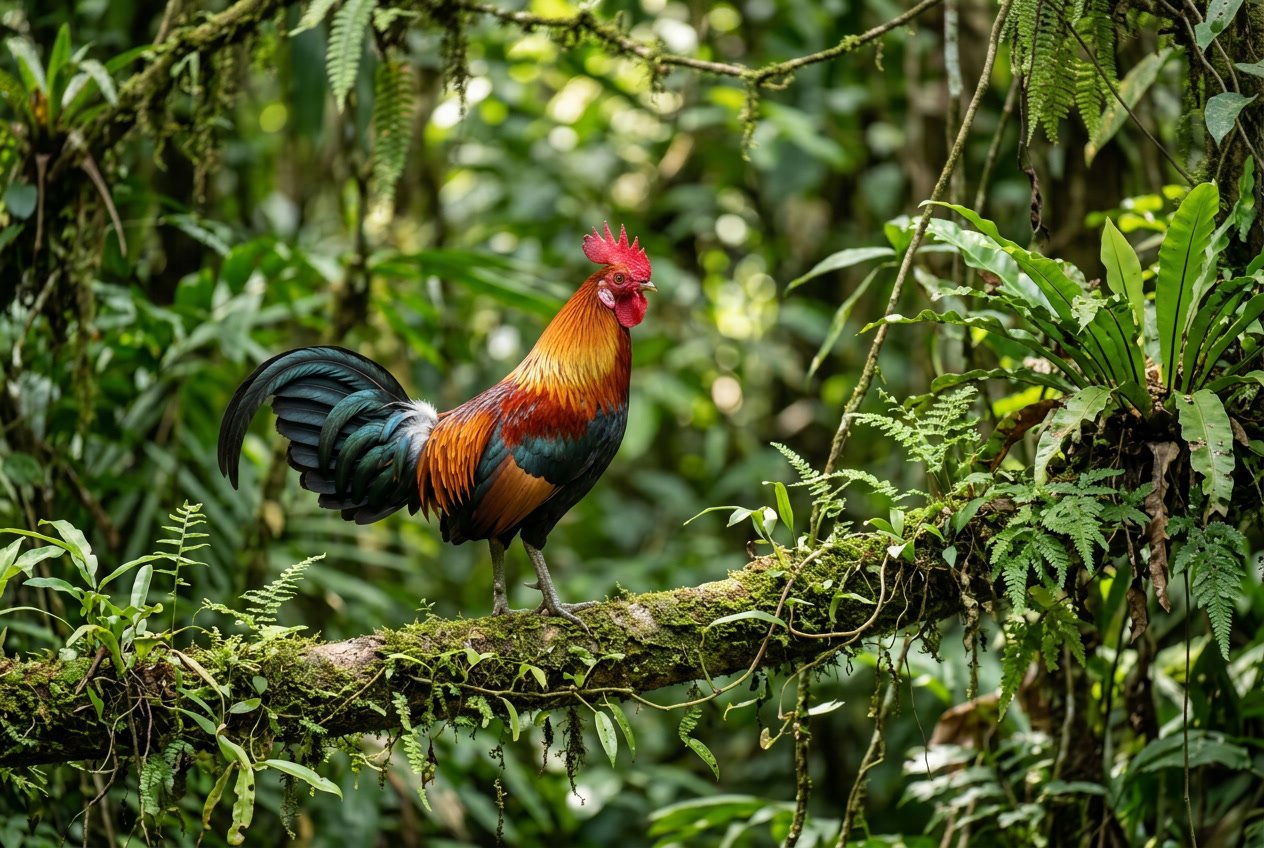
Wild junglefowl species in the genus Gallus supplied most of the genetic and behavioral traits that became familiar in domestic chickens.
One subspecies contributed the largest share of ancestry, while others donated specific traits through occasional hybridization and local interbreeding.
Contribution of Red Junglefowl
The red junglefowl (Gallus gallus) provides the bulk of the domestic chicken’s genome. Genetic studies, including whole-genome comparisons, show that one subspecies—G. g. spadiceus from parts of northern Thailand, Myanmar, and southwestern China—forms the closest wild relative to most domestic breeds.
Traits such as body shape, vocal patterns, and baseline reproductive biology trace to red junglefowl ancestry.
Archaeological finds place early domestic-type bones and captive management in regions overlapping red junglefowl ranges.
That geographic overlap explains how humans first shaped survivorship, reproduction, and social tolerance.
Ongoing local gene flow occurs between domestic birds and wild red junglefowl where their ranges meet.
Role of Grey and Green Junglefowl
Grey junglefowl (Gallus sonneratii) and green junglefowl (Gallus varius) contributed specific traits to some domestic chicken lineages.
Genes controlling pigmentation and skin color, such as the yellow-skin allele in many modern breeds, trace to introgression from grey junglefowl.
These transfers occurred when domestic birds and wild junglefowl interbred after initial domestication events.
These hybridization events were generally limited in scope and geographically localized.
They produced distinct phenotypes—yellow skin, certain plumage patterns, and minor morphological variants—rather than replacing the red junglefowl genetic foundation.
Regional breeds on islands or peninsulas where local junglefowl species coexisted with humans show the most non-red junglefowl input.
Wild Versus Domesticated Behaviors
Wild junglefowl behavior differs from domestic chicken behavior in predictable ways that affected early domestication.
Wild Gallus species show stronger flight responses, tighter social hierarchies, and seasonally constrained breeding.
Red junglefowl display territorial roosting and more pronounced predator avoidance.
Human selection targeted tameness, reduced fear, and extended breeding seasons.
Those behavioral shifts required many generations of selection on the red junglefowl baseline, combined occasionally with genes from other junglefowl species.
Modern village chickens show a mosaic: retained wild behaviors in free-ranging flocks and distinctly domesticated behaviors in managed breeds.
The Domestication Process
You will learn where the clearest archaeological evidence appears and which genetic and bone-based markers researchers use to identify early domestic chickens.
Ongoing hybridization complicates the picture.
Earliest Domestication Sites and Ban Non Wat
Excavations at Ban Non Wat in central Thailand provide the most secure early evidence for domestic chickens, with bones dated to roughly 1650–1250 BCE.
The unusually high frequency of Gallus bones, the large proportion of juvenile remains, and burials where these birds were placed with other domestic animals indicate human management.
Claims for much earlier chickens in places like the Yellow River basin or Harappan sites do not hold up under reanalysis of morphology, stratigraphy, and radiocarbon dates.
Treat reports from sites lacking fine recovery methods or secure dating as uncertain, especially where wild junglefowl ranges overlap with archaeological deposits.
Genetic and Archaeological Markers of Early Chickens
When you evaluate early domestic status, ask for multiple lines of evidence: osteometric measurements that distinguish small-bodied domestic from wild galliform bones, clearly stratified contexts, and direct radiocarbon dates on chicken bones.
Genomic studies show modern Gallus gallus domesticus descends primarily from red junglefowl (Gallus gallus), with Gallus gallus spadiceus often implicated as the main progenitor.
Genetic divergence estimates (tens of thousands to several thousand years ago) indicate when lineages split but do not by themselves prove human-mediated domestication.
Combine DNA with zooarchaeological context to infer management, such as demographic profiles indicative of controlled breeding or mortality patterns matching human provisioning.
Hybridization and the Domesticated Chicken
Hybridization between domestic chickens and wild junglefowl has been common and continues to blur taxonomic boundaries.
When you examine archaeological specimens, expect possible introgression that can obscure morphological and genetic signals of pure domestication.
You must weigh evidence case by case: morphological traits like reduced size or changes in bone proportions, contextual indicators of human use, and multiple genetic loci rather than single markers.
Consider taphonomic issues and recovery biases that reduce the likelihood of detecting early domestic chickens in many regions.
Human Influence and Selective Breeding
Humans shaped chickens by choosing which birds to keep, move, and mate based on utility, appearance, or behavior.
Those choices drove changes in size, growth rate, temperament, and egg-laying that created the wide variety of chickens you see today.
Early Uses: Cockfighting and Rituals
Early human-chicken interactions often favored aggression and visibility.
People kept roosters for cockfighting, as shown in archaeological and iconographic records, and selected for combative temperament, larger spurs, and bold coloring.
Cultures in Southeast Asia and later in Southwest Asia and Europe used such birds in rituals and displays.
Breeders favored showy plumage and strong, gamey behavior.
Repeatedly breeding the fiercest roosters with attentive hens concentrated genes for aggression and certain body proportions.
Ritual use sometimes preserved local varieties that might otherwise disappear when food-focused selection dominated.
Spread Through Agriculture and Trade
As farming spread, chickens foraged around fields and ate grain waste.
Farmers selected birds that tolerated human presence, reproduced reliably, and converted cereals into eggs or meat efficiently.
Trade routes moved birds and genes far beyond their original range, introducing the red junglefowl-derived domestic stock into South Asia, the Pacific islands, and eventually Europe and Africa.
Hens that produced more eggs became common near grain stores.
Hardier island varieties developed where long-distance voyaging required resilient stock.
Commercial and local exchanges shuffled traits—size, plumage, and disease resistance—across continents.
Development of Distinct Chicken Breeds
Deliberate breed formation intensified in the 18th and 19th centuries.
People set standards, recorded pedigrees, and isolated bloodlines.
Organizations such as the American Poultry Association, founded in 1873, codified breed standards for traits like comb type, weight class, and plumage patterns.
Breed types emerged for clear purposes: heavy breeds for meat, prolific layers for eggs, and bantams for ornament and small-holdings.
Breeders used selective pairing and line-breeding to fix desired traits, then judged outcomes against written standards.
This produced formal breeds (Brahma, Leghorn, Wyandotte) and numerous regional varieties, each with predictable production or aesthetic qualities.
Formation of Pecking Order and Social Structures
Chickens cluster in a coop and establish a pecking order as an immediate social effect.
Selection for docility, broodiness, or tolerance of confinement reshaped social dynamics.
Birds bred for calm temperament show reduced aggression and more stable rank structures, which improves flock productivity and reduces injury.
Breeds retained for fighting or territorial defense can maintain volatile hierarchies.
Managing mixed-breed flocks requires you to account for these differences.
Matching temperament and size reduces conflict.
Over generations, selection for calm egg layers or assertive show roosters alters dominance patterns and social cohesion within the flock.
Genetic Traits and Modern Chicken Diversity
Genetic selection concentrates specific traits—egg number, growth rate, feed efficiency, disease resistance—into distinct chicken types.
Those traits determine how breeds perform in commercial hatcheries, backyard flocks, and intensive poultry farming.
Egg Production and Laying Hens
Layer hens provide predictable, high-volume egg production.
Breeders select for clutch size, age at first lay, and persistency, producing strains that lay 250–320+ eggs per year under optimal lighting and feed.
Genetic lines also carry traits for eggshell quality and yolk color, which affect marketability and reduce breakage losses.
Breeding emphasizes low body weight relative to egg output to limit energy spent on maintenance.
Disease resistance alleles and behavioral traits (reduced broodiness, calm temperament) get fixed to improve flock management.
Commercial layer production often uses single-purpose hybrids rather than dual-purpose or heritage breeds.
You’ll encounter these hens in large-scale operations and backyard chickens.
Backyard birds often show wider genetic variability and lower peak output but greater resilience.
Broilers and Meat Chickens
Broiler chickens grow rapidly, yield high breast muscle, and convert feed efficiently.
Genetic programs select for muscle fiber number, metabolic rate, and skeletal support to reach market weight in 5–8 weeks for conventional hybrids.
Those traits lower production time and feed cost per kilogram of meat.
Selection also targets uniformity and tolerance to intensive housing conditions.
Extreme growth selection can increase skeletal and metabolic disorders, so modern breeding balances growth with leg strength and cardiovascular health.
Most broilers are raised in commercial poultry farming and supplied by specialized hatcheries producing day-old chicks for integrators.
Backyard or slow-growth broilers use different strains that grow more slowly but show better foraging behavior and survival in less controlled environments.
Hybrid Layers and Poultry Farming
Hybrid layers combine parental lines to capture complementary traits. One line contributes high egg output, while the other provides shell strength and disease resistance.
Commercial hatcheries use F1 hybrids because heterosis delivers reliable performance across flocks.
Poultry farming integrates genetics with nutrition, lighting, and biosecurity. Producers match genetic strain to the system, such as cage-free, free-range, or conventional.
Producers make management decisions like vaccination schedule, feed formulation, and stocking density. These decisions interact with genotype to determine final production metrics.
Backyard chickens with mixed or heritage genetics display broader trait diversity but lower standardized production. Commercial operations use specific hybrid lines to meet supply-chain targets for egg production and broiler throughput.
Taxonomy, Classification, and Scientific Insights
This section explains how chickens are classified and what genome research reveals about their origins. You will also learn the precise terms used for young and adult birds.
You will see where the domestic chicken fits in biological classification. Embryology and genetics inform origin stories, and there are specific names for chicks, pullets, hens, and cockerels.
Chicken Taxonomy and Classification
The domestic chicken is Gallus gallus domesticus, a subspecies of the red junglefowl (Gallus gallus). Taxonomic rank signals evolutionary relationships.
Chickens belong to the family Phasianidae and order Galliformes, grouping them with pheasants, quails, and turkeys. Classification reflects descent, not just appearance.
Fossils, comparative anatomy, and modern molecular data show chickens share recent common ancestry with other Gallus species. Taxonomy points to gradual divergence of junglefowl populations under both natural selection and human-directed breeding.
Advances in Chicken Genome Research
Chicken genomics pinpoints genetic changes linked to domestication, behavior, and egg production. Whole-genome sequencing of domestic chickens and wild junglefowl populations identifies loci under selection, including genes affecting growth, reproduction, and plumage.
Embryology ties into genomics by showing how developmental genes are expressed to form the chicken body plan. Mitochondrial DNA and nuclear markers trace maternal lineages and admixture.
Evidence shows multiple domestication events and gene flow between wild and domestic populations. Molecular tools let researchers test hypotheses about when and where domestication traits appeared.
Chicks, Pullets, Hens, and Cockerels
Use precise terms when discussing life stages and sexes because they reflect age and reproductive status.
- Chick: a newly hatched bird of either sex. The embryonic stage comes before this.
- Pullet: a young female chicken, typically under one year, not yet or newly laying commercially reliable eggs.
- Hen: an adult female that lays eggs regularly.
- Cockerel: a young male chicken, usually under one year. After one year, call him a rooster.
Accurate terminology helps when you read studies on development or breeding.
Researchers often specify the stage of the chicken embryo (Hamburger–Hamilton stages) because embryonic timing affects gene expression and morphological outcomes.


