
How to Use Chicken Thighs: Techniques, Recipes, and Tips
You can turn chicken thighs into quick weeknight dinners, slow-simmered comfort food, or showstopping dishes for guests. They stay juicy, tolerate bold flavors, and work with almost any cooking method.
Use bone-in, skin-on thighs when you want maximum flavor and crisp skin. Choose boneless, skinless thighs for faster cooking and easy shredding.
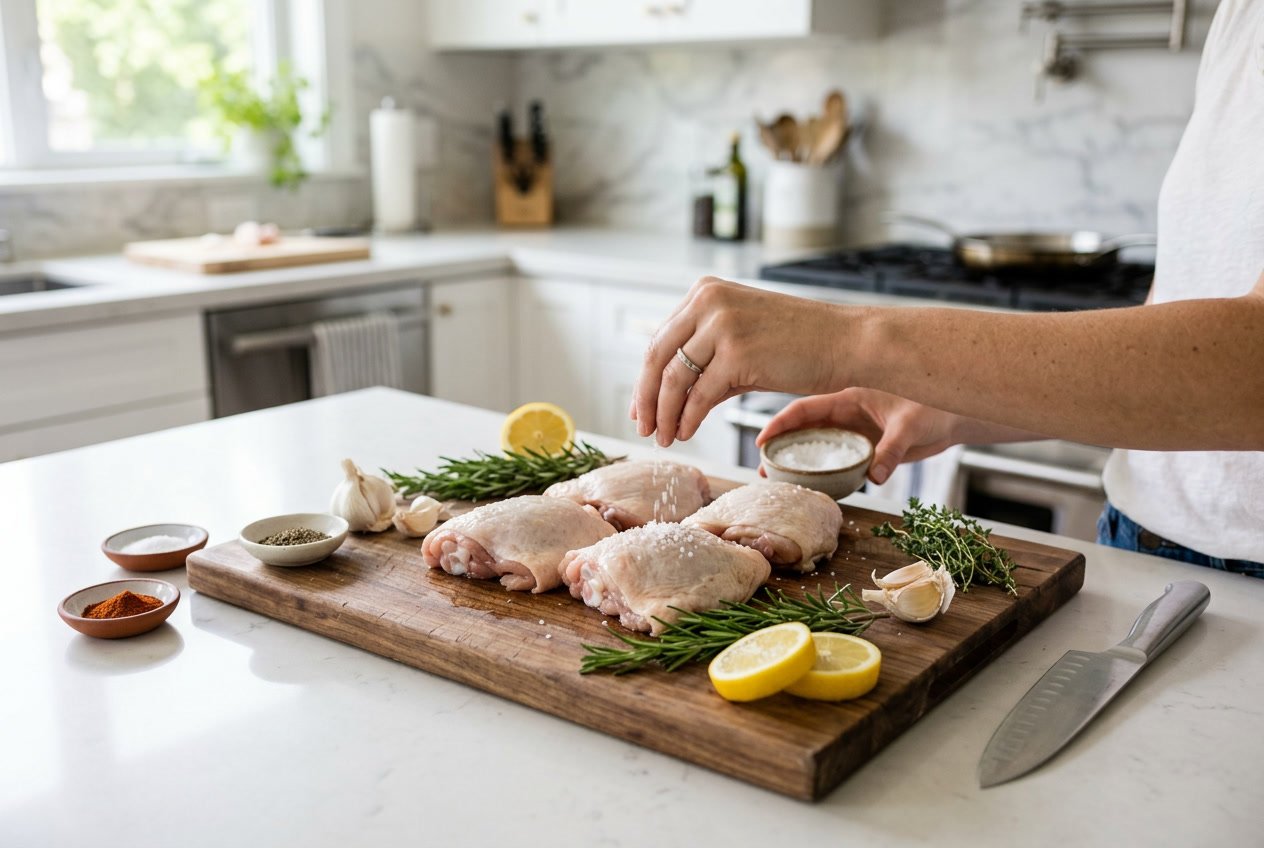
This guide explains which thigh to pick, simple prep techniques, and reliable cooking methods. You’ll find flavor ideas from global cuisines and practical recipes that move from pantry staples to crowd-pleasers.
Types of Chicken Thighs and Their Best Uses
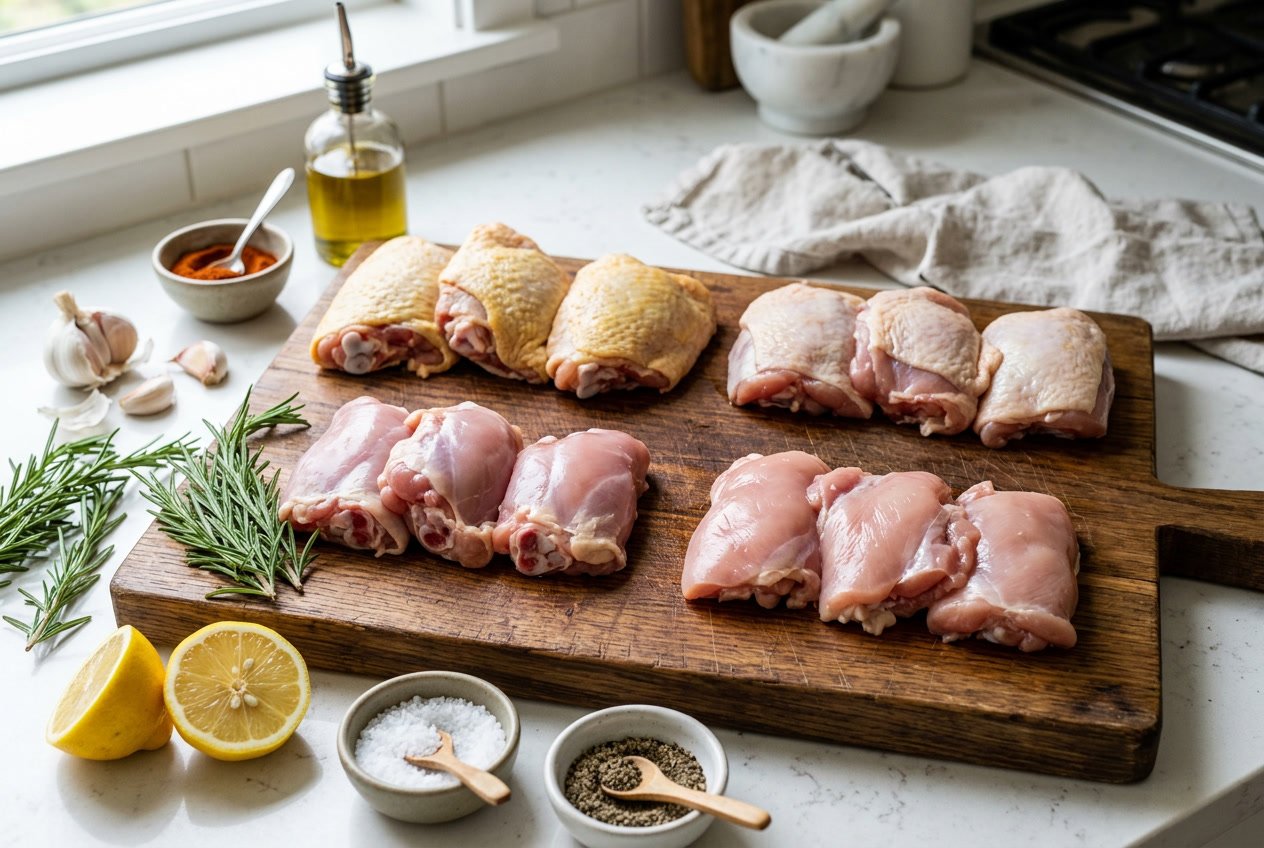
You’ll find thighs sold in a few clear formats that affect cook time, texture, and best uses. Bone changes heat transfer and carving, skin adds crispness and fat, and boneless options speed cooking and shredding.
Bone-In, Skin-On Chicken Thighs
Bone-in, skin-on thighs deliver the richest flavor and best moisture retention. The bone conducts heat more slowly, so expect longer cook times—plan for up to 30 minutes in a hot oven or longer on the grill for even doneness.
The skin renders fat and crisps, making this cut ideal for roasting, braising, and grilling when you want a caramelized exterior and juicy interior. Use them in recipes that benefit from slow, steady heat and stock-making value, such as stew, braise, sheet-pan dinners, or barbecued thighs.
If you want less fat on the plate, cook with the skin on for protection and remove it before serving.
Boneless, Skinless Chicken Thighs
Boneless, skinless thighs cook fastest and are easiest to handle for weeknight meals. They typically take 15–20 minutes in a 425°F oven or about 8–10 minutes per side when pan-seared, depending on thickness.
Their lack of skin makes them leaner but still forgiving, so they suit stir-fries, curries, tacos, and quick sautés where shredding or chopping is needed. Marinate to boost flavor and speed up tenderizing for thin-cut pieces.
They cost more per pound due to processing but save time and simplify plating.
Skinless Chicken Thighs
Skinless thighs with the bone in sit between the two above in flavor and cooking time. The bone preserves moisture and adds depth, while the missing skin reduces surface fat and eliminates the option for crisp skin.
Use bone-in, skinless thighs for long-simmered dishes like braises, stews, and soups where skin crispness isn’t required. They work well when you plan to shred meat around the bone or use the cooking liquid for sauces.
Expect slightly longer cook times than boneless thighs. Always check the thickest part reaches 165°F.
Choosing the Right Cut for Your Recipe
Match cut to method: choose skin-on, bone-in for high-heat roasting or grilling when you want crisp skin and deep flavor. Pick boneless, skinless for fast pan-frying, sandwiches, tacos, and anything that needs quick shredding.
Opt for bone-in, skinless when cooking low and slow or when you want broth and unctuous meat without extra surface fat. Consider prep time, plating, and fat content: boneless saves time, bone-in boosts flavor, and skin-on gives you crisp texture.
When in doubt, buy a mix—use bone-in for Sunday dinner and boneless for weekday meals.
How to Prepare Chicken Thighs
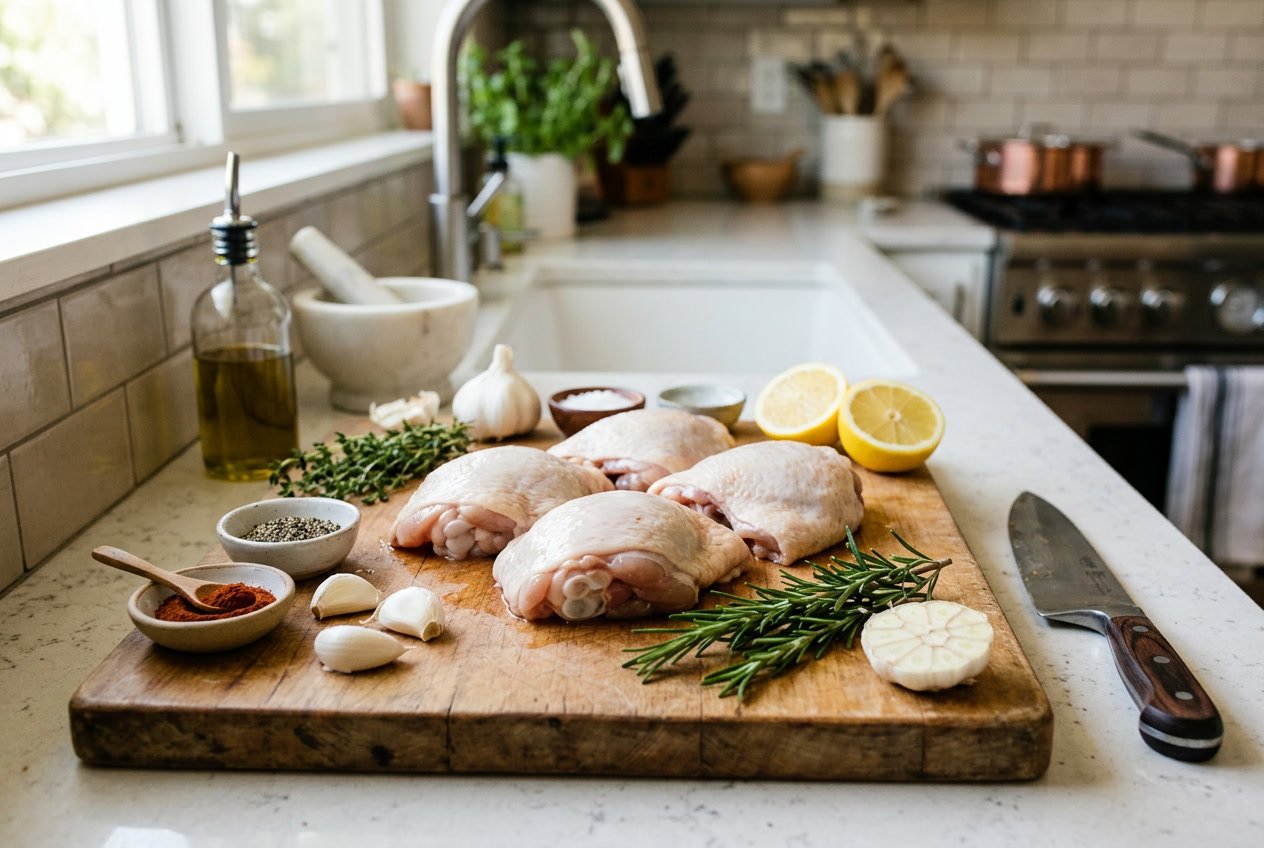
Prepare the thighs by removing excess fat, choosing whether to keep skin or bone, and deciding on a quick marinade or dry seasoning to match your cooking method. Focus on clean cuts, even thickness, and flavors that complement the dish you plan to cook.
Trimming and Deboning
Trim visible excess fat and loose connective tissue with a sharp knife to prevent flare-ups on the grill and to reduce greasy mouthfeel. Work on a stable cutting board; pull the flap of fat away and slice it off with short, controlled cuts.
Slide the tip of your knife along the bone under the meat, keeping the blade close to the bone to preserve as much flesh as possible. If you want to remove the bone yourself from a bone-in thigh, cut along the joint and pop the bone out. This saves money and lets you use the bone for stock.
Check each piece for stray cartilage and small bones by running your fingers over the surface. If you need uniform thickness for even cooking, butterfly thicker pieces or gently pound them with a flat meat mallet inside a plastic bag.
Removing the Skin
Decide whether to keep skin based on texture and fat. Keep skin on for roasting, grilling, or pan-searing when you want crisp exterior and extra flavor.
Remove skin for braising, stewing, or leaner preparations where you want sauce to cling directly to the meat. To remove skin, start at the neck end (thinner side) and use your fingers to separate skin from flesh.
Grip the loosened skin and pull while sliding the knife between skin and meat to release connective tissue. Work slowly to avoid tearing the meat.
If you plan to crisp skin later, pat it very dry and season underneath it for deeper flavor. If you’ll cook skinless thighs, trim excess fat after removing the skin to reduce splatter and improve presentation.
Marinating Techniques
Marinate to tenderize and infuse flavor. Aim for 30 minutes to overnight depending on the marinade’s acidity.
For a quick boost, 30–90 minutes in a simple mixture of oil, acid (lemon juice or vinegar), garlic, and salt will improve both flavor and juiciness. Use yogurt-based marinades for tender, moist meat—combine plain yogurt, lemon juice, garlic, and warming spices like cumin or paprika.
Yogurt-marinated chicken thighs benefit from 2–8 hours in the fridge; the lactic acid gently breaks down proteins without making the meat mushy. For longer marinating, keep the salt moderate or separate salt until the last hour to avoid over-curing.
Always marinate in the refrigerator in a nonreactive container or resealable bag. Discard used marinade unless boiled for a sauce.
Seasoning Suggestions
Start with kosher salt and freshly cracked black pepper as the base. Add garlic powder, onion powder, and smoked paprika for a simple, versatile rub that crisps well under high heat.
For an herb-forward profile, mix chopped fresh thyme, rosemary, lemon zest, and olive oil and rub under the skin of bone-in thighs. For Asian-inspired dishes, combine soy sauce, ginger, brown sugar, and a splash of rice vinegar; apply as a marinade or baste during cooking.
If using yogurt-marinated thighs, add warm spices—turmeric, coriander, and garam masala—for depth. For grilled or roasted thighs, finish with a squeeze of citrus or chopped herbs to brighten the seasoned crust.
Popular Cooking Methods for Chicken Thighs
You can get crisp skin, tender meat, or fall-apart texture depending on the method and temperature you choose. Focus on controlling surface moisture, using the right heat, and pulling at target internal temps for the best result.
Oven Baking and Roasting
Baking at 400°F–425°F gives roasted chicken thighs with crispy skin and even cooking. Use a wire rack over a rimmed sheet pan so fat drips away and hot air circulates.
Bone-in, skin-on thighs take about 35–45 minutes, boneless about 20–25 minutes. Pat thighs dry and salt them at least 1 hour ahead or overnight in the fridge to draw out surface moisture.
For extra-crispy skin, dust the skin lightly with baking powder (not baking soda) and roast skin-side up without foil. Use an instant-read thermometer: pull boneless at 165°F, pull bone-in at 175°F–185°F for more gelatinized, tender meat.
Grilling and Broiling
Grilling adds char and smoky flavor. Broiling mimics intense top heat when a grill isn’t available.
For bone-in grilled chicken thighs, sear skin-side down over direct high heat 5–6 minutes, then move to indirect heat and cook covered until 175°F. Boneless thighs can cook direct 5–7 minutes per side over medium-high.
Trim loose fat to control flare-ups and move pieces away from flames. For broiling, position thighs 6–8 inches from the element and watch closely since skin crisps fast. Finish with a short rest to let juices redistribute.
Slow Cooking and Braising
Slow cooking and braising turn thighs into shreddable, deeply flavored meat for tacos, stews, and sandwiches. In a slow cooker, cook bone-in thighs on low 6–7 hours or high 3–4 hours until meat falls from the bone.
For braising, brown thighs first in a skillet, then simmer covered in liquid at low heat until collagen breaks down. If you want texture, transfer thighs to a hot oven or broiler for 3–4 minutes after cooking.
Use acidic or aromatic braising liquids such as stock, wine, tomatoes, or soy-based mixtures to build depth. Avoid over-acidifying for more than 12–24 hours.
Air Frying and Pan Frying
Air fryer chicken thighs cook fast and develop crispy skin with less oil. Preheat the air fryer to 400°F, pat thighs dry, and cook bone-in 22–28 minutes or boneless 16–20 minutes skin-side up.
Avoid stacking pieces; work in batches for even browning. For pan-roasted or pan-fried thighs, start skin-side down in a cold or medium-hot skillet to slowly render fat and produce crisp skin, about 7–10 minutes undisturbed.
Finish in the oven if needed to reach target internal temp. This pan-to-oven technique gives a crisp exterior and juicy interior.
Flavor Variations and World Cuisines
Chicken thighs take well to bold marinades, long braises, quick sears, and gentle oven roasting. You can build bright, spicy, sweet, or deeply savory dishes simply by changing the sauce, spice mix, and cooking method.
Classic American and Southern Dishes
Use bone-in, skin-on thighs for crispy, flavorful results when roasting or pan-frying. Season with salt, pepper, smoked paprika, and garlic powder for crispy baked chicken thighs; finish with a squeeze of lemon to cut richness.
For Southern-style braises, brown thighs first, then simmer in a skillet with onions, bell pepper, and a pan sauce made from chicken stock and a splash of vinegar or hot sauce. Try a honey-garlic glaze on roasted thighs for a sticky, sweet-savory finish.
For mustard-forward profiles, coat thighs in a mustard-mayo rub or make a pan sauce with Dijon, cream, and thyme for mustard chicken. Use thighs for classic casseroles, or shred them for sandwiches and barbecue-style plates.
Mediterranean and Italian Specialties
Opt for bone-in thighs when braising with tomatoes, olives, and capers to build depth and body. A simple braise with garlic, rosemary, white wine, and cherry tomatoes creates a rustic Chicken Provençal-style dish.
Use za’atar or sumac for a lemony, herbaceous lift if you want Middle Eastern accents. In Italian applications, pan-sear thighs then finish in a skillet with mushrooms, shallots, and a splash of Marsala or white wine.
Thighs absorb herb mixtures like oregano, basil, and lemon zest well. Use them in sheet-pan dinners with asparagus or roasted potatoes.
You can also shred roasted thighs into pasta sauces or top polenta with a slow-cooked thigh ragu.
Asian-Inspired Flavors
Use soy, sesame, ginger, and rice vinegar for umami-forward dishes. Marinate boneless thighs in a mixture of soy sauce, mirin, garlic, and a little brown sugar, then pan-sear or broil for shoyu chicken.
Try gochujang and honey for a sticky, spicy-sweet glaze on grilled thighs and serve with scallions and kimchi. Japanese-style bowls like oyakodon benefit from diced thighs simmered briefly in dashi, soy, and mirin.
They stay tender and pair well with softly cooked eggs. For Filipino flavors, braise thighs in vinegar, soy, garlic, and bay leaves for chicken adobo and cook low and slow until the thighs become fork-tender and the sauce reduces to a glossy coating.
Indian and Middle Eastern Styles
Use yogurt-based marinades to tenderize and infuse flavor. For tandoori chicken and other grilled dishes, marinate thighs in yogurt with garam masala, cumin, coriander, turmeric, garlic, and lemon.
Grill the thighs over high heat to achieve char without drying the meat. Serve with naan, cucumber raita, and lemon wedges.
Brown thighs first when making curries and biryanis for extra depth. Simmer them in an onion-tomato gravy spiced with garam masala, cumin, coriander, and chili for classic chicken curry.
For chicken biryani, marinate bone-in thighs in yogurt, ginger-garlic paste, and spices before searing. Assemble with rice and steam for aroma and tenderness.
Easy Weeknight Chicken Thigh Recipes
These recipes use minimal hands-on time and bold, simple seasoning. Swap components based on what you have in your fridge.
You can achieve crispy skin or tender braised meat with clear timing and easy cleanup.
Sheet-Pan Chicken Meals
Roast chicken thighs at 400°F (200°C) for 30–40 minutes, skin side up, to get crisp skin and juicy meat. Arrange bone-in thighs with vegetables like halved baby potatoes, carrot sticks, and quartered onions.
Season everything with salt, pepper, garlic powder, and olive oil. For faster dinners, use boneless thighs and cut vegetables smaller to finish in 25–30 minutes.
For a Mexican-inspired sheet-pan, rub thighs with chili powder, cumin, and paprika. Add halved bell peppers and corn, then finish with lime and chopped cilantro.
Line a rimmed sheet pan with foil for easy cleanup. For saucy enchilada flavors, toss roasted thighs with red enchilada sauce and shredded cheese.
Broil for 2–3 minutes to melt the cheese. Serve over rice or tuck into warmed tortillas for an easy chicken enchilada twist.
One-Pot and Casserole Recipes
Braise thighs or assemble a casserole ahead, then bake. For smothered chicken, brown thighs first, then simmer in a savory gravy of onion, garlic, chicken stock, and Worcestershire until fork-tender.
Spoon the pan juices over mashed potatoes or rice. For a quick casserole, layer shredded cooked thighs, corn, black beans, enchilada sauce, and cheese in a baking dish.
Bake until bubbly, about 15–20 minutes. For chicken noodle soup and tortilla soup, simmer bone-in thighs in stock, remove and shred the meat, then add noodles or tortillas, vegetables, and finish with lime and cilantro.
Use a Dutch oven for stovetop-to-oven flexibility. It keeps liquid from reducing too fast and makes reheating easy for packed lunches.
Quick Stir-Fries and Skillet Dishes
Cut boneless chicken thighs into 1-inch pieces for fast cooking, about 6–8 minutes in a hot skillet. Pat the pieces dry, season lightly, and sear in a single layer for color before tossing with vegetables and sauce.
Make a basic stir-fry sauce with soy sauce, rice vinegar, honey, and a touch of cornstarch for gloss. For skillet smothered-style dinners, sear thighs, remove them, sauté onions and mushrooms in the same pan, deglaze with stock, return the meat, and simmer until tender.
This technique delivers deep flavor with little cleanup. Stir-fry shredded leftover thighs with frozen mixed vegetables and cooked rice for a quick chicken fried-rice meal.
Keep sliced scallions and lime wedges on hand to brighten each plate.
Comfort Food and Stews Featuring Chicken Thighs
Chicken thighs give rich flavor, tender meat, and forgiving cooking times for hearty one-pot dishes. Thighs excel when simmered slowly, paired with root vegetables, or cooked in saucy, spiced broths.
Classic Stews and Soups
Use bone-in or boneless thighs for chicken stew with potatoes, carrots, celery, and a savory base of onion and garlic. Brown the thighs first for deeper flavor, then deglaze the pot with wine or vinegar before adding stock.
For chicken and wild rice soup, simmer thighs with wild rice, thyme, and bay leaf until the rice is plump and the meat pulls easily. Finish with a little cream for silkiness.
White chicken chili works well with shredded thigh meat, white beans, green chiles, cumin, and chicken stock. Simmer gently to keep the thighs moist.
For chicken and dumplings, cook thighs until tender, remove and shred them, then return the meat to the broth before adding biscuit dumplings to steam.
Slow Cooker Favorites
A slow cooker turns thighs into easy weeknight meals. Use skin-on thighs for more rendered fat and flavor, or trim the skin for a lighter result.
Sear the thighs first for a richer base, or add all ingredients raw for convenience. Pair slow-cooked thighs with root vegetables, tomato-based sauces, or a cream-and-herb mix.
Combine thighs, potatoes, carrots, onion, garlic, and chicken broth for a stew, and cook on low 6–8 hours. For brown stew chicken, braise thighs with soy, brown sugar, ginger, and spices in the slow cooker for deep, caramelized taste.
Global Comfort Dishes
Bring thighs to global stews where the dark meat stands up to bold spices and long braises. In Caribbean brown stew chicken, brown the thighs, then simmer in a spiced tomato-based sauce with allspice and Scotch bonnet for savory heat.
Make a Moroccan-style tagine by cooking thighs with preserved lemon, olives, and cinnamon. The thighs stay juicy and absorb complex flavors.
For an Asian-style braise, simmer thighs in soy, ginger, garlic, and a touch of sugar until the sauce reduces and glazes the meat. The connective tissue in thighs melts into the sauce, thickening the broth and making the meat tender.
Signature and Crowd-Pleasing Chicken Thigh Dishes
Chicken thighs shine across cuisines in braises that soak into rice, saucy bakes over mashed potatoes, and pan-roasted plates with crisp skin and juicy meat. Use bold, balanced sauces, confident seasoning, and simple sides to amplify texture.
Celebration and Special Occasion Meals
For special meals, choose recipes that look impressive and travel flavors well. Chicken Marbella uses briny olives, capers, prunes, and white wine for a sweet-salty centerpiece.
Roast on a sheet pan or braise in a Dutch oven for 40–50 minutes until the skin is glossy and juices run clear. Butter chicken turns boneless thighs into a rich, creamy curry that pairs well with naan and basmati.
Simmer thighs in tomato, butter, and fenugreek until the sauce is velvety and coats the meat. Chicken Vesuvio pairs roasted thighs with lemony potatoes and peas.
Chicken Cacciatore stews thighs in tomatoes, peppers, mushrooms, and wine. Serve over polenta or egg noodles for a homey plate.
Must-Try Chicken Thigh Recipes
Pick a handful of reliable go-tos you can make without fuss. Instant Pot chicken thighs speed up braises like adobo by pressure-cooking thighs with soy, vinegar, garlic, and bay leaves for shreddable meat to spoon over rice.
Marry Me Chicken uses a pan sauce of sun-dried tomatoes, cream, and Parmesan that coats thighs and melts into mashed potatoes. Bourbon chicken caramelizes soy, brown sugar, and bourbon on hot thighs for sticky, deep flavor.
Serve with roasted vegetables. Try Chicken Stroganoff by sautéeing thighs, deglazing with stock, and finishing with sour cream and mustard for a saucy plate with egg noodles.
Rotate these recipes for quick weeknights or slower weekend dinners.
Pairing Suggestions and Side Dishes
Match textures and flavors to the main dish. Serve adobo or Instant Pot braises with plain steamed rice to soak up the vinegary pan sauce.
Pair butter chicken with buttery basmati or naan to mop up the sauce.
Serve roasted or crispy-skinned thighs, such as Vesuvio, crispy roast, or bourbon, with mashed potatoes or roasted vegetables for contrast. Mashed potatoes add creaminess, while roasted carrots, Brussels sprouts, or potatoes bring caramelized bite.
When sauces are rich and tomato-forward, like Cacciatore or Chicken Marbella, choose a simple green salad or sautéed greens to balance the richness. Keep starch portions modest so the thighs remain the focus.


