
How to Prep Chicken Thighs: Step-by-Step for Juicy Results
You can turn ordinary chicken thighs into juicy, flavorful meals by cleaning, drying, trimming, seasoning, and bringing them to room temperature before cooking.
Trim excess fat, pat skin dry, season well, and let the meat rest briefly at room temperature for even cooking, crisp skin, and more flavor.
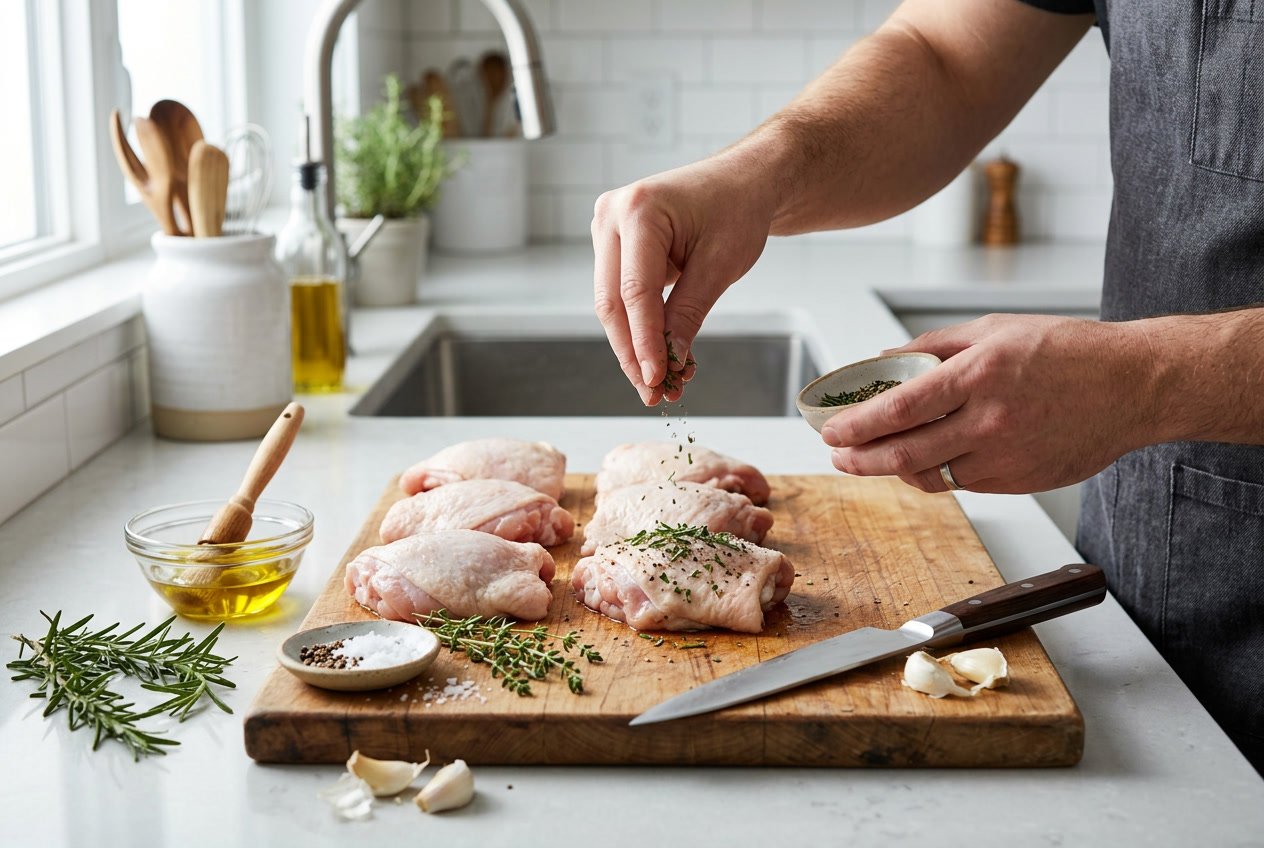
This guide explains what makes thighs different (bone-in vs. boneless, skin on vs. off), how to store and thaw them safely, the trimming and prep steps that save time, and simple seasoning and marinating approaches for baking, pan-frying, grilling, or meal prep.
Follow these step-by-step tips for easier and more dependable weeknight dinners and batch-cooking.
Understanding Chicken Thighs
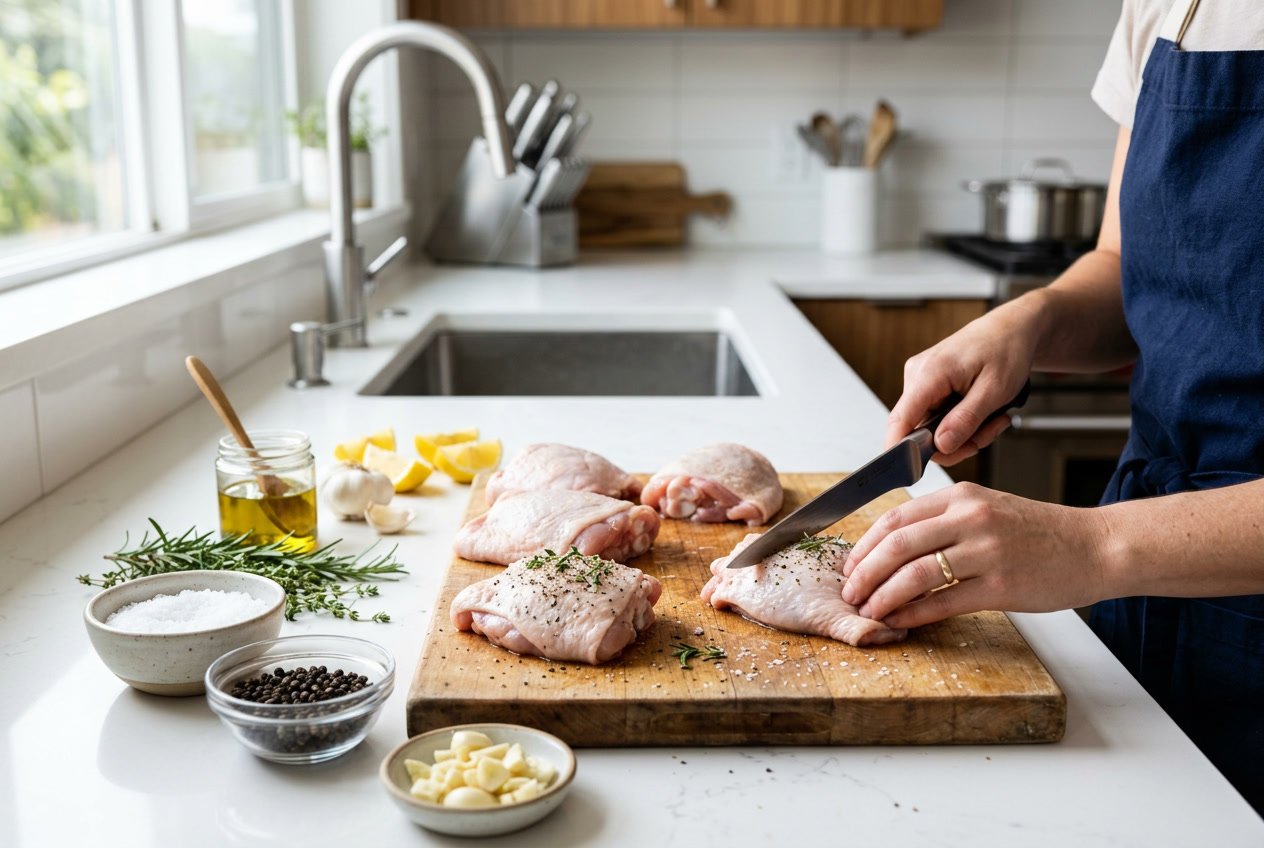
Chicken thighs vary by bone and skin content, which affects cooking time, texture, and flavor.
Choose the right cut for crisp skin, quick dinners, or bulk meal-prep protein.
Types: Bone-In, Boneless, Skinless, and Skin-On
Bone-in, skin-on thighs deliver the most flavor and moisture.
The bone slows heat transfer, so they need longer cooking (often 35–45 minutes in a 400°F oven or similar pan-to-oven method), but you get juicier thighs and crisp skin when dried and roasted properly.
Boneless, skinless thighs cook faster and are easier to slice for salads or stir-fries.
They need shorter pan time (6–10 minutes per side depending on thickness), and you should watch for overcooking since they can dry out faster than bone-in cuts.
Use brines, marinades, or check the internal temperature (165°F) to keep them juicy.
Boneless skin-on and bone-in skinless variants also exist.
Choose skin-on for high-heat crisping and skinless for braises where you want the meat to absorb flavors.
For meal prep, boneless skinless thighs offer easy portioning and reheating.
Nutritional Benefits of Chicken Thighs
Chicken thighs contain more fat and iron than breast meat, giving them richer flavor and better moisture retention.
A 3.5-ounce cooked thigh typically provides about 200–250 calories, 20–25 g of protein, and 8–12 g of fat depending on whether you keep the skin on.
The higher fat content supplies fat-soluble vitamins and helps you feel full, which is useful for meal planning.
Thighs also supply B vitamins (niacin, B6) and minerals like selenium and phosphorus.
If you trim visible fat and remove the skin, you lower calories and saturated fat while keeping most of the protein.
For balanced meal prep, combine thighs with vegetables and whole grains to moderate calories and boost fiber.
How to Safely Store and Thaw Chicken Thighs
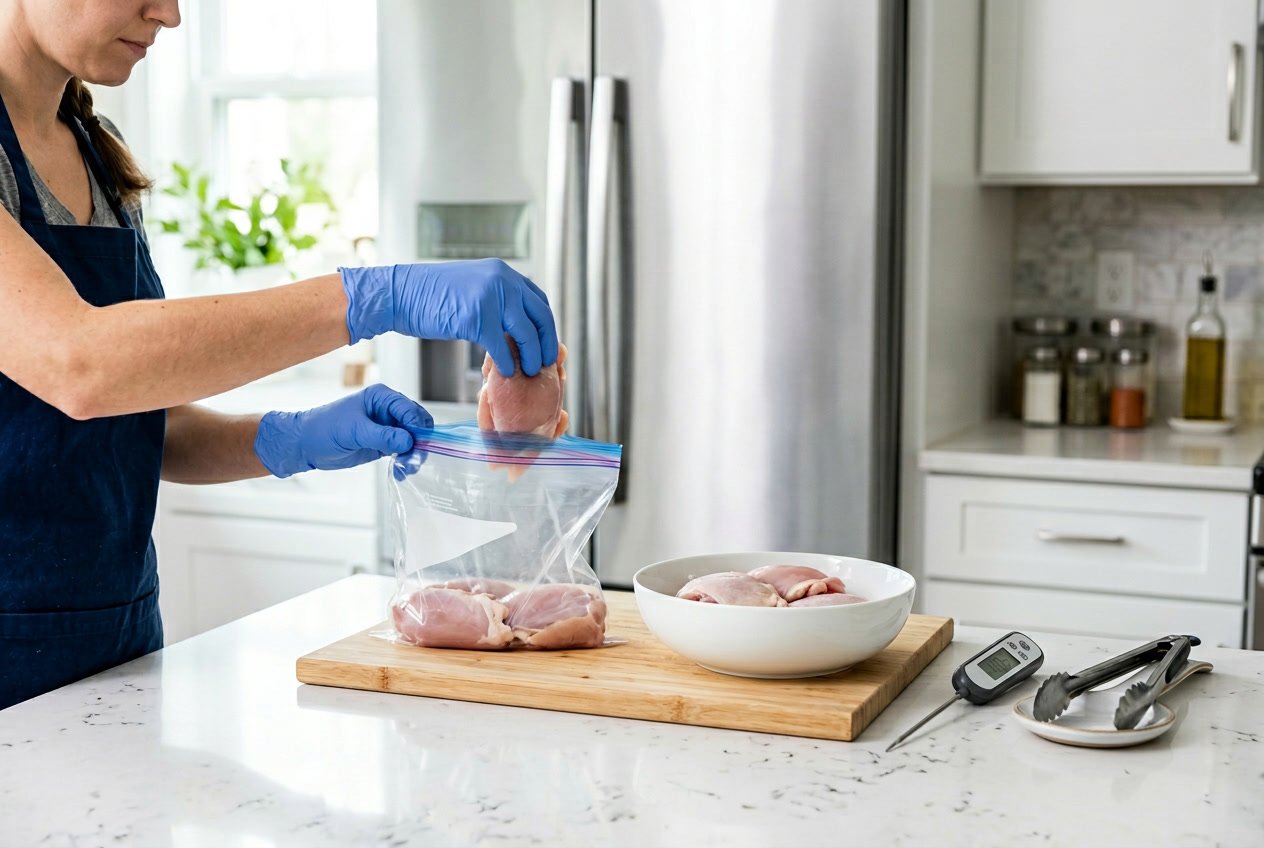
Store raw chicken thighs cold and sealed.
Refrigerate at 34–40°F (1–4°C) and freeze at 0°F (-18°C) or below.
Check for color, smell, and texture before use.
Choose the safest thawing method based on when you plan to cook them.
Checking Freshness and Quality
Inspect raw chicken thighs visually and by touch.
Fresh thighs are pale pink with white fat and no gray or green tint.
Press the flesh; it should feel slightly springy, not slimy.
Smell the meat.
A sour, ammonia-like, or rotten odor means you should discard it.
Check packaging dates and storage time.
Use refrigerated chicken within 1–2 days; freeze for up to 4–6 months for best quality.
If packaging is puffed, torn, or leaking, transfer thighs to a clean, airtight container or heavy-duty freezer bag to prevent cross-contamination.
Label packages with the freeze date to track age.
Thaw only when you plan to cook or refreeze after cooking.
Safe Thawing Methods
Use three safe options: refrigerator, cold water, or microwave.
For refrigerator thawing, place sealed thighs on a tray on the bottom shelf to catch drips.
Allow 12–24 hours for a small batch; larger quantities may need longer.
Cook within 1–2 days of thawing.
For cold-water thawing, keep thighs in a leak-proof bag, submerge in cold tap water, and change water every 30 minutes.
This takes 1–3 hours depending on quantity and thickness.
Cook immediately after thawing.
For microwave thawing, remove packaging, use the defrost setting following weight instructions, and rotate or flip pieces for even thawing.
Cook immediately since microwaving can partially cook edges.
Never thaw on the counter or in warm water.
After handling raw thighs, wash hands, utensils, and surfaces to prevent cross-contamination.
Trimming and Prepping Chicken Thighs
Set up a clean work surface, a sharp boning or chef’s knife, and kitchen shears.
Keep thighs cold for easier trimming and pat them dry before seasoning or cooking.
Trimming Excess Fat and Skin
Place the thigh skin-side down on a stable cutting board.
Use a sharp knife to trim away large, visible fat deposits along the edges and near the bone, leaving a thin 1–2 mm layer of fat if you want some flavor.
Remove loose or wrinkled skin that traps grease.
Grip the skin with a paper towel and pull while sliding the knife underneath to avoid tearing the meat.
Leave skin on for roasting or pan-searing to get crisp skin, or remove it for stews, braises, or lower-fat dishes.
After trimming, pat each thigh dry with paper towels to promote even browning.
Sanitize your board and tools immediately to prevent cross-contamination.
Deboning Techniques for Thighs
If you want boneless chicken thighs, work with chilled thighs to keep the meat firm.
Turn the thigh skin-side down and locate the bone.
Cut along one side of the femur with a narrow, flexible boning knife.
Follow the bone’s contour, using short controlled strokes to separate meat from bone without sawing.
Once you expose the bone, lift and cut the connective tissue at the joint to free it.
Remove any remaining cartilage or shards and inspect the meat with your fingers for hidden fragments.
For quicker prep, use kitchen shears to snip around cartilage before finishing with the knife.
Store boneless skinless chicken thighs in the fridge up to 2 days or freeze flat in a sealed bag for later use.
Essential Prep Steps Before Cooking
These steps help you achieve even cooking and better texture.
Bring thighs closer to room temperature so they cook evenly, and remove surface moisture so skin crisps and seasonings stick.
Bringing to Room Temperature
Take the thighs from the fridge and leave them on a plate, uncovered, for 15–20 minutes before cooking.
This reduces the temperature gap between the cold center and hot pan or oven, which shortens cook time and lowers the risk of overcooking the exterior while the interior reaches a safe temperature.
If you plan to marinate, do that while the thighs are still cool, then bring them up to room temperature after marinating.
For bone-in pieces, allow the full 20 minutes.
Boneless, skinless pieces need closer to 10–15 minutes because they warm faster.
Avoid leaving raw chicken out for more than 2 hours total (1 hour above 90°F).
Use this timing to coordinate oven or pan preheating so the thighs go straight from resting to heat.
Patting Dry for Best Texture
Use paper towels to pat each thigh completely dry, pressing on both skin and meat sides.
Dry skin is essential for achieving a crisp exterior and helps seasonings stick.
Trim excess fat and loose skin with kitchen shears before drying.
Removing these prevents flare-ups in a pan and reduces greasy patches that inhibit browning.
After drying, apply a light coat of oil and then salt and spices so they adhere.
If you prefer, season 15–30 minutes before cooking to let salt begin to penetrate.
For longer holds, refrigerate uncovered to dry the skin further for extra crispness.
Quick checklist:
- Remove from packaging and trim loose skin or fat.
- Pat dry thoroughly with paper towels.
- Oil lightly, then season; time seasoning per your cooking schedule.
Seasoning and Marinating Techniques
Seasoning gives immediate surface flavor and helps create a crisp exterior on skin-on thighs.
Marinades penetrate the meat, increase juiciness, and can be used ahead for meal prep to save time.
Basic Seasonings for Flavorful Chicken Thighs
Use salt as your foundation: about 1 tsp kosher salt per pound for even seasoning.
Apply salt early if you can—up to 24 hours refrigerated—to improve moisture retention.
Add black pepper and garlic powder for savory depth.
Paprika (regular or smoked) adds color and a mild sweet-smoky note that works well with both boneless skinless and bone-in cuts.
Include onion powder and a dried herb like thyme or rosemary for aroma.
Rub the mix into the meat and under skin when present to flavor the interior.
Finish skin-on thighs with a light brush of oil so spices adhere and skin crisps.
For boneless, skinless thighs, use slightly less oil to avoid greasy texture and reduce cooking time.
Marinade Ideas for Extra Juiciness
Acid, oil, and aromatics balance a good marinade.
Use 1 part acid (lemon juice, vinegar, or yogurt) to 3 parts oil (olive or neutral) plus garlic, salt, and herbs.
Marinate boneless skinless chicken thighs 30 minutes to 4 hours; longer can break down texture if acid-heavy.
For a soy-honey profile, combine soy sauce, honey, minced garlic, grated ginger, and a splash of rice vinegar.
This works for grilling or baking and suits meal prep.
For Mediterranean flavor, mix olive oil, lemon zest, oregano, garlic, and Dijon mustard.
For spicy notes, add smoked paprika or chipotle.
Pat thighs dry before cooking to ensure proper sear and crisping, especially when prepping ahead for reheating.
Popular Cooking Methods for Prepped Chicken Thighs
Choose a cooking method that fits your time, equipment, and texture goal.
High, direct heat gives crisp skin and char.
Steady oven heat gives even cooking and tenderness.
Temperature control, drying the skin, and using a thermometer matter most.
Baked Chicken Thighs
Baking gives you even cooking and consistent results with minimal hands-on time.
Preheat the oven to 400–425°F (204–218°C).
Arrange skin-side up on a rack set over a rimmed baking sheet so air circulates and the skin crisps.
Bake for 30–40 minutes depending on size.
Check with an instant-read thermometer and remove at 165°F, or 180–190°F if you prefer fall-apart tenderness.
Pat skin dry and rub with oil before seasoning to encourage browning.
If skin needs extra crisp, broil 1–3 minutes at the end while watching closely.
Let thighs rest 5–10 minutes to redistribute juices.
Grilled Chicken Thighs
Grilling adds smoke and char that complement the rich dark meat of chicken thighs.
Preheat a two-zone grill: one side high heat (about 450–500°F) and one medium (about 350°F).
Sear skin or exterior over high heat for 2–4 minutes per side to develop color, then move to indirect heat to finish—about 8–12 minutes—until internal temperature reaches 165°F.
Use bone-in, skin-on thighs for more flavor and less chance of drying.
Keep a spray bottle of water handy for flare-ups and baste with a sauce in the final few minutes to prevent burning.
Rest 5 minutes before serving to keep thighs juicy.
Sheet Pan Chicken Thighs
Sheet pan cooking gives you convenience and one-pan flavor concentration for roasted, juicy chicken thighs.
Preheat oven to 425°F (218°C).
Arrange skin-side up with vegetables spaced around thighs; avoid crowding to maintain crisp skin.
Toss vegetables and thighs with oil and a pinch of salt so everything roasts evenly.
Roast 30–40 minutes, flipping vegetables once if needed, until chicken reaches 165°F and vegetables are tender.
For extra caramelization, broil 1–2 minutes at the end.
Use boneless thighs to shorten cook time by 5–10 minutes.
Choose bone-in for deeper flavor and sturdier texture.
Chicken Thighs for Meal Prep
Chicken thighs give you a juicy, forgiving meal-prep protein that holds up well to refrigeration and reheating.
Focus on even cooking, quick chilling, and clear labeling so your cooked thighs stay safe and tasty for the week.
Batch Cooking and Storage Tips
Cook thighs in uniform size batches so every piece finishes at the same internal temperature. Use boneless, skinless for speed or bone-in, skin-on for richer flavor.
Roast at 400 to 425°F on a wire rack to crisp the skin. Let them rest 8 to 10 minutes to redistribute juices.
For stovetop, sear skin side down until crisp. Finish in a 400°F oven until the internal temperature reaches 165°F.
Portion into single-meal containers with 4 to 6 oz cooked chicken per person. Use airtight containers or heavy-duty resealable bags and press out excess air.
Label each container with the date and contents. Refrigerate cooked thighs up to 4 days or freeze up to 3 months.
If you freeze them, flash-freeze on a tray first to avoid clumping. Then transfer to a freezer bag.
Reheating for Freshness
Reheat gently to avoid drying. For oven reheating, place thighs on a baking sheet, cover loosely with foil, and warm at 325°F until the internal temperature reaches 140 to 150°F.
For stovetop, add 1 to 2 tablespoons of broth or oil to a skillet over medium-low, cover, and heat 5 to 8 minutes, flipping once.
Microwave for convenience by slicing thighs, adding a tablespoon of water or sauce, covering, and heating in 30 to 45 second bursts. Check the temperature as you go.
If you want crisp skin, finish under a 450°F broiler for 1 to 2 minutes after microwaving. Always reheat to at least 165°F and eat within 24 hours of reheating.
Easy Chicken Thigh Meal Prep Ideas
You can turn a batch of cooked chicken thighs into ready-to-eat lunches and dinners that save time and stay flavorful. Focus on straightforward recipes, simple sauces, and assembly patterns that let you mix and match through the week.
Chicken Thigh Recipes for Lunch and Dinner
Use baked, air-fried, or sheet-pan chicken thighs as the base for meals that reheat well and taste good cold. Try a Greek-style batch by marinating thighs in yogurt, lemon, garlic, and oregano, then baking at 425°F until 165°F internal. Portion with rice and roasted vegetables.
Apply a sticky honey-garlic or soy-garlic glaze in the last 5 minutes under the broiler for caramelization. Slow-braised tomato or curry thighs pair with grains or mashed potatoes and hold up in the fridge for 3 to 4 days.
For high-protein lunches, slice two thighs per serving and add to salads, grain bowls, or warm quinoa with sautéed greens. Label containers with date and reheating instructions such as air-fry at 400°F for 4 to 6 minutes or microwave for 1 to 2 minutes to keep your prep organized.
Uses for Prepped Chicken Thighs
Prepped thighs work well in bowls, wraps, soups, and chilis. Each option needs only minimal extra cooking.
For bowls, slice the thighs and combine them with 1 cup cooked grain and 1 cup roasted vegetables. Add a handful of greens and a tablespoon of sauce like tzatziki, pesto, or spicy mayo.
For wraps, shred the thighs and mix them with salsa or slaw. Fill whole-wheat tortillas and wrap them in foil for easy lunches. Add sliced avocado for extra creaminess.
In soups or chilis, cube or shred the thighs and stir them into chicken chili, bean chili, or broth-based soup during the last 10 minutes of simmering. This keeps the dish hearty and prevents overcooking.
Store the meat separately from wet components when possible to preserve texture and keep it fresh. Prepare 4 to 6 portions in advance for convenience.


