
How to Cook Chicken Thighs: Essential Methods and Pro Tips
You want chicken thighs that stay juicy, develop deep flavor, and give you crisp skin when you want it. Cook bone-in, skin-on thighs to about 175°F for tender, gelatin-rich meat and pull boneless thighs around 165°F to avoid drying. Use an instant-read thermometer and a hot cooking surface or oven to crisp the skin.
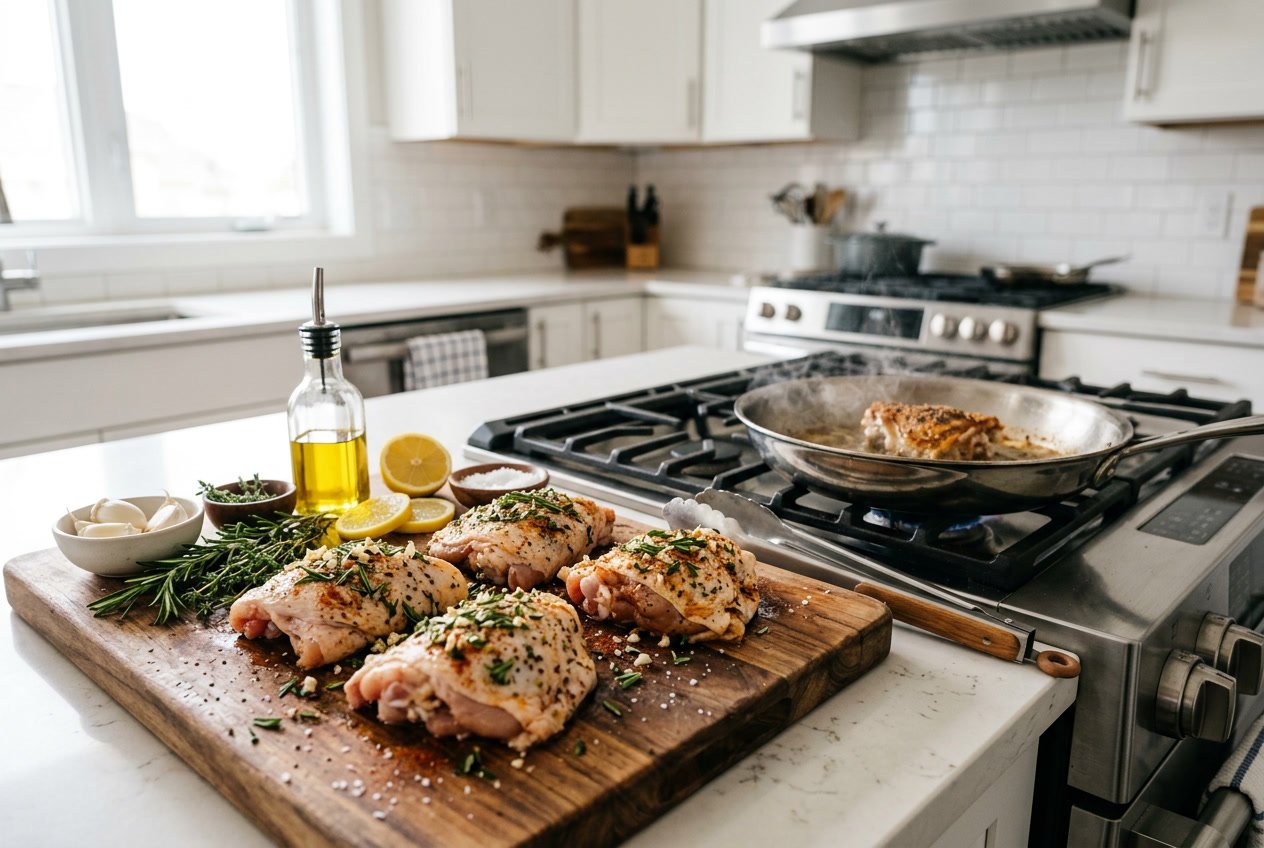
This guide helps you choose the right thigh, prep and season for maximum flavor, and use the best approaches for baking, stovetop searing, grilling, and air frying.
You’ll find practical tips on timing, avoiding mistakes like overcrowding or skipping the pat-dry step, and safe doneness checks.
You’ll also get quick serving ideas and simple recipe variations for weeknight schedules or weekend feasts.
Types of Chicken Thighs
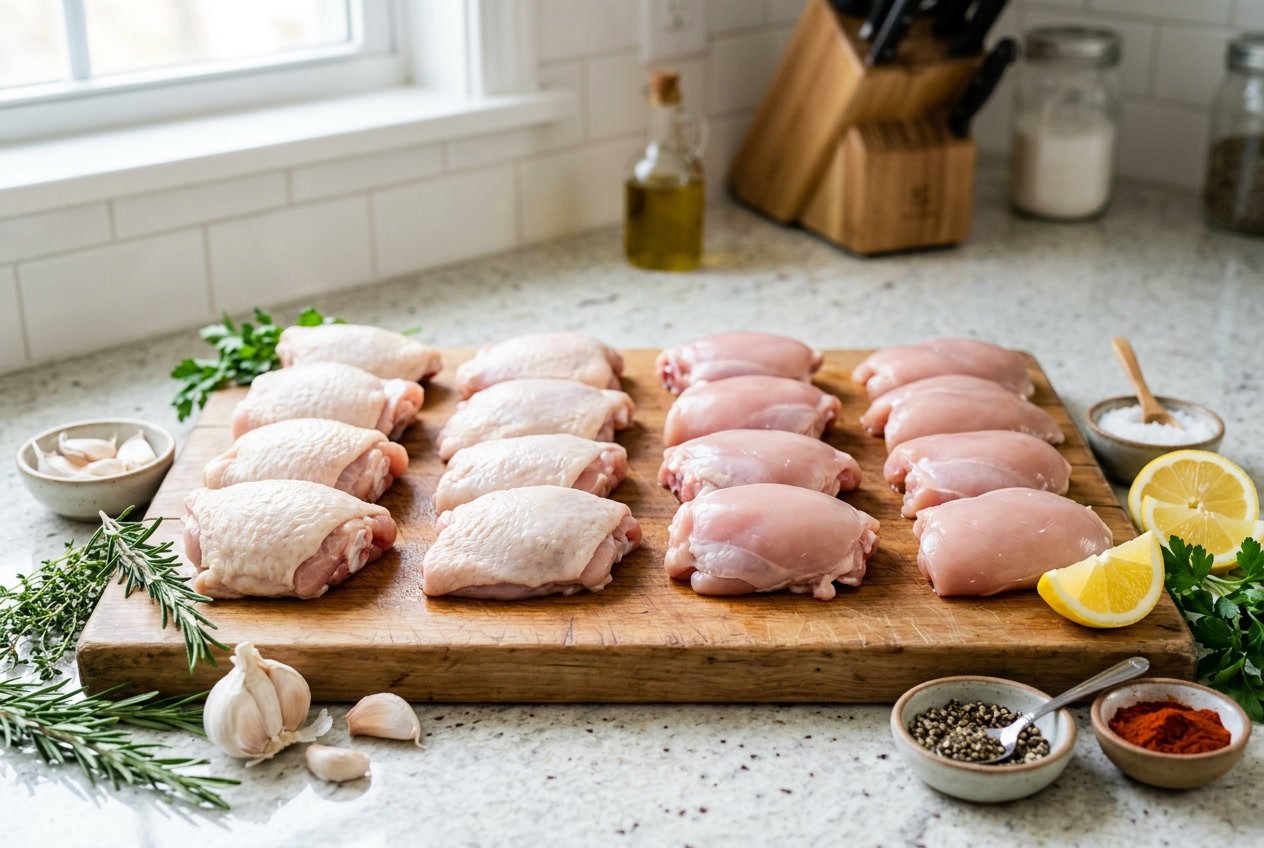
Choose between cuts that prioritize flavor, texture, or speed. Consider your cooking method and desired texture when picking thighs.
Bone-In Skin-On Chicken Thighs
Bone-in, skin-on thighs deliver the most flavor because the bone and fat protect the meat and add richness. The skin crisps when you dry it and use high heat or finish under a broiler. The bone helps the interior reach a tender, gelatinous texture at 175–185°F.
Use these for roasting, grilling with a two-zone fire, braising, or slow cooking when you want a crispy exterior and moist meat. Expect longer cook times than boneless thighs and watch for flare-ups on the grill from rendered fat.
If you want juicy slices or shreddable meat, pull them later (175–185°F) so collagen converts to gelatin.
Boneless Skinless Chicken Thighs
Boneless, skinless thighs cook faster and fit tight recipes like stir-fries, sheet-pan dinners, or quick pan-sears. They have less connective tissue than bone-in thighs, so aim for 165–170°F.
Overcooking dries them out because there’s no skin or bone to protect moisture. Use these when you need uniform pieces for skewers, sandwiches, or quick meals.
Marinate shorter (30 minutes to 4 hours) if using acidic ingredients. For crisp edges, pat dry, sear over medium-high heat, and finish in a hot oven or under a broiler.
Use even thickness or pound lightly for even cooking.
Choosing the Right Cut
Match the cut to your method and desired finish. Pick bone-in skin-on when you want deep flavor and crispy skin. Choose boneless skinless for speed, even cooking, and portability in dishes like tacos or rice bowls.
Consider cooking time, equipment, and how you’ll serve the chicken. If you need shreddable meat for tacos or sandwiches, bone-in slow cooking or pressure cooking works well. For fast weeknight protein that seasons evenly, go boneless skinless and plan for a shorter cook time.
Preparation and Seasoning
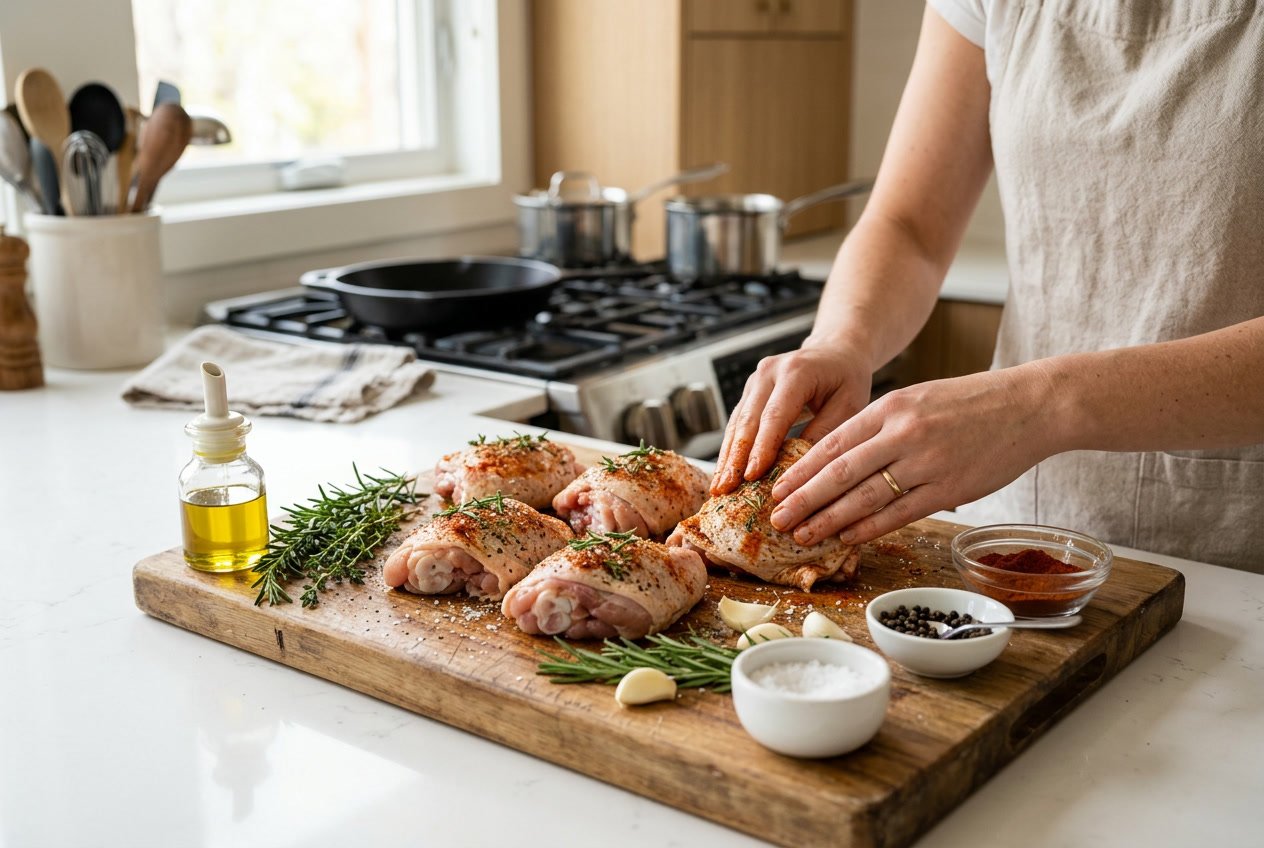
Start by removing excess fat and drying the meat thoroughly. Decide whether you’ll use a quick rub, a longer marinade, or both to build flavor and help the skin crisp.
Trimming and Patting Dry
Trim excess fat and loose skin with kitchen shears to prevent flare-ups and uneven cooking. Remove the thin flap of skin near the bone if it bunches and prevents even contact with the pan or rack.
Pat each thigh very dry with paper towels. Dry skin browns and crisps far better; wet skin steams and stays rubbery.
If using bone-in thighs, tuck the skin back over the meat after trimming. Leave a small amount of fat for flavor, but trim any thick pockets that will render and make the pan greasy.
Marinades and Rubs
Choose a marinade based on time: 15–30 minutes for surface flavor, 4–24 hours for deeper penetration. For lemon chicken thighs, combine lemon juice, olive oil, minced garlic, salt, and chopped thyme. Refrigerate 2–6 hours for bright acidity.
Dry rubs work well when you want crispy skin. Mix salt, black pepper, garlic powder, paprika, and a touch of sugar to encourage browning. Apply rub at least 15 minutes before cooking, or up to overnight in the fridge.
Use a zip-top bag or shallow dish for marinades and turn thighs occasionally to coat evenly. Pat poultry dry after marinating if you plan to sear or roast.
Seasoning Techniques
Salt early for deeper seasoning: sprinkle about 1 teaspoon kosher salt per pound and refrigerate uncovered for 30–60 minutes when time allows. This helps the salt penetrate and firms the meat for even cooking.
Apply oil sparingly to help spices adhere and to promote browning. Rub oil over skin and then press the seasoning mix into the surface.
For even seasoning, distribute spice mixes on both sides and along the edges. When using bone-in thighs, season around the bone where heat conducts differently.
Use an instant-read thermometer to check doneness (165°F minimum). Rest thighs 5–10 minutes after cooking so juices redistribute.
Flavor Variations
Classic: olive oil, garlic, paprika, salt, black pepper, and a squeeze of lemon after cooking. This keeps flavors clean.
Herb-forward: mix chopped rosemary, thyme, and lemon zest into oil and rub under the skin for aromatic infusion. Under-skin application flavors meat directly and protects the skin from burning.
Spicy/Smoky: combine smoked paprika, cayenne, brown sugar, and cumin for a balanced heat and caramelized crust. Adjust cayenne as needed.
Asian-inspired: blend soy sauce, sesame oil, grated ginger, garlic, and a splash of rice vinegar. Marinate 30 minutes to 4 hours; pat dry before high-heat searing.
For any variation, balance acid, fat, salt, and aromatics so the thigh retains moisture while carrying bold flavor.
How to Bake Chicken Thighs
You can use a simple oven method to produce juicy meat and, when desired, golden, crispy skin. Temperature, timing, and a couple of handling tricks determine whether thighs stay moist or dry out.
Step-by-Step Oven Instructions
Preheat your oven to 425°F for boneless thighs or 450–500°F if you want to crisp skin on bone-in thighs. Pat thighs dry with paper towels to remove surface moisture.
Toss thighs with 1–2 tbsp oil per pound and season with salt, pepper, and aromatics. Arrange skin-side up on a rimmed baking sheet or in a shallow roasting pan with a little space between pieces.
Bake boneless thighs on the middle rack for about 20–30 minutes. For bone-in, skin-on thighs, use a preheated baking sheet and roast on the upper third of the oven for 25–35 minutes.
Check the thickest part with an instant-read thermometer: target 165°F. Let rest 5–10 minutes before serving.
How Long to Bake Chicken Thighs
Cooking time depends on thigh type, size, and oven temperature. Boneless, skinless thighs (4–6 oz) take 20–30 minutes at 425°F. Bone-in, skin-on thighs (6–8+ oz) usually need 25–35 minutes at 450–500°F. At lower temperatures (350°F) they can take 40–50 minutes.
Use internal temperature, not time alone. Insert an instant-read thermometer into the thickest part without touching bone; 165°F is the safe minimum. If you prefer more tender results, pull at 165°F and let carryover raise the temp a few degrees while resting.
Cut a tiny slit if you lack a thermometer; clear juices indicate doneness.
Tips for Crispy Baked Chicken Thighs
Dry skin is essential: pat thoroughly and let skin air-dry in the refrigerator uncovered for at least 30 minutes if time allows. A thin coating of oil or mayonnaise helps seasonings adhere and promotes even browning.
High heat or preheating the baking sheet creates immediate sizzling that renders fat and crisps skin. Place thighs on a wire rack set over a baking sheet to let fat drip away and air circulate under the pieces.
Finish under the broiler for 1–2 minutes if you want extra color. Watch closely to avoid burning.
Avoid overcrowding the pan; crowded pieces steam instead of roast. Season generously with salt. Use an instant-read thermometer to prevent overcooking and keep the meat juicy.
How to Cook Chicken Thighs on the Stove
You can use practical stovetop techniques and temperature checks to deliver juicy meat and, when desired, crispy skin. Here are step-by-step actions for searing, finishing, and a quick pan sauce.
Stovetop Methods Overview
Choose bone-in, skin-on for more flavor and slightly longer cook time, or boneless, skinless for faster, leaner results. Use a heavy skillet for even heat and a better crust.
Pat thighs dry and season with salt and pepper. Add garlic powder or paprika if you like. Heat 1–2 tablespoons of oil until shimmering over medium-high heat, then add thighs without overcrowding the pan.
Sear undisturbed 5–8 minutes skin-side down (or on the first side for boneless) until a deep golden crust forms. Flip, reduce heat to medium, and cook another 6–12 minutes depending on thickness and bone presence.
Check doneness with an instant-read thermometer: 165°F at the thickest point.
For a simple pan sauce, remove the chicken, add a knob of butter, minced garlic, and 1/4 cup chicken broth or wine to the hot pan. Scrape browned bits, reduce 1–2 minutes, then spoon over the thighs.
Achieving Crispy Skin on the Stove
Start by drying the skin very well. Sprinkle salt on the skin and let the thighs sit uncovered in the fridge for 30 minutes to an hour if you have time.
Use a skillet large enough to leave space between pieces; overcrowding causes steaming. Heat oil until it just smokes, then place thighs skin-side down and press lightly so skin contacts the pan.
Do not move them for 5–8 minutes. Adjust heat after the initial sear—lower to medium to finish cooking through without burning the skin.
If skin isn’t crisp enough, finish under a hot broiler for 1–3 minutes, watching closely. Rest thighs 5 minutes before serving.
Grilling and Air Frying Chicken Thighs
Grill or air fry for crispy skin and juicy meat. Control temperature and timing, and use a thermometer to reach 165°F at the thickest part.
Dry the skin, season well, and avoid overcrowding to ensure even cooking and good air circulation.
How to Grill Chicken Thighs
Preheat your grill to medium-high (about 400°F). Oil the grates to prevent sticking and place bone-in, skin-on thighs skin-side down first to crisp the skin.
Cook 5–7 minutes per side for direct heat, then move to indirect heat if pieces are large. Aim for an internal temperature of 165°F; check at the thickest part near the bone.
Use a two-zone fire (hot and cooler side) to sear, then finish gently to avoid flare-ups. Let the thighs rest 3–5 minutes before serving.
For flavor, marinate 30 minutes to overnight or apply a dry rub. Brush with sauce in the last 2–3 minutes only to prevent burning.
How to Make Air Fryer Chicken Thighs
Preheat the air fryer to 400°F for 3–5 minutes. Pat thighs fully dry, lightly coat with oil, and season. A small amount of baking powder can help the skin crisp.
Arrange thighs skin-side down in a single layer with space between pieces for airflow. Cook bone-in thighs about 18–22 minutes, flipping halfway so skin finishes on top. For boneless thighs, expect 12–15 minutes.
Confirm doneness with a thermometer at 165°F. Reheat or refresh leftovers in the air fryer at 350°F for 3–5 minutes to restore crispness.
Avoid overcrowding and add 1–2 extra minutes if you want darker browning.
Checking for Doneness and Food Safety
Check temperature and appearance to ensure safety and maintain juiciness. Use an instant-read thermometer for the most reliable results and target the proper internal temperature for dark meat.
Using an Instant-Read Thermometer
Insert an instant-read thermometer into the thickest part of the thigh, avoiding contact with bone. Hold the probe in place until the reading stabilizes; most digital probes settle in a few seconds.
Check multiple spots if pieces vary in size or thickness. For bone-in thighs, probe next to the bone but not touching it.
For boneless thighs, probe the center. Clean the probe with hot, soapy water between checks to avoid cross-contamination.
If you don’t have a thermometer, rely on visual and tactile cues: meat should be opaque and juices clear. Using a thermometer removes guesswork and reduces the risk of foodborne illness.
Ideal Internal Temperatures
Aim for 175°F (79°C) in the thickest part of chicken thighs for the best balance of safety and tenderness. This temperature breaks down dark meat collagen, yielding juicy, tender meat.
USDA lists 165°F (74°C) as the safe minimum for poultry, but thighs reach optimal texture at 175°F. If you remove thighs a few degrees shy, rest them tented with foil for 5–10 minutes to allow carryover cooking to raise the internal temperature.
If a thermometer reads below target, return thighs to heat and recheck after a few minutes.
Serving Ideas and Recipe Variations
Serve chicken thighs with starches and bright produce to balance their richness. Try roasted potatoes, steamed rice, or a crisp salad, and add a pan sauce or glaze to boost flavor and moisture.
Classic Chicken Thigh Recipes
Roast bone-in, skin-on thighs at 425°F until the skin is crisp and the internal temperature reaches 165°F. Serve with roasted root vegetables and pan juices.
Boneless, skinless thighs work well in braises. Cook them low and slow with tomatoes, onions, and olives for a Mediterranean-style dish.
For quick weeknight meals, sear thighs in a hot skillet for 5–7 minutes per side, then finish in the oven. Use simple seasoning: salt, pepper, garlic, and a squeeze of lemon.
For frying, brine briefly, dredge in seasoned flour, and fry at 350–375°F for even browning and juicy meat.
Creative Sauce and Pan Sauce Ideas
After searing or roasting, deglaze the pan with liquid to make a pan sauce. Add wine, stock, or vinegar, scrape browned bits, then reduce.
Whisk in butter off heat for shine and silkiness. Finish with fresh herbs, mustard, or a splash of cream for richness.
Try these variations:
- Citrus-Garlic Pan Sauce: white wine, lemon juice, chopped parsley.
- Mustard-Shallot Sauce: chicken stock, Dijon, sautéed shallots, butter.
- Soy-Ginger Glaze: soy, rice vinegar, brown sugar, grated ginger, reduce to glaze.
Spoon the sauce over thighs or toss with roasted vegetables and grains.
Using Leftover Chicken Thighs
Shred leftover thighs and mix them with yogurt, mayo, chopped celery, and herbs for a robust chicken salad.
Use diced leftovers in tacos with pickled onions and cilantro. Fold them into pasta with a splash of cream and the pan sauce for a quick dinner.
You can freeze leftover thighs. Store them in airtight containers with a little cooking liquid to retain moisture.
When you reheat, warm the chicken gently in a skillet with a tablespoon of stock or sauce to avoid drying the meat.


