
How to Cook Chicken Thighs on Stove: Step-by-Step Guide and Recipes
You can get crispy, juicy chicken thighs on the stove in under 30 minutes using simple techniques and common kitchen tools.
Sear skin-side down in a hot pan, avoid overcrowding, and finish over medium heat until the internal temperature reaches 165°F (75°C) for reliably tender, flavorful results.
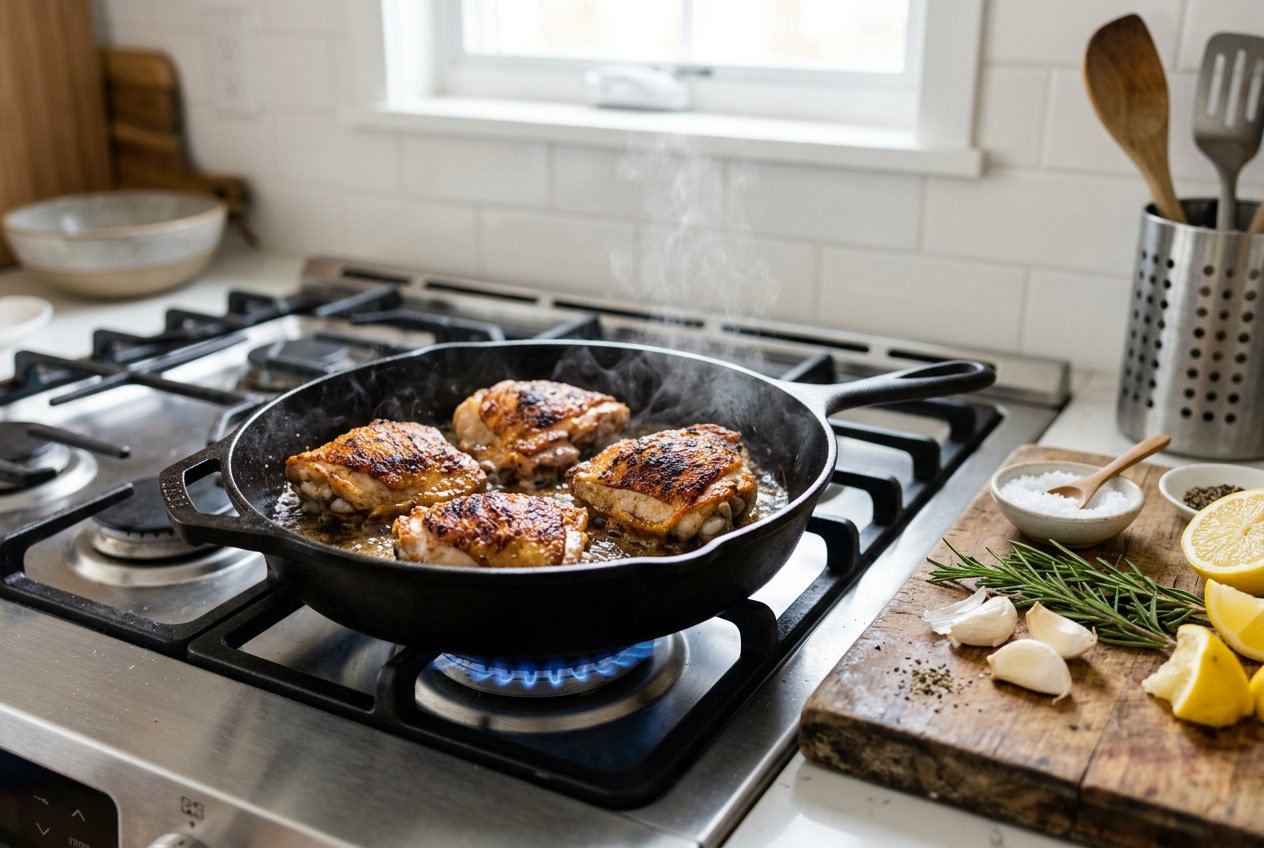
This guide explains how to choose bone-in or boneless thighs, the right pan and oil, how to prep and season, a clear step-by-step stovetop method, recipe variations, and tips to prevent steaming or burning.
Follow these steps to turn a weeknight protein into a dependable, crowd-pleasing meal.
Choosing the Right Chicken Thighs
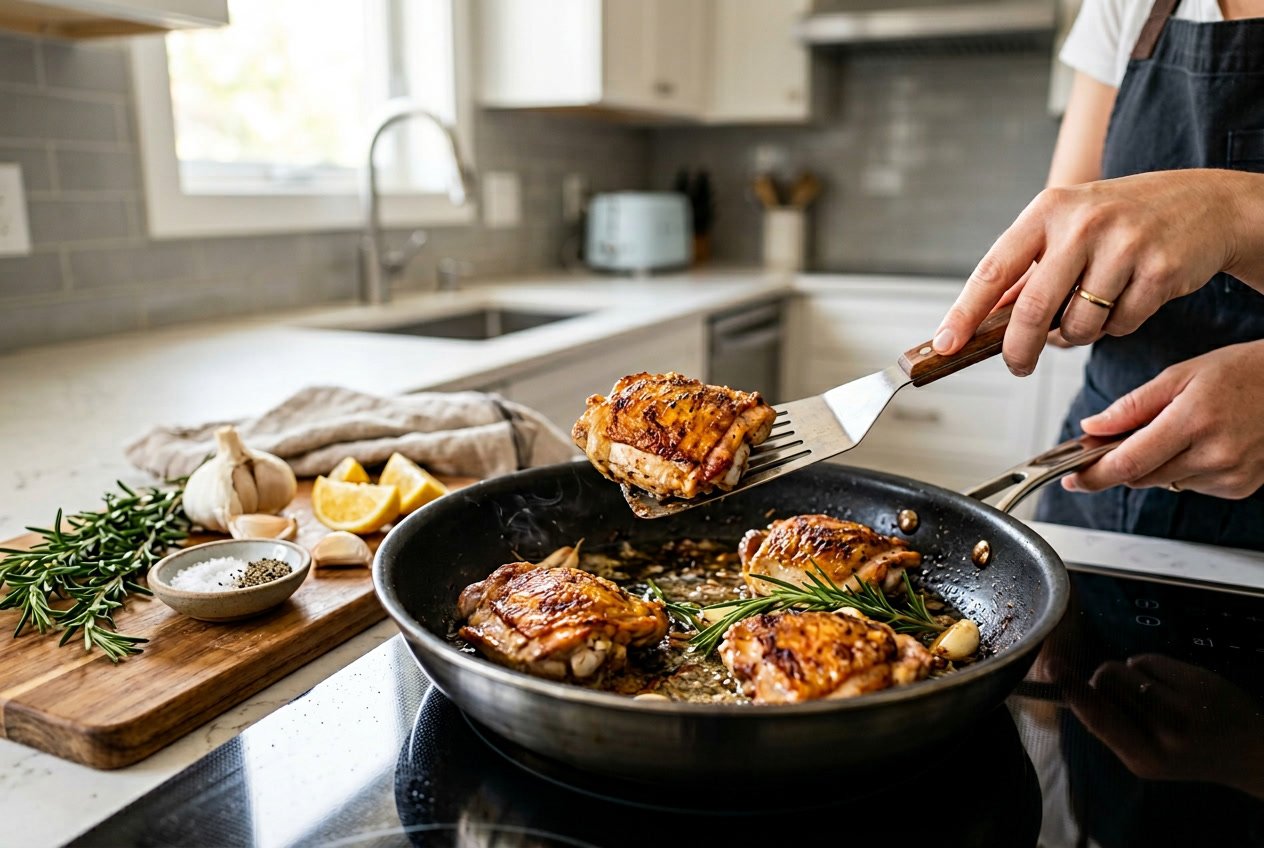
Pick thighs that match the texture and cook time you want.
Bone-in adds flavor and holds heat longer, while boneless cooks faster and is easier to eat.
Skin presence affects moisture, crisping, and prep choices.
Bone-In vs Boneless Chicken Thighs
Bone-in chicken thighs give you more flavor and stay juicier during longer cooking because the bone conducts heat and slows the center from overcooking.
Expect 5–10 extra minutes of stovetop time compared with boneless thighs, and check doneness with an instant-read thermometer near the bone.
Boneless chicken thighs cook faster and are simpler to cut or serve.
They sear quickly and fit better in a single pan when you need even contact with the skillet.
Choose boneless if you want faster weeknight dinners or to slice the meat for salads and wraps.
Skin-On vs Skinless Chicken Thighs
Skin-on chicken thighs provide a layer of fat that bastes the meat and crisps beautifully when seared.
If you want a crispy exterior, start skin-side down in a hot skillet and render the fat until the skin is golden and tight.
Skinless thighs reduce cooking splatter and shorten crisping steps, but they lose surface fat that helps flavor and moisture.
Use a little more oil and lower heat to prevent drying when you cook skinless thighs on the stove.
Selecting High-Quality Cuts
Look for thighs that are uniform in size so they cook evenly.
Avoid pieces with large color variations or a strong odor.
Fresh chicken thighs should be pink with minimal liquid in the packaging and elastic flesh when pressed.
Buy bone-in chicken thighs if you plan to braise or simmer.
Choose boneless, skin-on thighs if you want quick pan-seared crispness without dealing with bones.
Pick thighs labeled “fresh” or “never frozen” for the tightest texture.
Consider organic or pasture-raised options if you prefer higher-welfare sourcing.
Essential Tools and Ingredients for Stovetop Cooking
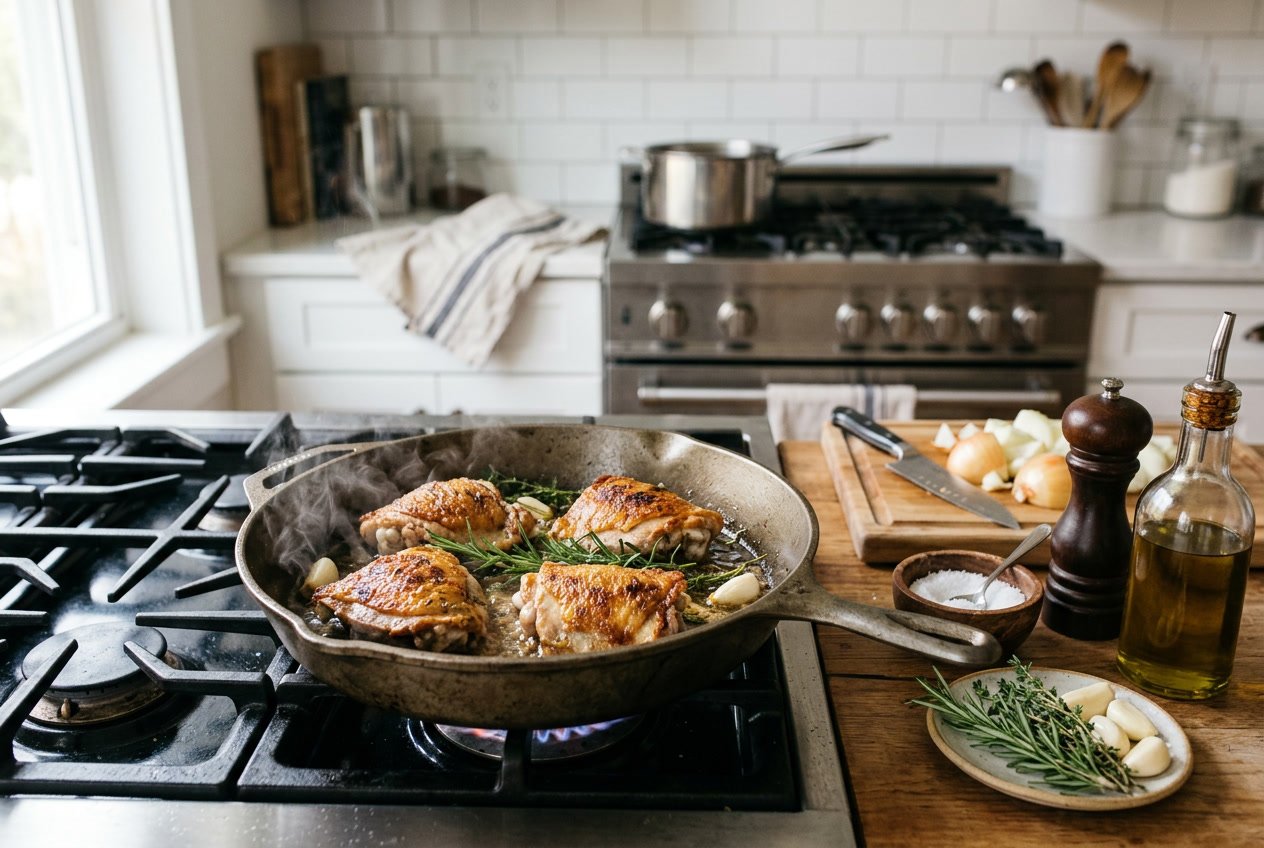
Use a heavy, heat-retaining skillet, reliable seasonings, and an instant-read meat thermometer to get juicy results.
Pick tools that give steady heat and ingredients that tolerate high-heat searing.
Best Skillets for Chicken Thighs
Choose a heavy-bottomed skillet that holds and distributes heat evenly.
Cast iron creates a superior crust, retains heat when you add cold liquids, and browns skin-on, bone-in thighs without hot spots.
Use a well-seasoned 10–12-inch cast iron skillet for 4–6 thighs.
Stainless steel or enameled cast iron are good alternatives.
Stainless steel works well with oil at medium-high heat and deglazes easily for pan sauces.
Nonstick works for skinless, boneless thighs but won’t develop as deep a fond.
Avoid thin, warped pans that cause uneven browning.
Match pan size to batch size.
Leave 1/2–1 inch between pieces to prevent steaming.
Preheat the skillet until oil shimmers before adding the chicken.
Must-Have Seasonings and Oils
Start with coarse salt and freshly ground black pepper.
Add garlic powder, onion powder, smoked paprika, or lemon zest depending on the profile you want.
For bone-in, skin-on thighs, rub under the skin as well as on top to flavor the meat directly.
Choose oils with high smoke points for searing: avocado oil, refined olive oil, or grapeseed oil.
Butter adds flavor but burns quickly.
Use butter late in cooking or combine with oil to raise the smoke point.
Keep 1/2 cup chicken broth or white wine on hand to deglaze and capture the fond.
Have aromatics ready—minced garlic, fresh thyme, or rosemary—to add in the last minute of cooking.
For skin-on skillet chicken thighs, pat the skin dry and lightly oil before seasoning to ensure a crisp finish.
Importance of a Meat Thermometer
An instant-read meat thermometer tells you when the thickest part of the thigh reaches 165°F (74°C), the safe internal temperature for chicken.
Insert the probe avoiding bone for an accurate reading.
Use the thermometer after searing and during the finish stage, especially for bone-in thighs that take longer.
Allow the chicken to rest 4–5 minutes.
Carryover heat will raise the internal temp slightly and juices will redistribute.
Keep a digital instant-read model with a thin probe for fast, precise checks.
Preparing Chicken Thighs for the Stove
Focus on removing excess moisture, trimming loose fat or skin, and applying salt-forward seasoning or a short marinade so the thighs sear properly and finish juicy.
Small steps before the pan make a big difference in crisp skin and even cooking.
Trimming and Patting Dry
Trim any large, dangling pieces of fat or skin with a sharp knife to prevent flare-ups and uneven browning.
Leave the skin attached; it crisps and protects the meat during stovetop cooking.
Pat each thigh thoroughly with paper towels.
Press firmly into crevices and under the skin where possible.
Dry surfaces brown; moisture creates steam and prevents a proper sear.
If using bone-in thighs, check for bone fragments and remove them.
Let trimmed thighs sit uncovered in the fridge for 20–40 minutes if you have time.
This further dries the skin and improves crisping.
Proper Seasoning Techniques
Season early and simply.
Sprinkle kosher salt (about 1/4–1/2 tsp per thigh) and freshly ground black pepper evenly over all sides.
Salt draws moisture to the surface initially, then helps form a flavorful crust when seared.
Massage dry spices into the meat and under the skin when possible.
Use a small, even layer of garlic powder, paprika, and a dried herb like thyme or oregano for balanced flavor without burning during searing.
If you plan to braise or finish covered, increase salt slightly because some seasoning flavors dilute during the covered cook.
Reserve fresh herbs and citrus zest for the final minutes to preserve brightness.
Marinades and Flavor Infusions
Use brief marinades (30 minutes to 2 hours) for skin-on thighs to avoid breaking down the skin’s texture.
An acid-balanced mix (1 part acid like lemon juice or vinegar to 3 parts oil) with garlic, salt, and a touch of sugar will boost flavor without making the meat mealy.
For overnight marinating, favor low-acid options: yogurt or buttermilk with spices tenderizes without overcooking surface proteins.
Rinse and pat dry before searing to protect skin crispness.
To infuse during cooking, add aromatic butter or oil-based baste near the end of pan-searing.
Spoon-hot fat over the skin to deepen color and lock in juices.
How to Cook Chicken Thighs on Stove: Step-by-Step
Follow a clear sequence: dry and season the thighs, get the pan hot, sear skin-side down without crowding, then reduce heat and finish covered until the internal temperature reaches 165°F (74°C).
Use a meat thermometer, rest the meat, and finish with a quick high-heat crisp if needed.
Pan-Searing for Juicy Results
Pat each chicken thigh very dry with paper towels.
Season both sides with salt, pepper, and your chosen spices (garlic powder, paprika, thyme), and rub a little oil into the skin.
Heat a heavy skillet over medium-high until a drop of water sizzles away.
Add 1–2 tablespoons oil, then place thighs skin-side down in a single layer.
Do not move them for 6–8 minutes to develop a crisp, brown crust.
Flip and sear the flesh side 3–5 minutes.
If using boneless, skin-on thighs, reduce sear times by a couple minutes.
Work in batches if the pan gets crowded to keep the pan temperature high and the skin crisp.
Timing and Temperature Guidelines
Start with medium-high heat for searing, then lower to medium-low to finish cooking.
Typical timings: 6–8 minutes skin-side down, 3–5 minutes skin-off sear, then 12–18 minutes covered to reach doneness depending on thigh size.
Target an internal temperature of 165°F (74°C) at the thickest part, measured with an instant-read thermometer.
Bone-in thighs take longer—plan on the higher end of the finish time.
Boneless thighs cook faster; check after 10 minutes covered.
If the skin browns too quickly before the center reaches temperature, lower heat and extend covered time.
If you prefer extra crisp skin, remove the lid for the last few minutes and raise heat slightly while watching closely.
Finishing Techniques and Resting Meat
After the thighs reach 165°F, remove the pan from heat and tent the thighs loosely with foil.
Rest for 5–10 minutes so juices redistribute.
For extra crisping, transfer rested thighs back to a hot, dry pan skin-side down for 30–60 seconds.
Or spoon pan juices over the meat for added flavor.
If you used a sauce, simmer it separately and spoon over the thighs after resting.
Slice against the grain when serving.
Serve immediately with lemon wedges or a quick pan sauce made from deglazed drippings, stock, and butter.
Methods and Recipe Variations
These recipes use stovetop techniques that give you crispy skin, fully cooked interior, and concentrated pan flavors.
Each variation lists key seasonings, cooking steps, and quick sauce or finishing ideas to fit weeknight cooking and meal prep.
Classic Skillet Chicken Thighs
Pat the thighs dry and season generously with salt, pepper, garlic powder, and paprika.
Use a heavy skillet and heat 1–2 tablespoons oil over medium-high until shimmering.
Place skin-side down and sear without moving for 6–8 minutes until deeply golden.
Flip, reduce heat to medium, and cook 6–10 minutes more for bone-in (less for boneless), or until internal temp reaches 165°F (75°C).
Rest 5 minutes before serving.
For a quick pan sauce, remove chicken, deglaze with 1/3 cup chicken broth or white wine, add a knob of butter and a squeeze of lemon, then spoon over the thighs.
Garnish with chopped parsley.
Honey Garlic Chicken Thighs
Season thighs with salt, pepper, and a touch of smoked paprika.
Sear skin-side down in oil over medium-high heat until crisp, then flip and cook until nearly done.
Lower heat to medium-low, push thighs to the side, and add 2 minced garlic cloves and 1 tablespoon butter to the pan.
Stir in a sauce made from 3 tablespoons honey, 2 tablespoons soy sauce, and 1 tablespoon rice vinegar; simmer 2–3 minutes until slightly thickened.
Coat the thighs in the glaze and simmer 1–2 more minutes to marry flavors.
Finish with sesame seeds and sliced green onions.
Cajun Butter Chicken Thighs
Pat thighs dry and rub with a blend of 1 teaspoon paprika, 1/2 teaspoon cayenne (adjust to heat preference), 1 teaspoon garlic powder, 1/2 teaspoon onion powder, 1/2 teaspoon thyme, plus salt and pepper.
Use oil for the initial sear.
Sear skin-side down over medium-high heat until crisp, then flip and reduce heat to medium.
After the chicken is nearly cooked, add 2 tablespoons butter and 1 small sliced shallot to the pan.
Spoon melted butter and pan juices over the thighs for 1–2 minutes.
Finish with a splash of lemon juice or hot sauce.
Serve with rice or sautéed greens.
Other Flavorful Stovetop Recipes
Try these quick riffs to stretch your skills. Make a brown sugar and soy glaze for a sweet-savory finish, a lemon-thyme and white wine pan sauce for a bright herbal touch, or a Moroccan spice rub with preserved lemon and cilantro for warm, aromatic flavors.
Start each recipe the same way. Dry and season the chicken, sear it skin-side down, then finish over medium heat.
If you want to add vegetables, cook them after searing the thighs or in a separate pan to keep the chicken from steaming. Use the pan drippings to make sauces by deglazing with stock, wine, or citrus, then finish with butter or cream to thicken.
Tips for Perfect Stovetop Chicken Thighs Every Time
Focus on heat control, seasoning, and timing. Adjusting pan temperature, resting time, and storage technique can improve texture and flavor.
Avoiding Dry or Undercooked Meat
Check doneness with a digital instant-read thermometer. Aim for 165°F (75°C) in the thickest part of boneless skinless thighs or just under the bone for bone-in pieces.
Insert the probe from the side to avoid hitting bone and recheck in two spots if thickness varies. Sear the chicken on medium-high heat to form a crust, then reduce to medium and finish cooking.
For bone-in, skin-on thighs, cook 6–12 minutes after flipping, depending on thickness. Boneless thighs finish faster, usually 6–8 minutes total after searing.
Let the thighs rest for 4–6 minutes after cooking. Resting helps redistribute juices and slightly raises the internal temperature.
Slice only after resting to keep juices inside.
Getting Crispy Skin and Golden Crust
Pat skin-on chicken thighs completely dry with paper towels before seasoning. Moisture prevents browning, so avoid wet marinades or blot excess liquid right before cooking.
Use a heavy skillet like cast iron or stainless steel and heat oil until it shimmers but does not smoke. Place the chicken skin-side down and press gently so the skin makes full contact.
Leave the chicken undisturbed until the skin releases and turns deep golden, usually 6–8 minutes. Flip and finish over medium heat to cook through without burning.
For boneless skinless thighs, flatten slightly with a meat mallet for even thickness. Dust lightly with flour or cornstarch for extra crust, or finish with a small pat of butter and a quick baste for richer browning.
Storing and Reheating Leftovers
Let cooked thighs cool to room temperature for no longer than two hours. Then refrigerate them in an airtight container for up to 3–4 days.
Slice the thighs or keep them whole. Pour a thin layer of pan sauce over the pieces to help retain moisture during storage.
Reheat the thighs in a preheated oven at 350°F (175°C) for 10–15 minutes. You can also use a skillet over medium-low heat, covered, and add a splash of chicken broth to prevent drying.
For crispy skin, reheat the thighs uncovered in a 400°F (200°C) oven for 6–8 minutes. You can also sear them skin-side down in a hot skillet for 2–3 minutes.
Try to avoid microwaving, as it softens the skin and can dry the meat.


