
How to Chicken Thighs in Oven: Crispy, Tender & Juicy Guide
You can get juicy, well-seasoned oven baked chicken thighs with crisp skin by using the right temperature, a simple seasoning or marinade, and an instant-read thermometer to reach 165°F.
Coat the thighs, choose bone-in or boneless based on texture preference, bake at a hot temperature for crisp skin or at moderate heat for gentle cooking, and check doneness with a thermometer for great results every time.
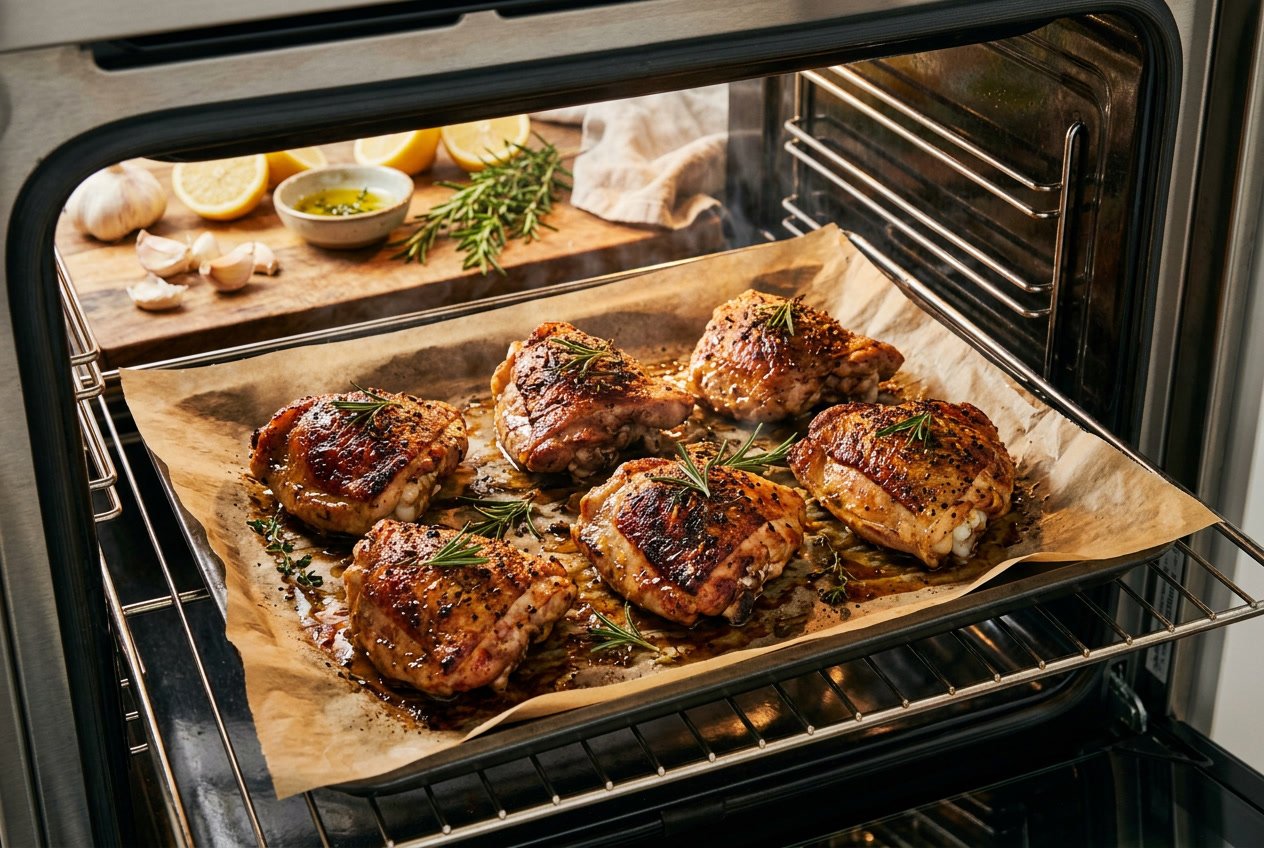
This guide covers what to have on hand, exact oven temperatures and times, tips for crispy skin and juicy meat, and easy flavor variations for weeknight meals or batch cooking.
Use these steps to simplify prep, avoid dried-out thighs, and turn basic ingredients into an oven-baked favorite.
Essential Ingredients for Oven Baked Chicken Thighs
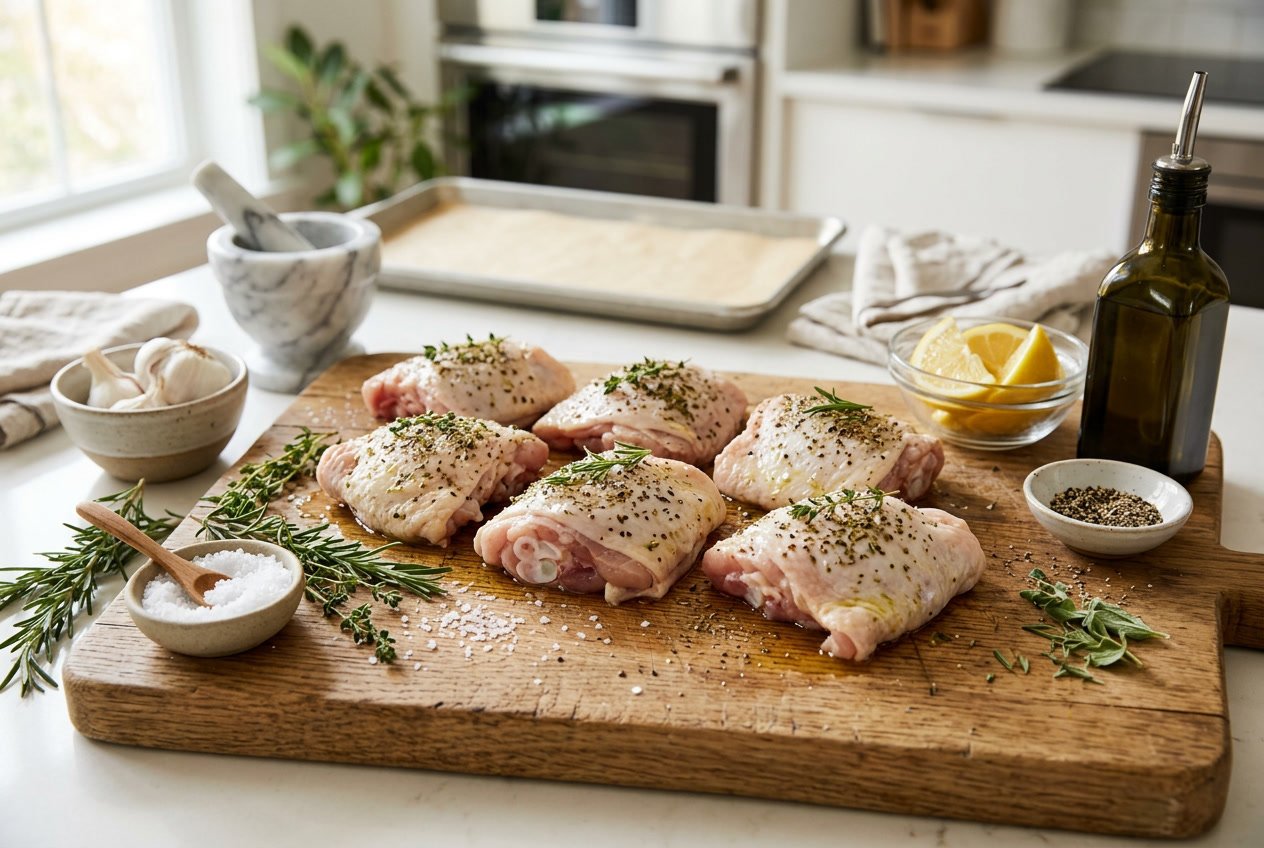
Aim for juicy meat, crisp skin when applicable, and a seasoning that complements the chicken.
Choose the right thigh type, build a flexible spice blend, and keep a few pantry staples and swaps on hand.
Choosing Between Bone-In, Skin-On and Skinless Thighs
Bone-in, skin-on chicken thighs deliver the most flavor and stay moist during baking.
The bone conducts heat slowly and the skin protects the meat; bake at 400–425°F for 35–45 minutes depending on size.
Use a thermometer and remove the thighs at 165°F.
Skinless chicken thighs cook faster and are leaner; expect 25–35 minutes.
They won’t crisp, so add a thin oil coating and use a higher oven temperature for better browning.
Boneless thighs are fastest and easiest to portion for meal prep.
Pick bone-in skin-on when you want crispy skin and rich flavor.
Choose skinless or boneless if you need lower fat, quicker cook time, or easier slicing for salads and sandwiches.
Seasoning Blends and Flavor Variations
Use a basic blend: 1 tsp paprika, 1 tsp garlic powder, 1 tsp onion powder, 1 tsp salt, ½ tsp black pepper per pound of thighs.
Add 1 tbsp brown sugar if you want light caramelization.
For Mediterranean flavor, swap paprika for smoked paprika, add 1 tsp dried oregano, and finish with lemon zest and chopped parsley.
For a warm, earthy twist, replace oregano with ½–1 tsp cumin and add a pinch of cayenne for heat.
You can also keep it minimal: olive oil, kosher salt, and cracked pepper.
Rub the mix under the skin on bone-in pieces to season the meat directly.
Taste-test on a small piece if you’re trying a new spice ratio.
Key Pantry Items and Substitutes
Keep these basics: olive oil (or neutral oil), kosher salt, black pepper, paprika, garlic powder, onion powder, and brown sugar.
These cover most chicken thigh recipes and make quick adjustments easy.
Use smoked paprika for deeper flavor, ground cumin for warmth instead of Italian seasoning, and maple syrup or honey for brown sugar in small amounts.
If you lack kosher salt, use table salt at about half the volume and adjust to taste.
Use a digital instant-read thermometer, a rimmed baking sheet or shallow baking dish, and paper towels to pat thighs dry.
Dry skin crisps; a light oil helps spices adhere.
Step-by-Step Guide: How to Bake Chicken Thighs in the Oven
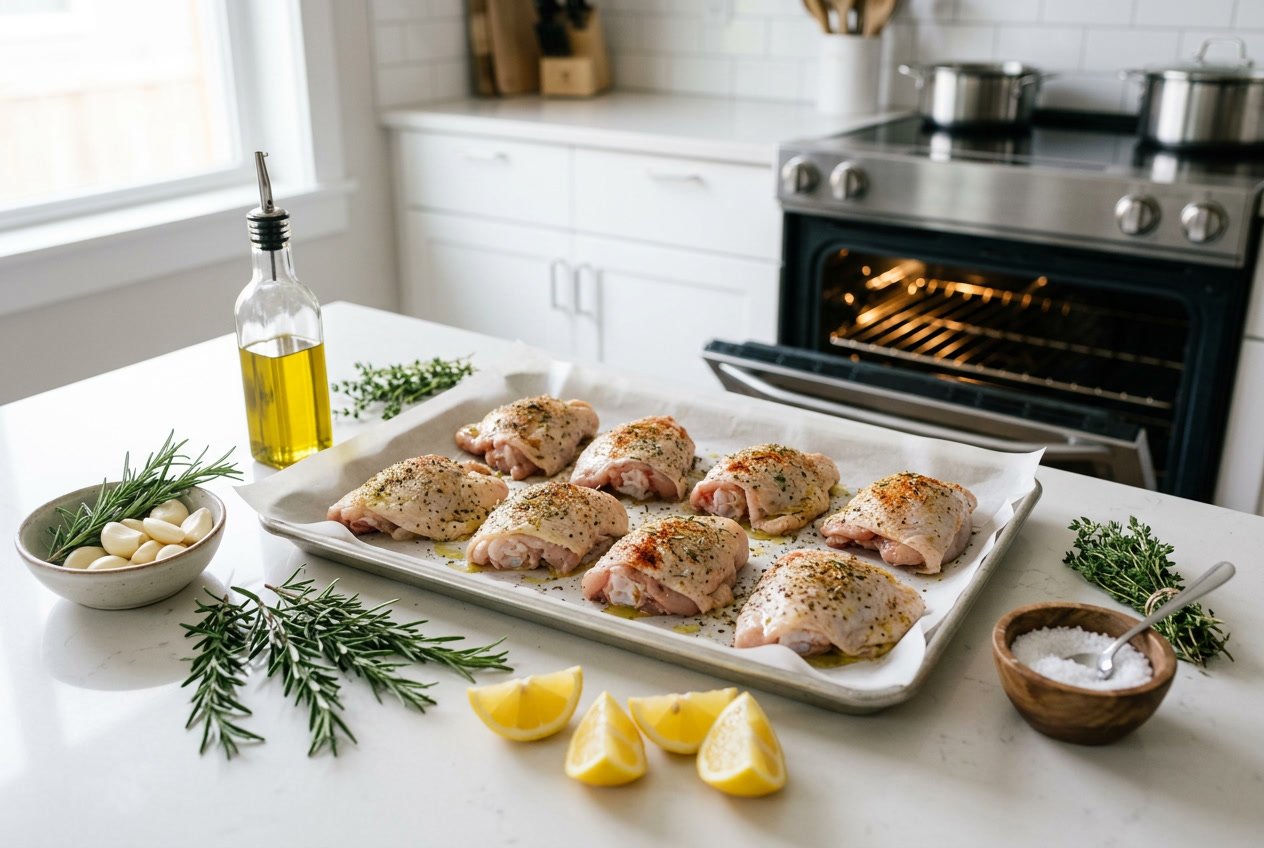
Use bone-in, skin-on thighs for best flavor and texture.
Dry the skin, season well, and space pieces so hot air can circulate for even browning.
Prepping and Trimming the Chicken
Pat each thigh thoroughly with paper towels until the surface feels dry.
Moisture prevents crisping, so spend extra time on the skin and under any loose skin folds.
Trim excess fat and loose skin with kitchen shears to avoid flare-ups and uneven cooking.
If pieces vary widely in size, cut very large thighs in half or choose similar-sized pieces for the same tray.
Bring thighs to room temperature for 15–20 minutes before baking to promote even internal cooking.
Don’t leave chicken out longer than 30 minutes for food safety.
Applying Oil, Butter, and Seasoning Mixes
Lightly coat each thigh with 1 teaspoon of olive oil or melted butter to help spices adhere and encourage browning.
Rub oil under and over the skin for deeper flavor.
Mix a basic rub: 1.5 tsp salt, 1 tsp paprika, 1 tsp garlic powder, 1/2 tsp onion powder, 1/2 tsp black pepper, and 1/2 tsp dried thyme or oregano.
Adjust salt to taste and add smoked paprika for a deeper color.
Pat the rub onto the skin and into crevices.
If you have time, season under the skin as well.
For a simple marinade, combine oil, lemon juice, and the same spices.
Marinate 1–4 hours, then re-pat dry before baking to keep skin crisp.
Arranging and Spacing for Even Cooking
Preheat the oven to 400–425°F (200–220°C).
Use a rimmed baking sheet lined with foil and a wire rack set inside the sheet for extra-crisp skin.
Place thighs skin-side up with at least 1 inch (2–3 cm) between pieces.
Crowding traps steam and yields soggy skin; a single layer with space ensures hot air circulates and surfaces brown evenly.
If you don’t use a rack, rotate the pan 180° halfway through cooking for more even heat exposure.
Bake 35–45 minutes until the thickest part reads 165°F (75°C).
Finish with 2–3 minutes under the broiler if you need extra crispness.
Baking Times and Oven Temperatures
This section gives clear temperatures and target times to achieve juicy meat and crisp skin, plus how to verify doneness safely.
Follow the temperature guidance, monitor internal temp with a thermometer, and adjust for bone-in vs boneless pieces.
How Long to Bake Chicken Thighs at Different Temperatures
Bake at 425°F (220°C) for a balance of speed and crisp skin.
Bone-in skin-on thighs typically take about 30–35 minutes; boneless skinless usually 20–25 minutes.
The higher heat promotes browning and helps seal juices.
At 375°F (190°C) expect longer times with less aggressive browning.
Bone-in thighs need about 40–45 minutes, boneless 30–35 minutes.
Use this lower temp when cooking with vegetables or a sauce that benefits from gentler heat.
At 350°F (175°C) plan on roughly 40–50 minutes for 4–8 ounce bone-in thighs.
Slow roasting at 300–325°F yields very tender meat but requires over 60 minutes and won’t crisp skin without a brief finishing broil.
Checking Doneness and Safe Internal Temperatures
Insert an instant-read thermometer into the thickest part of the thigh, avoiding bone on bone-in pieces.
The USDA minimum safe internal temperature is 165°F (74°C).
For texture, many cooks remove bone-in thighs at 170–175°F to render collagen and keep them juicier.
Juices should run clear, meat should be opaque, and the texture should yield slightly when pressed.
If you lack a thermometer, cut into the thickest area—no pink should remain near the bone.
If the outside browns before the center reaches temperature, tent loosely with foil to finish cooking gently.
For crisp skin after slow roasting, broil 2–4 minutes while watching closely.
Adapting Bake Time for Boneless and Skinless Thighs
Boneless, skinless thighs cook faster because they lack insulating bone and fat.
Reduce baking time by roughly 20–30% compared with bone-in.
If bone-in needs 30 minutes at 425°F, boneless will finish in 20–25 minutes.
Arrange boneless thighs in a single layer and avoid overcrowding the pan.
Marinate or lightly oil and pat dry to promote browning.
Let boneless thighs rest 5 minutes after baking so juices redistribute.
If you want crispy edges, finish them under the broiler for 1–3 minutes or start at high heat (425°F).
Achieving Crispy and Juicy Results
Focus on dry skin, high initial heat, and correct internal temperature to get crisp skin and moist meat.
Use direct-seasoning under the skin, a quick sear or high-heat start, and a reliable thermometer to control doneness.
Tips for Crispy Oven Baked Chicken Thighs
Pat each thigh very dry with paper towels.
Moisture prevents browning and causes steaming.
Rub skin with oil and a coarse salt; salt draws out surface moisture and helps the skin crisp.
Sear skin-side down in a hot oven-safe skillet for 5–7 minutes until deeply golden, then finish in a 400°F (200°C) oven.
If you don’t sear, start roasting at 425°F (220°C) for the first 10 minutes, then reduce to 400°F.
Leave space between thighs on the pan.
For an extra crisp finish, broil 1–2 minutes at the end while watching closely to avoid burning.
How to Keep Chicken Thighs Tender and Moist
Choose bone-in, skin-on thighs for the juiciest baked chicken thighs.
The bone and fat help retain moisture.
Season some of the rub under the skin and on the meat to flavor without drying the exterior.
Use a meat thermometer and remove thighs at 175°F (80°C) internal temperature for tender results.
Rest the thighs 5 minutes after baking so juices redistribute instead of spilling out when you cut.
If you meal-prep, sear ahead then finish in the oven when ready.
Reheat in a 375°F (190°C) oven on a wire rack to revive crispness without overcooking the meat.
Flavorful Variations and Recipe Ideas
These variations focus on quick marinades, simple rubs, and finishing techniques that maximize crisp skin and juicy meat.
Each idea lists key ingredients, basic method tweaks, and serving suggestions so you can pick one based on time, pantry items, or the flavor profile you want.
Honey Mustard, BBQ, and Classic Herb Versions
For a honey mustard glaze, whisk 3 tbsp Dijon mustard, 2 tbsp honey, 1 tbsp apple cider vinegar, and a pinch of salt.
Brush on skin-side up during the last 10–12 minutes of baking so the sugars caramelize without burning.
Serve with roasted potatoes or steamed green beans.
For a BBQ-style finish, use a store-bought or homemade sauce (ketchup, brown sugar, Worcestershire, smoked paprika).
Bake thighs at 400°F (200°C) for 30–35 minutes, brush sauce on, then broil 2–3 minutes to set the glaze.
Pair with coleslaw or corn on the cob.
For a classic herb rub, mix 1 tsp each dried thyme, oregano, garlic powder, and 1/2 tsp salt with 1 tbsp olive oil.
Pat thighs dry, rub under and over the skin, and bake uncovered on a rack for even crisping.
Lemon wedges and a simple salad complete the plate.
Popular Chicken Thigh Recipe Inspirations
Start with bone-in, skin-on thighs for best texture.
Try these quick templates you can adapt:
- Garlic-Butter Baked: melt butter with minced garlic and parsley; brush before baking and again after resting.
- Smoky Paprika Rub: combine smoked paprika, cumin, onion powder, and black pepper; press onto skin and bake for a deep, savory crust.
- Teriyaki-Style: marinate in soy sauce, mirin or rice vinegar, brown sugar, and ginger for 30–60 minutes; bake and baste to create a glossy finish.
Use a meat thermometer to hit 165°F (74°C) at the thickest part, then rest 5–10 minutes.
Leftovers refrigerate 3–4 days and reheat gently to preserve juiciness.
Global Twists: Greek Lemon Chicken and More
Marinate chicken thighs in the juice and zest of 1–2 lemons, 2 tablespoons olive oil, 3 crushed garlic cloves, oregano, and a pinch of salt for 30 minutes.
Roast the thighs at 400°F (200°C) with halved lemons and a few sprigs of rosemary or oregano. Finish with crumbled feta and chopped parsley.
Serve over orzo or with roasted potatoes.
Try a Moroccan-style version by seasoning thighs with ras el hanout, preserved lemon pieces, and olives for a fragrant tray bake.
For an Asian-inspired twist, use hoisin, sesame oil, and scallions. Add roasted broccoli for a sheet-pan meal.
To make it Italian, top baked thighs with tomato sauce and fresh basil during the last 5 minutes of baking.
By changing the marinade, spice blend, or garnish, you can create many distinct meals from basic baked chicken thighs.
Serving, Storing, and Leftover Ideas
Serve baked chicken thighs hot or cooled.
Pair them with bright, acidic elements and a starchy side to balance the richness.
Best Sides for Oven Baked Chicken Thighs
Roasted vegetables complement crispy skin and rich meat. Try roasted Brussels sprouts or carrots tossed with olive oil, salt, and a squeeze of lemon.
Roast vegetables at 425°F for 20–25 minutes alongside the thighs if timing allows.
Starches add heft. Garlic mashed potatoes, lemon-herb rice, or skillet-cooked couscous absorb pan juices well.
For a lighter plate, serve thighs over a simple salad of romaine, cherry tomatoes, cucumber, and a tangy vinaigrette.
If you use an air fryer for extra crispness, serve with quick pan-fried green beans or a warm grain salad.
For weeknight convenience, build bowls with shredded thigh meat, quinoa, steamed broccoli, and a drizzle of yogurt-tahini.
How to Store and Reheat Leftover Chicken Thighs
Cool cooked thighs to room temperature within two hours, then refrigerate in airtight containers at 40°F or below.
Use refrigerated cooked chicken within 3–4 days.
Slice or shred the meat before reheating to ensure even heating.
Reheat in a 325°F oven covered with foil for 10–15 minutes, or warm gently in a skillet with a splash of broth.
Use an air fryer at 350°F for 4–6 minutes to restore crisp skin, checking frequently.
Avoid reheating more than once.
If the chicken smells sour or feels slimy, discard it.
Freezing Cooked Chicken Thighs and Meal Prep Tips
Portion cooked thighs before freezing. Whole thighs, sliced strips, or shredded meat freeze best in 1–2 cup portions.
Use freezer-safe bags or rigid containers. Remove excess air, label with the date, and freeze at 0°F.
Consume within 3 months for best quality.
Thaw in the refrigerator overnight for safe reheating. You can also use the microwave’s defrost setting if you need them faster.
For meal prep, freeze shredded chicken with sauce such as tomato, curry, or enchilada to avoid dryness on reheating.
If you plan to finish in an air fryer, partially thaw the chicken and then crisp at 360°F for 6–8 minutes to revive texture.


