
How to Chicken Thighs: Ultimate Guide to Juicy, Flavorful Meals
You can cook chicken thighs that stay juicy inside and get crispy outside without guessing or overcomplicating things. Aim for the right internal temperature, use simple drying and seasoning steps, and pick a cooking method that fits the texture you want such as roast, grill, pan-sear, air-fry, or braise.
You’ll reliably get great results by following these steps.
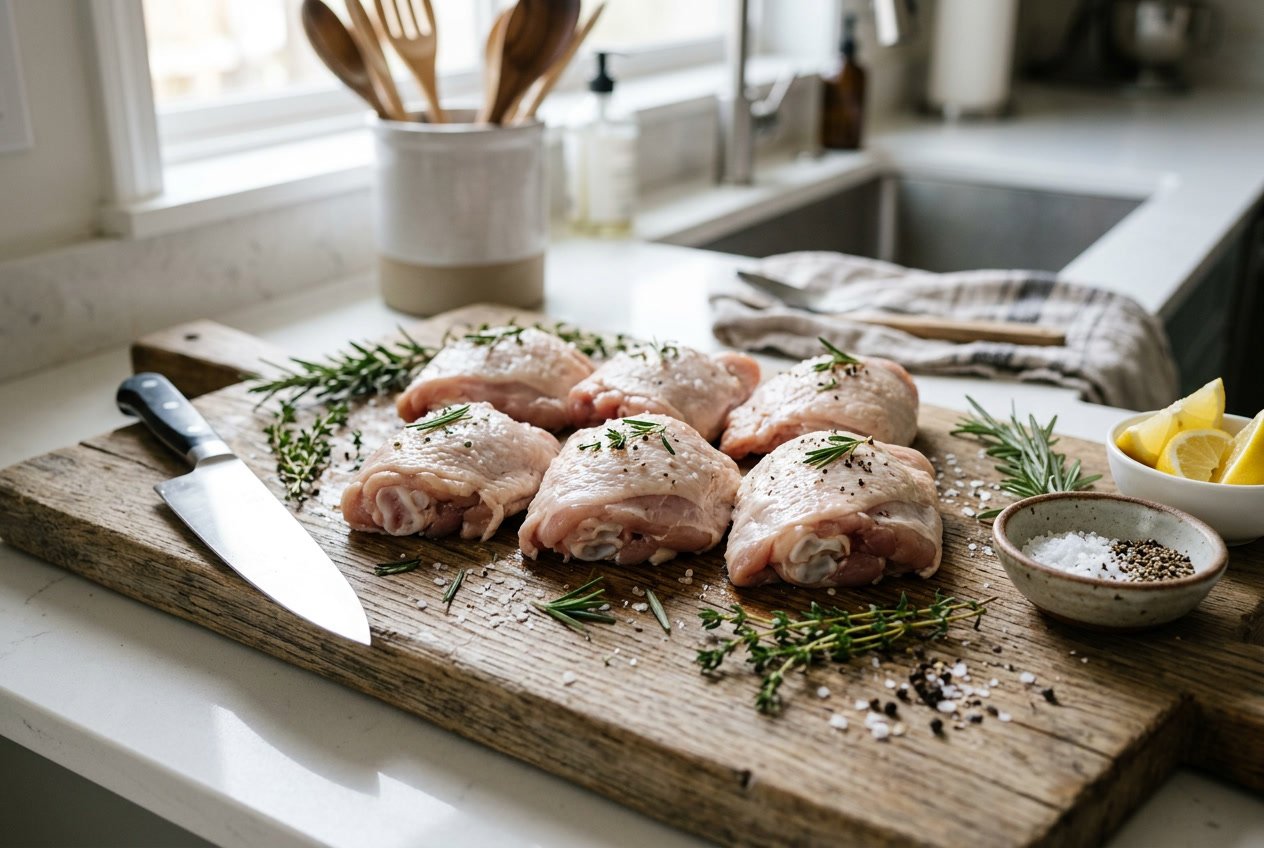
This post walks you through choosing the best thighs, essential seasonings and marinades, precise cooking times and temperatures, and method-by-method tips. You can hit crisp skin and tender meat every time.
Expect practical, confident guidance for everyday meals, weeknight shortcuts, and a few recipe ideas that showcase why thighs are so forgiving and versatile.
Choosing Chicken Thighs
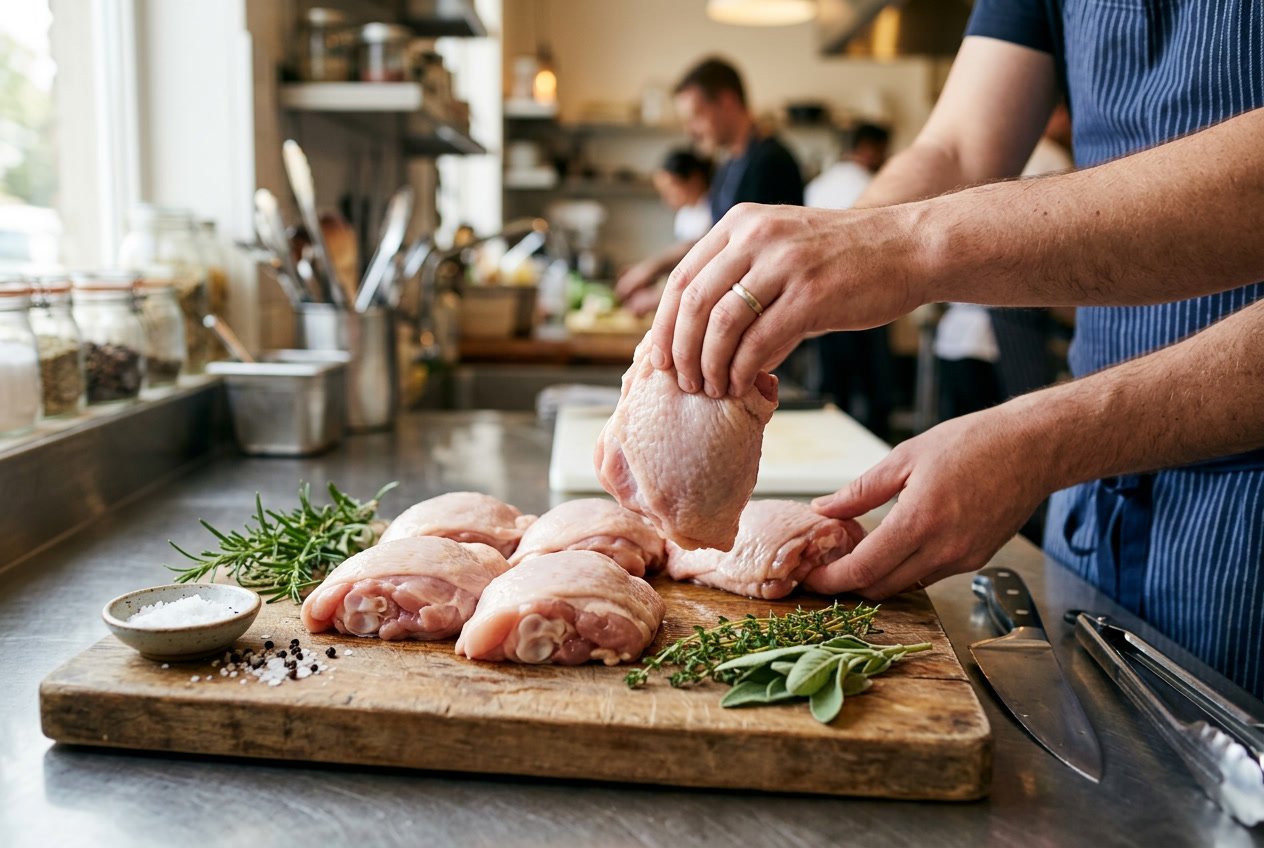
Pick thighs based on how you plan to cook them and the texture you want. Think about cooking time, skin crispness, and how much connective tissue you’re willing to break down for tenderness.
Bone-In vs. Boneless
Bone-in chicken thighs give more flavor and work well with high-heat or long-cook methods. The bone conducts heat slowly, so bone-in pieces tolerate higher final internal temperatures (175–185°F) without drying.
That extra temperature helps break down collagen into gelatin for silkier meat. Expect a 10–20 minute longer cook time than boneless when roasting.
Boneless chicken thighs cook faster and are easier to portion and shred. They work best for quick pan-searing, grilling, and stir-fries where you want uniform thickness and a shorter cook time.
If you want fall-apart texture for tacos or pulled chicken, choose bone-in. If you need quick weeknight protein or even browning, choose boneless.
Skin-On vs. Skinless
Skin-on chicken thighs deliver the best crispy exterior and richer mouthfeel because the skin renders fat during cooking. For crispy skin, pat thighs very dry, salt ahead, and use high heat or a wire rack in the oven.
Expect more splatter when pan-searing. A wire rack or oven finishing under the broiler helps if you braise or pressure-cook first.
Skinless chicken thighs absorb marinades faster and cut down on surface fat, which reduces overall calories and crispiness. They’re ideal for curries, stews, and recipes where you want the meat to take on sauce flavors uniformly.
If you want some browning, briefly sear skinless thighs in a hot pan and finish in the oven to lock in juices.
Selecting Fresh Chicken Thighs
Check color and smell first. Fresh chicken thighs are pinkish with a slight sheen and no sour or off odor.
Avoid packages with excessive liquid. Pooled juices indicate earlier thawing or older product, which reduces shelf life and makes crisping harder.
Look at the label for sell-by and packing dates. Choose thighs with minimal added solutions (saltwater or brine) unless that is what you want for juiciness.
For bone-in chicken, inspect the bone area for clean cuts and no dark spots. Dark or dry bone ends can indicate older meat.
When buying bulk, arrange pieces so there’s space between them. Crowded packaging traps moisture and shortens freshness.
Essential Seasonings and Marinades
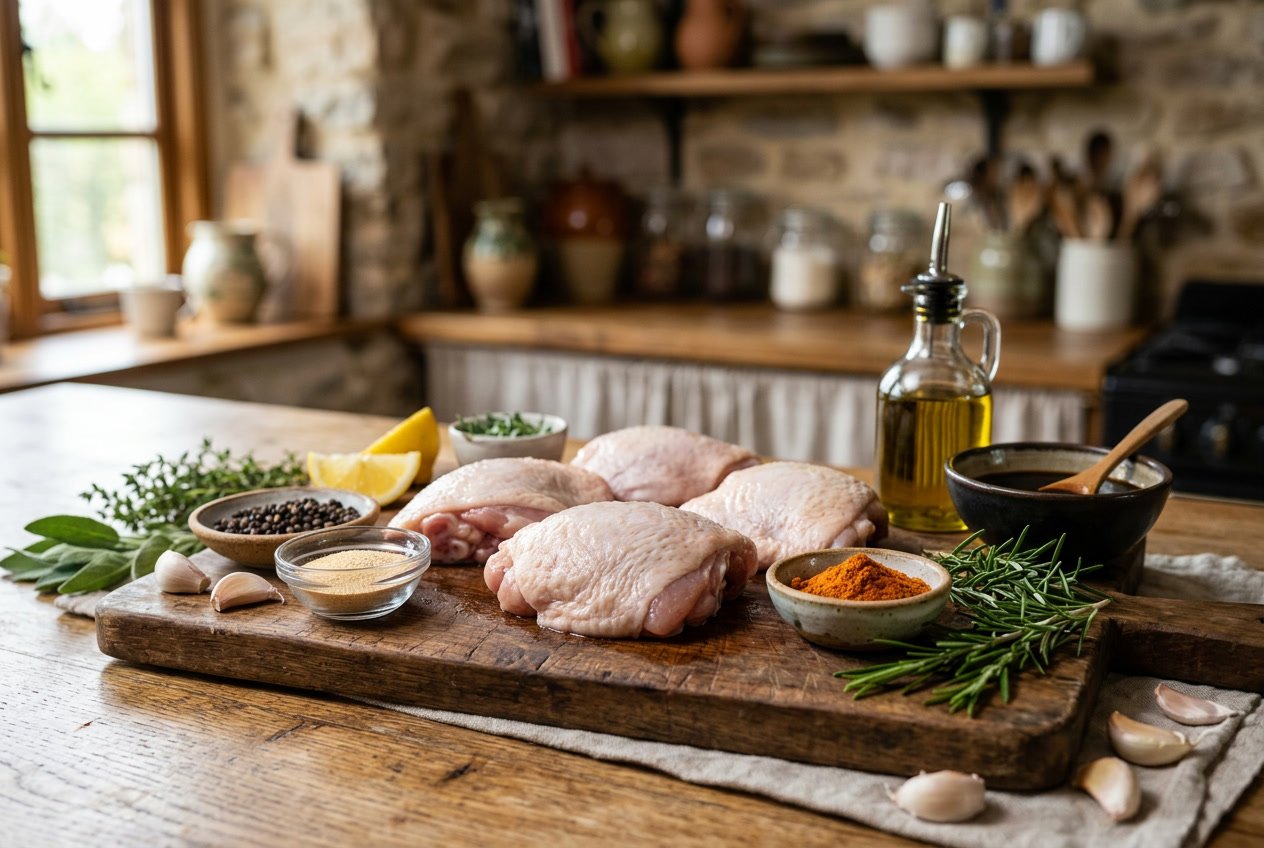
Choose a clear flavor direction and balance salt, acid, fat, and aromatics. Focus on specific spices and herbs that pair well with the dark, forgiving texture of chicken thighs.
Classic Spice Blends
Build a reliable chicken seasoning by combining salt with a few strong, compatible spices. Start with 1 tsp salt and 1/2 tsp black pepper per pound of thighs, then add 1–2 tsp smoked or sweet paprika for color and mild smokiness.
Mix in 1 tsp garlic powder and 1 tsp onion powder for savory depth. For a Mediterranean twist, add 1 tsp dried oregano and 1/2 tsp dried thyme.
Rub the blend onto skin-on or skinless thighs and let rest 30–60 minutes for surface flavor. You can also use this blend as a dry rub before grilling to encourage a crisp, caramelized exterior.
Herb and Citrus Flavors
Use fresh herbs and citrus to cut through the fattiness of thighs while highlighting natural juices. Combine zest and juice of one lemon with 2 tbsp olive oil, 1 tbsp chopped fresh oregano or 1 tsp dried, and 1 tsp chopped fresh thyme or 1/2 tsp dried.
Add 2 cloves minced garlic and 3/4 tsp salt. Pat thighs dry, then coat under and over the skin if present.
Refrigerate 30 minutes to 4 hours. Herbs and citrus brighten taste without over-tenderizing.
Roast or grill, finishing with an extra squeeze of lemon and a sprinkle of chopped oregano for fresh aroma.
Marinating for Extra Flavor
Design marinades that balance acid, fat, salt, and sweetness for deeper penetration. A reliable formula: 2 tbsp acid (lemon juice, vinegar, or yogurt), 3 tbsp oil, 1–2 tsp salt, 1–2 tbsp flavor agents (soy sauce, Dijon, or honey), and aromatics like 2 cloves garlic, 1 tsp paprika, and 1/2 tsp black pepper.
Place thighs in a zip-top bag with the marinade, remove excess air, and refrigerate. Marinate boneless thighs 30 minutes to 4 hours.
Bone-in or skin-on can go up to 8–12 hours if the marinade is low in acid. Reserve or boil any used marinade before using as a sauce to avoid cross-contamination.
Methods for Cooking Chicken Thighs
Choose a method that matches the texture you want: crispy skin and roast flavor, fast and evenly browned air-fryer results, deeply seared pan-roasted pieces, or tender, shreddable slow-cooked thighs. Temperatures, timing, and a dry skin surface drive success in each approach.
Oven Baked Chicken Thighs
Preheat the oven to 400–425°F. Arrange bone-in, skin-on thighs on a wire rack set over a rimmed sheet pan so hot air circulates and fat drips away.
This produces crispy baked chicken thighs rather than steamed skin. Season now or salt and rest uncovered in the fridge for 1–12 hours to dry the skin and concentrate flavor.
Bake bone-in thighs 35–45 minutes and boneless 20–25 minutes, until an instant-read thermometer reads 175°F for bone-in or 165–170°F for boneless. Avoid covering with foil.
High dry heat, not trapped steam, creates crispy, golden skin. Rest 5 minutes before serving to let juices redistribute.
Air Fryer Techniques
Pat thighs completely dry and avoid overcrowding the basket. Leave space for air to circulate.
Set the air fryer to 400°F. Cook boneless skin-on thighs 16–20 minutes and bone-in skin-on thighs 22–28 minutes, flipping once halfway for even browning.
Use a light brush of oil and a modest dusting of baking powder in the rub to encourage faster browning and crispiness. Work in batches for consistent results.
Check temperature with a probe inserted into the thickest part. Pull boneless at 165–170°F and bone-in at 175°F.
Pan Roasting Tips
Start skin-side down in a cold oven-safe skillet to slowly render the fat from the skin. Turn heat to medium and leave undisturbed until the skin releases and browns, 7–10 minutes.
Flip and transfer the skillet to a 400°F oven to finish. This gives you crisp skin and caramelized fond.
If using boneless thighs, sear in a hot pan for 4–6 minutes per side, then reduce heat or finish briefly in the oven to prevent overcooking. Use tongs, not a fork, to avoid puncturing the meat and losing juices.
Deglaze the pan with stock or wine for a quick pan sauce.
Slow Cooker Methods
Place bone-in thighs in the slow cooker with aromatics and a small amount of liquid such as broth, tomato sauce, or a marinade. Cook on low for 6–7 hours or high for 3–4 hours until the meat falls apart easily.
Internal texture at these temps benefits from collagen breaking down into gelatin. For any crispness, transfer finished thighs to a sheet pan and broil 2–4 minutes to re-crisp skin.
Use the concentrated cooking liquid as a sauce base. Skim excess fat or reduce on the stove for a thicker glaze.
Avoid prolonged cooking in acidic marinades longer than 24 hours before you start, which can make texture mushy.
Achieving Crispy and Juicy Results
Focus on drying and seasoning the skin, and on timing and temperature for the meat. Small technique changes such as patting dry, high heat, and resting produce the biggest differences in texture and juiciness.
How to Get Crispy Skin
Pat each skin-on chicken thigh very dry with paper towels. Any surface moisture prevents browning.
Salt the skin at least 30 minutes before cooking or right before. Salt draws out surface moisture and helps render fat for crisping.
For oven-baked thighs, use a wire rack set over a baking sheet so hot air circulates and fat drips away. Roast at 425°F (220°C) for 35–40 minutes for bone-in thighs, finishing under the broiler 1–3 minutes if needed to deepen color.
If pan-searing first, start skin-side down in a hot skillet without moving the pieces until the skin is deeply golden, then transfer to a 400°F oven to finish. Light oiling prevents sticking without frying.
Avoid overcrowding the pan or tray. Leave space so steam doesn’t accumulate and soften the skin.
Tips for Juicy Thigh Meat
Use bone-in, skin-on thighs whenever possible. The bone slows heat transfer and helps retain moisture.
Aim for an internal temperature of 165°F (75°C) measured at the thickest part without touching bone. Remove thighs from heat a few degrees before target if carryover heat will finish them.
Brining briefly (15–30 minutes in a saltwater solution) or salting ahead improves moisture retention and seasoning depth. Monitor cooking times by size.
Let cooked thighs rest 5–10 minutes on a cutting board. Resting redistributes juices so they stay in the meat when you cut.
Cooking Times and Temperatures
Bake bone-in, skin-on thighs at moderate to high heat for 35–55 minutes depending on temperature and size. Use a probe thermometer in the thickest part and aim for a target temperature to balance safety and tenderness.
How Long to Bake Chicken Thighs
Bone-in, skin-on thighs generally take longer than boneless. At 350°F (175°C) expect about 50–55 minutes.
At 400°F (200°C) expect 40–45 minutes. At 425°F (218°C) expect 35–45 minutes.
Boneless, skinless thighs cook faster: roughly 20–30 minutes between 350–400°F. Use a wire rack on a sheet pan for even air circulation and crisp skin.
Arrange thighs skin-side up and avoid crowding the pan. Overcrowding increases time and reduces browning.
Adjust time for unusually large or small pieces by checking internal temperature sooner or later than the guideline minutes.
Doneness and Safety
The USDA minimum safe internal temperature for all poultry is 165°F (74°C) measured in the thickest part without touching bone. Insert the thermometer parallel to the bone for an accurate read.
For texture, many cooks pull bone-in thighs at 175–180°F (80–82°C). The higher temperature breaks down connective tissue and yields more tender meat while still safe.
Rest thighs 5–10 minutes after baking so juices redistribute. Residual heat can raise the internal temperature 3–5°F.
Popular Chicken Thigh Recipes
These recipes highlight how chicken thighs perform in saucy, braised, and pan-finished dishes. Expect techniques that build deep flavor such as browning for Maillard, deglazing for pan sauce, and slow simmering for tender meat.
Chicken Stroganoff
Chicken stroganoff adapts the classic by using boneless, skinless thighs for juicier results and shorter cooking time. Sear thighs in batches until the exterior browns well.
Deglaze with white wine or chicken stock to form the sauce base. Finish the sauce with sautéed mushrooms, onions, a touch of Dijon mustard, and sour cream added off the heat to avoid curdling.
Season with salt, black pepper, and a small pinch of smoked paprika if you want warmth without heat. Serve over egg noodles, rice, or wide pasta.
Garnish with chopped parsley. For a quicker weeknight version, slice cooked thighs and stir them into a cream-mushroom sauce made in one skillet.
Chicken Cacciatore
Use bone-in, skin-on thighs for chicken cacciatore because they withstand braising and deliver rich flavor. Brown the thighs skin-side down until crisp, then remove them.
Sauté onions, bell peppers, and garlic in the same pan to capture the browned bits. Add canned tomatoes, a splash of red wine or chicken stock, capers or olives if you like briny accents, and herbs such as oregano, thyme, and bay leaf.
Return the thighs to the sauce and simmer gently until the meat pulls from the bone. Serve with polenta, mashed potatoes, or crusty bread to soak up the tomato-herb sauce.
Cook low and slow for tender meat and a concentrated sauce.
Smothered Chicken
Smothered chicken features thighs braised in a savory onion gravy that clings to the meat. Salt and pepper the thighs, dredge lightly in flour, then brown to develop a crust.
Sauté a large quantity of sliced onions until caramelized. Add the browned thighs back to the pan and pour in chicken stock.
Skim any excess fat. Thicken the braising liquid with a roux or the pan drippings plus a small slurry of flour and water.
Season with Worcestershire or soy sauce for umami, and finish with a splash of vinegar or mustard for balance. Serve with mashed potatoes or rice.
Keep the lid on to maintain moisture and braise until the thighs are fork-tender.
Chicken Adobo
Chicken adobo balances soy sauce, vinegar, garlic, and bay leaves. Thighs work well because they stay moist through the long simmer.
Brown the thighs quickly to deepen color, then combine with crushed garlic, soy sauce, black pepper, and cane or white vinegar in a pot. Add bay leaves and a little water or stock if needed.
Simmer, uncovered, until the sauce reduces and coats the chicken. Adjust tang with vinegar and sweetness with a touch of sugar or honey if the vinegar is too bright.
Serve with steamed white rice to mop up the savory-tangy sauce.
Serving Suggestions and Leftover Ideas
Cooked chicken thighs work well for quick dinners, packed lunches, or as part of two or three reliable weeknight meals. Focus on easy assemblies, bold sauces, and simple reheating methods to keep the meat juicy and meals varied.
Easy Weeknight Dinner Ideas
-
Make a 20-minute pasta. Toss sliced thighs with cooked fettuccine, jarred Alfredo or marinara, a squeeze of lemon, and a handful of chopped parsley. Heat gently so the chicken warms without drying.
-
Build grain bowls. Layer warm rice or quinoa, shredded thigh meat, roasted vegetables, a drizzle of soy-sesame dressing, and a soft-boiled egg for protein balance.
-
Stir-fries and tacos are quick options. Cube the thighs, flash-fry with bell pepper and broccoli, then finish with soy-honey glaze for rice. Or shred the meat, toss with taco seasoning, and fill corn tortillas with cabbage and cotija.
-
For speed, reheat gently in a skillet with a splash of broth or oil. Use leftover pan juices or a quick pan sauce to restore moisture.
Incorporating Into Dinner Rotation
Plan two core recipes that use chicken thighs differently each week. This helps you avoid repetition.
For example, rotate between a baked thigh casserole and a spicy stovetop stir-fry. Each recipe uses the same cooked meat but creates distinct flavors and textures.
Batch-cook and portion meals. Freeze individual servings or store them refrigerated for 3 to 4 days.
Label containers with the date and intended meal, such as salad, taco, or pasta. This makes meal planning easier.
Swap cuisines each week. Try Italian dishes like pasta or pot pie one week, then Asian options like fried rice or stir-fry the next, and Mexican meals such as quesadillas or tacos another week.
Keep a short pantry list with staples like tortillas, pasta, rice, canned tomatoes, soy sauce, and a few fresh herbs. You can turn chicken thighs into different dinners in under 30 minutes.


