
How to Chicken Thigh Fillets: Expert Guide to Perfect Results
You can turn simple chicken thigh fillets into consistently juicy, safe, and flavorful meals by controlling thickness, temperature, and timing. Cook boneless, skinless thigh fillets until they reach 75°C (165°F) internally. Use a thermometer and aim for even thickness so they finish evenly without drying out.
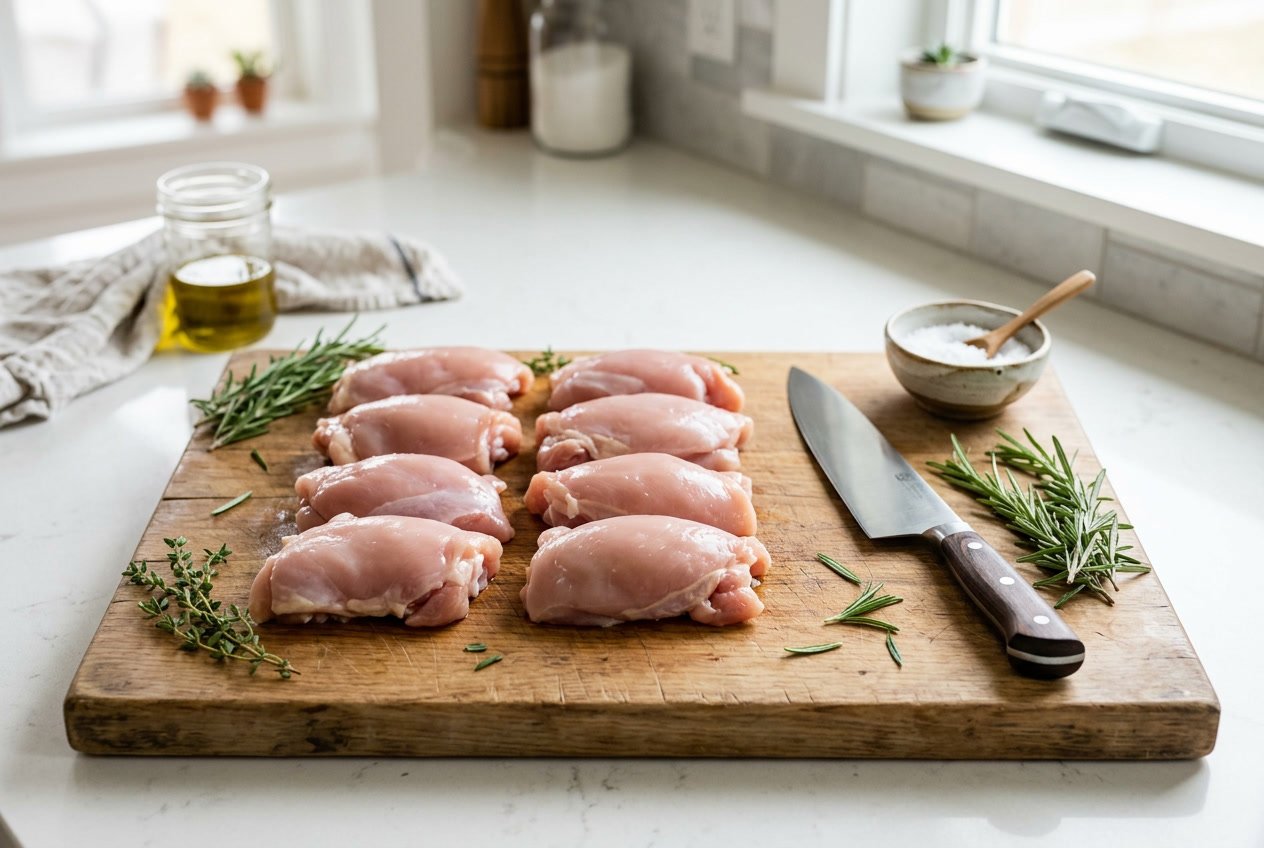
This post explains what thigh fillets are, practical prep steps, smart marinades, and reliable cooking methods such as pan-fry, oven, grill, air-fryer, and slow cooker. You’ll get exact times and temperatures to use for best results.
Understanding Chicken Thigh Fillets
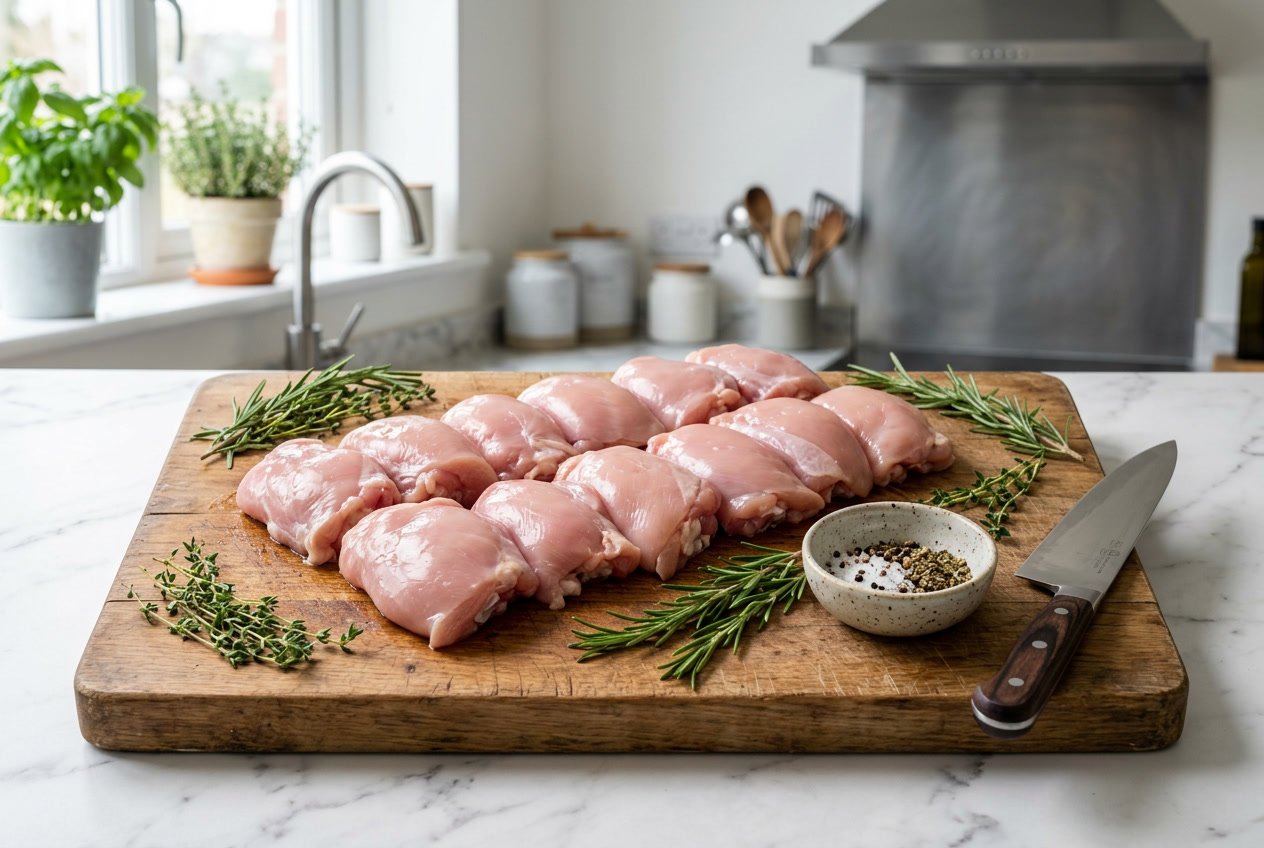
Chicken thigh fillets offer flexible cooking options, forgiving fat content, and strong flavor. You’ll choose between darker, juicier meat and leaner alternatives based on texture and recipe needs.
Chicken Thighs vs. Chicken Breast
Chicken thighs come from the bird’s upper leg and contain more fat and connective tissue than chicken breast. That fat keeps thigh fillets moist during high-heat searing or longer braises, so you’re less likely to end up with dry meat compared with breast.
If your recipe calls for quick, lean protein like stir-fries or poached salads, chicken breast may suit you better. For richer flavor and a forgiving cook time, choose boneless chicken thighs or thigh fillets.
Thighs tolerate higher internal temperatures without sacrificing juiciness. Use an internal temperature of 75°C (165°F) as a safety target. Thigh meat stays slightly darker than breast even when fully cooked.
Boneless and Skin-On Options
Boneless chicken thighs (thigh fillets) cook faster and more evenly, and they’re easier to slice. You’ll save about 5–10 minutes cooking time compared with bone-in pieces, and fillets fit well in pans and air fryers.
Skin-on chicken adds flavor and texture. The skin crisps when roasted or pan-seared and insulates the meat, which can increase cooking time slightly. For crisp skin, start skin-side down in a hot pan or roast at 200°C (400°F) until the skin browns, then finish until the internal temperature reaches 75°C.
For marinades and sauces, boneless skinless fillets absorb flavors quickly and are more convenient for shredding. Choose skin-on for a crisped exterior and added richness. Pick skinless for faster, leaner results.
Texture and Flavor Characteristics
Thigh fillets are darker, more tender, and fattier than breast, which gives them a fuller chicken flavor. The intramuscular fat and connective tissue break down during cooking, producing a succulent mouthfeel that works well in both high-heat sears and low-and-slow methods.
Because texture varies by thickness, pound fillets to even thickness or cut larger pieces in half for uniform cooking. Expect a slight chew compared with breast meat but greater juiciness. When cooked to 75°C, thigh fillets remain moist and flaky.
Shred thigh fillets for tacos and sandwiches, or keep them whole for grilling and pan-roasting to showcase the richer flavor.
Preparation Techniques for Chicken Thigh Fillets
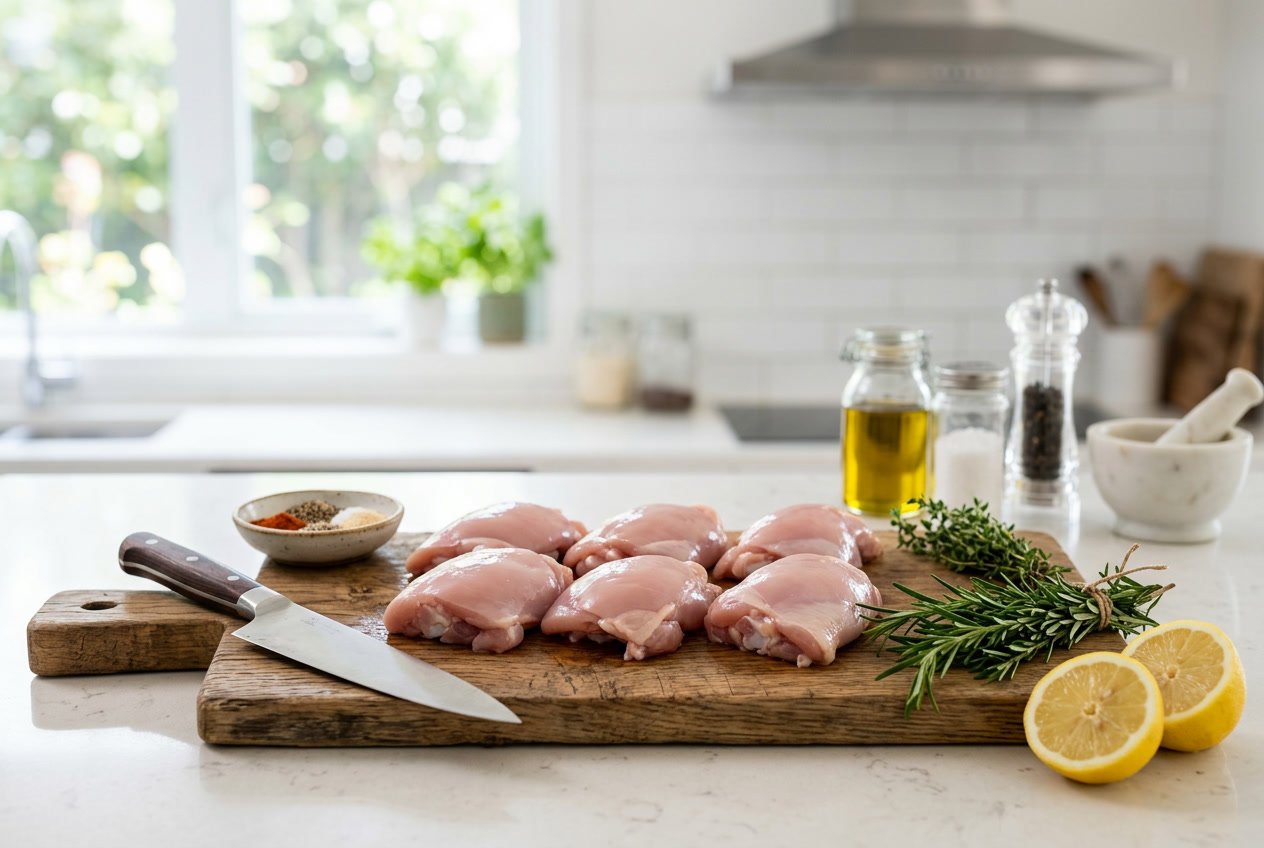
Trim excess fat, remove visible connective tissue, and flatten uneven pieces so each fillet cooks uniformly. Dry the surface thoroughly to promote a brown, crispy exterior and control splatter during high-heat cooking.
Trimming and Portioning Fillets
Inspect each chicken thigh fillet for leftover skin, silverskin, and large pockets of fat. Use a sharp boning or paring knife to trim away loose skin and the thin white connective tissue to prevent chewy bits after cooking.
Portion fillets to uniform size when pieces vary by more than 1/2 inch in thickness or weight. Cut larger fillets into two pieces or trim edges so each portion matches the rest.
If recipes call for bone-in thighs, remove the bone only when necessary for quicker, more even cooking. For stir-fries or tacos, slice fillets into strips against the grain to shorten fibers and improve tenderness.
Pounding for Even Thickness
Lay a fillet between two sheets of plastic wrap or inside a zip-top bag to prevent tearing and contamination. Use a meat mallet or the flat side of a heavy pan and gently pound from the center outward.
Aim for an even thickness of roughly 1/2 inch for quick pan-searing or 3/4–1 inch for moderate oven roasting. Even thickness ensures identical cook time across the fillet and reduces the chance of dry edges.
Don’t over-pound; you want uniformity, not mush. If a recipe needs very thin pieces for schnitzel-style or quick stir-fry, pound to about 1/8–1/4 inch but stop when the muscle fibers begin to separate.
Patting Dry for Better Searing
Pat each fillet completely dry with paper towels, pressing into creases and folds where moisture hides. Moisture on the surface turns to steam when it hits a hot pan and prevents browning.
After drying, season immediately with salt. Salt draws a little moisture out and then reabsorbs, improving flavor and surface dryness. If you have time, place seasoned fillets uncovered on a rack in the fridge for 30–60 minutes to further dry the skin and firm the meat.
When you transfer to the hot pan or grill, leave at least 1–1.5 inches between pieces so steam can escape and the surface stays dry. This produces a crisp, caramelized exterior.
Marinating and Seasoning Methods
Choose an acid, oil, and flavoring that match the cooking method and sides you plan to serve. Use either a wet marinade to tenderize and glaze or a dry rub to build a crisp, seasoned crust on chicken thigh fillets.
Basic Marinade Options
Use a balance of acid, oil, and seasoning. For acid, pick lemon or yogurt for brightness and tenderizing. For oil, use olive or neutral vegetable oil to carry flavors and keep fillets moist.
Add salt, garlic, and a savory component like soy sauce or Worcestershire for depth.
Try these pairs:
- Mediterranean: olive oil, lemon juice, garlic, oregano, salt, black pepper.
- Asian-style: soy sauce, rice vinegar, sesame oil, honey, grated ginger.
- Creamy: Greek yogurt, lemon zest, garlic, smoked paprika.
Marinate in a nonreactive container or zip bag and refrigerate. Reserve a portion if you want a finished sauce, or boil used marinade for 5 minutes before using as a glaze.
Dry Rubs and Spice Blends
Dry rubs give you a concentrated crust for pan-searing, grilling, or roasting. Apply a thin, even layer of salt first to help moisture migrate, then rub on spices like paprika, garlic powder, onion powder, cumin, and brown sugar.
Use this quick rub template:
- 1 part salt
- 1 part sugar (optional)
- 2 parts paprika/pepper blend
- 1 part garlic/onion powder
- Pinch of cayenne or chili for heat
Pat chicken thigh fillets dry before applying the rub. Let seasoned fillets rest 15–30 minutes at room temperature for better flavor penetration, or refrigerate up to 24 hours for deeper seasoning.
For skin-on fillets, rub under and over the skin for crisp, flavored skin.
Time Required for Maximum Flavor
Marinating time depends on ingredients and cut thickness. For chicken thigh fillets:
- Quick: 30–60 minutes for mild flavor boost and some tenderizing.
- Standard: 4–8 hours for noticeable flavor throughout the fillet.
- Overnight: 12–24 hours when using milder acids like yogurt or buttermilk.
For strong acids such as straight lemon or vinegar, keep marinating closer to 30–120 minutes to prevent meat breakdown. Dry rubs benefit from 15 minutes to 24 hours; longer times deepen flavor without texture issues. Always refrigerate while marinating and heat-used wet marinades before serving.
How to Cook Chicken Thigh Fillets
Focus on dry surface, direct high heat for crust, and target internal temperatures that suit boneless thighs. Manage crowding and resting time so juices redistribute and skin stays crisp when applicable.
Baking Chicken Thigh Fillets
Preheat the oven to 400°F (200°C) and use a rimmed sheet pan with a wire rack to keep fillets out of their drippings. This prevents steaming and promotes even browning.
Pat each fillet thoroughly with paper towels and season or marinate. Boneless fillets typically take 18–25 minutes depending on thickness.
If you want extra-crispy edges, brush a thin coating of oil and finish under the broiler for 1–2 minutes, watching constantly. Use an instant-read thermometer in the thickest part and pull fillets at 165°F.
Let them rest 5 minutes before slicing to retain juices. Space fillets 1–1.5 inches apart so hot air circulates.
Pan-Frying and Sautéing
Heat a heavy skillet over medium-high heat until hot, then add a tablespoon of oil with a high smoke point. Dry the fillets and season.
Cook undisturbed 4–6 minutes per side for ¾-inch-thick pieces until a golden crust forms. If fillets are thicker, lower heat to medium after searing and cover for 2–4 minutes to finish without burning the exterior.
Cook in batches so each fillet sears rather than stews. Check doneness with a thermometer (165°F) or by cutting into the thickest part; juices should run clear.
Rest fillets on a plate tented loosely for 3–5 minutes before serving.
Grilling Chicken Thigh Fillet
Preheat the grill to medium-high (about 400°F) and oil the grates. For direct grilling, place fillets over direct heat and cook 4–6 minutes per side, flipping once for even char and grill marks.
For thicker fillets or a more controlled cook, use a two-zone fire. Sear over direct heat 2–3 minutes per side, then move to indirect heat to finish (internal temp 165°F).
Let grilled chicken thigh fillets rest 5 minutes before serving to let juices redistribute. Slice against the grain for the best texture and arrange slices over salads, sandwiches, or as a main with sides.
Optimal Cooking Times and Temperatures
You need clear targets for time and temperature to get juicy, safe chicken thigh fillets with crisp skin when desired.
How Long to Bake Chicken Thighs
Bake boneless, skinless chicken thigh fillets at 190–200°C (375–400°F) for about 20–25 minutes. Thicker pieces may need up to 30 minutes; thinner fillets finish closer to 18 minutes.
Arrange fillets single-layer on a rimmed baking sheet so hot air circulates and edges brown evenly. For bone-in thighs, increase time to 35–45 minutes at 200°C (400°F) to allow heat to reach the bone.
Use an oven-safe rack or turn once halfway if you want more even browning. If using a higher temperature to crisp skin, increase by 5–10°C but cut time by several minutes and check internal temperature sooner.
Temperature Guidelines for Doneness
Measure doneness with an instant-read thermometer inserted into the thickest part of the fillet without touching bone. Target an internal temperature of 75°C (165°F) for immediate safety.
If you prefer slightly more tender dark meat, remove boneless thighs at 68–70°C (155–158°F) and rest. Carryover heat will raise them to safe levels.
Check multiple pieces if sizes vary. Rest fillets 3–5 minutes after cooking so juices redistribute and the final internal temperature stabilizes.
Adjusting for Thickness and Skin
If fillets vary in thickness, pound thicker pieces to an even 1–1.5 cm (0.4–0.6 in) or separate by size and cook in batches. For pan-seared then oven-finished fillets, sear 2–3 minutes per side over medium-high heat, then bake 8–12 minutes at 200°C (400°F) depending on thickness.
Skin-on fillets take longer. Add 5–7 minutes in the oven to crisp skin and allow fat to render.
To crisp skin without overcooking meat, start skin-side down in a hot pan 4–6 minutes, then finish in a 200°C oven until internal temperature reaches 75°C.
Serving and Storing Chicken Thigh Fillets
Lock in juices, choose complementary sides and sauces, and store leftovers safely. Follow simple steps for resting, slicing, serving, and reheating to maximize flavor and food safety.
Resting and Slicing for Juiciness
After you cook chicken thigh fillets, transfer them to a warm plate and tent loosely with foil. Let them rest for 5–10 minutes so the juices redistribute and the meat stays moist.
Slice the fillets against the grain in 1/4–1/2-inch thick pieces for tender bites. If you cooked bone-in thighs, remove the bones after a short rest for easier serving.
For boneless fillets, slice just before plating to retain heat and texture. Pat the cut surfaces with a paper towel if they look wet; this helps sauces cling.
Spoon a small amount of reserved pan juices or sauce over the slices to boost flavor without making them soggy.
Serving Suggestions and Pairings
Serve sliced chicken thigh fillets over grains like jasmine rice, quinoa, or mashed potatoes for a hearty base. For lighter meals, place them on mixed greens, arugula, or shredded cabbage and drizzle with vinaigrette.
Match flavors to your seasoning. Spicy thighs go well with cooling tzatziki or yogurt sauce. Soy-ginger glazed thighs suit steamed bok choy and scallions.
Add roasted vegetables such as brussels sprouts, carrots, or bell peppers for color and texture contrast. Garnish with fresh herbs like cilantro, parsley, or thyme, a squeeze of lemon or lime, and toasted sesame or chopped nuts for crunch.
Offer extra sauce on the side so diners can control moisture and intensity.
Storage and Reheating Best Practices
Cool cooked chicken thigh fillets to room temperature within two hours after cooking. Place them in an airtight container.
Refrigerate for up to 3 days. Freeze in a sealed bag or container for up to 3 months to maintain quality.
Layer fillets with parchment between pieces to prevent sticking. Label the container with the date.
Thaw frozen thighs overnight in the fridge for even reheating.
Reheat gently to avoid drying. Use an oven at 300°F (150°C) for 10–15 minutes covered, or microwave in 30–45 second bursts with a damp paper towel to retain moisture.
For crisp skin, finish under a broiler or in a hot skillet for 1–2 minutes per side. Make sure the internal temperature reaches 165°F (74°C) before serving.


