
How Should Chicken Thighs Smell? Key Signs of Freshness & Spoilage
Raw chicken thighs should have a very mild, slightly meaty scent. You should not notice anything sour, ammonia-like, or sharply pungent.
If you notice a strong, unpleasant odor (sour, sulfurous, or ammonia-like), treat it as a sign of spoilage and discard the meat.
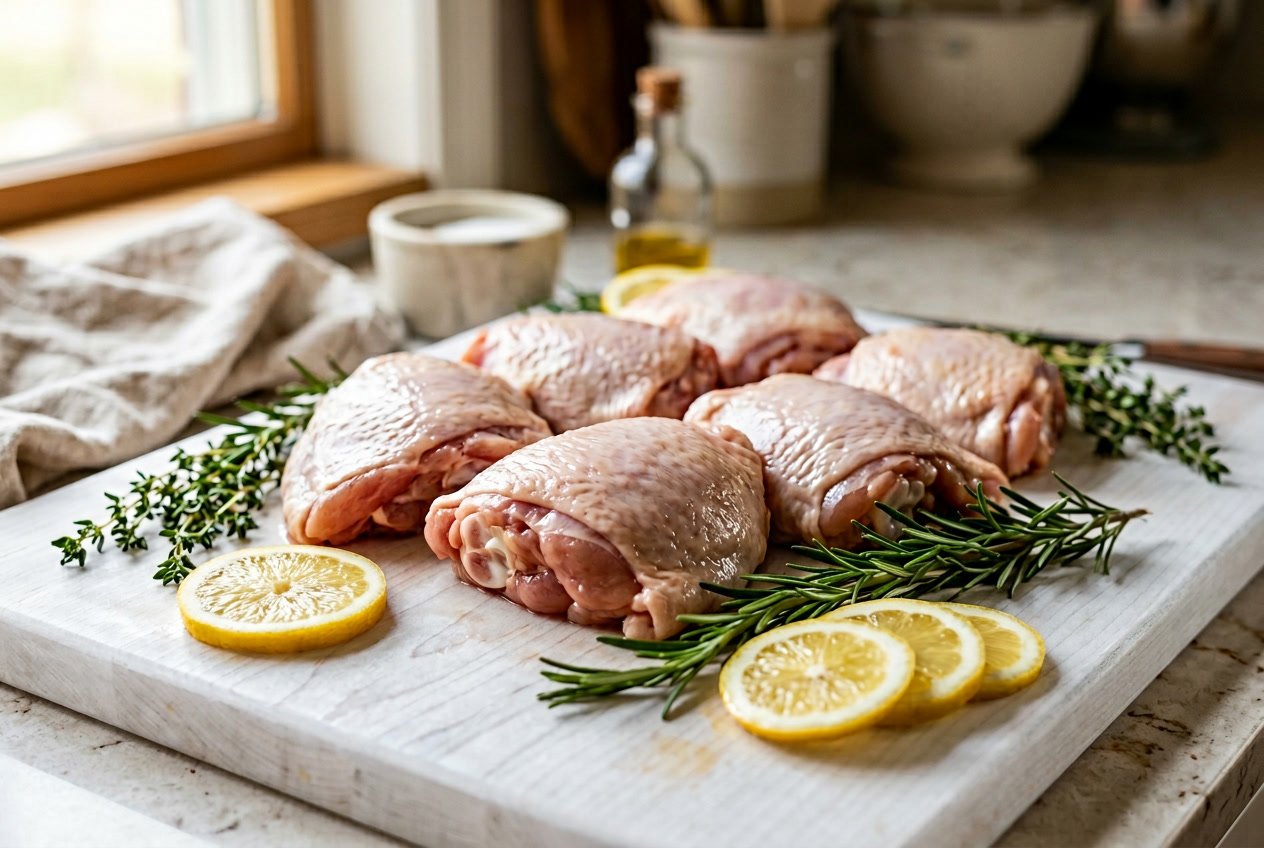
This guide helps you tell the difference between a normal faint poultry smell and warning smells caused by bacteria, improper storage, or freezer damage. You’ll also find visual and textural clues to watch for and practical steps to keep your chicken safe.
Understanding the Normal Smell of Chicken Thighs
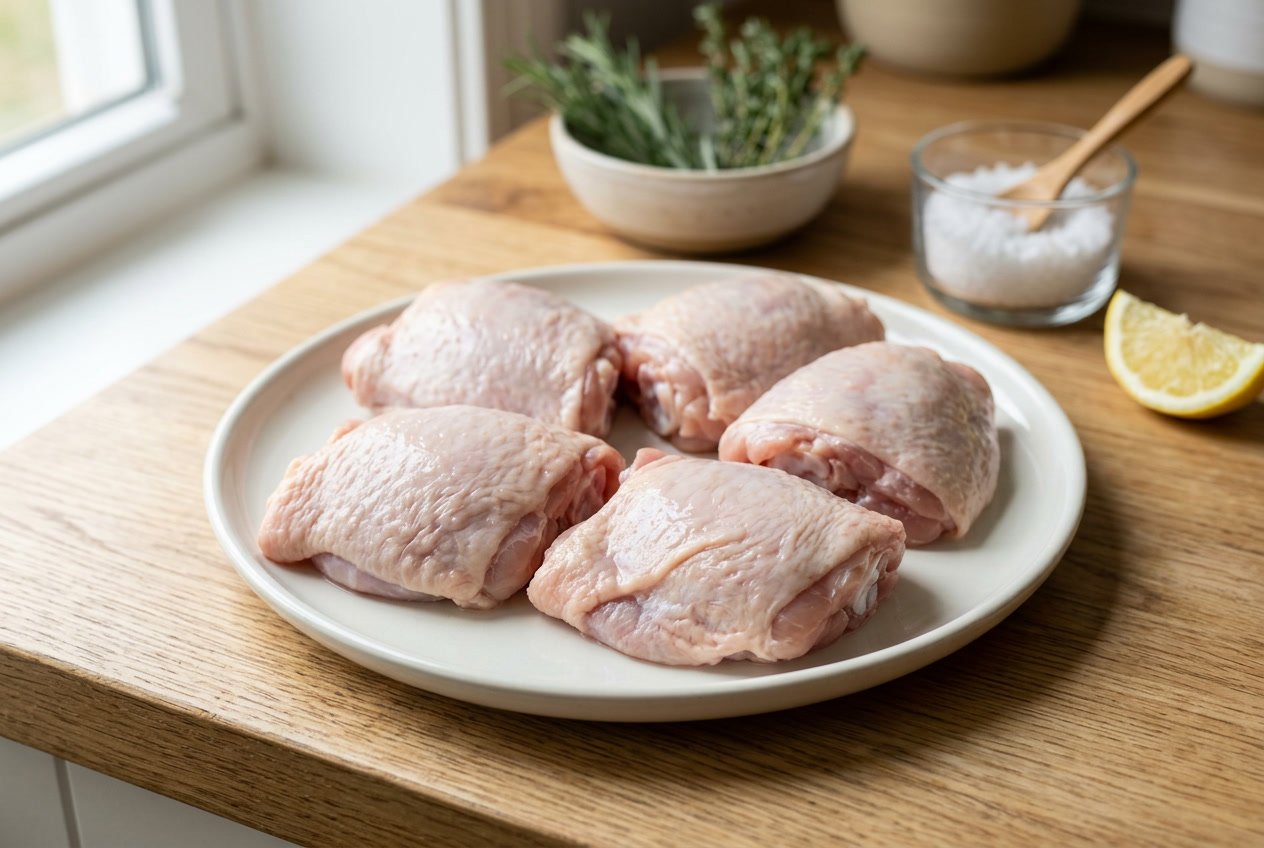
Fresh raw chicken thighs give a faint, meaty scent with no sharp, sour, or chemical notes. You may detect a mild “raw meat” aroma that’s neither strong nor unpleasant.
Expected Scent of Fresh Raw Chicken Thighs
Raw chicken thighs should have a subtle, neutral scent—faintly meaty, sometimes with a light metallic or iron note. This comes from the muscle and small amounts of blood near the bone, which is more noticeable in thighs than in breasts.
If packaging remains intact and you refrigerate the meat properly (at or below 40°F / 4°C), the smell stays mild for 1–2 days after purchase. Use a short, cautious sniff close to the package; an immediate strong odor is not normal.
Difference Between Fresh and Spoiled Odor
Spoiled raw chicken gives off sharp, sour, ammonia-like, or sulfurous smells that are very different from the neutral scent of fresh thighs. Bacteria break down proteins and fats, producing volatile compounds such as amines and hydrogen sulfide.
If the smell is sour, chemical, or plainly unpleasant, discard the meat. Also check texture and color: slime, tackiness, or gray-green discoloration alongside a bad odor confirms spoilage.
Cooking will not make foul-smelling chicken safe because some bacterial toxins resist heat. Do not rely on cooking to fix off odors.
Factors Affecting Natural Chicken Smell
Several factors change the natural smell of raw chicken thighs: cut (thighs are slightly stronger than breast), fat content, and how the bird was processed. Thighs contain more fat and dark muscle, which carry more aroma compounds than white meat.
Storage conditions matter. Higher fridge temperatures, repeated thawing, or prolonged storage accelerate odor changes.
Packaging type also affects smell. Vacuum-sealed chicken can retain a milder scent, while broken packaging or cross-contamination with other foods can introduce off-odors.
The chicken’s age, diet, and freshness at slaughter also influence its baseline aroma.
Odors Indicating Spoilage in Chicken Thighs
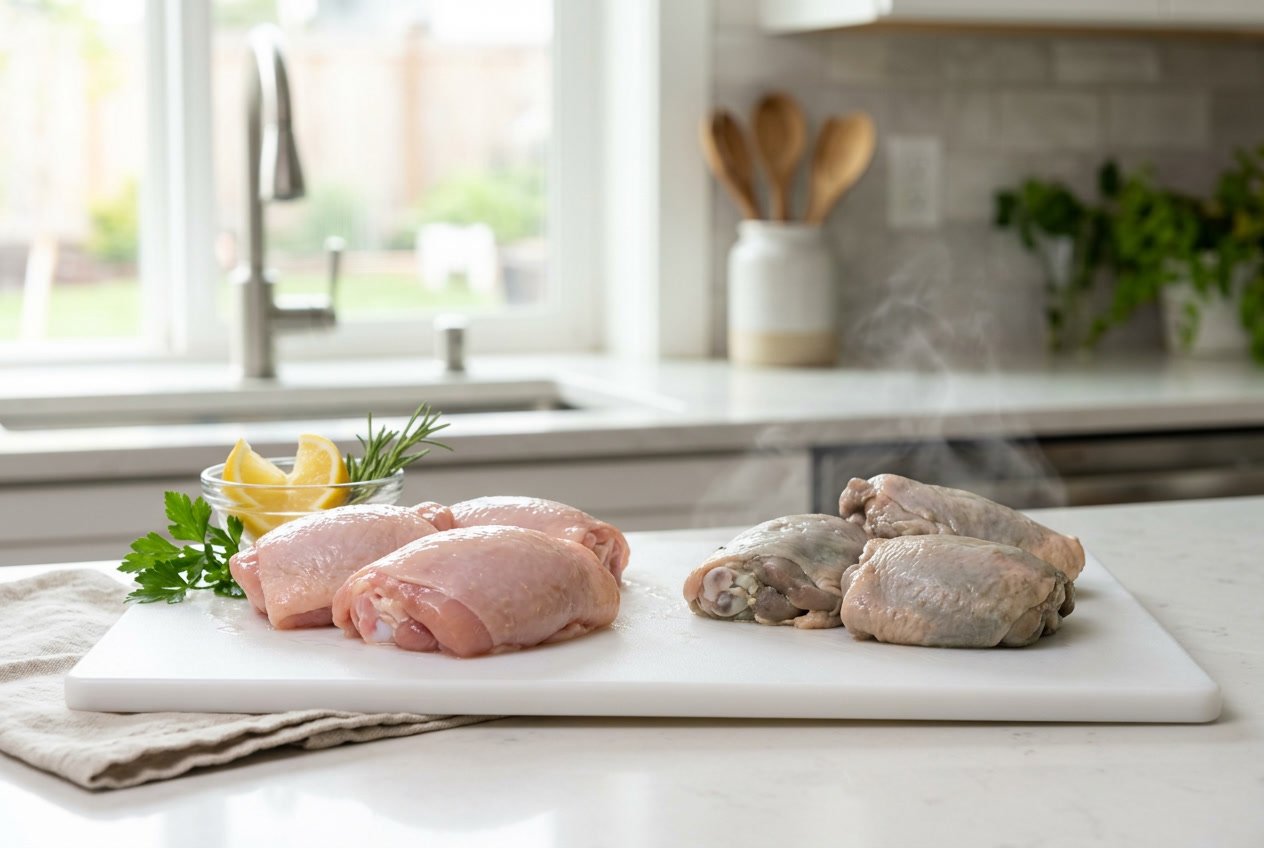
You can detect spoilage quickly by smelling for specific off-odors. Focus on sour or ammonia-like notes, sulfur/egg-like smells, and any strong putrid scents.
Detecting Sour or Ammonia-Like Smells
A sharp sour or chemical ammonia-like odor usually signals bacterial growth and protein breakdown. If the raw chicken gives a nasal sting or a vinegar-like tang, discard it.
Smell the meat with the package open but not pressed to your nose. If the scent is clearly sour or reminiscent of cleaning products, avoid tasting.
Slightly acidic packing fluids or marinade odors can mask problems, so trust a persistent sour smell over faint background aromas.
The sell-by date isn’t definitive. Even within the labeled window, a sour or ammonia-like smell makes the chicken unsafe to eat.
Sulfur and Rotten Egg Odors
A sulfurous or rotten-egg smell comes from hydrogen sulfide and related compounds formed when bacteria break down sulfur-containing amino acids. If the chicken “smells like eggs” or gives off a rotten-egg odor, spoilage is likely.
This odor can be stronger near the bone or in areas where juices pooled. Rinsing won’t remove hydrogen sulfide; the smell will persist because the compounds are produced internally.
Don’t try to cook away this scent. If you detect egg-like or sulfur notes, do not consume the chicken.
Bag it and discard it promptly to avoid cross-contamination.
Putrid or Strong Unpleasant Scents
Putrid, foul, or overwhelmingly unpleasant odors point to advanced spoilage and high levels of bacterial decomposition. You might notice a combination of sour, fecal, or rotten fragrances that make handling the package intolerable.
Such strong smells often come with slimy texture or discoloration. If the chicken emits a pervasive rot-like scent, assume it harbors pathogenic bacteria and toss it.
Avoid opening other refrigerated items while inspecting the package to prevent spreading odors and contaminants.
What Causes Abnormal Smells in Chicken Thighs
Three main sources cause abnormal odors in chicken thighs: microbial growth that produces foul volatile compounds, natural enzymatic and chemical breakdown of tissues, and gases or trapped odors from packaging. Each source creates distinct scent notes and has different implications for safety and quality.
Bacterial Growth and Foodborne Pathogens
Bacteria on raw chicken produce volatile compounds as they multiply, creating sour, putrid, or ammonia-like smells. Salmonella and Campylobacter often coincide with off-odors when numbers get high.
A strong sour, sulfurous, or ammonia scent should be treated as a warning sign. These odors indicate chemical byproducts like amines and hydrogen sulfide, which come from protein decomposition and bacterial metabolism.
A pronounced bad odor reliably signals increased bacterial load and a higher risk of foodborne illness. If you detect these scents, discard the chicken.
Organic Breakdown and Enzymatic Activity
After slaughter, natural enzymes and oxidation start breaking down muscle proteins and fats. This process releases compounds with metallic, fatty, or slightly sulfurous notes that intensify as the meat ages.
Texture changes—slimy feel or discoloration—often appear alongside enzymatic breakdown. Fat oxidation produces rancid, cardboard-like odors, while protein breakdown yields amines and hydrogen sulfide, which smell sour or eggy.
Proper cold storage slows these reactions. Leaving thighs at temperatures above 40°F (4°C) accelerates enzymatic activity and increases the chance of off-odors tied to spoilage.
Packaging Gases and Confinement Smell
Vacuum-sealed or modified-atmosphere packaging can trap gases that concentrate natural chicken odors or create new scent notes. Low-oxygen environments favor anaerobic bacteria producing sulfurous or sour odors, while residual processing gases can give a chemical or metallic tang.
You may notice a stale or slightly acidic smell when opening tight packaging. That can come from trapped carbon dioxide or from juices concentrating against the meat surface.
Check the package for swelling, tears, or leakage. These signs indicate microbial fermentation or gas production.
If packaging smells sharply of sulfur, ammonia, or rotten eggs on opening, assume contamination and discard the product.
Other Signs of Spoiled Chicken Thighs
Check color, feel, and freezer condition as well as smell. Visual and tactile cues often reveal spoilage before cooking.
Discoloration and Color Changes
Look for any gray, green, or iridescent patches on the skin or flesh. Healthy raw thighs are uniformly pink with white fat.
Green or blue-green spots indicate bacterial growth or mold and mean you should discard the meat immediately.
Brownish or dull gray tones can develop when meat oxidizes or sits too long. A little color variation near the bone can be normal, but widespread dulling is not.
If fat turns yellowish or the interior shows dark streaks, don’t risk it. If packaging contains dark liquid pooled around the thighs, that liquid can signal breakdown of muscle proteins and spoilage.
Combine color checks with smell and texture before deciding.
Changes in Texture: Slimy, Sticky, or Tacky
Fresh chicken thighs feel moist but not slippery. Spoiled thighs develop a slimy, tacky, or sticky surface film.
Gently press the meat with a clean finger. If residue clings or the surface peels away in a film, bacteria-produced biofilm is likely present.
Sliminess can be subtle at first, especially on thigh joints and skin folds. Avoid rinsing slimy chicken—rinsing spreads bacteria. Discard it instead.
Stickiness combined with off-odors or discolored areas strengthens the case for spoilage. Texture changes are often more reliable than color alone, so use touch as a decisive indicator.
Freezer Burn Effects
Freezer burn appears as dry, pale, whitish or grayish patches on frozen thighs where moisture escaped. These spots are dehydrated and may feel leathery. They don’t always mean the meat is unsafe, but they do reduce quality.
Severe freezer burn causes tough, tasteless meat after cooking and can produce off-flavors that smell stale or cardboard-like. If freezer burn covers small surface areas, trim those parts before cooking. If it’s widespread, toss the package.
Check packaging integrity. Punctures, crushed seals, or large ice crystals inside the bag indicate thaw-refreeze cycles that increase spoilage risk.
Labeling the freeze date and using a vacuum seal or tightly wrapped packaging helps prevent this issue.
Food Safety and Handling for Chicken Thighs
Store chicken at safe temperatures and separate raw from ready-to-eat foods. Follow recommended timelines for refrigeration and freezing.
Handle and thaw chicken to minimize cross-contamination and ensure you reach the correct cooking temperature.
Safe Storage Practices
Keep raw chicken thighs refrigerated at 40°F (4°C) or below. Place them on the lowest shelf in a sealed container or sealed plastic bag to prevent juices from dripping onto other foods.
Use airtight packaging or heavy-duty freezer bags for long-term storage to limit freezer burn and odor absorption. Label packages with the date so you can track how long they’ve been stored.
Always store cooked chicken separately from raw chicken. Clean and sanitize any surfaces, utensils, and hands after they contact raw poultry to prevent cross-contamination.
Expiration Dates and Shelf Life
In the refrigerator, use raw chicken thighs within 1–2 days of purchase for best safety and quality. If you can’t use them within that window, freeze them immediately.
In the freezer, keep chicken thighs for up to 9 months in proper packaging for optimal quality. They remain safe longer but may lose texture and flavor.
Thawed chicken that was previously frozen should be cooked within 1–2 days. Ignore sell-by dates as guarantees; use them as rough guidance and rely on storage time, packaging integrity, and sensory checks (odor, color, texture) to decide whether to keep or discard the meat.
Proper Thawing and Handling
Thaw chicken thighs in the refrigerator, not on the counter, to keep the surface below 40°F (4°C). Allow 24 hours for every 1–2 pounds; small packages may thaw overnight.
For faster thawing, use a sealed bag in cold water, changing the water every 30 minutes until thawed. Cook immediately after cold-water thawing.
If you use a microwave to defrost, cook the chicken immediately afterward because parts may begin to cook during defrosting.
Always wash hands, cutting boards, knives, and sinks with hot, soapy water after they touch raw chicken to prevent cross-contamination.
What to Do If Chicken Thighs Smell Off
If your chicken thighs give a sour, ammonia-like, or otherwise unpleasant odor, stop and assess. Take immediate containment steps, reduce cross-contamination risk, and decide when disposal is the safest choice.
Immediate Steps When an Off-Odor Is Detected
Move the package to the sink or an easily cleaned surface and open it carefully to avoid splashing any juices. Smell from a short distance first; lean in only if the odor is faint to avoid strong inhalation.
Keep the chicken sealed or re-seal it in a plastic bag if you plan to discard it. This limits airborne odors and fluid spread.
Wash your hands with soap and hot water for at least 20 seconds immediately after handling the package.
Clean any surfaces, utensils, or containers that contacted the chicken with hot, soapy water. Sanitize with a household bleach solution (1 tablespoon bleach per 1 quart/1 liter water) or an EPA-registered disinfectant.
Launder any cloths or towels used on hot cycle.
Reducing Risk of Foodborne Illness
Do not taste chicken to test freshness. Tasting can expose you to pathogens and toxins even if the chicken is cooked.
Salmonella and Campylobacter can cause severe illness. Some bacteria also produce toxins that cooking will not destroy.
Keep suspect chicken separate from other foods. Discard anything it may have touched, including packaged produce.
Set your refrigerator to 40°F (4°C) or lower. Use a fridge thermometer to check the temperature.
If you need to discard chicken, place it in a sealed bag in an outdoor trash bin if possible. Clean and sanitize the trash bag or container area afterward to avoid attracting pests or contaminating other waste.
When to Discard Chicken Thighs
Throw away chicken immediately if you notice a strong sour, ammonia, rotten, or sulfurous odor. Visible sliminess or green and gray discoloration also indicate spoiled chicken.
If you leave chicken above 40°F (4°C) for more than 2 hours, or above 90°F (32°C) for more than 1 hour, discard it even if the smell seems only slightly off. Bacteria grow quickly and toxins can form in these conditions.
When in doubt, throw the chicken away. Use a sealed bag for disposal and clean all contact surfaces. Wash your hands after handling spoiled chicken.


