
How Should Chicken Thighs Be Cooked: Temps, Methods & Pro Tips
You want juicy, flavorful chicken thighs with crisp skin and reliable doneness.
Sear bone-in, skin-on thighs skin-side down to render fat, then finish them in the oven until the internal temperature reaches at least 165°F, or up to 175–180°F for extra-tender, fall-apart meat.
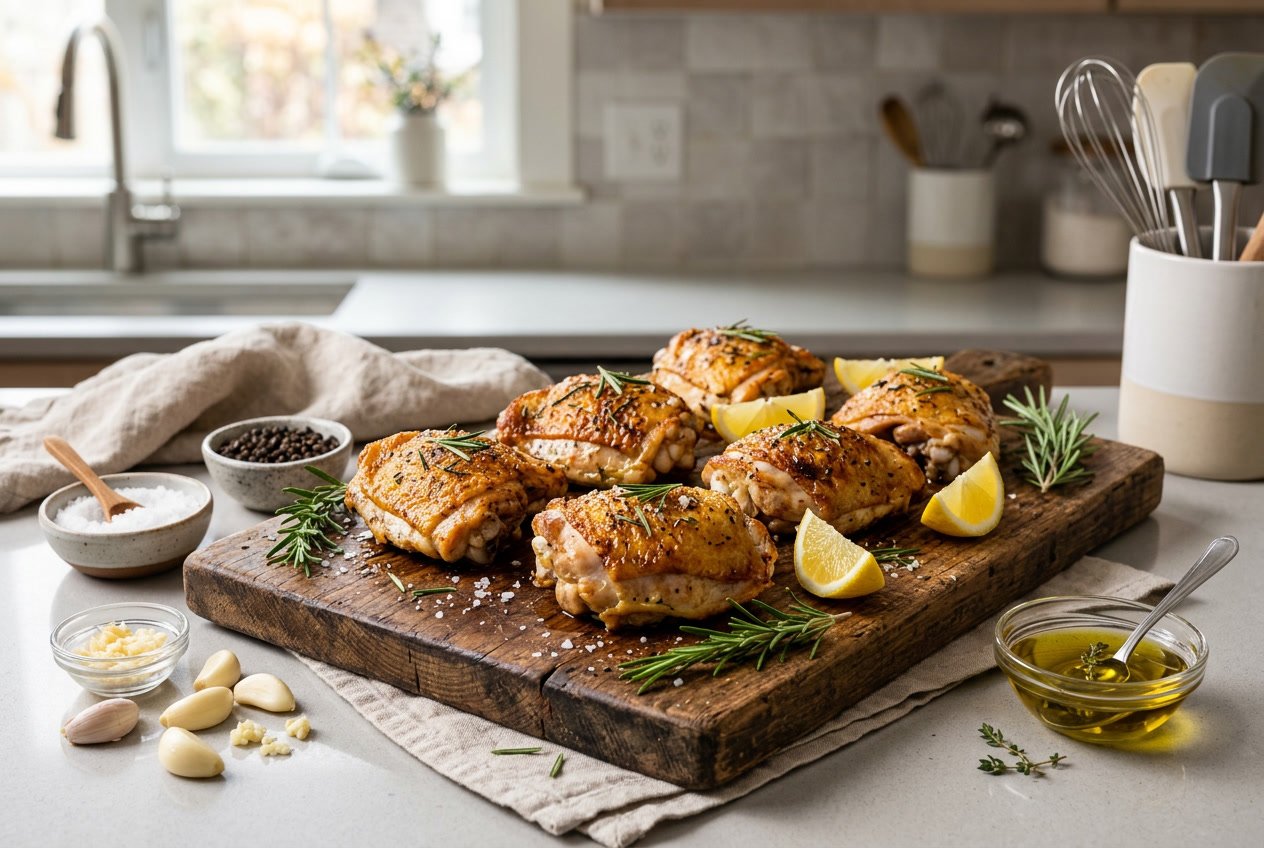
This guide explains why thighs tolerate higher finish temperatures and how bone and skin affect texture.
You’ll learn which methods—baking, grilling, pan-searing plus oven-roasting, or alternatives like poaching and pressure cooking—deliver the results you want.
Follow the steps and timing that match your equipment and flavor goals so every batch turns out consistent.
Understanding Chicken Thighs
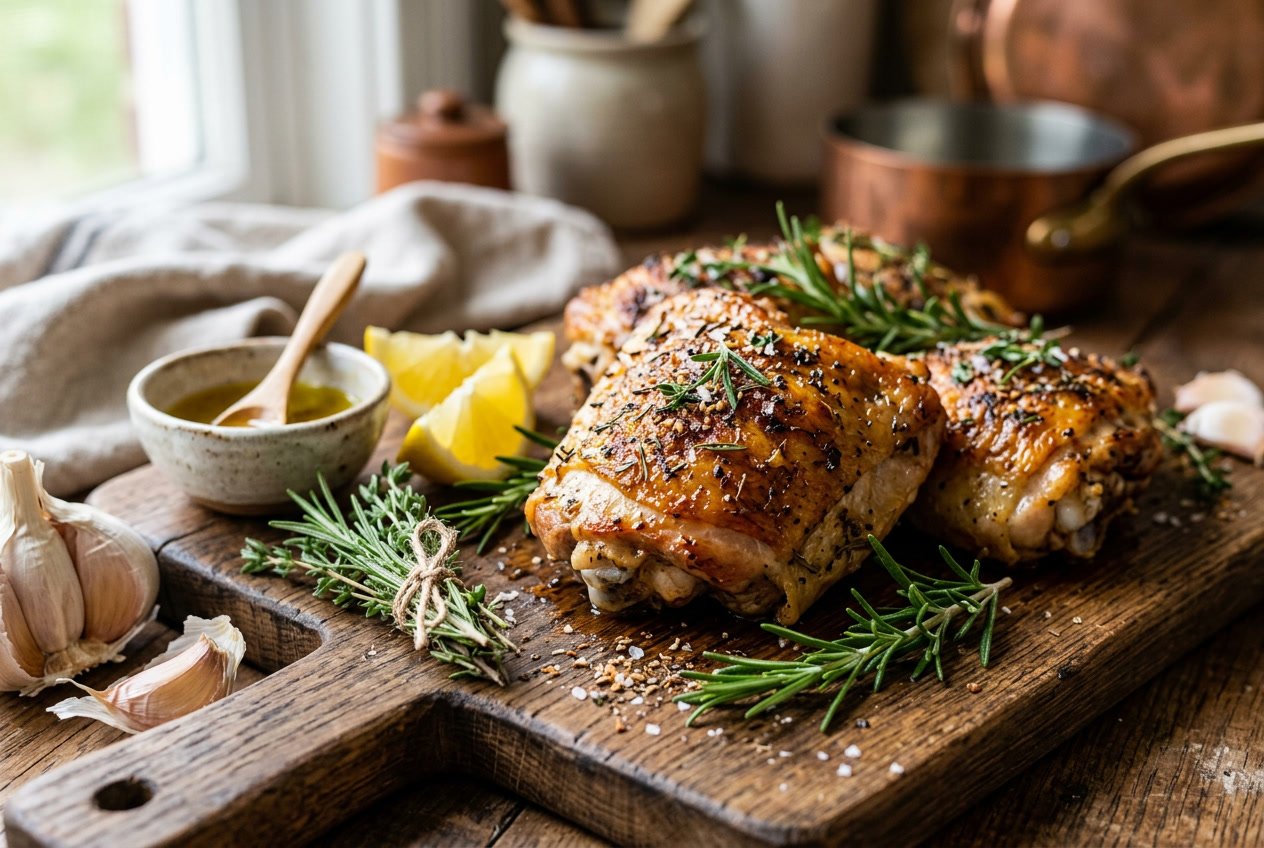
Chicken thighs offer forgiving cooking behavior, higher fat content, and more connective tissue than breasts.
They respond well to both high-heat searing and low-and-slow methods.
Your choice of bone, boneless, skin, or skinless changes cooking time, texture, and flavor.
Bone-In vs. Boneless Chicken Thighs
Bone-in chicken thighs keep heat and moisture near the interior, so they tolerate longer cooking and higher end-point temperatures without drying.
Bone-in pieces take roughly 10–20 minutes longer than boneless at the same oven temperature.
Pull bone-in thighs around 175°F for tender results because the extra collagen benefits from higher final temps.
Boneless chicken thighs cook faster and work well for quick pan-sears, stir-fries, or slicing for bowls.
They reach safe temperature at about 165°F; overshoot that and they can become dry.
Use an instant-read thermometer inserted into the thickest part, avoiding bone, to time them precisely.
Skin-On vs. Skinless Chicken Thighs
Skin-on chicken thighs deliver more flavor and texture because the skin traps fat and can become crispy when rendered properly.
Dry the skin thoroughly, salt ahead, and cook with a combination of pan-searing and oven-roasting or high oven/air-fryer heat to render the fat and get a golden, crispy exterior.
Skinless thighs are leaner and absorb marinades or sauces faster, which suits braises, curries, and quick sautés where crisp skin isn’t needed.
They also reduce cooking time slightly and make portion control easier.
If you want texture after braising or pressure cooking, finish skinless pieces under the broiler briefly for color.
Nutritional Value and Flavor Profile
Thighs contain more fat and connective tissue than breasts, which gives them richer flavor and a juicier mouthfeel.
A typical cooked chicken thigh provides more iron and zinc per ounce than white meat and supplies higher caloric density due to fat.
The higher fat content tolerates bold marinades and longer cooking without drying out, so you can use acidic (yogurt, citrus), enzymatic, or soy-based marinades for deep flavor.
Choose bone-in, skin-on thighs for maximum succulence and mouthfeel.
Choose boneless or skinless when speed, a leaner profile, or easier slicing matters.
Fundamentals of Cooking Chicken Thighs
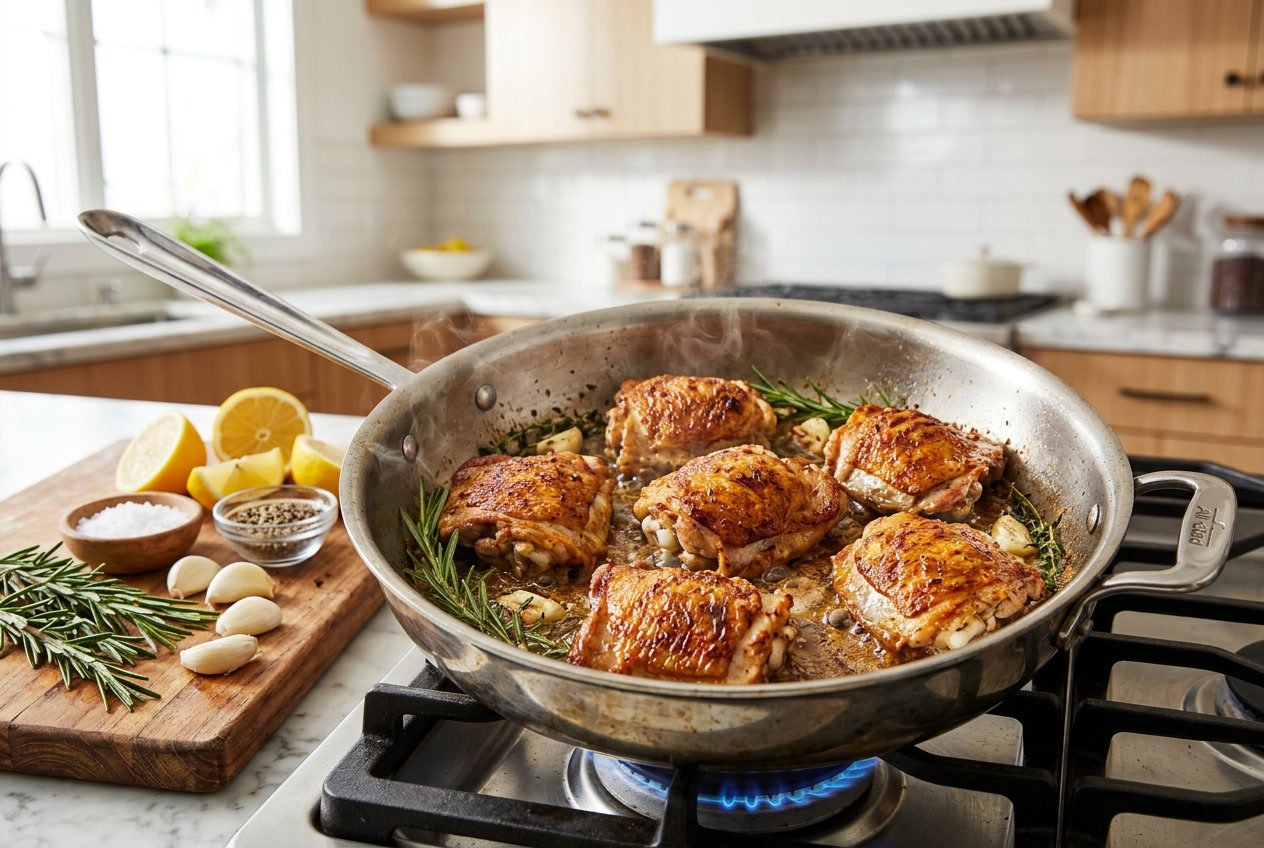
You need clear temperature targets and reliable checks.
Use an instant-read thermometer and rest the meat to retain juices and finish collagen conversion.
Safe Internal Temperature
The USDA minimum is 165°F (74°C) for poultry safety.
For chicken thighs, aim higher depending on cut: boneless thighs are best at 165–170°F, while bone-in, skin-on thighs benefit from 175–185°F to convert collagen into gelatin.
Insert an instant-read thermometer into the thickest part, avoiding bone, and wait for a stable reading.
When cooking a batch, check multiple pieces because size and thickness vary.
How to Check Doneness
Use an instant-read thermometer for accuracy.
Probe the thickest area perpendicular to the bone and avoid touching bone, which gives a false high reading.
Juices should run clear, not pink, and meat near the bone should lose its translucent, raw appearance.
A well-cooked thigh feels firmer than raw but still yields slightly.
When using oven, grill, or air fryer, check a representative thigh rather than just one piece at the edge of the pan.
Resting and Juiciness Tips
Rest the thighs 5–10 minutes after cooking; larger bone-in pieces may benefit from 10–15 minutes.
Resting lets residual heat finish the cook and redistributes juices.
Tent loosely with foil to avoid cooling too fast but don’t wrap tightly or steam will soften the skin.
If you need to re-crisp skin, return thighs to a hot oven or under a broiler for 1–3 minutes after resting.
For shredded applications, rest briefly then shred while still warm for easier pulling.
How to Bake Chicken Thighs
Baking chicken thighs gives you juicy meat and, when done right, crisp skin.
Choose temperature and time based on whether thighs are bone-in or boneless, and use a thermometer to confirm doneness.
Oven Temperatures and Cooking Times
Select a temperature that matches your texture goal.
For bone-in, skin-on thighs, bake at 375–425°F (190–218°C).
At 375°F expect 40–50 minutes; at 400°F aim for 35–45 minutes; at 425°F you can finish in 30–40 minutes with crispier skin.
For boneless, skinless thighs use higher heat but shorter time.
Bake at 400°F for about 20–25 minutes or 425°F for 18–22 minutes.
Internal temperature should reach 165°F (74°C) for safety; many cooks pull thighs at 175–180°F (80–82°C) for more tender results.
Adjust for thigh size and oven variance.
Thicker pieces take longer; crowded pans increase time.
Use a meat thermometer in the thickest part without touching bone.
Steps for Baking Chicken Thighs
Preheat the oven to your chosen temperature so the thighs start cooking immediately.
Pat thighs dry with paper towels to remove surface moisture; this promotes browning.
Season or marinate as desired.
A simple rub of salt, pepper, garlic powder, and paprika works well.
If using a wet marinade, let excess drip off before baking to avoid steaming.
Arrange thighs skin-side up on a rimmed sheet pan or a wire rack over a pan.
Space them so hot air circulates.
Bake until the thermometer reads the target temperature, then rest the thighs 5–10 minutes to let juices redistribute.
Tips for Crispy Baked Chicken Thighs
Dry skin is essential.
Pat the skin thoroughly and, if time allows, refrigerate uncovered for 1–2 hours to dry the surface further.
Use high heat and a wire rack.
Baking at 400–425°F and elevating thighs on a rack exposes skin to hot air and concentrates browning.
Avoid overcrowding the pan; crowded pieces steam instead of crisping.
Finish with a quick broil if needed.
If skin hasn’t crisped after the main bake, broil 1–3 minutes while watching closely.
Rest briefly before serving so juices settle and skin stays crisp.
Grilling and Roasting Chicken Thighs
Aim for even heat, an internal temperature of 165°F, and a short rest before serving.
Use higher heat for a crispy exterior and moderate or indirect heat to finish thicker pieces.
Grilling Times and Temperatures
Set grill temperature to 350–450°F.
Cook boneless thighs 5–8 minutes per side over direct medium-high heat.
For bone-in, plan 7–10 minutes per side and move to indirect heat if the exterior chars before the center reaches temperature.
Insert a probe thermometer into the thickest part without touching bone; pull thighs at 165°F and let them rest 5 minutes.
Start skin-on thighs skin-side down to render fat and crisp the skin, then flip once.
For even cooking, flatten very thick pieces or butterfly them.
If using a two-zone fire, sear over high heat then finish over medium or indirect heat to avoid burning.
Roasting Techniques for Flavor
Preheat your oven to 400–425°F for a balance of crisp skin and juicy meat.
Roast skin-on bone-in thighs on a rack set in a baking pan for 30–40 minutes depending on size.
Boneless thighs typically take 20–30 minutes.
Check the internal temperature at the thickest point; 165°F is the safe target.
Pat thighs dry and season with salt at least 30 minutes before roasting to improve texture.
Use a light oil coating and scatter aromatics—garlic, thyme, lemon slices—around the pan to add flavor.
For extra crisping, finish under the broiler for 1–2 minutes, watching closely to prevent burning.
Alternative Cooking Methods for Chicken Thighs
Try fast, high-heat techniques or low-and-slow approaches that suit chicken thighs’ fat and connective tissue.
Pick the method that matches the texture and time you want.
Sautéing and Pan-Searing
Sautéing and pan-searing deliver crisp skin and concentrated flavor quickly.
Pat skin-on thighs very dry and season well.
Start skin-side down in a cold or room-temperature skillet, then set heat to medium or medium-high so fat renders slowly and skin browns without burning.
Give each piece 1–1.5 inches of space so steam escapes.
Boneless skin-on thighs take about 8–12 minutes total.
Bone-in need longer and benefit from a brief oven finish at 400°F for 8–12 minutes.
Use an instant-read thermometer—pull boneless at 165°F, and aim for 175°F for bone-in.
Rest 5 minutes before serving.
Slow Cooking and Braising
Use slow cooking for pull-apart tenderness and deep flavor.
Brown thighs first to develop flavor, then add aromatics, a liquid (stock, wine, or tomato-based), and low heat.
In a slow cooker, set high for 3–4 hours or low for 6–7 hours.
In the oven, braise covered at 300°F for 1.5–3 hours depending on size and bone.
Aim for 185°F if you want fall-off-the-bone texture.
If you care about skin texture, finish under a hot broiler for 3–4 minutes after braising to add color and some crispness.
Pressure Cooking and Air Frying
Pressure cooking gives tenderness quickly.
Pressure cook bone-in thighs 10–12 minutes with a natural release; boneless needs less time.
Use 1 cup of liquid for a 6-quart cooker and brown first if you want better color.
Shred or serve whole depending on recipe.
Air frying produces crisp skin with minimal oil.
Pat thighs dry, season, and arrange in a single layer skin-side up.
Cook at 400°F: boneless 16–20 minutes, bone-in 22–28 minutes, flipping once if needed.
Avoid overlap and check internal temperature.
For best results, pressure-cook for tenderness, then air-fry briefly for crisp skin.
Maximizing Flavor and Texture
Control three things: surface dryness for crisp skin, collagen breakdown for tenderness, and seasoning penetration for flavor.
Use time and temperature deliberately to get crispy, juicy thighs and layers of taste.
Marinating Chicken Thighs
Marinades add flavor and can tenderize, but choose ingredients and timing carefully.
For acid-based marinades (lemon, vinegar, yogurt), limit marinating to 2–8 hours.
For oil-forward or enzyme marinades (olive oil, soy, ginger), you can marinate up to 12–24 hours for deeper flavor.
Use a 1:3 ratio of acid to oil as a basic guide, and include salt to help it penetrate the meat.
Put thighs in a zip-top bag, press out air, and refrigerate flat so the marinade contacts the surface evenly.
Always pat thighs dry before cooking to preserve crispness.
Seasoning and Rubs
Salt is the single most important seasoning. Apply it at least 1 hour before cooking, or leave it overnight in the fridge for better moisture control and flavor penetration.
Use kosher salt by weight when possible. Aim for about 0.8–1% of the raw meat weight for a noticeable but balanced seasoning.
Combine salt with aromatics and spices for rubs, such as garlic powder, smoked paprika, and black pepper. Add a pinch of baking powder for skin crisping.
Baking powder raises pH and speeds browning when used sparingly (1/8–1/4 tsp per thigh). Apply rubs to dry skin and leave the meat uncovered in the fridge for at least 30 minutes to dry the surface further before high-heat cooking.
Recipe Inspiration and Serving Ideas
Match the cooking method to the dish. Roast or air-fry skin-on bone-in thighs for a Sunday roast. Braise or slow-cook thighs for shredded tacos.
Pan-sear thighs, then finish them in the oven for weeknight mains. Try a Greek yogurt marinade with yogurt, lemon zest, oregano, and garlic for tangy roasted thighs.
Use a soy-ginger mix with soy, sesame oil, ginger, and honey for an Asian-style glaze. Serve with sides that balance fat and acid.
Pair with roasted vegetables and a lemony herb salad with yogurt sauce. Rice pilaf and quick-pickled cucumbers also work well.
For make-ahead meals, shred cooled cooked thighs into stews, grain bowls, or sandwiches. Store refrigerated for up to 4 days or freeze portions for up to 3 months.


