
How Much Chicken Thighs Per Person: The Ultimate Serving Guide
You want a simple rule of thumb so you can shop and cook with confidence.
Plan on about 1 to 1¼ boneless, skinless chicken thighs (roughly ½ to ¾ pound) per adult, or about 1¾ to 2¼ bone-in thighs (roughly ¾ to 1 pound) per adult depending on appetite and whether you’re serving hearty sides.
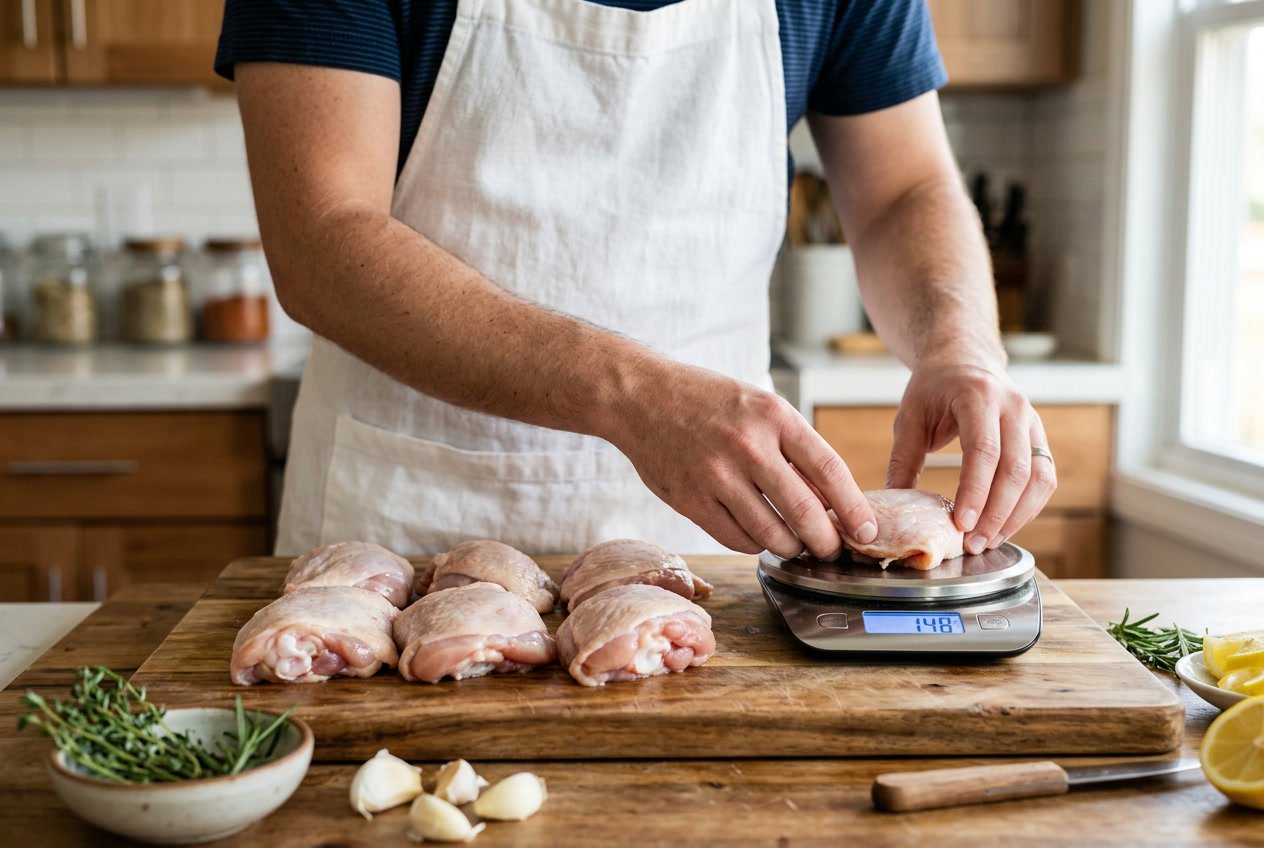
This post explains the differences between boneless and bone-in thighs. It shows how cooking method and guests’ appetites change the math and gives a quick formula to calculate how much to buy for any group.
Use the guidance that fits your meal so you avoid overbuying or coming up short.
Standard Chicken Thigh Portions Per Person
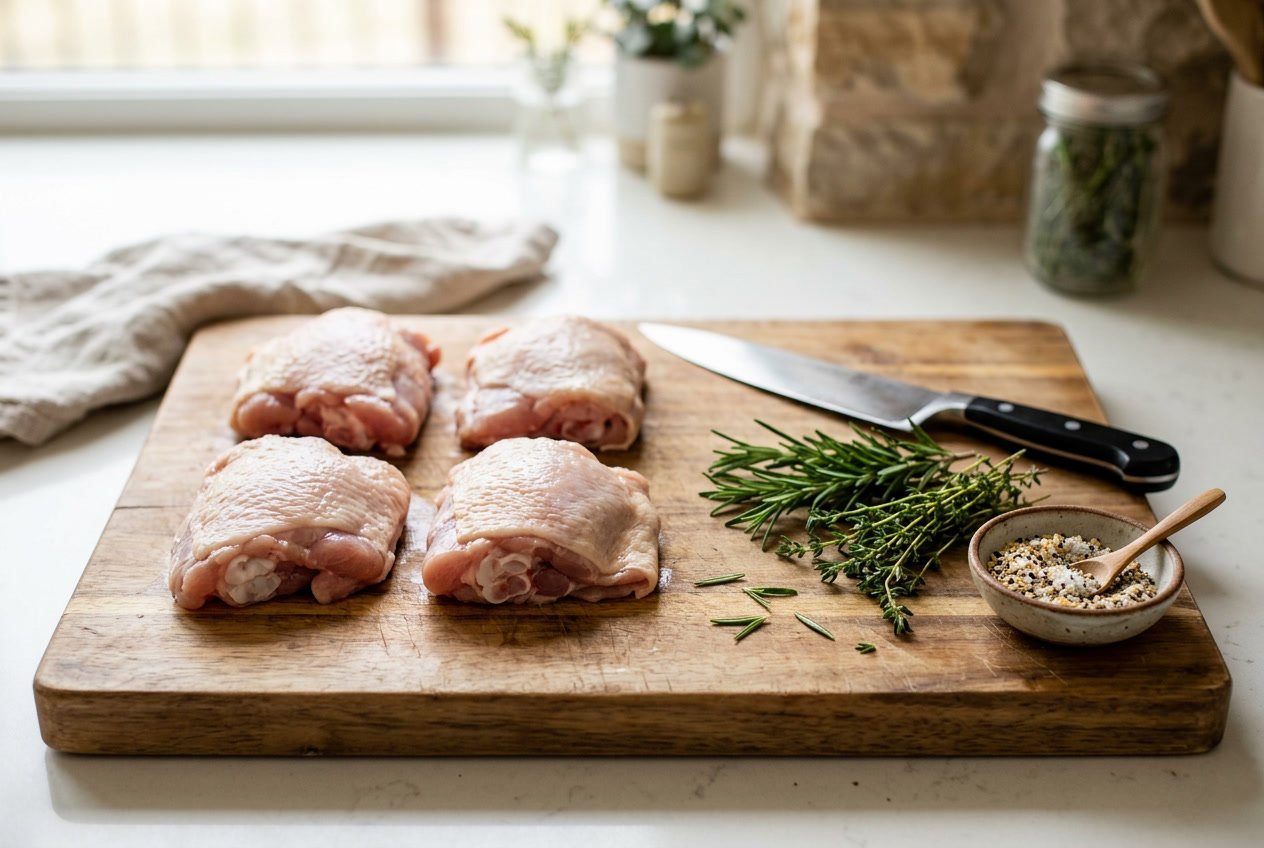
Plan portions by weight and appetite. For a main-course meal, use about 1/2 pound (8 oz) of boneless chicken thighs or 3/4–1 pound (12–16 oz) of bone-in thighs per adult.
Adjust up or down based on sides, leftovers wanted, and the average size of the thighs you buy.
Recommended Serving Sizes for Adults
Aim for 3–4 ounces of cooked meat per person when thighs are part of a balanced plate.
That typically means:
- Boneless thighs: 1/2 pound (8 ounces) raw per adult, which yields roughly 4–5 ounces cooked.
- Bone-in thighs: 3/4 to 1 pound raw per adult, because bones reduce edible yield.
If you serve heavier sides or multiple courses, you can drop to one boneless thigh (about 4–5 oz cooked).
For plated mains with only a couple of sides, plan two boneless thighs or one large bone-in thigh to meet typical adult appetites.
Portions for Children and Light Eaters
For children and light eaters, reduce portions to about half an adult serving.
That means roughly 2–3 ounces cooked meat each, or about:
- Boneless: 3–4 ounces raw (one small thigh).
- Bone-in: one small thigh or share larger pieces.
Consider age and activity. Toddlers may need less than school-age kids.
When you serve several side dishes or family-style spreads, one thigh per child usually suffices and helps avoid waste.
Adjustments for Hearty Appetites
If you expect big eaters or want leftovers, increase the portion to 3/4 pound (12 oz) boneless or 1 pound (16 oz) bone-in per person.
That generally means two boneless thighs or two large bone-in thighs for each hungry adult.
Factor in cooking loss (about 15–25%) and bone weight when estimating.
For group meals, round up and buy by weight: 1/2–3/4 pound boneless per person gives you flexibility for seconds and varied appetites.
Boneless vs. Bone-In Chicken Thighs
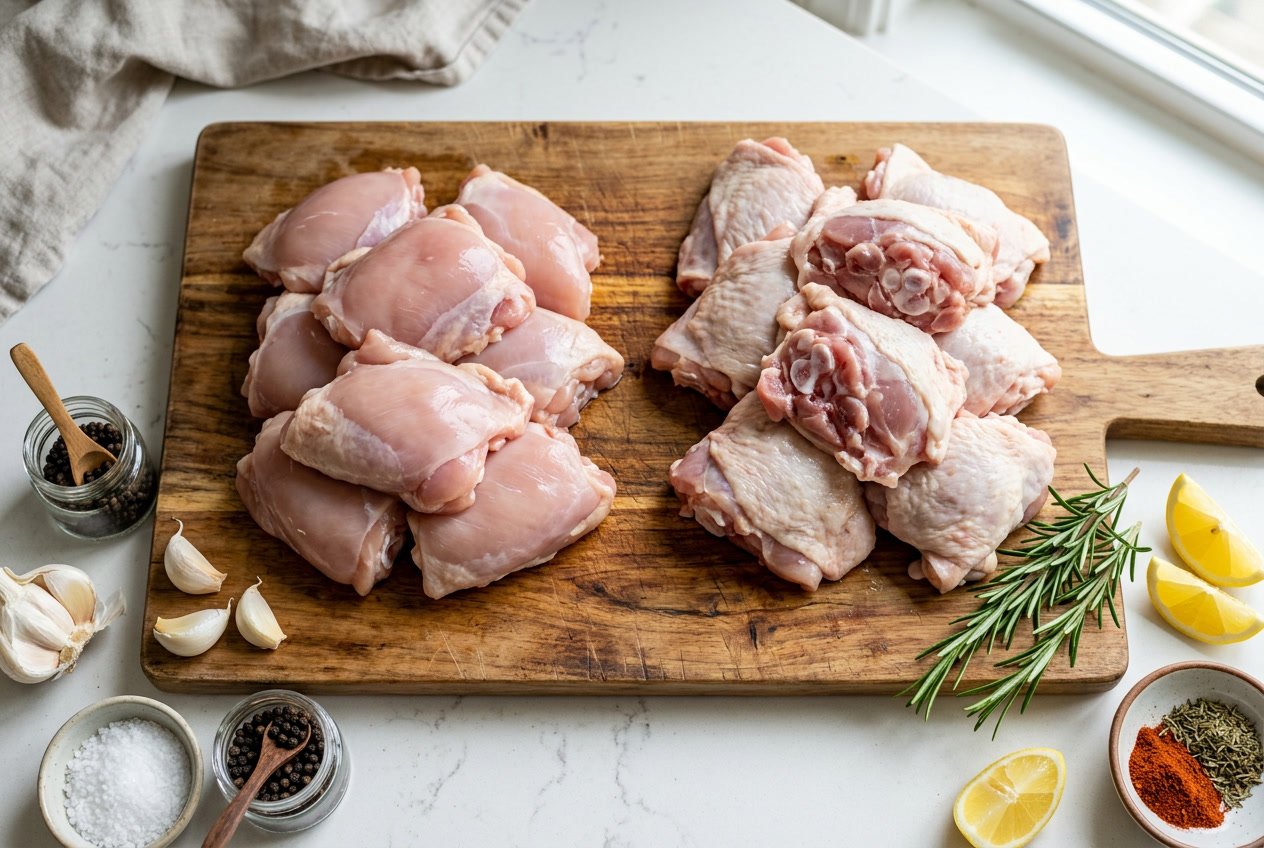
Boneless thighs save prep time and give you more edible meat per pound.
Bone-in thighs cost less per pound and deliver more flavor, but you must plan for bone weight when portioning.
How Boneless Chicken Thighs Affect Portioning
Boneless chicken thighs deliver mostly edible meat, so portioning by weight works best.
Plan about 1/2 pound (8 ounces) of boneless thighs per adult when the chicken is the main protein.
That yields roughly 6–7 ounces cooked per person after typical moisture loss.
If you track pieces instead of weight, expect about 5–6 boneless thighs per pound.
That means 1–2 thighs per person depending on appetite and sides.
Use weight for consistent results when pre-packaged pieces vary in size.
Boneless thighs also save cooking time and make plating easier.
They’re a good choice if you want predictable servings, minimal trimming, and straightforward calorie or protein estimates.
Bone-In Thighs: Serving and Yield Differences
Bone-in thighs include the bone and often the skin, so you must increase raw weight to reach the same edible yield.
Plan roughly 3/4 to 1 pound of bone-in thighs per person when serving as the main course.
A typical raw bone-in thigh weighs 4–6 ounces.
After cooking and removing the bone you get about 3–4 ounces of meat.
That usually means 1–2 thighs per person for average appetites.
Buying bone-in can stretch your budget and add flavor for slow-cooked or grilled dishes.
If you need precise portions or want minimal waste, convert your target cooked weight into raw bone-in weight using the 30–40% bone-and-loss adjustment.
Calculating How Much Chicken Thighs to Buy
Plan by weight, not pieces.
Decide whether you’re serving boneless or bone-in thighs and account for bones, skin, and cooking shrinkage when converting pounds to servings.
Thighs Per Pound and Weight Conversions
One average bone-in chicken thigh weighs about 6 to 8 ounces raw.
Boneless, skinless thighs usually weigh 3 to 4 ounces each.
Use these figures to convert: 1 pound of bone-in thighs equals roughly 2 to 3 thighs.
1 pound of boneless thighs equals roughly 4 to 6 thighs.
For a main course, plan on 1/2 to 3/4 pound of bone-in thighs per adult, or 1/4 to 1/3 pound of boneless thighs per adult.
Multiply those per-person weights by guest count, then round up to allow for larger appetites and trimming losses.
Use a kitchen scale when prepping to portion exactly.
Remember cooking methods (roasting vs. braising) change final plated weight by several ounces per serving.
Planning for Groups and Large Gatherings
For parties, calculate by weight first, then convert to pieces for shopping ease.
Example: 10 adults wanting boneless thighs at 1/3 pound each equals 3.3 pounds total.
Buy 3.5–4 pounds to account for trimming and uneven piece sizes.
If you expect heavier eaters or minimal sides, increase bone-in estimates to 3/4–1 pound per person.
For buffets, add 10–15% extra to prevent running out.
For kids, count on half an adult portion or one small boneless thigh each.
Write your shopping list in pounds, not pieces.
That prevents underbuying when packages contain variable thigh sizes.
Buying Tips at the Store
Check labels for “boneless/skinless” vs. “bone-in/skin-on” and buy accordingly.
Price per pound often differs significantly.
Inspect package weight.
If you need 4 pounds and packages are 1.5 pounds each, buy three rather than two to hit your target.
Buy from consistent sources when possible.
Different brands and farms vary in thigh size.
If freezing, divide into meal-sized packages to avoid thawing excess.
When in doubt, buy an extra 10–20%.
Leftovers store well and reduce the risk of running out.
Factors Affecting Chicken Thigh Serving Size
Portion needs change based on whether chicken is the main protein, what else you serve, and who you’re feeding.
Use weight or piece counts to match thighs per person to appetite and menu context.
Meal Type: Main Dish vs. Side or Appetizer
When chicken thighs are the main dish, plan for about 4–6 ounces of cooked meat per adult.
That usually means 1 bone-in thigh or 1–2 boneless thighs per person, depending on size.
If you buy by weight, allow roughly 1/2 pound boneless thighs or 3/4–1 pound bone-in thighs per person for generous portions.
If thighs serve as a side or appetizer, reduce portions to 1/3–1/4 pound boneless or 1 thigh per person.
For bite-sized appetizer pieces, count 1–2 smaller pieces per guest.
Label servings clearly at buffets so guests know portion expectations.
Impact of Side Dishes and Menu Variety
Hearty sides shrink the chicken portion you need.
If you provide rice, potatoes, salad, and a vegetable, you can reduce thighs per person to 3–4 ounces each.
For heavy starches or multiple mains, aim for 1 thigh (bone-in) or 1 boneless thigh per person.
For light or simple sides, increase to 1–2 thighs per person to avoid shortages.
In buffets, plan a 10–15% surplus because guests take second helpings.
Use a simple table:
- With many sides: 3–4 oz cooked meat per person
- With few sides: 4–6 oz cooked meat per person
This keeps chicken serving size aligned with your menu mix.
Guest Age, Appetite, and Dietary Preferences
Adjust portions by guest demographics.
Teenagers and active adults commonly need 6–8 ounces cooked, so serve 2 thighs or 1 large bone-in thigh.
Small children typically eat 2–4 ounces, equal to half a bone-in thigh or one small boneless thigh.
Account for dietary choices.
Vegetarians or low-meat eaters need alternatives so you don’t overserve chicken.
Note allergies and provide clear labeling.
When in doubt, round up quantities slightly to accommodate larger appetites and avoid running out.
Comparing Chicken Thighs to Other Cuts
Chicken thighs give you more fat and flavor per ounce, so you can often serve fewer pieces than with leaner cuts.
Bone-in thighs weigh more but contain less edible meat than boneless.
Adjust counts by whether pieces are bone-in or boneless.
Chicken Thighs vs. Chicken Breasts Serving Guide
If you serve boneless thighs, plan 2 thighs per average adult when the thigh is the main protein and sides are modest.
A typical boneless thigh weighs about 2.5–3.5 oz raw.
Two thighs equal about 5–7 oz raw meat, roughly matching one medium boneless chicken breast after cooking.
For bone-in thighs, count 1–2 per person.
Bone reduces edible yield, so one large bone-in thigh (4–6 oz raw) may satisfy a smaller appetite.
Larger eaters need two.
If you usually use breasts, convert using: 1 medium boneless breast equals 2 average boneless thighs.
Use a kitchen scale for precision when you must hit a specific cooked weight per guest.
Drumsticks and Other Cuts: Portion Advice
Drumsticks give about 1.5–2.5 oz edible meat each.
For adults, plan 2 drumsticks per person for a mixed menu, and 3 per person if drumsticks are the main course with minimal sides.
Drumsticks work well for casual service or finger-food formats.
If you mix cuts, estimate by edible weight.
Aim for 6–8 oz cooked protein per adult.
Quick reference:
- Breasts per person: 1 medium boneless breast (6–8 oz raw) or 1 per person.
- Thighs per person: 1 bone-in thigh or 1–2 boneless thighs.
- Drumsticks per person: 2–3 drumsticks.
Label bone-in vs. boneless when planning, because bone-in requires ordering about 25% more weight to reach the same edible meat.
Serving and Cooking Tips for Chicken Thighs
Plan portions by weight and choose cooking methods that match the recipe.
Trim and weigh thighs for consistent servings.
Use ovens, grills, or pans depending on whether you want crisp skin or tender braised meat.
Tips for Uniform Portions and Presentation
Weigh thighs with a kitchen scale when uniform portions matter.
Target 3–4 oz cooked per person or 4–6 oz raw for an average thigh.
For boneless servings, aim for two thighs per plate if you want a generous 6–8 oz cooked portion.
If you must use pieces by count, select thighs that are similar in size before cooking.
Pair one bone-in thigh or two boneless thighs per adult for plated meals.
Allow one thigh for children and consider two for heartier appetites.
For a neat presentation, arrange thighs skin-side up on a platter and garnish with fresh herbs and lemon wedges.
Use shallow pans for roasting so skin crisps evenly.
Rest meat 5 minutes before plating to retain juices.
Adapting Chicken Thighs for Different Recipes
Choose bone-in, skin-on thighs for roasting or grilling to maximize flavor and texture.
Use boneless thighs for quick sautés, stir-fries, tacos, or recipes where you’ll shred the meat.
Adjust portion sizes by recipe.
For stews or curries, count on 1/2 pound boneless per person to ensure hearty servings after simmering.
For salads or pasta dishes, reduce to 3–4 oz cooked per person since sides add bulk.
Trim excess fat for braises and long cooks to prevent greasy sauces.
Marinate up to 24 hours for deeper flavor in grilled or baked recipes.
Limit acidic marinades to 2–4 hours to avoid mushy texture.
Safe Handling, Storage, and Leftovers
Keep raw thighs below 40°F. Use them within 1–2 days of purchase, or freeze at 0°F for up to 9 months for best quality.
Thaw thighs in the refrigerator overnight. If you need them quickly, use cold running water.
Cook thighs to an internal temperature of 165°F. Measure at the thickest part without touching bone.
Cool leftovers quickly. Refrigerate within two hours in shallow containers and use within 3–4 days.
Reheat leftovers to 165°F before serving.
Label packages with the date and portion size. This helps with future meal planning and keeps chicken thighs perfectly portioned for lunches or dinners.


