
How Many Chicken Thighs Per Person: The Definitive Portion Guide
You want a simple rule for shopping or meal planning. For most adults, plan on about one bone-in thigh or two boneless thighs as a standard serving. Adjust up for big appetites or down for kids and heavy side dishes.
If chicken thighs are the main protein, aim for roughly 1/2 pound boneless per person or about 3/4 to 1 pound bone-in per person.
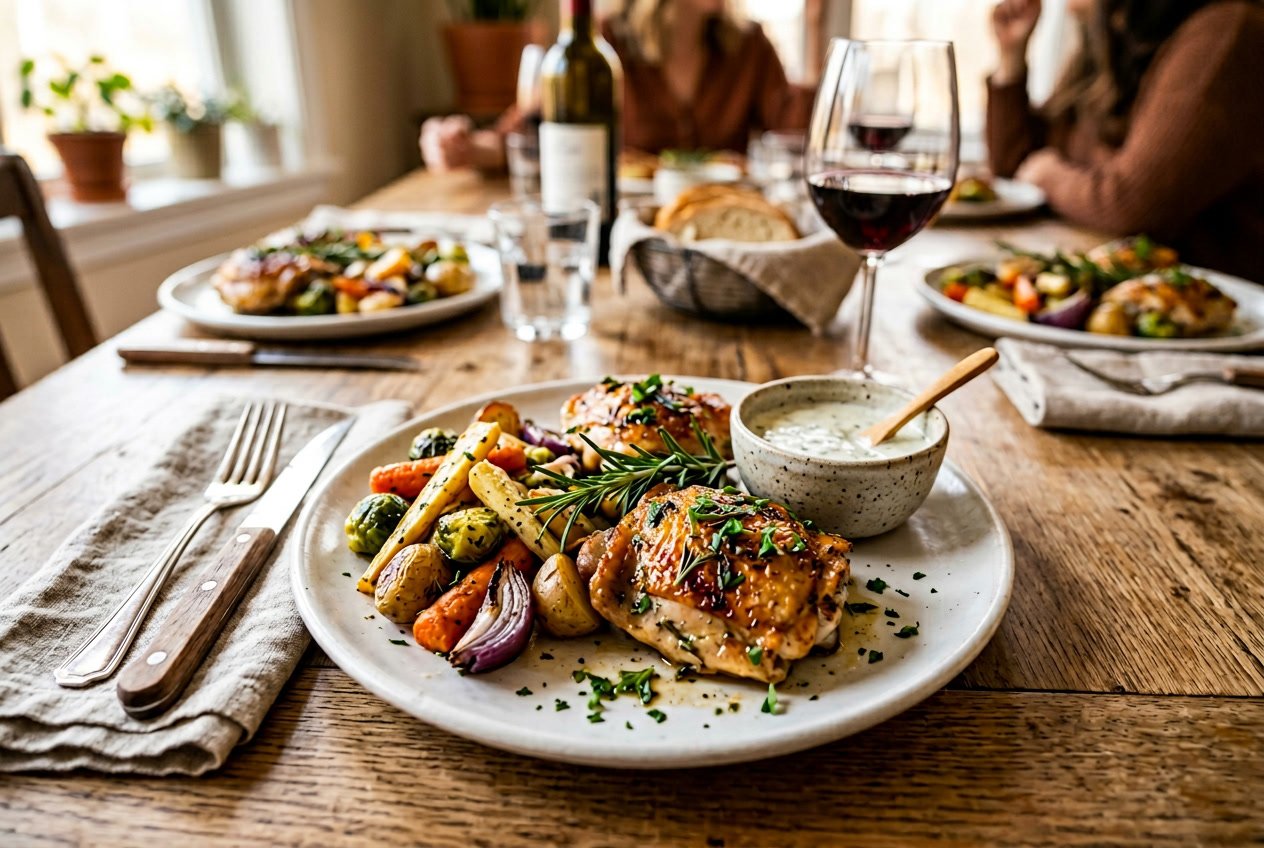
This guide explains how bone-in versus boneless pieces affect portions. It also covers how meal context changes how much you need and offers quick ways to calculate how many thighs to buy.
Use the tips that fit your menu and appetite mix so you don’t overbuy or run short.
How Many Chicken Thighs Per Person: Essential Guidelines
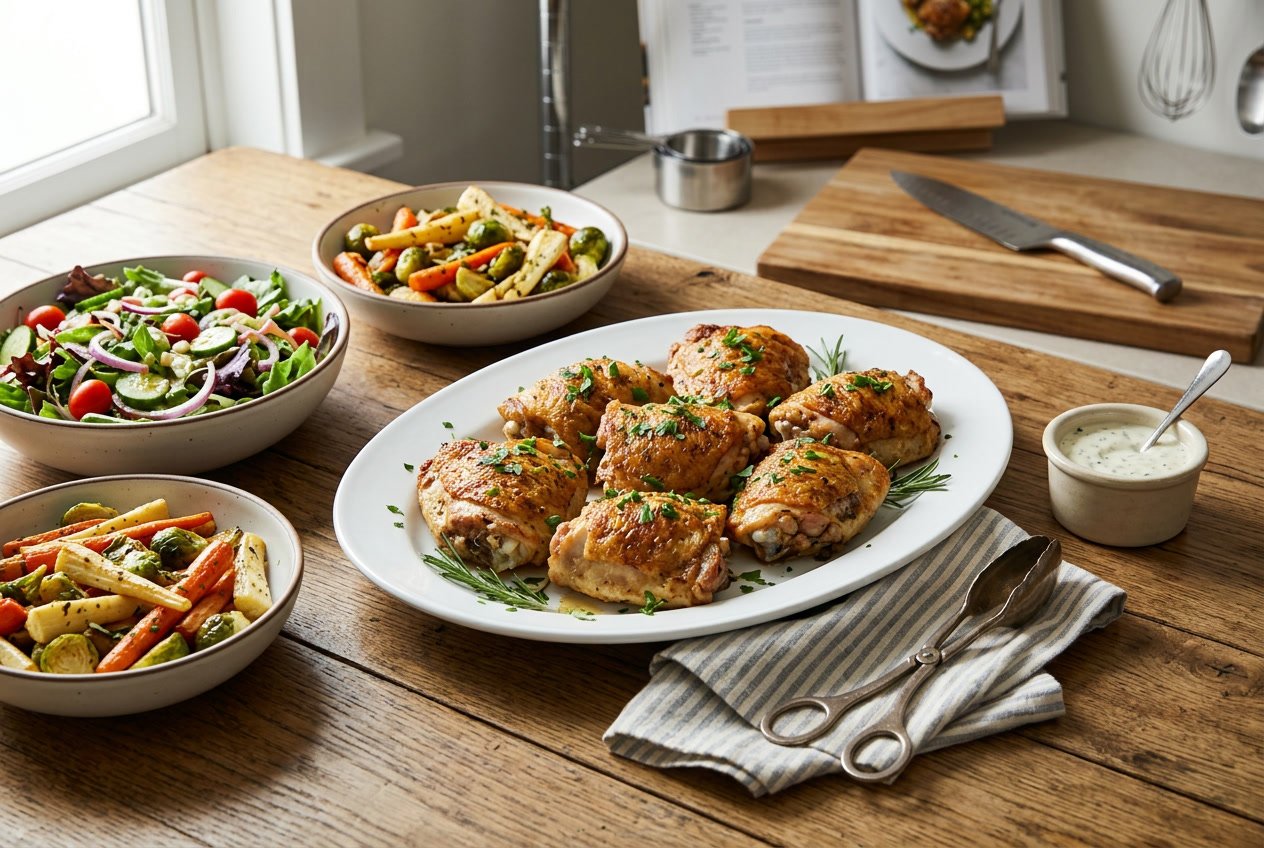
Plan by weight for the most reliable result. Use 4–6 ounces (0.25–0.33 lb) of boneless thigh per adult or 8–12 ounces (0.5–0.75 lb) of bone-in thigh when thighs are the main protein.
Standard Portion Size for Adults
For a main-course meal, serve 4–6 ounces (115–170 g) of boneless chicken thighs per adult. That usually equals 1 to 2 small-to-medium boneless thighs.
If you cook bone-in thighs, plan 8–12 ounces (225–340 g) per person because bones and skin add non-edible weight. This typically equals one medium bone-in thigh or one large thigh per person.
Use weight rather than piece count when thighs vary in size. If you’re serving filling sides, lean toward the lower end of the range.
For buffets, add 10–20% extra to account for seconds and uneven serving.
Serving Recommendations for Children
For children aged 4–10, plan about 2–3 ounces (55–85 g) of boneless thigh each. That’s roughly half an adult portion or one small boneless thigh.
Younger toddlers (1–3 years) usually need 1–2 ounces (30–55 g). Serve smaller pieces and remove bones for safety.
Adjust by activity and appetite: active older kids may eat closer to 4 ounces. When offering a variety of sides, you can reduce the meat portion and avoid waste.
Adjusting for Hearty Appetites
If your guests are big eaters like teenagers or athletes, plan 6–8 ounces (170–225 g) of boneless thigh per person. That often means 2 boneless thighs or 1–2 larger bone-in thighs each.
For events where chicken is the only entree and sides are light, increase portions to 3/4 pound (12 ounces) bone-in or 8 ounces boneless per person.
Quick reference:
- Boneless: 4–8 oz per adult (0.25–0.5 lb)
- Bone-in: 8–12+ oz per adult (0.5–0.75+ lb)
Buy slightly more if you expect seconds or want leftovers. Unused cooked thighs store well in the fridge for 3–4 days.
Bone-In vs. Boneless Chicken Thighs
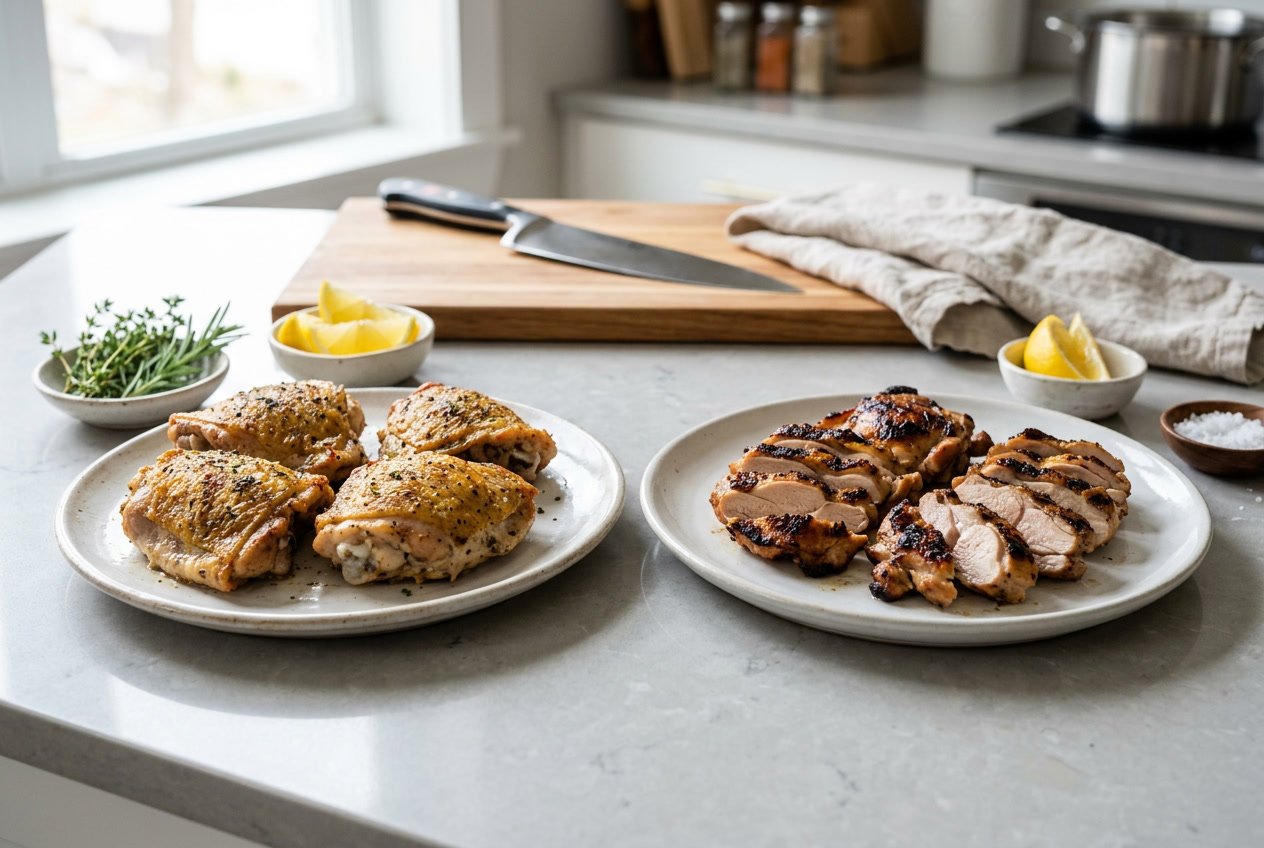
Bone-in thighs contain more non-edible weight, so plan by weight rather than piece count. Boneless thighs give you more edible ounces per pound and simplify portion math.
Typical Weight Differences
Bone-in, skin-on thighs commonly weigh about 6–8 ounces each raw. That equals roughly 3–5 ounces of edible meat after removing bone and some fat.
Boneless, skinless thighs usually weigh 3–5 ounces each raw and deliver nearly all of that as edible meat.
If you measure by ounces of chicken per person, boneless thighs let you count actual meat directly. Plan 4–6 ounces cooked (about 6–8 ounces raw boneless) per adult as a main course.
With bone-in, increase raw weight to account for bone. Plan 10–12 ounces raw bone-in to net the same 4–6 ounces cooked.
Calculation Adjustments for Bone-In
Convert bone-in pieces to edible weight using a yield factor. A common yield is 50–60% edible from raw bone-in thighs.
For example, if you need 6 ounces cooked per person, multiply by 1.8–2 to get required raw bone-in weight (about 11–12 ounces raw).
Use this method: decide edible ounces per person, then
- Boneless raw needed is about edible ounces × 1.2 (to allow for cooking loss).
- Bone-in raw needed is about edible ounces × 1.8–2.0 (to allow for bone and trimmings).
Weigh packaged meat when possible. Packages vary, so using pounds alone can mislead if pieces are large or small.
Bone-In and Boneless Thighs Per Pound
A pound of boneless thighs yields about 3–4 servings at 4–6 ounces cooked per person. That equals roughly 3–4 boneless thighs per pound, depending on size.
A pound of bone-in thighs contains fewer edible ounces. Expect about 2–3 servings per pound if you require 4–6 ounces cooked.
In piece terms, bone-in thighs per pound are usually 2–3 pieces, while boneless may be 4–6 pieces per pound.
Quick guide:
- Boneless: 1/2 pound (8 oz) raw per person for a hearty portion.
- Bone-in: 3/4–1 pound (12–16 oz) raw per person for the same edible portion.
Meal Context: Determining the Right Amount
Portion needs change with how the chicken is used, who’s eating, and what else is on the plate. Focus on appetite, side dish density, and whether the thighs are bone-in or boneless.
Main Course vs. Side Protein
When chicken thighs are the main protein, serve 2 thighs per average adult (about 8–10 oz bone-in total).
For larger eaters or teenagers, serve 3 thighs. For smaller adults or older guests, 1–2 may suffice.
If the thighs are a secondary protein, cut portions to 1 thigh per adult.
Boneless thighs weigh less than bone-in. Swap 2 boneless for 3 bone-in when estimating by count if you don’t have a scale.
Quick guide:
- Bone-in main: 2 thighs/adult
- Boneless main: 2–3 thighs/adult (smaller pieces)
- Side protein: 1 thigh/adult
Adjust for diets that require more protein by adding half a thigh per person.
Buffet or Family-Style Serving
Buffets let guests sample, so you can plan slightly less per person than plated service. Aim for 1.5 thighs per adult for buffet service when multiple dishes are available.
For family-style plated portions, set 2 thighs per adult and provide serving utensils to control portions.
Add a 10–15% buffer for seconds, unexpected guests, or heavier appetites.
If using pans or chafing dishes, note capacity. One standard sheet pan holds about 20–25 thighs.
That helps you plan cooking batches and holding times at 140°F to keep thighs tender and safe.
Dining Event Type
Casual backyard BBQs often encourage larger portions. Plan 2–3 thighs per adult when sides are simple.
Formal sit-down dinners allow you to be more precise. Serve 1.5–2 thighs per adult if plated with multiple courses.
For kid-heavy gatherings, estimate 1 thigh per child under 10 and 1.5 for teens.
When guests include vegetarians or pescatarians, reduce total thighs proportionally and offer clear labels.
For groups over 50, use 1.5–2 thighs per person and buy wholesale to reduce cost.
Always round up slightly to avoid running short and to give you flexible leftovers for next-day meals.
Factors That Affect Chicken Thigh Portions
Portion size depends on who you’re feeding, what else is on the plate, and any dietary limits you must accommodate. Adjust counts by appetite, available sides, and whether guests avoid meat, gluten, or certain ingredients.
Appetite and Age
Children typically need smaller portions than adults. For most kids under 12, a single boneless thigh or half a bone-in thigh often suffices.
Teenagers and very active adults usually want more. Plan for 1.5–2 bone-in thighs or about 8–10 ounces of boneless thigh per hungry teen.
Consider gender and activity level when estimating. Men with larger appetites commonly eat two thighs. Light eaters or small-statured adults may be satisfied with one.
If you expect seconds, reduce initial portions by about 20% to avoid overcooking.
Side Dishes and Menu Diversity
Hearty sides reduce the meat you need per person. Serve starches like mashed potatoes or rice plus two vegetable sides and you can plan on about 4 ounces cooked chicken per adult.
If sides are light, boost portions to 6 ounces or one full bone-in thigh.
For buffets or family-style meals, people take varying amounts. Provide a slightly larger total (about 10–15% extra) when guests serve themselves.
When chicken is the focal entrée, calculate portions per person higher than when it’s one of several proteins.
Special Diets and Preferences
Vegetarians, vegans, and those avoiding pork or dairy change menu balance. Offer clear labels and an alternative protein so you don’t overestimate chicken demand.
For guests on high-protein or low-carb diets, increase chicken portions to 6–8 ounces cooked per person.
Allergies and religious restrictions may affect preparation methods. When accommodating multiple preferences, segment portions and mark trays for special diets. Plan extra plain or simply seasoned thighs to suit most diets.
How to Calculate Chicken Thighs Needed
Plan by weight when possible, account for bone vs. boneless, and add a buffer for hungry guests or seconds. Use simple math: decide cooked meat per person, convert to pounds, then adjust for bone-in or leftovers.
How Many People Does 1lb of Chicken Serve
One pound of raw boneless chicken thighs yields roughly 0.75 lb cooked, which serves about 2 people if you aim for 6 ounces cooked per person.
If you prefer a standard main-course portion of 8 ounces cooked, 1 lb boneless serves 1.5 people.
For bone-in thighs, expect more weight loss to bones. One pound of bone-in thighs typically contains 2–3 pieces and yields roughly 0.5–0.6 lb edible meat.
That means 1 lb bone-in serves about 1 person at a 6-ounce cooked portion.
Quick reference:
- Boneless: 1 lb → ~0.75 lb cooked → serves 2 (6 oz)
- Bone-in: 1 lb → ~0.5–0.6 lb cooked → serves 1–1.5 (6–8 oz)
Estimating for Large Groups
Scale using weight instead of piece count to reduce error. Decide cooked ounces per person (6–8 oz for adults), multiply by guest count, then convert to raw weight.
For boneless, divide total cooked weight by 0.75. For bone-in, divide by about 0.55.
Example: 50 adults × 6 oz = 300 oz cooked (18.75 lb). For boneless buy about 25 lb raw (18.75 ÷ 0.75). For bone-in buy about 34 lb raw (18.75 ÷ 0.55).
Add a 10–15% buffer for seconds and unexpected guests. For buffets, you can reduce to 1.5 thighs per person on average, but still apply the weight conversions above.
Portion Adjustments for Leftovers
If you want leftovers, add 15–25% to your total raw weight. That converts to roughly an extra 1–2 thighs per 8–10 people depending on thigh size.
For example, a party of 12 aiming for 6 oz cooked each (9 lb cooked total) would need about 12 lb boneless raw normally. Add 20% and buy about 14.5 lb to guarantee leftovers.
Label cooked vs. raw weight when prepping to track yields. Use airtight storage and cool within two hours. Leftover cooked thighs keep 3–4 days refrigerated or 3 months frozen.
Cooking Methods and Serving Considerations
Plan portions around how much edible meat you need, how you’ll cook the thighs, and whether you’ll serve seconds. Bone-in thighs lose weight to bone and shrink during cooking. Boneless thighs give you more predictable cooked ounces.
Yield After Cooking
A raw bone-in thigh that weighs 6–8 ounces typically yields about 3–4 ounces of cooked, edible meat.
Boneless thighs usually yield about 70–75% of their raw weight after cooking. A 6-ounce raw boneless thigh gives you about 4–4.5 ounces cooked.
If you need 4 ounces of cooked meat per person, plan for about 5.5–6 ounces raw boneless thigh per person. For bone-in thighs, plan for about 8 ounces raw per person, or one thigh.
Weigh packages when possible to avoid guessing.
Cooking losses increase with high-heat, long-duration methods. Let cooked thighs rest 5–10 minutes before serving to help retain juices and weight.
Cooking Method Influence on Portions
Grilling and roasting at high heat cause more moisture loss than braising or slow cooking.
Searing and finishing in the oven or on the grill concentrates flavor but reduces final weight by 10–20%. Braising or stewing retains moisture and gives slightly more usable meat per raw ounce, so you can plan on smaller raw portions with these methods.
If you shred thighs for tacos, salads, or casseroles, one boneless thigh often yields enough meat for two small tacos. For plated entrees, allocate one bone-in thigh or two small boneless thighs per adult.
Adjust for appetite. For hungry adults or minimal sides, add 25–50% more. For buffets with many options, reduce to one bone-in thigh or 3–4 ounces cooked per person.
Best Ways to Prepare Chicken Thighs
Choose cooking methods that match your portioning needs. Roast or grill when you want a whole-piece presentation.
These methods pair well with one-thigh servings. Braise, slow-cook, or pan-simmer when you need consistent, shred-ready meat for bowls or sandwiches.
These methods keep more moisture and make smaller raw portions stretch further. For quick weeknight meals, pan-sear boneless thighs.
Cook skinless boneless thighs for 6–8 minutes per side over medium-high heat until the internal temperature reaches 165°F (74°C). For bone-in thighs, roast at 375°F (190°C) for 25–35 minutes depending on size.
Use a thermometer to check doneness and prevent overcooking. Label servings (bone-in or boneless) on buffet platters so guests choose correctly and you reduce waste.


