
How Many Chicken Thighs in a Pound: Essential Kitchen Guide
You probably buy thighs for flavor and ease. Planning meals often leads to the question: how many thighs equal a pound?
Expect about 2–3 bone-in thighs or 3–4 boneless, skinless thighs per pound, depending on size and trimming.
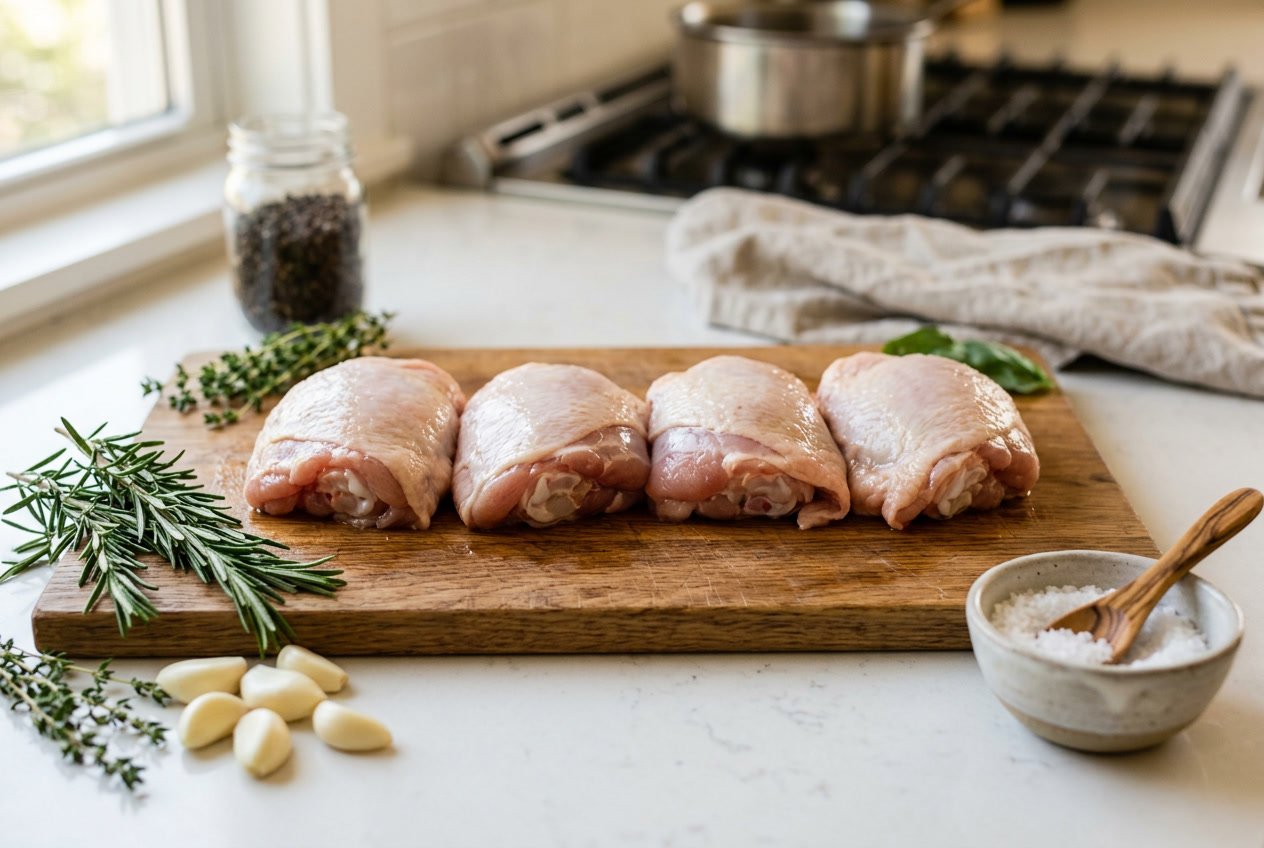
This guide covers average thigh weights, how much meat you get after cooking, and quick conversions to cups or servings. Use these tips to make meal prep faster and more predictable.
How Many Chicken Thighs in a Pound?
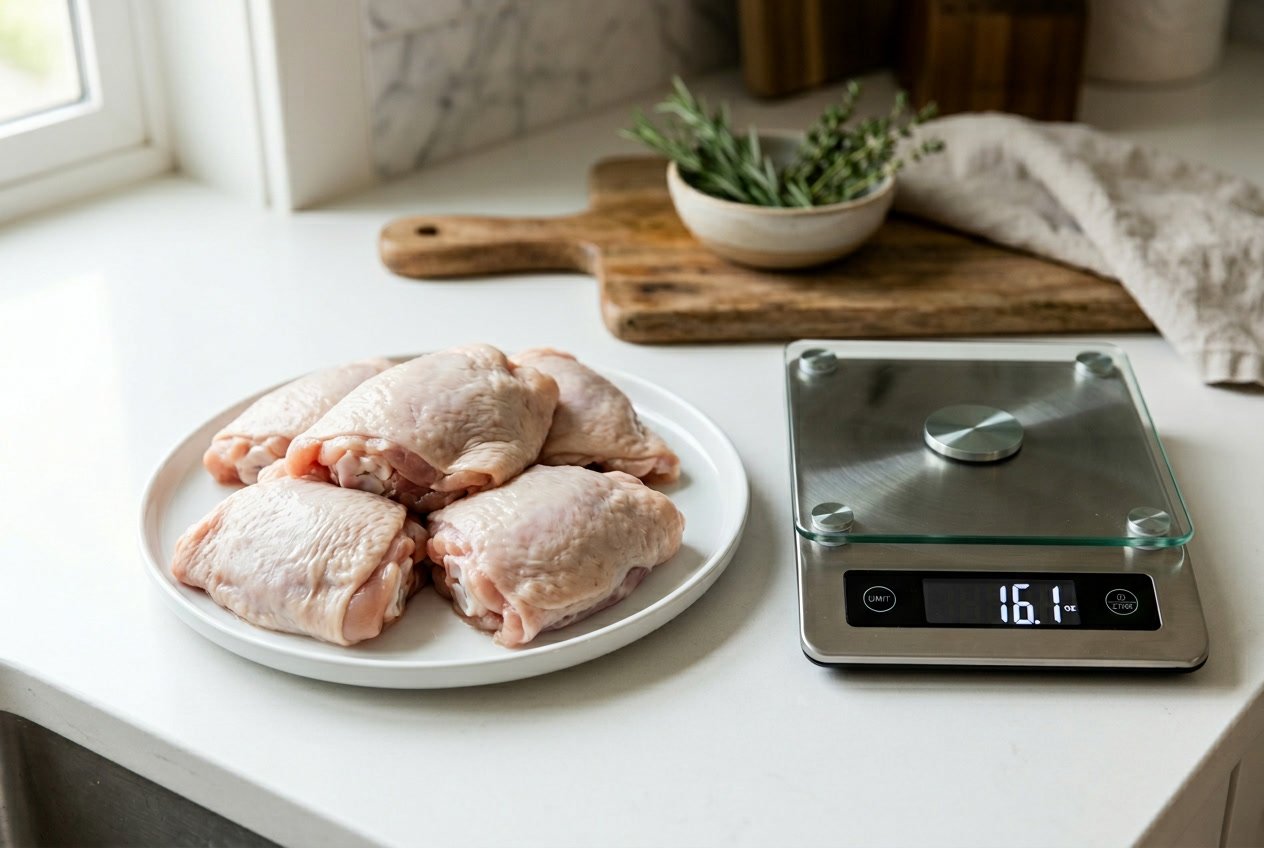
The count changes depending on whether the thighs have bone and skin or are boneless. Bone-in thighs weigh more per piece, while boneless thighs provide more edible meat per pound.
Typical Chicken Thigh Count for Bone-In
Bone-in chicken thighs usually weigh about 4 to 6 ounces each when raw. You can expect roughly 2 to 3 bone-in chicken thighs per pound (16 ounces).
The bone and skin add weight. Cooked edible meat per thigh drops to about 2 to 3 ounces after cooking and trimming.
Plan portions using one bone-in thigh per adult serving. For 4 adult servings, buy about 4 bone-in thighs (about 1 1/4 to 1 1/2 pounds) to allow for bone weight and cooking loss.
Boneless Chicken Thighs Per Pound
Boneless, skinless chicken thighs commonly weigh about 2.5 to 4 ounces each. That gives you approximately 4 to 6 boneless chicken thighs per pound.
Because there’s no bone or skin, you lose less weight during cooking. You typically get close to 12–16 ounces of edible meat from a raw pound.
For recipes calling for diced or shredded chicken, use 1 pound of boneless thighs for about 2 cups of cooked diced chicken. Buy a little extra if you want leftovers.
Factors Affecting Thigh Count Per Pound
Size variation between suppliers changes counts. Grocery-store packs may have smaller trimmed thighs, while butcher-cut or farm-raised thighs often run larger.
Processing (trimmed vs. untrimmed) affects weight. Skin-on pieces weigh more than fully trimmed, boneless pieces.
Cooking method also matters. High-heat roasting or grilling causes more moisture loss than braising, reducing final edible ounces per thigh.
Average Chicken Thigh Weight
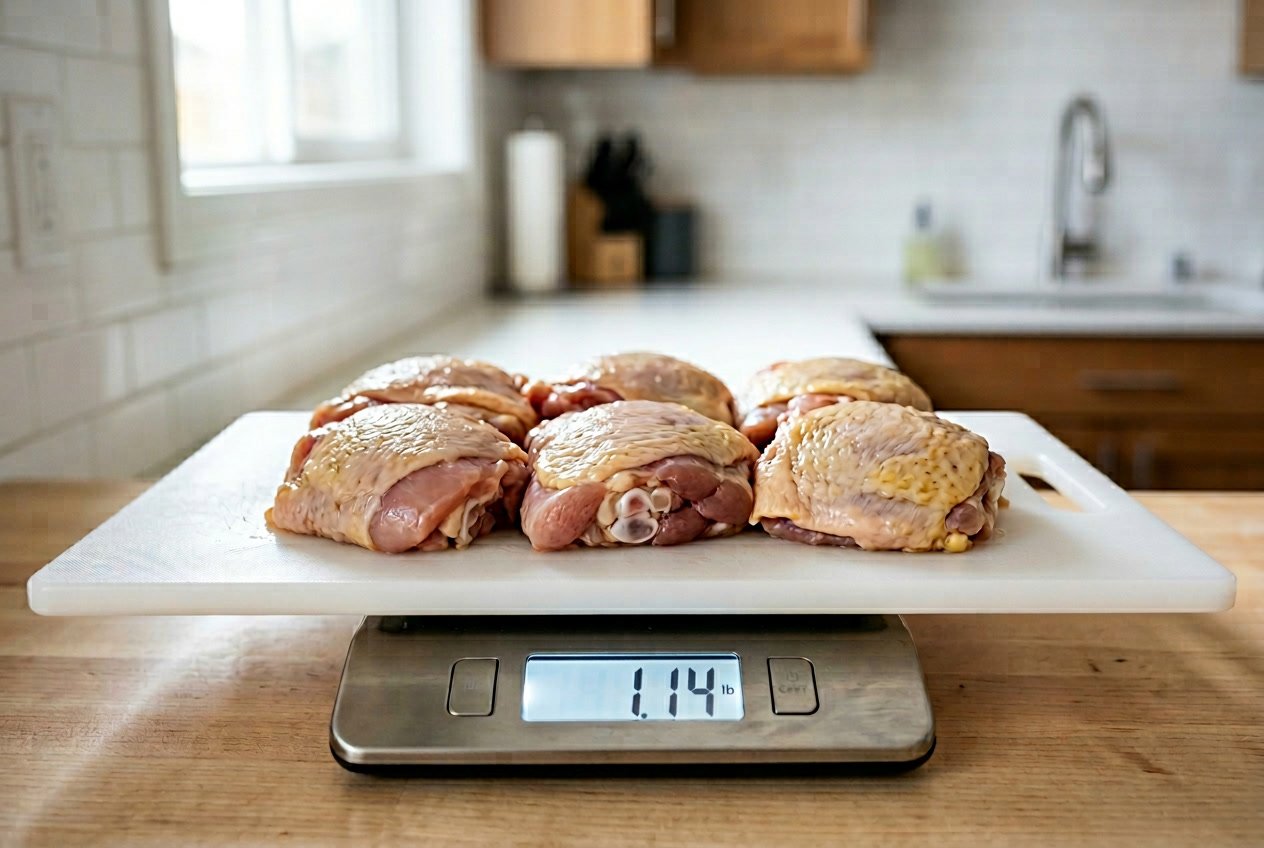
Individual thigh weights vary based on preparation (skin/bone), trimming, and the bird’s size. Typical ranges help you plan portions and convert between pounds and number of thighs.
Raw Weight Variations
Raw chicken thighs commonly fall between about 80 g and 200 g each, depending on whether they include skin and bone and how the butcher trimmed them.
If you buy skinless, boneless thighs, plan on an average of roughly 80–90 g (2.8–3.2 oz) per thigh. This is the weight most nutrition labels and recipes use when listing calories for raw boneless thighs.
For skin-on, bone-in thighs, expect around 120–140 g (4.2–4.9 oz) on average, with some large thighs reaching 180–200 g.
When you weigh for recipes or calorie counting, weigh raw if the nutrition info is given raw. That avoids errors caused by cooking loss.
Difference Between Bone-In and Boneless
Bone-in thighs include the femur and often the skin, so much of the listed weight isn’t edible meat.
A bone-in thigh averaging 125 g might contain roughly 80–90 g of actual meat after you remove bone and skin.
Boneless, skinless thighs are trimmed to remove non-meat components, so their package weight closely matches edible meat weight.
You’ll commonly see boneless thighs around 83 g each; that means 1 pound (454 g) yields about 5–6 boneless thighs.
Size and Breed Impact on Weight
Broiler chickens raised for meat produce the largest thighs. Heritage or smaller breeds yield lighter thighs.
Within the same store pack, you’ll sometimes find a mix of small and large pieces. Plan for ±10–20% variation per thigh.
If you buy from a butcher or farmer, ask which class of bird you’re getting (young broiler vs. older hen). That detail changes average thigh weight enough to affect how many thighs equal a pound.
Yield After Cooking and Shrinkage
Expect weight loss from moisture and some fat when you cook thighs. Plan portions using cooked weights rather than raw counts.
How you cook—roast, grill, or braise—directly affects how much edible meat you end up with.
Shrinkage During Cooking
Chicken thighs shrink when cooked because moisture evaporates and some fat renders away. Typical shrinkage ranges from about 20% to 30% of raw weight.
Bone-in, skin-on thighs usually lose closer to 25–30% because the skin and connective tissues expel more water and fat. Boneless, skinless thighs often shrink less, around 15–25%, since there’s no skin and less connective tissue to lose moisture from.
Brining or resting under foil reduces shrinkage by helping the meat retain water. Use lower, slower cooking (e.g., 325–350°F for roasting) to limit shrinkage if you need maximum yield.
Expected Edible Meat Per Pound
One pound (16 oz) of raw boneless, skinless thighs will typically yield about 12–13 oz of cooked meat after roasting or pan-searing. That reflects roughly 20–25% shrinkage.
For bone-in, skin-on thighs, 1 lb raw often yields about 9–12 oz of edible cooked meat because bones account for significant weight and skin loses fat. If you remove bones after cooking, expect less edible weight than the raw-to-cooked percentage implies.
Brined boneless thighs can yield slightly more cooked meat per pound due to retained moisture.
Estimating Cooked Portions
Plan servings using cooked ounces. A standard adult portion is about 3–4 oz cooked meat.
Using cooked yields, one pound raw boneless thighs (yield ≈12–13 oz cooked) serves about 3 people at 4 oz each, or 4 people at 3 oz each.
For bone-in thighs, assume 9–10 oz cooked per raw pound; that serves two people at 4 oz each.
If you want leftovers or are serving hearty eaters, add 25% extra.
Quick reference:
- Boneless, raw 1 lb → ~12–13 oz cooked → 3–4 servings (3–4 oz each)
- Bone-in, raw 1 lb → ~9–10 oz cooked → 2–3 servings (3–4 oz each)
Adjust for cooking method. Grilling and high-heat pan-searing often reduce yield more than braising or low-temperature roasting.
Converting Pounds to Recipe Measurements
One pound of raw chicken thighs gives you a predictable starting point for recipes and shopping. Use weight-to-volume conversions and cooked-yield estimates to decide how many thighs to buy and how much diced chicken you’ll end up with.
Cups of Diced Chicken from a Pound
A pound of boneless, skinless chicken thighs yields about 2 cups of diced chicken. If your thighs are bone-in, remove bones and skin first; expect roughly 1.25 to 1.75 cups of diced meat per pound after trimming and deboning.
Measure diced chicken by packing loosely into a dry measuring cup. For recipes that call for 1 cup diced chicken per serving, plan on 1/2 pound of boneless thighs per two servings.
If you prefer exactness, weigh the diced pieces: 1 cup diced cooked chicken ≈ 5 to 6 ounces.
Ounces and Cups: Conversion Tips
Remember these practical conversions: 1 pound = 16 ounces, and 1 cup diced chicken ≈ 5–6 ounces cooked.
Raw boneless thighs typically weigh 8–10 ounces per half-pound, so two boneless thighs often equal about 1 cup diced when cooked.
Bone-in pieces contain less edible meat; a raw bone-in pound might yield only 9–12 ounces of usable cooked meat.
When a recipe lists ounces, convert to cups by dividing the ounce amount by 5 (for diced cooked chicken). Use a kitchen scale for accuracy, especially when scaling recipes.
If unsure, buy an extra 1/4 pound to account for trimming loss and shrinkage during cooking.
Portion Planning and Serving Size
Plan by type (bone-in vs boneless) and expected edible weight so you buy the right amount and avoid waste.
How Many Chicken Thighs Per Serving
For bone-in thighs, plan 1 thigh per adult when served with sides. A raw bone-in thigh usually weighs about 4–6 ounces, so expect roughly 3 thighs per pound.
For boneless, skinless thighs, plan 2 thighs per adult; boneless thighs often weigh 2–3 ounces each, giving about 4–6 thighs per pound.
If you want cooked-portions, target 4 ounces of cooked meat per person.
Estimate yield: bone-in thighs lose more weight to bone and cooking (about 2–3 ounces edible meat per thigh), while boneless thighs give closer to the full raw weight after cooking.
Quick reference:
- Bone-in: 1 thigh per person → ~3 thighs/lb
- Boneless: 2 thighs per person → ~4–6 thighs/lb
Scaling Recipes for Groups
Multiply servings by the per-person counts above and round up to avoid shortages.
Example: for 8 adults using bone-in thighs, buy 8 thighs ≈ 2.5–3 pounds. For boneless for 8 adults, buy ~16 thighs ≈ 2.5–3 pounds.
Account for appetites and menu composition. If you serve many sides or an additional protein, reduce to 3/4 of the per-person estimate.
For hungry crowds or minimal sides, increase by 25%. Always round up to the nearest half-pound when buying in bulk.
Meal Prep and Leftovers Guidance
If you plan leftovers, add 1/4–1/2 pound per person to your purchase. One pound boneless thigh typically yields about 2 cups diced cooked chicken, suitable for salad or soup for two servings.
Store cooked thighs in an airtight container in the fridge for 3–4 days or freeze for up to 3 months.
Label packages with date and portion sizes. For example, 1 cup portions per container simplifies reheating and meal assembly.
Buying, Storing, and Cooking with Chicken Thighs
Know how many thighs you need, which cut fits your recipe, and how to keep them safe and flavorful.
Choosing Between Bone-In and Boneless
Bone-in thighs weigh more per piece. Expect about 2–3 bone-in thighs per pound.
Choose bone-in when you want richer flavor, extra moisture, and a slower, forgiving cook time for braises or oven roasts.
Boneless, skinless thighs run about 4–5 pieces per pound and cook faster and more evenly. Choose boneless when you need quick pan-frying, slicing for bowls or sandwiches, or exact portion control by weight.
Consider price and waste. Bone-in is usually cheaper per pound but includes bone weight. If a recipe lists a weight (ounces or grams), buy slightly more boneless to account for trimming and shrinkage during cooking.
Storage and Freezing Tips
Refrigerate raw thighs at 40°F (4°C) or below and use within 1–2 days for best quality. Store them in their original packaging or in an airtight container to prevent cross-contamination and odors.
Freeze for longer storage. Wrap individual pieces in plastic wrap, then place in a zip-top bag with excess air removed.
Label with the date. Use boneless within 6 months and bone-in within 9 months for best texture and flavor.
Thaw safely in the refrigerator overnight or under cold running water if you need faster thawing. Never thaw at room temperature. Cook immediately after thawing in cold water or the microwave.
Popular Ways to Cook Chicken Thighs
First, sear bone-in thighs in a hot pan to brown the skin. Then, simmer them in stock, wine, or tomato sauce until tender.
This method keeps the meat moist and draws flavor from the bone.
Pan-searing or grilling works well for boneless thighs. Cook them for 6–8 minutes per side, depending on thickness.
Use a meat thermometer and cook to an internal temperature of 165°F (74°C) for safety.
Roast thighs in the oven at 400°F (200°C) to crisp the skin and render fat quickly. Space the pieces apart to allow airflow.
Shred cooked thighs for tacos, salads, or sandwiches. You can use either bone-in (remove bones first) or boneless pieces.


