
How Make Chicken Thighs: The Complete Guide to Crispy Baked Perfection
You can make tender, juicy, and crispy chicken thighs with a few simple choices and reliable techniques.
Start by picking bone-in, skin-on thighs for flavor and forgiving texture. Season or marinate for depth, and use high oven heat or an initial skin-side sear to render fat and lock in crispness.
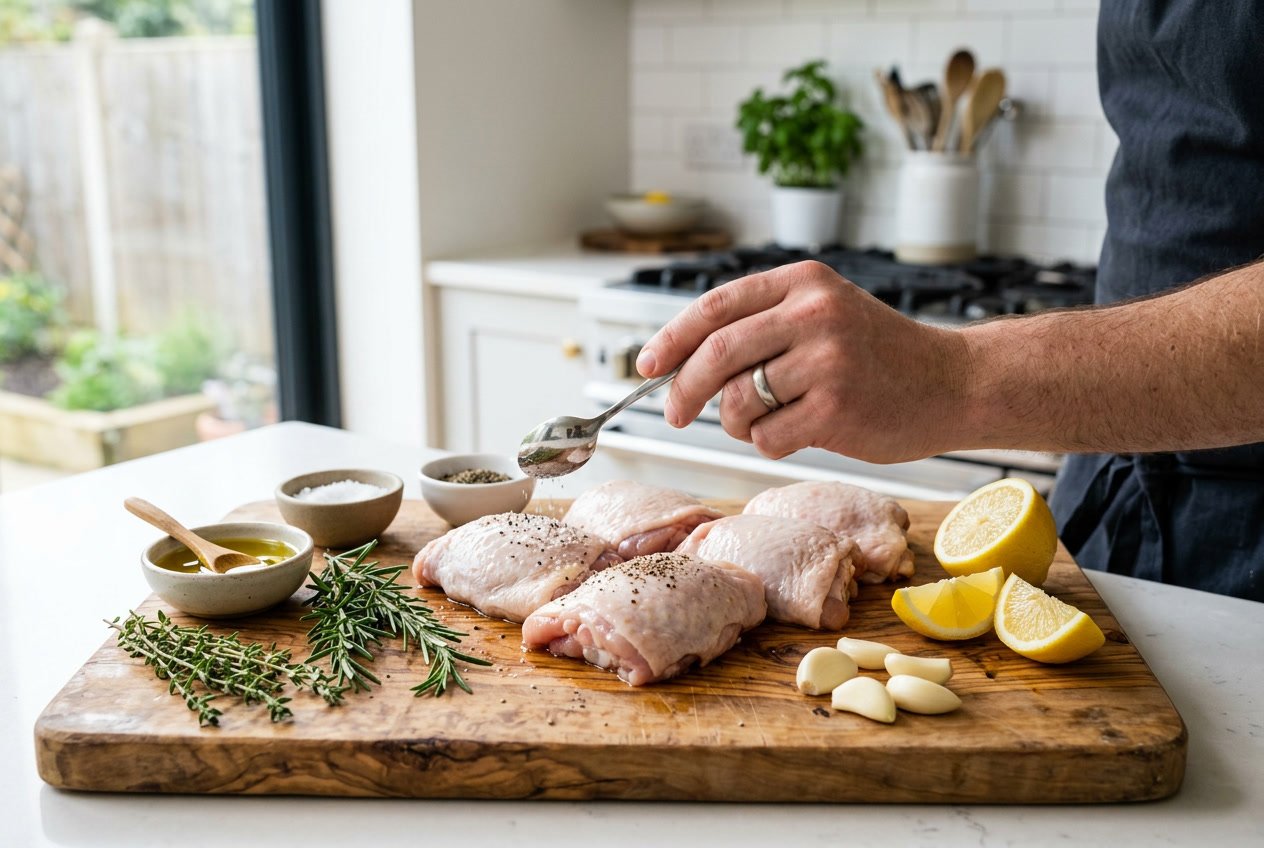
This guide helps you choose the right cut, seasoning options, baking times and temperatures, and tricks for ultra-crispy skin. You’ll also find recipe ideas and storage tips for great leftovers.
Choosing the Right Chicken Thighs
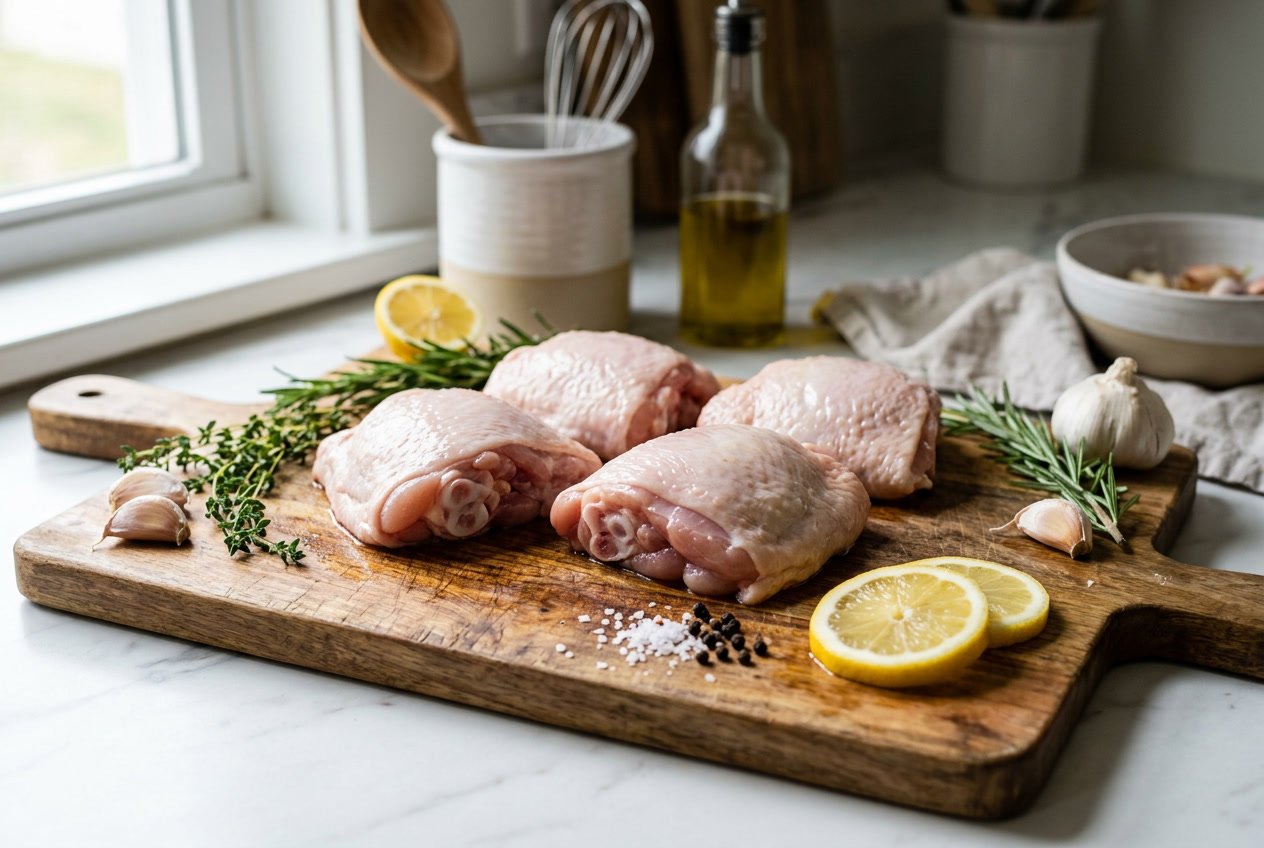
Pick thighs that match your cooking method, texture, and time. Focus on cut (bone-in or boneless), skin presence, and freshness for consistent results.
Bone-In vs. Boneless Chicken Thighs
Bone-in chicken thighs hold more flavor and resist drying. Use them for longer roasts, braises, or grilling where juicy meat and richer taste matter.
The bone helps stabilize internal temperature. Plan for roughly 5–10 extra minutes of cook time compared with boneless pieces.
If you want faster, uniform cooking or easy shredding for tacos and salads, pick boneless chicken thighs. They sear evenly in a skillet and fit better in sheet-pan dinners.
Handle bone-in thighs carefully when cutting or trimming. Use poultry shears if you need to remove the bone before cooking.
Bone-in yields less edible meat per pound than boneless, so keep portion size in mind.
Skin-On vs. Skinless Chicken Thighs
Choose skin-on thighs for crispy exterior texture and added fat for flavor. Roasting at 400°F (200°C) or pan-roasting gives reliably crisp skin.
The skin protects meat from direct heat, helping the thigh stay moist during high-temperature methods.
Pick skinless chicken thighs for saucy dishes, stews, curries, or when you want lower surface fat. Skinless pieces absorb marinades faster and reduce cook time slightly.
If you want crisp skin and a leaner result, remove skin after cooking to retain flavor while cutting surface fat.
How to Select Fresh Chicken Thighs
Look for a consistent pink color and firm texture. Avoid gray or slimy pieces.
Press the meat lightly—fresh thighs spring back and feel moist, not sticky.
Check packaging for no tears or excess liquid. Excess pooling signals age or poor handling, so choose vacuum-sealed packs when possible.
Inspect expiration or sell-by dates and pick the latest date that still gives you 1–3 days for use.
Smell the meat if you can. Fresh thighs should be neutral, not sour or ammonia-like.
For bulk purchases, portion and freeze immediately in meal-sized packs at 0°F (-18°C) to preserve quality.
Essential Ingredients and Seasoning
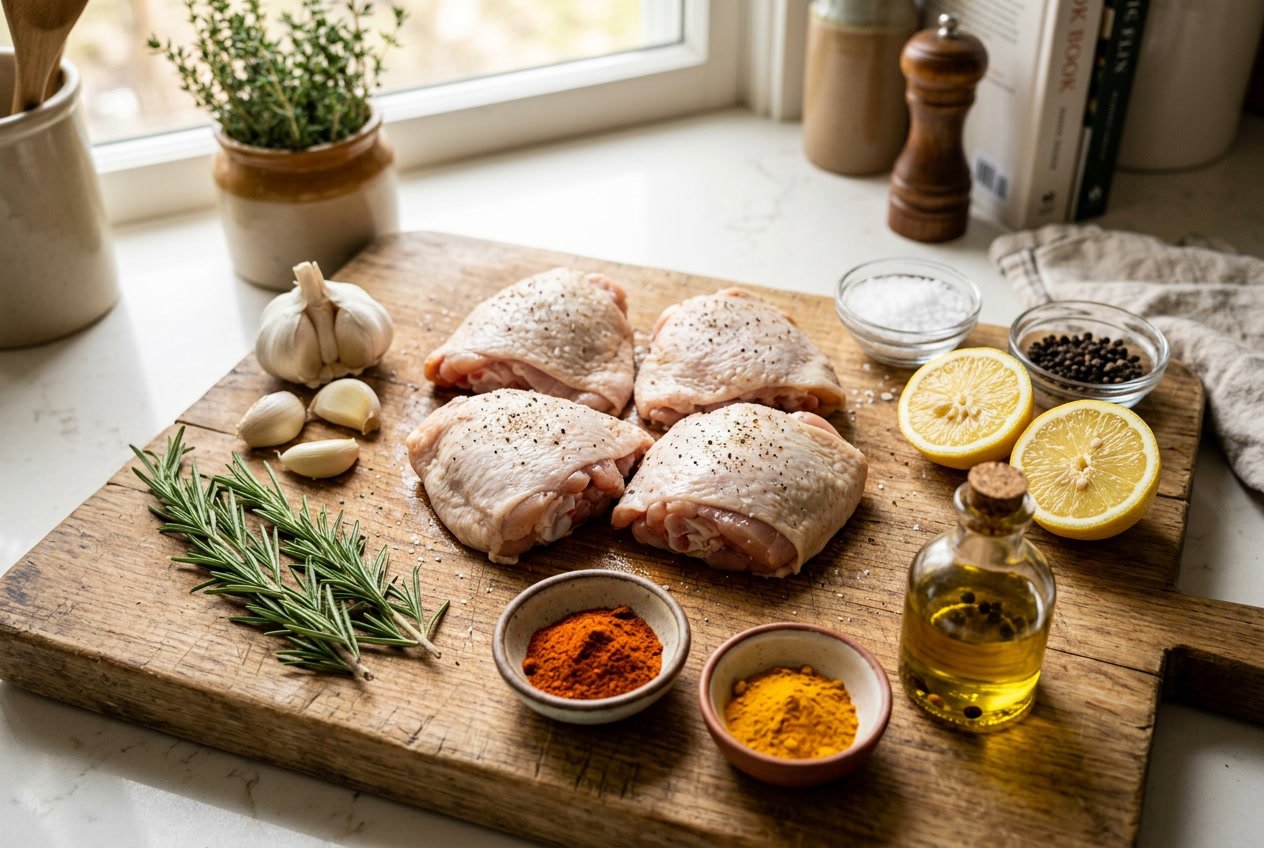
You need a reliable mix of spices and a simple method to blend them so your chicken thighs stay juicy and develop crisp, flavorful skin.
Focus on kosher salt, black pepper, garlic and onion powders, and paprika as the foundation. Add herbs like oregano or thyme to match your dish.
Core Spices and Herbs for Chicken Thighs
Use kosher salt as your baseline—about 1 teaspoon per pound of chicken. Black pepper provides bite; freshly cracked yields a brighter flavor.
Garlic powder and onion powder give even, toasty savory notes without added moisture. Start with 1/2 to 1 teaspoon of each per pound and adjust to taste.
For herbs, dried oregano and thyme work best with thighs. Use 1/2 teaspoon dried herbs per pound or swap to fresh (triple the amount) for garnish.
How to Create the Perfect Chicken Seasoning
Layer flavors in three parts: salt, aromatics, and finishing spices. Combine kosher salt, 1 to 2 teaspoons paprika, 1 teaspoon garlic powder, 1 teaspoon onion powder, and 1/2 teaspoon black pepper for a reliable base per 4 thighs.
If you want heat or sweetness, add 1/2 teaspoon cayenne or 1 tablespoon brown sugar. Mix thoroughly and pat onto dry, patted chicken skin to ensure adhesion and crisping during roasting.
For a herby profile, fold in 1 teaspoon dried oregano or 1 teaspoon dried thyme. Store leftover blend in an airtight jar for up to one month and label with the date.
Paprika and Its Role in Flavor and Color
Paprika controls both color and mild sweetness. Regular sweet paprika gives a warm red hue and gentle pepper flavor without heat.
Smoked paprika adds a smoky, almost charred note that pairs well with roasted thighs. Use about 1 to 2 teaspoons paprika per 4 thighs as part of your rub.
Increase to 2 teaspoons for a stronger color or swap half for smoked paprika when you want a barbecue-like depth.
Paprika also helps create a visually appealing crust when mixed with oil and salt. Combine it with garlic powder, onion powder, and a pinch of black pepper to balance color, aroma, and savory taste.
How to Bake Chicken Thighs
You’ll prep thighs for crisp skin and juicy meat, use exact oven temps and timing, and see when a baking rack improves airflow and browning.
Prepping Chicken Thighs for the Oven
Pat each thigh dry with paper towels. Dry skin crisps much better than damp skin.
Leave skin-on, bone-in thighs when possible for more flavor and moisture. Boneless, skinless thighs cook faster and need closer timing checks.
Season generously with salt at least 20–30 minutes before baking, or up to 24 hours refrigerated for deeper flavor. Use a simple rub: 1 tsp kosher salt per pound, 1 tsp black pepper, 1 tsp paprika, 1/2 tsp garlic powder.
Add oil (1 tbsp per pound) to help spices adhere and promote browning. If marinating, keep acidic marinades under 4 hours to avoid texture changes.
Bring refrigerated thighs to room temp for 15–20 minutes before the oven to reduce cooking time variance. Preheat the oven fully so skin begins rendering as soon as the thighs go in.
Step-by-Step Baking Instructions
Preheat oven to 400°F (200°C) for a balance of crisp skin and tender meat. Line a rimmed baking sheet with foil or parchment for easier cleanup.
Place thighs skin-side up with 1–2 inches between pieces. Bake times:
- Bone-in, skin-on: 35–45 minutes at 400°F.
- Boneless, skinless: 25–30 minutes at 400°F.
Start checking internal temperature at the lower end of the range. Use an instant-read thermometer in the thickest part without touching bone.
Pull thighs at 165°F (74°C); carryover will raise temp slightly. For extra crispness, broil 2–4 minutes at the end, watching closely to avoid burning.
Let thighs rest 5 minutes on a cutting board before serving to redistribute juices. If skin darkens too fast, tent loosely with foil after 20–25 minutes and continue baking until the internal temp reaches 165°F.
Using a Baking Rack for Even Cooking
Place a wire rack on the baking sheet to lift thighs off the pan. This allows hot air to circulate under the meat for uniform browning.
A rack also keeps skin from steaming in pooled juices, improving crispness without extra oil. Use a shallow roasting rack or oven-safe cooling rack rated for high heat.
Arrange thighs skin-side up and leave space between pieces for airflow. If you don’t have a rack, use halved onions or thick-cut carrots as supports under the thighs to elevate them slightly.
Expect slightly faster cook times on a rack because air circulates more freely. Check temperature 5–8 minutes earlier than a sheet-pan method.
Clean the rack promptly; baked-on fat sticks more after it cools and hardens.
Achieving Crispy Baked Chicken Thighs
You will remove surface moisture, maximize direct heat contact, and control oven temperature to get crisp, deeply browned skin without drying the meat.
Techniques for Extra Crispy Skin
Pat each skin-on, bone-in thigh thoroughly with paper towels until the surface feels almost dry. Excess water creates steam that prevents crisping.
Loosen the skin and season beneath it with kosher salt and a little oil. The salt draws moisture out of the meat and the oil promotes even browning.
Lightly dust the skin with a teaspoon of cornstarch or arrowroot per pound to create a dry surface that browns faster. Use a wire rack on a rimmed baking sheet so air circulates underneath each thigh.
Space them at least 1 inch apart to avoid steaming. For a final finish, brush lightly with melted butter or oil in the last 5–8 minutes to boost color without burning.
Oven Temperature and Timing for Crispiness
Start hot to jump-start the Maillard reaction. Roast at 425°F (220°C) for the first 20–25 minutes.
That initial heat helps render fat and tighten the skin, producing the characteristic crackle of crispy baked chicken thighs. After the initial blast, reduce to 375°F (190°C) and continue roasting until the thickest part of the thigh reaches 165°F (74°C).
Expect total cook time of about 35–50 minutes depending on thigh size. If skin isn’t as crisp as you want, finish under the broiler on high for 1–2 minutes while watching constantly.
Use an instant-read thermometer and avoid overcrowding the pan. Accurate internal temperature and steady airflow give you reliably crispy baked chicken every time.
Popular Chicken Thigh Recipes
These recipes focus on easy weeknight execution and bold, simple flavor profiles. You’ll get clear guidance on timing, seasoning, and when to pick thighs over breasts.
Weeknight Dinner Ideas
For quick weeknight dinners, use boneless, skin-on chicken thighs for fast searing and oven finishing. Marinate 20–30 minutes in a mix of olive oil, garlic, salt, pepper, and a splash of acid (vinegar or lemon) to boost flavor.
Sear skin-side down in a hot skillet 4–6 minutes until deeply browned. Transfer to a 400°F oven for 10–12 minutes to finish.
This method gives crisp skin and juicy meat with minimal hands-on time. One-pan sheet-pan meals work well: arrange thighs on a rimmed sheet with chopped potatoes, bell peppers, and onions.
Toss vegetables in the same marinade, roast 30–35 minutes, and rotate the pan once for even browning. Use bone-in thighs if you want bolder flavor and don’t mind longer cook time (35–45 minutes at 400°F).
Serve with quick sides like steamed greens, rice, or a green salad.
Greek Lemon Chicken
Greek lemon chicken features bright lemon, garlic, oregano, and olive oil. It pairs naturally with roasted potatoes and a simple salad.
Pat thighs dry, season with salt, pepper, minced garlic, oregano, lemon zest, and olive oil. Let sit 15–30 minutes for seasoning to penetrate.
Brown skin-side down in a skillet 6–8 minutes. Finish in the oven at 425°F for 12–15 minutes, spooning pan juices over the meat.
For a roast chicken-style approach, place bone-in, skin-on thighs and quartered lemon halves on a tray and roast 35–40 minutes until internal temp reaches 165°F.
Finish with a squeeze of fresh lemon and chopped parsley. Serve with tzatziki, orzo, or roasted vegetables for a Greek-inspired plate.
Comparing Baked Chicken Thighs to Baked Chicken Breasts
Chicken thighs and breasts behave differently when baked. Thighs tolerate longer cooking without drying because of higher fat and connective tissue.
Bake thighs skin-on at 400–425°F for 25–35 minutes (boneless shorter), aiming for 165–175°F to render fat and remain juicy. Breasts require careful timing—bake at 375–400°F for 18–22 minutes for boneless pieces and target 160–165°F, then rest to finish cooking.
Overbaking breasts causes dryness quickly. If you want hands-off roast chicken, choose bone-in thighs; they stay juicy and flavor the pan.
If you need lean protein for salads or sandwiches, choose breasts but brine or marinate to protect moisture. Use a meat thermometer for reliable results regardless of cut.
Tips, Storage, and Community Advice
Store cooked thighs correctly and reheat them to preserve moisture and skin texture. Use practical steps below for chilling, freezing, reheating, and fixing common problems.
How to Store and Reheat Baked Chicken Thighs
Let cooked thighs cool to room temperature for no more than 1 hour. Refrigerate them in an airtight container within two hours of cooking.
Arrange the thighs in a single layer or separate them with parchment. This helps prevent soggy skin and speeds up cooling.
In the refrigerator, store chicken thighs for up to 4 days. For freezing, wrap each thigh tightly in plastic wrap and place them in a sealed freezer bag for up to 3 months.
Thaw frozen thighs overnight in the fridge. Do not thaw at room temperature.
To reheat, use a 350°F oven for 10–15 minutes for individual thighs. For a sheet pan, heat for 15–20 minutes until the internal temperature reaches 165°F.
For crisp skin, finish under the broiler for 1–3 minutes or use an air fryer at 375°F for 4–6 minutes. Avoid microwaving if you want crispness.
If you use a microwave, heat briefly, then transfer the chicken to a hot skillet or broiler to restore texture.
Allrecipes Community Tips and Recommendations
Allrecipes reviewers often recommend salting thighs and refrigerating them uncovered for an hour before cooking. This process dries the skin and deepens the flavor.
Many users report that adding a light dusting of baking powder to the rub helps the skin brown and crisp faster. Use about 1/4 teaspoon per pound and mix it into your seasoning.
Community members suggest freezing cooked shredded thighs in portions for tacos or salads. Label the bags with the date and use within three months.
Several cooks recommend using an instant-read thermometer and pulling bone-in thighs at 175°F for tender, gelatin-rich meat. Pull boneless thighs at 165°F to avoid dryness.


