
How Long Should Chicken Thighs Bake: Complete Guide & Tips
You want juicy, safe chicken thighs without wasting time or drying them out. Bake boneless thighs about 20–30 minutes at 400–425°F, and bone-in, skin-on thighs about 30–40 minutes at 375–425°F, or until the internal temperature reaches 165°F.
These ranges balance speed, browning, and moisture so you get consistent results whether you’re meal-prepping or cooking for company.
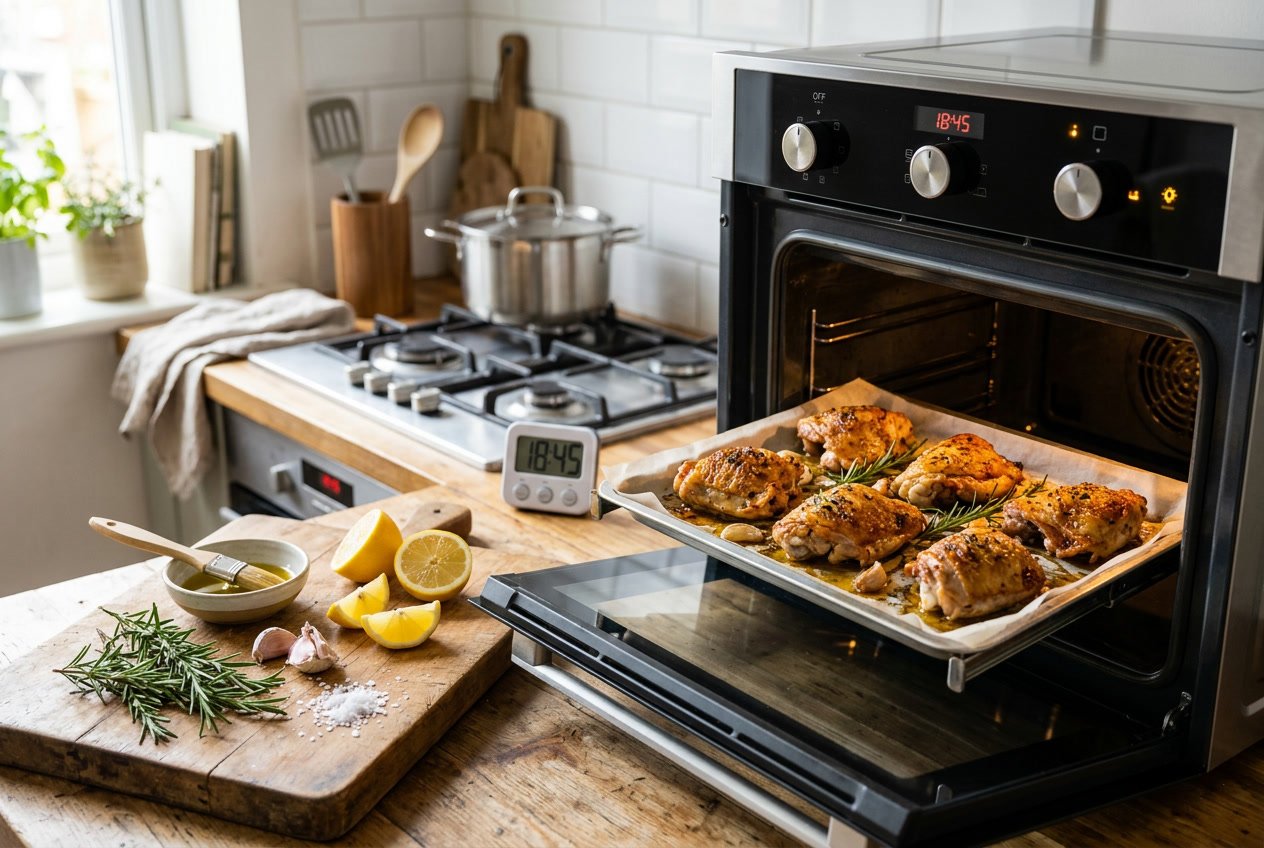
This post explains how oven temperature, thigh size, and bone-in vs. boneless affect baking time. You’ll also find quick flavor ideas and a step-by-step baking method you can use tonight.
How Long Should Chicken Thighs Bake?
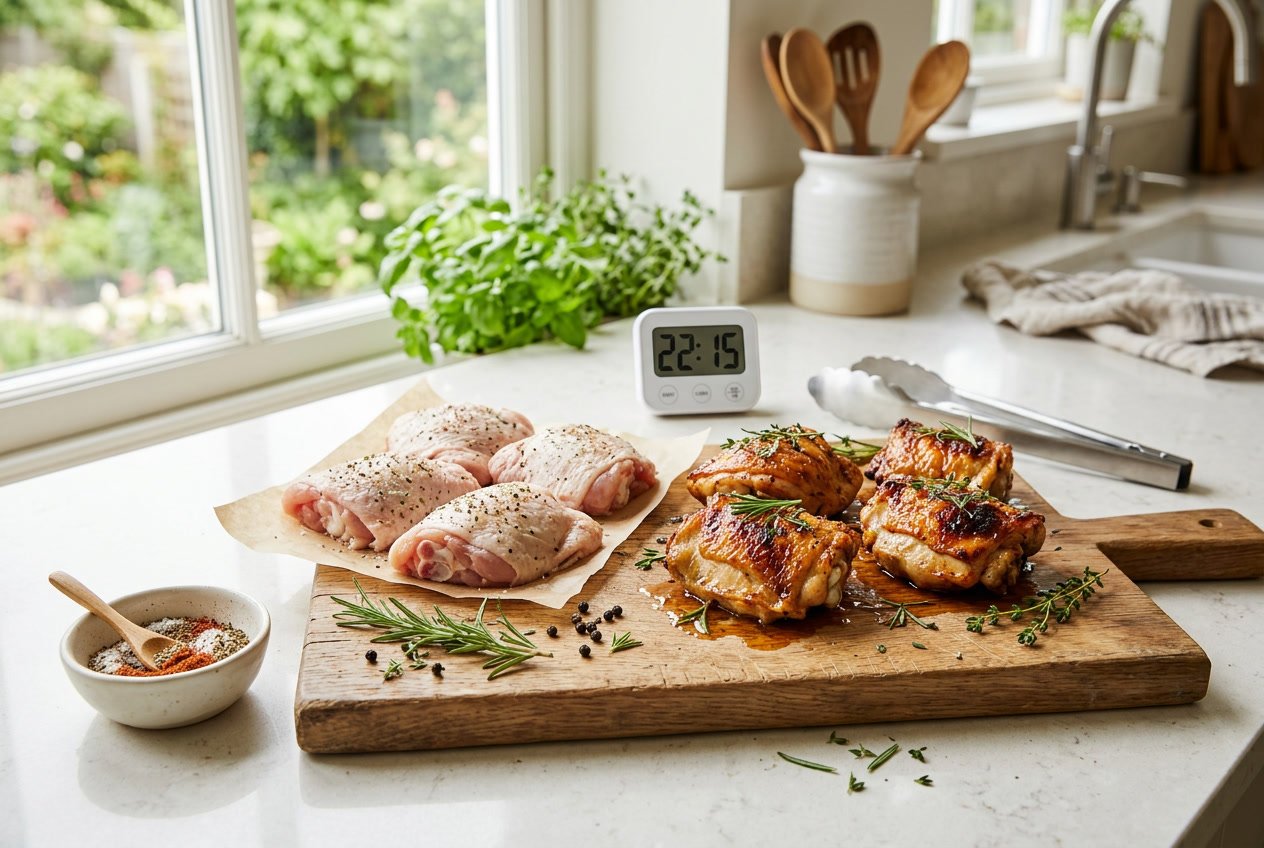
Aim for an internal temperature of 165°F and adjust time for bone-in vs. boneless cuts and oven temperature. Higher oven temperatures shorten bake time and crisp skin, while lower temperatures give gentler, more forgiving cooking.
Typical Bake Times by Temperature
Baking temperature changes time roughly as follows. At 350°F, bake average-sized thighs for 40–50 minutes. At 375°F, bake for 30–40 minutes. At 400–425°F, most thighs finish in 20–30 minutes.
These ranges apply to typical 4–8 ounce thighs. Larger pieces need more time.
Use an instant-read thermometer inserted into the thickest part of the meat, avoiding bone contact, to verify doneness. If you don’t have a thermometer, cut into the thickest area—the juices should run clear and meat should be opaque.
Use higher temperatures (400–425°F) for crisp skin. Use 350–375°F for gentler cooking and more even internal doneness.
Bake Time for Bone-In Chicken Thighs
Bone-in, skin-on thighs take longer to cook because the bone slows heat penetration. At 350°F, bake 4–8 ounce pieces for 40–50 minutes. At 425°F, plan about 30–35 minutes, often with the baking sheet preheated for crisp skin.
Check the thickest part near the bone with a thermometer; 165°F is ideal. Lower the oven by 25°F if the skin browns too fast and continue baking until the thighs reach temperature.
Rest the thighs 5 minutes after baking so juices redistribute.
Bake Time for Boneless Chicken Thighs
Boneless, skinless thighs cook faster because there’s no bone. At 425°F, most boneless thighs finish in 20–25 minutes. At 375°F, expect 25–30 minutes. At 350°F, plan 30–40 minutes depending on thickness.
Use an instant-read thermometer in the center for a 165°F reading. Toss thighs with oil and salt before baking to retain moisture and avoid overcooking.
If you want a browned exterior without drying, start at 425°F for 10 minutes, then drop to 375°F to finish.
Essential Factors That Affect Bake Time
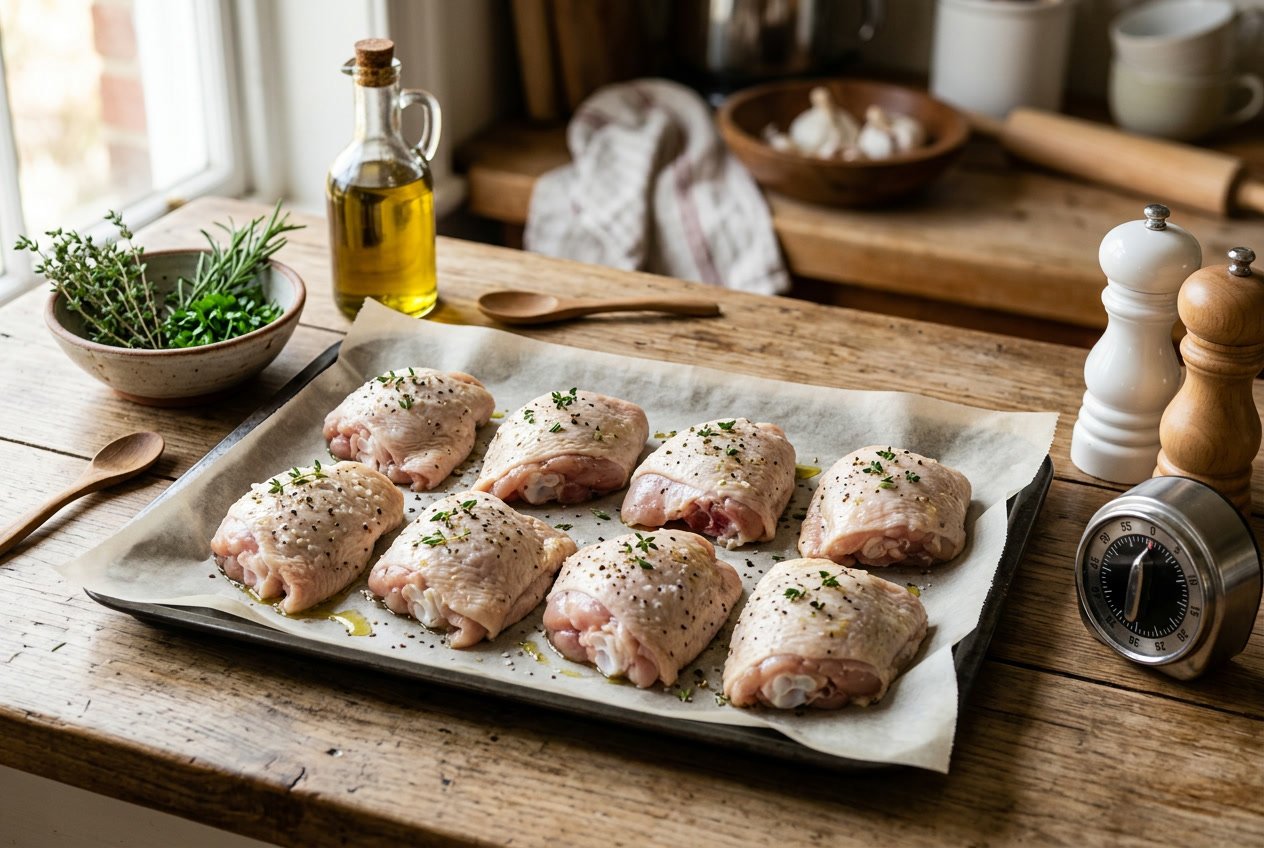
Thigh type and size change how long the oven needs to run. Pay attention to whether the thighs have bone or skin and how thick they are.
Bone-In vs. Boneless Chicken Thighs
Bone-in chicken thighs take longer to reach a safe internal temperature because the bone slows heat transfer. Bone-in, skin-on thighs around 4–6 oz need about 40–55 minutes at 400°F. Larger pieces or lower temps add 10–20 minutes.
Use a meat thermometer and check at the thickest part near the bone.
Boneless thighs heat through faster since there’s no bone. Typical boneless, skinless thighs (about 3–5 oz) often finish in 20–30 minutes at 375–400°F.
If you start with cold or thicker pieces, add 5–10 minutes and monitor temperature closely. Searing first shortens oven time and improves crust.
Skin-On vs. Skinless Chicken Thighs
Skin-on thighs need time to render fat and crisp the skin. Higher oven temperatures (400–425°F) promote crisping and shorten bake time. Plan for 35–50 minutes for medium bone-in, skin-on thighs.
Pat skin dry and oil lightly for best browning.
Skinless thighs cook faster and won’t develop a crispy exterior in the oven. Bake skinless boneless thighs at 375–400°F for roughly 20–30 minutes depending on size.
If you want a crust on skinless thighs, sear in a hot pan first or finish under the broiler for 1–3 minutes.
Weight and Thickness of Chicken Thighs
Thickness controls heat penetration more than weight. A thigh flattened to 1/2 inch will finish much sooner than a 1.25-inch thick piece.
Measure thickness at the thickest point and aim for an internal temperature of 165°F. Add 5–10 minutes if you prefer 180–185°F for fall-apart texture on bone-in pieces.
If you bake a tray with mixed sizes, smaller pieces will overcook before larger ones hit temp. Arrange similar-sized thighs together or remove smaller pieces earlier.
For frozen thighs, increase bake time by about 50% and verify doneness with a thermometer.
Oven Temperatures and Their Impact
Different oven temperatures change how long chicken thighs need and how the skin and meat finish. Choose a temperature based on whether you want crisp skin, shorter cook time, or gentler heat.
Low, Medium, and High Temperature Baking
Baking chicken thighs at low temperatures (325–350°F) gives gentler, more even cooking. Bone-in, skin-on thighs take about 50–65 minutes at 350°F. Boneless thighs finish closer to 35–45 minutes.
Low heat reduces the risk of drying but won’t produce crispy skin.
Medium temperatures (375–400°F) balance juiciness and browning. Bone-in thighs reach safe doneness in 45–55 minutes at 375°F and 40–50 minutes at 400°F. Boneless thighs usually cook in 20–30 minutes at these temps.
Use an instant-read thermometer and aim for 165°F as the minimum safe internal temperature. Many cooks prefer 180–185°F for tender dark meat.
High heat (425°F and above) shortens cooking time and promotes fast skin crisping. At 425°F, bone-in thighs often take about 35–45 minutes. Boneless pieces may finish in 18–25 minutes.
Watch closely to avoid burning the exterior before the interior reaches a safe temperature.
Choosing the Best Temperature for Crispiness
If you want crispy oven baked chicken thighs, use high initial heat or a final broil. Pat skin dry, rub with oil, and bake at 425°F to render fat and brown the skin. Broil 2–3 minutes at the end if needed.
Use a rimmed baking sheet with a wire rack to improve airflow and crispness.
For juicy meat with some crispness, start at 400°F and finish at 425°F for 5–10 minutes, or sear in a skillet first then transfer to the oven.
If you prefer softer skin or are cooking with a sauce, choose 350–375°F and accept less crisping in exchange for more even cooking.
How to Check for Doneness and Food Safety
Use a reliable internal temperature and visual cues to confirm safety and texture. Start with a properly positioned meat thermometer, then cross-check with color, juices, and feel.
Using a Meat Thermometer Correctly
Insert the thermometer probe into the thickest part of the thigh without touching bone. Bone reads hotter and gives a false high temperature.
For bone-in thighs, place the probe parallel to the bone near the center. For boneless, aim for the center of the thickest section.
Cook to at least 165°F (74°C) to meet USDA minimum safety. Many chefs pull thighs between 175–185°F (79–85°C) for juicier dark meat.
Use an instant-read thermometer for quick checks near the end of baking. If the temp is close to target, tent the thighs with foil and let them rest 5–10 minutes. Carryover heat will raise the internal temperature a few degrees while juices redistribute.
Visual and Texture Indicators of Doneness
Cut one thigh at the thickest point if you lack a thermometer. Properly cooked meat will show opaque, fully colored flesh that flakes easily along the grain.
Check juices; they should run clear, not pink or bloody. Slightly pink edges can appear in well-cooked dark meat, but rely on temperature first.
Press the thigh with a fork or tongs. Cooked thighs feel firm but still springy. Overcooked thighs feel very tight and dry.
Use these cues to confirm doneness after you verify temperature.
Step-by-Step Guide to Baking Chicken Thighs
You’ll learn how to prep and season bone-in or boneless thighs, choose oven temperatures and times for crispy skin or tender meat, and rest the thighs to lock in juices.
Preparing and Seasoning Chicken Thighs
Pat thighs dry with paper towels to remove surface moisture. Trim excess fat and loosen the skin if present so seasoning gets under it.
Use a basic seasoning formula: 1 tsp kosher salt per pound, 1/2 tsp black pepper, 1 tsp garlic powder, and 1 tsp smoked paprika for color and flavor.
Rub oil (1 tbsp per pound) over the skin or meat, then apply the spice mix evenly. For deeper flavor, refrigerate seasoned thighs, uncovered, for 1–8 hours. This also dries the skin for better crisping.
If you prefer a marinade, limit wet time to 2–4 hours to avoid overly softening the exterior.
Recommended Baking Methods
Choose your method based on the outcome you want. For crispy skin, preheat the oven to 425°F (218°C).
Arrange thighs skin-side up on a wire rack over a rimmed sheet pan for even browning. Bake bone-in, skin-on thighs 30–40 minutes at 425°F until internal temp reaches 165–175°F.
Boneless thighs take 20–25 minutes at the same temp.
For tender chicken thighs without maximum crispness, roast at 375°F (190°C) for 35–45 minutes (bone-in) or 25–30 minutes (boneless).
Alternatively, sear skin-side down in a hot skillet 4–6 minutes first, then finish in a 400°F oven for 15–20 minutes for extra-crispy results. Always verify doneness by temperature, not time alone.
Resting and Serving for Juicy Results
Remove thighs from the oven when the thickest part reads 165–175°F. Transfer to a clean plate or cutting board and tent loosely with foil for 5–10 minutes.
Resting lets juices redistribute so the meat stays tender.
For presentation, spoon pan juices over the meat or make a quick pan sauce from drippings, a splash of stock, and a pat of butter. Serve skin-side up to preserve crispiness.
Slice bone-in thighs off the bone if you plan to shred or add to salads, keeping pieces large enough to retain moisture.
Popular Flavor Variations and Recipe Ideas
You’ll find options that prioritize crispy skin, sticky glaze, or complementary sides to complete a meal. Pick a technique and seasoning that matches your time, heat level, and whether you use bone-in or boneless thighs.
Classic and Crispy Baked Chicken Thighs
Season bone-in, skin-on thighs with kosher salt, black pepper, garlic powder, and a pinch of smoked paprika for color and depth. Pat the skin dry, rub with a little oil, and arrange skin-side up on a wire rack set over a rimmed baking sheet.
Bake at 400°F (204°C) for about 35–45 minutes for bone-in thighs. Boneless thighs usually finish near 25–30 minutes.
Always check internal temperature—165°F (74°C) in the thickest part—or cook to 175–180°F if you prefer more rendered connective tissue for fall-apart texture. Rest 5 minutes before serving to let juices redistribute.
BBQ and Glazed Chicken Thighs
Brush your favorite BBQ sauce onto the thighs during the last 8–10 minutes of baking. This prevents burning and creates a glossy glaze.
Start the thighs skin-side up at 375–400°F. When they reach about 155–160°F, remove them, glaze both sides, then return them to the oven or broiler briefly to set the sauce.
Try a simple glaze with equal parts ketchup and brown sugar. Add a splash of apple cider vinegar and a teaspoon of Worcestershire or hot sauce.
For sticky Asian-style glazes, use soy sauce, honey, rice vinegar, and grated ginger. Adjust salt and sweetness to match the strength of your sauce.
Serving Suggestions and Side Dishes
Pair crispy or BBQ thighs with starchy sides that soak up juices. Roasted potatoes, buttered rice, or creamy polenta work well.
Add a bright contrast with quick-pickled cucumbers or a lemony kale salad. These sides help cut the richness.
Carve or serve whole thighs on a platter with extra sauce on the side if you serve them family-style.
For meal prep, remove bones and shred thighs into bowls with grain, roasted vegetables, and a spoonful of sauce. This keeps each serving flavorful through the week.


