
How Long Do I Sear Chicken Thighs: Master Timing for Juicy Results
Sear boneless, skinless chicken thighs about 3–4 minutes per side and bone-in, skin-on thighs about 4–5 minutes per side over medium-high heat. Finish to 165°F (75°C) internal temperature for juicy, fully cooked meat.
Searing takes just a few minutes per side, but thicker pieces need finishing in the oven or over lower heat.
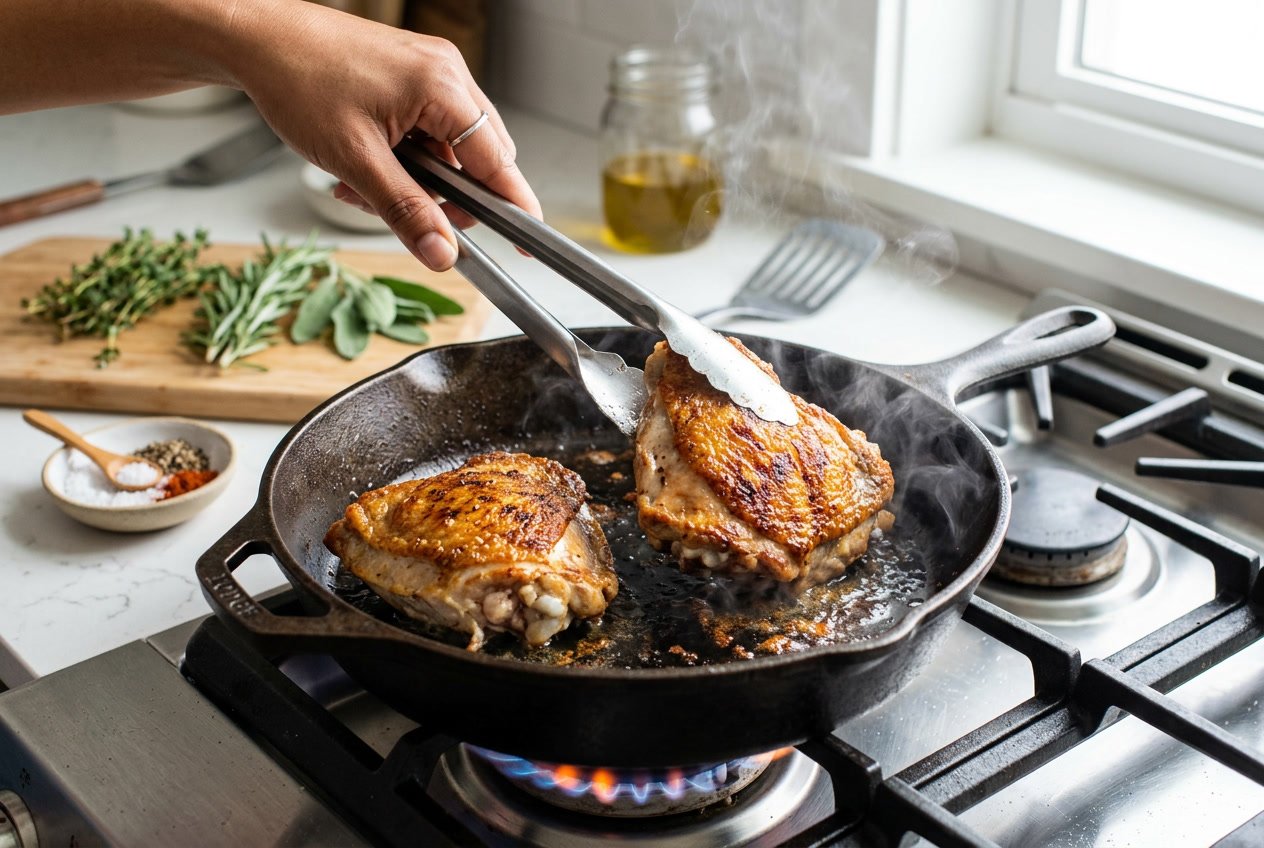
Master timing, pan choice, seasoning, and resting to transform a routine meal into something satisfying. The following sections guide you through every step for consistent results.
How Long to Sear Chicken Thighs
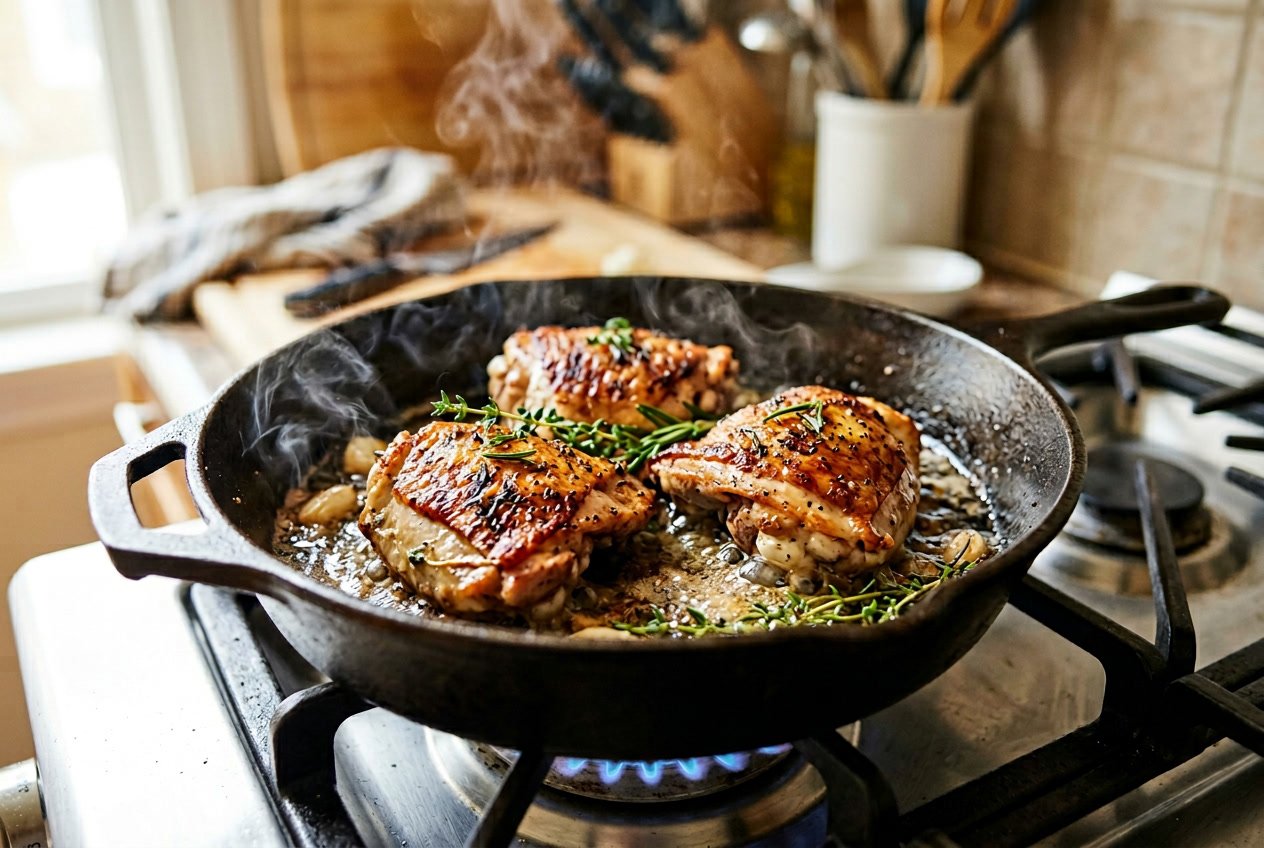
Sear long enough to build a deep golden crust without burning the exterior. Use timing as a guide and confirm doneness with an instant-read thermometer.
Timing for Bone-In, Skin-On Chicken Thighs
Start by searing skin-side down for 5–7 minutes over medium to medium-high heat to render fat and crisp the skin. Listen for steady sizzling; if the skin darkens too quickly, lower the heat.
Flip and sear the flesh side 4–6 minutes to develop color. Reduce heat to medium and continue cooking 8–14 minutes, covered or uncovered as preferred, to reach 165°F in the thickest part.
If thighs are very thick or your burner is weak, add extra finish time or transfer to a 375°F oven for 8–12 minutes. Rest thighs 4–6 minutes before slicing.
Sear Time for Boneless, Skinless Chicken Thighs
Sear boneless, skinless thighs 3–5 minutes per side over medium-high heat. These cook faster since there’s no bone or skin, so monitor closely to avoid over-browning.
After flipping, check temperature at the thickest point; most boneless thighs reach 165°F during the second sear or after 2–6 minutes of lower-heat finishing. For thin pieces, reduce sear time to 2–3 minutes per side.
Press thicker spots gently to level them or cut large pieces in half for even cooking. Rest 3–5 minutes to let carryover heat finish the center.
Impact of Thickness and Pan Temperature
Thickness changes the sear window. Thin thighs (½–¾ inch) need short, high-heat sears of 2–4 minutes per side.
Thick or bone-in thighs (1–1¼+ inch) require longer sears and a gentler finish to reach 165°F without burning.
Heat the pan enough to produce a Maillard crust but not so hot that spices or skin burn. Preheat a heavy skillet 3–5 minutes, add high-smoke-point oil until it shimmers, then add chicken.
If the pan cools when you add meat, increase initial sear time by 30–60 seconds. Use cues like steady sizzling, clear rendered fat, and a deep golden edge.
Check doneness with an instant-read thermometer to ensure juicy, safely cooked chicken.
Preparing Chicken Thighs for Searing
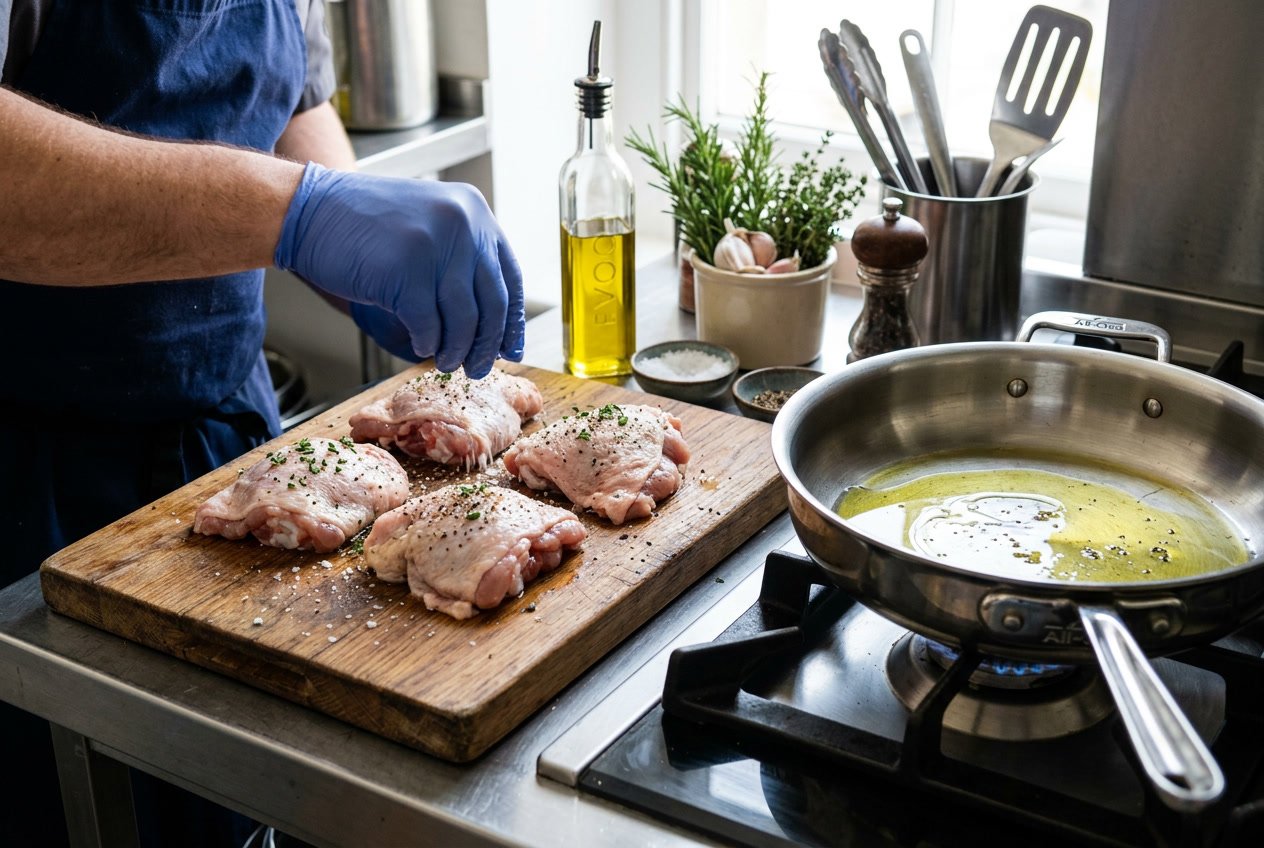
Dry the surface, season well, and let thicker pieces warm up slightly for even cooking and a golden crust.
Drying and Seasoning Techniques
Pat each thigh thoroughly with paper towels until dry. Excess moisture causes steaming and prevents browning.
Season with kosher salt and freshly ground black pepper. For extra flavor, rub a light coating of neutral oil before adding dry spices like paprika, garlic powder, or onion powder.
If using a wet marinade, limit it to 15–30 minutes or pat the thighs dry again before searing. Avoid crowding the pan; season in batches if needed for direct contact with the skillet.
Bringing Chicken Thighs to Room Temperature
Remove thighs from the refrigerator 20–30 minutes before searing to take the chill off. This helps the pan reach the safe internal temperature faster and allows better browning.
Cover thighs lightly with plastic wrap or a plate as they rest. For boneless, skinless thighs, rest 15–20 minutes; for bone-in, skin-on, allow the full 30 minutes.
Check with a digital thermometer that the surface is no longer ice-cold for even searing.
Selecting the Best Pan and Oil
Choose a heavy, well-heated skillet and an oil that tolerates high heat. These choices help you achieve a deep brown sear and juicy meat.
Choosing the Right Pan Type
Use cast iron or stainless steel for reliable searing. Cast iron holds heat well and is best for thicker, bone-in thighs.
Stainless steel heats quickly and works well for boneless thighs. Avoid nonstick pans for high-temperature sears.
Pick a 10–12 inch skillet to sear 3–4 thighs without crowding. If you plan to finish in the oven, use an oven-safe pan with a metal handle.
Selecting High Smoke Point Oils
Choose oils with smoke points above 400°F to prevent burning. Good options include avocado oil, refined grapeseed, or light olive oil.
Use just enough oil to coat the pan, about 1–2 tablespoons in a 10-inch skillet. Add a tablespoon of butter near the end of searing for extra flavor, lowering heat so the butter browns without burning.
Pat thighs dry before adding oil to reduce splatter and improve browning.
Step-by-Step Guide to Searing Chicken Thighs
Sear skin-side down first to render fat and build a golden crust, then flip and finish until the exterior is browned and the internal temperature reaches 165°F (74°C).
Control pan temperature, use a high smoke point oil, and avoid crowding the skillet.
Heating the Pan and Adding Oil
Preheat a heavy skillet over medium-high heat for 3–5 minutes until evenly hot. Cast iron or stainless steel works best because they hold heat.
Test readiness by flicking a few drops of water; they should sizzle and evaporate immediately. Add an oil with a high smoke point such as canola, avocado, or refined vegetable oil.
Use just enough oil to coat the pan, about 1–2 tablespoons for a 10–12 inch skillet. Heat the oil until it shimmers and moves fluidly across the surface.
Pat thighs dry and season just before adding to the pan.
Searing Technique for Golden-Brown Crust
Place each chicken thigh skin-side down (if skin-on) in a single layer without crowding. Leave at least 1/2 inch between pieces.
Listen for an immediate, steady sizzle to confirm correct temperature. Do not move the thighs for the initial sear.
For bone-in, skin-on thighs, cook 4–5 minutes skin-side down until deep golden-brown. For boneless, skinless thighs, aim for about 3–4 minutes per side.
If the chicken sticks, give it another 30–60 seconds; a proper sear releases naturally. Use tongs and press lightly to ensure good contact for even browning.
Flipping and Finishing the Sear
Flip the thighs gently and sear the other side. For bone-in pieces, sear the flesh side 4–5 minutes; for boneless, sear 3–4 minutes.
After both sides have a crust, check internal temperature with an instant-read thermometer. Transfer to a preheated 350°F (175°C) oven for 10–15 minutes if needed to reach 165°F (74°C), or cover and lower heat to finish on the stove.
Rest the thighs 5 minutes before serving to let juices redistribute.
If you accidentally start searing from frozen, stop and fully thaw before searing. Remove excess fat from the pan between batches and maintain heat for consistent searing.
Checking Doneness and Resting
Check internal temperature and let the thighs rest so juices redistribute and the crust stays crisp.
Using a Meat Thermometer
Insert an instant-read thermometer into the thickest part of the thigh without touching bone. Aim for 165°F (74°C) internal temperature for safe, fully cooked chicken.
For bone-in thighs, probe near the bone but not against it. For boneless, check the center of the meat.
If the reading is 160–164°F and the thighs will rest briefly, carryover heat will finish the job. Avoid relying on color or juices alone.
Resting Chicken Thighs After Searing
Transfer thighs to a warm plate or baking sheet and tent loosely with foil. Rest boneless thighs 5–10 minutes and bone-in thighs 8–12 minutes.
Do not stack thighs while resting to keep the crust crisp. Use resting time to finish a pan sauce or check temperature again.
When you cut into the thigh after resting, juices should stay in the meat.
Common Mistakes and Expert Tips
Keep the pan hot, dry the skin, and avoid crowding the skillet. Use an instant-read thermometer and wait to flip until the crust releases.
Avoiding Overcrowding the Pan
Crowding drops pan temperature and causes steaming. Cook thighs in a single layer with at least 1 inch between pieces.
Work in batches if needed. Use a heavy-bottomed skillet and preheat over medium-high for 5 minutes.
Add a thin film of high-smoke-point oil. If the oil stops shimmering after adding meat, remove a piece to let the pan recover.
Rest cooked thighs on a wire rack over a baking sheet while finishing the rest to prevent sogginess.
Dealing With Sticking or Burning
Sticking usually means the skin hasn’t rendered or the pan wasn’t hot enough. Pat thighs dry and season just before cooking.
If the chicken sticks, wait; properly seared pieces release on their own. Reduce heat if fat is smoking and use a spatula to gently loosen edges.
For burning, lower the heat slightly and finish in a 375°F (190°C) oven for 8–12 minutes depending on thickness.
Use a splatter screen to control hot oil without trapping steam. Wipe out burnt residue between batches, reheat the pan, and add fresh oil to prevent burned flavors.
Searing for Maximum Flavor
Start with the skin-side down for skin-on thighs to render fat and build a crisp crust. Press lightly with a spatula for the first 30–60 seconds to ensure full contact.
Sear for about 5–7 minutes per side for skin-on and 3–4 minutes per side for boneless on medium-high heat. Adjust the time for thickness.
Season the skin with coarse salt to draw out moisture and improve browning. Near the end of searing, add crushed garlic, thyme sprigs, or a knob of butter to brown without burning.
Finish thicker pieces in a 375°F oven until an instant-read thermometer reads 165°F (74°C) in the thickest part.
Monitor pan surface temperature at around 350–400°F (177–204°C) for consistent results. Flip only once to preserve the crust and juices.


