
How Long Chicken Thighs on BBQ: Grilling Times, Temps & Tips
Grilling chicken thighs doesn’t have to be guesswork.
For bone-in thighs, grill about 40–50 minutes. For boneless thighs, grill about 20–30 minutes. Always aim for an internal temperature of 165°F (75°C) to ensure safety and juiciness.
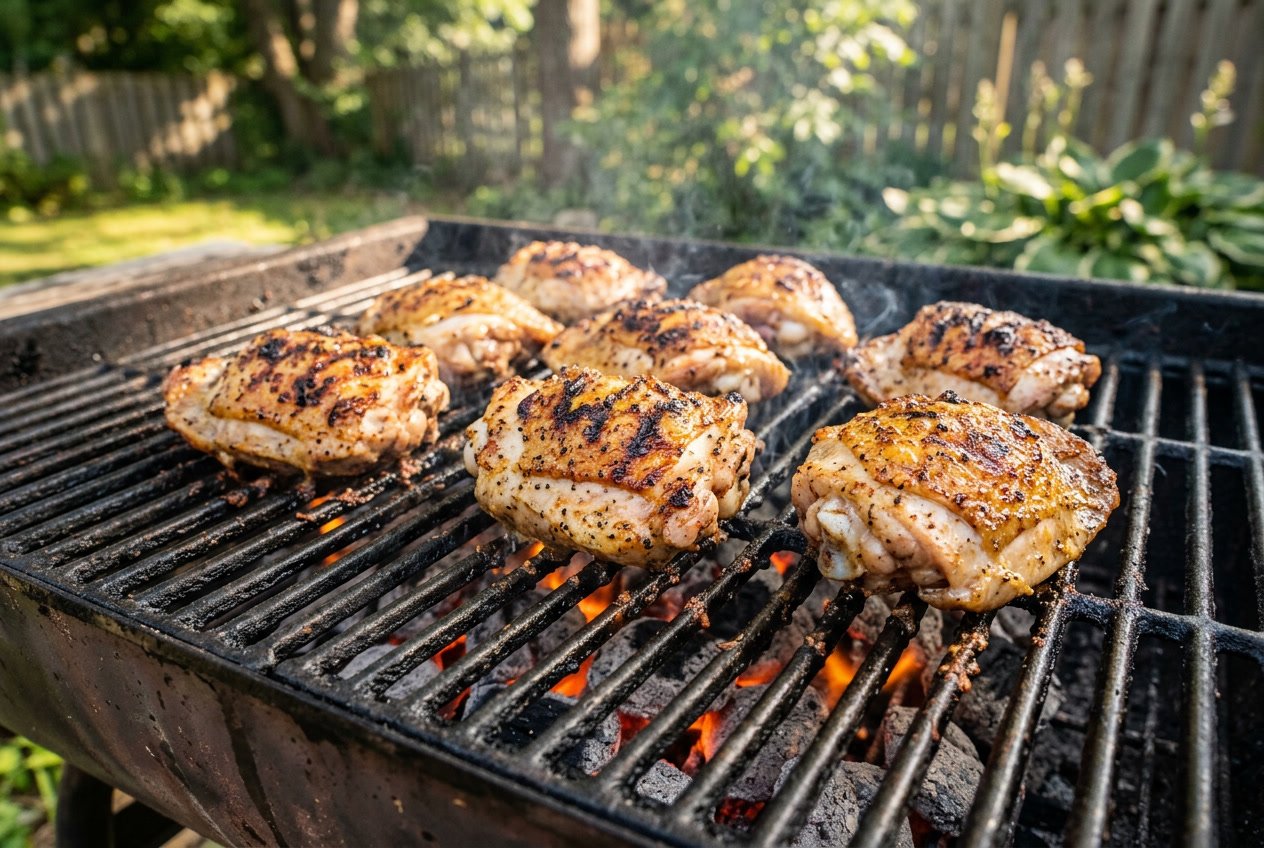
Heat, bone, and skin all affect cooking times. Simple prep and marinating choices keep meat tender.
Follow clear techniques for direct and two-zone grilling. This helps you achieve a crisped exterior and juicy interior.
How Long to BBQ Chicken Thighs
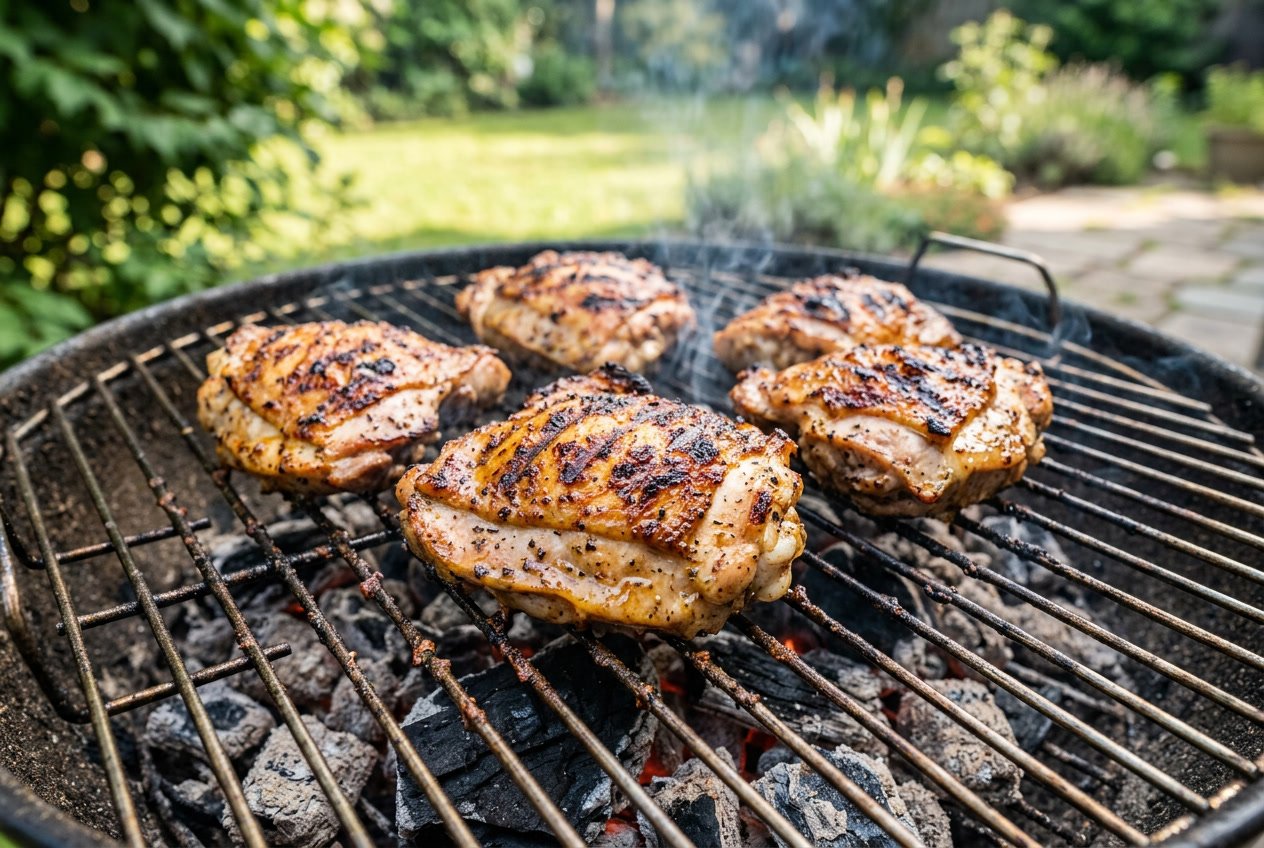
Aim for even heat and use a reliable thermometer. Cook times vary by bone, thickness, and skin, so check internal temperature rather than relying only on minutes.
Cooking Times for Bone-In Chicken Thighs
Bone-in thighs take longer because the bone slows heat transfer. Grill over medium heat (about 350–400°F / 175–200°C).
Start with indirect heat if the thighs are large. Finish over direct heat to crisp.
Typical time: 35–50 minutes. Flip every 10–15 minutes to brown both sides evenly.
Insert an instant-read thermometer into the thickest part without touching bone; target 165°F (75°C). Some cooks pull at 175–185°F, then rest 5–10 minutes. The carryover will settle near 165°F while juices redistribute.
If you use high, direct heat only, reduce grill time but watch for flare-ups and uneven cooking. Adjust time for very small or very thick thighs.
Cooking Times for Boneless Chicken Thighs
Boneless thighs cook faster because heat reaches the meat uniformly. Preheat the grill to medium-high (375–425°F / 190–220°C) for a good sear.
Typical time: 12–25 minutes total. Cook 3–6 minutes per side for thinner pieces; thicker pieces need 6–10 minutes per side.
Flip once or twice to develop color without overcooking. Use an instant-read thermometer aiming for 165°F (75°C).
Remove a few degrees early if you plan a 5–10 minute rest; carryover will finish cooking. Marinated boneless thighs may brown quicker due to sugars, so watch closely to avoid burning.
Reduce direct time if you see excessive charring.
Cooking Times for Skin-On and Skinless Thighs
Skin changes how you manage heat. For skin-on thighs, start skin-side down over direct medium heat to render fat and crisp the skin, about 6–10 minutes.
Move to indirect heat to finish; total time usually falls into the bone-in or boneless ranges above. Skinless thighs lack the fat barrier and cook faster; they benefit from slightly lower heat to avoid drying.
For skinless boneless, aim 12–25 minutes at medium-high and monitor internal temp closely. Skin-on should be crispy and 165°F (75°C) inside.
Skinless should reach 165°F without excessive browning. When using sauces with sugar, add them in the last 5–10 minutes to prevent burning.
Key Factors Affecting Grilling Time
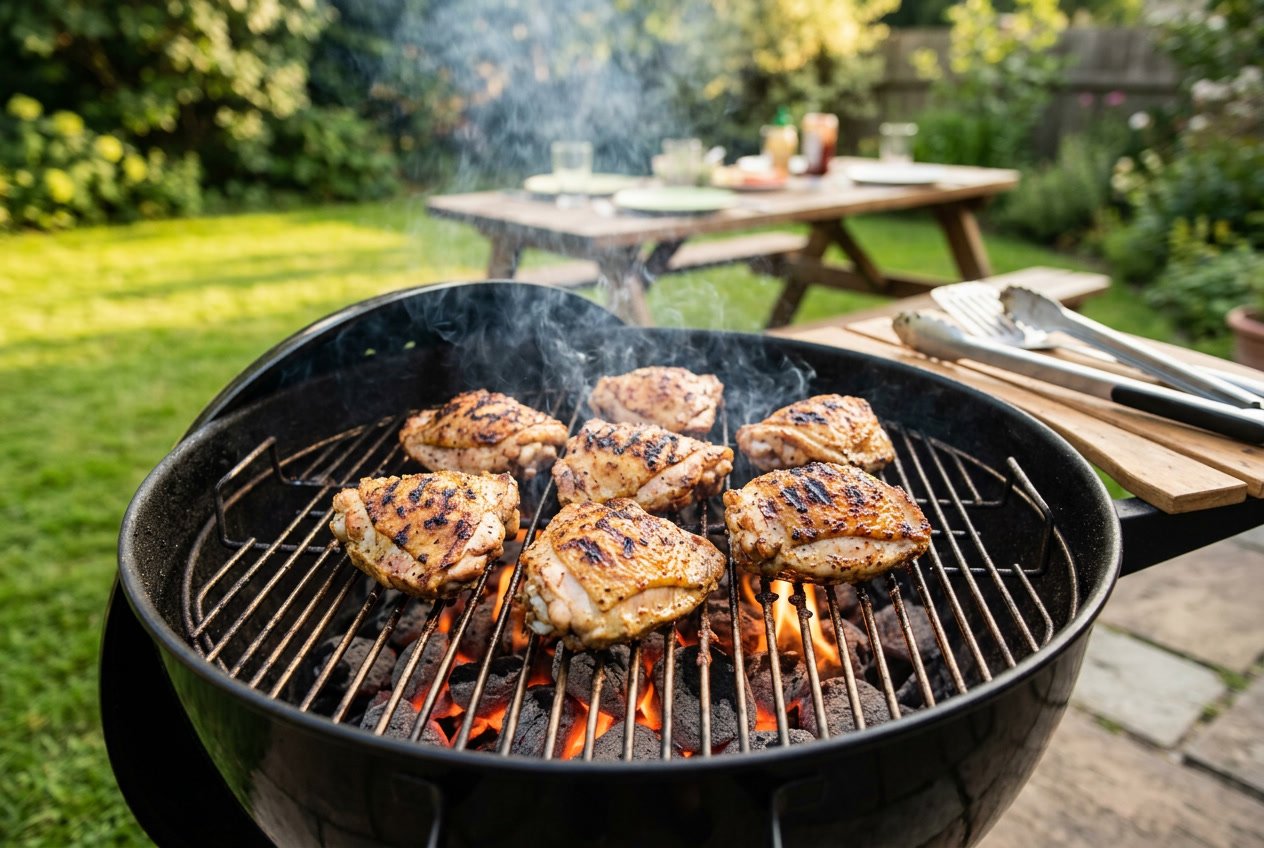
How much mass the piece has and how you place it on the grill control grilling time. Temperature control and heat placement determine whether thighs cook through evenly or end up burned outside and undercooked inside.
Impact of Thickness and Size
Thicker or larger thighs take longer because heat needs time to penetrate to the bone or center. Bone-in thighs commonly require 25–40 minutes on a medium-hot grill.
Boneless thighs usually finish in 8–15 minutes. Measure thickness: a 1-inch boneless thigh will cook far faster than a 1.5–2 inch bone-in piece.
Cut or butterfly very thick pieces to reduce time and improve evenness. Use a digital meat thermometer and insert it into the thickest part without touching bone.
Aim for 165°F (74°C) minimum for safety. Many cooks pull bone-in thighs at 175°F (79°C) for more tender connective tissue.
Direct vs Indirect Heat on the Grill
Direct heat exposes meat to flames or high grate temperature and works best for quick searing and crisping skin. Use direct medium-high heat (around 400–450°F) for boneless thighs, 4–6 minutes per side, to build color and caramelization.
Indirect heat lets thighs finish cooking without burning the exterior. For bone-in or skin-on pieces, start over indirect heat at 350–400°F to bring the internal temperature up slowly.
Use direct heat briefly to crisp skin and caramelize sauces. On a gas grill, create two zones: one burner high for direct, one burner off or low for indirect.
Grill Temperature Guidelines
Set clear temperature targets for consistency. For medium grilling of chicken thighs, aim for 350–400°F for indirect cooking and 400–450°F for direct searing.
Higher than 450°F risks charring the exterior before the center reaches safe temperature. Use the grill lid to maintain steady heat—closed for indirect cooks on gas grills.
Monitor with a thermometer built into the grill, then verify with a probe thermometer in the meat. Adjust burners or charcoal placement to keep the grill within target ranges for juicy grilled chicken thighs.
Choosing and Preparing Chicken Thighs
Pick thighs that match how you want to cook and serve them. Think about texture, the time you have, and whether you want crisp skin or easy slicing.
Bone-In vs Boneless Chicken Thighs
Bone-in chicken thighs hold moisture better and tolerate longer, lower-heat grilling without drying. The bone slows heat transfer so the meat stays juicier.
Expect 40–50 minutes on a medium grill, flipping every 10–15 minutes to cook through evenly. Choose bone-in if you want richer flavor and don’t mind a little extra cook time and carving.
Boneless chicken thighs cook faster and more predictably, usually 20–30 minutes at medium heat with frequent turns. They’re easier to marinate evenly and cut for sandwiches or salads.
Pick boneless for quicker grilling or when you need uniform pieces for even searing.
Skin-On vs Skinless Chicken Thighs
Skin-on chicken thighs give you a crispy, savory exterior when you start skin-side down over direct heat. The skin protects the meat and renders fat that bastes the thigh, helping the interior stay moist.
Monitor flare-ups and move to indirect heat if the skin browns too quickly. Skinless thighs heat through faster and reduce flare-ups and excess fat.
They absorb marinades more directly and are better for sauces that you’ll apply late in cooking. Choose skinless if you prefer lower fat, quicker cook times, or if you’ll finish with a glaze that shouldn’t burn.
Trimming and Prepping Thighs for the Grill
Trim excess fat and loose skin to limit flare-ups and create even contact with the grate. Remove any small bone fragments from boneless thighs and pat the meat dry to promote browning.
If you brine, do a short brine (30–60 minutes) to boost juiciness. For longer flavor infusion, marinate up to overnight in the fridge using an acidic or oil-based marinade.
Score thick areas lightly to help heat penetrate. Season both sides with salt at least 30 minutes before grilling.
Bring thighs to near room temperature (20–30 minutes) before they hit the grill to ensure consistent cooking from edge to center.
Marinating and Seasoning for Flavor and Juiciness
Marinate to add acid, oil, salt, and aromatics that penetrate the meat. Season dry to build a crisp, savory exterior.
Both approaches produce juicy, tender chicken thighs when you control time, salt, and cooking temperature.
Best Marinades and Marinating Times
Choose a marinade with a balance: acid (lemon, vinegar, or yogurt) to tenderize, oil (olive or neutral) to carry flavor, and salt or soy sauce for seasoning.
Add aromatics like garlic, ginger, and herbs, plus a touch of sugar or honey if you want caramelization on the BBQ. For most marinades, 1 to 4 hours in the refrigerator gives good flavor and some tenderizing without turning the meat mushy.
If your marinade is highly acidic, limit time to 2–6 hours. For yogurt-based or low-acid marinades, you can go up to 12 hours safely.
Always marinate in a sealed bag or nonreactive container and keep the chicken refrigerated. Before grilling, pat thighs dry to help skin crisp and get even browning.
Reserve any unused marinade that touched raw chicken and boil it first before using as a sauce.
Dry Rubs and Seasoning Techniques
Dry rubs rely on salt, sugar, and spices to season and form a flavorful crust on the barbecue. Use kosher salt or sea salt for even penetration, brown sugar for caramelization, and spices like smoked paprika, cumin, garlic powder, and black pepper for depth.
Apply rub at least 30 minutes before cooking. For best results, season 2–6 hours ahead and refrigerate uncovered to dry the skin slightly.
If you plan a longer hold, reduce the salt slightly to avoid over-salting. For skin-on thighs, pat dry after refrigeration, then oil lightly to help the rub adhere and to promote browning.
Use a light spray of oil or a mop sauce during cooking rather than reapplying wet marinades to avoid flare-ups and soggy skin. Monitor internal temperature. Cook to 165°F (74°C) and rest 5–10 minutes for juicy, tender chicken thighs.
Essential Grilling Techniques for Perfect Chicken Thighs
Control internal temperature, manage direct and indirect heat, and handle the thighs carefully so skin crisps without charring.
Use an instant-read meat thermometer for accurate doneness. Flip strategically to develop color and keep fat flare-ups in check.
Using a Meat Thermometer for Doneness
Use a reliable instant-read meat thermometer and insert it into the thickest part of the thigh without touching bone. Aim for 165°F (75°C); once the probe reads that temperature, remove the thigh from the grill.
Check temperature in two places if thighs vary in thickness. For bone-in pieces, probe near but not against the bone.
Calibrate your thermometer occasionally by testing it in boiling water. If you prefer carryover cooking, pull thighs at 160–162°F and let them rest; they’ll rise to 165°F while resting.
Always clean the probe after each use to avoid cross-contamination.
Flipping and Resting Your Chicken
Flip chicken thighs only as needed to develop even color and prevent moisture loss. For bone-in or skin-on thighs, start skin-side down over medium heat to crisp the skin, then flip every 8–12 minutes.
For boneless thighs, flip every 4–6 minutes to avoid overcooking the thin parts. Use a spatula or tongs and avoid piercing the meat with a fork.
Keep the grill lid closed between flips to maintain steady heat. After the final flip and thermometer check, move thighs to a cooler zone if they need a few more minutes without burning.
Let thighs rest for 5–10 minutes on a plate tented loosely with foil. Resting redistributes juices so the meat stays moist when you slice.
Preventing Flare-Ups and Burnt Skin
Trim excess fat and pat thighs dry before seasoning to reduce dripping that causes flare-ups. Create a two-zone fire: direct medium heat for searing and an indirect cooler zone to finish cooking.
When flames spike, move the affected thighs to the indirect zone until flames subside. Keep a spray bottle of water nearby for small flare-ups.
For skin-on thighs, cook skin-side down initially and monitor for hot spots. If skin chars before the inside reaches temperature, shift to indirect heat until done.
Use a drip pan under the indirect zone or grill on a raised rack to catch fat. That reduces grease flare-ups and preserves a crisp, unburnt skin.
Serving and Enjoying BBQ Chicken Thighs
You can balance texture, temperature, and flavors for the best serving options. Crisp sides, bright sauces, and simple plating highlight the juicy meat.
Serving Suggestions and Pairings
Serve skin-on thighs hot from the grill to preserve crisp skin. Rest them 5–10 minutes before plating to lock in juices.
Slice bone-in thighs across the grain for easy eating and place on a warm platter. Pairings to try:
- Starches: grilled corn, charred potato wedges, or herby rice pilaf.
- Vegetables: a vinegary slaw, grilled zucchini, or blistered cherry tomatoes.
- Sauces: a vinegar-based BBQ sauce for contrast, a honey-mustard glaze for sweetness, or chimichurri for freshness.
Arrange thighs on a large board with lemon wedges and a small bowl of sauce for family-style meals. Offer toasted buns and pickles for handheld sandwiches.
Plan 1–2 thighs per adult depending on appetite and side dish volume.
Storing and Reheating Leftover Grilled Chicken
Cool leftover grilled chicken within two hours and refrigerate it in airtight containers.
Slice meat off the bone for faster chilling and easier storage. Keep the skin separate if you want to re-crisp it later.
To reheat in the oven, set it to 325°F (160°C), cover the chicken with foil, and heat for 10–15 minutes until the internal temperature reaches 165°F (74°C).
For the skillet, use medium-low heat with a splash of broth. Cover and heat for 6–8 minutes.
Use the air fryer at 350°F (175°C) for 4–6 minutes to make the skin crisp again.
Label containers with the date and eat the chicken within 3–4 days.
For longer storage, freeze portions for up to 3 months. Thaw overnight in the fridge before reheating.
If you use a microwave, cover the chicken to avoid uneven heating and soft skin.


