
How Long Chicken Thighs in Refrigerator: Safe Storage & Freshness
Raw chicken thighs should stay in the refrigerator no more than 1–2 days. Cooked thighs last about 3–4 days.
Keep to those windows to cut your risk of foodborne illness and keep meals tasty.
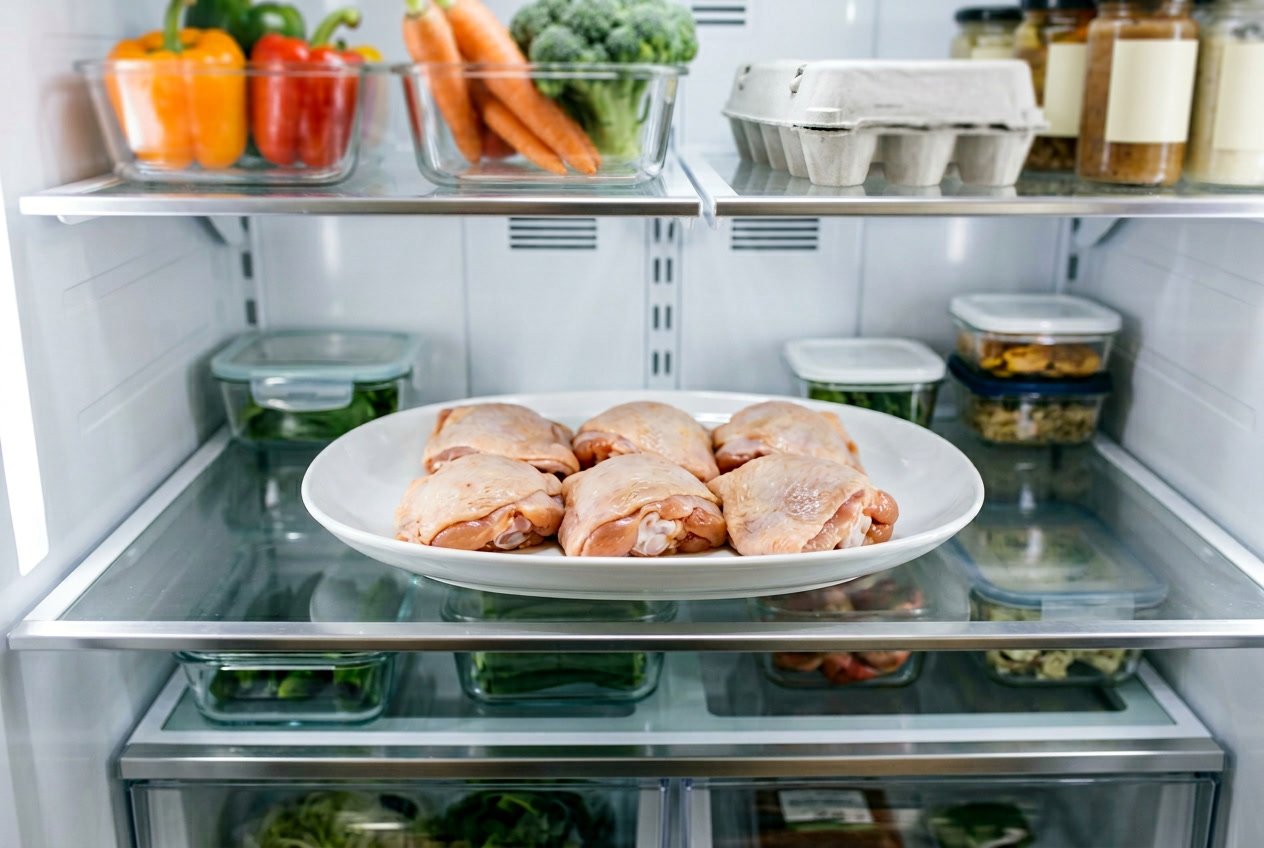
You’ll learn how to store thighs to maximize freshness and spot spoilage before it becomes dangerous. Freezing or marinating can change the timing.
This article covers storage tips, thawing methods, and signs to toss chicken so you can make confident choices in the kitchen.
How Long Raw Chicken Thighs Last in the Refrigerator
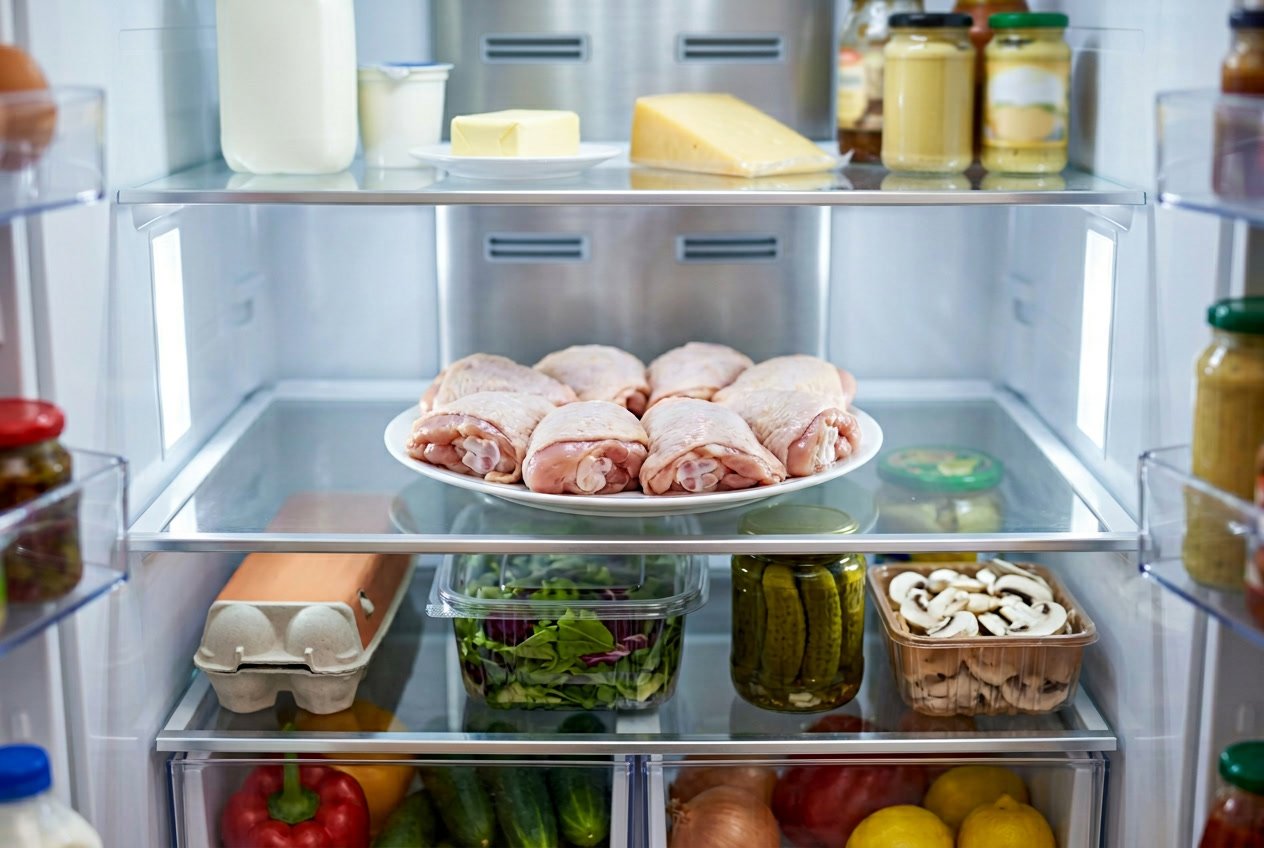
Raw chicken thighs spoil quickly, so keep them cold and separated from other foods. Store at 40°F (4°C) or below, on the bottom shelf, and use or freeze quickly to avoid bacterial growth.
Recommended Storage Time for Raw Chicken Thighs
Use raw chicken thighs within 1–2 days of purchase for safety and quality. This applies to both bone-in and boneless thighs, whole packages, or individually wrapped pieces.
If you won’t cook them within two days, freeze the thighs immediately. Label packages with the date; frozen raw thighs keep quality for up to 9 months.
Always refrigerate cooked leftovers within 2 hours of cooking. Cooked chicken lasts 3–4 days.
Factors Affecting Raw Chicken Thigh Shelf Life
Fridge temperature matters most. If the temperature rises above 40°F (4°C), bacteria multiply faster.
Use a fridge thermometer and avoid opening the door often. Packaging also matters.
Use the original store packaging short-term, but for longer storage, reseal or transfer to airtight containers. Vacuum sealing or removing air can slow spoilage.
Initial freshness at purchase, how long the chicken sat in transit, and whether it was frozen and thawed all change shelf life. Surface contamination from prep areas and time at room temperature before refrigeration also play a role.
Checking Freshness at Purchase
Inspect the sell-by or use-by date, but don’t rely solely on it. Choose packages with no tears, no excess liquid, and a firm feel.
Pinkish color with white fat is normal. Gray or green tinges are not.
If you can, smell the chicken in-store; a sour or ammonia-like odor means spoilage. If you buy near the use-by date, plan to cook or freeze the thighs immediately once home.
Buy from stores with cold, well-organized meat cases and quick turnover. This increases the chance you’ll get fresher thighs.
How Long Cooked Chicken Thighs Last in the Refrigerator
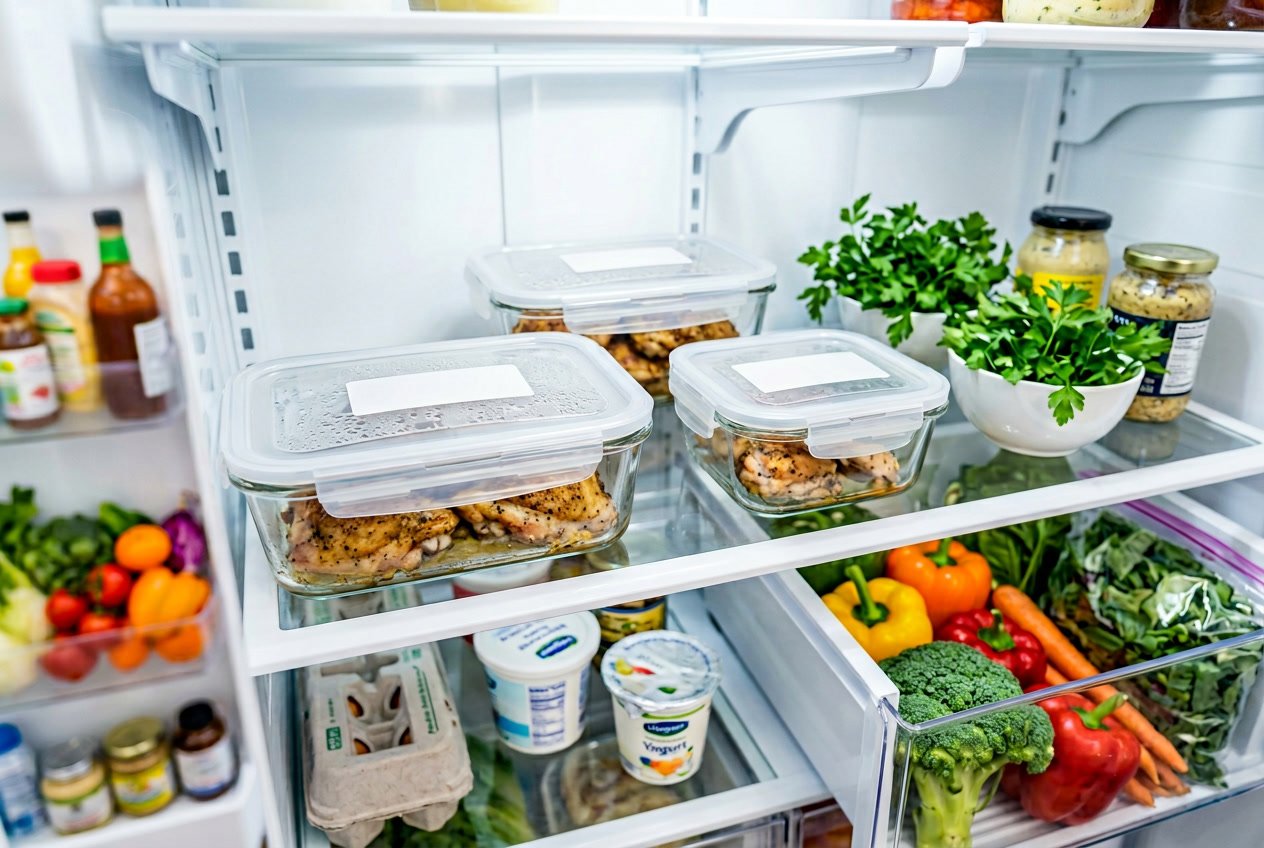
Cooked chicken thighs stay safe and high quality for a limited time in the refrigerator. Store them promptly in airtight containers, keep your fridge at 40°F (4°C) or below, and label with dates.
Safe Storage Time for Cooked Chicken Thighs
Cooked chicken thighs are safe in the refrigerator for 3 to 4 days. Refrigerate the chicken within two hours of cooking, or within one hour if it’s above 90°F (32°C).
Use a digital fridge thermometer to confirm the temperature. If you can’t verify those conditions, consume the chicken sooner or discard it.
Avoid leaving cooked chicken at room temperature overnight.
Storing Leftover Cooked Chicken Thighs
Place cooled thighs in shallow, airtight containers or wrap them tightly in foil or plastic wrap. Divide large batches into meal-sized portions.
Label each package with the date cooked. Store containers on a fridge shelf, not the door, to keep a steady temperature.
For longer storage, freeze within the 3–4 day refrigerator window. Frozen cooked chicken keeps best for about 2–4 months.
How Long Is Cooked Chicken Good For
Safety is the 3–4 day fridge rule. Quality may decline before that if the chicken was overexposed to air or moisture.
Look for spoilage: sour or off smell, slimy texture, or discoloration. Discard immediately if you notice these.
When reheating, heat to an internal temperature of 165°F (74°C). Reheat only the portion you plan to eat and avoid reheating the same portion multiple times.
Proper Storage Practices for Chicken Thighs
Store raw and cooked chicken thighs at or below 40°F (4°C). Keep them sealed to prevent drips and place them away from ready-to-eat foods.
Use airtight packaging, a dedicated shelf or tray, and refrigerate within two hours of purchase or cooking.
Best Way to Store Chicken Thighs
For raw chicken thighs, keep them in the original store packaging for 1–2 days. If storing longer, transfer to a heavy-duty freezer bag or vacuum-seal and freeze.
Raw thighs freeze well up to nine months for quality. For cooked chicken thighs, cool to room temperature within two hours, then place in shallow airtight containers or wrap tightly.
Label with date and use within 3–4 days. Keep your refrigerator at 40°F (4°C) or lower and check with an accurate fridge thermometer.
Preventing Cross-Contamination
Treat raw chicken thighs as a high-risk item. Never let juices contact other foods, utensils, or surfaces.
Use separate cutting boards for raw poultry and ready-to-eat items. Wash hands with soap for at least 20 seconds after handling raw chicken.
Clean surfaces and utensils with hot, soapy water. Sanitize with a diluted bleach solution (1 tablespoon bleach per gallon of water) or a commercial sanitizer.
Store raw chicken on the lowest shelf to prevent drips onto other foods. Keep it in a sealed container or tray to contain leaks.
Packaging and Placement in the Refrigerator
Use leak-proof containers or resealable bags to contain juices from chicken thighs. If using store packaging, place it inside a shallow, rimmed container or on a plate to catch leaks.
For longer storage before freezing, double-wrap in plastic wrap and foil or use vacuum sealing. Place raw chicken on the bottom shelf or in a designated meat drawer.
Keep cooked chicken on upper shelves to avoid contact with raw items. Maintain consistent temperatures by not overpacking the fridge and checking door seals.
Recognizing Spoiled Chicken Thighs
Check color, surface condition, smell, and feel to see if chicken thighs have gone bad. Use clear sensory checks and the fridge timeline (raw: 1–2 days; cooked: 3–4 days) to decide whether to keep or discard.
Visual Signs of Spoilage
Look at color first. Fresh raw chicken thighs are pinkish; gray, green, or yellow patches mean spoilage.
Check the surface for mold or fuzz. Any visible mold signals spoilage even if only on a small area.
Inspect packaging and juices. Bulging packaging or excessive cloudy, milky, or green-tinged liquid suggests bacterial growth.
Dried, darkened edges indicate age and quality loss. If you thawed frozen thighs, examine them after thawing.
Brownish or gray areas that don’t look like normal freezer discoloration and a broken, flaking texture are reasons to throw them out.
Odor and Texture Warnings
Smell the chicken before cooking. Fresh thighs have a mild or neutral scent.
A sour, ammonia-like, rotten, or chemical odor means the meat is unsafe. Feel the surface with clean hands.
Fresh raw thighs feel slightly moist but not slippery. A tacky, sticky, or slimy film means spoilage.
Test firmness by pressing the meat. Fresh thighs spring back; if an indentation remains or the flesh feels mushy, bacteria have broken down the tissue and you should discard it.
If raw chicken thighs have been in your refrigerator for 4 days, they are past the safe 1–2 day window. Do not eat them unless they were cooked and stored properly.
Freezing Chicken Thighs for Long-Term Storage
Freezing preserves chicken thighs for months and keeps them safe. Use airtight packaging, label with dates, and keep your freezer at 0°F (-18°C) or below.
Proper Freezing Techniques
Wrap each thigh tightly to prevent freezer burn and moisture loss. Use vacuum-seal, heavy-duty freezer bags with air pressed out, or double-wrap in plastic wrap plus aluminum foil.
Remove as much air as possible before sealing. Portion chicken by meal to avoid thawing more than you need.
Lay thighs flat in a single layer on a baking sheet until firm, then stack and repackage to save space. Label packages with the date and number of pieces.
If you freeze cooked thighs, cool them to room temperature within two hours and store in shallow airtight containers. For raw thighs, avoid rinsing and pat dry before packaging to reduce ice crystals.
How Long Can You Freeze Chicken Thighs
Store raw chicken thighs at 0°F (-18°C) or lower. For best flavor and texture use raw thighs within 6–9 months.
Cooked chicken thighs keep best for 2–6 months depending on packaging. Large ice crystals or discolored meat signal quality loss.
If you thaw and the meat smells off, feels sticky, or shows discoloration beyond typical freezer effects, discard it.
Can You Refreeze Chicken Thighs
You can refreeze raw chicken thighs only if you thawed them in the refrigerator and they never rose above 40°F (4°C). Refreezing after refrigerated thawing is safe, though repeated freeze and thaw cycles reduce juiciness and tenderness.
Do not refreeze chicken that thawed at room temperature, in cold water left out, or in a microwave unless you cook it first. If you cook thawed chicken thighs, you may safely freeze the cooked leftovers; label them with the cooking date.
When refreezing, package the meat tightly and remove air to limit further quality loss. Each refreeze cycle shortens optimal storage life.
Plan portions to minimize refreezing.
Safe Thawing Methods for Chicken Thighs
Use a reliable method to keep chicken thighs below 40°F and avoid bacterial growth. The three safe options below show how long each takes and when to cook the meat after thawing.
Refrigerator Thawing
Place frozen thighs in their original packaging or a leakproof bag and set them on a rimmed tray or pan. Allow about 12–24 hours per pound for boneless thighs; bone-in thighs typically need 18–24 hours per pound.
Put the tray on the bottom shelf to prevent drips onto other foods. Keep your refrigerator at or below 40°F (4°C).
Thawed chicken thighs remain safe in the fridge for 1–2 days before cooking. If you decide not to use them, you can safely refreeze them within that window.
Cold Water Thawing
Seal thighs in a leakproof plastic bag to prevent water from contacting the meat. Submerge the bag in a bowl or sink of cold tap water and change the water every 30 minutes.
Expect roughly 1–2 hours for a pound of thighs, depending on thickness. Cook chicken immediately after cold water thawing.
Do not return it to the refrigerator for later use. Monitor the water temperature and the bag’s integrity.
Microwave Thawing
Use your microwave’s defrost function and follow the instructions for weight and time. Rotate or flip the thighs frequently to promote even thawing and prevent partial cooking.
Small packages may thaw in 5–10 minutes; larger or bone-in pieces may need longer. Cook thighs immediately after microwave thawing.
If you notice any cooked areas, cook the entire piece until it reaches 165°F (74°C) internal temperature.
Special Considerations for Marinated Chicken Thighs
Marinated chicken thighs need careful timing and storage to stay safe and retain texture. Keep them refrigerated at 40°F (4°C) or below.
Treat acidic marinades differently from oil-based ones.
How Long Can Marinated Chicken Thighs Stay in the Refrigerator
Marinate raw chicken thighs in the fridge for no longer than 24 hours for most marinades. Oil-based or mild herb and spice marinades work well for 12 to 24 hours.
Use acidic marinades like citrus, vinegar, or yogurt for only 2 to 8 hours. Acids start breaking down muscle fibers and can make the meat mushy if left too long.
Store marinating chicken in a sealed container or heavy-duty resealable bag on the bottom shelf to prevent drips. Throw away any marinade that touched raw chicken, or boil it for at least one minute before using it as a sauce.

